
Review · POKHARA TOURS & SIGHTSEEING
Kathmandu and Pokhara: 6 Days in the Heart of Nepal
Temple mornings, lake sunsets—Nepal in 6 days. What makes this trip feel special is how it packs Kathmandu’s UNESCO sights with a real nature break in Pokhara, without turning your schedule into a frantic checklist. I like the way the plan groups the sacred neighborhoods into one efficient day, then trades traffic for views the moment you reach Phewa’s side of town.
The second thing I love is the contrast: Sarangkot sunrise for Himalayan panoramas, followed by a calm one-hour boat ride on Phewa Lake. It’s the kind of rhythm that helps you absorb the culture without feeling stuck in transit all day.
One possible drawback: the itinerary leans on early mornings and a long drive day (about 5–6 hours from Kathmandu to Pokhara). Also, lunch and dinner aren’t included, so you’ll want to budget for meals and keep a little cash for tips.
In This Review
- Key highlights to pay attention to
- Day 1 in Kathmandu: airport pickup and a clean start
- Kathmandu Durbar Square and Pashupatinath: royalty, temples, and an unforgettable river-side scene
- Kathmandu Durbar Square (royal temples, stone stories)
- Pashupatinath (holy architecture and cremation rituals you may witness)
- Boudhanath and Swayambhunath (Buddhist landmarks with real atmosphere)
- Kathmandu to Pokhara: the 200 km road trip and what to expect
- Sarangkot sunrise at 1,592m: why this morning timing matters
- Pokhara valley day: Devi’s Fall, Gupteshwor Cave, World Peace Pagoda, and the mountain museum
- Devi’s Fall (the waterfall that keeps you curious)
- Gupteshwor Cave (cool air after the sun)
- World Peace Pagoda (a calm viewpoint moment)
- International Mountain Museum (learn what you’re looking at)
- Phewa Lake boat ride: the quiet hour you’ll remember
- Day 5 return to Kathmandu and the farewell dinner
- Day 6 departure: smooth airport escort
- What the $730 price covers (and what you still need to plan)
- Private guide support, especially when plans change
- Who should book this 6-day Kathmandu and Pokhara route
- Should you book this Kathmandu and Pokhara tour?
- FAQ
- What is included in the tour price?
- What is not included?
- Is airport pickup or transfer included?
- How does the itinerary split between Kathmandu and Pokhara?
- How long is the drive from Kathmandu to Pokhara?
- Is there a boat ride included?
- Where do we meet and what time does it start?
- Is there free cancellation?
Key highlights to pay attention to
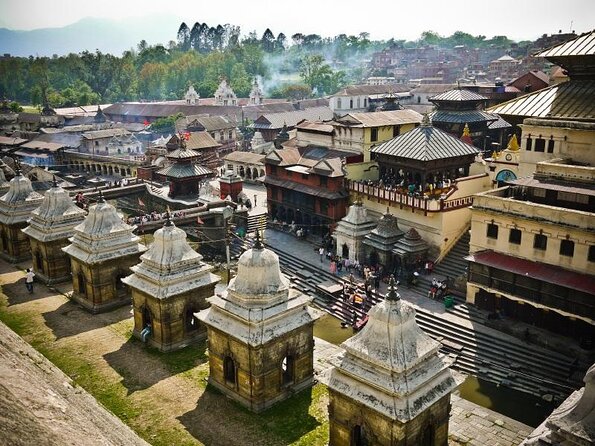
- Kathmandu temple circuit in one day: Durbar Square, Pashupatinath, Boudhanath, and Swayambhunath, with site fees handled.
- A real sunrise viewpoint: Sarangkot at 1,592m, timed before sunrise for Annapurna Massif and Machhapuchhre views.
- Pokhara sights beyond lakes: Devi’s Fall, Gupteshwor Cave, World Peace Pagoda, and the International Mountain Museum.
- Easy decompression time: afternoon boating on Phewa Lake after sightseeing.
- English-speaking guide with private transport: fewer headaches than piecing together local buses and taxis.
- Kunjan’s responsiveness shows up in real life: several bookings praised him for last-minute coordination (flights/transfers) and smooth support.
Before you lock this one in, a few Kathmandu alternatives:
- Kathmandu: 6-Day Limitless Langtang Trek★ 5.0 · 21 reviews
- 6 Days Muktinath Tour Package in Nepal★ 5.0 · 20 reviews
- 6-Day Nepal Buddhist Pilgrimage Tour Package (Kathmandu and Lumbini)★ 5.0 · 17 reviews
- 5 Nights 6 Days Kathmandu and Chitwan Safari Tour Package of Nepal★ 5.0 · 11 reviews
Day 1 in Kathmandu: airport pickup and a clean start
You land at Tribhuvan International Airport, then you’re met by a representative and transferred to your hotel. It’s simple, but it matters on Nepal trips—getting oriented after a flight can eat a whole day if you’re left to sort it out yourself.
Because your accommodation is 3-star with breakfast (BB basis), you’ll have the basic fuel you need for a full day of walking and temple time. This also keeps the trip realistic for most budgets: you’re paying for the guiding and transport rather than a high-end, all-day resort experience.
Kathmandu Durbar Square and Pashupatinath: royalty, temples, and an unforgettable river-side scene
Day 2 is the big Kathmandu day, and the sequence is smart. You start at Kathmandu Durbar Square, then move to Pashupatinath, and you finish with three major Buddhist/Hindu landmarks: Boudhanath and Swayambhunath.
Kathmandu Durbar Square (royal temples, stone stories)
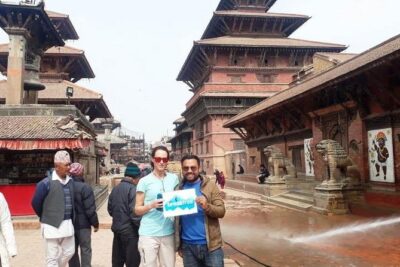
Kathmandu Durbar Square is described as the ancient center of Nepal’s royal power, with temples dedicated to Hindu gods and goddesses. You’ll see a cluster that includes Kumari Ghar, Taleju Temple, Kasthamandap, Kaal Bhairav, and Jagannath Temple. Even if you’re not a history nerd, this place works because it’s visually layered: smaller shrines sit alongside larger temple forms, so you get multiple “answers” to what Kathmandu looks like in one spot.
Practical tip: wear shoes you can wipe off—temple areas are active, and sidewalks can be uneven.
Pashupatinath (holy architecture and cremation rituals you may witness)
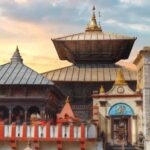
Pashupatinath Temple is one of the holiest Hindu sites in South Asia, and it’s known for its iconic golden two-tiered structure. Tourists aren’t allowed inside the temple premises, but you can observe open cremation ceremonies on the bank of the Bagmati River.
That’s not a casual sightseeing moment. If you’re sensitive about religious rituals, go with a calm mindset and treat it like what it is: a living practice, not a show. A guide helps here—knowing what you’re seeing (and what you’re not supposed to do) makes the experience far more respectful.
Boudhanath and Swayambhunath (Buddhist landmarks with real atmosphere)
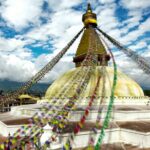
Then you pivot to Boudhanath Stupa, one of the biggest and oldest Buddhist monuments in the world. It’s built as a large dome-shaped stupa decorated with prayer flags, and it’s linked to Kassapa Buddha traditions. The atmosphere here tends to feel both active and peaceful—people are moving, but the space also invites stillness.
Finally, you visit Swayambhunath, on a hillock west of the city center. This complex includes shrines, monasteries, temples, plus a museum and library. It’s one of those places where symbols make more sense when someone points them out—so having an English-speaking guide on this stop isn’t just convenient, it improves your understanding.
Kathmandu to Pokhara: the 200 km road trip and what to expect
Day 3 shifts you from the capital’s temple density to Pokhara’s lake-and-hills rhythm. The drive is about 200 km and 5–6 hours via Prithvi Highway. The route is scenic, with terraced fields, green valleys, occasional bazaars, and changing terrain.
This day is also a chance to reset. If you’re prone to getting travel-worn (jet lag, tight schedules), treat the afternoon in Pokhara as breathing room. The plan leaves you options: you can rest, or take a walk around Phewa Lake.
Sarangkot sunrise at 1,592m: why this morning timing matters
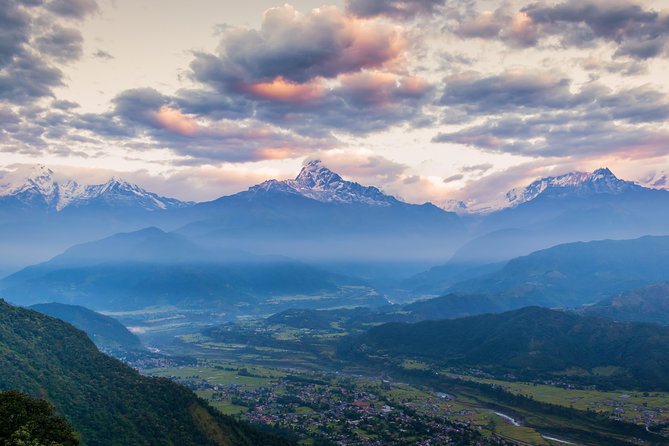
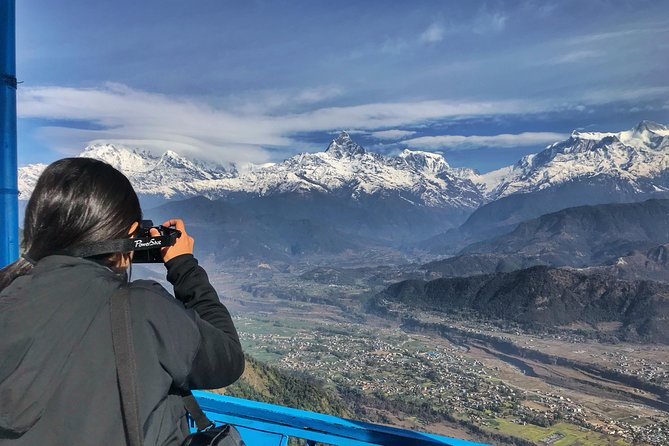
Day 4 starts before sunrise with an excursion to Sarangkot (1,592m). The point isn’t just a viewpoint; it’s timing. From Sarangkot, you’re set up for panoramic views that can include the Annapurna Massif and Mt. Machhapuchhre.
You’ll also visit Bindhya Basini Temple on the way back to your hotel. It sits on a tiny hill in Old Pokhara and is dedicated to Lord Durga. For me, this is the kind of cultural stop that works well on a morning like this: you’re already up early for views, and the temple gives you a different angle on the place you’re in.
Practical consideration: mornings in the Pokhara region can feel cool. Bring a layer you’ll actually wear, not just something you hope will be enough.
Pokhara valley day: Devi’s Fall, Gupteshwor Cave, World Peace Pagoda, and the mountain museum
After breakfast, you explore the Pokhara valley with a mix of water features, caves, viewpoints, and museum time. Here’s how each stop fits the bigger picture.
Devi’s Fall (the waterfall that keeps you curious)
Devi’s Fall is one of the signature Pokhara natural attractions. The big value for your day is variety: you’ll be moving from city streets to a water-focused landscape, then into cave territory, then to a pagoda viewpoint, and finally into a museum setting. That mix keeps energy up and helps you avoid the feeling that you’re repeating the same photo scene.
Gupteshwor Cave (cool air after the sun)
Gupteshwor Cave is a strong contrast to outdoor waterfall time. If the weather is warm, caves feel like a relief; if it’s cloudy, they can feel atmospheric. Either way, it’s a change of pace that breaks up the day.
Because you’re touring with a guide, you’ll get context for what you’re seeing rather than just walking through space.
World Peace Pagoda (a calm viewpoint moment)
The World Peace Pagoda stop is a nice counterbalance to the cave and waterfall energy. It’s also a place where you can slow down—take in the view, look for the best angles for photos, and let the day stretch a little.
International Mountain Museum (learn what you’re looking at)
Then comes the International Mountain Museum. When you visit the Annapurna region, it helps to have at least a basic understanding of the mountains you’re seeing. A museum stop can feel optional on some tours, but here it complements Sarangkot nicely: you’ve seen the peaks at sunrise, and now you have a chance to connect that view to stories and information.
Phewa Lake boat ride: the quiet hour you’ll remember
The itinerary includes a one-hour boat ride on Phewa Lake in the afternoon. This is a key piece of why the 6-day plan works. After mornings in temples and the intense morning push to Sarangkot, the boat ride gives you a slower tempo.
Even if you’re not the type to obsess over scenic details, a lake ride changes how you experience Pokhara. You get perspective from the water and a break from walking. It’s also a good time to do what you probably won’t have time for earlier: just sit, watch, and let the day settle.
Day 5 return to Kathmandu and the farewell dinner
On Day 5, you head back to Kathmandu by road. The goal here is comfort and simplicity: get you back, escort you to your hotel, and give you downtime to freshen up.
In the evening, you’re picked up for the final dinner—farewell dinner in Kathmandu is included. Even without knowing the menu, it’s a smart touch. It gives you one last social anchor before your departure day, and it’s included rather than something you need to plan or pay for separately.
Day 6 departure: smooth airport escort
Farewell day is based on your flight time. The representative receives you from the hotel and escorts you to the airport for final departure. This is another underappreciated value: you avoid the stress of negotiating transport while you’re tired and running on a schedule.
What the $730 price covers (and what you still need to plan)
This tour is listed at $730 per person for an approx. 6-day program in Kathmandu and Pokhara. Here’s how the included parts usually translate into real value for you.
Included highlights:
- Luxury private transportation throughout the itinerary
- 3-star accommodation in Kathmandu and Pokhara on a breakfast basis
- English-speaking tour guide for sightseeing in Kathmandu and Pokhara
- Sightseeing site fees in Kathmandu and Pokhara
- One-hour boat ride on Phewa Lake
- Farewell dinner in Kathmandu
- All government and local taxes
- Pickup offered and mobile ticket support
What’s not included:
- International airfare and the Nepalese visa fee
- Lunch and dinner
- Travel insurance
- Personal expenses
- Tips for guide and driver
- Extra nights if you need them
So is $730 a good deal? Usually, yes, if you want the convenience of private transport and pre-arranged access for the main sights. The inclusion list matters: entrance fees and guide time can quietly add up in Nepal if you’re paying day by day. Also, private transport saves hours of figuring out local rides.
The main budget risk is predictable: you’ll pay for meals on your own. If you plan to eat out for every lunch and dinner, you’ll feel it. A simple strategy helps—pick one or two meal splurges, keep the rest straightforward.
Private guide support, especially when plans change
The service reputation behind KJ Adventure Nepal comes through clearly in the feedback shared about the team, especially Kunjan. Multiple people highlighted that he handled last-minute needs smoothly—things like arranging flights and transfers quickly and at a price they felt was reasonable.
That matters because Nepal doesn’t always run on perfect timing. Weather can affect sunrise viewing plans, flight schedules can shift, and it’s helpful to know you’ll have a real person coordinating rather than a generic inbox response.
So while the tour itself is structured, the human support is what gives it flexibility when life happens.
Who should book this 6-day Kathmandu and Pokhara route
This itinerary is a strong match if you want:
- A straightforward first trip to Nepal with Kathmandu temples + Pokhara lake-and-viewpoints
- Private transport and an English-speaking guide
- A schedule that’s active, but not a nonstop grind
- A balanced mix of culture (temples, stupas) and nature (Sarangkot, falls, caves, Phewa)
It may be less ideal if:
- You hate early wakeups. Sarangkot is before sunrise.
- You want full-day free time with no structured stops.
- You’re trying to keep costs ultra-tight, because lunch/dinner and tips are not covered.
Also note: the tour says most travelers can participate, and it requires a minimum of 2 people per booking. It’s a private tour/activity, meaning it’s only your group.
Should you book this Kathmandu and Pokhara tour?
I’d book this if you want your Nepal time to feel organized and meaningful—especially the Temple Day in Kathmandu and the sunrise-to-lake pacing in Pokhara. The inclusion list is the clincher: private transport, guide, site fees, and a boat ride are built in, which reduces the chaos that can happen when you plan everything on your own.
I’d think twice if your priority is total independence or if you don’t like dawn starts. In that case, you might prefer a lighter, less structured plan.
If you do book, I’d also pack smart for both cities: comfortable shoes for temple steps, a warm layer for early Sarangkot mornings, and a small budget for lunch and dinner so the trip stays stress-free.
FAQ
What is included in the tour price?
The tour includes luxury private transportation, 3-star accommodation in Kathmandu and Pokhara on a breakfast basis, an English-speaking guide for Kathmandu and Pokhara sightseeing, sightseeing site fees, a one-hour boat ride on Phewa Lake, and a farewell dinner in Kathmandu. It also lists all government and local taxes.
What is not included?
International airfare, the Nepalese visa fee, lunch and dinner, travel insurance, personal expenses, and tips for the guide and driver are not included. Extra night accommodation is also not included if needed.
Is airport pickup or transfer included?
Yes. You’ll be received at Tribhuvan International Airport in Kathmandu and transferred to your hotel. On the last day, you’ll be escorted to the airport based on your flight time.
How does the itinerary split between Kathmandu and Pokhara?
You spend Day 1 and Day 2 in Kathmandu (arrival plus Kathmandu Durbar Square, Pashupatinath, Boudhanath Stupa, and Swayambhunath). You travel to Pokhara on Day 3 and explore Sarangkot, Bindhya Basini Temple, Devi’s Fall, Gupteshwor Cave, World Peace Pagoda, the International Mountain Museum, and Phewa Lake boating on Day 4. Day 5 returns to Kathmandu.
How long is the drive from Kathmandu to Pokhara?
The drive is about 5–6 hours for roughly 200 km.
Is there a boat ride included?
Yes. There is a one-hour boat ride on Phewa Lake.
Where do we meet and what time does it start?
The meeting point is Nepali Ghar Hotel, Amrit Marg 26, Kathmandu 44600, Nepal. The listed start time is 8:00 am.
Is there free cancellation?
Yes. You can cancel up to 24 hours in advance for a full refund. If you cancel less than 24 hours before the start time, the amount paid is not refunded.
More 6-Day Experiences in Kathmandu
More Tour Reviews in Kathmandu
Just Reviewed in Kathmandu
- Mountain Bike Tour
★ 5.0 · 3 reviews - Annapurna Panaroma
★ 5.0 · 3 reviews - Mount Everest Scenic Flight 50 Minutes
★ 5.0 · 3 reviews - Kathmandu : Swambhunath & Durbar Square Guided Half Day Tour
★ 3.3 · 3 reviews - Chandragiri Cable Car & Monkey Temple Tour – Private/Group
★ 5.0 · 3 reviews - Kathmandu: Shivapuri National Park Hiking Day Trip
★ 3.3 · 3 reviews
Pokhara Tours & Sightseeing, compared.
 ★ 4.63-Day All-Inclusive Chitwan SafariFrom $149133 reviews
 ★ 4.73 Day Chitwan Jungle Safari TourFrom $12987 reviews
 ★ 5.06 Days Special Kathmandu Pokhara Tour in NepalFrom $1,00028 reviews
 ★ 4.52 Days Chitwan Jungle Safari Tour from Pokhara/KathmanduFrom $11727 reviews
 ★ 5.0Kathmandu to Pokhara drop-off service by private vehiclesFrom $22527 reviews
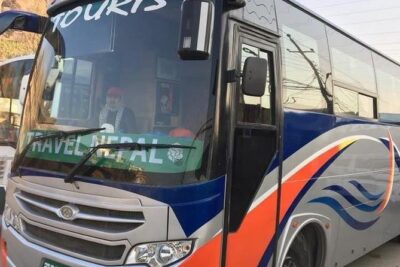 ★ 4.0Kathmandu to Pokhara Tourist Bus Tickets reservationFrom $2225 reviews
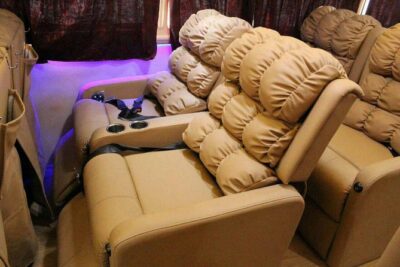 ★ 4.0Kathmandu to Pokhara Bus Ticket- SofaFrom $2124 reviews
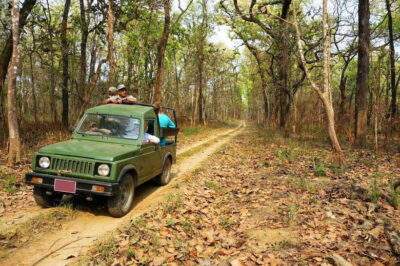 ★ 4.82, 3, or 4-Day Chitwan Jungle SafariFrom $3524 reviews
Browse the lists this tour appears in