
Review · KATHMANDU UNESCO HERITAGE TOURS
Kathmandu city tour – 4 UNESCO World Heritage Sites
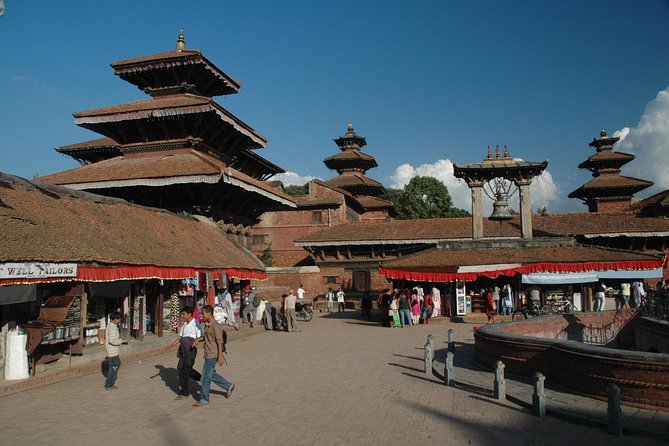
A day that feels like old Kathmandu, fast. This Kathmandu city tour strings together key heritage stops—Durbar Square, Swayambhunath, Boudhanath, and Pashupatinath—so you spend hours seeing what makes the Kathmandu Valley special. I like that it’s built as a practical route through the city’s sacred architecture, not a random checklist.
What I really like is the small-group feel (up to 10 people) and the fact that you get a professional guide to explain what you’re looking at, with the pace adjusted to what you want to spend time on. I also like that it’s handled end-to-end with hotel pickup and drop-off plus an air-conditioned car or van, so you’re not negotiating transport before and after.
The main drawback: monument entry fees are not included, and you pay them locally (NPR 2650 per person). Plan on that added cost, and also remember the tour requires good weather.
In This Review
- Key things to know before you go
- Why This Kathmandu UNESCO Route Works So Well
- Getting Around: Pickup, Air-Conditioned Comfort, and a Small Group
- Your Day at a Glance: The 4-Stop Pattern
- Stop 1: Kathmandu Durbar Square and Hanuman Dhoka
- Stop 2: Swayambhunath Stupa and the Monkey Temple
- Stop 3: Boudhanath Stupa and the Built-In Lunch Break
- Stop 4: Pashupatinath Temple on the Holy River
- Price and Value: What $75 Covers (and What Doesn’t)
- Timing, Weather, and How to Plan Your Day
- What You’ll Learn: City Context, Not Just Photo Stops
- Who This Tour Suits Best
- Should You Book This Kathmandu UNESCO Highlights Tour?
- FAQ
- How long is the Kathmandu city tour?
- What UNESCO World Heritage sites are included?
- Is hotel pickup and drop-off included?
- Are monument entry fees included in the tour price?
- Is food included?
- Does the tour include a mobile ticket?
- What group size should I expect?
- What is the cancellation policy?
Key things to know before you go
- Four UNESCO World Heritage Sites in one tight 4 to 6 hour loop around Kathmandu
- Hotel pickup and drop-off plus an air-conditioned vehicle to keep the day easy
- Small group size (maximum 10 travelers) helps the guide manage timing better
- Mobile ticket is part of the setup
- Entry fees are extra and paid directly at the monuments (NPR 2650 per person)
- Food isn’t included, though there’s a lunch break built into the Boudhanath stop
Bigger sweeps across the valley
- Kathmandu: Private City Guided Tour★ 4.9 · 174 reviews
- Kathmandu City Tours★ 5.0 · 66 reviews
- Kathmandu Valley City Day Tour★ 5.0 · 40 reviews
- Full Day Kathmandu City Sightseeing Tour of UNESCO Heritage Sites★ 5.0 · 36 reviews
Why This Kathmandu UNESCO Route Works So Well
Kathmandu can feel like a city with layers stacked on top of each other. This tour is a smart way to see that layering without getting lost in logistics. In a few hours, you move from the old royal core to major stupa and temple areas, all tied to UNESCO World Heritage recognition.
The biggest value is that you’re not just walking around names on a map. You’re following a guided route through places that are central to the city’s sacred and royal past—temples, stupas, and courtyard spaces—so you get context while you go. That’s especially helpful if it’s your first time in Kathmandu and you want your bearings fast.
This is also a good “middle-day” option. At 4 to 6 hours, it fits before you’re too tired to think, and it’s long enough to feel like a real experience instead of a quick drive-by. And with pickup and drop-off, you’re not burning energy coordinating transit on your own.
Getting Around: Pickup, Air-Conditioned Comfort, and a Small Group
You’ll start after breakfast, when the guide meets you for a short drive into the heart of Kathmandu and beyond. The tour includes hotel pickup and drop-off, which matters more than it sounds. In a city with traffic and lots of walking between sites, starting with a vehicle and ending back at your hotel keeps your day from turning into a logistics project.
The ride is in an air-conditioned car or van with a driver. That’s a real quality-of-life upgrade, particularly if the weather is warm. You also have a mobile ticket, which helps smooth the check-in flow.
Group size is capped at 10. That small limit is one of the reasons pacing can work. The guide can steer the day based on what you want to emphasize—some people prefer to linger, others want to keep moving—without turning your experience into a stop-and-go crowd shuffle.
Your Day at a Glance: The 4-Stop Pattern
This tour is built as four heritage stops, each with a focused time window. You’re looking at:
- Kathmandu Durbar Square (with Hanuman Dhoka)
- Swayambhunath Stupa / Monkey Temple
- Boudhanath Stupa (with a lunch break)
- Pashupatinath Temple
The ordering matters. You begin in the city center with the royal courtyard area, then head to a west-side hill stupa area, move toward Boudhanath to include a lunch break, and finish at Pashupatinath, which is about 5 km from the main city to the east on the bank of the holy river.
That sequence is practical: you cover major landmarks in a loop-like flow rather than bouncing back and forth across town. Your guide handles the driving between sites, so you spend your energy on seeing—not figuring out where to go next.
Stop 1: Kathmandu Durbar Square and Hanuman Dhoka
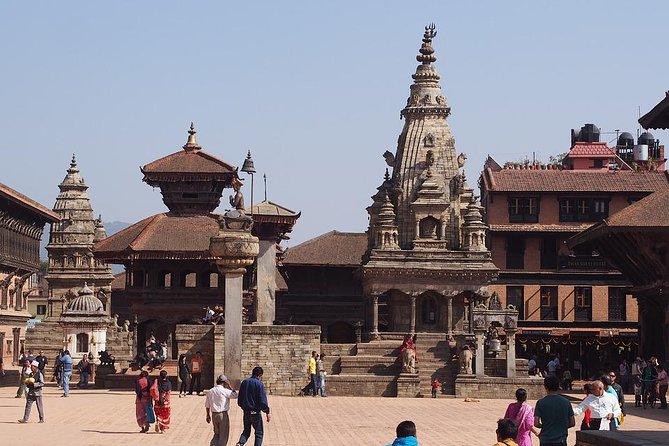
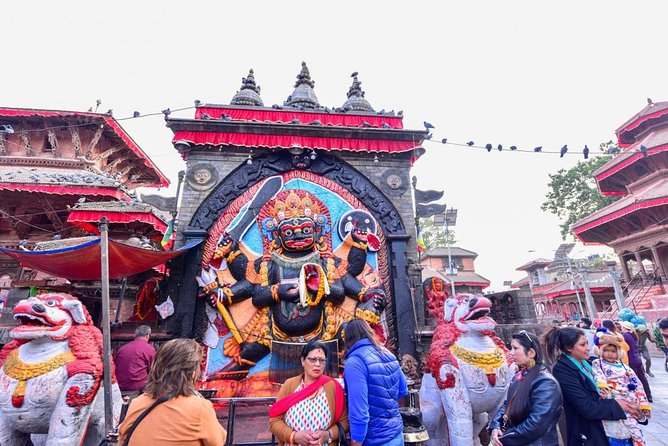
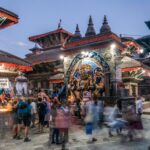
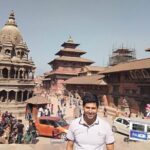
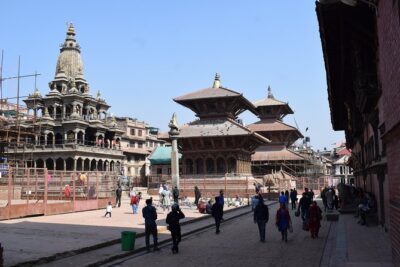
Your first major stop is Kathmandu Durbar Square, including Hanuman Dhoka, set in the central area of the city. This is where you’ll see a place that once served as a royal palace and courtyard—meaning it’s not just a temple stop. It’s tied to the city’s royal layout and the kind of public space where power and ceremony overlapped.
Expect a lively atmosphere around the square. The tour keeps the time focused—about an hour and a half—so you can take in the core highlights without feeling rushed across the entire area. Admission for this stop isn’t included, so you’ll pay locally.
A practical note: this is typically where you’ll start noticing how the rest of the day will feel. If you like heritage sites that connect to court life and public courtyard culture, Durbar Square is your anchor. If you’re mainly after major stupa and temple areas, you’ll still appreciate this stop because it sets the “royal Kathmandu” context before the more spiritual sites.
Deeper into old Kathmandu
Stop 2: Swayambhunath Stupa and the Monkey Temple
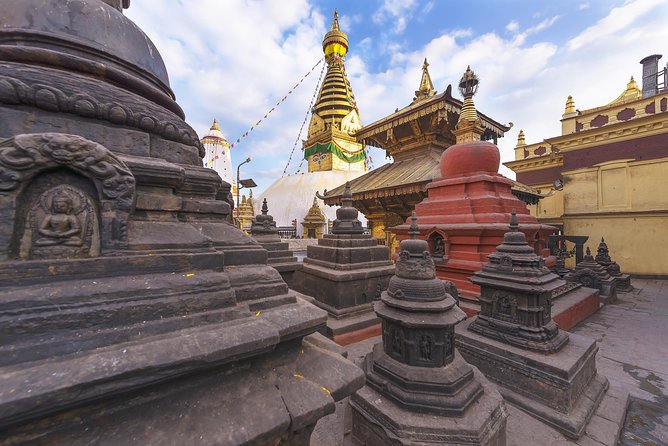
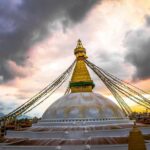
Next comes Swayambhunath, also known as the Monkey Temple. The drive heads toward the outskirt of the city heading due west to reach this famous site, so you’ll feel the day shift from central Kathmandu toward a more hill-and-stupa atmosphere.
You’ll spend about an hour here or less. That time window is perfect for a first pass: enough to appreciate the stupa presence and the site’s character, without turning it into a half-day mission. Since entry fees aren’t included, plan for local payment at the monument as needed.
Why this stop works in the route: it balances the royal-courtyard energy of Durbar Square with a sacred stupa setting that’s tied to Kathmandu’s religious identity. It also helps break up your day rhythm. After the square, you get movement, a change of scenery, and a different kind of “heritage look.”
And yes, the name Monkey Temple is your clue. You can expect monkeys to be part of the scene.
Stop 3: Boudhanath Stupa and the Built-In Lunch Break
Then you move on to Boudhanath Stupa, one of the other UNESCO-recognized anchors in the Kathmandu heritage circuit. The drive heads north, and the tour time here is around two hours, with a lunch break included.
This is a great stop to slow down a bit. The plan explicitly gives you time to eat instead of forcing you to grab food “whenever.” Since food and drinks aren’t included in the tour price, the lunch break is your cue to choose what works for you—something nearby, or whatever the guide recommends as an easy option.
Admission fees also aren’t included, so you’ll be paying locally.
Boudhanath adds a different spiritual texture to the day. After Swayambhunath, this is your second stupa stop, which means you’re comparing two sacred spaces as part of the same UNESCO-themed route. You’ll likely notice how the experience feels different even though both are major religious landmarks—different focus, different crowd energy, different vibe.
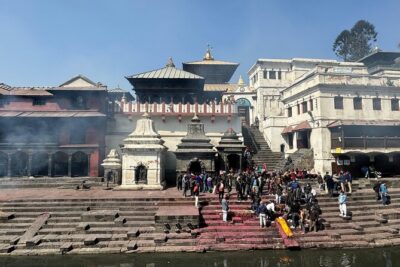
Stop 4: Pashupatinath Temple on the Holy River
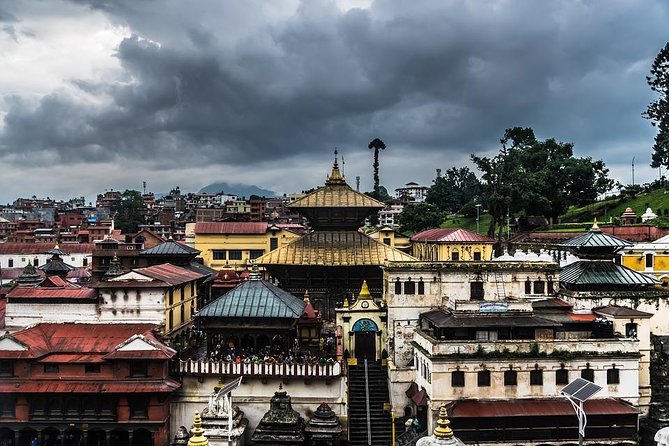
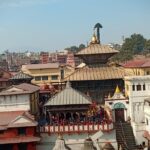
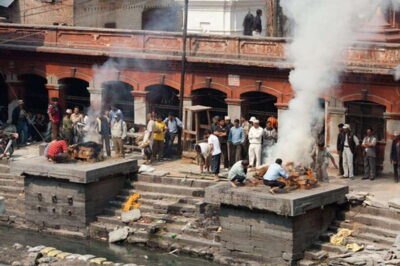
The final stop is Pashupatinath Temple, a famous Hindu temple. The tour begins with a holy visit here and notes it’s located about 5 km from the main city toward the east, on the bank of the holy river.
You get about an hour here, which is a good length for a guided “see it, understand it, move on” finish. It’s not a long lingering session, but it’s enough to take the experience seriously and get the guide’s context for what you’re seeing.
Like the other monuments, admission isn’t included, so you pay locally. You’ll want to keep some flexibility in your schedule for the day’s end, because temple areas can change how quickly people move.
Ending at Pashupatinath makes sense because it’s a strong religious centerpiece. It’s also a logical way to close the loop of your four UNESCO stops: royal courtyard start, stupa and temple circuit in the middle, then a major Hindu temple finish.
Price and Value: What $75 Covers (and What Doesn’t)
The price is $75.00 per person for a 4 to 6 hour experience. For that money, you get a professional tour guide, an air-conditioned car or van with driver, and hotel pickup and drop-off. Those inclusions are often the real cost-savers in a city day tour because transport and guide time are usually the biggest line items.
What’s extra: monuments entry fees (NPR 2650 per person) plus your own food and drinks and tips to the guide and driver. That means you should budget a bit beyond the headline price. Still, paying entry fees directly at monuments is common on tours like this, and it keeps your tour day simpler.
The value question comes down to your priorities. If you want a guided route across four UNESCO sites without spending time figuring out where to go and how to connect them by yourself, $75 is reasonable. If you already know the sites well and you’re comfortable with your own transport and ticketing, then a self-guided plan could cost less. But most first-timers pick this kind of guided route because it reduces friction.
One more value point: this tour is commonly booked about 35 days in advance on average, which often signals a steady demand for the basic “highlights in one day” format.
Timing, Weather, and How to Plan Your Day
This is a morning start after breakfast, then a half-day route that ends back at your hotel. The tour runs about 4 to 6 hours, depending on timing and how long you want to spend at each stop.
Weather matters here. The experience requires good weather, and if it’s canceled due to poor weather you’ll be offered another date or a full refund. So keep an eye on forecasts and don’t lock your entire Kathmandu schedule around one single day if you can avoid it.
What I’d do in your shoes: pick a day with some flexibility. If you’re planning other activities, give yourself a cushion. That way, if the tour shifts, your whole itinerary doesn’t collapse.
Also, you’ll be outside for parts of the day. Bring what makes walking tolerable for you—comfortable shoes and sun protection if it’s bright. You’ll be glad you thought about it when you’re moving between heritage areas.
What You’ll Learn: City Context, Not Just Photo Stops
The tour is described as a way to see Kathmandu’s ancient glorious artifacts—temples, monasteries, stupas, and royal palace areas. In practice, the guide’s job is to help you connect the dots: what each site is, why it matters, and how the day’s route fits together as a Kathmandu overview.
The route is built around the idea that Kathmandu may be a metropolitan city, but it still carries an older identity. That contrast is the core of the experience. You see the modern city, then you step into spaces that reflect older royal and religious life.
In at least one documented case, the guide named Kedar is credited with keeping the pace right—about 4 hours—and adjusting the plan based on the visitor’s wishes. That’s a good sign for you: if you like a day that feels tailored instead of rigid, this format is set up to support that.
Who This Tour Suits Best
This tour fits best if you want:
- A guided Kathmandu overview that hits four UNESCO World Heritage Sites
- A half-day plan that doesn’t swallow your whole day
- A smoother day with hotel pickup/drop-off and an air-conditioned vehicle
- A pace that you can influence a bit, rather than feeling locked into a strict script
It may be especially appealing after travel days when you’re not in the mood for long, complex planning. The whole point is to give you highlights while keeping your effort low.
If you’re the type who likes deep, slow museum-style exploration, you might feel the time windows are short. But if your goal is to understand the layout of Kathmandu’s heritage story, this route gives you a solid foundation.
Should You Book This Kathmandu UNESCO Highlights Tour?
If your goal is to see the key heritage sites in one efficient half-day, I’d book it. The combination of guide + transport + hotel pickup is the reason to choose this over piecing together your own plan. The small group size (up to 10) also makes it feel more manageable.
I’d hesitate only if you hate paying local entry fees or if you’re planning to eat without any schedule. Since food and drinks aren’t included, you’ll need to handle lunch on your own during the Boudhanath break. And you’ll want to keep some money aside for the NPR 2650 monument entry fees per person.
One last test: if you want to leave Kathmandu with the big-picture understanding of how royal courtyard spaces and major Hindu and Buddhist sites fit together, this tour does that job well.
FAQ
How long is the Kathmandu city tour?
It runs about 4 to 6 hours.
What UNESCO World Heritage sites are included?
The tour covers Kathmandu Durbar Square (Hanuman Dhoka), Swayambhunath (Monkey Temple), Boudhanath Stupa, and Pashupatinath Temple.
Is hotel pickup and drop-off included?
Yes. Hotel pickup and drop-off are included, along with an air-conditioned car or van and driver.
Are monument entry fees included in the tour price?
No. Monument entry fees are not included and are paid locally at NPR 2650 per person.
Is food included?
No. Food and drinks aren’t included. A lunch break is provided during the Boudhanath Stupa stop.
Does the tour include a mobile ticket?
Yes. A mobile ticket is part of the experience.
What group size should I expect?
The tour has a maximum group size of 10 travelers.
What is the cancellation policy?
You can cancel for free up to 24 hours in advance for a full refund. The experience also depends on good weather; if canceled due to poor weather, you’ll be offered a different date or a full refund.
The Valley, End to End
More Tours in Kathmandu


More Tour Reviews in Kathmandu

Just Reviewed in Kathmandu
- Mountain Bike Tour
★ 5.0 · 3 reviews - Annapurna Panaroma
★ 5.0 · 3 reviews - Mount Everest Scenic Flight 50 Minutes
★ 5.0 · 3 reviews - Kathmandu : Swambhunath & Durbar Square Guided Half Day Tour
★ 3.3 · 3 reviews - Chandragiri Cable Car & Monkey Temple Tour – Private/Group
★ 5.0 · 3 reviews - Kathmandu: Shivapuri National Park Hiking Day Trip
★ 3.3 · 3 reviews
Kathmandu UNESCO Heritage Tours, compared.
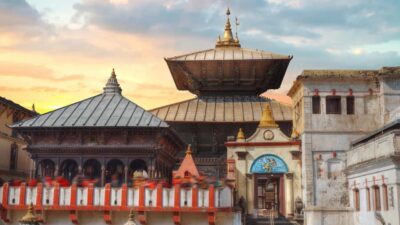 ★ 4.87 UNESCO Sites with LunchFrom $2744 reviews
 ★ 5.0Full Day 7 UNESCO Tour with Lunch – Private/GroupFrom $10415 reviews
 ★ 5.0Full Day Top 4 UNESCO Tour with Lunch – Private/GroupFrom $10269 reviews
 ★ 5.0UNESCO Seven World Heritage Tour in KathmanduFrom $180253 reviews
★ 4.9Full-Day 7 UNESCO Tour with Lunch – Private/GroupFrom $5247 reviews
★ 5.0UNESCO Seven World Heritage Tour in KathmanduFrom $180253 reviews
★ 4.9Full-Day 7 UNESCO Tour with Lunch – Private/GroupFrom $5247 reviews
 ★ 4.97 UNESCO Sites Tour in 1 Day (Private Tour)From $4204 reviews
 ★ 4.9Top 4 UNESCO Tour with Lunch – Private/GroupFrom $5181 reviews
 ★ 5.0Kathmandu Private Sightseeing Tour | UNESCO World Heritage SitesFrom $35109 reviews
Browse the lists this tour appears in