
Review · KATHMANDU UNESCO HERITAGE TOURS
Kathmandu World Heritage City Sightseeing Cultural Tour From, Kathmandu, Nepal
Kathmandu’s temples hit fast and hard. This easy, guided loop is a smart way to see UNESCO World Heritage highlights without getting stuck in slow transport or confusing ticket lines. I love how the tour packs major sites into a single day, and I also like the comfort of private transportation with an English-speaking city guide. One thing to keep in mind: with multiple stops and lots of walking on stone steps, it can feel a bit full if you prefer a slower pace or long breaks.
You’ll get a window into Kathmandu Valley’s spiritual life, old royal power, and Newari craftsmanship in just a few hours. Expect a thoughtful guide to connect what you’re seeing—like temple courtyards and living traditions—to the wider story of Nepal. Most people can participate, but bring water and plan on taking your time climbing where the routes go uphill.
In This Review
- Key reasons this Kathmandu UNESCO city tour works
- A fast, focused UNESCO day in Kathmandu Valley
- Price and logistics: what $145 buys you
- Kathmandu’s Durbar Square: temples, royal power, and the Living Goddess
- Swayambhunath Monkey Temple: 2,000 years of stupa life and big valley views
- Patan Durbar Square: Newari carving, old kingdom pride, and an art museum angle
- Boudhanath Stupa: a Tibetan Buddhist hub with butter-lamp atmosphere
- How the day actually feels: timing, walking, and comfort
- Guide and operator quality: why organization matters in Kathmandu
- Value vs. DIY: when paying for a guide pays off
- Who should book this tour (and who should skip it)
- Should you book this Kathmandu heritage tour?
- FAQ
- How long is the Kathmandu World Heritage City Sightseeing Cultural Tour?
- What UNESCO World Heritage Sites are included?
- Is pickup offered?
- Is this a private tour?
- Do I need to buy admission tickets?
- Is food included?
- What about gratuities?
- What kind of guide will I have?
- What transportation is provided?
- What is the cancellation policy?
Key reasons this Kathmandu UNESCO city tour works
- Private guide + private transport means less stress and more time looking up
- Four UNESCO stops covers Kathmandu, Patan, and the two big stupa hubs
- Tickets handled for most sites (and Boudhanath is free) so you can move efficiently
- Easy customization helps if you want more photo time or a shorter walk at one stop
- Strong organization track record from the operator, including praise for professional guiding and even film-location logistics
Bigger sweeps across the valley
- Kathmandu: Private City Guided Tour★ 4.9 · 174 reviews
- Kathmandu City Tours★ 5.0 · 66 reviews
- Kathmandu Valley City Day Tour★ 5.0 · 40 reviews
- Full Day Kathmandu City Sightseeing Tour of UNESCO Heritage Sites★ 5.0 · 36 reviews
A fast, focused UNESCO day in Kathmandu Valley
This tour is built for people who want Kathmandu to make sense quickly. You start in the city’s historic center, then head out to the hilltop stupa views, cross the river to Patan’s artisan squares, and finish at Boudhanath, where the atmosphere shifts from royal-era courtyards to a full-on Tibetan Buddhist rhythm.
The big win is that everything is close enough to do in one outing, but different enough that you don’t feel like you’re repeating the same scene. You’re seeing Hindu and Buddhist sacred spaces, watching religious life in real time, and learning how the valley’s communities shaped its art and architecture.
Price and logistics: what $145 buys you
At $145 per person for about five hours, this is not a “cheap bus hop” kind of deal. The value comes from the basics that often cost you time (and sanity): a professional English-speaking guide and private transportation that keeps the day moving.
You also get admissions included for key stops, which matters in Kathmandu where paying at each site can eat up time. Boudhanath is listed as admission free, while other sites include tickets. Add pickup offered (when arranged) and you’ve got a smooth start, especially if you’re staying somewhere not right on top of the action.
One note to plan around: this is a tour format where you’re guided from place to place, not a long meal-and-museum day. Food & beverages aren’t included, so you’ll want to either eat before you start or build in time to grab something simple on your own.
Kathmandu’s Durbar Square: temples, royal power, and the Living Goddess
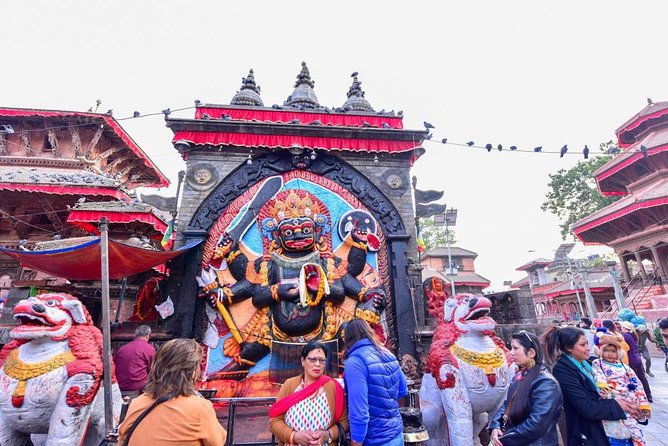
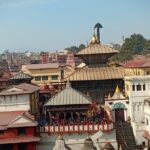
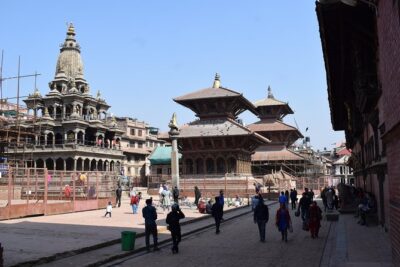
Kathmandu Durbar Square is the cultural heart of the old city. It’s the kind of place where your brain goes, wait—how is there so much detail packed into one square? You’ll find over 60 ancient temples around the courtyards, plus the remains of the old royal palace area.
The star detail here is the Living Goddess tradition. Your guide should point out what it means and where you’re likely to see it reflected in daily life. Even if you’ve never heard the story before, the setting helps. You’re not reading about history in a book—you’re standing in the physical layout that supported centuries of ritual and authority.
Practical tips for this stop:
- Bring a respectful mindset for shrine areas and temple interiors. Some parts are clearly used for worship.
- Expect uneven stone surfaces and lots of stair and threshold steps.
- If you’re short on time, focus on the central temple clusters first, then loop outward for carvings.
Swayambhunath Monkey Temple: 2,000 years of stupa life and big valley views
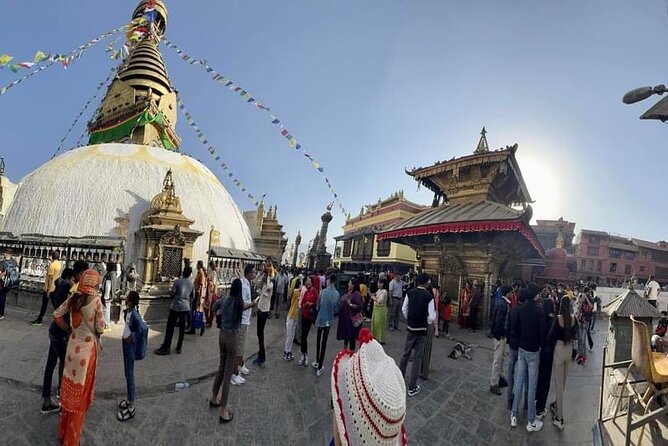
Next up is Swayambhunath Temple, also known as the Monkey Temple. This is one of those places that feels layered: you’ll see Buddhist sacred structures, smaller shrines, and temple buildings clustered together, all built around the stupa tradition that dates back over 2,000 years.
Your guide will likely emphasize why it’s so important in the Kathmandu Valley and how the site’s layout works as a religious space you move through. And yes, the monkeys earn their reputation. They can be entertaining, but also be smart: don’t feed them and keep bags and small items secured.
One of the best reasons to go here is the hilltop overlook. From Swayambhunath you get a classic Kathmandu Valley view, and it helps you understand what you’ve been driving through all day. Even if the city looks chaotic from street level, the valley’s sacred nodes make more sense when you see their placement from above.
Ticket note: admission is included for this stop, so you don’t have to stop your day to manage payments.
Deeper into old Kathmandu
Patan Durbar Square: Newari carving, old kingdom pride, and an art museum angle
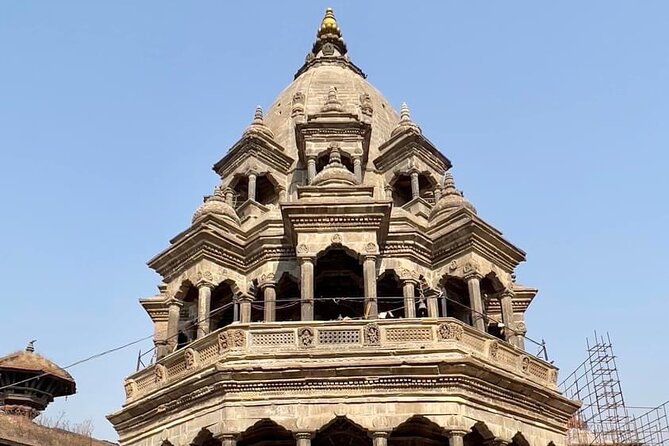
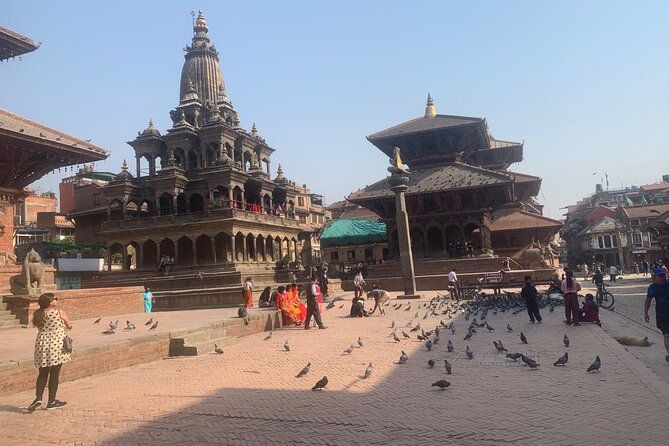
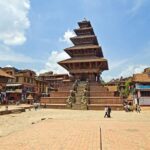
Then you cross over to Patan, located across the Bagmati River from Kathmandu. Patan used to be its own kingdom until 1769, and the architecture shows it. Patan Durbar Square is known as a place of arts, and the best part is how the fine details reward slow looking.
Expect impressive temple carvings and a strong sense of craftsmanship tied to the Newari people, who lived and shaped the area for centuries. Your guide can help connect what you see in stone—ornament patterns, temple forms, and layout—with the local culture that made it.
You’ll also get to the royal palace area again in Patan’s own version, plus an outstanding museum that displays cultural art from earlier centuries. This is a good moment to balance outdoor viewing with something more interpretive, especially if you like context.
Ticket note: admission is included here as well. That’s part of why this tour works so well for a time-crunched day.
Boudhanath Stupa: a Tibetan Buddhist hub with butter-lamp atmosphere
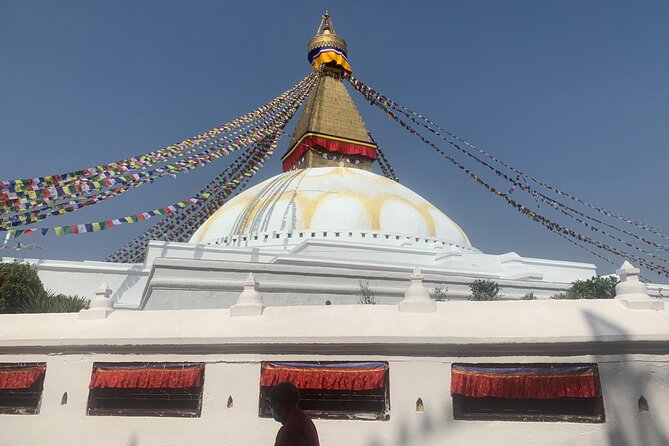
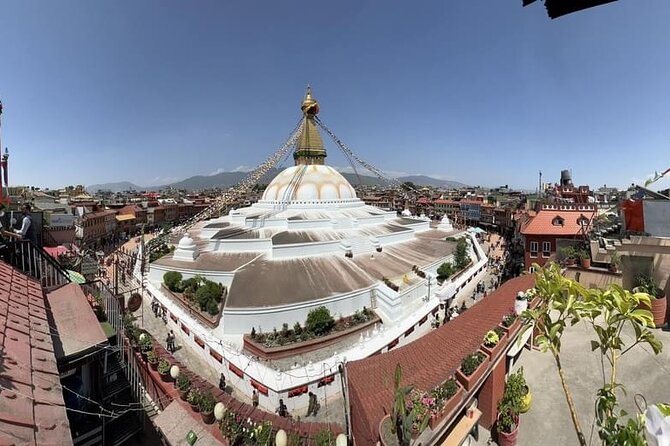
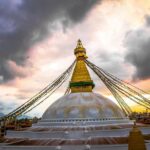
Boudhanath is where the day changes tone. The stupa itself rises to about 36 meters (118 ft), and it’s described as the third-largest Buddhist stupa in Asia. The scale hits you quickly, and the space around it feels made for circling, pausing, and watching religious routines.
As you explore, you’re also stepping into a major Tibetan refugee community hub in Nepal. Your guide can frame how the Tibetan presence shapes what you see—especially the monasteries and their practices. The details you might notice include flickering butter lamps and the way prayer and movement fill the site.
This is also a stop that’s easier to appreciate even if you’re not “into temples.” It’s not just architecture. It’s people doing something consistent, day after day, and it’s part of the living culture of the valley.
Ticket note: Boudhanath is listed as admission free, which makes it one of the best value stops on the route.
How the day actually feels: timing, walking, and comfort
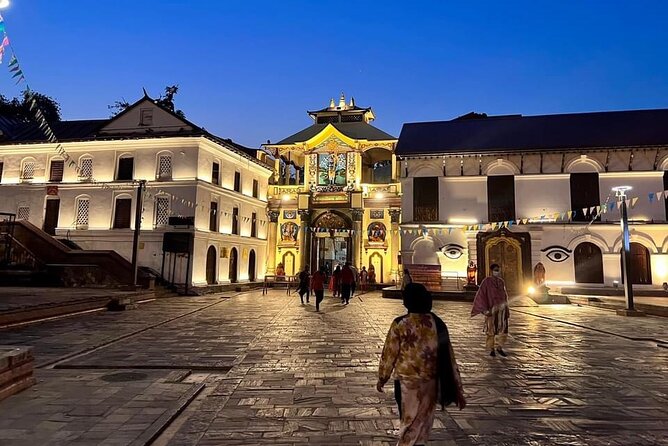
The tour is about five hours, so it’s not a long sit-down day. It’s a “see it, understand it, move on” format. That’s great if you’re on a tight schedule. It can be less great if you want hours at one site to fully sink in.
Here’s the rhythm you should expect:
- Start at Kathmandu’s historic center for the temple-and-palace context.
- Climb to Swayambhunath for stupa life and views.
- Switch to Patan for artisan detail and museum context.
- Finish at Boudhanath for a slower, atmosphere-heavy sacred space.
Private transport helps a lot because Kathmandu traffic and road navigation can be unpredictable. The guide’s job isn’t just talking; it’s managing the day so you spend your energy on the places you came for, not on figuring out what comes next.
Guide and operator quality: why organization matters in Kathmandu
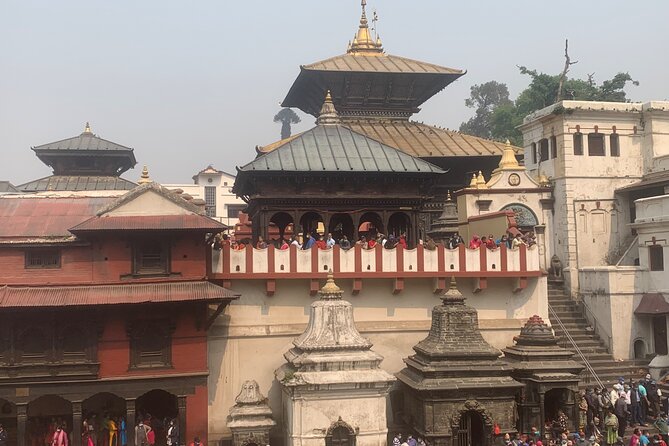
A day like this lives or dies on timing. If you’re late to a stop, you lose prime light for photos and you might end up rushing through carvings or missing the parts you care about.
This is where the operator’s reputation shows up in the way the day is described as well organized and personalized. Multiple accounts praise expert guidance and reliable coordination, including service that went beyond the basics—one mention even described Himal Tourism organizing logistics for a Bollywood film shoot, including coordinating cameramen and artists. You don’t need a film crew to enjoy a tour, but it does suggest the company knows how to plan and keep a schedule on track.
Value vs. DIY: when paying for a guide pays off
You can DIY this route with a driver and your own map. But the value here isn’t only transportation—it’s interpretation and timing.
A guide helps you:
- understand what each site represents (royal square vs. stupa hub vs. artisan center)
- avoid getting stuck in confusion at temple areas and courtyards
- make smarter choices if you only have a short time window
This matters most for first-timers. If it’s your first time in Kathmandu Valley, the sites can feel impressive but disconnected. A good guide turns it into a connected story: where power sat, where pilgrims gathered, and how art traditions traveled across the valley.
Who should book this tour (and who should skip it)
This is a strong pick if you:
- are visiting for the first time and want a structured introduction
- prefer a comfortable day with private transport instead of buses and taxi haggling
- want an English-speaking guide to explain what you’re seeing
You might think twice if you:
- want lots of free time at one site (this tour is designed to cover multiple major highlights)
- dislike uphill walks and temple stairways
- need an all-day food-focused plan (meals aren’t included)
If you’re traveling as a family, this kind of pacing can work well because it’s organized, but you should still be honest with yourselves about walking comfort.
Should you book this Kathmandu heritage tour?
If you want a well-paced day that hits the valley’s main UNESCO anchors—without the guesswork—this is a very reasonable way to do it. At $145 for a guided, ticketed loop with private transport, the price feels fair when you factor in time saved and admissions handled for multiple stops.
Book it if your priority is seeing the highlights, learning the meaning behind them, and keeping the day simple. Skip or adjust expectations if you’re the type who wants to linger for hours in one place, or if you’d rather build your own custom route with lots of downtime.
FAQ
How long is the Kathmandu World Heritage City Sightseeing Cultural Tour?
It’s approximately 5 hours.
What UNESCO World Heritage Sites are included?
The tour includes Kathmandu’s Durbar Square, Swayambhunath Temple, Patan Durbar Square, and Boudhanath Stupa.
Is pickup offered?
Pickup is offered.
Is this a private tour?
Yes. It’s a private tour/activity, and only your group participates.
Do I need to buy admission tickets?
Admission fees are included. Swayambhunath and Patan Durbar Square include admission ticket, and Boudhanath is listed as admission free.
Is food included?
No. Food & beverages are not included.
What about gratuities?
Gratuities are not included.
What kind of guide will I have?
You’ll have a professional English-speaking city guide.
What transportation is provided?
Private transportation is included.
What is the cancellation policy?
You can cancel for a full refund up to 24 hours in advance of the experience start time.
The Valley, End to End
More Tours in Kathmandu




More Tour Reviews in Kathmandu




Just Reviewed in Kathmandu
- Mountain Bike Tour
★ 5.0 · 3 reviews - Annapurna Panaroma
★ 5.0 · 3 reviews - Mount Everest Scenic Flight 50 Minutes
★ 5.0 · 3 reviews - Kathmandu : Swambhunath & Durbar Square Guided Half Day Tour
★ 3.3 · 3 reviews - Chandragiri Cable Car & Monkey Temple Tour – Private/Group
★ 5.0 · 3 reviews - Kathmandu: Shivapuri National Park Hiking Day Trip
★ 3.3 · 3 reviews
Kathmandu UNESCO Heritage Tours, compared.
 ★ 4.87 UNESCO Sites with LunchFrom $2744 reviews
 ★ 5.0Full Day 7 UNESCO Tour with Lunch – Private/GroupFrom $10415 reviews
 ★ 5.0Full Day Top 4 UNESCO Tour with Lunch – Private/GroupFrom $10269 reviews
 ★ 5.0UNESCO Seven World Heritage Tour in KathmanduFrom $180253 reviews
★ 4.9Full-Day 7 UNESCO Tour with Lunch – Private/GroupFrom $5247 reviews
 ★ 4.97 UNESCO Sites Tour in 1 Day (Private Tour)From $4204 reviews
 ★ 4.9Top 4 UNESCO Tour with Lunch – Private/GroupFrom $5181 reviews
 ★ 5.0Kathmandu Private Sightseeing Tour | UNESCO World Heritage SitesFrom $35109 reviews
Browse the lists this tour appears in