
Review · PEAK CLIMBING & EXPEDITIONS
Mera Peak Expedition – 20 Days
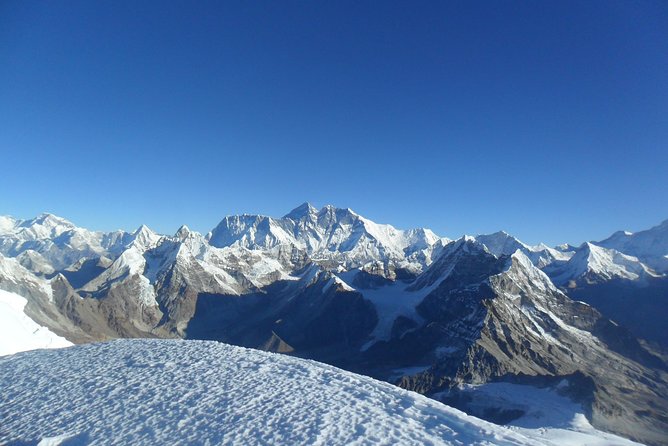
Lungs test, then big payoff in the sky. This 20-day Mera Peak expedition takes you from Kathmandu to Lukla, then deep into the remote Hinku Valley before pushing up to Nepal’s highest permitted trekking peak at 6,476m. I love the mix of long Himalayan trek days and actual mountaineering training time, so you get both the journey and the climb. I also like that the trip is organized around a professional Sherpa team and includes major logistics like permits, flights, and support staff.
You should know one consideration upfront: even if Mera Peak is technically an easier 6000m-style climb than many other options, you’re still going above 5,000m for multiple days. Expect altitude fatigue and a schedule that depends on workable weather, especially around the summit and reserve day.
In This Review
- Key Things That Make This Trip Worth Your Time
- Entering the Everest Region via Lukla (and Why It Matters)
- Preparation Day in Kathmandu: What You’re Actually Doing
- Trek to Paiya and Pangoma: First Taste of the Hinku Valley
- Nigmsa, Chhetra Khola, and Kothe: When Trail Time Turns Into Altitude Work
- Thangnak and Khare: Building for Acclimatization at 5,045m
- Base Camp Day: Reaching 5,350m and Switching Gears
- Summit Day on Mera Peak (6,476m): The Big Work, Then the Long Descent
- Reserve Day at Khare: The Weather Reality Check
- Trek Back Down: Kothe, Thuli Kharka/Chhatrwabuk, and Lukla
- Back in Kathmandu: Recovery, a Free Day, and One Last Cultural Moment
- Sherpa Guide, Team Support, and the Little Logistics That Save Energy
- Value Check: What You Get for $3,300 in the Nepal Climb World
- Who This Trip Suits Best (and Who Should Rethink)
- Should You Book Mera Peak for This Price?
- FAQ
- Where does the tour start and end?
- How long is the Mera Peak expedition?
- What are the included Kathmandu transfers?
- What flights are included?
- What permits are included?
- What lodging is included during the trek and in Kathmandu?
Key Things That Make This Trip Worth Your Time
- Lukla flight + gradual altitude gain: you trade endless road travel for a dramatic jump into the mountains, then build height step by step
- Hinku Valley trekking: quiet trails through green terraced fields, dense forest, rushing streams, and swing-bridge crossings
- Real climbing cadence: one night at base camp and one night at high camp before the summit push
- Certified Sherpa leadership and full support: a govt-trained Sherpa guide plus trekking cook and kitchen staff during camping days
- Permits handled: Mera Peak climbing permit, Sagarmatha National Park fees, TIMS, and required documentation are included
- Private group setup: it’s a private activity, so only your group participates
Not sure yet? Here are other Kathmandu tours worth a side-by-side look.
- Everest Base Camp Trek – 14 Days★ 5.0 · 1,499 reviews
- Everest Base Camp Trek★ 5.0 · 842 reviews
- Private Kathmandu Sightseeing Tour | UNESCO World Heritage sites★ 5.0 · 756 reviews
- Kathmandu: 7 UNESCO Sites with Lunch★ 4.8 · 744 reviews
Entering the Everest Region via Lukla (and Why It Matters)
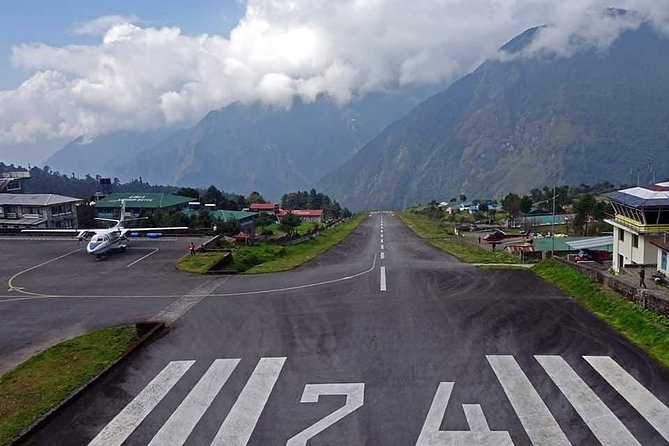
The trip starts in Kathmandu, centered around Thamel. You’ll spend a preparation day in the city, then fly out to Lukla. That Lukla flight is not a gimmick. It’s the cleanest way to compress travel time and get your body into the rhythm of the trek sooner.
In practical terms, the Kathmandu portion is set up for you to be ready, not rushed. You get four nights in Kathmandu on a twin-share bed-and-breakfast basis, and the company provides a private car/van/Hi-ace/Coaster transfer for airport and hotel legs. On top of that, you’ll enjoy an authentic Nepali welcome dinner with a live cultural program. It’s a nice way to settle in and understand the local context before you start chasing altitude.
The small-but-real benefit here is energy management. After jet lag and travel stress, you don’t want to spend your first day stuck in transport. This itinerary gets you moving while still giving you a buffer day in Kathmandu.
Preparation Day in Kathmandu: What You’re Actually Doing
That second day in Kathmandu is your training-wheels day, even if you don’t treat it that way. Your main job is getting your gear and mindset aligned for a long trek and a high-altitude climb.
From the included items, you can see the trip is set up to reduce your admin burden: permits, national park fees, TIMS, and Mera Peak climbing permits are covered. You’ll also receive Mera Peak climbing certificates issued by the Nepal government, which is a satisfying extra if you’re collecting proof of climbs.
Even so, preparation isn’t just paperwork. You should show up with a strong physical base, because the itinerary includes long trekking days—some 7 to 8 hours, and later days that stretch to 9 to 10 hours including the summit ascent and descent.
If you’re new to high altitude climbing, this is also where your guide and team can set expectations for pace, hydration, and summit-day effort.
Trek to Paiya and Pangoma: First Taste of the Hinku Valley
Day 3 begins with the flight to Lukla, then trekking to Paiya (about 3–4 hours). Day 4 continues to Pangoma (about 5–6 hours). This is where you start learning the basic rhythm: keep moving, don’t sprint, and let the air do its job.
The Hinku Valley is described as remote and beautiful, and you’ll feel that remoteness immediately. The route is known for green terraced fields, dense forests, rushing streams, and swinging bridges. Those bridges aren’t just scenery; they’re a real part of how the valley routes you through different terrain.
What I like about these early days is that they don’t pretend you’ll feel amazing the moment you land. They ease you into daily walking time while you collect altitude gradually. It’s a good approach for people who want a first Himalayan climb but don’t want their first week to be a death march.
Nigmsa, Chhetra Khola, and Kothe: When Trail Time Turns Into Altitude Work
After Pangoma, the itinerary brings you to Nigmsa (2,745m) for Day 5 (about 4–5 hours), then Chhetra Khola (3,122m) on Day 6 (about 7–8 hours). Day 7 climbs onward to Kothe (3,600m) (about 6–7 hours).
This is where the trek stops being casual hiking. You’re still moving through lodges and valley trails, but your pace starts to matter more than your determination. Longer days like Chhetra Khola can make even fit walkers start breathing a little heavier.
The upside is that the valley offers constant visual and sensory variety. You’re trekking through forests, across streams, and into pasture areas as you go. That matters because altitude makes every minute feel longer. If the trail is boring, you suffer more. If it’s interesting, you suffer differently—which is better.




Thangnak and Khare: Building for Acclimatization at 5,045m
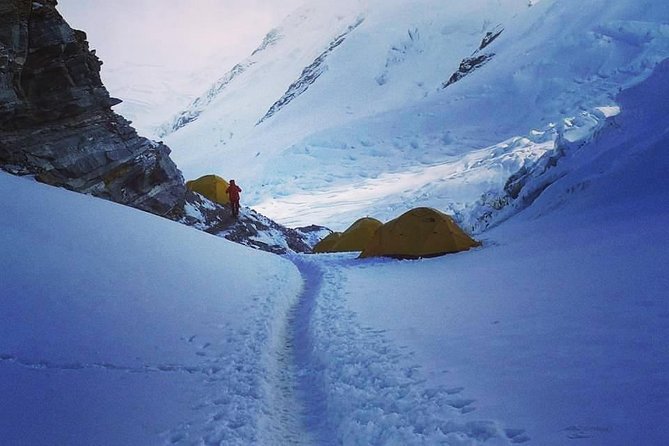
Day 8 takes you to Thangnak (4,356m) (about 5 hours). Day 9 brings you to Khare (5,045m) (about 4 hours). Then Day 10 is an acclimatization day in Khare, including preparation.
This is the core of the expedition’s common-sense design. Khare is high enough that your body will start sending real messages. The acclimatization day gives you a chance to adapt without immediately climbing higher.
What this means for you: you’re not just trying to reach the next place. You’re training your lungs to function at a higher altitude, and you’re giving yourself time to recover from the walk up to Khare.
In a trip like this, that extra day can be the difference between feeling “behind” and feeling ready. You’ll appreciate it even if you’re a strong hiker.
Base Camp Day: Reaching 5,350m and Switching Gears
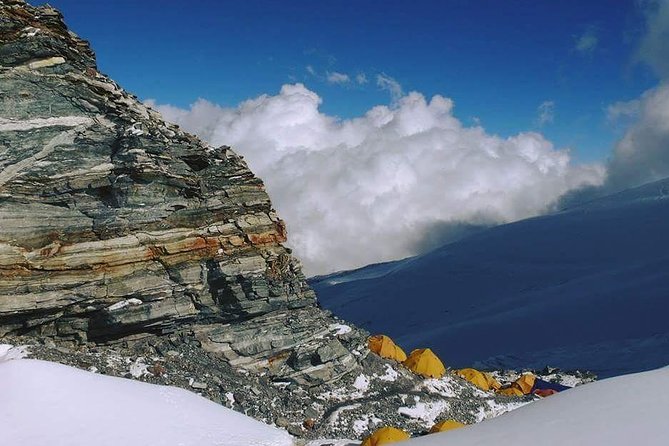
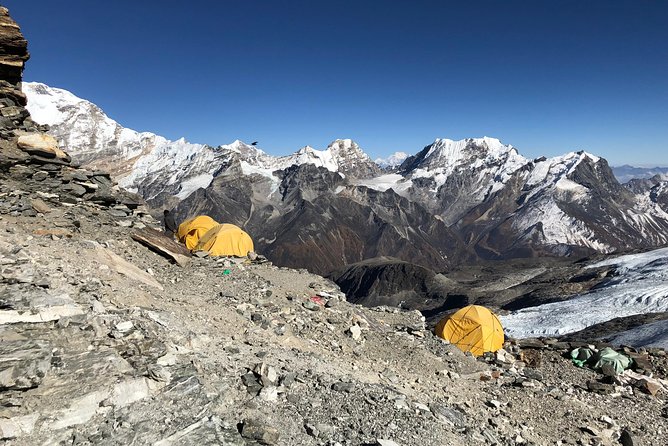
Day 11 is a trek to Base Camp (5,350m), about 4 hours. Then Day 12 moves to High Camp (5,780m), about 4 hours.
This is where the expedition part becomes real. You’re no longer just sleeping in lodges. The itinerary includes camping accommodations, with meals during camping. It also includes one night at base camp and one night at high camp, plus the full camping setup: sleeping tents/mattresses, kitchen tent, and kitchen equipment.
That support matters because above a certain height, your body doesn’t want to fight for comfort. When camping days are handled for you, you can focus on the job at hand: conserve energy, follow the guide’s pacing, and sleep as best you can.
If you’ve never camped at altitude, be ready for basic sleeping conditions and expect your body to wake up more often. That’s normal. Don’t treat it like a disaster; treat it like part of the process.
Summit Day on Mera Peak (6,476m): The Big Work, Then the Long Descent
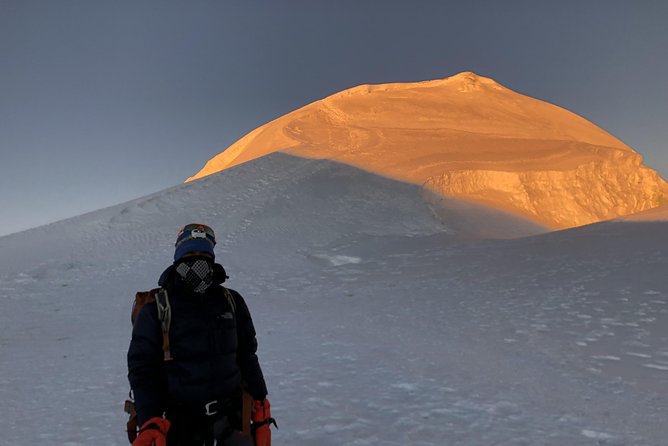
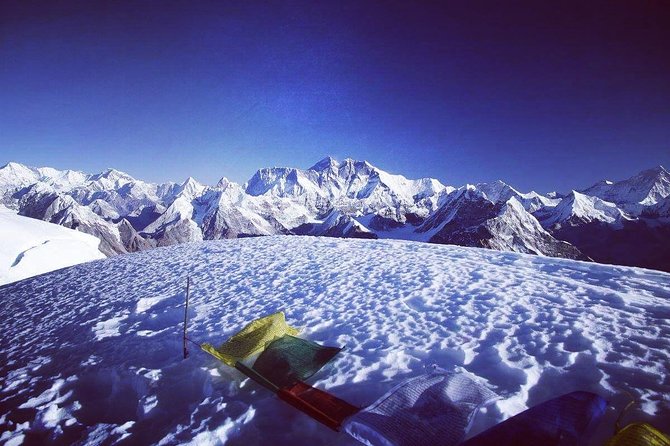
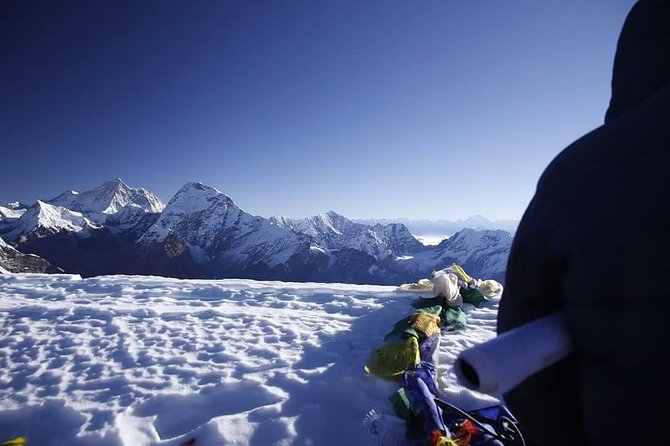
Day 13 is the ascent of Mera Peak (6,476m), then descent back to Khare (about 9–10 hours total). This is the emotional center of the whole trip.
The trip describes Mera Peak as the highest permitted trekking peak in Nepal, and technically an easier climb than other 6000m trekking peaks. For you, that usually translates into: you’re not facing the same level of technical complexity that some other 6,000m climbs might bring. But you still must respect the altitude. “Easier” doesn’t mean “easy.”
Here’s what I think is a smart way to approach summit day:
- Trust the pacing set by your Sherpa guide
- Plan for the descent as part of the effort, not an afterthought
- Keep moving steadily even when you feel slow or cold
Then, after summiting, you still trek back to Khare. That long return is a reminder: the climb is not just a photo moment. It’s sustained physical work.
Reserve Day at Khare: The Weather Reality Check
Day 14 is a reserve day. This is not filler. In high-altitude Nepal, the mountain doesn’t care about your calendar.
If weather doesn’t cooperate, you need flexibility. A reserve day gives the team room to wait for conditions that make sense for the summit attempt.
So if you like strict itineraries and hate uncertainty, this is the part you’ll have to accept. If you’re traveling with the mindset that mountains run on mountain time, you’ll feel less frustrated.
Trek Back Down: Kothe, Thuli Kharka/Chhatrwabuk, and Lukla
Day 15 returns you to Kothe (about 7 hours). Day 16 goes to Thuli Kharka / Chhatrwabuk (4,200m) (about 6–7 hours). Day 17 is the long trek down to Lukla (about 7–8 hours).
This down-trek phase has two sides:
- You get lower and recover. That’s huge.
- Your legs take a beating on downhill terrain, and altitude recovery can still feel slow.
One smart advantage of this trip’s structure is that it keeps you moving through familiar valley logic: you don’t bounce around wildly. Down days follow a clear sequence of altitude changes.
Day 17 lands you in Lukla, and then Day 18 includes the flight back to Kathmandu and transfer to your hotel. You’re back to the city life rhythm after days of mountain schedules.
Back in Kathmandu: Recovery, a Free Day, and One Last Cultural Moment
Day 18 covers your flight from Lukla to Kathmandu and transfer to hotel. Day 19 is a free day in Kathmandu. Day 20 is departure.
I like the free day after the summit because it gives you options that don’t feel like a checklist. You can sleep, eat real food, take a slow walk, or just enjoy the fact that you’re no longer negotiating slopes above 5,000m.
And yes, your welcome dinner and cultural program are a good sign that the trip isn’t only about climbing. It gives you a chance to connect with the country in a normal, human way before you vanish into the high valleys.
Sherpa Guide, Team Support, and the Little Logistics That Save Energy
This expedition is built around an English-speaking experienced and certified Sherpa guide (govt. trained/license holder). You also get a full support crew for camping days: a trek cook, kitchen staff, trek Sherpa, and other support staff. Porters are included on a clear rule: one porter for two trekkers on all climbing trips.
That porter ratio is important because it affects how much you personally carry. You’ll still be responsible for your day items, but you should be able to avoid the heaviest loads on the mountain work.
Also, I appreciate the inclusion of practical trail energy supplies: Snickers, Mars, Bounty, plus fresh or canned fruit on the trek. That’s not a luxury detail. Sugar and calories can make altitude days feel more manageable.
In the reviews you shared, the human side of the team comes through. The director Ngima is mentioned as directly involved and communicative. Guides named Mingmar are praised for experience and care. Support staff like porters Tshiring and Tjeet are also specifically mentioned. Even when every trip is different, that pattern usually means the company uses a stable crew and takes guide quality seriously.
Value Check: What You Get for $3,300 in the Nepal Climb World
At $3,300 per person for about 20 days, this is priced like a real, supported Himalayan expedition—not a budget trek.
Here’s where the value shows up:
- Round-trip Kathmandu–Lukla airfare is included (plus excess baggage fees)
- Permits and national park fees are included (Mera Peak permit, Sagarmatha National Park fee, TIMS, and required documentation)
- You get Kathmandu lodging and trek lodging in local lodges
- You get camping meals and equipment on the base camp and high camp nights
- Staffing is included: guide, Sherpa support, cook and kitchen team, plus porter coverage (1 porter for two trekkers)
If you try to build this yourself without the same infrastructure, the costs tend to spike in the places that are hard to organize—permits, guide staffing, and the camp setup at altitude.
So the best way to judge the price is not just the sticker number. Ask: does this include the hard parts? In this case, yes. The climb part and logistics part are handled.
The main value question for you is fit: if you’re truly ready for altitude and physically prepared, you’ll benefit from the structure. If you’re on the edge physically, the mountain will not negotiate.
Who This Trip Suits Best (and Who Should Rethink)
This expedition is a strong match if you want:
- a first Himalayan climbing experience
- the combination of trek immersion plus a summit goal
- professional Sherpa leadership and built-in altitude planning
- a private group format that keeps things calm and predictable
You should think carefully if:
- you’re not ready for high-altitude trekking at 5,000m+
- you expect a guaranteed summit timeline regardless of weather
- you don’t handle long walking days well (some are 7–10 hours)
Should You Book Mera Peak for This Price?
If you want a guided Mera Peak climb that handles the hard logistics—flights, permits, camping gear, and experienced Sherpa leadership—this is the kind of package that makes sense. The itinerary is designed around altitude (Khare acclimatization, base camp and high camp nights), which is what you want for a 6,476m objective.
My honest take: book it if you’re physically ready, you’re okay with weather flexibility, and you want a real expedition feel rather than a shortcut. If you’re new to altitude, this structure is exactly the kind that can teach you how to climb in the Himalaya with support.
FAQ
Where does the tour start and end?
It starts at Thamel, Kathmandu (44600), Nepal. The activity ends back at the same meeting point.
How long is the Mera Peak expedition?
The duration is listed as 20 days (approx.).
What are the included Kathmandu transfers?
Transfers from the airport to the hotel and from the hotel back to the airport are included using a private vehicle (car, van, Hi-ace, or Coaster).
What flights are included?
The trip includes round-trip airfare between Kathmandu and Lukla, with airport tax included.
What permits are included?
Included permits and fees cover Mera Peak climbing permit, Sagarmatha National Park fee, TIMS permits, and all required permits/official documentation.
What lodging is included during the trek and in Kathmandu?
In Kathmandu, there are four nights in twin-share bed and breakfast. During the trek you stay in local lodges, plus camping nights at base camp and high camp with meals during camping.
More Tour Reviews in Kathmandu






Just Reviewed in Kathmandu
- Mountain Bike Tour
★ 5.0 · 3 reviews - Annapurna Panaroma
★ 5.0 · 3 reviews - Mount Everest Scenic Flight 50 Minutes
★ 5.0 · 3 reviews - Kathmandu : Swambhunath & Durbar Square Guided Half Day Tour
★ 3.3 · 3 reviews - Chandragiri Cable Car & Monkey Temple Tour – Private/Group
★ 5.0 · 3 reviews - Kathmandu: Shivapuri National Park Hiking Day Trip
★ 3.3 · 3 reviews
Peak Climbing & Expeditions, compared.
 ★ 5.0Mera Peak ClimbingFrom $3,00033 reviews
 ★ 5.0Everest Base Camp Trek with Island Peak ClimbingFrom $3,30014 reviews
 ★ 5.0Pikey Peak TrekFrom $8998 reviews
★ 5.0Mera Peak ClimbingFrom $1,1998 reviews
Mera Peak ClimbingFrom $2,7506 reviews
 ★ 5.0Pikey Peak TrekkingFrom $1,4355 reviews
 ★ 5.0Island Peak Climbing with Everest Base CampFrom $2,8995 reviews
 ★ 5.0Island Peak Climbing ( 6,189M )From $2,2565 reviews
Browse the lists this tour appears in