
Review · PEAK CLIMBING & EXPEDITIONS
Mera Peak Climbing
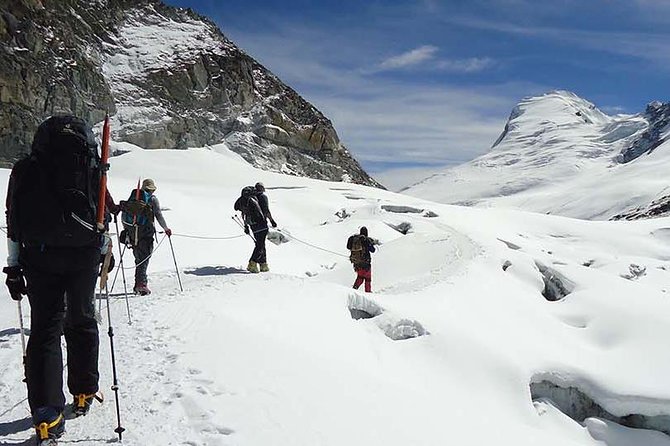
Mera Peak is Everest country without the chaos. This climb targets Nepal’s highest officially permitted trekking peak, with summit views that list five 8000m giants (Everest, Cho Oyu, Makalu, Kanchenjunga, Lhotse). I like that the route also gives you time around the Hongu and Hinku valleys, plus the chance to see highland Sherpa community life up close.
The best part here is the human support. I’d count on strong guidance from Sherpa and trekking leaders such as Gelchen Sherpa, Sonam Sherpa, Dandee, Ming-ma, Samdu, and Dende, with Prakash Devkota (owner) involved in communication and problem-solving. The main drawback is real: altitude can turn quickly, and bad weather can force plan changes, so you need to be ready for a serious safety-first mindset—and you’ll still need to bring your own personal climbing items since only “necessary climbing gears” are included.
In This Review
- Key things I’d zero in on before you go
- Why Mera Peak climbs differently than most trekking peaks
- Kathmandu prep: 4 nights, permits, and the logistics you don’t want to stress about
- The trek phase: tea houses plus camping in the Hongu and Hinku valleys
- The climb itself: what you’re really buying with a Mera Peak attempt
- Altitude safety rules that you should treat like the real itinerary
- Gear and what you still need to pack personally
- Guides, communication, and route-change reality in the Everest region
- Price and value: is $3,000 reasonable for Mera Peak?
- Who this Mera Peak climb suits best (and who should reconsider)
- Should you book this Mera Peak climb with Nepal Guide Treks and Expedition?
- FAQ
- Where does the Mera Peak climbing experience start?
- How long is the trip?
- What is the price per person?
- What’s included in the package?
- What is not included?
- Is pickup offered?
- What are the age and group-size limits?
- What kind of accommodation and meals are used during the trek?
- What cancellation options are available?
- What should I plan for regarding altitude safety?
Key things I’d zero in on before you go
- Five 8000m peaks in one big view: Everest, Cho Oyu, Makalu, Kanchenjunga, and Lhotse are specifically on the sightline list.
- Hongu and Hinku valleys: wild, less-used areas with a strong sense of isolation.
- Tea house + camping mix: your comfort level will change depending on the day and weather.
- Sherpa-led climbing support: names like Sonam, Samdu, Dende, and Gelchen show up as guide references in the trip’s track record.
- Altitude safety gear needs checking: you’ll want to confirm what’s actually provided, including altitude-focused items.
Not sure yet? Here are other Kathmandu tours worth a side-by-side look.
- Everest Base Camp Trek – 14 Days★ 5.0 · 1,499 reviews
- Everest Base Camp Trek★ 5.0 · 842 reviews
- Private Kathmandu Sightseeing Tour | UNESCO World Heritage sites★ 5.0 · 756 reviews
- Kathmandu: 7 UNESCO Sites with Lunch★ 4.8 · 744 reviews
Why Mera Peak climbs differently than most trekking peaks
Mera Peak sits in a sweet spot for ambitious hikers. It’s officially the highest of Nepal’s permitted trekking peaks, rising to the south of Mount Everest. Translation: you’re aiming high, but the goal is still structured for climbers who aren’t going straight for Everest itself.
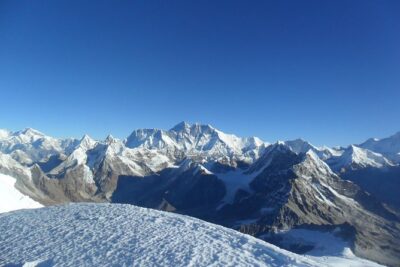
What makes it especially motivating is the view math. On a clear summit day, you’re working toward a panorama that includes Everest (8848m), Cho Oyu (8201m), Makalu (8485m), Kanchenjunga (8586m), and Lhotse (8516m)—plus other peaks in the broader Everest region. If you’re chasing big credentials, this is one of the cleanest “legit high-altitude” targets you can book.
And it’s not only about the top. You’ll also be moving through the Hongu and Hinku valleys, described as wild and uninhabited in feel, with time in nearby Sherpa communities. That matters because it turns the trip into more than a vertical stunt.
Kathmandu prep: 4 nights, permits, and the logistics you don’t want to stress about
Your trip begins in Kathmandu, with 4 nights on a bed-and-breakfast plan. Those early days are where the foundation gets set: paperwork, gear prep, and getting your head into mountaineering mode instead of tourist mode.
You’re also covered on two big pre-climb essentials: Mera Peak climbing permits and an experienced trekking & climbing guide. Permits aren’t glamorous, but they’re the difference between a clean climb and a chaotic scramble.
The tour includes pickup and a mobile ticket, which is useful if you’re landing and don’t want to waste your first day decoding local transport. Your meeting point is Tribhuvan Airport (and it’s near public transportation), with set meeting hours listed for Mon–Sun.
The trek phase: tea houses plus camping in the Hongu and Hinku valleys
The trip uses a tea house + camping combined plan for food and accommodation during the trek. That hybrid approach can be a plus if you want a taste of both worlds: simple lodge life when available, then more remote nights where the valley really feels empty.
This is where the Hongu and Hinku valley time becomes practical, not just scenic. The tour’s description focuses on wandering through wild, beautiful areas—exactly the kind of environment where you’ll feel your body working steadily but not always violently. It’s also the stage where acclimatization habits take hold, because you can’t rush your way to a summit at altitude.
Culturally, you’re in highland Sherpa territory. Expect opportunities to experience community traditions rather than only passing through villages at speed. Even when the schedule is about altitude, the day-to-day culture keeps the trip grounded.
The climb itself: what you’re really buying with a Mera Peak attempt
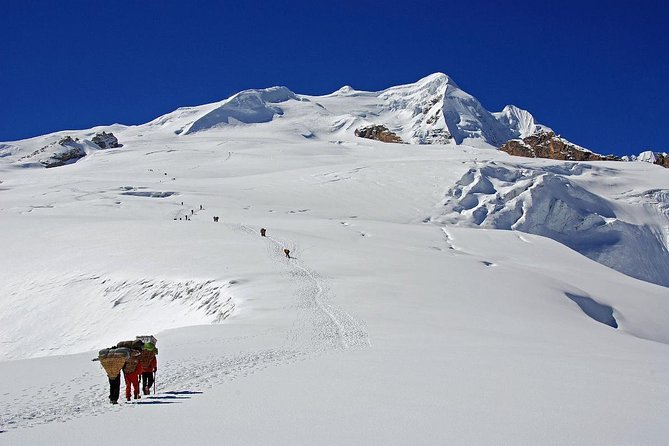
Mera Peak is a climb, not a walk-up. The tour is designed around trekking and climbing, and it explicitly includes all necessary climbing gears. That inclusion is one of the reasons the package can work well for people who don’t want to build a whole mountaineering kit before arriving.
The viewing list is specific, and that specificity matters. You’re not paying for vague promises of mountains. You’re paying for a route with a known payoff: the sightlines to multiple 8000m peaks that sit inside the Everest region.
Plan for a serious pace, because altitude is part of the job description. The trip materials include very direct health guidance: drink enough water (with lukewarm water suggested), eat light but calorie-dense food, and avoid alcohol and smoking. In other words, the climb expects you to manage your body like a tool.
Altitude safety rules that you should treat like the real itinerary
This package talks plainly about altitude risks, and I like that. You get practical instructions that tell you what to do before it becomes a crisis.
Here are the safety points worth memorizing from the trip guidance:
- Drink 2–3 liters of lukewarm water per day.
- Avoid alcohol and smoking.
- Eat light food that’s high in calories.
- Add ginger and garlic to your food.
- If you get altitude sickness symptoms, the first action is don’t panic: if mild, stay put, sleep well, and drink enough water.
- If symptoms don’t improve even after acclimatizing, begin descending.
- If symptoms become serious, descend immediately and use Diamox pills.
- A Gamow bag (high-pressure inflatable bag) is mentioned as a way to restore oxygen level and air pressure—if your operator provides it.
- Also, talk to your guide about the option of traveling to lower altitude if possible, and consult a doctor if available.
Two key takeaways for your decision:
1) This climb is managed around descending when needed, not “push no matter what.”
2) You should verify what altitude gear is included. The materials explicitly tell you to check whether your organizer provides all altitude gear.
Gear and what you still need to pack personally
The good news: the package includes all necessary climbing gears. That reduces the risk of arriving without something critical. It also makes it easier if you’re traveling internationally and don’t want to guess what’s required.
The fine print you should respect is that personal climbing gears are not included. That means you still need to bring your own items that are personal to your body and comfort. If you’ve ever had cold hands or cramped feet on a mountain, you already know why personal gear matters more than people think.
Because altitude emergencies are specifically discussed, also think beyond clothing and ropes. Ask (in writing) what altitude-specific equipment is actually available on your dates. The guidance calls out the importance of confirming altitude gear coverage.
Guides, communication, and route-change reality in the Everest region
The strongest praise themes in the trip’s track record are about support during stress. When weather turns, the mountain doesn’t care about your perfect plan.
In examples tied to this company, snowstorms forced route changes for climbers working toward other high passes and summit combos, and the team adjusted so people could still work toward their goals. That’s not theoretical; it’s the Everest region’s basic behavior in shoulder seasons.
You can also see a pattern around responsiveness before travel. Notes connected to the trip emphasize fast communication (including WhatsApp-style planning) and an ability to handle issues like illness while still enabling summit attempts when conditions allowed it.
Here’s what that means for you: you’re not just buying a climb permit and a guide. You’re buying someone’s willingness to solve problems fast when forecasts and trail conditions don’t cooperate.
Price and value: is $3,000 reasonable for Mera Peak?
At $3,000 per person, this is a premium experience, but it’s not just paying for a view. You’re paying for a package that includes:
- 4 nights in Kathmandu (BB)
- Mera Peak climbing permits
- Tea house + camping food and accommodation during the trek
- An experienced trekking & climbing guide
- All necessary climbing gears
What’s not included is equally important to your budget:
- International airfares and departure tax
- Personal climbing gears
- Personal expenses
- Tips to guides/porters
So is it value? For most people, the biggest part of the value equation is gear + guide + permits. If you tried to DIY those pieces, you’d quickly spend time and money that you’d rather put into training and recovery. The package also keeps group size capped at 15 travelers, which tends to support smoother coordination than large treks.
If you’re comparing costs, don’t just compare the sticker price. Compare the included gear level and the role of the guide in altitude decision-making.
Who this Mera Peak climb suits best (and who should reconsider)
This is for you if:
- You have strong physical fitness and you’re prepared for long days with altitude strain.
- You want a legit high-altitude summit goal that’s officially permitted.
- You value real mountain support, not just a booking service.
- You’re okay with a trekking style that mixes tea houses and camping.
This might be a weaker fit if:
- You’re not ready for altitude management and you expect guaranteed conditions.
- You want a completely “comfortable” trip. Camping days and cold summit nights aren’t optional in a climb of this type.
- You don’t want to take health guidance seriously. The materials don’t treat altitude sickness as a minor inconvenience.
Minimum age is 18, so it’s an adult-focused climb.
Should you book this Mera Peak climb with Nepal Guide Treks and Expedition?
I’d book it if you want a structured Mera Peak attempt with permits, guide support, and included climbing gear, plus trekking time in Hongu and Hinku with Sherpa community contact. The $3,000 price makes more sense when you factor in what’s covered and the practical importance of guide decisions at altitude.
Before you commit, do three smart checks:
- Confirm exactly what personal climbing gear you must bring.
- Ask what altitude-focused items (like a Gamow bag) are available for your dates.
- Be honest with yourself about health: the included advice is clear that descending early is part of the plan, not a failure.
If those boxes work for you, this looks like a solid way to aim for one of Nepal’s more impressive permitted summits—without pretending the Himalaya will ever run on your schedule.
FAQ
Where does the Mera Peak climbing experience start?
The start point is Tribhuvan Airport, Kathmandu, Nepal.
How long is the trip?
The duration is listed as approximately 18 days and 2 hours.
What is the price per person?
The price is $3,000.00 per person.
What’s included in the package?
Included items are 4 nights in Kathmandu on a bed-and-breakfast plan, Mera Peak climbing permits, tea house + camping combined food and accommodation during the trek, an experienced trekking & climbing guide, and all necessary climbing gears.
What is not included?
Not included are international airfares and departure tax, personal climbing gears, cost of personal expenses, and tips to guides/porters.
Is pickup offered?
Yes, pickup is offered.
What are the age and group-size limits?
Minimum age is 18 years, and there’s a maximum of 15 travelers.
What kind of accommodation and meals are used during the trek?
The trip uses a tea house and camping combined approach for food and accommodation.
What cancellation options are available?
Free cancellation is offered. You can cancel up to 24 hours in advance for a full refund.
What should I plan for regarding altitude safety?
The provided guidance includes drinking enough water, avoiding alcohol and smoking, eating light but calorie-rich food, and descending if symptoms don’t improve after acclimatizing. Diamox pills are mentioned for serious cases, and a Gamow bag is mentioned as an altitude emergency tool, depending on what the organizer provides.
More Tour Reviews in Kathmandu
Just Reviewed in Kathmandu
- Mountain Bike Tour
★ 5.0 · 3 reviews - Annapurna Panaroma
★ 5.0 · 3 reviews - Mount Everest Scenic Flight 50 Minutes
★ 5.0 · 3 reviews - Kathmandu : Swambhunath & Durbar Square Guided Half Day Tour
★ 3.3 · 3 reviews - Chandragiri Cable Car & Monkey Temple Tour – Private/Group
★ 5.0 · 3 reviews - Kathmandu: Shivapuri National Park Hiking Day Trip
★ 3.3 · 3 reviews
Peak Climbing & Expeditions, compared.
 ★ 5.0Everest Base Camp Trek with Island Peak ClimbingFrom $3,30014 reviews
 ★ 5.0Mera Peak ClimbingFrom $1,1998 reviews
 ★ 5.0Pikey Peak TrekFrom $8998 reviews
 ★ 5.0Mera Peak Expedition – 20 DaysFrom $3,3007 reviews
Mera Peak ClimbingFrom $2,7506 reviews
★ 5.0Mera Peak Expedition – 20 DaysFrom $3,3007 reviews
Mera Peak ClimbingFrom $2,7506 reviews
 ★ 5.0Island Peak Climbing – 20 DaysFrom $3,2505 reviews
 ★ 5.0Pikey Peak TrekkingFrom $1,4355 reviews
 ★ 5.0Island Peak Climbing with Everest Base CampFrom $2,8995 reviews
Browse the lists this tour appears in