
Review · KATHMANDU DURBAR SQUARE TOURS
Oldest Local Market Walking Tour with Living Goddess Kumari
A living goddess sight is a rare bonus. This 2-hour Kathmandu walk pairs the oldest market lanes with a front-row moment at Kumari Chowk, so you get both culture and a real-world story you can’t buy in a shop. I especially love the combo of market exploring plus Kathmandu Durbar Square for context, and I like the small group pace (up to 20) that keeps the guide’s attention on you. The one drawback: monument entrance fees are extra (NPR 1000 per person), and the Kumari stop is short.
I also like how it starts right where you can orient fast. You meet at Chhaya Devi Complex (Chhaya Center), then the route flows from Thamel market toward Ason Bazar and back again at the end.
Bring patience for the crowds and plan your timing for temples. This tour is a walking experience in central Kathmandu, so good shoes and a quick snack plan help.
In This Review
- Key Points You’ll Care About
- Meeting at Chhaya Devi Complex and Getting Oriented Fast
- Thamel to Ason Bazar: Walking the Oldest Market Streets
- Kathmandu Durbar Square: Temples, Courtyards, and a Living Tradition Nearby
- Kumari Chowk in 10 Minutes: What You’re Really Watching
- Price and What You’ll Actually Spend
- Small Group Pace With an English Guide
- Where This Tour Fits Best in Your Kathmandu Trip
- Should You Book This Tour?
- FAQ
- How long is the Oldest Local Market Walking Tour with Living Goddess Kumari?
- How much does the tour cost?
- What is included in the $40 price?
- Are entrance fees included?
- Is the Kumari Chowk admission free?
- Where does the tour start and where does it end?
- How large is the group?
- Is free cancellation available?
Key Points You’ll Care About
- Ason Bazar on foot: old-market shopping streets for instruments, clothes, food, and spices
- UNESCO-grade stop at Kathmandu Durbar Square: palace-temple courtyards where the Kumari tradition lives in the city fabric
- A short, meaningful Kumari Chowk moment: a 10-minute window to witness the living goddess
- English-speaking guide plus context: faster city understanding without needing to decode everything yourself
- Group size capped at 20: you’ll keep moving together and ask real questions
- Mobile ticket included: less hassle once you arrive
Kathmandu at walking pace, more routes
- Kathmandu Food and Drink Walking Tour★ 5.0 · 266 reviews
- Kathmandu: Food and Drink Walking Tour★ 4.9 · 119 reviews
- Walking Street Food Tour in Kathmandu★ 5.0 · 111 reviews
- Walking Food Tour in Hidden Local Eateries of Kathmandu★ 5.0 · 40 reviews
Meeting at Chhaya Devi Complex and Getting Oriented Fast
The tour meets at the main gate of Chhaya Devi Complex, also referred to as Chhaya Center on Amrit Marg (Kathmandu 44600). That choice matters. You start in an area with an easy connection to Thamel, so you’re not fighting transit plans before you even begin.
From there, you walk through Thamel Market and then head into the older market district: Ason Bazar. This is a good structure if you want to understand Kathmandu quickly. Thamel gives you the modern tourist baseline; Ason shows you the city’s everyday trading heart. By the time you reach the Durbar Square area, the place doesn’t feel random anymore.
You also end back at the meeting point. That’s a practical detail when you’re short on time, tired from walking, or trying to align your afternoon plans.
Thamel to Ason Bazar: Walking the Oldest Market Streets
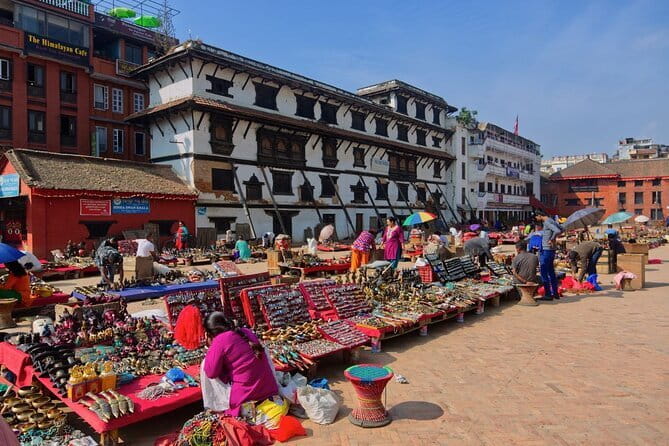
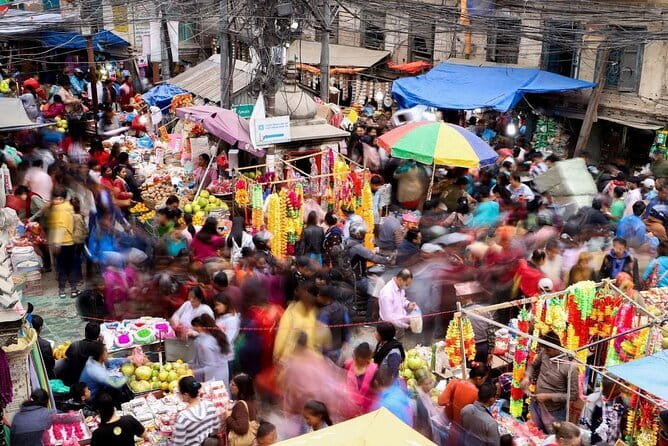
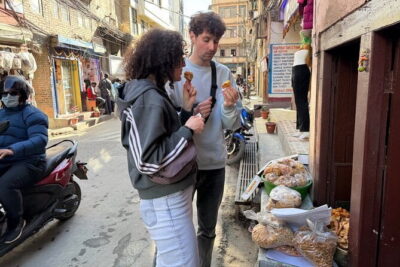
Ason Bazar is the star for anyone who likes to watch how a city actually runs. You’re not just passing by storefronts. You’re walking the lanes where people shop for the basics and the everyday extras: food, spices, textiles, souvenirs, and even instruments.
This is where your guide earns their fee. A good market walk is half movement and half translation. The guide helps you spot what’s where and what people are buying, so you don’t just see signs—you understand categories. That makes shopping more confident and less guesswork.
You’ll also notice the pace shift as you move from Thamel toward Ason. Thamel tends to be more geared toward visitors. Ason feels like it’s built for locals—trading, bargaining, and quick transactions. That’s exactly why pairing it with the Kumari and Durbar Square stops works. The tour connects two Kathmandu worlds: faith and daily life.
One practical note: market streets can get busy fast. Keep your phone and valuables secure, and don’t plan to stop for long conversations unless you’re sure your group isn’t already moving on.
Kathmandu Durbar Square: Temples, Courtyards, and a Living Tradition Nearby
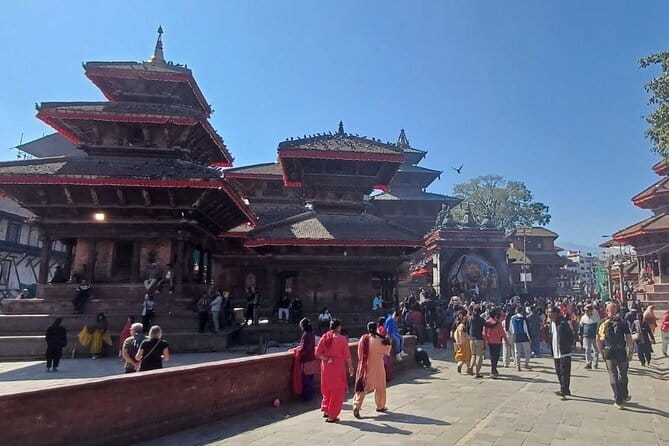
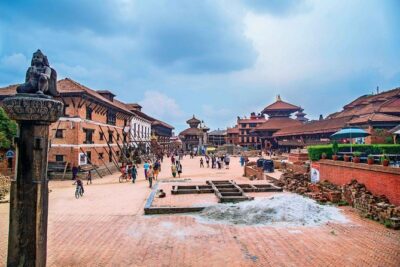
Next comes Kathmandu Durbar Square, a UNESCO World Heritage site. This stop isn’t just about pretty architecture. The square is a concentration of royal and religious space—palaces, temples, and courtyards that show how Kathmandu’s power and devotion were historically tied together.
The tour route keeps you oriented in this setting. You’ll have time to understand what you’re looking at rather than rushing through stonework. The guide’s job here is to explain why these areas matter in daily culture—especially with the Kumari tradition in the background.
In particular, the Kumari House is mentioned as part of the Durbar Square context. That detail is useful because it tells you the Kumari isn’t treated like a roadside attraction. She’s part of the ceremonial and spiritual structure of the area, tied to the religious beliefs around Taleju.
If you’re new to Kathmandu, this Durbar Square stop is a smart “map in your head” moment. You start to see how neighborhoods link together: market life in Ason, then sacred space in Durbar Square, then the Kumari sighting next.
Kumari Chowk in 10 Minutes: What You’re Really Watching

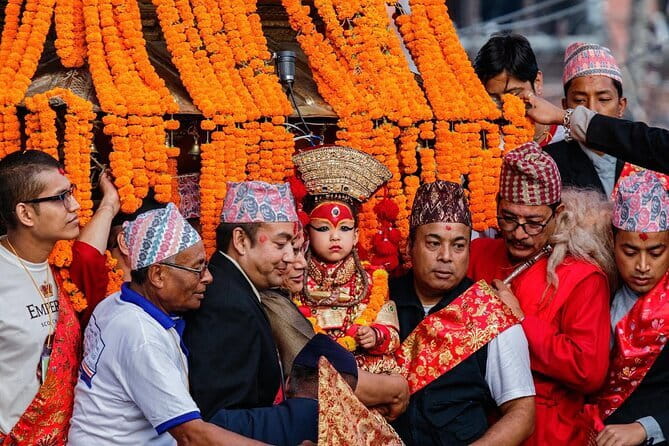
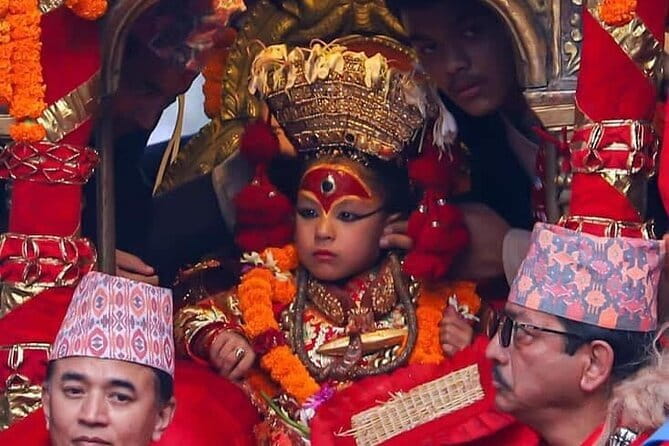
The Kumari moment is the emotional centerpiece. At Kumari Chowk, you get a short stop—about 10 minutes—where you can witness the living goddess.
The tour uses the traditional understanding of Kathmandu Kumari: a pre-pubescent girl who is considered the living incarnation of the goddess Taleju. Her role is described as deeply rooted in tradition and religious beliefs, and she lives in the Kumari Ghar.
This is the kind of experience where expectations matter. You’re not settling in for a long sit-down. You’re there for a brief, focused window to see and absorb the atmosphere. That can feel intense in a good way, especially because the guide frames what you’re seeing in cultural terms.
I also appreciate that the stop has free admission (the tour notes admission ticket free for this segment). It lowers the pressure on your budget during the most special part of the walk.
For your own comfort, plan to stand still and pay attention. The short timing means you’ll want your camera ready and your questions saved for the guide at a better moment.
Before you lock this one in, a few Kathmandu alternatives:



Price and What You’ll Actually Spend
The tour price is $40.00 per person for a walk that runs about 2 hours. That price includes: an experienced English-speaking tour guide plus company service charge and tax.
What’s not included is the part that can surprise people: monument entrance fees (NPR 1000 per person). So your real all-in cost is $40 plus NPR 1000 per person for monument entry.
There’s also no included food or beverages, and tips for the guide are not included. That’s normal, but it’s worth planning so you don’t end up scrambling at the wrong time.
The trade-off is that you’re paying for two things you can’t easily replicate alone: a guided flow between Ason Bazar, Kathmandu Durbar Square, and Kumari Chowk, plus the explanation that turns landmarks and market activity into something you understand—not just something you photograph.
Group discounts are listed as available, and the tour uses a mobile ticket, which can make booking simpler if you’re traveling with friends and coordinating schedules.
Small Group Pace With an English Guide
With a maximum of 20 travelers, this tour isn’t a mega-group shuffle. A smaller group tends to work better for questions—especially when you’re learning about a tradition as specific as Kumari.
The route also supports walking without dragging. Thamel to Ason Bazar is the “shop and learn” phase, Durbar Square is the “structure and meaning” phase, and Kumari Chowk is the “one human moment” phase. That rhythm keeps it from turning into a long lecture.
And because the guide is English speaking, you won’t be stuck piecing together meaning from signs alone. If you like to understand what you’re looking at, this matters a lot.
One small strategy: ask questions during the stops where you’re stationary. In markets and in temple areas, movement often happens in short bursts. If you wait until you’re already walking away, you’ll miss your chance.
Where This Tour Fits Best in Your Kathmandu Trip
This is the kind of tour that helps you get your bearings fast. It’s short enough to fit early in your visit, and focused enough that you leave with a clearer idea of where the old city energy lives.
I’d especially recommend it if:
- You want a first introduction to central Kathmandu beyond one temple or one museum
- You like markets, but you don’t want a random wandering session
- You’re interested in the Kumari tradition and want context, not just a photo
If you’re the kind of traveler who hates standing in crowds or dislikes short, timed moments, this one may feel a little rushed—because the Kumari stop is deliberately brief.
Should You Book This Tour?
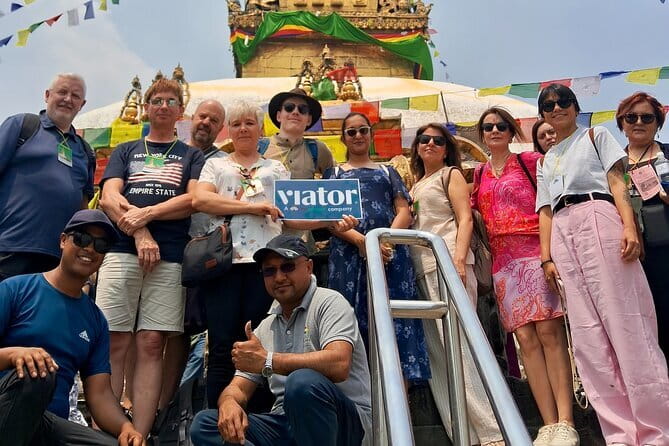
Yes—if you want a compact Kathmandu walk that mixes daily market life with a culturally meaningful Kumari sighting. The value is strongest when you factor in what’s included: an English guide, a guided route through Ason Bazar and Kathmandu Durbar Square, and a focused Kumari Chowk moment.
Just go in with two clear expectations: budget NPR 1000 per person for monument entrance fees, and treat the Kumari part as a short window where attention matters more than time.
If that sounds like your style, booking makes sense.
FAQ
How long is the Oldest Local Market Walking Tour with Living Goddess Kumari?
The tour lasts about 2 hours.
How much does the tour cost?
The price is $40.00 per person.
What is included in the $40 price?
It includes an experienced well English speaking tour guide, plus company service charge and tax.
Are entrance fees included?
No. Monument entrance fees (NPR 1000 per person) are not included.
Is the Kumari Chowk admission free?
Yes. The tour notes that the Kumari Chowk stop has admission ticket free.
Where does the tour start and where does it end?
You meet at the main gate of Chhaya Devi Complex (Chhaya Center, Amrit Marg) and the tour ends back at the meeting point.
How large is the group?
The tour has a maximum of 20 travelers.
Is free cancellation available?
Yes, you can cancel up to 24 hours in advance for a full refund. Within 24 hours, there is no refund.
Kathmandu on Foot: More Walks


More Tours in Kathmandu

More Tour Reviews in Kathmandu


Just Reviewed in Kathmandu
- Mountain Bike Tour
★ 5.0 · 3 reviews - Annapurna Panaroma
★ 5.0 · 3 reviews - Mount Everest Scenic Flight 50 Minutes
★ 5.0 · 3 reviews - Kathmandu : Swambhunath & Durbar Square Guided Half Day Tour
★ 3.3 · 3 reviews - Chandragiri Cable Car & Monkey Temple Tour – Private/Group
★ 5.0 · 3 reviews - Kathmandu: Shivapuri National Park Hiking Day Trip
★ 3.3 · 3 reviews
Kathmandu Durbar Square Tours, compared.
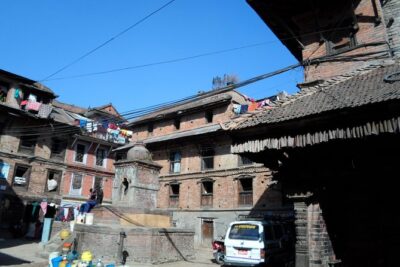 ★ 5.0Bhaktapur & Patan Durbar Square Day ToursFrom $50122 reviews
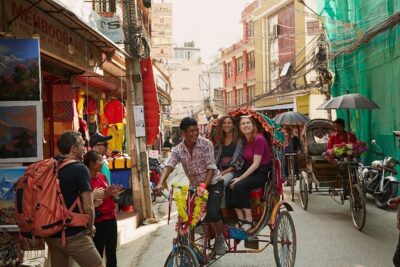 ★ 5.0Kathmandu Sunset Tour by Rickshaw Including Durbar Square VisitFrom $5073 reviews
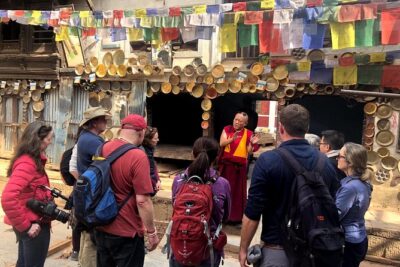 ★ 5.0Old Kathmandu Walking Tour, Historic World Heritage Durbar SquareFrom $2822 reviews
 ★ 4.5City tour of Bhaktapur and Patan Durbar SquareFrom $11020 reviews
 ★ 5.0Bhaktapur Old City and Durbar Square Half-Day TourFrom $6515 reviews
 ★ 5.0Kathmandu Durbar Square – Private/Small GroupFrom $1513 reviews
 ★ 5.0Nagarkot Sunrise & Bhaktapur Durbar Square UNESCO Heritage TourFrom $5512 reviews
 ★ 5.0Patan & Bhaktapur Durbar Square Tour with Lunch – Private/GroupFrom $511 reviews
Browse the lists this tour appears in