
Review · KATHMANDU DURBAR SQUARE TOURS
Oldest Local Market Walking Tour With Living Goddess Kumari
Seeing Kumari in Kathmandu feels unreal. This 2-hour walk bundles two big cultural anchors—Ason, the oldest market area in Kathmandu, and the living goddess Kumari—into one guided route that helps you read the city’s Hindu and Buddhist symbols without getting lost in the noise. I especially like how the tour is built around real places you can stand in front of: market stalls for everyday life, then Kathmandu Durbar Square for temples and palaces. One consideration: the Kathmandu Durbar Square entry fee (1000 Nepali Rupee) isn’t included, so you’ll want some cash ready.
I’m also a fan of the communication style—clear, English-guided explanations that make the Kumari tradition feel understandable rather than mysterious. In the feedback I saw, guides like Santos were singled out for being an excellent communicator and for explaining details thoroughly, not just pointing and moving on. If you’re hoping for a long, slow meander with lots of free time for shopping, this is more of a focused “see and learn” walk than a hangout.
In This Review
- Key Things I’d Do First
- Ason and Durbar Square: Two Stops That Explain Kathmandu Fast
- Meeting at Chhaya Devi Complex: Getting Your Bearings
- Walking Ason Market: How Everyday Goods Teach Religion and Culture
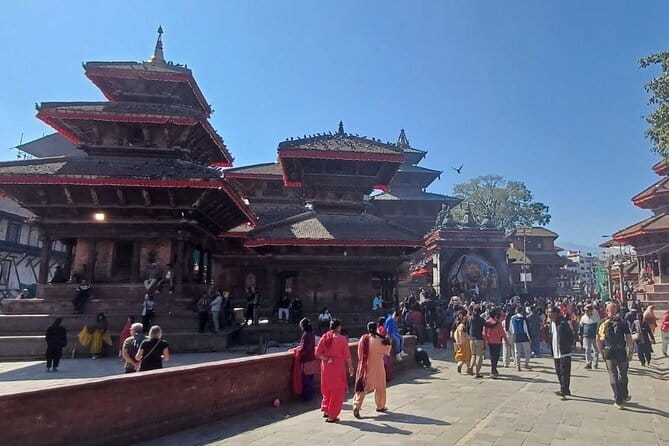
- Kathmandu Durbar Square: Temples, Palaces, and Courtyards Up Close
- The Kumari Moment: Witnessing the Living Goddess Kumari
- Hinduism and Buddhism on One Walk
- Price and What You Get for $39 (Plus the One Main Extra Cost)
- The Best Fit: Who Should Book This Walk
- Practical Tips That Make the Tour Easier
- Should You Book This Oldest Market + Kumari Tour?
Key Things I’d Do First
- Start at Chhaya Devi Complex in Thamel: it’s an easy, central meeting point to orient yourself before the walking begins.
- Use the guide to decode Ason’s everyday signals: spices, textiles, and souvenir stalls make sense faster with context.
- Treat Kathmandu Durbar Square as a living classroom: you’ll see palaces, temples, and courtyards in the heart of the old city.
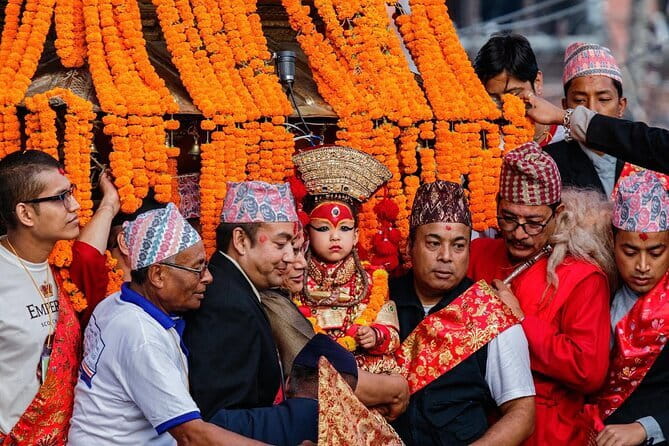
- Expect a meaningful Kumari moment: the tour’s main feature is witnessing Kumari as the living embodiment of Taleju.
- Budget for the Durbar Square entry fee: 1000 NPR is the main add-on you should plan for.
Kathmandu at walking pace, more routes
- Kathmandu Food and Drink Walking Tour★ 5.0 · 266 reviews
- Kathmandu: Food and Drink Walking Tour★ 4.9 · 119 reviews
- Walking Street Food Tour in Kathmandu★ 5.0 · 111 reviews
- Walking Food Tour in Hidden Local Eateries of Kathmandu★ 5.0 · 40 reviews
Ason and Durbar Square: Two Stops That Explain Kathmandu Fast
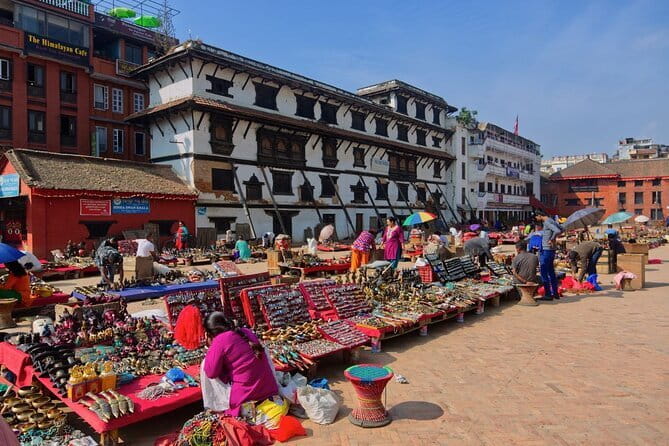
If you only have a short window in Kathmandu, this kind of route is a smart way to get oriented. Ason gives you the rhythm of daily commerce—spices, textiles, and traditional goods—while Kathmandu Durbar Square shifts the mood to carved stone, temples, and royal-era courtyards.
What I like is the contrast. You’re not just “seeing temples.” You’re also watching how ordinary people live, buy, and barter in the market area that has long served the city. Then you step into the Durbar Square zone, where the symbolism gets heavier and the architecture starts telling you a story about power, devotion, and community.
Meeting at Chhaya Devi Complex: Getting Your Bearings
The tour meets at the main gate side of the Chhaya Devi Complex at Thamel, Kathmandu. That matters more than it sounds. Thamel can feel like a tourist hub, so starting near a defined complex gives you a clean “anchor point” before you head into the older streets.
You’ll also travel with an English-speaking tour guide and bottled mineral water is included. For a 2-hour walking tour, that small bit of planning helps: you can focus on listening and looking instead of figuring out water on the fly.
If you’re the type who likes to be ready early, arrive a few minutes before the meet time. It keeps the whole group calmer and gives you a moment to settle your camera, your questions, and your walking shoes.
Walking Ason Market: How Everyday Goods Teach Religion and Culture
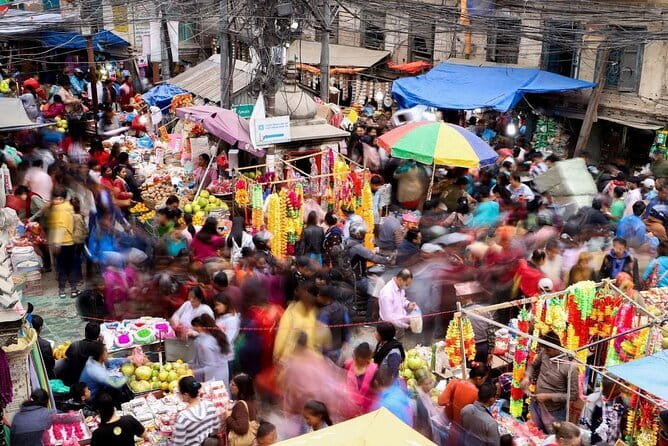
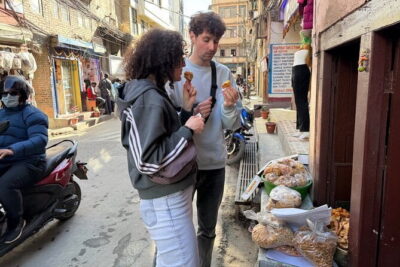
Ason is described as the oldest market area in Kathmandu, and it shows in the way the streets feel shaped around trade. In practical terms, it’s a place where you’ll see spices, textiles, and souvenirs laid out in ways that reflect how goods are traditionally sold here.
But the real value of the market stop is what your guide can connect. When you walk through Ason, you’re not just collecting photos of stalls. You’re learning how commerce and culture share the same physical space.
Here’s what you’ll likely notice as you go:
- The narrow lanes can make the area feel “compact,” so listen when the guide points out key locations.
- Shopfronts and goods tend to focus on everyday needs—spices and fabrics are obvious examples—so you can imagine how locals plan meals, festivals, and daily routines.
- Souvenirs will be there, but you’ll get more out of the visit if you treat them as clues to what people consider worth buying.
A minor practical note: markets mean crowds and movement. Stay aware of where you place your feet and how you pause. You’ll get better photos and you’ll keep things easy for the people selling and walking.
Kathmandu Durbar Square: Temples, Palaces, and Courtyards Up Close
Kathmandu Durbar Square is one of the big historic places in the city center. It’s known for its palaces, temples, and courtyards, all packed into a walkable core that makes it possible to see how different religious spaces sit next to political and social life.
Two things to keep in mind as you’re there:
- You may need to pay the 1000 NPR entry fee for Durbar Square. This isn’t included, so treat it as a planned cost, not a surprise.
- The square is a working cultural area, not a museum-only setting. You’ll get more from the visit if you slow down at key structures and let your guide explain what you’re looking at.
Even in a short 2-hour experience, the Durbar Square stop is designed to give you the “why.” Temples and courtyards don’t just look old—they reflect how communities gather, worship, and remember their leaders. With a guide translating the symbolism, you can start seeing patterns: where devotion takes place, where formal spaces sit, and how the architectural style supports ceremonies and daily rituals.
If you’re short on time, this stop pays off. If you have extra time later, Durbar Square is also the kind of place you’ll want to return to—because one guided visit rarely gives it all in one shot.
Before you lock this one in, a few Kathmandu alternatives:



The Kumari Moment: Witnessing the Living Goddess Kumari
This tour’s headline feature is witnessing Kumari, the living goddess of Kathmandu tradition. The idea is that Kumari is a prepubescent girl regarded as the living embodiment of goddess Taleju in Nepalese culture.
Kumari resides in the Kumari Ghar. That concept alone makes the encounter different from any normal city sight. You’re not just viewing a statue or an empty temple alcove. You’re observing a role deeply rooted in religious belief and community tradition.
Here’s how to get the most out of the Kumari moment:
- Be respectful with your behavior and space. This is a religious tradition tied to devotion, not a “performance” for visitors.
- Don’t rush the explanation. The value of a guide is that they help you understand what you’re seeing and why it matters.
- Watch the details your guide highlights—especially the way the tradition frames Kumari as more than a person, but as a living embodiment in the cultural story.
One theme that comes through strongly is the emotional impact of seeing Kumari. People describe the impression as real and lasting, often focusing on the presence and expression. It’s the kind of moment that can feel both historic and immediate—because it’s happening within living practice, not behind a glass barrier.
Hinduism and Buddhism on One Walk
Kathmandu’s religious landscape isn’t a separate set of attractions. It’s interwoven into the way the city is built and how people move through it. This tour explicitly connects Hinduism and Buddhism, which is exactly what you want if you’re trying to understand Kathmandu beyond sightseeing checklists.
You’ll see this most through your guide’s explanations, especially around sacred places like Durbar Square and around the Kumari tradition tied to goddess Taleju. Even in two hours, you can walk away with a clearer mental map: what kinds of structures signal worship, how tradition is preserved in daily life, and why these sacred roles still matter in modern Kathmandu.
Price and What You Get for $39 (Plus the One Main Extra Cost)

The tour price is $39 per person for a 2-hour guided walk. For what’s included—an English-speaking tour guide, government taxes and VATs, and a bottle of mineral water—that price is trying to be straightforward and “no fuss.”
The key add-on is the Kathmandu Durbar Square entry fee: 1000 Nepali Rupee. Also, meals and beverages are not included, so plan on buying anything you need before or after.
So, is it good value? I’d call it fair, especially if:
- you want a guide to connect Ason market life with the sacred significance of the Durbar Square and Kumari tradition
- you have limited time in Kathmandu and want a tight route
- you prefer learning through walking, not through a long bus ride
The value drops slightly if you don’t care about historical or religious context and you mainly want time to shop. But if you like understanding the “why” behind what you’re seeing, this route is designed for you.
The Best Fit: Who Should Book This Walk
This tour fits best if you:
- have only a short stay in Kathmandu and want one compact cultural route
- like a guided experience where someone explains what you’re looking at in plain English
- want to witness the living goddess Kumari as part of a broader city story, not as a lone photo stop
- enjoy mixing everyday street life (Ason market) with major sacred architecture (Kathmandu Durbar Square)
It’s also a good choice if you enjoy walking at a steady pace for about two hours without needing lots of long breaks.
If you’re someone who gets easily impatient in crowded market lanes, or you dislike religious settings, you might find the Kumari component emotionally intense. In that case, it could feel like too much meaning packed into a short time.
Practical Tips That Make the Tour Easier
I’d plan your day so you’re not rushing from one place to another. You’ll cover a small cluster of important locations, so you want your attention for the guide and your eyes for details.
A few simple moves:
- Bring cash for the Durbar Square entry fee (1000 NPR).
- Wear comfortable shoes because this is a walking tour.
- If you’re sensitive to crowded spaces, keep a little extra personal space and don’t stop suddenly in the middle of foot traffic.
And if you have questions about what you’re seeing—ask them. The whole point of paying for a guide here is to trade confusion for clarity.
Should You Book This Oldest Market + Kumari Tour?
I’d book it if you want a short, concentrated Kathmandu experience that mixes street-level culture with a major living religious tradition. The combination of Ason market and Kathmandu Durbar Square gives you context, and the Kumari moment gives you the standout memory that’s hard to recreate on your own.
I wouldn’t book it if you only want free time to browse and shop, or if you’re not interested in religious and historical explanations. Also, if the idea of paying an extra 1000 NPR entry fee feels like a deal-breaker, you may want to adjust your expectations—or budget—before booking.
If your goal is to understand Kathmandu quickly and respectfully, this tour is a strong choice.
Kathmandu on Foot: More Walks


More Tours in Kathmandu


More Tour Reviews in Kathmandu


Just Reviewed in Kathmandu
- Mountain Bike Tour
★ 5.0 · 3 reviews - Annapurna Panaroma
★ 5.0 · 3 reviews - Mount Everest Scenic Flight 50 Minutes
★ 5.0 · 3 reviews - Kathmandu : Swambhunath & Durbar Square Guided Half Day Tour
★ 3.3 · 3 reviews - Chandragiri Cable Car & Monkey Temple Tour – Private/Group
★ 5.0 · 3 reviews - Kathmandu: Shivapuri National Park Hiking Day Trip
★ 3.3 · 3 reviews
Kathmandu Durbar Square Tours, compared.
 ★ 5.0Bhaktapur & Patan Durbar Square Day ToursFrom $50122 reviews
 ★ 5.0Kathmandu Sunset Tour by Rickshaw Including Durbar Square VisitFrom $5073 reviews
 ★ 5.0Old Kathmandu Walking Tour, Historic World Heritage Durbar SquareFrom $2822 reviews
 ★ 4.5City tour of Bhaktapur and Patan Durbar SquareFrom $11020 reviews
 ★ 5.0Bhaktapur Old City and Durbar Square Half-Day TourFrom $6515 reviews
 ★ 5.0Kathmandu Durbar Square – Private/Small GroupFrom $1513 reviews
 ★ 5.0Nagarkot Sunrise & Bhaktapur Durbar Square UNESCO Heritage TourFrom $5512 reviews
 ★ 5.0Patan & Bhaktapur Durbar Square Tour with Lunch – Private/GroupFrom $511 reviews
Browse the lists this tour appears in