
Review · PASHUPATINATH & BOUDHANATH TOURS
The Boudhanath Yoga Experience in Nepal
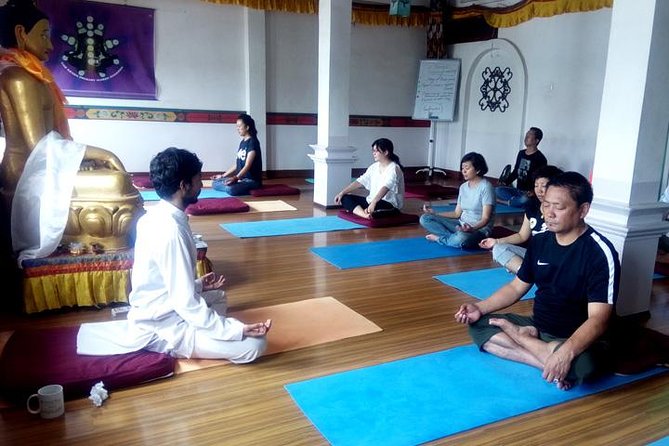
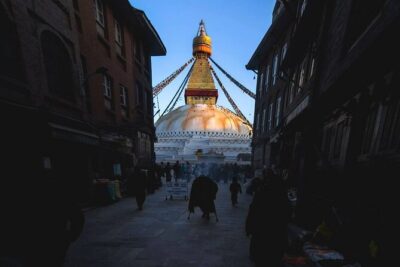
Boudhanath yoga is a rare kind of calm. You’re in Kathmandu learning asanas and breathing in a Buddhism-inspired setting, with the world’s largest Buddhist stupa nearby and visible from where you practice. I also love the practical touch here: round-trip hotel pickup means you’re not spending your morning figuring out traffic or transit.
The main thing to think about is comfort: the class is 2.30 hours, so you’ll want to be ready for steady movement and seated/hand-gesture work. Loose-fitting clothing helps a lot, and it’s good to plan to stay present rather than rush for photos.
Key things I’d circle before you book
- Stupa views while you practice: you learn while Boudhanath is right there in front of you
- A full yoga framework, not just stretching: asanas, mudras, pranayama, dharana, dhyana
- Private vehicle transfers: easier than navigating Kathmandu on your own
- Group stays small: up to 14 people, so questions actually make sense
- Instructor-led step-by-step teaching: you’re guided move by move and can ask questions
- Entry to Boudhanath Stupa included: you don’t have to add extras at the gate
In This Review
- Why Boudhanath is a powerful match for a yoga workshop
- Your 9:00 am start and private transfers from Kathmandu
- What you’ll learn: asanas, mudras, pranayama, dharana, dhyana
- A yoga class with the stupa in view: what that focus changes
- The Boudhanath Stupa visit: what you’ll notice beyond the photos
- Price and value: is $110 worth it in Kathmandu?
- What to wear, what to bring, and how to make it feel smooth
- Who this experience fits best (and who might want a different style)
- Should you book this Boudhanath yoga experience?
- FAQ
- What time does the Boudhanath yoga experience start?
- How long is the yoga class?
- Is hotel pickup and drop-off included?
- Where does it take place?
- Do I need to pay an entry fee for Boudhanath Stupa?
- What should I wear?
- Is food included?
- Can I cancel and get a full refund?
Why Boudhanath is a powerful match for a yoga workshop
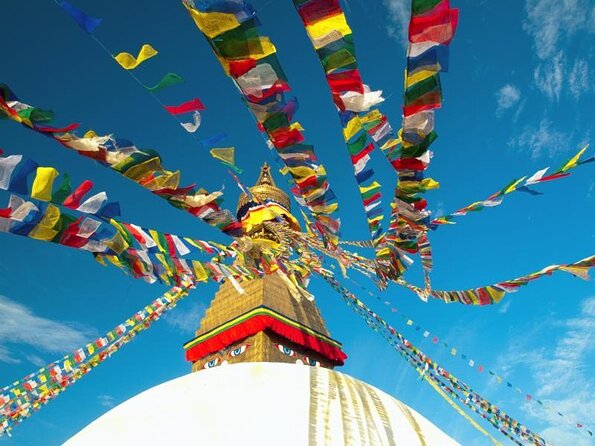
Boudhanath isn’t just a landmark. It’s a living Buddhist pilgrimage site, and it’s closely tied to the exiled Tibetan community that calls this area home. That matters because this workshop doesn’t treat yoga as only a workout. It’s presented as a holistic approach to life that aims at both body and mind—right where people come to practice, reflect, and worship.
The setting also changes your pace. A stupa like Boudhanath tends to make you quiet down without trying—because the place itself carries ritual attention. Even when the neighborhood is busy, you can still keep your focus during practice. That blend—human activity nearby, stillness in your body—can be exactly what you’re looking for if your yoga back home feels too performative.
And because the stupa is so close to the yoga area, you get a natural continuity: you’re not separating spiritual context from physical practice. You’re doing them in the same block of time.
Not sure yet? Here are other Kathmandu tours worth a side-by-side look.
- Everest Base Camp Trek – 14 Days★ 5.0 · 1,499 reviews
- Everest Base Camp Trek★ 5.0 · 842 reviews
- Private Kathmandu Sightseeing Tour | UNESCO World Heritage sites★ 5.0 · 756 reviews
- Kathmandu: 7 UNESCO Sites with Lunch★ 4.8 · 744 reviews
Your 9:00 am start and private transfers from Kathmandu
The experience starts at 9:00 am, and you’ll be picked up from your hotel and brought back afterward by private vehicle. For Kathmandu, that’s a big deal. You avoid the mental load of route planning and figuring out who does what at each corner. Instead, you show up, get oriented, and focus on the class.
Timing-wise, the total experience is about 4 hours (approx.). The yoga portion is 2.30 hours, so you should expect the rest of the time to be taken up by getting to Boudhanath, a stupa visit/connection moment, and time for getting everyone settled.
Group size is capped at 14 travelers. That’s small enough for a teaching vibe, not a cattle-call. You should feel comfortable asking questions and checking your form.
One practical note: the yoga is in an area that’s near public transportation, which is helpful if you need backup options. But the whole point of booking this is that you don’t have to rely on them.
What you’ll learn: asanas, mudras, pranayama, dharana, dhyana
This is not pitched as random poses. The workshop frames yoga as a system with distinct parts. You’ll practice:
- Asanas: proper posturing of the body
- Mudras: hand gestures meant to support the flow of energy
- Pranayama: breathing techniques to relax you and purify body and energy
- Dharana: training the mind for focused, positive energy
- Dhyana: meditation practices meant to liberate the mind
In plain terms, expect a sequence that trains more than flexibility. The mudras and breathing elements can feel different from typical gym-style yoga because they’re meant to guide attention. If you’ve only done yoga that’s mostly about movement, this is a chance to shift gears toward a more meditative rhythm.
The workshop also ties the practice to Lord Buddha’s Eight-Fold Path while cultivating Seven Disciplines. Even if those concepts are new to you, the benefit is practical: the class structure is meant to connect your physical practice (what you do with the body) to your mental practice (what you do with attention). That connection is often where people feel the biggest change.
What I like about this approach is that it gives you a map. Instead of thinking, I’m just stretching, you can understand the purpose behind each element. That makes it easier to stay motivated during the full 2.30 hours.
A yoga class with the stupa in view: what that focus changes
Doing yoga with a major sacred monument nearby isn’t about “aesthetic vibes.” It tends to change how you breathe and where your mind goes. When you’re in front of something that’s meant for devotion and repetition, your body often stops trying to multitask.
Here, the stupa is literally across from the yoga center, and you have a chance to practice while watching Boudhanath. That creates a steady anchor for your attention during pranayama and meditation-style moments.
The teaching style also matters. The class is explained move by move, so you’re less likely to feel lost. I find that step-by-step guidance is especially helpful when mudras or breathing techniques are part of the session—because small adjustments can make a big difference in how it feels.
You also can ask questions. The difference between following instructions and understanding them is huge in a workshop like this. When you get answers in the moment, you leave with a clearer sense of what to keep practicing later.
And yes, it’s in a more active area. The good news is that the session setup is designed so that city noise doesn’t take over the class. You get the best of both worlds: the real Kathmandu environment without turning your yoga into a street-corner distraction.
The Boudhanath Stupa visit: what you’ll notice beyond the photos
A key part of this experience is your time at Boudhanath Stupa, with entry included. The stupa is the big spiritual center of the area, and it’s famous as the world’s largest Buddhist stupa. You’re also right in the pilgrimage zone, so you’ll likely notice that people aren’t just passing through. They’re connected to a practice rhythm—visiting, paying respects, and moving in ways that match their intentions.
Because you’re there with a yoga-focused plan, you may find the stupa experience feels different than a quick sightseeing stop. Instead of rushing from monument to monument, your mind has been warmed up by breath and attention work. Then you look at the stupa with a steadier internal tempo.
One small consideration: with a workshop, your schedule is structured around your class timing. So if you love ultra-flexible wandering, you may wish you had more time before or after. But the trade-off is you get a calmer, more integrated experience.




Price and value: is $110 worth it in Kathmandu?
The price is $110.00 per person for an experience that runs about 4 hours. You also get:
- Hotel pickup and drop-off
- Transport by private vehicle
- A highly qualified, trained yoga instructor
- A 2.30-hour yoga class
- Entry fee at Boudhanath Stupa
If you were to do this on your own, costs start adding up fast: private transport or a reliable driver, paying for a yoga instructor, and stupa entry. Even if you find individual lessons at a lower hourly rate, you’d still be paying separately for transportation and the stupa visit plan. Here, the value is in the bundle: you’re buying convenience plus guided instruction in one tight block of time.
Also, the schedule structure helps. Booking this kind of class in a place like Kathmandu can be easier when someone else handles the timing and setup. You spend your energy on the practice, not logistics.
One more clue: this is commonly booked well ahead. The average advance booking time is 113 days, which often means people plan yoga and Boudhanath time early. If those are your goals, don’t wait until the last minute.
What to wear, what to bring, and how to make it feel smooth
The workshop advises loose-fitting clothing. That’s not a minor detail. Breathwork, seated moments, and mudra work feel much better when you’re not fighting tight fabric.
Food and drinks are not included, so plan your day accordingly. This is a morning-start experience, and you’ll likely want a meal before you go or something afterward when you’re done. If you prefer not to think about it, plan a simple plan: eat earlier, keep water accessible, and then eat after the class.
Because the class is 2.30 hours, think about how you’ll feel if you come in hungry, overheated, or rushing from hotel to pickup. A calm start supports a calmer practice.
If you’re new to yoga, you’re still likely to be fine. The experience notes that most travelers can participate. If you’re more advanced, you’ll still benefit from the structure, especially if you want a Buddhism-inspired approach rather than just a physical flow.
Who this experience fits best (and who might want a different style)
This workshop is a great fit if you want yoga that’s tied to attention, breathing, and meditation—not only stretching. The course includes pranayama and meditation-oriented techniques like dharana and dhyana, and it frames practice through Buddhist teachings.
It’s also a good choice if you like guidance. The class is taught move by move, and you can ask questions, which helps you feel confident rather than guessing.
It might be less ideal if your goal is athletic, high-intensity training. The emphasis here is holistic and tradition-based, and you’ll spend meaningful time on breath and mind training.
Finally, if you’re someone who gets overwhelmed by city navigation, the private hotel pickup and drop-off is a practical win. You can focus on the experience rather than Cairo-level chaos—sorry, Kathmandu chaos.
Should you book this Boudhanath yoga experience?
I’d book it if you want a morning in Kathmandu that feels intentional: yoga instruction tied to Buddhist practice, a close connection to Boudhanath Stupa, and transfers handled so you don’t waste time figuring things out. The small group size and step-by-step teaching style also make it a strong pick if you want clarity.
Skip it if you’re chasing a tough, workout-style yoga session or if you need lots of free wandering time on your own. This experience is structured on purpose: 2.30 hours of class and a focused stupa visit connection.
If you’re the kind of traveler who likes to understand what you’re doing while you do it, this one fits nicely.
FAQ
What time does the Boudhanath yoga experience start?
It starts at 9:00 am.
How long is the yoga class?
The yoga class lasts about 2.30 hours, and the full experience is about 4 hours (approx.).
Is hotel pickup and drop-off included?
Yes. Hotel pickup and drop-off are included, along with transport by private vehicle.
Where does it take place?
It takes place in Kathmandu near Boudhanath, close to the Boudhanath Stupa.
Do I need to pay an entry fee for Boudhanath Stupa?
No. The entry fee at Boudhanath Stupa is included.
What should I wear?
Wear loose-fitting clothing so you can move comfortably during the practices.
Is food included?
No. Food and drinks are not included.
Can I cancel and get a full refund?
Yes. You can cancel up to 24 hours in advance for a full refund.
More Tour Reviews in Kathmandu






Just Reviewed in Kathmandu
- Mountain Bike Tour
★ 5.0 · 3 reviews - Annapurna Panaroma
★ 5.0 · 3 reviews - Mount Everest Scenic Flight 50 Minutes
★ 5.0 · 3 reviews - Kathmandu : Swambhunath & Durbar Square Guided Half Day Tour
★ 3.3 · 3 reviews - Chandragiri Cable Car & Monkey Temple Tour – Private/Group
★ 5.0 · 3 reviews - Kathmandu: Shivapuri National Park Hiking Day Trip
★ 3.3 · 3 reviews
Pashupatinath & Boudhanath Tours, compared.
 ★ 5.0Kathmandu Spiritual Sites: Bodhnath & Pashupatinath TourFrom $60185 reviews
 ★ 5.0Pashupatinath Temple Evening Aarati TourFrom $4536 reviews
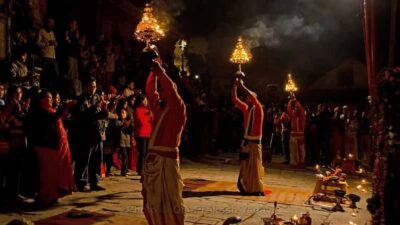 ★ 4.8Pashupatinath Temple Aarti Night TourFrom $7129 reviews
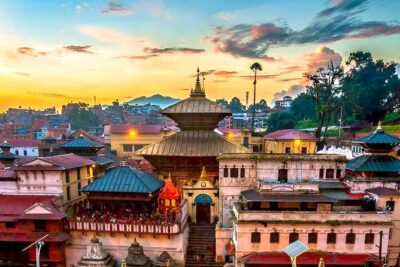 ★ 5.0Pashupatinath Temple, Hindu Crematorium and Aarati in-depth TourFrom $9025 reviews
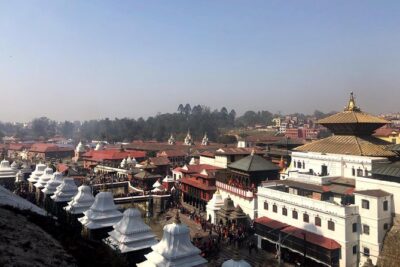 ★ 4.5Pashupatinath Evening Aarati: Few Divinely Hours in KathmanduFrom $3523 reviews
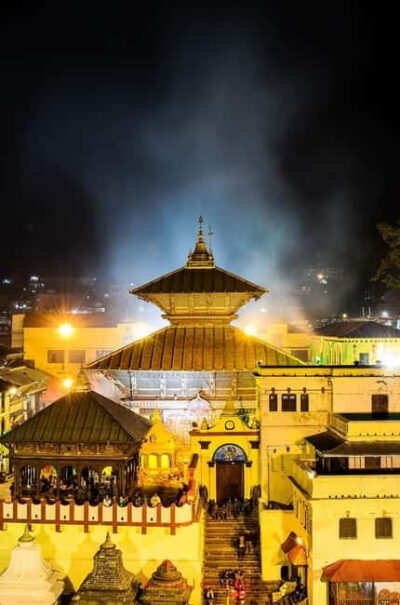 ★ 5.0Sacred Pashupatinath: Aarati,Cremation Rites & Boudha StupaFrom $1118 reviews
 ★ 5.0PashupatiNath and BoudhaNath – Private/Small GroupFrom $1518 reviews
★ 4.7Pashupatinath Temple Evening Aarati TourFrom $2211 reviews
Browse the lists this tour appears in