
Review · PASHUPATINATH & BOUDHANATH TOURS
PashupatiNath and BoudhaNath – Private/Small Group
Religion, walked through in three hours. This private/small-group Kathmandu tour connects Hindu and Buddhist ideas in a very practical way: you’ll see sacred sites, then get the stories and symbols that make them make sense. You start at Pashupatinath, move along the river area toward Aryaghat, and finish at Boudhanath with a hands-on stop at a thanka center.
I love the way the tour treats faith as something people actually do, not just something you look at. At Pashupatinath, you’ll learn the life-cycle rites (including Shodasha Samskaras) and how the last rites are carried out at Aryaghat. Then at Boudhanath, you get Buddhism explained through symbols like prayers flags and key teaching concepts like the Four Noble Truths.
One drawback to plan for: entrance fees are not included, and you pay cash at the gates (Pashupatinath and Boudhanath). Also, it’s only about 3 hours, so you’ll get depth through explanations, but you won’t have time to linger forever at every corner.
In This Review
- Key things that make this tour worth your time
- A Three-Hour Route Through Pashupatinath and Boudhanath
- Starting in Gaushala, ending at Boudhanath Gate
- Pashupatinath: temple rules and the stories behind the river
- Aryaghat crematoria: the 16 samskaras in real life
- Mrigasthali Deer Park: Shiva’s journey and the naming story
- Gorakhnath Mandir, Guhyeshwari Shaktipeeth: power, gurus, and Shakti
- Boudhanath Stupa: Tibetan Buddhism, Vajrayana symbols, and basics you can repeat
- Guru Lhakhang Monastery and the Dharma Chakra story
- Thanka painting and healing bowls: learning through art at the end
- Price and value: what you’re really paying for
- Who this tour is best for
- Should you book PashupatiNath and BoudhaNath?
- FAQ
- How long is the PashupatiNath and BoudhaNath private/small-group tour?
- What group size should I expect?
- Where does the tour start and where does it end?
- What’s included in the tour price?
- Are entrance fees included?
- Does the tour cover both Hindu and Buddhist sites?
- Is the tour suitable for most travelers?
- Is free cancellation available?
Key things that make this tour worth your time
- Max 5 people: small-group pace that makes Q&A realistic
- Guide-led meaning, not just sightseeing: Hindu samskaras and Buddhist teachings explained on site
- Hindu last rites + Buddhist stupa in one route: great for understanding Nepal’s religious mix
- Temple access realities: you learn what you can see and why (like main temple entry rules)
- Hands-on arts stop at the end: thanka basics plus mandala concepts and healing bowls
Just your group, at your own pace
- Private Kathmandu Sightseeing Tour | UNESCO World Heritage sites★ 5.0 · 756 reviews
- Kathmandu: Full Day 7 UNESCO Tour with Lunch – Private/Group★ 5.0 · 415 reviews
- Private Bhaktapur and Nagarkot Day Tour From Kathmandu★ 5.0 · 305 reviews
- Kathmandu: Full Day Top 4 UNESCO Tour with Lunch – Private/Group★ 5.0 · 269 reviews
A Three-Hour Route Through Pashupatinath and Boudhanath
This is one of those Kathmandu experiences that’s short enough to fit almost any schedule, but structured enough to leave you with a real mental framework. You’re not just bouncing between landmarks. You’re moving through a Hindu sacred corridor and then into one of the world’s best-known Buddhist stupa areas, with an English-speaking guide stitching the meaning together as you go.
The small group matters. With a maximum of 5 people, you’re less likely to get rushed through explanations. You can also ask follow-up questions without watching the guide’s patience meter.
The theme running through the whole tour is religious harmony in Nepal, including how culture and even food can reflect the overlap of Hindu and Buddhist life. You’ll feel that idea more than you’ll just hear it. These aren’t abstract “two religions” stops. They’re living places where people pray, grieve, celebrate, and teach.
Starting in Gaushala, ending at Boudhanath Gate
You begin at Gaushala Bus Stop on Ring Rd, which is handy because it’s near public transportation. The tour ends at Boudhanath Gate near the Buddha Stupa, and you’re free to wander after. That ending is actually useful: you can stay for atmosphere, sit for a while, or continue exploring the stupa area at your own speed.
Duration is about 3 hours, so you should think of this as an orientation tour. You’ll learn the “why” behind what you see, so your next walk through the same neighborhoods feels easier and more rewarding.
One practical note: this is a private/small-group format with a mobile ticket. That means fewer surprises on the day, as long as you keep your phone accessible for whatever ticket method you’re given.
Pashupatinath: temple rules and the stories behind the river
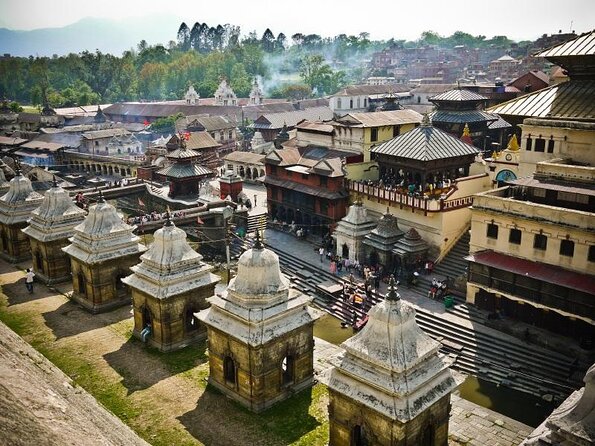
At Pashupatinath, you’re stepping into one of Kathmandu Valley’s oldest Hindu temples. It’s also famous globally, which is exactly why having a guide is helpful. The guide can point out what’s meaningful, explain what you should expect, and keep you from treating sacred spaces like photo stops only.
Here’s the key detail: only Hindus are allowed inside the main temple. So instead of going into the inner area, you’ll pass by toward Aryaghat (the cremation area). That means your experience leans toward the river-side religious process rather than “spot the most iconic gate and move on.”
Why that’s valuable: learning the limits of access helps you understand how the space actually works. You’ll see more than you would if you expected to tour everything inside. You also get context for why Aryaghat is such a central part of how people experience death and ritual in Hindu life.
You’ll spend about 15 minutes at this stage. It’s not long, but the explanations help. If you’re the type who likes to understand what you’re looking at before you start walking, this stop sets the tone well.
Aryaghat crematoria: the 16 samskaras in real life
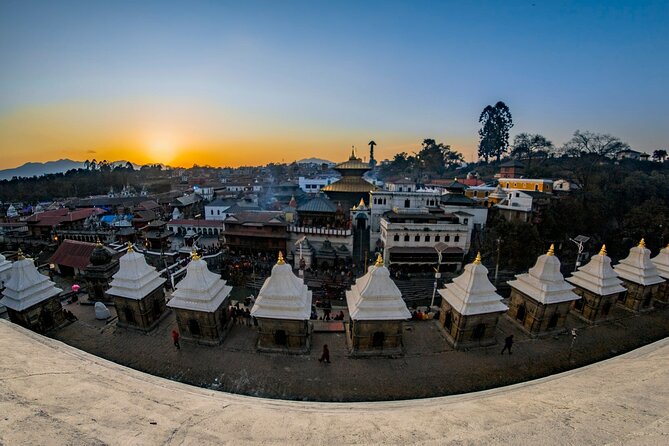
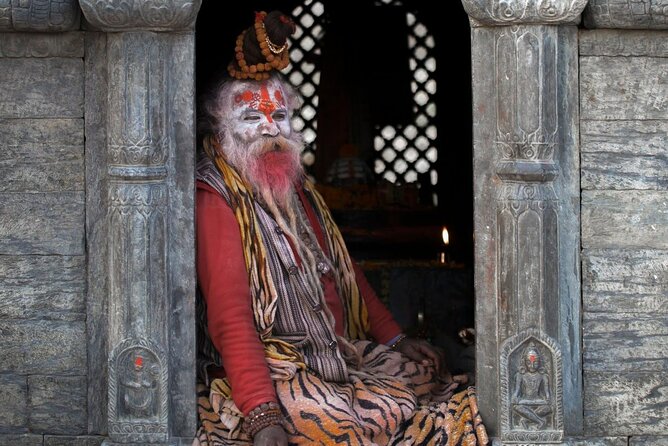
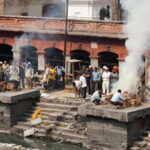
Aryaghat is where the tour becomes emotionally powerful and educational in the same breath. You’ll look toward the crematoria area, and the guide explains the last rites and the idea of Shodasha Samskaras (16 rites of passage) in Hindu life.
This isn’t just a lecture. Your eyes are doing the work while your guide gives you the meaning. The timing is about 30 minutes here, which is enough to grasp the structure of the rites without feeling like you’re stuck in one place too long.
A balanced way to approach this stop: don’t expect it to feel casual. This is a place people connect to grief and ritual. Even when the tour is framed as educational, you should treat your posture, volume, and attention with respect. If you’re sensitive to death-related sites, mentally flag this section ahead of time.
Also, note the entrance fee situation: the temple and stupa entrance costs are listed as not included, and you pay cash at the entrance. This matters because you’ll likely want to be ready with Nepal rupees (NRP) when you get to the key gates.

Mrigasthali Deer Park: Shiva’s journey and the naming story
After the crematoria area, you move to Mrigasthali Deer Park. The guide explains the journey of Lord Shiva to this place and how it got its name. Then you explore the area briefly.
This stop is about 15 minutes, and it’s a useful break in tone. You’re shifting from the heavy ritual focus to myth and place-name explanation. It’s also a reminder that these sacred zones aren’t one-dimensional. The same spiritual landscape includes stories of gods walking the earth, not only ceremonies tied to life’s biggest turning points.
If you like mythology explained in plain language, you’ll probably enjoy this part. If you’re only looking for architecture and photos, it can feel slower. But the name origin story is the point, and the guide keeps it tied to what you’re actually seeing around you.
Gorakhnath Mandir, Guhyeshwari Shaktipeeth: power, gurus, and Shakti
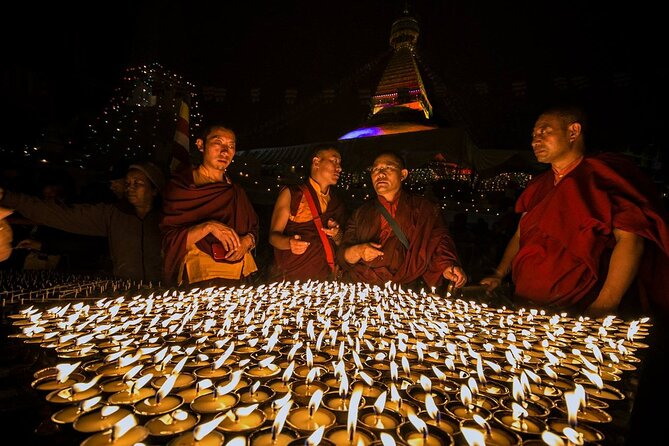
From the deer park, you continue toward Gorakhnath Mandir and then Guhyeshwari Shaktipeeth on the way toward Boudhanath.
At Gorakhnath Mandir, you’ll take about 30 minutes including a stop for rest, and you’ll hear the story of Guru Gorakhnath. Then you head toward Guhyeshwari, with the guide telling the story of Satidevi and explaining the concept of Shaktipeeth.
You’ll also spend about 20 minutes reaching Boudhanath after this segment. That travel time matters because it prevents the route from feeling like one long grind. You’re getting a sequence of spiritual “chapters” rather than a nonstop march.
Why this matters for your understanding: Shaktipeeth concepts and Guru traditions give Hinduism more texture than the common outside view. Many visitors only know Hinduism through a few famous images. Here, you get a bridge to how Nepalese Hindu devotion connects to power, protection, and sacred feminine presence, before you jump to Buddhist symbolism.
Boudhanath Stupa: Tibetan Buddhism, Vajrayana symbols, and basics you can repeat
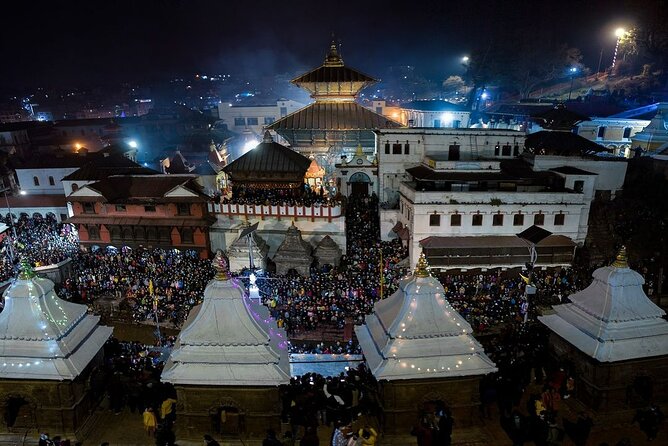
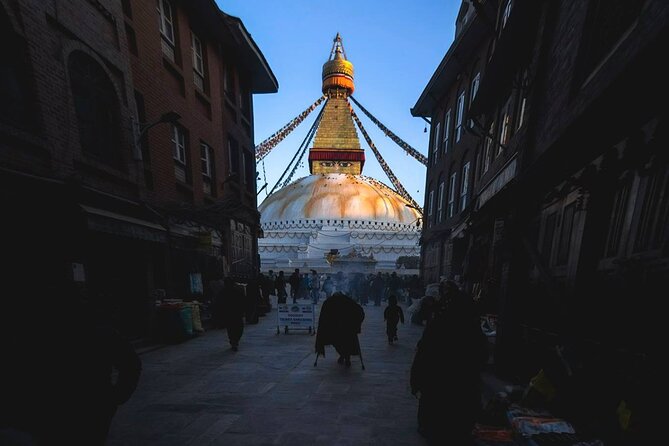
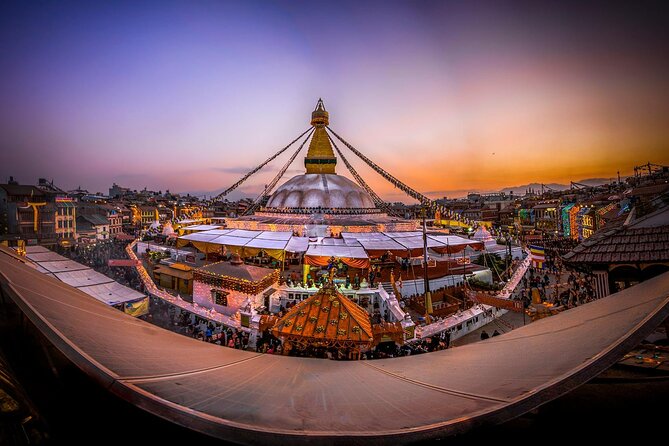
At Boudhanath Stupa, you step into one of the world’s largest stupa structures in this category. The focus here is Tibetan Buddhism and Vajrayana Buddhism.
You’ll spend about 45 minutes exploring basics with the guide. This is where you’ll learn core symbolic ideas and teaching concepts, including:
- prayers flags
- five elements
- Four Noble Truths
- eightfold path (listed as eightfold content in the tour description)
This is one of the most practical segments of the tour. Even if Buddhism is new to you, having a short list of ideas you can mentally carry helps you read what you’re seeing while you walk around the stupa area on your own afterward.
Also, expect the atmosphere to shift. Boudhanath is a pilgrimage center and a meeting point for many practitioners. The stupa itself tends to pull you into a slower rhythm. A guide helps you interpret the objects and actions so you don’t miss what people are doing and why.
Note again: entrance is not included, and you pay cash at the gate. Build that into your day so you’re not scrambling with your phone charger and money at the last moment.
Guru Lhakhang Monastery and the Dharma Chakra story
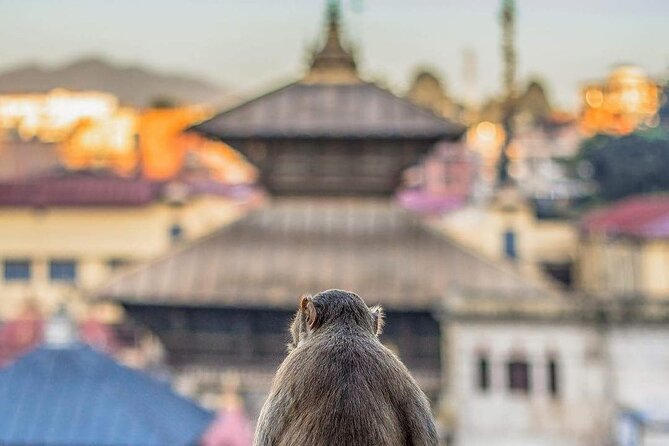
Next you visit Guru Lhakhang Monastery, where you’ll see what a typical Buddhist monastery environment looks like. The guide also covers Guru Padmasambhava and the idea of Dharma Chakra Pariwartana.
This stop is about 10 minutes and feels like a quick “zoom in” moment after the stupa. The stupa gives you the big picture. The monastery gives you a sense of how devotional life looks in a smaller setting.
If you tend to learn best from contrast, this portion is worth it. You get the monumental symbol first, then a quieter space with a different kind of emphasis.
Thanka painting and healing bowls: learning through art at the end
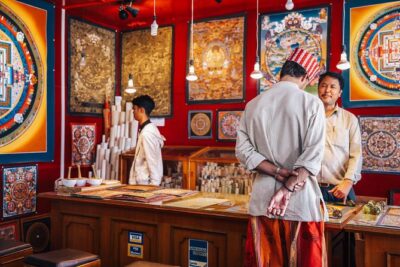
Your final content-heavy stop is the Boudha Stupa Thanka Center. This part stands out because it turns understanding into something you can hold in your attention without needing a full religious background.
You’ll learn about thank(a) painting and the mandala concept. You’ll also get the basics of healing bowls.
Time here is about 15 minutes. It’s not a full workshop, but it gives you the kind of mental hooks that make the stupa area feel more coherent afterward. Mandalas are not just pretty circles; the tour introduces them as a concept. Healing bowls are similarly framed as a practice concept, not just a souvenir-related gimmick.
After this, the tour ends at Boudhanath Gate. You can then continue exploring the stupa environment with your new vocabulary in your head.
Price and value: what you’re really paying for
The tour price is $15 per person, booked on average about 18 days in advance, with a maximum of 5 travelers. On top of that, entrance fees are not included: roughly NRP 1000 for Pashupatinath (listed around US$9) and NRP 400 for Boudhanath (listed around US$4). The total entrance amount is shown as $13 per person in the tour data, paid in cash at the entrance.
So your all-in expectation is roughly $28 per person, depending on the exact cash amount you’re asked for at the gates.
Is that good value? For me, the answer is yes, if you want meaning more than just movement. You’re not just buying access to two famous places. You’re buying an organized explanation of:
- Hindu last rites and life-cycle rites (Shodasha Samskaras)
- myth and place naming (like the Shiva story at Mrigasthali Deer Park)
- key Hindu devotion concepts (Guru Gorakhnath, Satidevi, Shaktipeeth)
- Buddhist fundamentals linked to objects you can see at Boudhanath (prayers flags, five elements, Four Noble Truths, eightfold path)
- a creative end-stop (thank(a) painting, mandala concepts, healing bowls)
If you’re comfortable reading religious sites on your own with a guidebook, you might skip this. But if you’re the type who asks why something is happening, or you want the route structured so you don’t miss the most important context, a guided small group is a smart value.
Who this tour is best for
This works well if:
- you want a short, high-impact Kathmandu experience
- you like religion explained through real practices and symbols
- you care about understanding Nepal’s religious harmony rather than treating the city as a checklist
- you prefer a small group, max 5, so you can ask questions
It might feel less ideal if:
- you need long free time at each site (this is paced for understanding in ~3 hours)
- you’re not comfortable around cremation-related sites (Aryaghat is part of the experience)
From the feedback summary, guides are praised for being very engaged and answering questions well, and at least one guide (like Santosh) is specifically noted for adjusting the schedule to accommodate a special ceremony request such as aarti.
Should you book PashupatiNath and BoudhaNath?
Book it if you want your Kathmandu walking route to come with answers, not just views. The best reason to choose this tour is the pairing: Hindu last rites and samskaras at Pashupatinath/Aryaghat, then Buddhist Vajrayana fundamentals at Boudhanath, all wrapped in a small-group format that invites questions.
Skip it only if you already know the basics well and you’d rather spend the money on more time in one place. Also, be ready for the cash entrance fees and for the emotional weight of the Aryaghat section.
If you do book it, bring a little patience for sacred spaces, keep cash handy for entrances, and plan to stay a bit longer after the tour at Boudhanath. The whole point is that you’ll understand what you see next.
FAQ
How long is the PashupatiNath and BoudhaNath private/small-group tour?
It’s approximately 3 hours.
What group size should I expect?
The maximum group size is 5 travelers.
Where does the tour start and where does it end?
It starts at Gaushala Bus Stop and ends at Boudha Stupa / Boudhanath Gate, where you can explore on your own.
What’s included in the tour price?
An English-speaking guide is included. The tour also uses a mobile ticket.
Are entrance fees included?
No. Entrance fees for Pashupatinath (NRP 1000) and Boudhanath (NRP 400) are not included and must be paid in cash at the entrance.
Does the tour cover both Hindu and Buddhist sites?
Yes. You visit Pashupatinath and the crematoria area, then continue to Boudhanath and related monastery and art stops.
Is the tour suitable for most travelers?
The information says most travelers can participate.
Is free cancellation available?
Yes. You can cancel up to 24 hours in advance for a full refund.
Private Days, Your Group Only

More Tour Reviews in Kathmandu


Just Reviewed in Kathmandu
- Mountain Bike Tour
★ 5.0 · 3 reviews - Annapurna Panaroma
★ 5.0 · 3 reviews - Mount Everest Scenic Flight 50 Minutes
★ 5.0 · 3 reviews - Kathmandu : Swambhunath & Durbar Square Guided Half Day Tour
★ 3.3 · 3 reviews - Chandragiri Cable Car & Monkey Temple Tour – Private/Group
★ 5.0 · 3 reviews - Kathmandu: Shivapuri National Park Hiking Day Trip
★ 3.3 · 3 reviews
Pashupatinath & Boudhanath Tours, compared.
 ★ 5.0Kathmandu Spiritual Sites: Bodhnath & Pashupatinath TourFrom $60185 reviews
 ★ 5.0Pashupatinath Temple Evening Aarati TourFrom $4536 reviews
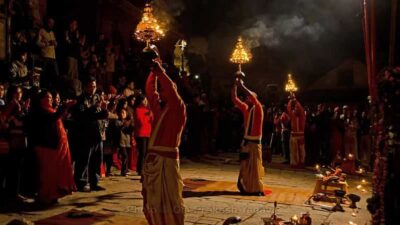 ★ 4.8Pashupatinath Temple Aarti Night TourFrom $7129 reviews
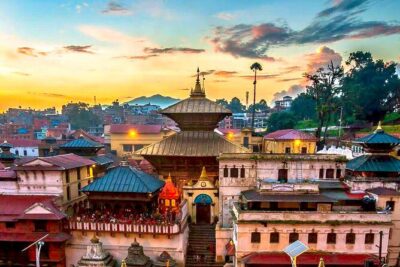 ★ 5.0Pashupatinath Temple, Hindu Crematorium and Aarati in-depth TourFrom $9025 reviews
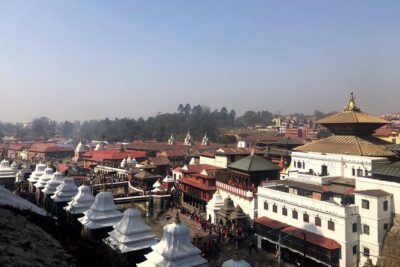 ★ 4.5Pashupatinath Evening Aarati: Few Divinely Hours in KathmanduFrom $3523 reviews
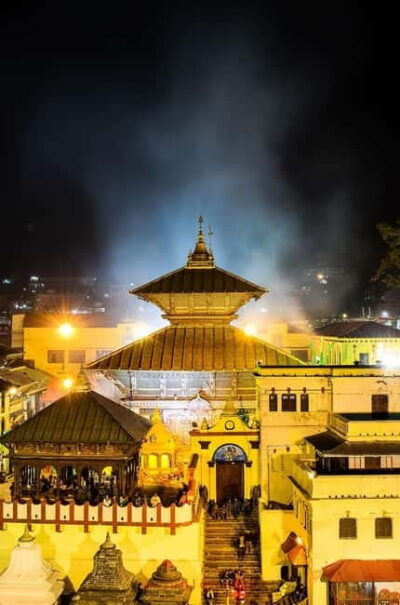 ★ 5.0Sacred Pashupatinath: Aarati,Cremation Rites & Boudha StupaFrom $1118 reviews
★ 4.7Pashupatinath Temple Evening Aarati TourFrom $2211 reviews
★ 5.0Sacred Pashupatinath: Aarati,Cremation Rites & Boudha StupaFrom $1118 reviews
★ 4.7Pashupatinath Temple Evening Aarati TourFrom $2211 reviews
 ★ 5.0Kathmandu City in One Day with Bodhnath StupaFrom $9510 reviews
Browse the lists this tour appears in