
Review · PASHUPATINATH & BOUDHANATH TOURS
Kathmandu: Pashupatinath Temple Evening Aarati Tour
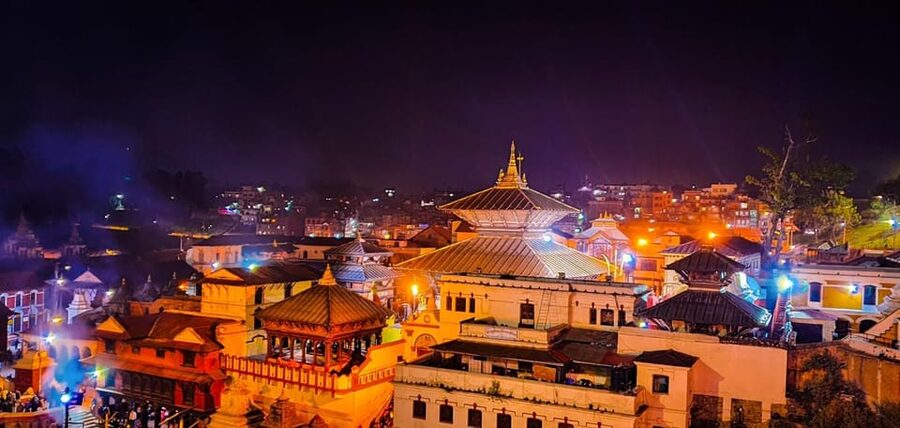
One evening can make Kathmandu feel sacred and real. I love how the Pashupati Bagmati Aarati happens right by the Bagmati River, with oil lamps, chanting, and bhajans that slow your brain down. I also like that you get an English guide who ties together what you’re seeing at the temple with the wider Hindu context, so the ritual doesn’t feel like a show. The only drawback: the area can be crowded and smoky with incense, so you’ll need good patience (and modest dress).
You’ll start with a hotel pickup in central Kathmandu areas like Thamel or Boudhha, then settle in for a focused ~3-hour evening circuit that centers on the 6:00–6:30 pm Aarati timing (seasonal shifts happen). If you’re careful and respectful about where you stand, you can get a powerful view without needing to be inside the main temple—though non-Hindus are not permitted inside.
In This Review
- Key moments I’d put on your radar
- Pashupati Bagmati Aarati at 6 pm: why this ritual hits different
- Your 3-hour plan: pickup to the riverside seats
- Inside the temple vs. riverside viewing: what you’re allowed to do
- The Aarati ritual: oil lamps, bhajans, and the river connection
- Guides who turn the scene into understanding (not just photos)
- Cultural context: Tandav, Shiva devotion, and when it gets crowded
- Price and value: $22 vs. the NPR 1,000 entry fee
- Practical tips so your evening feels calm, not chaotic
- Who this tour is for (and who might want a different plan)
- Should you book the Kathmandu Evening Pashupatinath Aarati Tour?
- FAQ
- What time does the Pashupati Bagmati Aarati start?
- How long is the tour?
- How much does the tour cost?
- Where do pickup and drop-off happen?
- What is included in the price?
- What is not included?
- Are non-Hindus allowed inside the main temple?
- Is photography allowed?
- What should I wear?
- What’s the cancellation situation?
Key moments I’d put on your radar
- 6:00–6:30 pm timing: the Aarati rhythm is built around the evening hour, not daytime sightseeing.
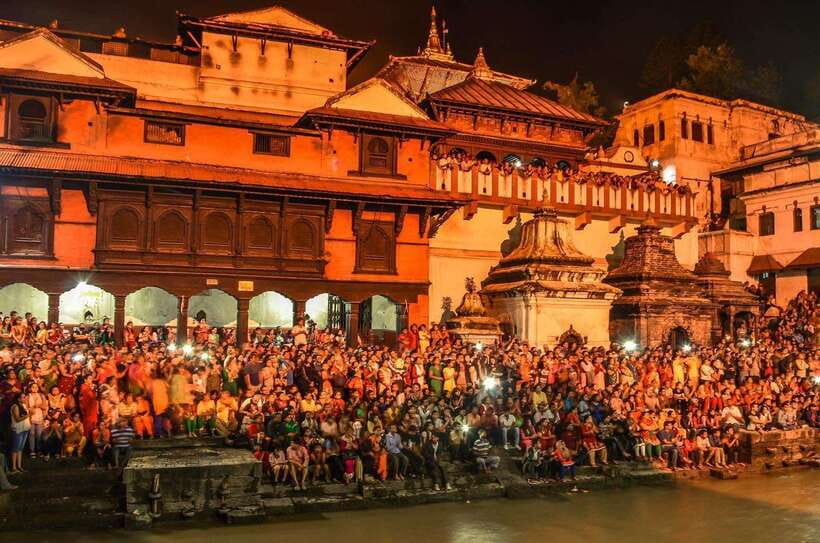
- Riverside viewing: the ceremony takes place by the Bagmati River, with views from the banks.
- Oil lamps and chanting: circular lamp motions, sacred words, and bhajans shape the mood.
- Guides who explain more than the photos: names like Razz and Shankar come up in past bookings for their clear explanations.
- Crowds and incense smoke: weekends, Mondays, and festivals can pack the area.
- Entrance fee on the day: the tour price excludes the monument entry cost (NPR 1,000 per person).
Other ways into a Kathmandu evening
- 3 Nights 4 Days Chitwan National Park with Tower Night Stay★ 5.0 · 41 reviews
- 3 night 4 Day Yoga & Ayurveda Retreat to Detox the Body & Mind, Nepal★ 5.0 · 37 reviews
- Kathmandu: Pashupatinath Temple Evening Aarati Tour★ 5.0 · 36 reviews
- Kathmandu: Pashupatinath Temple Aarti Night Tour★ 4.8 · 29 reviews
Pashupati Bagmati Aarati at 6 pm: why this ritual hits different
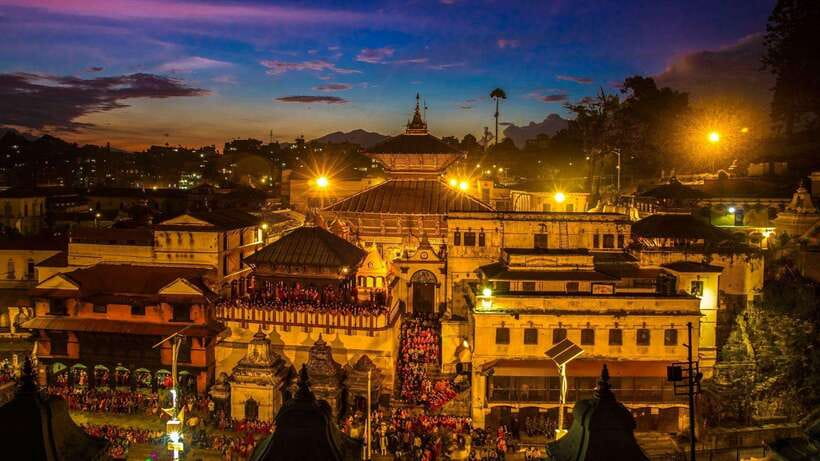
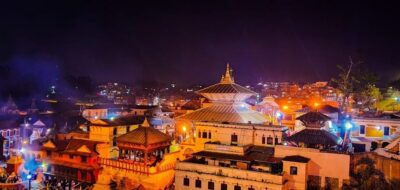
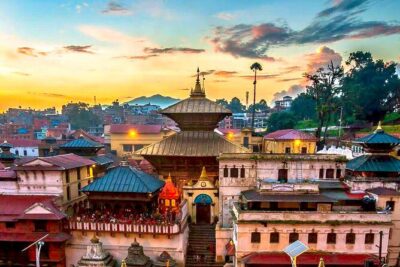
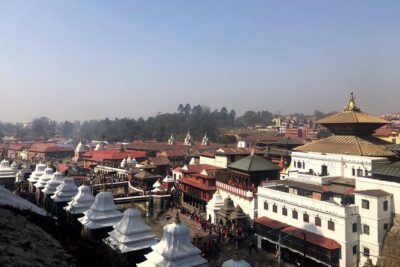
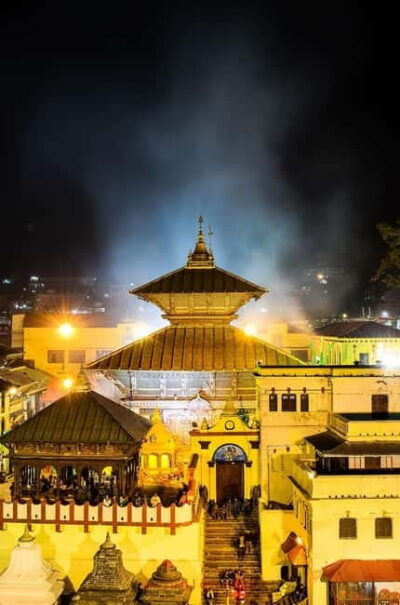
The Pashupatinath Temple is one of those Kathmandu places where you can’t really treat the experience like a checklist. The evening Pashupati Bagmati Aarati is special because it’s not happening in a quiet room. It unfolds beside the Bagmati River, the same river tied to local beliefs about spiritual cleansing—people come to the water, and the whole setting makes devotion feel physical.
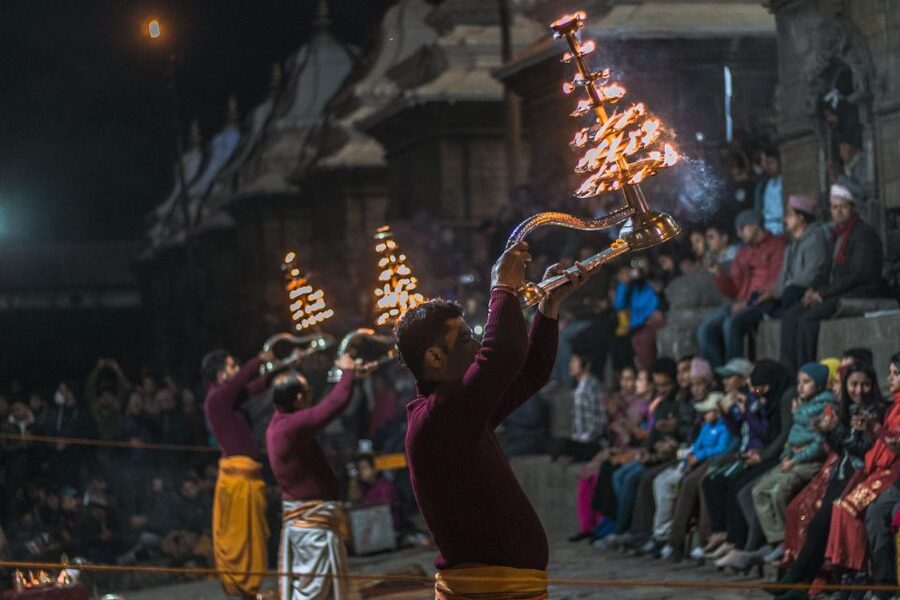
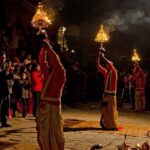
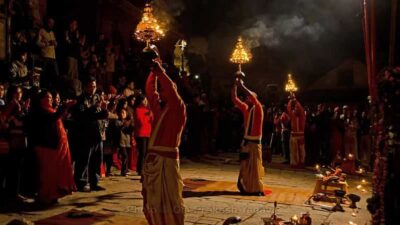
What you’ll notice right away is how the ritual moves with people’s voices. Priests handle the worship with oil lamps and chant sacred words, while devotees sing bhajans. The lamp motions in circular patterns aren’t just decorative; they’re part of the prayer language, a way of showing reverence and connection.
The other thing that makes this evening work for visitors is the pacing. You’re not trying to see everything. You’re arriving for one moment that repeatedly draws thousands of people each year, a tradition that began in 2000 and became a regular practice in 2006. That gives the evening a sense of continuity—even if you’re seeing it for the first time.
Your 3-hour plan: pickup to the riverside seats
This tour is built around a simple flow: hotel pickup → guided visit at Pashupatinath → guided time for the Aarati ritual → drop-off back in Kathmandu areas.
1) Pickup in Kathmandu city center
You’ll be collected by private vehicle with air conditioning. The pickup options are designed for common visitor bases: Boudhha and Thamel are both included, plus a third option listed as Kathmandu. This matters because Pashupatinath can feel like a long evening trek if you’re trying to figure out transport on your own.
2) Arrive and get oriented at Pashupatinath
Once you reach the temple area, the tour includes a guided visit and sightseeing time. That’s the part that helps you understand what you’re watching before the main ceremony starts. Guides often explain what the lamps symbolize, why the river matters here, and how the temple space connects to Hindu beliefs about the presence of the divine in living beings.
3) Settle in for the Aarati
The Aarati starts around 6:00–6:30 pm, with timing varying by season. Plan to arrive with enough buffer so you’re not scrambling when the ritual begins. The setting can be packed, especially on weekends and festival days.
4) Return drop-off
After the ceremony ends, you’ll be taken back to Kathmandu, Thamel, or Boudhha, depending on your selected drop-off location.
Inside the temple vs. riverside viewing: what you’re allowed to do
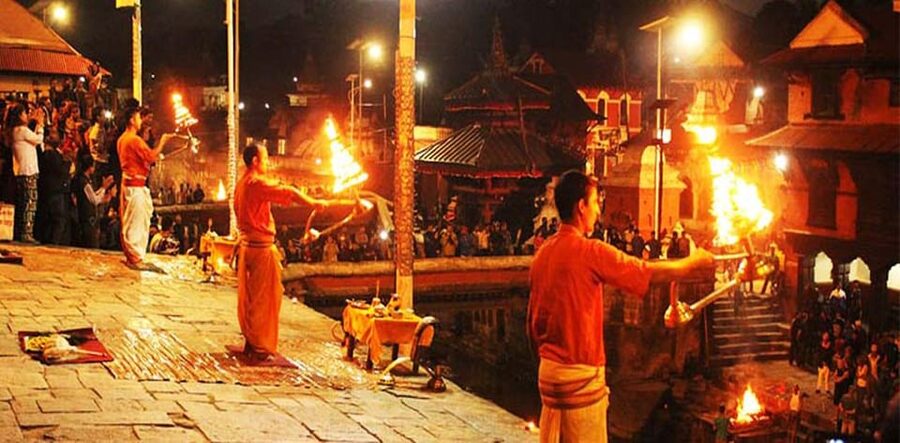
One key practical point: non-Hindus are not permitted inside the main temple. That doesn’t mean you’re stuck outside with a bad view. The important part of the evening—the Aarati ritual itself—can be viewed from the Bagmati River banks.
So your planning should be about positioning and respect, not access. Even if you can’t enter the main temple, you’ll still be close to the action because the ceremony is performed beside the river.
A couple of other “know before you go” items that really matter in real life:
- Dress modestly: cover shoulders and knees. This is a sacred Hindu site, and you’ll feel the difference in how smoothly things go when you follow the rules.
- Incense smoke and chanting are part of the experience. If you’re sensitive to smoke, come ready for it.
- Photography is generally allowed, but keep it respectful. During prayer and chanting, treat the moment as something sacred, not content.
The Aarati ritual: oil lamps, bhajans, and the river connection
Here’s what happens during the Pashupati Bagmati Aarati in plain terms.
Priests conduct worship using oil lamps. As they move the lamps in circular motions, they chant sacred words. The soundscape is important: bhajans (devotional songs) from devotees add another layer to the atmosphere, so it doesn’t feel like a silent performance. It feels like a community prayer turning the space into one shared focus.
The river link is the reason the Aarati isn’t just ritual theater. People believe bathing in the Bagmati River washes away sins, and the Aarati honoring the holy river ties the temple, the water, and devotion into one evening flow.
There’s also a broader Hindu framing to what you’re seeing. Hindu belief here emphasizes that divine presence exists in living beings and highlights collective well-being. The ritual ends with prayers for the wellness of all souls and gratitude toward God’s kindness.
Timing matters because the lamps and chants are synchronized with the evening moment. The Aarati is scheduled to begin around 6:00–6:30 pm, so if you come late, you’ll miss the rhythm that makes it meaningful.



Guides who turn the scene into understanding (not just photos)
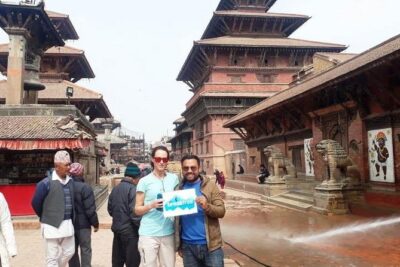
A good guide can change how spiritual ceremonies land for you. In past bookings, Razz is highlighted for speaking perfect English and for explaining Hindu traditions clearly, with added context even connecting the dots to Buddhism. That kind of cross-cultural explanation matters when you’re unfamiliar with the symbolism. It helps you watch with comprehension rather than confusion.
Other guides named include Shankar, who’s mentioned for explaining religion and the gods behind what you see. One booking also points out a guide walking people through what’s happening along the Bagmati area before the Aarati. That’s the part that can surprise first-timers: the river corridor isn’t just about worship. It’s part of life, and sometimes that includes the cremation process.
If you’re uncomfortable with that visual reality, I’d still book with caution. Ask your guide, before you get too close, what you might see and what the general flow is at that time of evening. You’re not being dramatic—you’re being prepared.
Cultural context: Tandav, Shiva devotion, and when it gets crowded
The Pashupatinath experience isn’t only about the Aarati. The wider area is associated with Shiva devotion, and there can be additional devotional practices you might notice during periods of special observance.
The information around this experience includes mention that followers perform a divine dance called Tandav in homage to Lord Shiva. You may or may not see specific elements like this depending on the evening and local schedule, but it’s useful to know that the temple atmosphere can include more than just lamp ritual and singing.
When the crowd factor is most intense, plan ahead:
- Holidays
- Mondays
- Festivals, especially Maha Shivaratri and Haritalika Teej
Even on regular days, the evening draws many people. That’s why arriving early is practical. If you arrive right on time at 6 pm without buffer, you may end up standing farther back than you’d like.
Price and value: $22 vs. the NPR 1,000 entry fee
The listed price is $22 per person for a 3-hour evening experience. What you’re paying for is not only the Aarati view. You’re also paying for hotel pickup and drop-off by private vehicle, an English-speaking professional guide, and private air-conditioned transportation.
That value equation changes once you remember the monument entry fee:
- Monument entry fees: NPR 1,000 per person (not included)
So do the math before you book. If you’re budgeting tightly, plan for that extra amount on the day. Still, the structure feels good for visitors who don’t want to fight traffic, parking, or timing on their own. Pashupatinath is easiest when you’re not also multitasking logistics in the evening rush.
Practical tips so your evening feels calm, not chaotic
This is one of those “small choices make a big difference” evenings.
- Dress right on arrival. Cover shoulders and knees, then you won’t spend time figuring out what’s allowed.
- Expect incense smoke. Come with a mindset for chanting and smells.
- Bring patience for crowds. Weekends and festival days can be very busy.
- Keep your phone respectful. Photography is generally allowed, but don’t block the view of someone praying.
- Be careful with side shopping. The Bagmati/Pashupatinath area has vendors, and at least one past booking described a bad experience tied to shopping and commission behavior. If you do buy anything, check prices clearly and don’t feel pressured.
Also, if you’re bringing motion sickness or breathing sensitivity concerns, the evening setting can be a factor. The smoke and crowd density can make you feel less comfortable if you’re not prepared.
Who this tour is for (and who might want a different plan)
This evening Pashupati Aarati tour is a strong fit if you:
- Want one of Kathmandu’s most spiritual, time-bound experiences.
- Prefer guided interpretation over wandering without context.
- Appreciate temple rituals and want to see how devotion works in real time.
- Value convenience: hotel pickup, private vehicle, and a timed visit.
It may be less ideal if you:
- Strongly dislike crowded religious spaces.
- Know you’ll be distressed by the possibility of seeing cremation activity in the river area (depending on timing and how the evening unfolds with your guide).
- Want a quiet, low-sensory sightseeing stroll. This is prayer-centered, with chanting and incense.
Should you book the Kathmandu Evening Pashupatinath Aarati Tour?
I’d book it if your goal is a meaningful evening with structure and a view that’s actually connected to the ritual. The combination of riverside Aarati timing, guided explanation in English (and specific guides like Razz and Shankar show up in past experiences), plus reliable pickup/drop-off makes this feel efficient and worth the price—especially when you’re factoring in that you only have a short time in Kathmandu.
But book smart:
- Plan for the NPR 1,000 entry fee on the day.
- Come dressed modestly and mentally ready for incense smoke and crowds.
- If you’re uneasy about anything you might see near the river, ask your guide what the flow usually looks like that evening.
If you want a “Kathmandu moment” that’s not just a photo, this is the kind of tour that delivers.
FAQ
What time does the Pashupati Bagmati Aarati start?
It usually starts around 6:00–6:30 PM, though the exact timing can vary by season.
How long is the tour?
The tour duration is 3 hours.
How much does the tour cost?
The price is $22 per person.
Where do pickup and drop-off happen?
Pickup options include Boudhha and Thamel (plus a Kathmandu city option). Drop-off options include Kathmandu, Thamel, and Boudhha.
What is included in the price?
Hotel pickup and drop-off by private vehicle, an English-speaking professional guide, private transportation with air conditioning, and all taxes.
What is not included?
Monument entry fees (NPR 1,000 per person), plus personal expenses and any meals or drinks.
Are non-Hindus allowed inside the main temple?
Non-Hindus are not permitted inside the main temple, but the Aarati can be viewed from the Bagmati River banks.
Is photography allowed?
Photography is generally allowed, as long as you remain respectful during the rituals.
What should I wear?
Dress modestly by covering your shoulders and knees.
What’s the cancellation situation?
Free cancellation is available up to 24 hours in advance for a full refund.
When the Lights Come On


More Tours in Kathmandu




More Tour Reviews in Kathmandu


Just Reviewed in Kathmandu
- Mountain Bike Tour
★ 5.0 · 3 reviews - Annapurna Panaroma
★ 5.0 · 3 reviews - Mount Everest Scenic Flight 50 Minutes
★ 5.0 · 3 reviews - Kathmandu : Swambhunath & Durbar Square Guided Half Day Tour
★ 3.3 · 3 reviews - Chandragiri Cable Car & Monkey Temple Tour – Private/Group
★ 5.0 · 3 reviews - Kathmandu: Shivapuri National Park Hiking Day Trip
★ 3.3 · 3 reviews
Pashupatinath & Boudhanath Tours, compared.
 ★ 5.0Kathmandu Spiritual Sites: Bodhnath & Pashupatinath TourFrom $60185 reviews
 ★ 5.0Pashupatinath Temple Evening Aarati TourFrom $4536 reviews
 ★ 4.8Pashupatinath Temple Aarti Night TourFrom $7129 reviews
 ★ 5.0Pashupatinath Temple, Hindu Crematorium and Aarati in-depth TourFrom $9025 reviews
 ★ 4.5Pashupatinath Evening Aarati: Few Divinely Hours in KathmanduFrom $3523 reviews
 ★ 5.0Sacred Pashupatinath: Aarati,Cremation Rites & Boudha StupaFrom $1118 reviews
 ★ 5.0PashupatiNath and BoudhaNath – Private/Small GroupFrom $1518 reviews
 ★ 5.0Kathmandu City in One Day with Bodhnath StupaFrom $9510 reviews
Browse the lists this tour appears in