
Review · EVEREST BASE CAMP TREKS
14 Days Everest Base Camp Trek
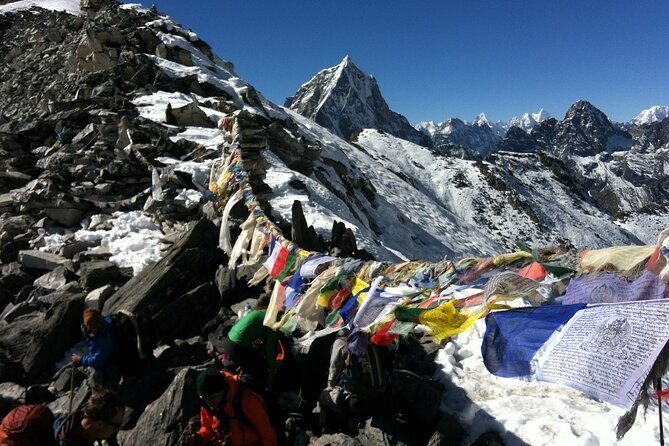
Lukla feels like a dare. This Everest Base Camp trek takes you through the Khumbu Valley, with big 8,000-meter views along the way, and it’s run with smooth human logistics (airport pickup plus a guide/porter team). I especially like the built-in Lukla flights with Himalayan views and the all-trek meal plan that keeps you focused on walking. The main thing to consider is altitude: the schedule includes acclimatization days, but some hikers may still have to adjust plans if they get hit by altitude or illness.
You also get real immersion in Sherpa life—not just scenery. You’ll spend real time in Namche Bazaar, pause in Tengboche for monastery rituals, and take in Everest View Point and Kala Patthar for panoramic mountain sightlines. I like that the trip balances culture with the grind, including rest time at Dingboche before you push closer to Everest Base Camp.
Before you go, be honest with yourself: even with support and first aid available, this is strenuous trekking at elevation. Pack smart, move at a steady pace, and don’t treat day 9 and day 10 like easy sightseeing.
In This Review
- Key things I’d bet on before you book
- How This Everest Base Camp Trek Runs From Kathmandu
- Price and Value: What Your $1,600 Covers (and What It Doesn’t)
- Day 1 in Kathmandu: A Rest Day That Actually Matters
- Day 2: Kathmandu to Lukla, Then a Trek Down to Phakding
- Day 3: Dudh Koshi River Footsteps and Namche Bazaar Arrival
- Day 4: Namche Bazaar Acclimatization and Everest View Point
- Day 5: Tengboche, the Gompa, and a Spiritual Pause
- Day 6: Dingboche and the Imja Valley Stone Walls
- Day 7: Dingboche Rest Day (Your Body’s Voting Day)
- Day 8: Lobuche, Thukla, Dughla Pass, and Peak Spotting
- Day 9: Everest Base Camp and the Return Toward Gorak Shep
- Day 10: Kala Patthar Views, Then Pheriche
- Day 11: Khumjung, Dudhkoshi River, and a Local Market Stop
- Day 12: Back to Lukla and the Memory of the Airport
- Day 13: Flight Back to Kathmandu and a Farewell Dinner
- Day 14: Drop-Off at Tribhuvan International Airport
- What Makes This Trek Feel Well Run
- Who Should Book This Everest Base Camp Trek
- Should You Book It?
- FAQ
- Where is the meeting point in Kathmandu?
- How do you handle airport transfers?
- What flights are included in the trek?
- Do you provide a guide and porter?
- Are meals included during the trek?
- Is first aid available?
- Is this a private trek?
- What trekking equipment should I bring?
- What costs are not included?
- How fit do I need to be?
Key things I’d bet on before you book
- Government-certified guide + porter support to keep the trek manageable and safer
- All meals during the trek (breakfast, lunch, dinner) so you’re not calculating food budgets
- Strategic acclimatization in Namche Bazaar and Dingboche before higher passes
- Real Everest viewpoint moments at Everest View Point and Kala Patthar
- Tengboche Gompa stop for a spiritual break with monastery activity you can watch (or join)
- Private tour for your group, not a mixed crowd trekking at random speeds
More trails out of Kathmandu, boots ready
- Everest Base Camp Trek – 14 Days★ 5.0 · 1,499 reviews
- Everest Base Camp Trek★ 5.0 · 842 reviews
- Everest Base Camp Trekking★ 5.0 · 485 reviews
- Nagarkot Sunrise View and Day Hiking from Kathmandu★ 5.0 · 471 reviews
How This Everest Base Camp Trek Runs From Kathmandu
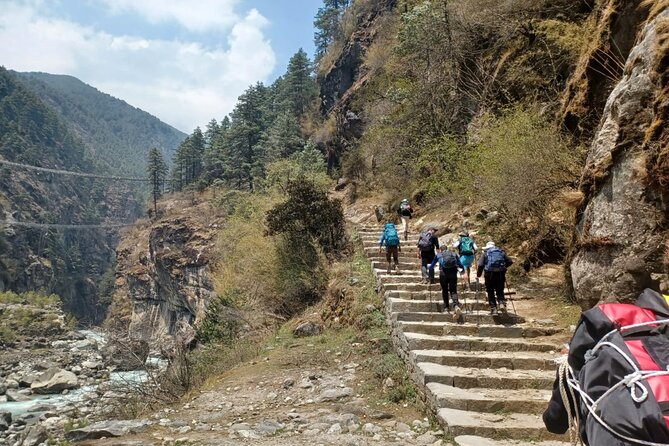
This trip starts with an airport transfer in Kathmandu, then quickly gets you into trek mode with an early flight to Lukla. The meeting point is in Thamel (Kathmandu 44600), which is handy because it’s a central base for gear shops, cafés, and last-minute fixes.
A key practical point: it’s a private tour/activity. That matters more than it sounds. When you’re dealing with altitude, tired legs, and weather swings, having only your group can make pacing and rest stops feel less chaotic than shared tours.
You also get a mobile ticket and basic onboard comforts like a restroom, plus first aid service. That’s not luxury hiking—it’s just smart safety planning for a remote route.
Price and Value: What Your $1,600 Covers (and What It Doesn’t)
At $1,600 per person for 14 days, the value comes from what’s already taken care of:
- Flights in and out of Lukla (both directions)
- Pickup and drop-off at the airport in Kathmandu
- A government-certified guide and porter, with a porter ratio of 1 porter for 2 trekkers
- All meals during the trek (breakfast, lunch, dinner listed across multiple days)
- Farewell dinner
- First aid service
- Restroom on board
What you still pay for (or handle yourself) includes international airfare and Nepal visa fees, drinks and beverages, personal expenses, and travel insurance. Trekking gear like hiking sticks and trekking shoes is also not included, so you’ll want to bring your own or rent beforehand.
To me, the fairest way to judge this price is simple: a trekking plan with flights plus a guide/porter team costs real money to organize. This package shifts the heavy lifting of logistics onto the operator, so you can spend energy on altitude adaptation and your footing.
Day 1 in Kathmandu: A Rest Day That Actually Matters
Day 1 is straightforward: you arrive at Tribhuvan International Airport, transfer to your hotel, and then you have the day free to rest. This isn’t just a formality. After an international flight, the smart move is to sleep early, drink water, and keep your body calm before you jump to a high-energy trekking route.
You’ll also be in Thamel area life nearby, which makes it easier to handle last-minute items like basic snacks or a quick gear check if you forgot something.
Day 2: Kathmandu to Lukla, Then a Trek Down to Phakding
The real action starts with an early flight from Kathmandu to Lukla (listed as about 40 minutes). The flight is famous for views, and your itinerary specifically calls out seeing the Langtang and Annapurna Himalayan range from the air.
Then you’re trekking down from Lukla to Phakding, crossing a few suspension bridges. The schedule lists the day as a long stretch (about 15 hours), so plan for a big first trekking day even though you’re going downhill. That mix—height exposure plus lots of walking time—is why you’ll feel it in your legs quickly.
Practical tip for day 2: keep your pace gentle. Don’t sprint just because you’re descending. Your knees will remember.


Day 3: Dudh Koshi River Footsteps and Namche Bazaar Arrival
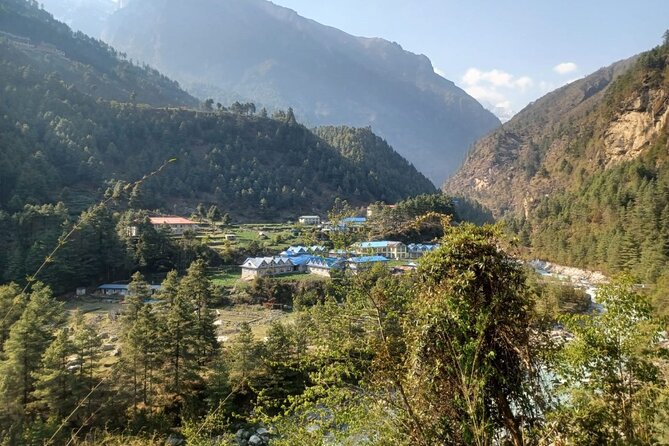
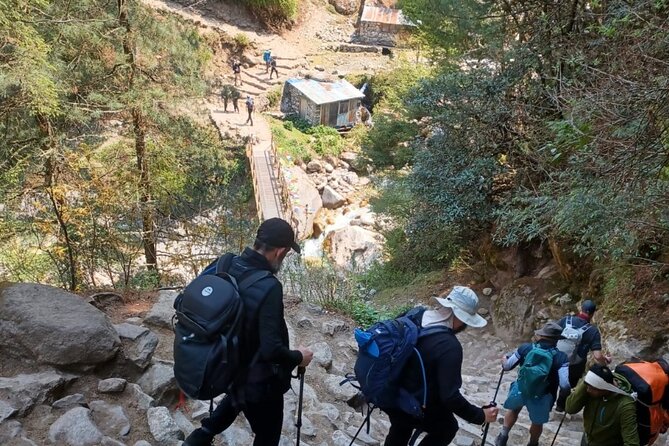
Day 3 takes you along the Dudh Koshi River and across several suspension bridges, including the Hillary Suspension Bridge. That bridge stop is more than a photo moment. It’s a quick reminder that the trail is real infrastructure in a remote valley—built and maintained in a place where everything is harder.
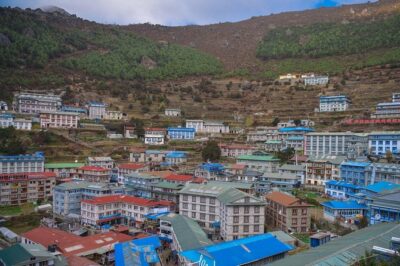
You then reach Namche Bazaar, a Sherpa town that’s both functional and social. The itinerary frames it as a beautiful Sherpa settlement, and it’s exactly the kind of place where you can gauge what the next week will feel like: packed trails, lots of trekking gear in shops, and strong local life around you.
The day is scheduled as about 12 hours, so treat it as a steady climb and don’t gamble on speed.
Day 4: Namche Bazaar Acclimatization and Everest View Point
Day 4 is your acclimatization day in Namche, and it’s one of the smartest parts of this itinerary. Instead of rushing onward, you explore the town and let your body adapt.
The plan also includes time at Everest View Point for panoramic mountain views. That’s huge value here because it gives you a taste of the big names (Everest, and the surrounding giants you’ll see from the route) without waiting until the final days.
This is also where you can handle real trekking-life tasks:
- checking gear
- stocking small comforts
- eating well before the higher sections
The itinerary lists day 4 as about a 1-day segment, meaning it’s not just an instant stop. You’re meant to settle in and adjust.
Day 5: Tengboche, the Gompa, and a Spiritual Pause
Tengboche is often the emotional checkpoint for many Everest treks, and this schedule takes it seriously. You trek to Tengboche (listed around 12 hours), and then you visit Tengboche Gompa, described as the largest monastery (Gompa) in the Khumbu region.
You’ll see Lama-led spiritual rituals, and the trip even notes that you can get involved if you’re interested. Even if you’re not religious, this is one of the most human parts of the trek. It’s not just mountains—it’s how people live with the mountains nearby.
The itinerary lists a separate 1-hour visit at the monastery area. That’s enough time to respect what’s happening and take in the setting without rushing.
Possible drawback: this day can feel long and tiring. If you’re already feeling altitude strain, prioritize rest in the morning so you can actually enjoy the monastery stop.
Day 6: Dingboche and the Imja Valley Stone Walls
From Tengboche you continue to Dingboche. The itinerary describes the valley area as gradually gaining altitude, and it adds a specific detail that I love for how it makes the place feel real: a kilometer of stone walls built using stones of different sizes, covering the valley of Imja.
Dingboche sits at a point where the trekking begins to feel more exposed. You’re closer to higher terrain, and the days feel more concentrated. The schedule lists day 6 as about 12 hours, so pace carefully and don’t treat it like a casual hike.
Day 7: Dingboche Rest Day (Your Body’s Voting Day)
Day 7 is rest for acclimatization in Dingboche. It’s listed as about 12 hours, which signals that this isn’t a token break. This is one of your key “make it or break it” moments.
If you want the most practical strategy for high-altitude trekking, it’s this: when the itinerary gives you a rest day, listen to it. Drink, eat, walk a little if it helps (without turning it into a hard workout), and give your body the time it needs.
The goal set by the itinerary is clear: prepare yourself for the mighty Everest Base Camp.
Day 8: Lobuche, Thukla, Dughla Pass, and Peak Spotting
Day 8 pushes you closer, heading to Lobuche. The plan includes passing through Thukla, ascending to Dughla Pass, and reaching Lobuche surrounded by hills and valleys.
You’ll also witness Tabuchi and Arakam peaks along the way. And there’s a nice bit of context here: Lobuche can refer to Lobuche East and Lobuche West, which helps you understand why you might hear the area described in multiple ways.
The schedule lists this day as about 4 hours, which sounds short on paper. But at this altitude, shorter days can still feel physically intense—especially after a week of trekking.
Day 9: Everest Base Camp and the Return Toward Gorak Shep
Day 9 is the day you reach Everest Base Camp and then trek back to Gorak Shep. The itinerary notes this can be challenging due to high altitude, and that’s the right expectation to carry into the day.
The schedule lists about 5 hours, but don’t let “hours” trick you. High altitude changes everything: breathing, energy levels, hydration needs, and your sense of effort. If you start the day feeling great, that’s common. Still, keep pace conservative because your body may adjust slower than you expect.
This is also where having a guide/porter team matters. Even when you’re carrying less than you think, you’ll feel the altitude in your legs and lungs. The support structure helps keep the day focused on safe movement.
Day 10: Kala Patthar Views, Then Pheriche
Today is all about Kala Patthar. Starting from Gorak Shep, you hike to Kala Patthar for breathtaking views of Mount Everest, then continue trekking to Pheriche.
The itinerary lists about 6 hours, and it also says the route shifts downward after Kala Patthar, making it easier. That’s a useful mindset shift: you’re not just marching for bragging rights. You’re also trading altitude strain for a gentler descent after one of the most intense sight days.
What I’d watch for: this is a big-view day, so go steady. It’s easy to rush when you see mountains. The payoff is worth the effort, but safety beats speed every time.
Day 11: Khumjung, Dudhkoshi River, and a Local Market Stop
Day 11 continues to Khumjung (listed around 7 hours). The plan includes the Dudhkoshi River area, Everest views, and something specific called a ruler market.
That kind of small cultural detail is why I like this route. Even during a trekking challenge, you still get touches of daily life and local economy—things that make you feel like you’re walking through real communities rather than just passing through.
Day 12: Back to Lukla and the Memory of the Airport
Day 12 takes you to Lukla (about 5 hours), and the itinerary calls out seeing the world’s most dangerous airport of all time. Whether or not you obsess over superlatives, the real point is that Lukla’s airfield is part of Everest folklore, and it’s a memorable end-cap to the trek’s hardest logistics.
It’s also a psychological day. If you’ve reached this point, you’ve crossed the toughest stretch. Now you’re walking to the place where planes take you back to Kathmandu life.
Day 13: Flight Back to Kathmandu and a Farewell Dinner
On Day 13 you fly from Lukla back to Kathmandu. The day includes time for leaving your footprints behind and taking home memories.
The itinerary also includes a farewell dinner with the Master Himalaya team. Based on the trip feedback, this isn’t just a polite ending. It’s part of how the operator keeps the experience human from start to finish—making sure you’re supported and celebrated, even when the trek is hard.
Day 14: Drop-Off at Tribhuvan International Airport
Day 14 is simple: a team member drops you at Tribhuvan International Airport. After a 14-day trekking rhythm, that kind of final coordination is comforting. You’re not left figuring out your own transfer at the last minute.
What Makes This Trek Feel Well Run
I like this trek model because it’s built around the realities of high-altitude trekking:
- Climb with structure: Namche and Dingboche aren’t random stops. They’re there to help your body adapt before the higher terrain.
- Shorter intensity spikes after rest: Days like Kala Patthar and Everest Base Camp are the big hits, then you shift to easier movement afterward.
- Support that reduces risk: Government-certified guide and porter support (1 porter for 2 trekkers) helps you move more safely, especially when tired.
- Food is handled: All meals are included during the trek. That’s a quality-of-life issue at altitude, not a small detail.
A couple of considerations to keep expectations realistic:
- Facilities are likely to be simple on the trail (the trip feedback describes food and facilities as spartan but more than adequate).
- Altitude can affect who makes it to the highest points. The itinerary is designed to reduce risk, but no trek can remove that uncertainty.
Who Should Book This Everest Base Camp Trek
You’re a good fit for this trek if you:
- have moderate physical fitness
- want a guided route with porter support
- like the idea of mixing Everest big views with Sherpa villages and monastery culture stops
- value a package where flights, meals, and basic medical support are already arranged
You might rethink the plan if you:
- know you struggle with altitude
- prefer a more flexible itinerary with more options to shorten or skip sections (this schedule is structured)
Should You Book It?
If your goal is a classic Everest Base Camp trek with real logistics covered—Lukla flights, guide/porter team, full meals, and planned acclimatization—this is a strong choice. The biggest “yes” comes from how the schedule supports you: Namche and Dingboche rest, then a careful push to Lobuche, base camp, and Kala Patthar.
The biggest “pause” is altitude reality. If you’re prone to altitude sickness or you’re not sure how your body handles elevation, you’ll want to be extra honest in training beforehand and have a conservative mindset on trekking days near the highest points.
If that sounds like you can manage, book it. Then train, pack smart, and let the mountains do the talking.
FAQ
Where is the meeting point in Kathmandu?
The meeting point is in Thamel, Kathmandu 44600, Nepal.
How do you handle airport transfers?
You get pickup and drop-off at the airport in Kathmandu, with a team member dropping you at Tribhuvan International Airport on the final day.
What flights are included in the trek?
Flights from and to Lukla are included. The Kathmandu to Lukla flight is listed as about 40 minutes, and there is a return flight from Lukla back to Kathmandu on Day 13.
Do you provide a guide and porter?
Yes. The trek includes a government-certified guide and porter, with a porter ratio of 1 porter for 2 trekkers.
Are meals included during the trek?
Yes. All meals during the trek are included, including breakfast, lunch, and dinner as listed across the trekking days.
Is first aid available?
Yes. The package includes first aid service.
Is this a private trek?
Yes. It’s described as a private tour/activity, so only your group participates.
What trekking equipment should I bring?
The trek does not include trekking equipment like hiking sticks and trekking shoes, so you should bring your own or arrange rentals separately.
What costs are not included?
Not included are international flight and visa fees, drinks and beverages, personal expenses, and travel insurance.
How fit do I need to be?
The tour data states you should have a moderate physical fitness level.
More Trekking Out of Kathmandu






More Tour Reviews in Kathmandu




Just Reviewed in Kathmandu
- Mountain Bike Tour
★ 5.0 · 3 reviews - Annapurna Panaroma
★ 5.0 · 3 reviews - Mount Everest Scenic Flight 50 Minutes
★ 5.0 · 3 reviews - Kathmandu : Swambhunath & Durbar Square Guided Half Day Tour
★ 3.3 · 3 reviews - Chandragiri Cable Car & Monkey Temple Tour – Private/Group
★ 5.0 · 3 reviews - Kathmandu: Shivapuri National Park Hiking Day Trip
★ 3.3 · 3 reviews
Everest Base Camp Treks, compared.
 ★ 5.0Everest Base Camp Trek – 14 DaysFrom $1,8001,499 reviews
 ★ 5.0Everest Base Camp TrekFrom $1,790842 reviews
 ★ 5.0Everest Base Camp TrekkingFrom $1,350485 reviews
 ★ 5.0Everest Base Camp Trekking – 13 DayFrom $1,399365 reviews
★ 5.0Everest Base Camp TrekFrom $1,445350 reviews
★ 5.0Everest Base Camp Trek -14 DaysFrom $1,420321 reviews
 ★ 5.012 Days Everest Base Camp TrekFrom $1,099289 reviews
 ★ 5.0Everest Base Camp Trekking – 2025/2026From $1,339199 reviews
Browse the lists this tour appears in