
One week, three Nepal highlights, zero guesswork. This 7-day route stitches together Kathmandu’s spiritual landmarks, Chitwan’s wildlife-filled days, and Pokhara’s lakeside calm—so you don’t waste time plotting between cities. I like that the plan includes airport-to-hotel help with private-car shuttles, plus guided city time with English support where it matters most.
The best part is the day structure: you get a full Kathmandu Valley block, then you switch gears to Chitwan National Park activities (not just sitting around). One thing to consider: entrance fees and some admissions aren’t included, and several parts of the trip run on early morning schedules.
In This Review
- Key highlights you’ll feel fast
- How the Kathmandu–Chitwan–Pokhara loop works (and why it’s smart)
- Day 1 in Kathmandu: arriving without the “where do I go now?” stress
- Day 2 in Kathmandu Valley: Pashupatinath, Boudhanath, Swayambhunath, Durbar Square
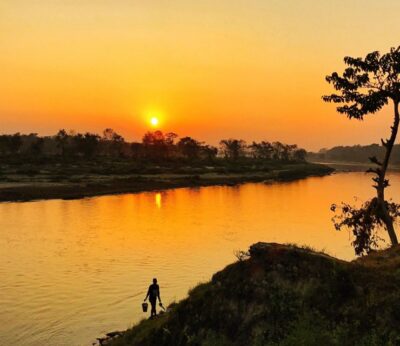
- Day 3 in Chitwan: travel in, then ease into sunset and nature walks
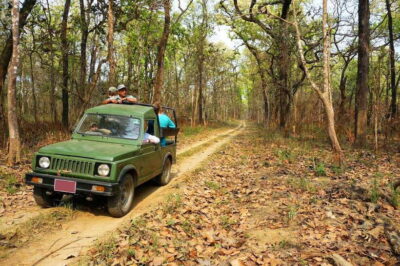
- Day 4 in Chitwan: jeep safari, Rapti River activity, and Tharu Village culture
- Day 5 to Pokhara: bird watching first, then a scenic switch in pace
- Day 6 in Sarangkot and around Pokhara: sunrise + waterfalls, caves, museums, stupa, and Fewa Lake
- Day 7 back to Kathmandu: wrap-up on tourist bus time
- Hotels and group size: what “2-star” means for your comfort
- English support and guides: where the value really shows
- What’s included (and what you should budget extra for)
- Is $789.34 per person good value for this 7-day route?
- Who should book this tour?
- Should you book the 7 Days Nepal Tour (Kathmandu, Pokhara and Chitwan)?
- FAQ
- Is airport pickup included?
- What cities are covered during the 7 days?
- Are hotels included in the price?
- Are meals included every day?
- Are entrance fees included?
- What Chitwan activities are included?
- How big is the group?
Key highlights you’ll feel fast
- Airport and hotel shuttles by private car for an easier first and last day
- Kathmandu Valley route packed with Pashupatinath, Boudhanath, Swayambhunath, and Durbar Square
- Chitwan National Park permit and activities included, so you can focus on the wildlife and culture
- Sunrise at Sarangkot timed for early starts and big viewpoints
- Group size capped at 30 and a common departure rhythm by tourist bus
Before you lock this one in, a few Kathmandu alternatives:
- Short Annapurna Base Camp Trek – 7 Days★ 5.0 · 22 reviews
- Explore Nepal In A Week – 7 Days★ 5.0 · 20 reviews
- 7 days Nepal Motorcycle tour★ 5.0 · 12 reviews
- Kathmandu to Langtang Valley 7-Day Trek★ 5.0 · 11 reviews
How the Kathmandu–Chitwan–Pokhara loop works (and why it’s smart)
This tour is built like a practical circuit: Kathmandu in the middle of the first half, Chitwan next, then Pokhara to finish with scenery and gentle momentum before rolling back to Kathmandu. The big value for you is that the logistics are handled—especially the city-to-city moves—so your time goes to sightseeing and activities instead of arranging transport on the fly.
You’ll also notice the balance: religious and heritage stops in Kathmandu, wildlife and Tharu culture in Chitwan, and then sunrise + lakes in Pokhara. That mix is ideal if you want variety without turning the trip into a nonstop sprint.
Pricing at $789.34 per person looks reasonable once you factor in what’s included: round-trip city transfers by tourist bus (Kathmandu–Chitwan–Pokhara–Kathmandu), airport and hotel shuttles by private car, English speaking support during city touring in Kathmandu and Pokhara, 2-star hotels, and a full set of Chitwan activities with the park permit.
Day 1 in Kathmandu: arriving without the “where do I go now?” stress
Your first move is simple: pickup from Kathmandu International Airport (or from your location) and transfer to your hotel. It’s only listed as about 40 minutes, which matters because the first thing your brain wants on arrival is not more decisions.
This is the day to take stock. Once you’re checked in, you can also plan your next morning pace. Kathmandu Valley temples and squares are concentrated, so you’ll get more out of the trip if you’re ready to walk early and take small breaks instead of trying to marathon every photo stop.
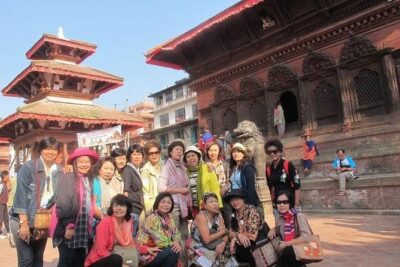
Day 2 in Kathmandu Valley: Pashupatinath, Boudhanath, Swayambhunath, Durbar Square
This is the heavy-hitter day for Kathmandu. Your city tour is set around major landmarks that each feel different, even though they’re all tied to the same Kathmandu Valley world.
- Pashupatinath Temple: A powerhouse stop for Hindu spirituality. Expect an atmosphere that’s much more than architecture—you’re stepping into a living religious setting.
- Boudhanath Temple: This is the Buddha-focused counterpart vibe. It’s a great contrast day: where Pashupatinath feels intensely ritual, Boudhanath often feels more meditative and outwardly communal.
- Swayambhunath (Monkey Temple): High on the hill, it’s a classic “look across the city” viewpoint combined with temple life. Good for getting bearings fast.
- Kathmandu Durbar Square: This is where the ancient royal palace history becomes visible in stone and layout. It’s a walkable way to understand Kathmandu’s heritage without needing a textbook.
- Narayanhiti Museum (latest Royal Palace): A more museum-like wrap-up that helps connect the dots between temple heritage and Nepal’s royal story.
The nice thing here is that admission tickets are shown as free for this day, and your tour guide support is English speaking for Kathmandu city touring. If you’re someone who likes context, this is where it pays off.
Possible drawback: This is a long day (listed as about 7 hours). If you’re sensitive to crowding or long walking, build in slower moments—especially around the temple complexes where people naturally cluster.
Day 3 in Chitwan: travel in, then ease into sunset and nature walks
Early morning starts the Chitwan phase: you’ll transfer to the bus station around 7am, then take about 5 hours by tourist bus to Chitwan. Once you arrive, you get a resort transfer, lunch at the resort, and then a nature walk plus a sunset tour.
I like this flow because it respects your energy. You don’t jump straight into a full-on safari schedule the moment you arrive. Instead, you land, eat, stretch your legs, and orient yourself to the surroundings.
Two practical points for you:
- Expect travel time to be real time. The bus ride is part of the experience rhythm, not just transit.
- Sunset tours in wildlife regions are timed and focused, so it’s worth being ready when the group moves.




Day 4 in Chitwan: jeep safari, Rapti River activity, and Tharu Village culture
Day 4 is the “do the things” day inside Chitwan National Park. The program is listed as about 7 hours, and it’s packed with both animal-watching and people-focused cultural stops.
Here’s what’s included:
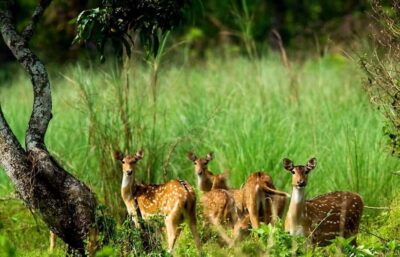
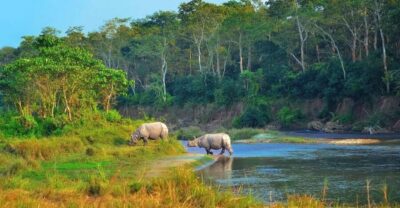
- Jeep safari: This is your main wildlife option. A jeep lets you cover ground and increase your odds of seeing animals during the day’s prime movement windows.
- Cannoning Tour in Rapti River: A water-based adventure on the Rapti River. This is one of the reasons this tour feels more active than a basic nature tour.
- Jungle Museum Tour: Useful for understanding what you’re looking at in the park environment.
- Tharu Village Tour: A cultural contrast to the wildlife focus.
- Tharu Stick Dance Program: A performance component that turns the village visit into something you can actually watch rather than just tour past.
If you’re choosing this tour for authenticity, this day is where it happens. You’re not only chasing animals—you’re also seeing how local culture relates to the land.
One thing to keep in mind: your comfort depends on your willingness to do a full day outdoors. If you prefer slow-paced sightseeing, the combination of safari + river activity can feel like a lot.
Day 5 to Pokhara: bird watching first, then a scenic switch in pace
You start early again with a bird watching program before breakfast. After that, you transfer to the bus station for the drive to Pokhara (about 6 hours).
This day works well if you want a gentler mood after Chitwan. Bird watching sets a calm tempo, and Pokhara is built for that kind of reset—less frantic, more scenic.
Even if you’re not a hardcore birder, bird watching can be a satisfying way to “wake up” the senses. You’re paying attention in a way that fits the region rather than treating the outdoors as a background for photos.
Day 6 in Sarangkot and around Pokhara: sunrise + waterfalls, caves, museums, stupa, and Fewa Lake
This is the big morning for views. You head to Sarangkot for a sunrise tour at 5:30am, then continue through Pokhara covering:
- Water fall
- Cave
- Mountain Museum
- World Peace Stupa
- Fewa Lake
Admission tickets are listed as not included for this day, so you should budget for a few entries or ticket costs. That doesn’t make it a bad day—it just prevents sticker-shock when you arrive at specific sites.
Why you’ll probably like this day: it strings together multiple types of Pokhara stops that feel different from each other. You’re mixing a viewpoint moment at sunrise with classic sightseeing around the lake area, plus the stupa and museum for context.
Possible drawback: it’s listed as about 7 hours. You’ll want comfortable walking shoes and a phone battery you can trust for photos, because the route is action-heavy.
Day 7 back to Kathmandu: wrap-up on tourist bus time
Your last day is basically a transition day. You’re transferred to the bus station around 7am and then take the tourist bus back to Kathmandu for about 7 hours. The tour ends after you arrive.
This is where I’d be thoughtful about your planning. If you have a late evening flight, make sure you’re not cutting it too close. You’ll be trading “one more stop” freedom for a fixed schedule—normal for group tours, but worth checking before you book anything after arrival.
Hotels and group size: what “2-star” means for your comfort
The itinerary includes 2-star level hotels in Kathmandu, Pokhara, and Chitwan. That usually means clean, functional, and simple. It’s not the kind of lodging choice you book for luxury; you book it because it keeps your budget focused on activities and transport.
Group size is capped at 30 travelers. That typically keeps the tour manageable: enough people to make it social, not so many that every stop becomes chaos. Still, temples and viewpoints in Nepal are naturally busy, so your experience will also depend on the time of day and crowd flow.
English support and guides: where the value really shows
You’ll have English speaking guidance during the city tour in Kathmandu and Pokhara. Having explanations matters most when you’re in sacred or historical spaces—like why certain temples are arranged the way they are, or what you’re meant to notice at squares and museums.
One standout from past travelers was a guide named Krishna, specifically praised as an amazing tourist guide during a stay at Holiday Inn. Even if your assigned guide differs, it’s a good sign that the operator knows how to staff city touring with someone who can keep you informed rather than just moving the group.
What’s included (and what you should budget extra for)
Here’s what you can plan on being covered:
- Airport and hotel shuttles in private car (Day 1 and Day 7 logic)
- Entercity transfers by tourist bus (Kathmandu–Chitwan–Pokhara–Kathmandu)
- English speaking during city tour in Kathmandu and Pokhara
- 2-star hotels in Kathmandu, Pokhara, and Chitwan
- Chitwan park permit
- Chitwan activities as listed
- Meals included: breakfast (2), lunch (2), dinner (2)
What’s not included:
- All meals and drinks beyond those specified
- Entrance fees during sightseeing in Pokhara and Kathmandu
- Any optional gratuity
- Admissions for places on the Pokhara/Sarangkot day are listed as not included
This is the practical part: group tours are great for turning time into experiences, but you should still carry a small budget for site tickets and drinks. Also, don’t forget your meals gap—if breakfast or dinner isn’t included on a specific day, you’ll want cash and patience for local options.
Is $789.34 per person good value for this 7-day route?
For a week that includes two big cities of sightseeing plus a national park with multiple activities, the price looks like decent value—especially because the tour bundles key costs: transfers, hotels, and Chitwan’s park permit and activities.
The value equation is strongest if:
- You want a structured route with little planning effort
- You’re okay with 2-star lodging
- You’re willing to do early starts (Sarangkot and bird watching days)
The value equation weakens a bit if:
- You hate long bus rides
- You want every single entrance fee and meal handled for you
- You prefer private, slower travel with fewer group constraints
Who should book this tour?
This is a strong fit for:
- First-time visitors to Nepal who want Kathmandu culture + Chitwan nature + Pokhara views
- Active travelers who don’t mind full days and early mornings
- People who want English support during city touring, not just a driver
It might not be ideal if you:
- Want a super relaxed pace every day
- Plan to spend most of the week on your own, unstructured
Should you book the 7 Days Nepal Tour (Kathmandu, Pokhara and Chitwan)?
If you want a one-week Nepal sampler that mixes temples, wildlife action, and Pokhara sightseeing, this tour makes a lot of sense. The schedule is structured, the Chitwan days are activity-heavy (with a permit included), and the Kathmandu stops hit the major spiritual and heritage anchors.
I’d book it if your priorities are time-saving logistics and a ready-made plan. I’d pause if you’re trying to avoid early starts or you don’t want to budget for extra admissions in Pokhara/Kathmandu. For most people, though, the blend of Kathmandu heritage, Chitwan wildlife days, and Sarangkot sunrise views is exactly what a first Nepal week is supposed to deliver.
FAQ
Is airport pickup included?
Yes. You can be picked up from Kathmandu International Airport (or from your location) and transferred to the hotel. The tour also includes airport and hotel shuttle in private car.
What cities are covered during the 7 days?
The tour covers Kathmandu, Chitwan, and Pokhara, with transfers between all three and a return to Kathmandu on the last day.
Are hotels included in the price?
Yes. The package includes 2-star level hotels in Kathmandu, Pokhara, and Chitwan.
Are meals included every day?
No. The tour includes 2 breakfasts, 2 lunches, and 2 dinners. All other meals and drinks are not included.
Are entrance fees included?
Entrance fees during sightseeing in Pokhara and Kathmandu are listed as not included. Some parts of the itinerary show admission as free, so you should still budget for site tickets on the Pokhara/Kathmandu sightseeing portions.
What Chitwan activities are included?
Chitwan activities listed as included are: jeep safari, Cannoning Tour in Rapti River, Jungle Museum Tour, Tharu Village Tour, and Tharu Stick Dance Program. The Chitwan park permit is also included.
How big is the group?
This tour has a maximum of 30 travelers.
If you want, tell me your travel month and your comfort level with early mornings, and I’ll help you decide which days to treat as priorities for photos and which to keep lighter.
More 7-Day Experiences in Kathmandu

More Tours in Kathmandu




More Tour Reviews in Kathmandu




Just Reviewed in Kathmandu
- Mountain Bike Tour
★ 5.0 · 3 reviews - Annapurna Panaroma
★ 5.0 · 3 reviews - Mount Everest Scenic Flight 50 Minutes
★ 5.0 · 3 reviews - Kathmandu : Swambhunath & Durbar Square Guided Half Day Tour
★ 3.3 · 3 reviews - Chandragiri Cable Car & Monkey Temple Tour – Private/Group
★ 5.0 · 3 reviews - Kathmandu: Shivapuri National Park Hiking Day Trip
★ 3.3 · 3 reviews
Pokhara Tours & Sightseeing, compared.
 ★ 4.63-Day All-Inclusive Chitwan SafariFrom $149133 reviews
 ★ 4.73 Day Chitwan Jungle Safari TourFrom $12987 reviews
 ★ 5.06 Days Special Kathmandu Pokhara Tour in NepalFrom $1,00028 reviews
 ★ 4.52 Days Chitwan Jungle Safari Tour from Pokhara/KathmanduFrom $11727 reviews
 ★ 5.0Kathmandu to Pokhara drop-off service by private vehiclesFrom $22527 reviews
 ★ 4.0Kathmandu to Pokhara Tourist Bus Tickets reservationFrom $2225 reviews
 ★ 4.0Kathmandu to Pokhara Bus Ticket- SofaFrom $2124 reviews
 ★ 4.82, 3, or 4-Day Chitwan Jungle SafariFrom $3524 reviews
Browse the lists this tour appears in