
13 days of Everest dreams and thin air. I love how this trek mixes big-view moments with a real plan for getting you acclimated, from the Sherpa village days to the early hike up to Kalapathar (5,550m) for Everest (8,848m) views. You’ll also enjoy the convenience of having a government-licensed guide handle permits and route guidance. One drawback to flag up front: most meals and drinks are not included, so you’ll want to budget for tea-house food along the way and keep spending under control.
What makes this itinerary feel practical is that it’s not just “walk and hope.” You get Kathmandu orientation first, then a route that builds altitude gradually through key stops like Namche Bazaar and Tengboche, with the main hard day shaped around Gorakshep and Kala Patthar.
Key things I’d focus on before you go
- Kalapathar early morning at 5,550m is the headliner day for Everest views beyond the Base Camp idea.
- Private rooms in tea houses keep the comfort level more predictable than dorm-style trekking.
- One guide + porter for every two trekkers means less weight on you, more energy for the climb days.
- Permits and Sagarmatha paperwork handled so you don’t arrive and scramble for documents.
- Lukla flights included so your trip starts and ends on a schedule that usually fits a 13-day window.
- Max group size 15 keeps the trek feeling manageable rather than crowded.
In This Review
- Kathmandu: Thamel, Durbar Square, and the sights you’ll remember
- Day 1: Thamel orientation and a guided kickoff
- Day 1 evening tip
- Day 2: Kathmandu Durbar Square, Pashupatinath, Boudhanath, and Monkey Temple
- Fly to Lukla, start descending, and find your rhythm
- Day 3: Lukla flight, Cheplung, and your first big views
- Day 3 practical consideration
- Day 4: Rivers, suspension bridges, and Namche Bazaar
- Day 4 why Namche matters
- Day 5: Sherpa village acclimatization with serious view pressure
- Tip for Day 5
- Tengboche to Dingboche: monasteries, forests, and altitude that climbs
- Day 6: Down to Dudhkoshi, up to Tengboche, and the monastery stop
- Day 7: Birch, pine, rhododendron, Pangboche, and Dingboche overnight
- Dughla to Lobuche: Khumbu Glacier moraine and the steep push
- Day 8: Steep ascending day and that glacier-moraine feel
- Day 8 pacing tip
- Gorakshep and Kala Patthar: the day you’ll talk about for years
- Day 9: Gorakshep base, then early hike to Kala Patthar (5,550m)
- Practical reality check
- Everest Base Camp day: staging area, then a descent back to Pheriche
- Day 10: To Everest Base Camp via glacier moraine, then back to Pheriche
- Return through the heart of Khumbu: Dingboche, Tengboche, and Namche
- Day 11: Dingboche to Tengboche, then up to Namche Bazaar
- Day 12: Down to Lukla through tributaries and Sherpa settlements
- Finish in Kathmandu: a flight day that feels surprisingly simple
- Day 13: Lukla to Kathmandu, Thamel hotel, and a farewell dinner
- What the $1,000 price buys you (and what you must budget for)
- Included costs that matter
- Not included costs you should plan on
- The guide and porter setup: why it changes your whole experience
- Accommodation and meals: tea houses, private rooms, and your real comfort level
- Weather, altitude, and the one thing you can’t schedule
- Who this trek suits best
- Should you book this Everest Base Camp trek?
- FAQ
- What is included in the Everest Base Camp trek price?
- Are domestic flights included?
- What kind of accommodation will I get on the trek?
- Do I need to arrange permits for Sagarmatha National Park?
- Is travel insurance included?
- Are meals included during the trek?
- What happens if the weather is bad?
Kathmandu: Thamel, Durbar Square, and the sights you’ll remember
You start in Kathmandu, and it matters. The first day isn’t about altitude; it’s about getting your bearings, meeting your guide, and learning how the next two weeks will run.
More trails out of Kathmandu, boots ready
- Everest Base Camp Trek – 14 Days★ 5.0 · 1,499 reviews
- Everest Base Camp Trek★ 5.0 · 842 reviews
- Everest Base Camp Trekking★ 5.0 · 485 reviews
- Nagarkot Sunrise View and Day Hiking from Kathmandu★ 5.0 · 471 reviews
Day 1: Thamel orientation and a guided kickoff
After pickup at the airport, you drive to your hotel near Thamel. Later, you take a short evening walk around Kathmandu heritage sites with your guide, then share dinner and get your questions answered. You also meet at the Trek Around Himalayas office for a briefing, which is a smart way to confirm what to expect before the flight to Lukla.
If you like travel that feels organized from day one, this part works. It’s also the moment to ask about your gear needs and packing priorities, especially since personal trekking equipment isn’t included.
Day 1 evening tip
Start thinking about footwear and layering now. Kathmandu nights can feel cooler than you expect, and you’ll want to be comfortable when you wake up early.
Day 2: Kathmandu Durbar Square, Pashupatinath, Boudhanath, and Monkey Temple
This day is about medieval Kathmandu and major spiritual sites. You’ll visit Kathmandu Durbar Square, then Pashupatinath, then Boudhanath Stupa. After that you head to the Monkey Temple area, then finish with time around the Durbar Square in the evening.
Two important practical notes:
- Entrance fees in Kathmandu sightseeing points are not included, so set aside cash or plan for card payments where available.
- Your schedule is packed with walking, but it’s flat compared with what comes next—great prep for leg stamina.
Fly to Lukla, start descending, and find your rhythm
The jump from city to mountain is the emotional switch. You fly from Kathmandu to Lukla early in the day, and even when clouds roll in, the flight typically gives you a first sense of scale—then you shift into trekking mode right away.


Day 3: Lukla flight, Cheplung, and your first big views
After breakfast you fly to Lukla. On the way, you can look out for Himalaya range views, then you reach Lukla and start descending trek toward Cheplung village. From that area, you can get your first glance at the mountain Khumbila, then you continue to Phakding for overnight.
This is a good day for pacing yourself. It’s not a “go hard” day—your body is still adjusting to the trek rhythm after travel.
Day 3 practical consideration
If you’re prone to motion sickness or anxiety with flights, take a moment to prepare before departure. Once you’re on the trail, you’ll be focused on steps and breathing.
Day 4: Rivers, suspension bridges, and Namche Bazaar
You trek along the Dudhkoshi and Bhotekoshi rivers, crossing several suspension bridges. If you’re lucky, you’ll catch early glimpses of Everest and Lhotse while climbing toward Namche Bazaar. The route also takes you through pine forest, then you end at Namche for the night.
This is where the trek starts to feel “Khumbu.” Suspension bridges create small moments of excitement—just stay steady, slow down on windy sections, and follow your guide’s pace.
Day 4 why Namche matters
Namche Bazaar isn’t only a town stop. It’s a base for acclimatization planning later, and you’ll likely feel the altitude more than you did in the lower valleys.
Day 5: Sherpa village acclimatization with serious view pressure
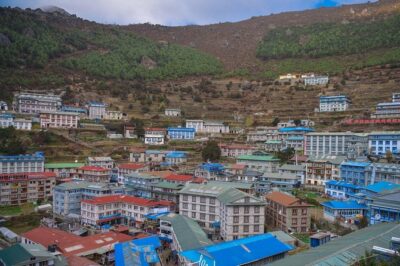
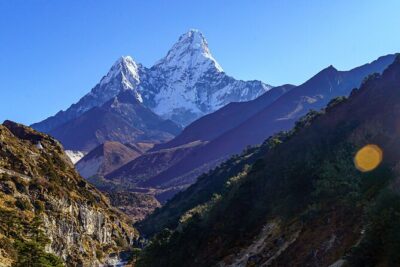
Today is an acclimatization day in a Sherpa village, with time to stroll while soaking in mountain views. You’re looking toward Everest, Lhotse, Nuptse, Ama Dablam, plus peaks like Kongde and Thamserku.
This is one of the days I’d call “strategic enjoyment.” You’re not just killing time. You’re letting your body adjust while your eyes get paid back with big sightlines.
Tip for Day 5
Keep moving gently during the stroll. If you hike too hard just to chase views, you can undo the purpose of acclimatization.
Tengboche to Dingboche: monasteries, forests, and altitude that climbs
The trek shifts from river valleys to more classic high-mountain rhythm. Trees change with elevation, and you’ll start noticing how much your breathing matters.
Day 6: Down to Dudhkoshi, up to Tengboche, and the monastery stop
You descend to the Dudhkoshi river through rhododendron forest, then climb up to Tengboche. You visit Tengboche monastery—ideal for photos and a calm break in your schedule—then you’re back on the trail with Everest and Ama Dablam view potential.
Monastery stops are more than photo stops. They’re a gentle mental reset when you’re working against altitude fatigue.
Day 7: Birch, pine, rhododendron, Pangboche, and Dingboche overnight
You continue through birch, pine, and rhododendron forest to Devuche. From there you cross Imja river, then trek up via Pangboche with strong scenery all along, ending in Dingboche.
This stretch feels like a gradual handoff: you’re still in “trek life,” but the scenery is starting to look more severe, and your pace naturally slows.
Dughla to Lobuche: Khumbu Glacier moraine and the steep push
This is where the trek starts asking for commitment. You’ll be moving beside the Khumbu Glacier moraine, and the trail profile becomes more demanding.
Day 8: Steep ascending day and that glacier-moraine feel
You take on a steep ascending trek toward Dughla and Chupki Lhara along the Khumbu Glacier moraine. As you approach the Lobuche valley, the trail flattens. You overnight in Lobuche.
Moraine terrain has a specific feel—rocky, sometimes uneven, and more tiring under load. If you brought a heavy pack, you’ll understand why having a porter for two trekkers is a real advantage.
Day 8 pacing tip
Your goal is steady breathing, not speed. If you feel your heart hammering, shorten your steps and keep your rhythm.
Gorakshep and Kala Patthar: the day you’ll talk about for years
This is the big hinge day. You’ll get to Gorakshep, then hike up to Kala Patthar when the air is thin and your body is working hard.
Day 9: Gorakshep base, then early hike to Kala Patthar (5,550m)
You trek through rocky dunes, streams, and moraine to Gorakshep. After dropping bags, you hike up to Kala Patthar. The air is thin and the trekking is strenuous, but the payoff is clear: world-class views of Everest standing bold in front of you, plus epic photo opportunities.
This is the day most likely to set the tone for your whole trip. If the weather is good, it can feel unreal. If the weather is poor, you may need to accept limited visibility and keep the focus on effort and safety.
Practical reality check
Bring a warm layer and something for wind. At these heights, temperature swings can be dramatic.
Everest Base Camp day: staging area, then a descent back to Pheriche
Base Camp is emotional. You’ve walked through valleys and forests, then the trail brings you to the place climbers use as a key staging base.
Day 10: To Everest Base Camp via glacier moraine, then back to Pheriche
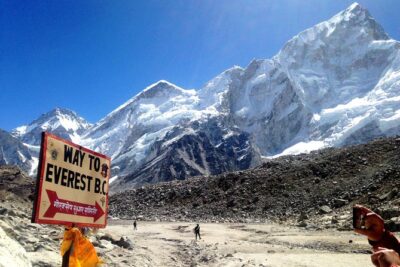
Early morning you trek to Everest Base Camp through glacier moraine. You spend time at Base Camp, then return toward Gorakshep, carry your backpack, and trek onward to Pheriche. The trail is described as a fairly easy descent by now, and you finish with a warm heavy dinner.
This structure makes sense: you get the intensity of Base Camp, then you shift into recovery mode so you can handle the next days down through Namche.
Return through the heart of Khumbu: Dingboche, Tengboche, and Namche
The trek down doesn’t mean easy. Your legs still work, your body still adjusts, and the views keep coming.
Day 11: Dingboche to Tengboche, then up to Namche Bazaar
You retrace via Dingboche and Tengboche. You cross forests described as full of dancing birds and butterflies, which is a nice reminder that this route isn’t only stones and snow. After crossing the Dudh Koshi river, you ascend toward Namche Bazaar for overnight.
It’s a mental boost day. You know what the trail feels like now, and that confidence helps on uphill sections.
Day 12: Down to Lukla through tributaries and Sherpa settlements
Early morning you descend down to the Dudhkoshi river and cross tributaries along the way. You pass Sherpa settlements and a busier trail with tourists, plus animals out on the route. You reach Lukla for overnight.
The “more people” feel can actually help. It adds a bit of social energy as you near the end, and you have more chances to compare notes on what the weather is doing.
Finish in Kathmandu: a flight day that feels surprisingly simple
By the last day, it’s mostly about moving back to civilization without losing the calm of the mountains.
Day 13: Lukla to Kathmandu, Thamel hotel, and a farewell dinner
You take an early flight to Kathmandu, drive to your hotel, and have time to relax or stroll around town. At the end of the day you join a farewell dinner party with the company.
This day is short on stress, which is exactly what you want after 12 days of effort.
What the $1,000 price buys you (and what you must budget for)
For this 13-day Everest Base Camp trek, the price is $1,000 per person. Value comes from the big-ticket items being included, not from you being handed lots of extras you’d never use.
Included costs that matter
- Domestic flights Kathmandu to Lukla and Lukla to Kathmandu
- Airport pickup and drop in a private vehicle
- Tea house accommodation with private room
- One English-speaking government-licensed guide
- One porter for two trekkers
- Permits and paperwork, including Sagarmatha National Park permit and other required permits
- All govt and local taxes
If you’ve trekked before, you know these are the parts that usually become messy when you try to DIY.
Not included costs you should plan on
- All meals and drinks in both the trekking period and Kathmandu period
- Personal expenses like phone calls, bar bills, bottled water, WiFi, battery charging, and hot shower
- Travel and rescue insurance
- Tips for trekking staff and drivers
- Entrance fees in Kathmandu sightseeing points
- Trekking equipment
Also note: tea house lodging is included, but meal budgets can swing a lot depending on how you eat and drink.
The guide and porter setup: why it changes your whole experience
This tour runs with one English-speaking, government-licensed trekking guide and a porter for every two trekkers. That ratio is a big deal once you’re tired, because a heavy pack can turn a manageable day into an exhausting one.
It also helps that the operator named Bimal is described as flexible and easy to deal with, and guides like Ganesh are mentioned as patient and highly capable. That kind of person-to-person coordination matters more than most people expect, especially around acclimatization pacing and day-to-day problem solving.
Accommodation and meals: tea houses, private rooms, and your real comfort level
You’ll stay in tea houses with a private room during the trek. That’s a comfort upgrade compared to shared bunks, especially when you want rest and quiet after a long altitude day.
Meals are not included, so expect to pay for breakfast only as covered by what’s listed in the package details (breakfast is listed as included twice), then cover the rest yourself. A practical strategy: keep snacks simple, and treat tea-house meals as fuel rather than something to “optimize.”
If you’re someone who really values hot shower time, plan ahead. Hot showers are listed as not included.
Weather, altitude, and the one thing you can’t schedule
This trek requires good weather. Since it can be affected by conditions, your best tool is flexibility and sensible expectations—especially around Kala Patthar and visibility of Everest.
Altitude is also part of the deal. Even with acclimatization days, you’ll be trekking at high elevations, and Kala Patthar is listed at 5,550m. Bring realistic stamina and be ready for strenuous moments.
Who this trek suits best
This works best if:
- You have strong physical fitness and you want a true challenging trek
- You want an organized plan with permits and paperwork handled
- You like having a guide to explain geography and biodiversity as you go
- You’re fine with tea house living and budgeting meals and drinks
It may not be the right fit if you want lots of included meals, frequent hot showers, or minimal exertion.
Should you book this Everest Base Camp trek?
I’d book it if you want a structured 13-day route with private-room tea houses, Lukla flights included, and a guide-and-porter setup that protects your energy for the hardest days. The best part is the way the itinerary builds toward the Kala Patthar climb, which is where the Everest views really go beyond the basics.
I’d think twice if your budget can’t handle extra trekking meals, drinks, and Kathmandu entrance fees, or if you’re not comfortable with strenuous altitude effort on the high days. If you’re healthy, flexible, and ready to put in the work, this is the kind of Everest trip that rewards effort with unforgettable mountain scale.
FAQ
What is included in the Everest Base Camp trek price?
The price includes airport pickup/drop by private vehicle, domestic flights Kathmandu to Lukla and back, tea house accommodation with private rooms, an English-speaking government-licensed trekking guide, permits and required paperwork (including Sagarmatha National Park permit), and a porter for two trekkers. It also includes government and local taxes and breakfast as listed in the package details.
Are domestic flights included?
Yes. Domestic flights are included for Kathmandu to Lukla and Lukla to Kathmandu.
What kind of accommodation will I get on the trek?
You stay in tea house accommodation during the trek, with a private room.
Do I need to arrange permits for Sagarmatha National Park?
No. The tour includes all necessary paperwork and permits, including Sagarmatha National Park permit and other required permits.
Is travel insurance included?
No. Travel and rescue insurance are not included.
Are meals included during the trek?
No. Meals and drinks (hot and cold) are listed as not included during both the city and trekking days. Breakfast is included based on the package details.
What happens if the weather is bad?
This activity requires good weather. If it’s canceled due to poor weather, you’ll be offered a different date or a full refund.
More Trekking Out of Kathmandu






More Tour Reviews in Kathmandu




Just Reviewed in Kathmandu
- Mountain Bike Tour
★ 5.0 · 3 reviews - Annapurna Panaroma
★ 5.0 · 3 reviews - Mount Everest Scenic Flight 50 Minutes
★ 5.0 · 3 reviews - Kathmandu : Swambhunath & Durbar Square Guided Half Day Tour
★ 3.3 · 3 reviews - Chandragiri Cable Car & Monkey Temple Tour – Private/Group
★ 5.0 · 3 reviews - Kathmandu: Shivapuri National Park Hiking Day Trip
★ 3.3 · 3 reviews
Everest Base Camp Treks, compared.
 ★ 5.0Everest Base Camp Trek – 14 DaysFrom $1,8001,499 reviews
 ★ 5.0Everest Base Camp TrekFrom $1,790842 reviews
 ★ 5.0Everest Base Camp TrekkingFrom $1,350485 reviews
 ★ 5.0Everest Base Camp Trekking – 13 DayFrom $1,399365 reviews
★ 5.0Everest Base Camp TrekFrom $1,445350 reviews
★ 5.0Everest Base Camp Trek -14 DaysFrom $1,420321 reviews
 ★ 5.012 Days Everest Base Camp TrekFrom $1,099289 reviews
 ★ 5.0Everest Base Camp Trekking – 2025/2026From $1,339199 reviews
Browse the lists this tour appears in