
Review · EVEREST BASE CAMP TREKS
Everest Base Camp Trek – 16 Days
One flight away from real high country. This 16-day Everest Base Camp trek in the Khumbu mixes classic teahouse walking with thoughtful altitude pacing, plus the big payoff of Kalapatthar sunrise and Everest Base Camp prayer flags.
I especially like how the trip builds confidence with early support in Kathmandu and then keeps you moving on practical days like Namche and Dingboche. You’ll also see why people keep raving about the guide team—names that come up in past journeys include Santa, Kamal, Hem, and Surya, and the common thread is calm, hands-on care when things get tough.
One thing to think about: this route depends on mountain weather. If flights into Lukla get disrupted, the plan can shift, and you may need patience—especially because cold and thinner air can turn small problems into bigger ones fast.
In This Review
- Key highlights worth your attention
- Everest Base Camp without the summit pressure
- Kathmandu start: your 3-star breathing room before altitude
- Lukla flights and day-one rhythm in Phakding
- Namche Bazaar: bridges, markets, and altitude that you don’t rush
- The acclimatization day (and the Everest View Hotel option)
- Tengboche monastery day: pine forests and a sunrise backdrop you remember
- A monastery morning plus a slow transition to higher villages
- Dingboche to Lobuche: Nagarsan Hill, thin air, and the quiet cemetery stop
- Everest Base Camp day plus Gorekshep: the prayer-flag finish
- Kalapatthar sunrise: hard early steps, big payoff later
- Return toward warmth: Namche, Lukla, and the feeling of coming home
- What you get for your money: flights, meals, permits, and real support
- Included on the trekking days
- Included in Kathmandu
- Included as trip extras
- What costs extra (so you don’t get surprised)
- Practical notes: weather shifts, solo options, and keeping your head clear
- Weather means flexibility
- Solo travelers: the group logistics matter
- How to avoid the common altitude trap
- The guide team is not just paperwork
- Who should book this 16-day EBC trek?
- Should you book Nepal Intrepid Treks for Everest Base Camp?
- FAQ
- What flights are included for the trek?
- Are meals included, and what about drinks?
- Do you provide trekking gear like a sleeping bag and jacket?
- Do I need travel insurance?
- Is oxygen included?
- Is there an extra cost if I travel alone?
Key highlights worth your attention
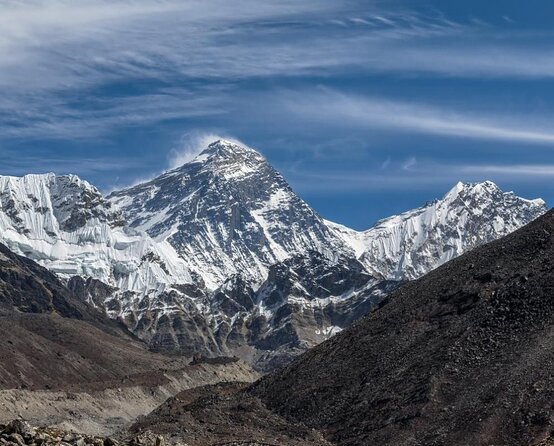
- Private group (up to 14 people): you won’t be lost in a giant herd, and your guide can actually manage the pace.
- Acclimatization built into the schedule: Namche and Dingboche get real time to adjust altitude, not just a rushed march.
- Big moments on schedule, not luck: Everest Base Camp and Kalapatthar are the headline days.
- Hot showers in the right places: you get attached bathrooms with hot shower rooms in Lukla, Phakding, and Namche.
- Gear support included: sleeping bag and down jacket are provided during the trek.
More trails out of Kathmandu, boots ready
- Everest Base Camp Trek – 14 Days★ 5.0 · 1,499 reviews
- Everest Base Camp Trek★ 5.0 · 842 reviews
- Everest Base Camp Trekking★ 5.0 · 485 reviews
- Nagarkot Sunrise View and Day Hiking from Kathmandu★ 5.0 · 471 reviews
Everest Base Camp without the summit pressure
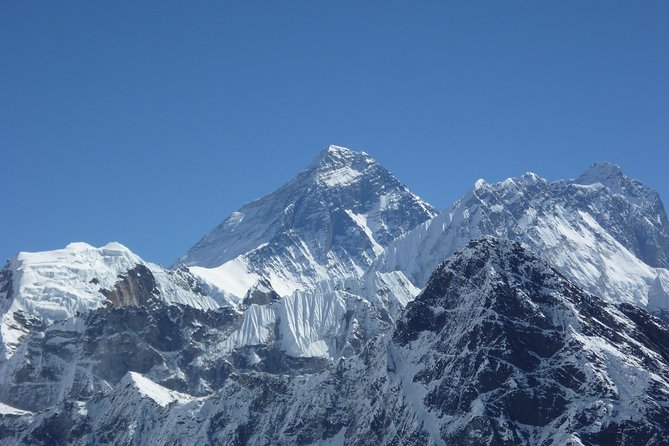
Everest Base Camp is not about racing to a peak. It’s about walking into the Everest story at ground level—slowly, day by day—until the world’s highest mountain is suddenly not a concept, but a wall of rock and snow in front of you.
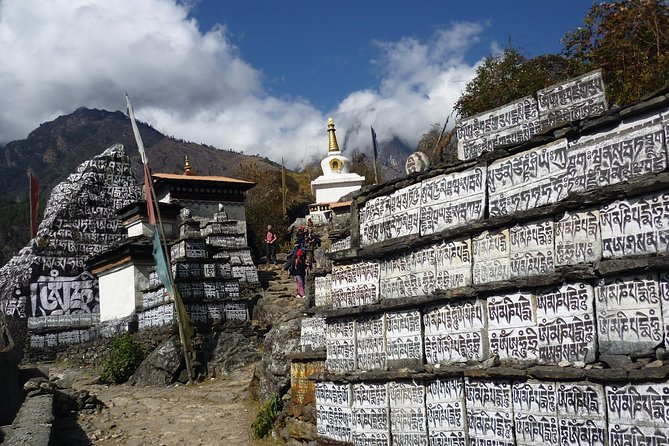
What makes this trek feel meaningful is the balance between hard altitude work and cultural texture. You’ll cross suspension bridges, pass prayer wheels and mani stones, and spend real time in towns like Namche and villages around Tengboche.
And you get a clear structure. That matters at altitude. When your body starts negotiating with thin air, having a plan you can trust helps you focus on breathing, water, and steady steps.
Kathmandu start: your 3-star breathing room before altitude
Your trip begins in Kathmandu, with a private vehicle pickup from Tribhuvan Airport and a three-star hotel for two nights with room and breakfast. That first night matters because Kathmandu is where you set up your rhythm: sleep, eat normally, hydrate, and sort the small details (especially if you’re carrying trek gear that needs adjusting).
Day 2 is a prep day plus a stroll. It’s not an early-morning hike day. It’s the right kind of slow—enough movement to stay loose, with time to get your bearings in the city and prepare mentally for Lukla and the trek.
One practical advantage here: the trekking team explains how the trek works before you’re under pressure. You’re also given information on what you’ll need to pack and how to handle the first days.
Lukla flights and day-one rhythm in Phakding
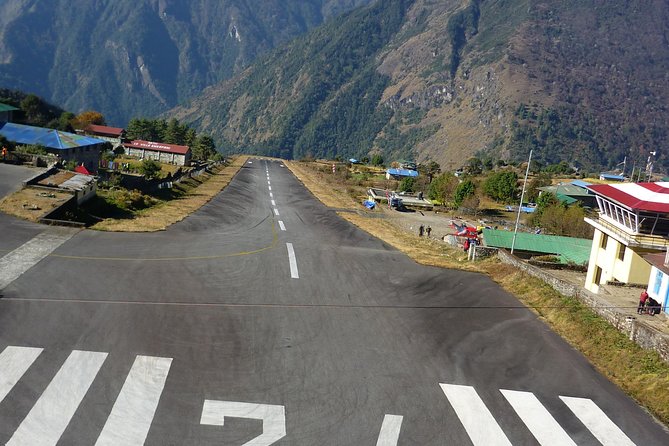
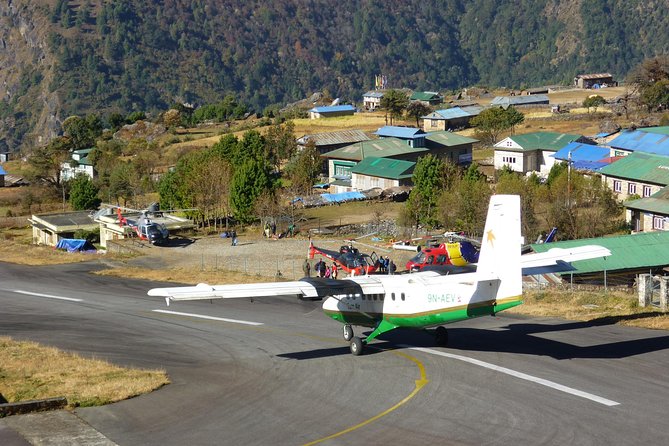
You fly from Kathmandu to Lukla via the domestic terminal. The Lukla landing is famous for a reason: the airport sits dramatically in the mountains, and the views during the flight feel like an instant trailer for what’s coming.
From Lukla, day three becomes your first real taste of the Khumbu: prayer wheels you can spin clockwise, a descent toward the Dudh Koshi River, and a suspension bridge crossing. Then you walk into Phakding, a small village where you spend the night in a guesthouse.
Why this first trekking day is a smart design choice:
- It gets your legs moving without throwing you into extreme altitude right away.
- You begin seeing the mix of local life and trail infrastructure that defines the region.
- The day ends with full meals included, so you can focus on settling in instead of hunting food.
You’ll be walking about four hours on this day, so it feels like a warm-up rather than a test.
Namche Bazaar: bridges, markets, and altitude that you don’t rush
The walk from Phakding toward Namche Bazaar is a classic Khumbu grind: ups and downs through villages and rhododendron forest, with plenty of movement around suspension bridges.
You’ll enter Sagarmatha National Park and pass places like Monjo before continuing uphill toward Namche. Along the way, you’ll notice the porters, yaks, and donkeys doing their work since there are no roads here in the way most of us expect.
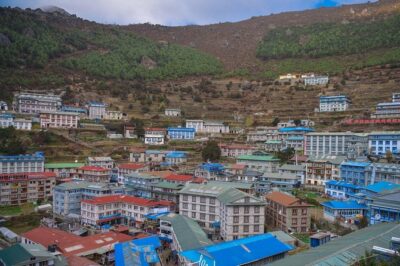
Namche itself is where the trek becomes real. It’s a popular hub, a place with enough energy that you don’t feel completely removed from civilization, but it’s still surrounded by high peaks. It also sets you up for acclimatization.


The acclimatization day (and the Everest View Hotel option)
On the next day, you spend time in and around Namche to adjust to altitude. The key idea is simple: you hike a little while you’re resting, then you come back down. That’s the kind of acclimatization that tends to help your body instead of fighting it.
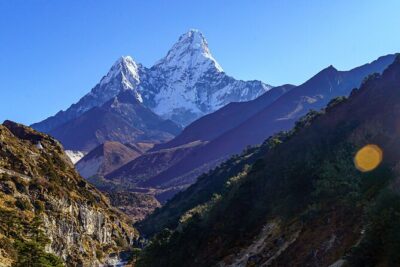
If you want a structured highlight, the schedule includes an option for a short hike to the world’s highest-placed hotel, the Everest View Hotel. From there, you can see Everest and surrounding peaks like Ama Dablam and Thamserku—views that also help you understand the geography you’ve been hiking toward.
This day is also where you get a social vibe: hikers looking for apple pie, conversations starting easily, and a feeling that you’re part of a community moving toward the same goal.
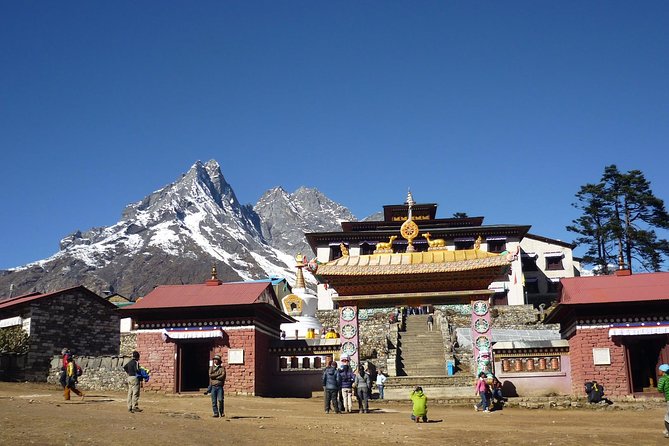
Tengboche monastery day: pine forests and a sunrise backdrop you remember
The trek continues to Tengboche, a place known for monastery life and mountain views. The walking pattern here is mixed—uphill and downhill—so it can feel tiring even if the distance isn’t the biggest.
You’ll pass sweet-smelling pine and rhododendron forests, cross hills and pastures, and see yak herders along the way. The payoff is that Tengboche is more than a viewpoint. It’s also where you get the spiritual and cultural side of the Khumbu.
Tengboche’s monastery is part of the rhythm of the day. If you time things well, you can catch the atmosphere near sunrise with Ama Dablam as a backdrop and the higher silhouette of Everest in the distance.
You spend the night in Tengboche in a guesthouse.
A monastery morning plus a slow transition to higher villages
The following morning includes time around Tengboche and the monastery, including prayer wheels and prayer flags that represent Tibetan Buddhist elements. Then the trek slowly transitions onward—descending toward Deboche, walking through forests, crossing the Imja Khola bridge, and continuing to places like Pangboche before reaching Dingboche.
This stretch is important because it keeps you moving while still respecting that you’re gaining altitude. You’re not sprinting; you’re acclimatizing on the move.
Dingboche to Lobuche: Nagarsan Hill, thin air, and the quiet cemetery stop
At Dingboche, the plan gives you a full acclimatization day. Instead of using that day to rush onward, you hike to Nagarsan Hill at about 5,100 meters and then come back down. That climb helps your body adapt, and it also gives you wider views of the Everest region—Island Peak, Ama Dablam, Lhotse, Makalu, and more.
Then comes day nine into Lobuche. This is where the trail starts feeling different. The air gets thinner in a way you can feel, and the route becomes more “high altitude trekking” than “walking through villages.”
Along the way, you pass a cemetery where climbers who lost their lives during Everest attempts are resting. It’s a sobering stop, and it’s also a reminder that this area is tied to real risk.
The day also includes crossing the Khumbu glacier (you’ll see Nuptse clearly in the mix). You end in Lobuche, where you stay overnight in a guesthouse.
Practical note: the most common mistake at this point is speeding up because you’re close. Keep the pace slow. The schedule gives you time for a reason.
Everest Base Camp day plus Gorekshep: the prayer-flag finish
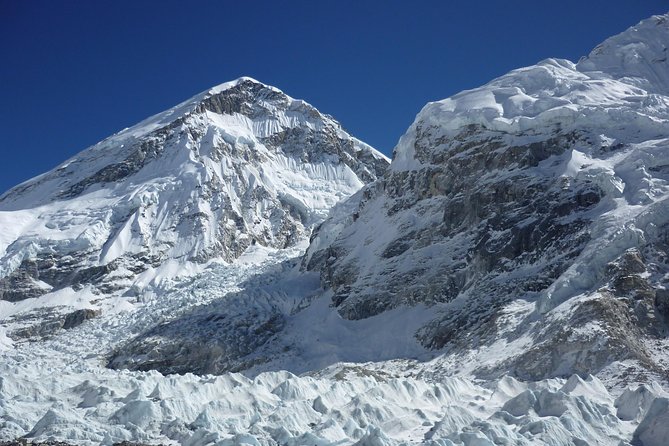
Day ten is the big one: Everest Base Camp. You’re approaching from the Changri glacier area, and when Kalapatthar starts to come into sight, it feels like the trek is switching from travel to arrival.
You’ll walk to Gorekshep, then pass through a frozen world of glaciers and icy rivers. The final stretch is rocky, with only the last hundred meters feeling like it’s truly pushing into the base camp space.
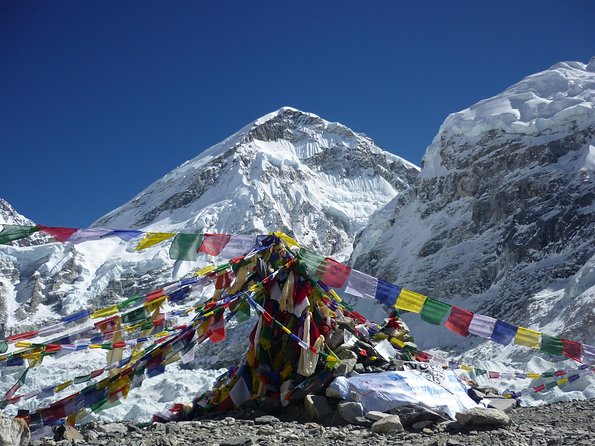
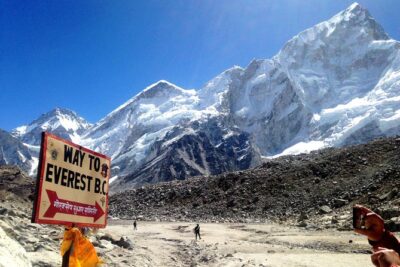
Then you reach the prayer flags at Everest Base Camp. Looking around, you’ll see the northern ridge of Everest plus peaks like Pumori, Lingtren, Khumbutse, Nuptse, and more.
What I think makes this day special is the sense of scale. Everest doesn’t look like a photo. It looks like a physical force.
And yes, it can be long: about eight hours on the day, with real walking time in cold air. Plan to go slower than you think you need. At this altitude, a “normal” hiking pace can still feel like work.
Kalapatthar sunrise: hard early steps, big payoff later
Day eleven flips the script: you get up very early for Kalapatthar, which is famous for sunrise views. If you’re into photos, this is one of the best places on the trek, with Everest clearly visible and sunlight striking snowy peaks in a way that looks almost unreal.
The reward is not just Everest. It’s the wider chain of mountains in morning glow, plus the contrast between glowing snow and darker rocks.
After the sunrise, you descend to Pheriche for the night.
A note on effort: this day is mentally easier when you accept that you’re trading sleep for payoff. If you’re fine with an early start, it’s memorable. If you hate mornings before you’ve had coffee, make sure you’re mentally ready.
Return toward warmth: Namche, Lukla, and the feeling of coming home
After Base Camp and Kalapatthar, the trek becomes a return journey. It’s the same general trail at times, but the direction changes what you notice.
Day twelve takes you back to Namche Bazaar. You’ll enjoy mountains rising and shifting in your view as you retrace steps. It’s also a chance to “see again” with the Everest context you now carry in your head.
Day thirteen continues from Dingboche area back down toward Lukla via Phakding and the familiar bridge and river scenery, now with the knowledge that you made it. That knowledge makes the walking feel different.
Then day fourteen brings you back to Kathmandu by flight from Lukla Airport. You get escorted to your hotel, and the rest of the day is free to recover.
Days fifteen and sixteen keep Kathmandu flexible: a free day for optional activities and then pickup to the airport when it’s time to go home.
What you get for your money: flights, meals, permits, and real support
Even though the price shown is listed as $0.00 here, the package itself clearly has real structure and value through what’s included. Here’s what you’re not scrambling for:
Included on the trekking days
- Three meals daily plus a cup of tea or coffee with meals.
- Guesthouse accommodations in places like Lukla, Phakding, Namche, Tengboche, Dingboche, Lobuche, Gorekshep-area, and Pheriche, typically on a twin-sharing basis.
- All trekking permits and paperwork handled.
- An English-speaking guide, plus two travelers per one porter.
- Sleeping bag and down jacket provided during the trek.
- Basic comforts in key towns: attached bathrooms with hot shower rooms in Lukla, Phakding, and Namche.
Included in Kathmandu
- Airport pickup and drop-off in Kathmandu with a private vehicle.
- Two nights in a three-star hotel with room and breakfast.
Included as trip extras
You also get a Nepal Intrepid Treks T-shirt, a duffle bag, a trekking map, and a Trip Achievement Certificate. Those last items aren’t why you do the trek, but they do mark the journey.
What costs extra (so you don’t get surprised)
The big extras to budget for are:
- Nepal entry visa and international airfare (not included).
- Travel insurance (you’re required to have it).
- Tips for drivers, guides, and porters.
- Personal trekking gear (clients arrange personal equipment).
- Cold drinks, water, and other beverages aren’t included.
- Oxygen cylinder and oxygen mask are available only on request, for an extra charge.
- If you want a personal Sherpa guide, that’s extra.
One more value note: the company covers flights not just as a single route. Flights are typically round-trip Kathmandu–Lukla–Kathmandu, with an alternative Ramechhap–Lukla–Ramechhap option mentioned. That matters because Lukla operations can be weather-sensitive.
Practical notes: weather shifts, solo options, and keeping your head clear
Two realities shape this trek: mountain weather and altitude.
Weather means flexibility
Lukla flights can be canceled due to poor weather. The experience is framed around good weather, so plan to be adaptable. If the trip itself is canceled due to poor weather, you’d be offered a different date or a full refund.
Solo travelers: the group logistics matter
This is a private tour/activity, but it still needs enough people for shared arrangements. The package is priced for one person based on two people booking, and a single surcharge of USD 230 applies if there’s no existing group for your date or if you choose solo departure.
How to avoid the common altitude trap
By the time you reach Dingboche and Lobuche, you’re walking at altitudes where your body cares more about breathing than speed. The schedule helps by adding acclimatization days and not requiring you to leap upward every single day.
Still, you’ll want to:
- Move slowly on climbs.
- Keep water intake steady.
- Expect cold and plan clothing layers even when the sun is out.
The guide team is not just paperwork
Past EBC experiences connected to this company highlight guides who stay patient when someone moves slower and who respond quickly if a traveler falls ill. Even without assuming outcomes, it’s comforting to know that the support approach is described as attentive and safety-focused.
Who should book this 16-day EBC trek?
This trek is a strong match for you if:
- You want the Everest region experience without aiming for summit climbing.
- You can commit to about 8 hours of walking on the most intense days.
- You’re happy with guesthouse stays and included meals.
- You prefer a structured program with permits, paperwork, and guides handled.
You might want to think twice if:
- You dislike early mornings. The Kalapatthar sunrise day is demanding.
- You know you’re vulnerable to respiratory or altitude issues. The itinerary includes oxygen availability on request, but you still need realistic health planning.
Should you book Nepal Intrepid Treks for Everest Base Camp?
If your priority is a well-run classic Everest Base Camp trek with acclimatization built in, gear support, and real guide staffing, this package fits the job. The included permits, flights, meals, and key nights with hot showers reduce the number of unknowns that can turn a trip stressful.
I’d book it if you’re comfortable with the weather reality of Lukla and you’re ready to respect altitude. If you’re unsure, ask the operator who your guide will be and confirm your departure plan options, since Ramechhap-Lukla can matter when conditions shift.
FAQ
What flights are included for the trek?
The package includes round-trip domestic flights between Kathmandu and Lukla. It also notes an alternative routing using Ramechhap–Lukla–Ramechhap.
Are meals included, and what about drinks?
You’ll have three meals daily during the trek with a cup of tea or coffee included with those meals. Cold drinks and water (and other beverages) are not included.
Do you provide trekking gear like a sleeping bag and jacket?
Yes. A sleeping bag and a down jacket are provided during the trek.
Do I need travel insurance?
Yes. Travel insurance is not included, and you must have it while traveling in Nepal.
Is oxygen included?
Oxygen cylinder and mask are not included in the base package, but oxygen is available on request for an extra charge.
Is there an extra cost if I travel alone?
Yes. The price is based on two people sharing, and if there is no existing group for your date (or if you choose a solo departure), a single surcharge of USD 230 applies upon arrival in Nepal.
More Trekking Out of Kathmandu






More Tour Reviews in Kathmandu




Just Reviewed in Kathmandu
- Mountain Bike Tour
★ 5.0 · 3 reviews - Annapurna Panaroma
★ 5.0 · 3 reviews - Mount Everest Scenic Flight 50 Minutes
★ 5.0 · 3 reviews - Kathmandu : Swambhunath & Durbar Square Guided Half Day Tour
★ 3.3 · 3 reviews - Chandragiri Cable Car & Monkey Temple Tour – Private/Group
★ 5.0 · 3 reviews - Kathmandu: Shivapuri National Park Hiking Day Trip
★ 3.3 · 3 reviews
Everest Base Camp Treks, compared.
 ★ 5.0Everest Base Camp Trek – 14 DaysFrom $1,8001,499 reviews
 ★ 5.0Everest Base Camp TrekFrom $1,790842 reviews
 ★ 5.0Everest Base Camp TrekkingFrom $1,350485 reviews
 ★ 5.0Everest Base Camp Trekking – 13 DayFrom $1,399365 reviews
★ 5.0Everest Base Camp TrekFrom $1,445350 reviews
★ 5.0Everest Base Camp Trek -14 DaysFrom $1,420321 reviews
 ★ 5.012 Days Everest Base Camp TrekFrom $1,099289 reviews
 ★ 5.0Everest Base Camp Trekking – 2025/2026From $1,339199 reviews
Browse the lists this tour appears in