
Review · EVEREST BASE CAMP TREKS
Everest Base Camp Trek
That first mountain flight hits different. This Everest Base Camp trek turns a scary route into a well-run 14-day journey through Sherpa villages, monasteries, and high-altitude scenery.
What I like most is how much you can trust the logistics. From the moment you land in Kathmandu for airport pickup and a pre-trip guide talk, the trip keeps moving with entrance fees, meals, accommodation, and the core trekking support handled. Second, the route isn’t just about Base Camp. You also get the spiritual stop at Tengboche and the classic “best Everest view” moment from Kalapathar after Base Camp.
One consideration: this trek depends on mountain weather. Lukla flights and mountain days can be delayed or adjusted, so you need a flexible mindset and moderate fitness for long days at altitude.
In This Review
- Key things that make this Everest Base Camp trek special
- From Kathmandu to Lukla: that flight is your real warm-up
- Phakding to Namche Bazaar: Sherpa villages and an altitude reality check
- Khumjung and Tengboche: the monastery day with the big view
- Dingboche and Chukhung options: when mild days still demand respect
- Lobuche, Gorak Shep, and Base Camp: your Everest moment arrives after the miles
- Kalapathar: the wind, the climb, and the clearest Everest angles
- Pangboche, Tengboche return, and the Dudh Koshi home stretch
- Flights back to Kathmandu and that last cultural dinner
- What’s included: why this price can actually feel fair
- Who should book this Everest Base Camp trek?
- Should you book Dream Heaven Adventure for Everest Base Camp?
- FAQ
- What time does the trek start in Kathmandu?
- Are airport transfers included?
- Is the Lukla flight included?
- Are entrance fees and national park fees included?
- Is there a vegetarian meal option?
- If weather cancels the trip, what happens?
- How much notice do you need to cancel for a full refund?
Key things that make this Everest Base Camp trek special
- Lukla flights included so you start the trek with less planning stress
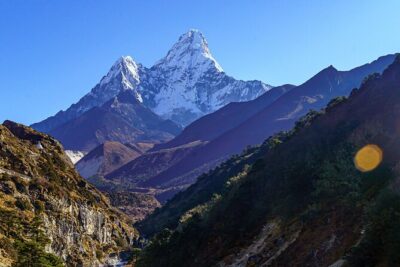
- Tengboche Gompa + Everest panorama with views of Everest, Lhotse, Nuptse, and Ama Dablam
- Kalapathar after Base Camp for an extended summit-view payoff
- Porter support (2 trekkers: 1 porter) to keep your load sane at altitude
- A team you can actually reach, including Suman as a responsive coordinator in prior trips
- All entrance fees and national park costs covered so you can trek without surprise add-ons
More trails out of Kathmandu, boots ready
- Everest Base Camp Trek – 14 Days★ 5.0 · 1,499 reviews
- Everest Base Camp Trek★ 5.0 · 842 reviews
- Everest Base Camp Trekking★ 5.0 · 485 reviews
- Nagarkot Sunrise View and Day Hiking from Kathmandu★ 5.0 · 471 reviews
From Kathmandu to Lukla: that flight is your real warm-up
Your trip begins in Kathmandu the morning you arrive. You meet the airport representative, get transferred to the hotel, then attend a pre-trip gathering where your trekking guide is introduced and you can ask practical questions. It’s a small thing, but it helps you get your bearings fast before the mountains take over your schedule.
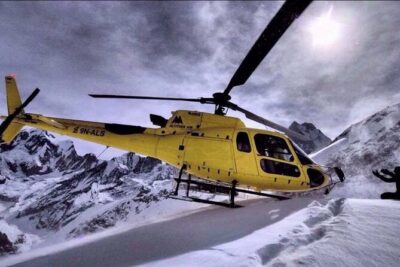
The next day is the famous hop from Kathmandu to Lukla. The flight is roughly 40 minutes, and it’s often the most dramatic part of the whole adventure. You’ll see stream valleys and terraced scenes below, which makes the first day feel like more than just transport.
Then it’s straight into trekking: walk from Lukla to Phakding in about 3–4 hours. Along the way you’ll pass mani stone walls and painted boulders—simple, colorful markers of how deeply faith is woven into everyday life here. Even early on, you’re building altitude in a smart way, not rushing to the highest points too fast.
Phakding to Namche Bazaar: Sherpa villages and an altitude reality check
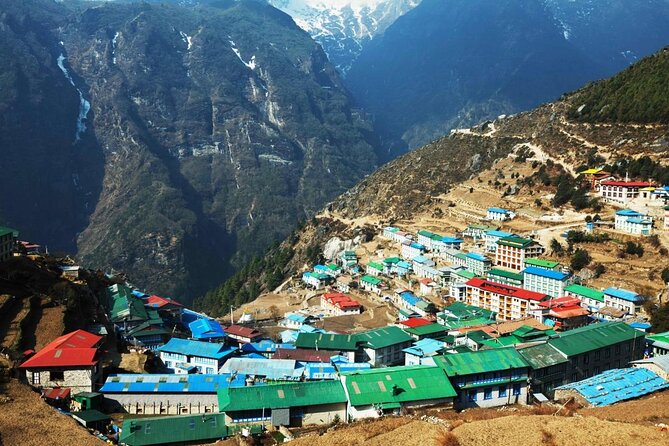
In the Khumbu, the rhythm is part village walk, part altitude adjustment. From Phakding onward, the trail follows Sherpa settlements and heads through the Dudh Koshi valley. This is also when mountain views start stacking up—big peaks often appear in layers as you gain height.
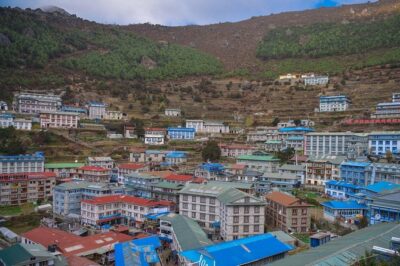
On the way into Namche Bazaar, you’ll likely notice how “settled” this region feels. Namche is the Sherpa capital and an important trading hub, so you’re not hiking through empty wilderness. There are markets, village life, and plenty of places to pause and refuel.
Namche is also your altitude checkpoint. You’ll typically need to slow down, drink water, and stop taking “easy” for granted. The scenery feels incredible, but your breathing is the boss here. Plan to enjoy the views, then listen to your body.
One practical bonus in this itinerary: you get time in Namche that isn’t only about walking. You’ll have a free day to explore at your own pace and take shorter hikes that help with acclimatization. That balance—moving when it helps and resting when it matters—is one of the reasons this trek feels manageable even though it’s high.
Khumjung and Tengboche: the monastery day with the big view
From Namche, you can aim for Khumjung and its viewpoint energy. The route is a short hike that lets you stretch your legs without treating every kilometer like a sprint. You’ll also get classic panorama angles of Everest, Ama Dablam, Thamserku, Nuptse, Lhotse, and more.
Then comes the highlight for many people: Tengboche Gompa. This is where the trek becomes more spiritual than just athletic. Tengboche sits at a lofty edge, and when the weather behaves, the views are the kind that stop you mid-step. Everest, Lhotse, Nuptse, and Ama Dablam dominate the area from the monastery vantage point.
This is also a day where you’ll get a real sense of the local rhythm. A monastery stop isn’t just sightseeing. It’s a chance to see how the community gathers, prays, and lives with the mountains in full view. You’ll feel the calm of the place after days of steep trail effort.
If you like your treks with meaning, Tengboche is a strong reason to choose this exact itinerary.
Dingboche and Chukhung options: when mild days still demand respect
After the Tengboche area, the route pushes toward Dingboche, following the Imja valley through rhododendron forests and up to higher ground. Dingboche is sometimes called the summer valley. In practice, it’s a welcome change: the trail feels less brutal on the gradients, even while altitude still slows you down.
Dingboche is also a good example of how this trek balances challenge and recovery. You’ll walk at a steady pace, not a race pace. Even so, you’ll likely feel altitude in your lungs and your sleep. That’s normal here.
Then you get a rest-and-adjust day in Dingboche. You can use it to explore locally and take things slow. The itinerary includes time for checking out the monastery area, plus views over the valleys and peaks like Ama Dablam and Lhotse.
You may also have an optional early trek toward Chukhung. This kind of move is meant for acclimatization, not bravery contests. It helps your body get used to the altitude while still giving you a controlled day. If you’re traveling as a group with mixed experience, this flexibility matters a lot.
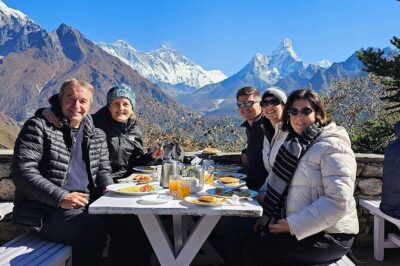
Lobuche, Gorak Shep, and Base Camp: your Everest moment arrives after the miles
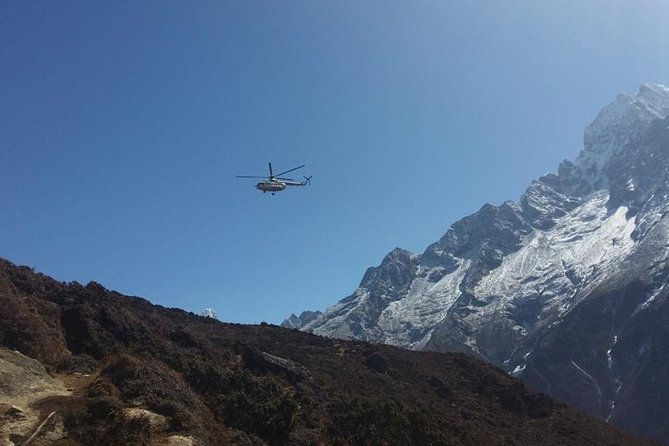
From Dingboche, the next big push heads to Lobuche. The climb feels longer because you’re chasing the glacier country vibe, not just the next village. You’ll pass a yak-farm area and see peaks like Tawache and Cholatse along the way.
As you approach the Khumbu Glacier region, the scenery shifts. You’re walking toward a world where ice, wind, and exposed ridgelines shape everything. It’s also where weather matters more. Cloud cover can arrive fast, and visibility can change your experience dramatically.
The next stage brings you toward Gorak Shep, then on to Everest Base Camp. This is a day of mixed trail energy: short ups and downs, then more effort once you’re on the Base Camp approach.
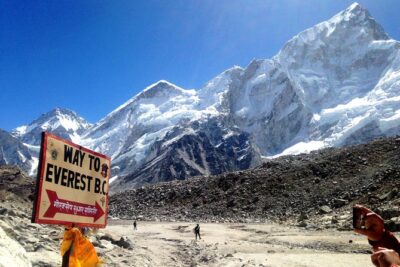
When you finally reach Everest Base Camp, the feeling is unlike any other part of the route. You’re not staring at a single moment on a postcard. You’re looking at a wide area that feels like a tented town, with activity from teams and trekkers staging for high-altitude work.
You don’t need climbing gear to appreciate Base Camp. What you need is time and patience. Take it in slowly. The altitude and the scale hit you harder when you stop rushing.
Kalapathar: the wind, the climb, and the clearest Everest angles
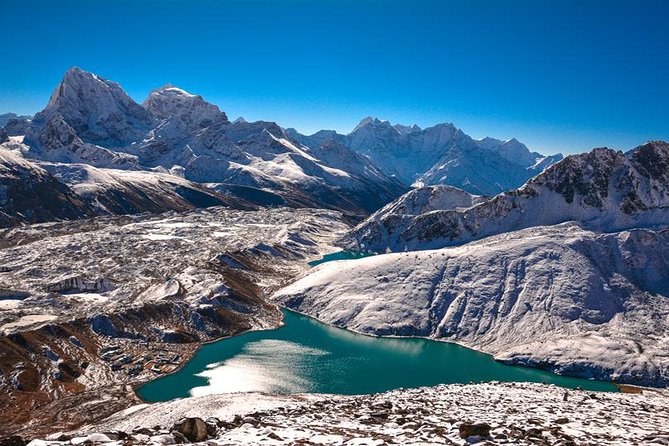
After Base Camp, the itinerary gives you the best-known follow-up viewpoint: Kalapathar at about 5,550 meters. This is one of those “you earn it” moments. The path is steep and rocky, often windy, and it’s a short climb that still makes your heart work.
From Kalapathar, you’ll get wide, clear views of Everest plus other major peaks like Khumbutse, Lhotse, Nuptse, Ama Dablam, and more. The viewpoint is famous for showing the mountain summit in a way that feels close enough to understand.
Then you go back down, first to Gorakshep, and continue onward to Pheriche. The return route isn’t a straight downhill slog. You’ll pass through places like Lobuche and Dhugla, and you’ll see chortens and stupas along the trailscape—little spiritual markers that make the trek feel connected to people’s faith, not just rocks.
On this leg, the walking is a mix of recovery and effort. It’s a chance to keep moving while your mind processes what you just saw.
Pangboche, Tengboche return, and the Dudh Koshi home stretch
The next day focuses on moving through villages again, but with new context. You’ll trek down toward Pangboche, where there’s an older monastery in the region. The site is known for relic stories, including what’s said to be a Yeti scalp and bones. Even if you don’t care about legend, the monastery stop gives you a cultural thread connecting the trek’s spiritual stops.
From Pangboche, the route continues through pine and juniper forest toward Tengboche again. Then it drops sharply toward the Dudh Koshi River and onward to Phunki, crossing back toward the route that leads to Namche.
This is also where you start feeling the trek finish line mentally. Your body still has to walk, but your brain shifts from achievement to appreciation. You’ll likely look at the villages differently now—like you’re watching life in the mountains rather than passing through it.
The final trekking day drops to Lukla following the Dudh Koshi River. It’s described as a sharp descent, and that can be tough on knees. Plan trekking poles if you can. Then you get last mountain sunsets in Lukla, which is a great way to close the physical part of the journey.
Flights back to Kathmandu and that last cultural dinner
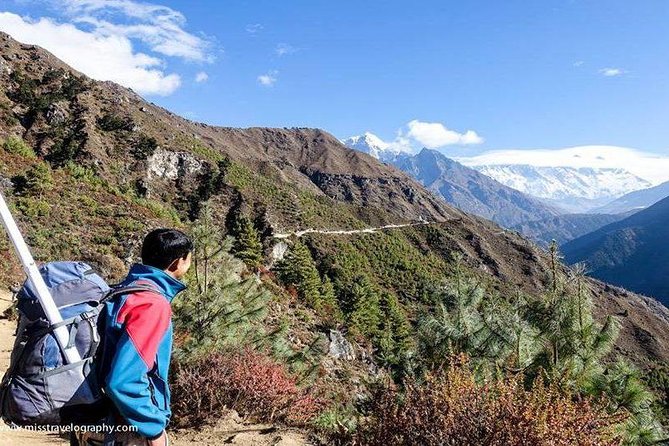
After your last night in Lukla, you fly back to Kathmandu for the final wrap-up. The flight is about 35 minutes, which makes it feel quick after days of slow altitude climbing. Back in Kathmandu, you’ll get a private vehicle transfer to your hotel.
In the evening, the itinerary includes a cultural dinner—an easy, low-pressure way to celebrate without packing bags or jumping between logistics. It’s also a good time to share what you loved and what surprised you. Many people walk away with the same theme: the mountains are huge, but the people and routine in the villages are what make it personal.
What’s included: why this price can actually feel fair
This trek costs $1,650 per person for a roughly 14-day experience, and the value comes from what’s bundled rather than what’s optional.
You get 14 nights of accommodation and meals as per the itinerary, plus national park fees and entrance fees. You also get a professional guide, airport pickup and drop-off, private vehicle transport in Kathmandu, and round-trip flights to Lukla. On top of that, porter support is included with a 2 trekkers to 1 porter ratio, which is a big deal at high altitude.
Equipment is listed as included too. The exact items aren’t spelled out in the details you shared, so you should confirm what’s covered when you book. Still, having “core gear support” handled is one less shopping headache before you go.
Now the trade-off: drinks aren’t included, and personal expenses like laundry, battery recharge, and hot showers are on you. Also, while the trekking pace can be adapted for the group, this is still a high-altitude trek. If you want a totally gentle vacation style, this isn’t that kind of trip.
Who should book this Everest Base Camp trek?
This itinerary fits best if you want a well-managed route and a strong payoff beyond Base Camp. The monastery stops at Tengboche and Pangboche, plus the Kalapathar view day, make the journey feel like more than just “walk and arrive.”
It’s also a good match for groups who prefer structure. It’s run as a private tour, meaning your group stays together rather than mixing with strangers. That matters for pacing, acclimatization decisions, and just keeping the experience smooth.
You should have at least moderate physical fitness. If you can handle steep steps for hours, slow altitude acclimatization, and a windy viewpoint climb at Kalapathar, you’ll likely find this manageable. If you’re unsure about endurance, ask your guide about pacing and whether you can take shorter breaks without disrupting the schedule.
One more human detail that stands out from prior trip feedback: the coordinator and guides can be responsive. Suman shows up as a key contact in prior communication, and guides like Shambhu and Raj have been described as experienced and helpful. You can’t pick every staff member in advance from the info here, but it’s a good sign that the operator invests in guides who can manage both logistics and people.
Should you book Dream Heaven Adventure for Everest Base Camp?
If you want the full Everest Base Camp experience with a solid support setup, I’d say this is a strong choice. The inclusion of Lukla flights, entrance fees, meals, guide support, and porter services makes the price easier to justify than a DIY plan where you end up juggling everything yourself.
I’d book it if you’re excited by monastery days at Tengboche, want the Kalapathar viewpoint payoff, and can handle altitude with a realistic pace. I’d think twice if you hate weather uncertainty or if you’re looking for a low-effort holiday rather than a real trek.
FAQ
What time does the trek start in Kathmandu?
The meeting point is Tribhuwan Airport in Kathmandu with a start time of 5:15 am.
Are airport transfers included?
Yes. You get hotel pickup and drop-off in Kathmandu, plus private vehicle transport for transfers.
Is the Lukla flight included?
Yes. Round-trip flights between Kathmandu and Lukla are included.
Are entrance fees and national park fees included?
Yes. All entrance fees and national park fees are included.
Is there a vegetarian meal option?
Yes. A vegetarian option is available if you advise at the time of booking.
If weather cancels the trip, what happens?
The trip is subject to favorable weather conditions. If it’s canceled due to poor weather, you’re given the option of an alternative date.
How much notice do you need to cancel for a full refund?
You can cancel up to 6 days in advance of the experience for a full refund.
More Trekking Out of Kathmandu
More Tour Reviews in Kathmandu
Just Reviewed in Kathmandu
- Mountain Bike Tour
★ 5.0 · 3 reviews - Annapurna Panaroma
★ 5.0 · 3 reviews - Mount Everest Scenic Flight 50 Minutes
★ 5.0 · 3 reviews - Kathmandu : Swambhunath & Durbar Square Guided Half Day Tour
★ 3.3 · 3 reviews - Chandragiri Cable Car & Monkey Temple Tour – Private/Group
★ 5.0 · 3 reviews - Kathmandu: Shivapuri National Park Hiking Day Trip
★ 3.3 · 3 reviews
Everest Base Camp Treks, compared.
 ★ 5.0Everest Base Camp Trek – 14 DaysFrom $1,8001,499 reviews
 ★ 5.0Everest Base Camp TrekFrom $1,790842 reviews
 ★ 5.0Everest Base Camp TrekkingFrom $1,350485 reviews
 ★ 5.0Everest Base Camp Trekking – 13 DayFrom $1,399365 reviews
★ 5.0Everest Base Camp TrekFrom $1,445350 reviews
★ 5.0Everest Base Camp Trek -14 DaysFrom $1,420321 reviews
★ 5.0Everest Base Camp Trekking – 13 DayFrom $1,399365 reviews
★ 5.0Everest Base Camp TrekFrom $1,445350 reviews
★ 5.0Everest Base Camp Trek -14 DaysFrom $1,420321 reviews
 ★ 5.012 Days Everest Base Camp TrekFrom $1,099289 reviews
 ★ 5.0Everest Base Camp Trekking – 2025/2026From $1,339199 reviews
Browse the lists this tour appears in