
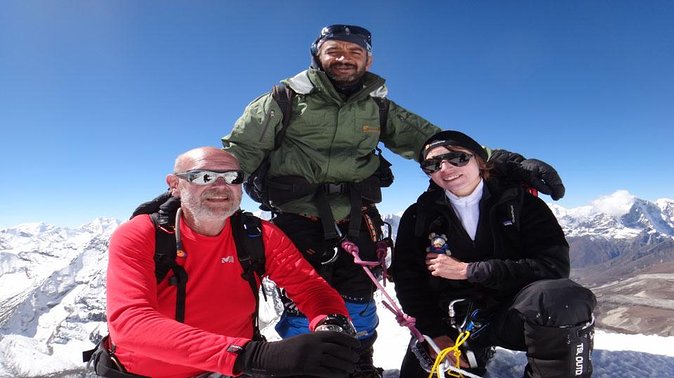
Review · EVEREST BASE CAMP TREKS
Everest Base Camp Trek
Everest Base Camp feels close, not rushed. This 17-day Everest Base Camp trek strings together Kathmandu culture (Tribhuvan Park, Swayambhunath, Boudhanath) with a trek plan built around acclimatization pacing and steady on-the-ground guide support—the kind you hear praised when people mention guides like Biru and Vision Tamang.
The main thing to know is that altitude is real even on a “moderate fitness” itinerary. You’ll start feeling it around Namche (3440m) and again in windy Pheriche (4240m), so bring good cold-weather habits and pace yourself from day one.
In This Review
- Key highlights worth knowing
- Kathmandu first: Tribhuvan, Swayambhunath, and getting your legs ready
- The Lukla flight and the first steps off the main trail
- Phakding to Namche (3440m): first big uphill and your first real Everest sighting
- Namche acclimatization: Khumjung (around 3780m) and the point of “not rushing”
- Tengboche Gompa and the Sherpa heart: religion, views, and real stops
- Pheriche and the second altitude barrier (4240m): when wind is part of the climb
- Gorak Shep to Everest Base Camp (and what May can change)
- Kala Pattar (5545m): the photo moment and the body reality
- The long return: Tengboche, Namche, Lukla, then clean clothes in Kathmandu
- Price and logistics: what $2,051.48 buys you (and what it doesn’t)
- Fitness level: what you should be able to handle
- Should you book this Everest Base Camp trek?
- FAQ
- How long is the Everest Base Camp trek?
- Where does the tour start?
- How do you get to Lukla?
- What’s the highest point on the trek?
- Are flights and transfers included?
- What permits are included?
- Are meals included on the trek?
- What’s not included in the price?
- Is this a private tour?
- What’s the cancellation policy?
Key highlights worth knowing
- Private group setup keeps the experience focused and easier to manage, with pickup offered in Kathmandu.
- Altitude planned with rest days at Namche and Pheriche so you spend less time fighting your breathing.
- Tengboche Gompa visit puts you in the Sherpa religious heart of the region, not just on a sightseeing route.
- Kala Pattar (5545m) gives you the peak vantage point and a classic early-morning photo window.
- All trek logistics handled: flights to Lukla, permits (including TIMS), guides, porters, and trek meals.
- Base Camp timing in May can mean fuller summit-season views and a more active Base Camp area.
More trails out of Kathmandu, boots ready
- Everest Base Camp Trek – 14 Days★ 5.0 · 1,499 reviews
- Everest Base Camp Trek★ 5.0 · 842 reviews
- Everest Base Camp Trekking★ 5.0 · 485 reviews
- Nagarkot Sunrise View and Day Hiking from Kathmandu★ 5.0 · 471 reviews
Kathmandu first: Tribhuvan, Swayambhunath, and getting your legs ready
Most Everest trips start with a jet-lag shuffle. This one starts with a calmer handoff: you land at Tribhuvan International Airport, get met, transfer to your hotel, and have time to reset with tea, a shower, and a first Kathmandu dinner before turning in early.
Then comes Swayambhunath (the self-styled monkey temple). The stupa and monastery complex is over 2,000 years old, and the view across the valleys gives you that fast “I’m really here” feeling. You’ll also get a good dose of everyday rhythm: monasteries, hillside paths, and the little details that make Nepal feel lived-in, not staged.
Practical tip: plan to use the afternoon to get your trek kit sorted and then head into Thamel for supplies. Thamel is basically the gear hub for many trekking routes, and it’s easier to handle last-minute items in Kathmandu than after you’re stuck on the mountain schedule.
The Lukla flight and the first steps off the main trail
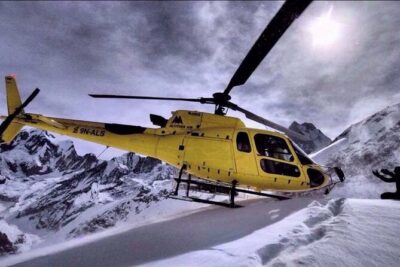
Day 3 is the jump day. You fly to Lukla (about 40 minutes), then start trekking toward Phakding (around 2653m). The flight is short, but it’s a major part of the experience—lots of people remember the moment because you’re going from city air into mountain air almost instantly.
Lukla is 2800m, and you’ll notice altitude even before you put on your boots. Porters carry luggage, which matters because it keeps your body ready for the day’s walking rather than turning it into a load-hauling workout.
The trek to Phakding is described as a shorter, around 3-hour walk through local villages and alongside a river. That’s a good setup. You’re not “training for the Alps” here—you’re learning how your legs and breathing work at elevation, while the valley keeps things gentle.
Phakding to Namche (3440m): first big uphill and your first real Everest sighting
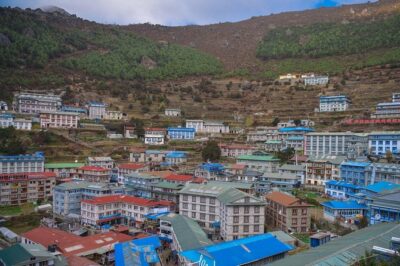
On Day 4, the trail starts up the valley along the river. You’ll make it to Monjo (around 2835m) for lunch. Then the pace changes. You enter Sagarmatha National Park, cross the Dudh Kosi River, and walk through villages toward Jorsale, before the climb toward Namche begins in earnest.
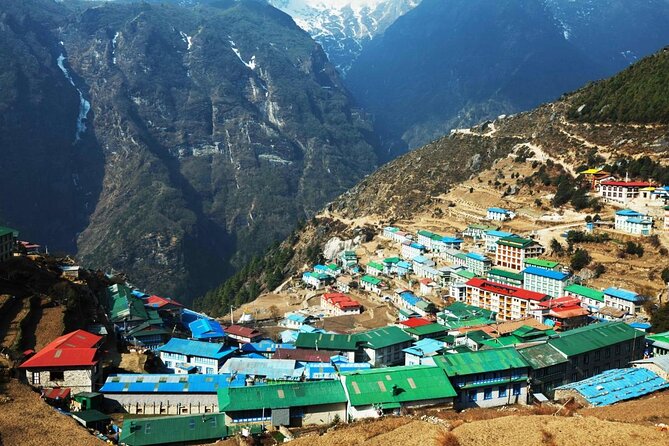
This is where the tour earns its value. Getting to Namche is more than movement—it’s the first time the group gets a view of Mount Everest on the route, and that moment can be a morale booster you feel in the legs for days. Namche itself (3440m) is also where altitude can start to bite. It’s not a dramatic collapse-and-burn situation, but you should treat it as a warning sign: drink water, move slowly on climbs, and don’t “win” altitude by pushing hard.
Namche has shops and the chance to relax. That’s useful because the next day is an acclimatization walk, not a full summit push.
Namche acclimatization: Khumjung (around 3780m) and the point of “not rushing”
Day 5 is a classic acclimatization day. You stay in Namche and walk up to Khumjung, with views of the mountain giants in the region. The walk goes higher (around 3780m), which helps your body adjust rather than spiking stress.
This is one of the most praised aspects of many successful EBC treks: you gain height gradually and you practice being at a higher altitude while still having time to recover. If you’re hoping to reach Base Camp feeling like a trek was earned—not survived—this kind of planning is the difference.
For you, the practical benefit is simple: a smoother acclimatization day usually means better energy later around the highest points.


Tengboche Gompa and the Sherpa heart: religion, views, and real stops
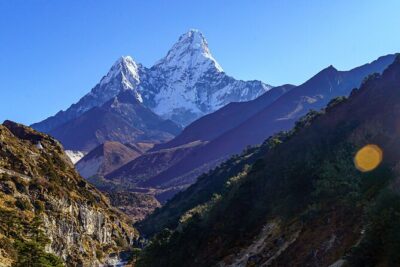
Day 6 takes you to Devuche (around 3750m) via Tengboche Gompa. The route is described as progress in both distance and height, with villages and photo opportunities, including glimpses of Everest and Ama Dablam.
Tengboche is called the religious heart of the Sherpa region, and the monastery there is noted as the largest in Nepal. That’s not just a fun “check the box” stop. It’s a meaningful contrast to the hard numbers of altitude and distance: you get to slow down inside a place that still anchors mountain life.
Day 7 continues into the higher settlements. You’ll pass through Pangboche (around 3800m), the highest all-year settlement in the region as described, plus mani stones and an infamous bridge stop before a tea break. The tea break matters more than it sounds—it’s when you reset your pace, tighten your layers, and keep your breathing under control.
Pheriche and the second altitude barrier (4240m): when wind is part of the climb
Days 7 and 8 are built for acclimatization again. After passing 4000m, the tree line disappears and the scenery shifts. You’ll reach Pheriche (around 4240m). The plan includes a second night there specifically because this altitude barrier can affect people more.
The itinerary also flags Pheriche as windy. That’s important for you: cold in wind can drain energy faster than you expect. If you come prepared with warm layers and something wind-protective, this section feels like “work you can manage.” If you show up with a light jacket and hope, it can feel like the mountain keeps moving the goalposts.
Day 9 moves you toward Lobuche (around 4930m) after another acclimatization style rhythm—stroll up the valley and then afternoon exploration around Chukpilhara, known for stone monuments to climbers and Sherpas. It’s a sobering place on a trek full of big views, and it helps make sense of why people treat these mountains with respect.
Gorak Shep to Everest Base Camp (and what May can change)
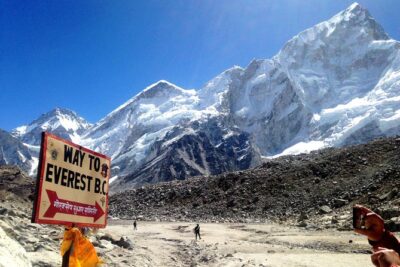
Day 10 is one of the headline days. You trek to Gorak Shep (around 5160m), rest and eat, then continue to Everest Base Camp as it’s used now. Since this itinerary is set for May, Base Camp can be busy due to peak climbing season.
What you’ll experience isn’t just the end-point. It’s the gradual “mechanical” change from village tea houses to a high-altitude outpost feel. You get the sense of history in how the trek route connects to earlier climbing eras—Gorak Shep is described as the first base camp area for Everest climbing in the 1950s, and today it’s part of the same approach story.
Day 11 turns the dial higher with an early push to Kala Pattar (5545m), the highest point on this trek. The early start is about timing for views. It’s also when the mind feels the payoff: you’ve already invested days of altitude work, and now you’re heading for the best vantage point for photos of Everest and neighboring peaks.
Kala Pattar (5545m): the photo moment and the body reality
Day 11 is long—about 9 hours in the plan—with a 5am start. You climb to Kala Pattar, spend time up top for photos and viewpoints, then descend back toward Gorak Shep for lunch, and continue down to Pheriche for the night.
Here’s the key practical note for you: even if you feel okay during the climb, the descent is still work at altitude. Your legs do the heavy lifting both ways. This is also where having a supportive guide team helps—because pacing, stop timing, and quick adjustments (layers, water breaks, walking speed) can keep the day from turning into a scramble.
It’s also where the guide reputation you see in feedback makes sense. People credit guides like Biru and Vision Tamang for support, patience, and making the trek feel “perfect” through day-to-day decisions—not just through the big ticket views.
The long return: Tengboche, Namche, Lukla, then clean clothes in Kathmandu
Day 12 brings you down toward Tengboche for an overnight. The itinerary frames it as the benefit of descent: you fill your lungs with more oxygen as you go lower, and people who have been struggling often feel better.
Day 13 continues downhill through Namche, and the plan includes time to stop for shopping again. It’s also the day that’s described as friendly for lighter spirits: the trek can feel easier as altitude effects ease.
Day 14 is your last trekking day in earnest. You descend steeply for about 1.5 hours, then deal with smaller ups and downs toward Phakding via Monjo. Then it’s back to Lukla, with an arrival target around 4pm to give time to wander. The plan even mentions comfort-style surprises like a Starbucks in Lukla. That kind of modern detour is not why you came, but it’s a nice way to celebrate finishing the mountains.
Day 15 brings the flight back to Kathmandu (weather permitting), arrival mid-morning, showers, and clean clothes—exactly the thing you start thinking about around Day 10.
Day 16 is a cultural finish: Boudhanath Stupa (described as the largest Buddhist stupa in the world) and a group dinner to celebrate the end of the trek. It’s a good “human scale” wind-down after days of high-altitude silence.
Price and logistics: what $2,051.48 buys you (and what it doesn’t)
At $2,051.48 per person, you’re paying for more than beds and trail days.
Included items in the trek fee cover:
- Accommodation while on trek
- Meals while on trek (you can choose any food, tea, breakfast, lunch, and dinner while trekking)
- Flights to Lukla and return flights (with the route described as returning via Manthali, plus private car transfers to Kathmandu)
- National park permits, Pasang Lhamu Municipality fee, and TIMS card
- Guides and porters, including their wages and accommodation/food
- Guide and porter insurance
- Medical supplies (first aid kit)
Not included:
- Lunch and dinner in Kathmandu
- Personal expenses (bar bills, coke/beer, bottle of water, phone calls, laundry)
- Tips for guides and porters
- Your insurance
- Hotel accommodation in Kathmandu (and meals in Kathmandu if you return early for any reason)
Value check: most of what costs real money here is altitude logistics—domestic flights, permits, and paying for guides/porters who make the trekking days run smoothly. If you try to DIY those pieces, the savings usually shrink fast once you price out travel timing, permits, and the reality of managing a high-altitude route.
One more practical note: the itinerary says it’s a private tour/activity, meaning only your group participates. In plain terms, you’re less likely to feel like you’re herded.
Fitness level: what you should be able to handle
This is aimed at travelers with moderate physical fitness. The itinerary is not described as a technical climbing expedition, but it is still big in altitude and daily walking time.
The plan includes:
- Several 5-hour days
- A long day to Base Camp (about 7 hours)
- A long summit-style day to Kala Pattar (about 9 hours)
- Multiple altitude checkpoints (Namche 3440m, Pheriche 4240m, Kala Pattar 5545m)
If you get winded by steep staircases on a normal day, you’ll want to train first. If you can do several hours of walking with a pack (even if porters carry the bulk), you’ll likely fit the rhythm.
And yes, cold will be part of it. Pheriche being windy is explicitly noted, and the climb to Kala Pattar makes cold management non-negotiable.
Should you book this Everest Base Camp trek?
Book it if you want:
- A route that builds acclimatization into the itinerary (Namche and Pheriche both get that attention)
- A guided trek where you’re not guessing logistics at high altitude
- More than “just pictures”—Tengboche Gompa and Boudhanath give you cultural anchors before and after the mountains
- A fee that includes most of the hard-to-arrange parts: flights, permits, guides, porters, and trek meals
Think twice if:
- You dislike altitude risk in general. This is still a high-elevation trek, and altitude effects can begin around Namche and intensify around Pheriche.
- You prefer lots of free time without schedule pressure. The itinerary is structured for trekking days plus early starts when it matters.
If you want the best decision shortcut: if you’re willing to train lightly, pack for cold, and follow pacing, this itinerary’s planning is built for you.
FAQ
How long is the Everest Base Camp trek?
It’s listed as 17 days approximately.
Where does the tour start?
It starts in Kathmandu, Nepal, with a meeting point and start time of 10:15 am.
How do you get to Lukla?
You fly from Kathmandu to Lukla. The flight is about 40 minutes.
What’s the highest point on the trek?
Kala Pattar is listed at 5545m.
Are flights and transfers included?
Yes. Flights to Lukla and return flights are included, along with private car transportation between Kathmandu and Manthali for clients, and return to Kathmandu.
What permits are included?
National park permits, Pasang Lhamu Municipality fee, and the TIMS card are included.
Are meals included on the trek?
Yes. You can choose any food and tea for breakfast, lunch, and dinner while on the trek.
What’s not included in the price?
Lunch and dinner in Kathmandu, personal expenses, tips for guides and porters, hotel accommodation or meals in Kathmandu if you return early, and your insurance are not included.
Is this a private tour?
Yes. It’s a private tour/activity, and only your group participates.
What’s the cancellation policy?
Free cancellation is available up to 24 hours in advance for a full refund. If you cancel less than 24 hours before the start time, the amount paid is not refunded.
More Trekking Out of Kathmandu






More Tour Reviews in Kathmandu




Just Reviewed in Kathmandu
- Mountain Bike Tour
★ 5.0 · 3 reviews - Annapurna Panaroma
★ 5.0 · 3 reviews - Mount Everest Scenic Flight 50 Minutes
★ 5.0 · 3 reviews - Kathmandu : Swambhunath & Durbar Square Guided Half Day Tour
★ 3.3 · 3 reviews - Chandragiri Cable Car & Monkey Temple Tour – Private/Group
★ 5.0 · 3 reviews - Kathmandu: Shivapuri National Park Hiking Day Trip
★ 3.3 · 3 reviews
Everest Base Camp Treks, compared.
 ★ 5.0Everest Base Camp Trek – 14 DaysFrom $1,8001,499 reviews
 ★ 5.0Everest Base Camp TrekFrom $1,790842 reviews
 ★ 5.0Everest Base Camp TrekkingFrom $1,350485 reviews
 ★ 5.0Everest Base Camp Trekking – 13 DayFrom $1,399365 reviews
★ 5.0Everest Base Camp TrekFrom $1,445350 reviews
★ 5.0Everest Base Camp Trek -14 DaysFrom $1,420321 reviews
 ★ 5.012 Days Everest Base Camp TrekFrom $1,099289 reviews
 ★ 5.0Everest Base Camp Trekking – 2025/2026From $1,339199 reviews
Browse the lists this tour appears in