
Review · EVEREST BASE CAMP TREKS
Everest Base Camp Trek from Salleri (Overland)
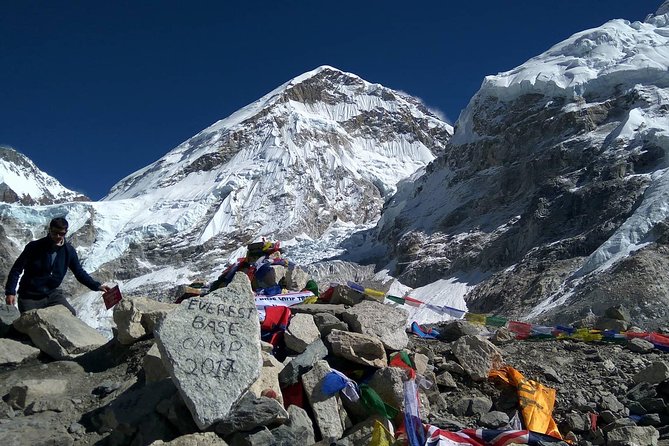
Everest Base Camp, reached with a twist. This version starts with overland travel to Salleri, so you trade the quick flight scramble for a slower approach through hillsides, rivers, and forested sections that feel closer and less tourist-busy. I like that it also builds in acclimatization time with day hikes around Namche and a higher hike toward Nagarjun hill—so you’re not just rushing upward. One consideration: you’ll still face long trekking days and some serious altitude jumps, so you’ll want moderate fitness and a calm pace from the start.
In the background, the human side matters here. The trek leader is English-speaking and government-licensed, and in examples with guides like Rupak, Binod, and Ballaram, the tone has been supportive and personal—more like you’re joining a competent local team than hiring a conveyor belt. If you need zero flexibility or want a very standardized, corporate feel, this may not match your style.
In This Review
- Jeep to Salleri: a quieter way into the Everest region
- 17 days on the trail: where altitude and pacing do the work
- Day-by-day route: from Salleri to Everest Base Camp and back
- Day 1: Kathmandu arrival and rest at the start line
- Day 2: Kathmandu to Salleri (8–9 hours, to about 2,309m)
- Day 3: Salleri to Nunthala (5–6 hours, ~2,190m)
- Day 4: Nunthala/Puiyan reach (6–7 hours, ~2,300m)
- Day 5: Puiyan to Phakding (6–7 hours, ~2,652m)
- Day 6: Phakding to Namche Bazzar (6–7 hours, 3,440m)
- Day 7: Day hike around Namche
- Day 8: Namche to Tengboche (4–5 hours, 3,880m)
- Day 9: Tengboche to Dingboche (6–7 hours, 4,410m)
- Day 10: Acclimatization Day at Dingboche (hike to Nagarjun hill, 5,080m)
- Day 11: Dingboche to Lobuche (4–5 hours, 4,930m)
- Day 12: To Everest Base Camp (5,364m), then back to Gorekshep (5,180m)
- Day 13: Kalapather early climb (5,545m), then back to Pheriche (4,200m)
- Day 14: Pheriche to Namche (6–7 hours, 3,440m)
- Day 15: Namche to Lukla (6–7 hours, 2,860m)
- Day 16: Lukla to Kathmandu flight (35 minutes)
- Day 17: Final departure from Kathmandu (TIA)
- Teahouses, meals, and what the inclusions actually buy you
- The people factor: trek leaders, porters, and the family-style care
- Price and logistics: does $1,500 per group feel fair?
- Weather, gear reality, and staying comfortable at altitude
- Who should choose this overland Everest Base Camp trek?
- Should you book Salleri Everest Base Camp (Overland)?
- FAQ
- What is the duration of the Everest Base Camp trek from Salleri?
- Where does the trip start and end?
- How much does it cost?
- Is airport transfer in Kathmandu included?
- Does the trek include domestic flights?
- Are meals included?
- Is accommodation included?
- Will there be a trek leader and porter support?
- What fitness level is needed?
- What about insurance, visa, and cancellation?
Jeep to Salleri: a quieter way into the Everest region
Most Everest routes start with Lukla, then immediately turn into a predictable trekking rhythm. This one takes a different road: you travel from Kathmandu to Salleri, and that overland start changes how the trek feels right away. Instead of landing and jumping straight onto trail legs, you ease in through changing terrain and gradual elevation rhythm.
You’re also avoiding the Lukla flight at the beginning of the trek, which can matter if flight timing, weather, or airport logistics stress you out. Here, the included flight is the ending leg—Lukla to Kathmandu—so the trek itself is the main event from the moment you leave Kathmandu.
There’s a tradeoff. An 8–9 hour drive day is long, and it comes before you’ve even started hiking. If you’re prone to feeling carsick on curvy roads, plan for it—bring what you need and keep your expectations realistic.
More trails out of Kathmandu, boots ready
- Everest Base Camp Trek – 14 Days★ 5.0 · 1,499 reviews
- Everest Base Camp Trek★ 5.0 · 842 reviews
- Everest Base Camp Trekking★ 5.0 · 485 reviews
- Nagarkot Sunrise View and Day Hiking from Kathmandu★ 5.0 · 471 reviews
17 days on the trail: where altitude and pacing do the work
This itinerary is built around the classic Everest lesson: altitude punishes mistakes. You’ll move through elevations starting around 1,320m in Kathmandu, reaching the Everest Base Camp area at 5,364m, then pushing higher with an early morning climb to Kalapather (5,545m) before descending again.
What makes this plan feel more human is that it doesn’t treat altitude like a straight line. You have:
- gradual climb days with shorter legs mixed in
- a dedicated acclimatization day at Dingboche, including a hike up toward Nagarjun hill (5,080m)
- time to move high, then come back down to sleep lower
Even without special gear talk or science lectures, you’ll feel the logic. When you’re breathing hard, the schedule matters. When your legs feel steady, you can focus on the scenery, the villages, and the simple job of walking one step at a time.
Day-by-day route: from Salleri to Everest Base Camp and back
Below is the flow in plain terms, with what each stage tends to mean for your body and your trip pace.
Day 1: Kathmandu arrival and rest at the start line
You land in Kathmandu and get picked up to your booked hotel. You’ll also have a 3-star hotel with breakfast included, which is a practical win before you leave the city behind.
This day is about resetting and keeping plans simple. Don’t pack in sightseeing marathons—save your energy for the long travel to Salleri the next day.
Day 2: Kathmandu to Salleri (8–9 hours, to about 2,309m)
This is your big first movement day, and it’s mainly a road day. You’ll travel from Kathmandu up to Salleri at 2,309m, and the time on the vehicle is a real part of the experience.
If you’re worried about altitude, this is still early in the game—sleeping higher helps your body adjust. If you’re worried about comfort, this is the day to be prepared for a long seated stretch.


Day 3: Salleri to Nunthala (5–6 hours, ~2,190m)
You start trekking while still staying relatively close to that 2,300m zone. That drop to Nunthala at 2,190m is a good detail: it keeps the climb from feeling too abrupt after the drive.
A day like this is where you get your trekking rhythm. You’re not just walking for distance—you’re practicing steady breathing and footwork.
Day 4: Nunthala/Puiyan reach (6–7 hours, ~2,300m)
You continue onward to Puiyan at 2,300m. The point isn’t speed; it’s routine. By now, you’ll understand how your body reacts to sustained hiking, even when the altitude feels manageable.
This is a good day to pay attention to hydration and foot care, because small issues tend to grow once you hit higher elevations.
Day 5: Puiyan to Phakding (6–7 hours, ~2,652m)
Now you’re rising again, ending around Phakding at 2,652m. Compared to the earlier days, this is where your pack weight starts to feel more personal, especially on uphill portions.
If you’ve brought layers, this is the day to use them wisely. You might start warmer and finish cooler, and that swing can mess with your comfort if you ignore it.
Day 6: Phakding to Namche Bazzar (6–7 hours, 3,440m)
Namche Bazzar at 3,440m is one of the bigger jumps in the early part of the trek. This is where you’ll feel the altitude more than before, even if the route still keeps moving at a realistic pace.
Expect the classic pattern: slower steps, more frequent breaks, and a need to focus on breathing. This is not the day to test your limit.
Day 7: Day hike around Namche
Instead of pushing higher overnight, you get a day to move around and adjust. The itinerary includes a day hike around Namche, which is exactly what acclimatization looks like in practice: go up a bit, return, and let your body catch up.
This is also one of the best days to ask questions and learn your guide’s style. If you’ve got concerns about pacing, you can usually address them here before the higher stretch.
Day 8: Namche to Tengboche (4–5 hours, 3,880m)
You step up again to Tengboche at 3,880m. The trekking time is shorter than the previous day, and that matters. It gives you a chance to arrive, eat well, and keep your energy steady.
I like this pattern: higher altitude, but not an exhausting march. You’ll have enough time to settle in without feeling wiped out.
Day 9: Tengboche to Dingboche (6–7 hours, 4,410m)
This is a solid push to Dingboche at 4,410m. At this stage, your body is working harder to move you uphill, and you’ll want to treat the pace as part of your strategy.
If your breathing feels sharp, slow down immediately. You can always move faster later; you can’t undo altitude strain.
Day 10: Acclimatization Day at Dingboche (hike to Nagarjun hill, 5,080m)
This is the big acclimatization day: you hike to Nagarjun hill (5,080m), roughly 4–5 hours. You’ll gain altitude, then return to sleep lower.
This is one of the most valuable parts of the plan because it actively prepares you for the later “go high, then go higher” feeling around base camp and Kalapather. It also helps you understand how you respond when you feel the altitude creep in.
Day 11: Dingboche to Lobuche (4–5 hours, 4,930m)
You continue to Lobuche at 4,930m. Even with a shorter stated trekking time, the altitude makes it feel longer. This day is about conserving effort and keeping your body calm.
If you notice you’re pushing too hard, it’s not too late to correct it. Your schedule still gives you a chance to adjust.
Day 12: To Everest Base Camp (5,364m), then back to Gorekshep (5,180m)
This is a long day: 7–8 hours. You’ll trek to Everest Base Camp at 5,364m and then return to Gorekshep at 5,180m.
This is where planning for stamina matters. You’ll want to pace hard early, so you don’t burn out before base camp. It’s also a good day to respect how cold and dry air can change how you feel.
Day 13: Kalapather early climb (5,545m), then back to Pheriche (4,200m)
Another long day: 7–8 hours. You climb to Kalapather (5,545m) in the early morning, then trek back down to Pheriche at 4,200m.
This is one of the clearest examples of the itinerary’s altitude logic. You go up for the payoff, then you come down to reduce stress and help your body recover.
Day 14: Pheriche to Namche (6–7 hours, 3,440m)
You return toward Namche at 3,440m. Descending can feel easier on your breathing but still tough on your legs. Watch your knees and take care with foot placement.
This is also a good morale day. By now, you’ve climbed the hardest part, and you’re heading back into familiar zones.
Day 15: Namche to Lukla (6–7 hours, 2,860m)
You trek to Lukla at 2,860m. Even though the altitude is lower than the summit days, you’ll still be hiking after days of effort.
Keep your pace controlled. Your legs may feel heavy, and that’s normal.
Day 16: Lukla to Kathmandu flight (35 minutes)
You fly Lukla to Kathmandu for about 35 minutes, then get to wrap up the trek with a calmer day. This is one of the simplest parts of the trip, and it’s nice after nonstop walking.
Day 17: Final departure from Kathmandu (TIA)
Your itinerary ends with departure from TIA airport. If your international flight has a big schedule gap, this day is a good time to plan rest and recovery.
Teahouses, meals, and what the inclusions actually buy you
One of the strongest value points here is simple: you’re not managing your food and lodging every day. The trek includes:
- tea house accommodation during the trek
- all meals during the trek (breakfast, lunch, dinner)
- farewell dinners
- Kathmandu hotel (3-star) with breakfast
That matters because you’ll be tired. When altitude drops motivation, having food and a bed lined up reduces decisions and stress.
What’s not included: lunch and dinner in Kathmandu, plus personal expenses like wifi, phone calls, laundry, bar bills, bottle or boiled water, showers, and battery recharges. Plan for those costs separately so the trip stays budget-realistic.
The people factor: trek leaders, porters, and the family-style care
This trek is “private,” meaning only your group participates. That’s good for comfort, but it also means the leader’s personality and organization really shape the experience.
You’ll have an experienced, English-speaking, government-licensed trek leader, plus a medical kit carried by the leader. That’s a practical combination: someone who can communicate clearly and handle normal field issues.
Porters help too. The included porter service is set up as 2 trekkers per 1 porter. Translation: your group load is reduced, and your energy can go into hiking instead of hauling everything yourself.
In examples tied to guides such as Rupak, the care described has been warm and personal—treated like family, not like a transaction. Other guidance examples include leaders Binod and Ballaram, described as supportive and inspirational. You can’t guarantee a specific personality, but you can use this as a clue: the operator tends to invest in relationship-building, not just logistics.
Price and logistics: does $1,500 per group feel fair?
The price is listed as $1,500.00 per group (up to 15), with a minimum of 2 people per booking. That pricing structure means your per-person cost depends on how many people share the group.
What you get for that price is substantial in logistics:
- private vehicle airport transfers in Kathmandu
- Kathmandu hotel (3-star) with breakfast
- full tea house lodging and all meals during the trek
- ground transportation on private vehicle per itinerary
- Lukla to Kathmandu domestic flight
- English-speaking government-licensed trek leader
- porter service with the 2:1 ratio
- staff costs, taxes, and a medical kit
So the value isn’t just the trek—it’s the coordination. Hiring a guide, organizing porters, covering flights, handling meals, and keeping everything moving at high altitude is expensive if you do it piecemeal.
Two money cautions:
- Nepal visa fee is not included.
- Travel and rescue insurance is not included, and personal spending adds up fast on long trips.
If you can share with friends (which the group-friendly pricing suggests), this becomes a smarter deal than paying solo for all the same infrastructure.
Weather, gear reality, and staying comfortable at altitude
The trek operates in all weather conditions, and you’ll need to dress appropriately. That’s not a motivational line—it’s your day-to-day comfort and safety plan.
The itinerary includes an early morning climb to Kalapather, which often means colder air and less margin for comfort. Pack like the mornings matter, and be honest with your layer system.
Also remember: porter service exists, but you still carry what you need for daily comfort. Personal expenses include things like bottle or boiled water and battery charging. Those are small, frequent costs—plan for them.
Who should choose this overland Everest Base Camp trek?
This trek suits you if:
- you want Everest Base Camp without flying from Kathmandu to Lukla at the start
- you like a more gradual feel with acclimatization built in
- you prefer your route to feel less like a single-file highway
- you want your meals and lodging managed so you can focus on hiking
It may not suit you if:
- you dislike long overland travel days (the Kathmandu to Salleri transfer is 8–9 hours)
- you want a shorter trek with fewer altitude exposures
- you’re not prepared for long days at higher elevations
Kids under 10 aren’t recommended, and you should have moderate physical fitness.
Should you book Salleri Everest Base Camp (Overland)?
If your goal is Everest Base Camp with a more grounded access approach—jeep/overland into Salleri—and a plan that actively supports acclimatization, this is a smart choice. I’d book it if you like structure: tea houses arranged, meals taken care of, and a capable leader who communicates well.
If you’re thinking about this, ask the operator one practical question before paying: how many people are in your final group size? That affects your actual per-person value under the per-group pricing. Then decide based on whether you want the overland start and acclimatization rhythm more than you want the fastest, most direct route.
FAQ
What is the duration of the Everest Base Camp trek from Salleri?
The trek is listed as 17 days approximately.
Where does the trip start and end?
It starts in Kathmandu and ends in Kathmandu, with a flight from Lukla to Kathmandu on day 16 and departure from TIA airport on day 17.
How much does it cost?
The price is $1,500 per group (up to 15).
Is airport transfer in Kathmandu included?
Yes. Airport pickups and drops in a private vehicle are included.
Does the trek include domestic flights?
Yes. A domestic flight (Lukla to Kathmandu) is included. The trek itself includes trekking to Lukla on day 15.
Are meals included?
Yes. All meals (breakfast, lunch, dinner) during the trek are included. Lunch and dinner in Kathmandu are not included.
Is accommodation included?
Yes. You get 3-star hotel accommodation in Kathmandu with breakfast, and tea house accommodation during the trek.
Will there be a trek leader and porter support?
Yes. You’ll have an experienced, English-speaking, government-licensed trek leader. Porter service is included with a ratio of 2 trekkers to 1 porter.
What fitness level is needed?
You should have moderate physical fitness.
What about insurance, visa, and cancellation?
Nepalese visa fees and travel and rescue insurance are not included. Cancellation is free up to 24 hours in advance for a full refund.
More Trekking Out of Kathmandu






More Tour Reviews in Kathmandu




Just Reviewed in Kathmandu
- Mountain Bike Tour
★ 5.0 · 3 reviews - Annapurna Panaroma
★ 5.0 · 3 reviews - Mount Everest Scenic Flight 50 Minutes
★ 5.0 · 3 reviews - Kathmandu : Swambhunath & Durbar Square Guided Half Day Tour
★ 3.3 · 3 reviews - Chandragiri Cable Car & Monkey Temple Tour – Private/Group
★ 5.0 · 3 reviews - Kathmandu: Shivapuri National Park Hiking Day Trip
★ 3.3 · 3 reviews
Everest Base Camp Treks, compared.
 ★ 5.0Everest Base Camp Trek – 14 DaysFrom $1,8001,499 reviews
 ★ 5.0Everest Base Camp TrekFrom $1,790842 reviews
 ★ 5.0Everest Base Camp TrekkingFrom $1,350485 reviews
 ★ 5.0Everest Base Camp Trekking – 13 DayFrom $1,399365 reviews
★ 5.0Everest Base Camp TrekFrom $1,445350 reviews
★ 5.0Everest Base Camp Trek -14 DaysFrom $1,420321 reviews
 ★ 5.012 Days Everest Base Camp TrekFrom $1,099289 reviews
 ★ 5.0Everest Base Camp Trekking – 2025/2026From $1,339199 reviews
Browse the lists this tour appears in