
Review · EVEREST BASE CAMP TREKS
Everest Base Camp Trek Via Salleri
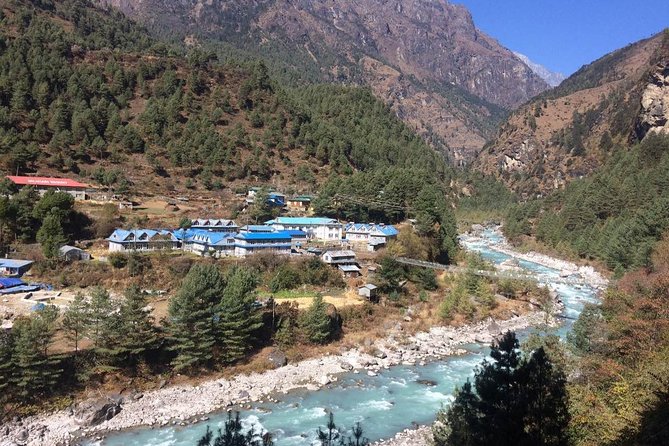
Everest Base Camp, but with a side road feel. This trek via Salleri swaps the usual Lukla approach for quieter villages and far-off settlements, including Takshindo Gompa and Sherpa hamlets by river valleys. I also love how the route builds in real acclimatization with hikes to the Everest View Hotel and later Nagerjun. The main thing to consider is the altitude spike to Kala Pathar at 5,545m, so you need a steady pace and good judgment with rest days.
The schedule alternates long driving days and short walking days, starting with an early Kathmandu to Phaplu/Ringmo transfer. You’ll feel the difference when your team handles permits, transport, and lodge bookings in advance—so your energy goes toward walking, not logistics.
Meals are not included, so plan for your daily food and tea-house bill on top of the package price. That said, having down jacket and sleeping bag support makes the cold nights more manageable and cuts down what you need to carry.
In This Review
- Key things I’d watch for before you book
- Salleri Route: Why It Feels Like Real Everest, Not a Conveyor Belt
- From Thamel to Takshindo: The Early Drive Sets the Tempo
- Takshindo to Namche Bazaar: River Valleys and the Shape of Acclimatization
- Everest View Hotel and Nagerjun: How the Trek Helps You Climb Smart
- Tengboche to Lobuche: The High Country Push
- Everest Base Camp at 5,364m and Kala Pathar at 5,545m
- The Return Loop: Pheriche Back to Namche, Then to Takhshindo
- Price, Included Comforts, and What You’ll Pay For Separately
- Who Should Choose This Trek (and Who Might Not)
- Should You Book Everest Base Camp via Salleri?
- FAQ
- Where do you meet in Kathmandu, and when does the tour start?
- What’s included for transportation and airport transfer?
- Is the trek private, and how many guides/porters are provided?
- What permits or fees are included?
- Are meals included in the package?
- What are the top altitude points on the itinerary?
Key things I’d watch for before you book
- Salleri routing instead of the Lukla start keeps the early days calmer and more local.
- Acclimatization hikes at Everest View Hotel and Nagerjun are built into the program, not tacked on.
- Porter support is structured: you get 1 porter for 2 hikers, and the staffing is covered by the trip.
- Big altitude payoff: Everest Base Camp sits at 5,364m and Kala Pathar climbs to 5,545m.
- Lodge comfort is included in key towns with attached bathrooms and hot showers listed for Lukla, Phakding, and Namche.
- Permits and gear support are part of the price (Sagarmatha National Park permits, TIMS, plus a down jacket and sleeping bag).
More trails out of Kathmandu, boots ready
- Everest Base Camp Trek – 14 Days★ 5.0 · 1,499 reviews
- Everest Base Camp Trek★ 5.0 · 842 reviews
- Everest Base Camp Trekking★ 5.0 · 485 reviews
- Nagarkot Sunrise View and Day Hiking from Kathmandu★ 5.0 · 471 reviews
Salleri Route: Why It Feels Like Real Everest, Not a Conveyor Belt
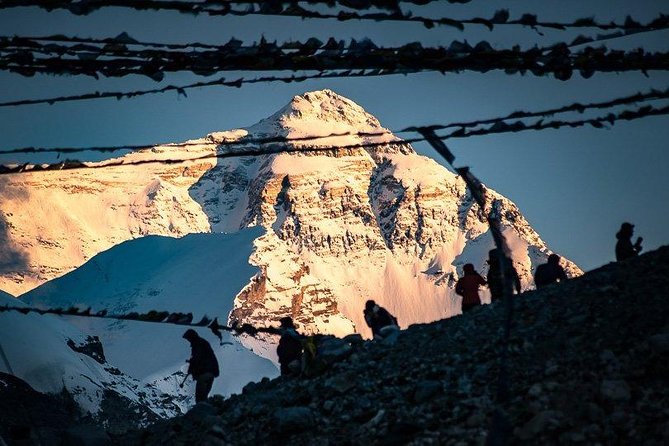
The appeal here is simple: this is Everest Base Camp, but you don’t take the same straight line as the most common approach. The Salleri route pushes you into isolated villages and far-off settlements, and you spend more time in small communities tied to river valleys and everyday Sherpa life.
One day you’re walking among pastures and terrace farms below steep mountain walls. Another day you’re dealing with narrow canyons and gushing river crossings that make you pay attention to your footing. That kind of “keep your head up and walk” trekking is often more memorable than the easier-to-predict flow of a more popular route.
And the culture piece isn’t just a brochure line. Takshindo Gompa and the surrounding settlements give you a chance to experience the rhythm of local life as you pass through. If your idea of a great Everest trip includes more than just summit views, this route fits that mindset.
The drawback? Remote routes can mean you have less margin for error. Weather and mountain conditions can slow things down, and the day-by-day rhythm still has to respect altitude. This isn’t a “walk whenever you feel like it” vacation; it’s a plan built around climbing safely.
From Thamel to Takshindo: The Early Drive Sets the Tempo
You start from Thamel, Kathmandu (meeting point), with a 6:15am start time. Day 1 is arrival at Tribhuvan International Airport in Kathmandu, and the trip includes airport transfer by local jeep, so you’re not left guessing about timing or transport.
Day 2 is a long travel day by jeep: about 8 hours from Kathmandu through Phaplu – Ringmo, followed by a short 30-minute walk to Takshindo (3,071m / 10,072 ft.). I like this format because it reduces your first-day hiking load while still getting you moving toward the higher start zone. It’s also a practical way to conserve energy before your next walking days begin.
The benefit of having transport handled matters more than it sounds. In higher-country trips, delays happen, and a quick switch to another plan can save real time on the ground. This operation has a track record of reorganizing promptly when flights don’t work, and explaining the new schedule clearly.
What to consider: the day 2 transfer is still long. If you’re sensitive to travel fatigue, treat that drive like part of the trek and plan to sleep soon after you arrive.
Takshindo to Namche Bazaar: River Valleys and the Shape of Acclimatization
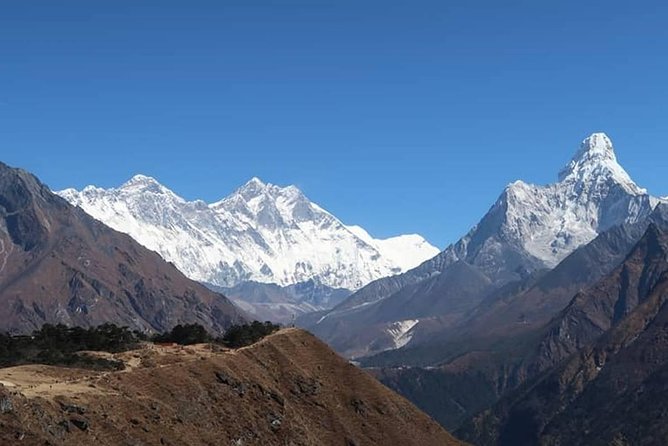
After Takshindo, your itinerary works as a rising-and-dipping rhythm that helps your body adjust. You go down to Khari Khola (2,194m), then up again to Puiyan (2,890m), then back down to Phakding (2,652m), and finally up to Namche Bazaar (3,440m).
I like this because acclimatization isn’t just about one big rest day. You’re training your body on the pattern: walk, gain a bit, then recover as you drop to the next village. That’s the real “why” behind these altitude changes.
Along the way, the route keeps returning you to the kinds of terrain that make this feel like a mountain place, not a trail line on a map. Expect narrow canyons and river action, plus the quieter scenes of small settlements. Even if you’re not chasing photos every five minutes, you’ll likely find yourself stopping anyway—gushing white rivers have a way of stealing attention.
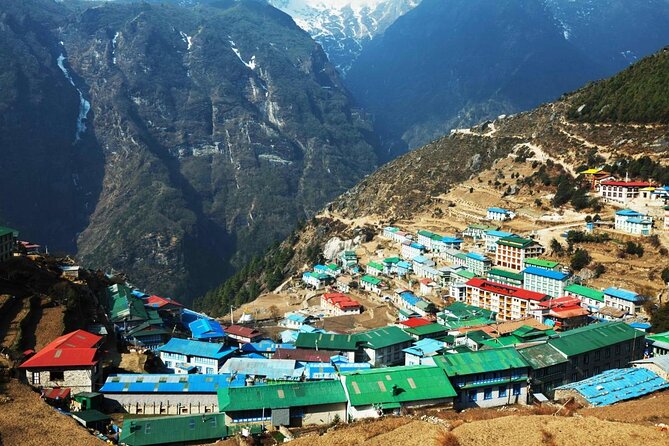
Lodge-wise, you’re not roughing it. The trip includes best available lodges during the trek, and it also lists attached bathrooms with hot shower at key stops like Phakding and Namche. That doesn’t turn the trek into a spa, but it does make the nights easier when temperatures drop.
One more practical point: you’re not carrying everything yourself. With the staffing model of 1 porter for 2 hikers, you can keep your pack lighter and keep walking feeling more steady.
Everest View Hotel and Nagerjun: How the Trek Helps You Climb Smart
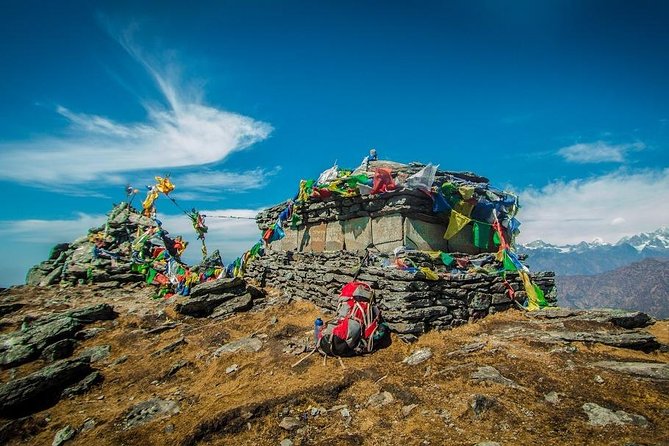
The best Everest trips aren’t only about going higher. They’re about using the time you have to avoid rushing your body. This itinerary gives you two built-in acclimatization days.
Day 7 is an acclimatization hike up to Everest View Hotel and back. Day 10 is another acclimatization day with a hike to Nagerjun and return. Both are set up like “test the air, then come down” days.
I like this approach because it doesn’t ask you to choose between two bad options: either keep going and hope for the best, or stop and lose momentum. Instead, you get short, purposeful hikes that help your breathing adapt while keeping the overnight altitude safer.
If you’re the type who tends to feel great on day one and then pay for it later, these scheduled checks are a real advantage. And since your down jacket and sleeping bag are included, you’re better set up for those cold evenings right after altitude work.
Small note: your pace matters more on acclimatization days than speed does. You’re not trying to prove anything; you’re trying to set your body up for the higher passes that come after.
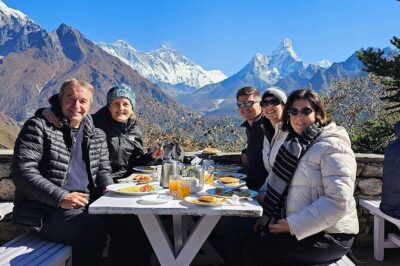
Tengboche to Lobuche: The High Country Push
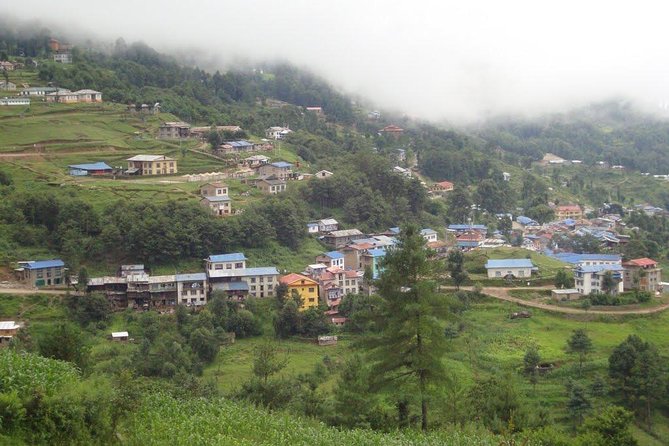
Once you’re moving through Tengboche (3,860m) and onward to Dingboche (4,410m) and Lobuche (4,910m), the trek starts to feel more serious—mostly because the altitude stops being background noise. You’re already gaining elevation in daily steps, and you’re getting closer to the high staging areas that make Everest possible.
This is where the “route choice” matters. Salleri’s earlier, quieter village days help you settle into a rhythm. Then the program gradually ramps you into the higher end: you’re not jumping from warm Kathmandu life to extreme heights in one leap.
Lobuche is especially important in your plan because it’s the launch point toward Everest Base Camp (5,364m) at Gorakshep. After days around 4,000–5,000m, your body starts to understand that the next part isn’t just scenery—it’s effort.
A comfort detail you’ll appreciate here: you have lodging included every night with staffing support behind the scenes, and guide support is part of the package. That’s where a good team shows up. The guides named in the trip’s feedback—people like Pooja and Prem, plus Prakash, Manoj, and Neel—are described as attentive and organized, which matters when weather changes or someone needs extra help pacing.
Everest Base Camp at 5,364m and Kala Pathar at 5,545m
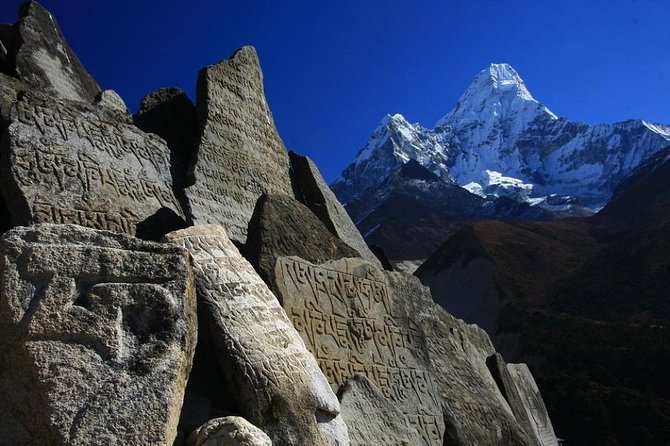
The headline stretch is Lobuche to Everest Base Camp (5,364m / 17,594 ft.) at Gorekshep. Then you move to Kala Pathar (5,545m / 18,188 ft.), and finally head down to Pheriche (4,210m).
Here’s the truth of this portion: it’s the part you train for, but it’s also the part where altitude decisions matter most. If you’ve been saving energy and following the slower rhythm the trek encourages, you’ll have a better shot at enjoying it instead of just surviving it.
Kala Pathar is your big high viewpoint day. Even if you don’t care about the technicalities, it’s a full-on climb in elevation. You’ll feel it in your legs and in your breathing. Then you descend to Pheriche, and that down step is more than convenience—it’s recovery.
One small but important value point: the trek includes a down jacket and sleeping bag during the trek. That makes the cold nights after these high days easier to manage without scrambling to rent or buy gear on the ground.
The Return Loop: Pheriche Back to Namche, Then to Takhshindo
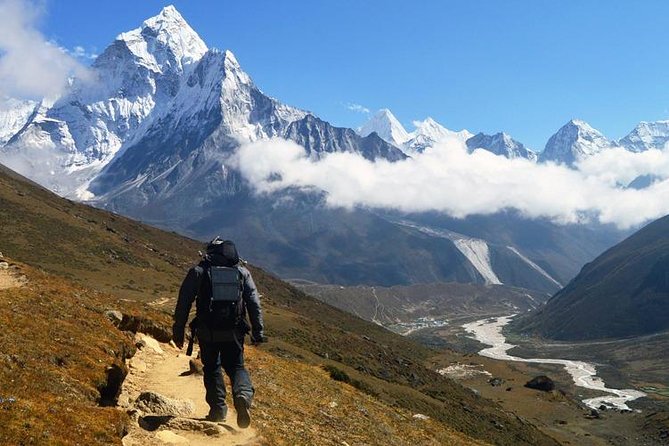
After the high point work, you get a return route that keeps your altitude moving in a way your body can handle. You go from Pheriche to Namche (3,440m), then to Phakding (2,652m), then down toward Puiyan (2,890m), then to Khari Khola (2,194m), and finally back to Takhshindo (around 3,071m) before the end-of-trek transport.
I like this loop style because it gives you two kinds of satisfaction. First, you enjoy the views with the fatigue level that comes after the hard part is done. Second, you get the “I remember that river crossing” feeling on roads and paths you already walked, but now it’s easier to pay attention to details you missed earlier.
Day 19 is a big finish: a jeep drive back from Takshindo – Ringmo – Phaplu to Kathmandu, listed as about 8 hours, plus a 30-minute walk. Then Day 20 is your farewell.
Price, Included Comforts, and What You’ll Pay For Separately
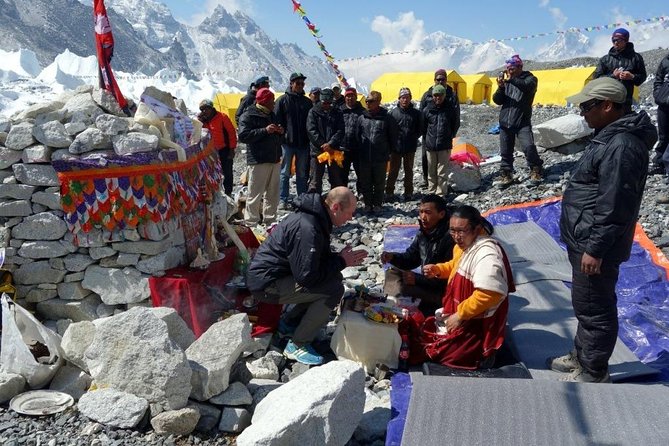
The price is $1,952 for an approx. 20-day private trek that includes a long list of essentials. For many trekkers, that’s what turns Everest from a DIY puzzle into a trip you can actually enjoy.
Here’s what you’re getting in the package:
- All fees and taxes
- Sagarmatha National Park permits and TIMS fee (TIMS requires you to bring 2 passport-size photos)
- All ground transport in local jeep, including airport transfer
- Guide and porters, with the staffing model 1 porter for 2 hikers, plus food, accommodation, salary, equipment, and insurance for the staff
- Best available lodges
- Attached bathroom with hot shower listed at Lukla, Phakding, and Namche
- Down jacket and sleeping bag provided during the trek
- A duffle bag, plus a trekking map and trip achievement certificate
What’s not included:
- Meals
- Travel insurance and international airfare
- Personal expenses (laundry, beverages, and other extras)
- Tips and gratuities for trekking staff
So where does the value really come from? It’s in reducing your biggest uncertainty costs: permits, transport planning, staff coordination, and lodge arrangement. If you’ve ever tried to price all those pieces separately, you’ll understand why a package helps.
What might raise your total on the ground is the obvious part: meals. Since meals aren’t included, your food budget depends on how often you go for extra drinks or larger meals at tea houses. Plan a buffer, not a guess.
Also, don’t forget that you’ll need your own travel insurance even if your trekking operator is taking care of staff insurance and equipment.
Who Should Choose This Trek (and Who Might Not)
This trek is listed for travelers with moderate physical fitness, and it’s a private tour/activity, meaning you’re with your group only. The altitude profile is serious enough that “moderate fitness” needs to come with good pacing and willingness to slow down when your body asks.
Choose this route if:
- You want an alternate Everest Base Camp route via Salleri instead of the most common path.
- You like the idea of small villages and Sherpa culture rather than only pass-through trekking hubs.
- You want acclimatization built into the itinerary with hikes to Everest View Hotel and Nagerjun.
- You value organization and a team that keeps things handled when conditions change. Names tied to that kind of service include Pooja, Prem, Prakash, Manoj, Neel, and others.
Rethink the plan if:
- You’re not comfortable with higher-altitude days like Kala Pathar (5,545m).
- You rely on “flexibility by whim.” This itinerary is a structured climb-and-recover rhythm.
- You’re hoping meals are included. They aren’t, so your daily spending will matter.
If you’re a first-timer to high altitude trekking, you’ll likely appreciate the way this program handles acclimatization and the fact that staff support is built into the schedule.
Should You Book Everest Base Camp via Salleri?
I’d book it if you’re craving the parts of Everest that feel like real mountain life: river valleys, isolated settlements, and a route that avoids the most standard approach. This itinerary also makes it easier to get ready because it includes permits, jeep transport, lodges, and key gear support like a down jacket and sleeping bag.
Before you commit, add up your “true total” in your head: the package price covers a lot, but meals, your travel insurance, airfare, and tips are on you. Also, make sure you can handle the altitude and use the acclimatization days as intended.
One more practical reassurance: the trip lists free cancellation up to 24 hours in advance for a full refund, and it notes weather-dependent planning. That’s not a guarantee, but it gives you some breathing room if conditions don’t cooperate.
FAQ
Where do you meet in Kathmandu, and when does the tour start?
You meet in Thamel, Kathmandu (44600), Nepal. The start time is 6:15am.
What’s included for transportation and airport transfer?
The trip includes all ground transport in local jeep, including the airport transfer.
Is the trek private, and how many guides/porters are provided?
Yes, it’s a private activity with one highly experienced guide and porters. The porter ratio is 1 porter for 2 hikers.
What permits or fees are included?
The package includes Sagarmatha National Park permits and the TIMS fee. You must bring 2 passport-size photos for the permit.
Are meals included in the package?
No. Meals are not included.
What are the top altitude points on the itinerary?
The itinerary lists Everest Base Camp (5,364m) at Gorekshep and Kala Pathar (5,545m) as the top viewpoint day.
More Trekking Out of Kathmandu
More Tour Reviews in Kathmandu
Just Reviewed in Kathmandu
- Mountain Bike Tour
★ 5.0 · 3 reviews - Annapurna Panaroma
★ 5.0 · 3 reviews - Mount Everest Scenic Flight 50 Minutes
★ 5.0 · 3 reviews - Kathmandu : Swambhunath & Durbar Square Guided Half Day Tour
★ 3.3 · 3 reviews - Chandragiri Cable Car & Monkey Temple Tour – Private/Group
★ 5.0 · 3 reviews - Kathmandu: Shivapuri National Park Hiking Day Trip
★ 3.3 · 3 reviews
Everest Base Camp Treks, compared.
 ★ 5.0Everest Base Camp Trek – 14 DaysFrom $1,8001,499 reviews
 ★ 5.0Everest Base Camp TrekFrom $1,790842 reviews
 ★ 5.0Everest Base Camp TrekkingFrom $1,350485 reviews
 ★ 5.0Everest Base Camp Trekking – 13 DayFrom $1,399365 reviews
★ 5.0Everest Base Camp TrekFrom $1,445350 reviews
★ 5.0Everest Base Camp Trek -14 DaysFrom $1,420321 reviews
★ 5.0Everest Base Camp Trekking – 13 DayFrom $1,399365 reviews
★ 5.0Everest Base Camp TrekFrom $1,445350 reviews
★ 5.0Everest Base Camp Trek -14 DaysFrom $1,420321 reviews
 ★ 5.012 Days Everest Base Camp TrekFrom $1,099289 reviews
 ★ 5.0Everest Base Camp Trekking – 2025/2026From $1,339199 reviews
Browse the lists this tour appears in