
Review · EVEREST BASE CAMP TREKS
Everest Base Camp Trekking
Everest Base Camp is close-up tough and very real. I like the private pace and the way the team handles the heavy logistics like permits and teahouses, so you can focus on walking and breathing. One tradeoff: this is teahouse trekking, so comfort is simple and hot showers aren’t included.
What makes this trek feel different is the support system. You’ll trek with a guide trained in Wilderness First Aid & altitude sickness, plus porters on a set ratio (1 porter for between 2 trekkers), and there are group medical supplies along the way. Still, the route is demanding and best suited to people who already hike regularly.
In This Review
- Key Highlights You Should Know Before You Go
- A 12-Day Private Everest Base Camp Trek From Kathmandu to Lukla
- What You’re Really Paying For: Permits, Teahouses, and a Trained Trek Team
- Lukla Flight: The First Reality Check (and Why It Affects Your Schedule)
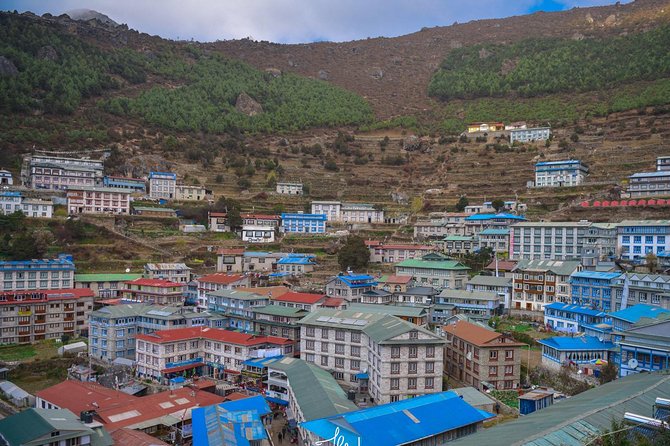
- Day 1 and Day 2: Phakding to Namche Bazaar Builds Your Legs Fast
- Acclimatization Day at Namche: This Is Where You Earn the Right to Go Higher
- Namche to Tengboche (and Deboche): The Gompa Day That Changes the Mood
- Dingboche, Dughla, and Lobuche: Getting Higher With a Plan, Not Guesswork
- Gorak Shep and Everest Base Camp: The Main Event (With Real Timing)
- Kalapatthar for Everest Views, Then Down to Pheriche
- The Descent: Pheriche to Tengboche to Monjo to Lukla
- Teahouse Life and Meals: Comfort You Can Count On (Within Limits)
- Guides and Porters: Why This Feels Safer Than DIY
- Gear That Matches This Route (and the Included Assumptions)
- Who This Trek Fits Best (and Who Should Think Twice)
- Should You Book This Everest Base Camp Trek?
- FAQ
- How long is the Everest Base Camp trek?
- Where does the trek start and end?
- Is pickup or transportation included?
- Are permits and park fees included?
- What meals are included on the trek?
- Do I have a guide and porters?
- Where do you stay during the trek?
- What is not included in the price?
- Do I need travel insurance?
- What gear should I bring?
Key Highlights You Should Know Before You Go
- Private trek control: you’re not sharing your daily rhythm with lots of strangers
- Permits and park fees handled: Sagarmatha National Park fees and TIMS are included
- Guide + porter support: Wilderness First Aid training, and porters carry your load in a set ratio
- Teahouses and most meals included: you’re paying for fewer surprises on the trail
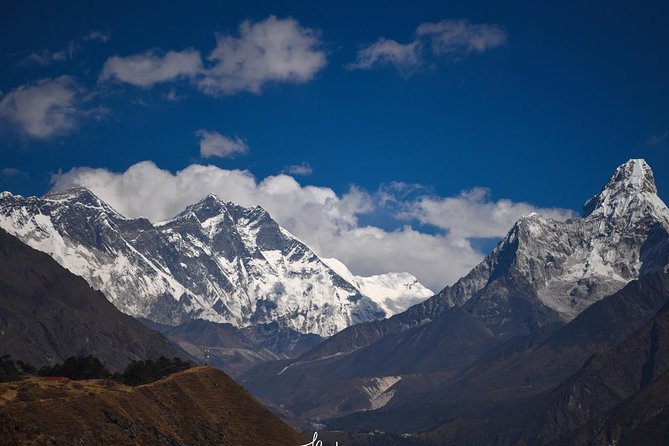
- Kalapatthar for Everest views: a classic viewpoint day included in the plan
- Owner responsiveness in hard moments: multiple accounts describe fast coordination when weather or flights get weird
More trails out of Kathmandu, boots ready
- Everest Base Camp Trek – 14 Days★ 5.0 · 1,499 reviews
- Everest Base Camp Trek★ 5.0 · 842 reviews
- Everest Base Camp Trekking★ 5.0 · 485 reviews
- Nagarkot Sunrise View and Day Hiking from Kathmandu★ 5.0 · 471 reviews
A 12-Day Private Everest Base Camp Trek From Kathmandu to Lukla
This is an Everest Base Camp trek designed for people who want the payoff without micromanaging every step. You start in Thamel, Kathmandu, and you’ll have airport/hotel transfers by private vehicle. From there, it’s off to Lukla by plane, then a classic trekking line through Sagarmatha National Park and back to Kathmandu.
The big value isn’t just the destination. It’s the structure. You get a set number of days, teahouse accommodation on the trek, and daily meals chosen from the menu (breakfast, lunch, dinner during the trek). That matters because Everest region trekking is expensive in the small ways—last-minute room changes, buying permits you thought were included, scrambling for help when timing slips. This itinerary tries to remove those stress points.
Price is $1,998 per person for about 12 days, private. For Everest Base Camp, that lands in the “serious but reasonable” zone, especially because permits/fees, guide/porters, and teahouse stays are included. You’re paying for planning and people, not just miles.
What You’re Really Paying For: Permits, Teahouses, and a Trained Trek Team
Most Everest trekgers quickly learn the truth: the mountain isn’t the only challenge. Paperwork and people make or break the trip.
Here’s what this package includes that actually reduces risk:
- All necessary permits, entry fees, and government taxes
- Sagarmatha National Park fees and TIMS card fee
- Teahouse/lodges accommodation during the trek
- Daily meals from the menu (breakfast/lunch/dinner during the trek)
- A trained guide and porters (1 porter for between 2 trekkers basis)
The guide detail is important. This team specifies a guide trained in Wilderness First Aid & altitude sickness, which you’ll feel on summit-day style stress and also on the smaller days when fatigue piles up.
Porters are covered properly too: their food, accommodation, salary, equipment, and accidental insurance are included. That affects your experience because you’re more likely to arrive at the end of a day feeling like you can still think clearly.
Lukla Flight: The First Reality Check (and Why It Affects Your Schedule)
Your trek begins with an early start. The meeting point is Thamel, and the start time lists 1:15 am. That usually means you’re gearing up for the day’s flight(s) and transfer timing well before most people are awake.
Day 1 includes a short flight from Kathmandu to Lukla (about 25 minutes), then trek to Phakding (about 3–4 hours). The practical takeaway: in the Everest region, flights can be weather-sensitive. Even when your trek plan is solid, your calendar can still wobble. The good news is that this operator is described as responsive and organized when things go off-script—especially when weather or flight changes hit.
What I’d plan for personally: keep a little flexibility in your head. You’re trekking to Base Camp in one of the world’s most variable places. The trek itself is hard, but the first “moving part” is the flight day.
Day 1 and Day 2: Phakding to Namche Bazaar Builds Your Legs Fast
Day 1 finishes in Phakding with an overnight teahouse stay. It’s your warm-up day, but don’t treat it as a stroll. You’ll be moving after the flight, and even “easy” Himalayan mornings can feel different once you’re at elevation.
Day 2 takes you from Phakding to Namche Bazaar (about 3–4 hours trek listed, with a total of 7 hours including breaks). Namche is where your trip starts to feel like Everest trekking—not just walking in the mountains. It’s also your supply town moment: you’re far enough in that you understand what you’ve brought, what you still need, and what you’re too tired to worry about.
The itinerary includes a teahouse night here too, and Day 2 notes “Admission Ticket Free” for the Namche Bazaar stop. The deeper point: Namche is where you acclimatize with real-world rhythm. You’ll see how other trekkers pace themselves, and you’ll feel the difference between pushing and moving smart.
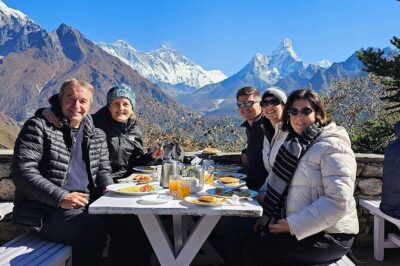
Acclimatization Day at Namche: This Is Where You Earn the Right to Go Higher
Day 3 is a dedicated acclimatization day in Namche Bazaar. It’s only listed as 2 hours, but that’s the point. You’re not here to “win cardio.” You’re here to let your body adjust.
In practice, acclimatization days are about:
- walking without overdoing it
- getting quality rest
- staying consistent with hydration and food
This itinerary keeps that structure intact, and that’s one reason I like it for people with solid hiking experience who still want guidance. If you rush acclimatization, the downside shows up later—when the days get longer and the air thins.
Namche to Tengboche (and Deboche): The Gompa Day That Changes the Mood
Day 4 moves from Namche Bazaar toward Tengboche Gompa, with the trek listed from Namche to Deboche (about 4–5 hours trek, total 6 hours). This is a classic transition day: you move toward more sacred landmarks while your altitude keeps climbing.
A gompa (and the village culture around it) gives your brain something to do besides count steps. You’ll also feel the shift in terrain and the way views open up. It’s not just scenic. It’s a mental rest break in walking form.
If you tend to get cold at higher altitude, plan this day as a “layers check.” You want your fleece and your warmer jacket ready before you stop, not after.
Dingboche, Dughla, and Lobuche: Getting Higher With a Plan, Not Guesswork
After Tengboche/Deboche, Day 5 starts the move toward Dingboche (about 5–6 hours listed). Then Day 6 goes from Dingboche to Dughla (listed about 3–4 hours). Day 9 in the text labels it “Duglha – Lobuche [4,940m/16,207ft]” with about 6 hours listed; so you’ll have a higher segment where you can feel altitude more strongly.
What you can expect:
- shorter stretches than the “big view” days, but slower steps
- teahouse nights as your reset point
- more focus on not wasting energy
The itinerary’s structure matters here. You don’t jump from Namche into high-altitude stress in a straight line. You stack these days so that your body gets multiple chances to adjust. You’ll still feel the climb, but it won’t feel like random suffering.
Gorak Shep and Everest Base Camp: The Main Event (With Real Timing)
Day 7 is a day with a big goal: trek from Lobuche to Gorakshep, then visit Everest Base Camp, and return to Gorakshep the same evening (about 6 hours total listed). This is the day you’ve been walking toward.
A few practical thoughts for you:
- Start early enough that you aren’t sprinting at altitude.
- Keep your pacing steady. No need to turn this into a race.
- Treat the Base Camp segment as a “focus zone.” This is where your attention matters.
Even if you’ve seen photos, Base Camp is different in person. It’s windy, it’s cold, and the scale hits you fast. The good side is your day is organized: you’re not left guessing how long it takes.
Kalapatthar for Everest Views, Then Down to Pheriche
Day 8 is the classic viewpoint payoff: trek from Gorakshep to Kalapatthar, enjoy views of Mount Everest, then continue trekking back to Pheriche (about 6–7 hours listed). This is a long day, and you’ll likely feel it in your legs after.
Kalapatthar is worth planning for because it’s not just “one more stop.” A good viewpoint day helps you understand what you climbed toward. It also helps you frame the descent mentally: you’re not grinding downward without a goal. You have a payoff.
After that, you sleep in Pheriche in a teahouse. Nights like this are where your pace changes. Your body knows you’re going home soon, but it’s still altitude-sensitive—so keep your routines steady.
The Descent: Pheriche to Tengboche to Monjo to Lukla
Days 9 through 11 are the return route:
- Day 9: Pheriche to Tengboche (about 5–6 hours)
- Day 10: Tengboche to Monjo (about 5–6 hours)
- Day 11: Monjo to Lukla (about 4–5 hours)
A descent sounds easier, but it often isn’t. Your quads take the hit. Your steps get faster, and that’s when people tweak knees or ankles. You’ll enjoy the slower, controlled rhythm more.
Lukla back on Day 11 matters too because it puts you in position for the final flight. Day 12 is flight back from Lukla to Kathmandu, ending back at the meeting point.
Teahouse Life and Meals: Comfort You Can Count On (Within Limits)
This trek includes teahouse accommodation and daily meals from the menu. That’s huge. In the Everest region, “included” can mean anything from real meals to vague promises. Here, you’re told you get daily meals (breakfast, lunch, dinner during the trek).
What’s not included:
- Alcoholic and hot/cold drinks
- Hot water and hot showers
- Personal items like laundry, phone charging, snacks, sweets, bar bills
So yes, you’ll have warmth and you’ll have food. But you should expect simple setups: thin walls, basic bathrooms, and the kind of night where layers matter.
If you want an easy checklist mindset: bring a plan for cold mornings. Wear what you can early, then add/remove layers as the day changes.
Guides and Porters: Why This Feels Safer Than DIY
This is the part people don’t always think about until something goes wrong.
You’ll have:
- an experienced trekking guide trained in altitude sickness response and Wilderness First Aid
- porters with food, accommodation, insurance, and medicine covered
- group medical supplies on the trail
Even better, multiple accounts describe how quickly the team reacts in difficult moments. That kind of speed matters on Everest routes because conditions can shift fast. It also shows up in small things: helping with timing, adjusting plans, and handling the human side of trekking logistics.
If you’re solo, this kind of support can be a big comfort. Even with a private trek, you’re still in a remote environment. Having a functioning team reduces the mental load.
Gear That Matches This Route (and the Included Assumptions)
The operator provides an equipment checklist and stresses keeping your packed bag under 33 pounds (15 kg) at the start of the trek. That’s consistent with how porters and baggage work in this region.
What you should bring (from the provided guidance):
- Waterproof trekking shoes with spare laces; high ankle with good grip recommended
- Woolen cap or scarf, sun hat, sun protection cream, lip balm/cold cream
- Fleece layer, a heavy down jacket or Gore-Tex jacket, thermal inners, wind-stopper optional
- Waterproof track pants and several t-shirts and socks (they suggest both synthetic/waterproof pants and a mix of sock types)
- Walking stick (recommended minimum 1)
- Gloves: lightweight plus winter-ready heavier options
- Camp shoes (sneakers/sandals)
Also note the trekking bag guidance: 60–70 liter pack, comfortable straps, and you should line the bag with polythene. That’s a practical Everest survival step in a region where weather can be wet.
If you don’t already own winter layers and waterproof footwear, you’ll likely feel that on Day 7 and Day 8. Don’t show up underprepared and hope the mountains negotiate.
Who This Trek Fits Best (and Who Should Think Twice)
This trek is described as best suited for hikers with hiking experience. It also notes moderate physical fitness.
You’ll likely love it if you:
- can handle 4–7 hour trekking days with elevation changes
- want a structured plan with teahouse comfort and included meals
- prefer a private group (so your pace and break style are your own)
You might think twice if you:
- want a “short and easy” trek (this route still climbs and spends multiple days at altitude)
- dislike basic teahouse conditions like cold water and limited shower access
- don’t have winter clothing for the coldest days near the Base Camp segment
Should You Book This Everest Base Camp Trek?
I’d book it if your top priorities are reduced logistical stress, a real support team, and a plan that includes permits, teahouses, and daily meals. The price feels most fair when you factor in what you’d otherwise arrange yourself: paperwork, lodging coordination, and guide/porter labor.
I’d pause if your idea of comfort requires hot showers and a resort-style experience. Teahouses are part of the deal here. And while the team supports you, you still need to show up ready to hike hard days at altitude.
If you want Everest Base Camp with clear structure—and with a guide/porter team built for the realities of high-altitude trekking—this is a strong fit.
FAQ
How long is the Everest Base Camp trek?
The trek is listed as 12 days (approx.), starting with flights from Kathmandu to Lukla and ending with a return flight back to Kathmandu.
Where does the trek start and end?
It starts in Thamel, Kathmandu and ends back at the same meeting point in Kathmandu.
Is pickup or transportation included?
Yes. The package includes airport/hotel/airport transfers by private vehicle, plus pickup offered.
Are permits and park fees included?
Yes. The trek includes necessary permits, Sagarmatha National Park fees, and the TIMS card fee.
What meals are included on the trek?
Daily meals are included from the menu during the trek (breakfast, lunch, and dinner). Hot and cold drinks are not included.
Do I have a guide and porters?
Yes. You’ll have a trekking guide and porters. The porter ratio is 1 porter for between 2 trekkers, and porter costs (food, accommodation, salary, equipment, accidental insurance, clothing, and medicine) are included.
Where do you stay during the trek?
You stay in teahouse/lodges accommodation during the trekking days.
What is not included in the price?
Not included: alcoholic drinks, hot/cold drinks, hot water, hot and cold showers, personal expenses (like laundry and phone charging), international airfare, Nepal entry visa fee, tips, and travel insurance.
Do I need travel insurance?
The trip notes travel insurance is essential, and it should include emergency evacuation coverage while trekking up to 5500+ meters.
What gear should I bring?
The provided checklist highlights waterproof trekking shoes, cold-weather layers (including down or Gore-Tex), gloves, socks, thermal inners, sun protection, a walking stick, and keeping your packed bag to 15 kg or less.
More Trekking Out of Kathmandu
More Tour Reviews in Kathmandu
Just Reviewed in Kathmandu
- Mountain Bike Tour
★ 5.0 · 3 reviews - Annapurna Panaroma
★ 5.0 · 3 reviews - Mount Everest Scenic Flight 50 Minutes
★ 5.0 · 3 reviews - Kathmandu : Swambhunath & Durbar Square Guided Half Day Tour
★ 3.3 · 3 reviews - Chandragiri Cable Car & Monkey Temple Tour – Private/Group
★ 5.0 · 3 reviews - Kathmandu: Shivapuri National Park Hiking Day Trip
★ 3.3 · 3 reviews
Everest Base Camp Treks, compared.
 ★ 5.0Everest Base Camp Trek – 14 DaysFrom $1,8001,499 reviews
 ★ 5.0Everest Base Camp TrekFrom $1,790842 reviews
 ★ 5.0Everest Base Camp TrekkingFrom $1,350485 reviews
 ★ 5.0Everest Base Camp Trekking – 13 DayFrom $1,399365 reviews
★ 5.0Everest Base Camp TrekFrom $1,445350 reviews
★ 5.0Everest Base Camp Trek -14 DaysFrom $1,420321 reviews
★ 5.0Everest Base Camp Trekking – 13 DayFrom $1,399365 reviews
★ 5.0Everest Base Camp TrekFrom $1,445350 reviews
★ 5.0Everest Base Camp Trek -14 DaysFrom $1,420321 reviews
 ★ 5.012 Days Everest Base Camp TrekFrom $1,099289 reviews
 ★ 5.0Everest Base Camp Trekking – 2025/2026From $1,339199 reviews
Browse the lists this tour appears in