

Review · WORKSHOPS
Kathmandu: Wood Carving Workshop with Local Artisan (Thamel)
Wood chisels beat jet lag. This hands-on Kathmandu workshop helps you make a real souvenir in just 3 hours, while I like how the small group setup keeps instruction practical and personal. One possible drawback: the historical and cultural context may be lighter than you want, depending on how your class is run.
I also appreciate that you start with proper tools and a pre-cut wooden block, so even if your hands have zero carving experience, you still get to practice outlining, chiseling, and detailing. And yes, you’ll leave with something you can actually hold and remember.
In This Review
- Key highlights you should care about
- Thamel, Kathmandu: why this neighborhood fits a workshop
- The 3-hour workshop flow (tools to your finished carving)
- What you’ll carve: outlining, chiseling, and detailing basics
- The wood, the tools, and what that means for first-timers
- The cultural side: motifs, iconography, and Nepal’s carving lineage
- Meet Hera and how the teaching style shapes the experience
- Price and value: $42 for skills you can show, not just buy
- How to plan your day around a 3-hour carving session
- Who should book this wood carving class
- Good to know before you go
- Should you book this Kathmandu wood carving workshop?
- FAQ
- How long is the Kathmandu wood carving workshop?
- How much does it cost?
- Is the class good for beginners?
- Who teaches the workshop, and what language is used?
- What will I make and can I take it home?
- What should I bring, and are there any rules?
Key highlights you should care about
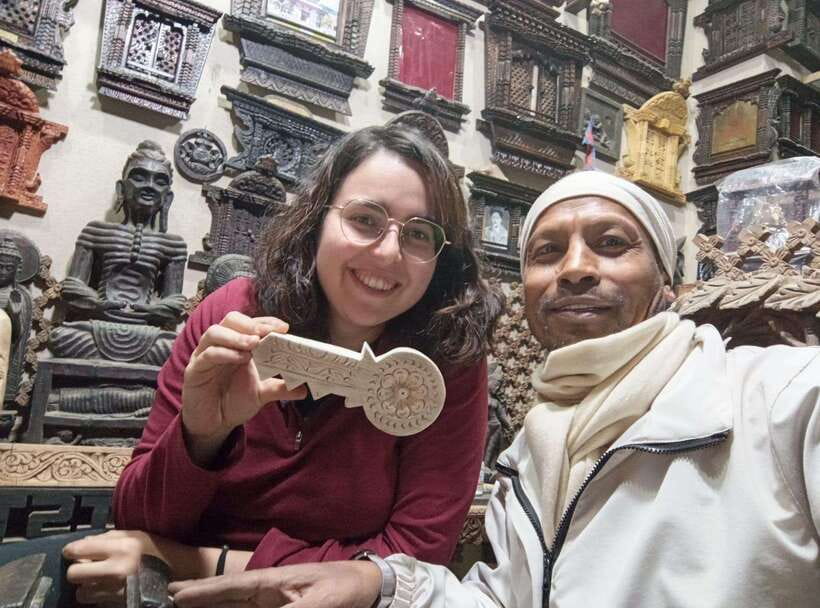
- A local artisan teaches you step by step, with time for corrections as you work.
- You practice core carving moves like outlining, chiseling, and adding fine detail.
- You make a take-home piece that feels personal, not generic.
- You learn where the motifs come from, including Hindu and Buddhist symbolism.
- Small group size (up to 4) means you get attention when you need it.
- English instruction makes it easier to ask questions and understand the process.
Make something to carry home
- Half day cooking class in Thamel kathmandu★ 5.0 · 607 reviews
- Kathmandu: Local Women-Led Nepali Cooking & Momo Class★ 4.9 · 360 reviews
- Kathmandu: Local Lead Nepali Cooking & Momo-Making Class★ 5.0 · 212 reviews
- Knife (Khukuri) Making Workshop- Forge of the Gurkhas★ 5.0 · 143 reviews
Thamel, Kathmandu: why this neighborhood fits a workshop
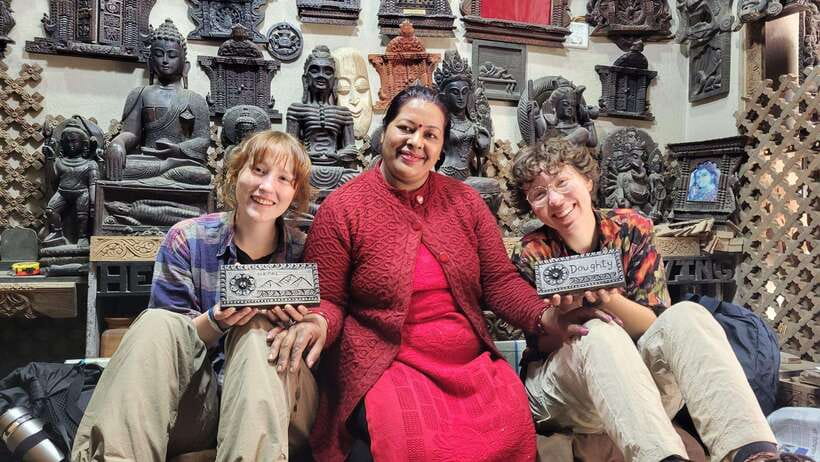
Thamel is a logical place to book a hands-on class. It’s where you can move through the day without big travel time, then settle into a calmer workshop rhythm for a few hours.
The workshop itself is described as a serene setting, which matters. Carving takes patience. You want fewer distractions so you can focus on the next small step: sketch, outline, carve, refine.
The 3-hour workshop flow (tools to your finished carving)
This class is built around a simple idea: you learn the technique while you’re doing it. You’ll get an overview of the tools and materials first, then you shift into practice right away.
Here’s the usual rhythm you can expect:
- You start with an introduction to carving tools (like traditional chisels and hammers) and the wooden block you’ll work on.
- You learn basic patterns and carving approaches, then begin carving your design.
- You work with guidance as you outline, carve, and add details.
- You finish with your own small piece of wood art to take home.
Because the session is only 3 hours, it’s paced to be doable. You’re not being asked to create something monument-level. You’re building skills fast, and that’s what makes the time feel worthwhile.
What you’ll carve: outlining, chiseling, and detailing basics
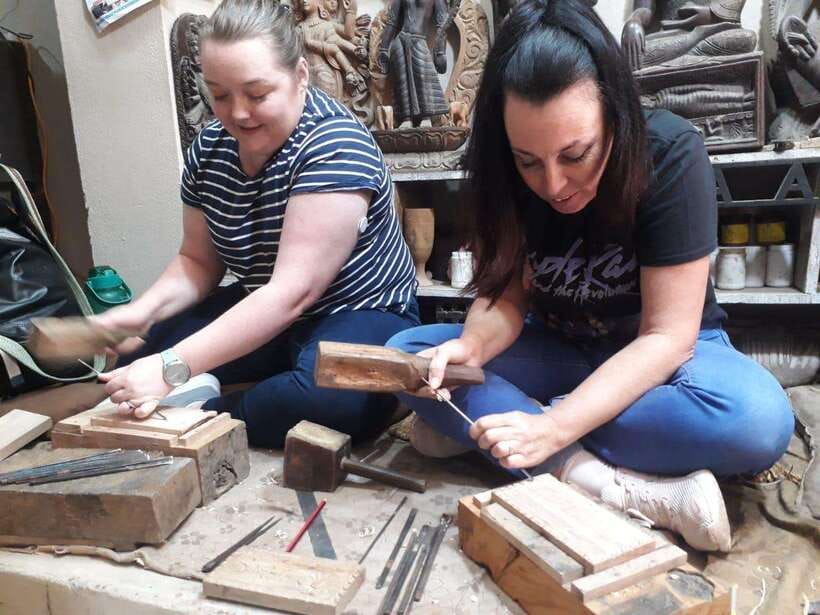
The workshop focuses on three core technique phases: outlining, chiseling, and detailing. That’s exactly the trio you want if your goal is a finished souvenir and a real skill you can repeat later.
Outlining is where you get control. You transfer your design and learn how to start grooves cleanly without tearing up the wood.
Chiseling is where your hands learn the main carving motion. The instructor helps you understand pressure and angle so the cut looks intentional instead of accidental.
Detailing is the last stage, and it’s where your piece stops looking like a rough draft. You add small finishing touches, and the wood starts to read like an art object rather than just a shaped block.
If you’re thinking you might be too beginner-level, the class is explicitly described as tailored for all skill levels. In practice, that means you should feel guided rather than thrown into the deep end with just a chisel and hope.
The wood, the tools, and what that means for first-timers
The materials matter in wood carving, and this class sets you up with good basics. You’ll learn about traditional chisels and other instruments, plus the kinds of wood commonly used in Nepal—sal and teak are specifically mentioned.
That’s useful information, because those woods behave differently. Even if you don’t get to choose the exact species in your block, understanding the usual Nepalese wood types helps you connect what you’re doing to the craft tradition.
You also get all necessary tools and materials provided. That’s a big value point. Carving supplies can add up fast, and it’s not something you want to buy and then never use again.
What to wear is simple: comfortable clothes. You’ll want freedom of movement, especially when you’re leaning in and concentrating for long minutes at a time.




The cultural side: motifs, iconography, and Nepal’s carving lineage
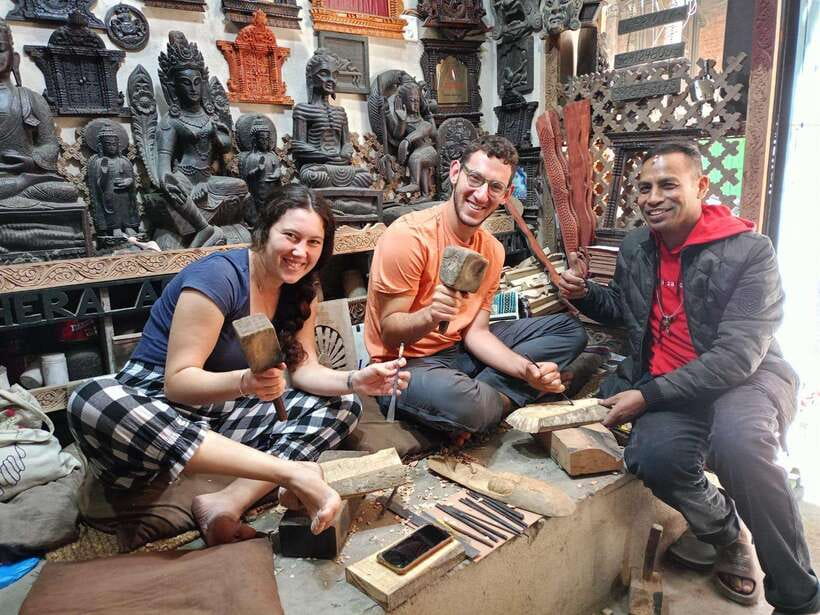
This class doesn’t just teach hand skills. It points you toward why Nepalese wood carving is such a big deal.
You’ll hear that wood carving in Nepal dates back to the Licchavi period (4th to 9th century), when artisans began adorning temples and palaces with wooden designs. Later, the craft flourished under the Malla dynasty (12th to 18th century), creating the kind of intricate works many people associate with the Kathmandu Valley.
You’ll also learn about the Newar community, which is credited with preserving and mastering the art form. The class references major examples like the Kasthamandap (House of Wood), the 55-Window Palace in Bhaktapur, and the famous Peacock Window.
And then you get closer to what you’ll actually see and carve: symbolism. Nepalese wood carvings often draw on Hindu and Buddhist iconography—things like lotus flowers, mandalas, and mythical creatures.
One real note for your expectations: at least one past student felt they wanted more historical context. So if you’re hoping for a full lecture on dynasties and architectural symbolism, you might want to ask the instructor specific questions during the class. You can steer the conversation toward the parts you care about.
Meet Hera and how the teaching style shapes the experience
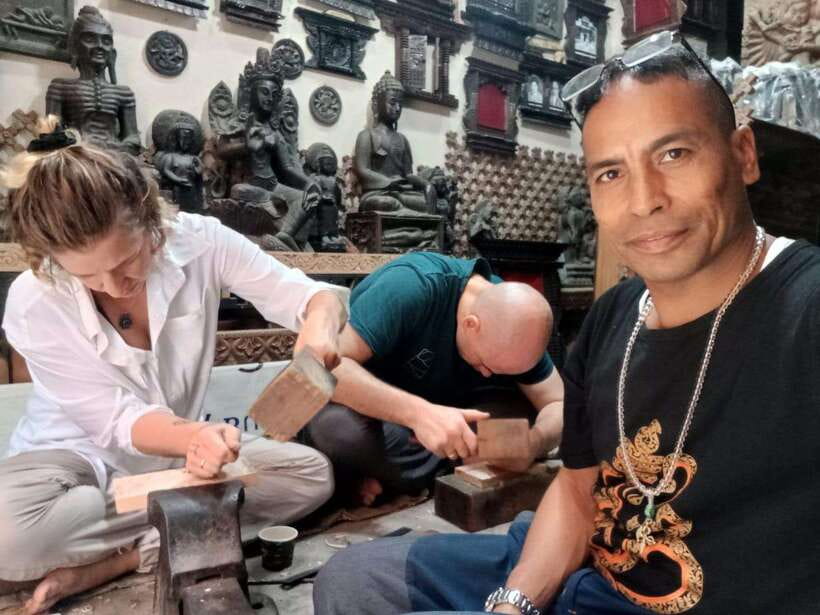
The experience is guided by a skilled local artisan, and one instructor name that came up is Hera. In a smaller session, Hera was described as warm, kind, and funny, with hands-on guidance that made the carving feel approachable.
That kind of personality isn’t a small thing. Wood carving can feel frustrating if you’re fighting the material. A patient instructor helps you correct early mistakes before they ruin your piece.
There’s also a family angle. One example involved a ten-year-old, and the guide was described as kind, friendly, and helpful while teaching a new skill. If you’re traveling with kids, that’s a good sign—provided your child can sit still and focus for a few hours.
One more detail you should know: small group classes sometimes shrink further. If you visit in the off season, you might end up with a one-on-one style class, which can be excellent if you want slower pacing and more direct attention.
Price and value: $42 for skills you can show, not just buy
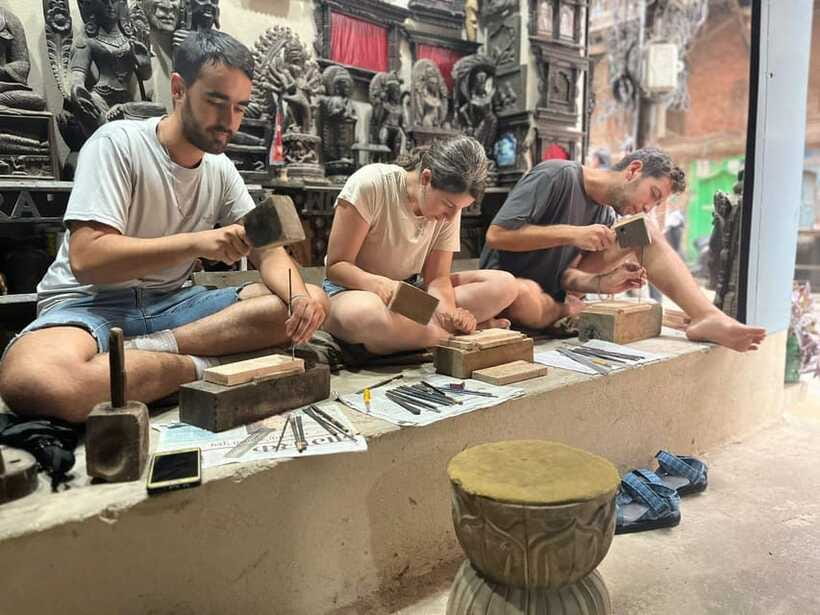
At $42 per person for a 3-hour workshop, this sits in the category of “pay for a real activity.” You’re not just buying a souvenir off a shelf. You’re paying for instruction, tools, and a take-home piece.
That’s why the value works for many people:
- You get a skill practice session, not only a demo.
- You bring home an item you personally made.
- All tools and materials are included, which keeps costs predictable.
- The group size is limited to 4, so your attention per minute is likely better than in larger workshops.
If you’ve spent time in Thamel shopping, you know it’s easy to end up with something pretty but generic. This kind of workshop swaps that trade-off. Your finished carving is smaller, but it has meaning. And it’s a better story than a postcard.
How to plan your day around a 3-hour carving session
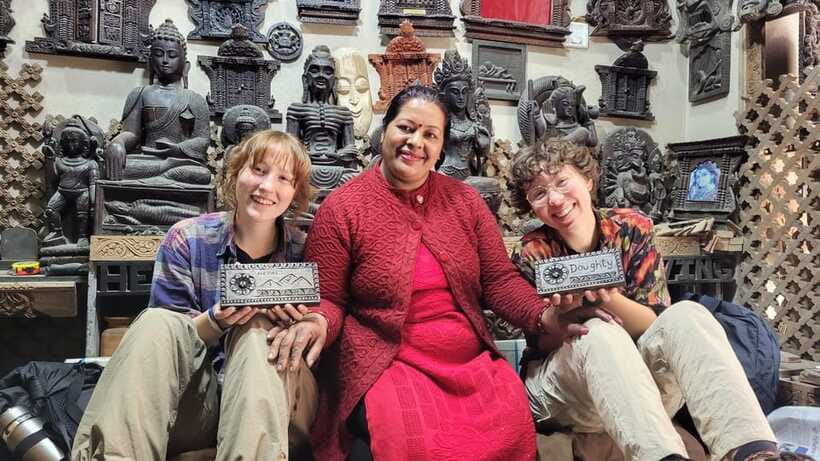
Timing-wise, a 3-hour class is a good midday or afternoon anchor. It gives you a full Nepal experience without swallowing your whole day.
You’ll want to wear comfortable clothes and keep your schedule realistic afterward. Your hands might feel a little tired from focused work, and your brain will likely want a calm change of pace.
Also, your meeting details are described in a very general way: you meet the team at your meeting point. In a neighborhood like Thamel, addresses can vary by block. I’d treat this as a reminder to confirm the exact drop-off point with the provider so you don’t spend your first ten minutes guessing.
Who should book this wood carving class
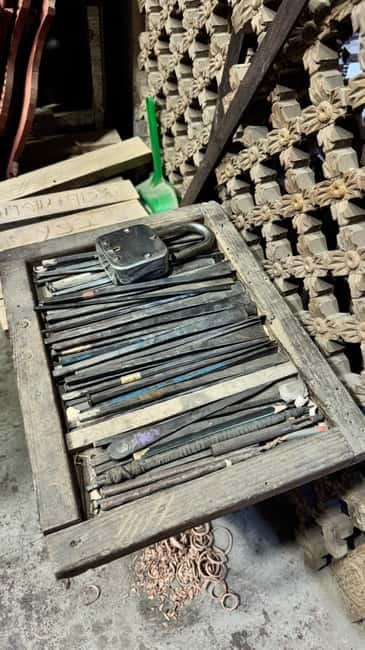
This workshop is a strong fit if you want:
- A hands-on activity that feels connected to Nepal’s craft culture
- A small-group class where instruction stays close
- A souvenir that isn’t mass-produced
It’s especially good for art-curious travelers who learn by doing, not by watching.
It also works for beginners. Since the class is tailored for all skill levels, you should be able to participate even if you’ve never used a chisel before.
If you’re an advanced woodworker, you might find the skill progression simpler than your usual practice. But you could still enjoy the cultural angle and the chance to learn common carving motifs and techniques used in Nepalese decorative traditions.
Good to know before you go
A few practical points to keep the experience smooth:
- You’ll get English instruction.
- The class includes all necessary tools and materials.
- Smoking isn’t allowed.
- You’ll take home your handcrafted wooden piece.
One more expectation check: the session is designed to produce a finished souvenir in a short window. That means it’s less about mastering wood carving over months, and more about learning the core moves with enough guidance to finish something you’ll be proud of.
Should you book this Kathmandu wood carving workshop?
I think you should book it if you want a memorable, creative activity in Kathmandu with a good mix of hands-on practice and cultural context. The small group size, the step-by-step technique focus, and the fact that you leave with a personal take-home piece make it a solid value.
I’d think twice if your main goal is deep historical architecture detail. At least one person felt the context could have gone further. If that’s you, go anyway but come with questions—about motifs, the significance of patterns, or how the craft evolved through different periods.
Bottom line: this is a practical Kathmandu craft experience. You’ll likely enjoy it most if you treat it like learning a new skill, not just shopping for something pretty.
FAQ
How long is the Kathmandu wood carving workshop?
The workshop lasts 3 hours.
How much does it cost?
The price is $42 per person.
Is the class good for beginners?
Yes. The wood carving class is described as being tailored to suit all skill levels.
Who teaches the workshop, and what language is used?
The workshop is guided by a skilled local artisan, and instruction is available in English.
What will I make and can I take it home?
You’ll carve your own unique piece of wood art during the session, and you take your handcrafted piece home as a souvenir.
What should I bring, and are there any rules?
Wear comfortable clothes. Smoking is not allowed. The class provides all necessary tools and materials.
Make a Little Nepal to Take Home




More Tour Reviews in Kathmandu





Just Reviewed in Kathmandu
- Mountain Bike Tour
★ 5.0 · 3 reviews - Annapurna Panaroma
★ 5.0 · 3 reviews - Mount Everest Scenic Flight 50 Minutes
★ 5.0 · 3 reviews - Kathmandu : Swambhunath & Durbar Square Guided Half Day Tour
★ 3.3 · 3 reviews - Chandragiri Cable Car & Monkey Temple Tour – Private/Group
★ 5.0 · 3 reviews - Kathmandu: Shivapuri National Park Hiking Day Trip
★ 3.3 · 3 reviews
Workshops, compared.
 ★ 5.0Half day cooking class in Thamel kathmanduFrom $28607 reviews
 ★ 4.9Local Women-Led Nepali Cooking & Momo ClassFrom $4360 reviews
 ★ 5.0Local Lead Nepali Cooking & Momo-Making ClassFrom $5212 reviews
 ★ 5.0Knife (Khukuri) Making Workshop- Forge of the GurkhasFrom $68143 reviews
Local Women Lead Nepali Cooking ClassFrom $30125 reviews
 ★ 5.0The best Private Nepali Cooking Class in KathmanduFrom $2483 reviews
 ★ 4.8Traditional Momo Making Class & PickupFrom $460 reviews
 ★ 5.0Traditional Nepali Momo Making ClassesFrom $1853 reviews
Browse the lists this tour appears in