
A cooking class in Thamel beats another restaurant meal. Namaste Cooking School is run by local women and focuses on Nepal’s indigenous culinary heritage, using ingredients sourced through local farmers so the flavors feel rooted, not generic. You start with a traditional cup of masala chai, then you cook your lunch with clear guidance and a friendly, small-group vibe.
I especially like two things: the women-led teaching style (I’ve heard classes are led by instructors such as Sabita and Sushila, and the energy is upbeat) and the fact that you’re genuinely doing the cooking, not just watching. One possible drawback to plan for: the experience depends on good weather, and it’s timed as a half-day activity that runs about 4 hours, so it’s not something you should tack on at the last minute.
In This Review
- Key Highlights You’ll Actually Care About
- Finding Namaste Cooking School in Thamel (and not wasting your day)
- Masala chai, menu selection, and how they handle dietary needs
- Nepali spice lessons that make the food make sense
- Hands-on cooking: you’ll actually cook, not just eat
- Lunch straight from your work (and why that timing is smart)
- The recipe book: your souvenir that earns its place
- Price and value: is $30 fair for Kathmandu?
- Who this class is perfect for (and who might want another option)
- Should you book Namaste Cooking School in Kathmandu?
- FAQ
- How long is the Nepali cooking class?
- Is lunch included?
- Where does the experience start and end?
- Is pickup offered?
- Is the class taught in English?
- How many people are in the group?
- Do I get to choose what I cook?
- Are dietary restrictions and allergies accommodated?
- What do I receive at the end?
- What if the weather is bad?
Key Highlights You’ll Actually Care About
- Women lead the class with a warm, encouraging teaching style, including instructors like Sabita and Sushila.
- Three menu choices let you pick your experience, while staff check dietary restrictions and allergies.
- You get hands-on cooking with guidance, and you’re not stuck doing heavy cleaning afterward.
- Included lunch means you eat what you made, while everything is fresh.
- A recipe book is handed to you at the end, so you can recreate the dishes at home.
More time at the stove
- Half day cooking class in Thamel kathmandu★ 5.0 · 607 reviews
- Kathmandu: Local Women-Led Nepali Cooking & Momo Class★ 4.9 · 360 reviews
- Kathmandu: Local Lead Nepali Cooking & Momo-Making Class★ 5.0 · 212 reviews
- Local Women Lead Nepali Cooking Class★ 5.0 · 125 reviews
Finding Namaste Cooking School in Thamel (and not wasting your day)
This class is based right in Thamel, Kathmandu, which is convenient for most visitors. You’ll also find it practical that it’s near public transportation, so even if you’re not using pickup, you likely won’t feel stranded trying to get there.
Pickup is offered, and the stated start and end point is Tribhuvan Airport. That matters if you’re arriving (or leaving) on a tight schedule, because airport traffic can stretch your timeline. Still, the flip side is reassuring: you’re not guessing where the tour ends—you return back to the meeting point.
The group size is capped at 16 travelers, which is a big deal for a cooking class. Small groups mean you can ask questions without shouting across the room, and the instructors can keep an eye on technique.
Masala chai, menu selection, and how they handle dietary needs
The welcome is simple and very Nepali: you arrive and are greeted with a cup of masala chai. It’s not just a nice touch—it helps you settle in, especially if you’re coming from cold mornings, jet lag, or a long walk through Thamel’s lanes.
Next comes menu selection. You choose from three carefully planned menus, and the staff ask about dietary restrictions or allergies before you start cooking. That’s the kind of detail that can make or break the experience. If you have to avoid certain ingredients, it’s good to know the class is set up to account for it rather than hoping for the best.
From there, you shift into learning mode. You’re not just cooking—you’re being taught what makes Nepali flavors work and how the dishes fit together.
Nepali spice lessons that make the food make sense
A big part of this class is the intro to Nepali spices. You’ll get a clear overview of the regional spices that show up across Nepali cooking, so you can understand why a dish tastes the way it does.
Why this matters: spices in Nepal aren’t just background flavor. They’re the structure. Once you understand what’s doing the work—warm spice notes, aromatic spices, and how they’re used—you can cook more confidently at home. Otherwise, you risk memorizing recipes as a list of ingredients without knowing how to reproduce the flavor balance later.
If you’re the kind of traveler who likes food but hates guesswork, this spice step is where you’ll feel the value click.
Hands-on cooking: you’ll actually cook, not just eat
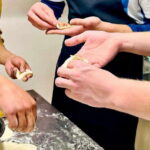
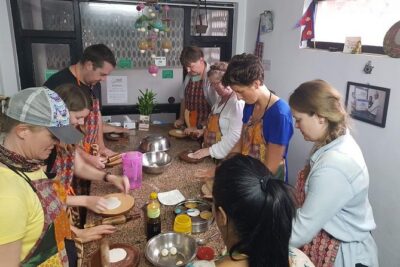
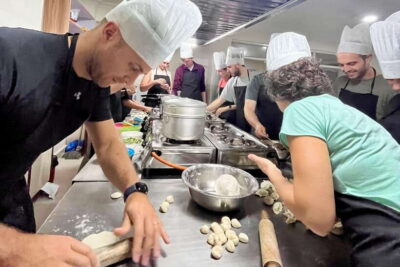
Then the class moves into the part you came for: hands-on cooking with guidance. This is not a passive show-and-tell. You cook your meal yourself, with the instructors coaching along the way.
One detail that stands out is how light the workload feels at the end. In multiple accounts of the class, guests noted that there was no cleaning burden for them—staff handle the cleanup. That’s huge when you’re traveling. Cooking classes can be messy and tiring; this one stays focused on learning and enjoying.
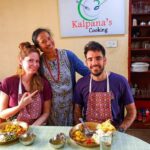
The vibe is also very human. Names like Sabita and Sushila come up in descriptions of the women leading the sessions, and people consistently highlight how friendly and upbeat the teachers are. That kind of warmth matters in a kitchen, because confidence grows when you’re not scared of messing up.
Make something to carry home
Lunch straight from your work (and why that timing is smart)
Lunch is included. You’ll eat what you make after you finish cooking your half-day course.
Timing is smart here: you don’t spend hours learning and then end up disappointed by bland food or rushed service. You get to taste the results while your dishes are still fresh and at their best. And since you cooked the meal yourself, you’ll notice flavors more clearly—especially spice balance, aroma, and texture.
It also makes the class feel complete. For many visitors, the best part of cooking is not just learning technique—it’s enjoying the final plate right away.
The recipe book: your souvenir that earns its place
At the end, you receive a Namaste Cooking School Recipe Book. This isn’t just a generic takeaway. It’s the tool you’ll use later when you want to recreate what you learned instead of only remembering the experience as a blur.
If you’ve ever cooked something you loved while traveling and then struggled to replicate it later, you know why this matters. The recipe book gives you a starting point you can return to, and the spice lessons help you troubleshoot at home.
Price and value: is $30 fair for Kathmandu?
$30 per person for a roughly 4-hour class with lunch included is solid value, especially because it’s hands-on and small-group. The price isn’t just paying for ingredients—it’s paying for:
- instruction from local women
- menu planning and ingredient sourcing
- time to teach spices and technique
- your lunch included in the session
- the recipe book afterward
- a setup where cleanup isn’t dumped on you
Also, the class emphasizes authenticity by sourcing ingredients through local farmers. Even if you don’t care about “heritage” as a concept, you’ll still taste the difference in flavor quality and freshness.
The only real “cost” is your time. If your Kathmandu itinerary is already packed, commit to this as a real half-day block rather than treating it like a quick side activity.
Who this class is perfect for (and who might want another option)
This cooking class is a strong match if you want:
- a hands-on meal-making experience (not a watch-and-learn session)
- an English-speaking class with practical instruction
- a smaller group setting (max 16)
- a friendly, women-led environment that feels welcoming, including for solo travelers
It may be less ideal if:
- you’re hoping for a super-late start or a flexible schedule—this is a timed half-day
- you’re traveling during a period where weather can be unreliable (the experience requires good weather)
- you’re expecting a “tour” with sightseeing stops. This is focused on cooking and cultural food learning rather than landmark hopping
Still, if you want a memorable, useful food experience in Kathmandu, this hits the right balance of teaching, eating, and leaving with something you can use again.
Should you book Namaste Cooking School in Kathmandu?
I’d book it if you want a genuine cooking experience with strong instruction, a warm welcome, and lunch that tastes like it was made for you—not for a camera. The combination of women-led teaching, menu choice, spice education, and the included recipe book is a practical package. It also tends to work well for solo travelers because the class format is social but not overwhelming.
You should think twice if your schedule is weather-sensitive or you can’t spare a steady 4-hour block. But if you’re in Thamel for a few days, this is the kind of activity that turns Kathmandu from a place you visit into a place you understand through taste.
FAQ
How long is the Nepali cooking class?
It runs for about 4 hours (approximately).
Is lunch included?
Yes. Lunch is included with the class.
Where does the experience start and end?
It starts at Tribhuvan Airport, Kathmandu, Nepal, and ends back at the meeting point.
Is pickup offered?
Yes, pickup is offered.
Is the class taught in English?
Yes. English is one of the languages offered.
How many people are in the group?
The maximum group size is 16 travelers.
Do I get to choose what I cook?
Yes. You choose from three menus.
Are dietary restrictions and allergies accommodated?
They ask about dietary restrictions and allergies during the menu selection process.
What do I receive at the end?
You receive a Namaste Cooking School Recipe Book as a keepsake.
What if the weather is bad?
The experience requires good weather. If it’s canceled due to poor weather, you’ll be offered a different date or a full refund.
Make a Little Nepal to Take Home
Learn Another Nepali Dish
More Tour Reviews in Kathmandu
Just Reviewed in Kathmandu
- Mountain Bike Tour
★ 5.0 · 3 reviews - Annapurna Panaroma
★ 5.0 · 3 reviews - Mount Everest Scenic Flight 50 Minutes
★ 5.0 · 3 reviews - Kathmandu : Swambhunath & Durbar Square Guided Half Day Tour
★ 3.3 · 3 reviews - Chandragiri Cable Car & Monkey Temple Tour – Private/Group
★ 5.0 · 3 reviews - Kathmandu: Shivapuri National Park Hiking Day Trip
★ 3.3 · 3 reviews
Nepali Cooking & Momo Classes, compared.
 ★ 5.0Half day cooking class in Thamel kathmanduFrom $28607 reviews
 ★ 4.9Local Women-Led Nepali Cooking & Momo ClassFrom $4360 reviews
 ★ 5.0Local Lead Nepali Cooking & Momo-Making ClassFrom $5212 reviews
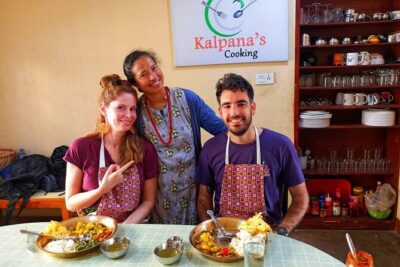 ★ 5.0The best Private Nepali Cooking Class in KathmanduFrom $2483 reviews
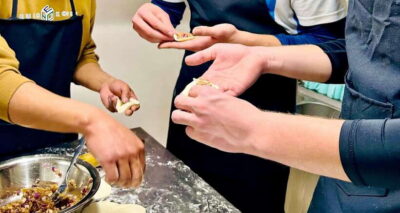 ★ 4.8Traditional Momo Making Class & PickupFrom $460 reviews
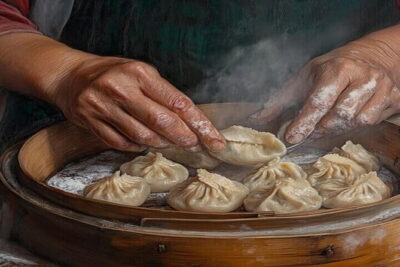 ★ 5.0Traditional Nepali Momo Making ClassesFrom $1853 reviews
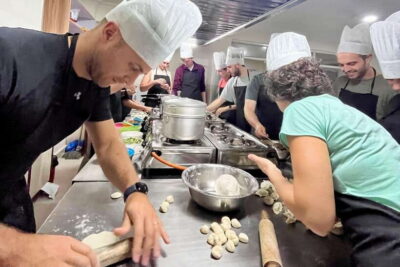 ★ 4.9Local Women-Lead Nepali Cooking & Momo ClassFrom $545 reviews
★ 4.9Local Lead Nepali Cooking & Momo Making ClassFrom $440 reviews
★ 4.9Local Women-Lead Nepali Cooking & Momo ClassFrom $545 reviews
★ 4.9Local Lead Nepali Cooking & Momo Making ClassFrom $440 reviews
Browse the lists this tour appears in