
Review · PEAK CLIMBING & EXPEDITIONS
Kyajo Ri Peak Climbing
Kyajo Ri puts the Himalaya in your lap. This climb in Nepal combines a Kathmandu-to-Lukla mountain flight, classic Khumbu trekking through Sherpa villages, and a summit at 6,186 meters with big views of Everest, Lhotse, Makalu, Cho Oyu, Baruntse, Pumori, and Ama Dablam.
What I love most is the acclimatization rhythm. You get recovery time in the right places (Namche Bazaar, base camp, and Camp I) before the higher, more technical climbing where fixed ropes and crampons come into play. The Sherpa crew handles camp setup and gear checks as you move higher, and that practical support helps the trip feel organized even when you’re tired.
One drawback to plan for up front: this is a physically demanding mountain climb, and the package does not include personal climbing gear or travel/medical insurance—so you’ll need to budget and pack accordingly.
In This Review
- Key highlights worth the effort
- First night in Kathmandu: pickup, paperwork, and welcome dinner
- Scenic flight to Lukla, then your first trek beside Dudh Koshi
- Phakding to Namche Bazaar: suspension bridges and your first taste of Khumbu
- Namche acclimatization day: explore and give your body a chance
- West into Bhote Khosi Valley: rhododendron, waterfalls, and Mende nights
- Kyajo Drangka and base camp setup: where the trip becomes “mountain work”
- Base camp rest at 4,500 m+: views, survival practice, and gear checks
- Camp I at 5,200 m: the step where you feel the altitude
- Camp I rest day: hiking for acclimatization, not heroics
- Camp II near 5,700 m: fixed ropes, crampons, and steeper exposure
- Summit day on Kyajo Ri: early start, wind timing, then that ridgeline reward
- Descent back to base camp, then down through Mende and Namche
- Flight back to Kathmandu and a little time in Thamel
- Price and what you’re really paying for
- Who should book Kyajo Ri, and who should reconsider
- Should you book this Kyajo Ri Peak Climbing itinerary?
- FAQ
- How long is the Kyajo Ri Peak Climbing trip?
- Where does the tour start and what time does it begin?
- Is there a scenic flight involved in the itinerary?
- How does the itinerary handle acclimatization?
- Does the climb include technical sections?
- What Kathmandu sightseeing is included before the trek?
- What is not included in the trip price?
Key highlights worth the effort
- Kathmandu–Lukla–Kathmandu scenic flight plan that gets you into the Khumbu fast
- Smart altitude breaks at Namche Bazaar, base camp, and Camp I
- Technical summit approach with fixed ropes and crampons on the higher section
- Sherpa crew camp setup + gear checks across multiple nights above 4,500 m
- Experienced guides on hand, including Prakash and Sherpa leaders like Dendi Sherpa, Sona Sherpa, and Lakpa Sherpa
Not sure yet? Here are other Kathmandu tours worth a side-by-side look.
- Everest Base Camp Trek – 14 Days★ 5.0 · 1,499 reviews
- Everest Base Camp Trek★ 5.0 · 842 reviews
- Private Kathmandu Sightseeing Tour | UNESCO World Heritage sites★ 5.0 · 756 reviews
- Kathmandu: 7 UNESCO Sites with Lunch★ 4.8 · 744 reviews
First night in Kathmandu: pickup, paperwork, and welcome dinner
Your trip starts in Kathmandu with an airport meeting and a transfer to a centrally located hotel. You’ll get help with check-in, and there’s time to either rest or stop by the operator’s office to confirm trip details.
On the second day, Kathmandu is about getting ready for the mountains. You’ll do sightseeing around UNESCO sites in the Kathmandu Valley, but there’s an important reality check: you can’t fit everything into one day, so choose 3–4 places and don’t try to cram. That same day also includes the paperwork and final preparations you’ll want done early, before the travel pace turns intense.
Scenic flight to Lukla, then your first trek beside Dudh Koshi
Day three is the big transition day: an early scenic flight from Kathmandu to Lukla, the gateway to the Everest region. After landing, the trek starts through Sherpa villages and dense rhododendron forest along the left bank of the Dudh Koshi River.
This first walking day ends in Phakding, which is a solid way to start. You’re moving, but you’re not immediately thrown into extreme altitude pressure, and the scenery along the river gives you a gentle on-ramp to Khumbu trekking.
Phakding to Namche Bazaar: suspension bridges and your first taste of Khumbu
From Phakding you cross a long suspension bridge, then work your way through smaller villages like Benkar. You’ll also cross the Dudh Koshi River again and continue toward Monjo, then follow the approach to Sagarmatha (Everest) National Park where you must register.
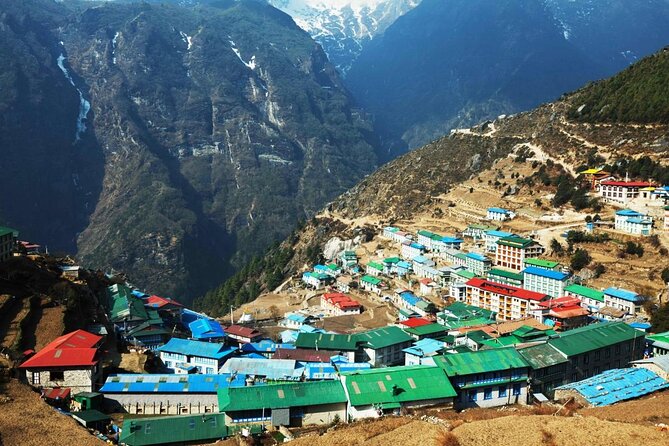
A key thing here is the feel of the climb. The route includes uphill stone steps and another suspension bridge, and then the final push brings you into Namche Bazaar, the Sherpa capital. This isn’t just a destination—it’s where you start understanding the rhythm of the region: trekking logistics, tea house life, and the way Sherpa communities live alongside the mountain economy.
Namche acclimatization day: explore and give your body a chance
You’ll be over 3,000 meters by now, and the plan treats acclimatization like a must, not a suggestion. Day five is a rest day in Namche Bazaar, with time to explore and adjust.
The itinerary gives you hike options that make sense at this altitude. You can head toward Khunde Hospital, connected to Sir Edmund Hillary, or take an easier hike (about an hour) to Syangboche for wide views of Everest, Lhotse, Cho Oyu, Nuptse, Thamserku, Kusum Kanguru, and Ama Dablam. I like that these hikes aren’t random—they’re chosen to help you learn the air without burning yourself out.




West into Bhote Khosi Valley: rhododendron, waterfalls, and Mende nights
On day six, you shift west as the trek follows the Bhote Khosi Valley. This used to be a trading route into Tibet, and even if you don’t think about trade history every step, the valley’s layout makes the old routes feel real.
You’ll pass cascading waterfalls, dense rhododendron forest, and viewpoints of peaks like Kwangde Peak. The day ends at Mende, which works as a transition into more remote terrain heading toward Kyajo Ri.
Kyajo Drangka and base camp setup: where the trip becomes “mountain work”
Day seven is one of the more interesting parts of the whole trek. You leave Mende and follow a faint yak trail over passes to reach Kyajo Drangka, a more isolated broad valley south of Kyajo Ri. That change—from village trails to more remote terrain—is where the expedition mindset starts.
As you hike, the views expand to Thamserku, Kusum Kangaru, Kwangde Peak, Parchamo Peak, and other snow-capped neighbors. You’ll arrive at a summer yak pasture area and set up base camp, with your Sherpa crew handling camp setup and gear checks for higher camps. This is the point where you stop thinking of it as a hike and start thinking of it as an organized climb.
Base camp rest at 4,500 m+: views, survival practice, and gear checks
Once you’re above 4,500 meters, the itinerary slows down again. Day eight is a rest and acclimatization day at base camp, with time for short hikes around camp and regular gear preparation.
The practical value here is huge: your crew will check equipment, and you’ll use the day to absorb how cold and how thin the air feels before you start moving toward camps at 5,200 and 5,700 meters. I also like that the route gives you time to enjoy the mountain valleys around you without treating every hour like a race.
Camp I at 5,200 m: the step where you feel the altitude
After a full base-camp rest, day nine is about moving upward. You’ll climb over grassy spurs and boulders, then follow a steep rocky trail to a campsite at 5,200 meters (Camp I).
Here, the mountain starts asking more of you. It’s not just about leg strength—it’s about steady breathing, pacing, and staying mentally calm. You’ll camp at Camp I with views of Kyajo Ri Peak and glacial lakes, then continue the expedition approach.
Camp I rest day: hiking for acclimatization, not heroics
Day ten keeps the same logic: another acclimatization day at Camp I. The plan includes hikes suited for altitude adjustment, plus checks of your health and your climbing equipment.
This day matters because it prepares you for the next section, which becomes technical. If you rush through Camp I, the climb to Camp II can feel harsher than it needs to. Using this day to get comfortable with the cold and the slower pace pays off later.
Camp II near 5,700 m: fixed ropes, crampons, and steeper exposure
On day eleven you go higher and more technical. The itinerary calls out technical climbing over rocks and glaciers, with use of fixed ropes and crampons. You’ll reach a campsite near a big glacial lake at 5,700 meters (Camp II).
This is the part of the trip where your gear matters. Since personal climbing gears are not included, you’ll want to be sure you have what you need—or clearly understand what rentals or substitutions your operator expects you to handle. Even if you’re strong, cramped breathing and slippery terrain can make “easy” moves feel technical.
Once at Camp II, your Sherpa crew sets up quickly and begins final preparations for the summit day.
Summit day on Kyajo Ri: early start, wind timing, then that ridgeline reward
Day twelve is the big one. You start early, aiming to reach the summit before noon. The reason is straightforward: strong winds after midday can make the summit attempt impossible.
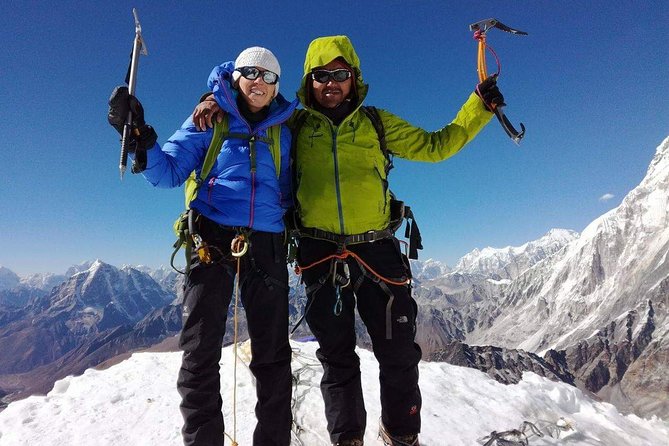
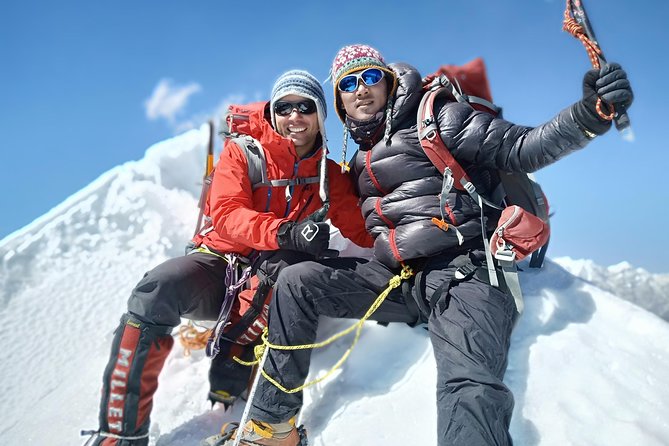
The climb includes multiple technical sections, guided by experienced climbing experts, and then you work your way to the sharp summit of Kyajo Ri Peak. The views are described as spanning Everest, Lhotse, Makalu, Cho Oyu, Baruntse, Ama Dablam, and other towering peaks—this is the moment where the whole trek turns into a payoff.
After a short time on top, you descend back to Camp II along the same route. That detail is important: on mountaineering days, returning safely is part of success, not an afterthought.
Descent back to base camp, then down through Mende and Namche
Day thirteen begins the retracing. You’ll take it easy, have breakfast, and descend from Camp II back through Camp I to base camp.
Then the descent continues. Day fourteen moves from base camp back through Mende, leaving alpine vegetation for sub-tropical forested trekking with rhododendron trees. Day fifteen brings you toward Lukla again, with a pleasant walk through rhododendron forest, crossing the Bhote Koshi River three times.
On day fifteen you finally reach Lukla and celebrate the successful climb with your team. I like that the itinerary gives you this moment—because after a summit, your body still needs a reset, and a grounded day helps you land the experience.
Flight back to Kathmandu and a little time in Thamel
Day sixteen is an early morning scenic mountain flight back to Kathmandu. After landing, you’ll be transferred to the hotel, with options to catch UNESCO sites you didn’t have time for earlier.
If you want a simple post-climb reward, spend time around Thamel market streets. It’s an easy place to get your bearings back on the ground level, and it’s a nice contrast to the mountain schedule. That evening, you’ll share a final meal together for the close of the trip.
Day seventeen ends with an airport drop based on your flight schedule.
Price and what you’re really paying for
The price listed is $3,350 per person for an approximately 17-day itinerary. Roughly speaking, that’s about $200 per day, but the comparison that matters isn’t just cost—it’s what you receive.
You’re included for the basics that are expensive to manage yourself in Nepal: breakfast, lunch, dinner, and accommodation as per the itinerary, plus taxes, national park fees, and handling charges. You also get a professional guide and one porter for every two people. Hotel pickup and drop-off in Kathmandu are included too.
What you should factor in separately: personal climbing gear, personal insurance, alcoholic beverages, personal expenses, and tips. Since the itinerary explicitly mentions fixed ropes and crampon use on the technical days, you should confirm ahead of time which climbing items you must bring personally versus what the expedition provides or helps arrange.
Also, a quick note on flights: the itinerary includes scenic flight Kathmandu–Lukla–Kathmandu. Flights can be weather sensitive, and the best operators plan contingency. In the experience of one guest, a Lukla flight was canceled due to bad weather and the group flew the next day—so ask how your operator handles delays and reschedules.
Who should book Kyajo Ri, and who should reconsider
This is best for you if you want a serious peak climb rather than a casual trek. The route includes high camps at 5,200 and 5,700 meters, plus technical sections that call for fixed ropes and crampons. You should also be comfortable with multiple acclimatization days and a lot of time on the move.
You’ll likely love this trip if you care about Sherpa culture in a real, day-to-day way—Sherpa villages, teahouse trekking life, and an actual Sherpa crew that sets up camp and checks your equipment. If you’re the type who enjoys good planning, you should also appreciate the early Kathmandu paperwork and the structured rest days before the summit push.
You might want to think twice if you’re not ready for long, high-altitude days or if you haven’t budgeted for the personal gear and insurance that mountaineering requires. This isn’t a route where you can “wing it” on the technical section.
Should you book this Kyajo Ri Peak Climbing itinerary?
I think you should book if you want a well-structured climb that takes acclimatization seriously and gives you the expedition support you need at altitude. The biggest strengths are the staged approach (Namche, base camp, Camp I, then Camp II) and the fact that your Sherpa crew does real mountain work like camp setup and gear checks—so you’re not carrying the whole logistics burden yourself.
You should pause and ask more questions before booking if you’re unsure about your personal climbing gear, or if you’re worried about the technical day at higher elevations. If you plan your packing and training well, this is the kind of climb that turns into a clear before-and-after story.
FAQ
How long is the Kyajo Ri Peak Climbing trip?
The duration is approximately 17 days.
Where does the tour start and what time does it begin?
It starts in Kathmandu, with a start time of 7:00 am.
Is there a scenic flight involved in the itinerary?
Yes. The plan includes a scenic flight from Kathmandu to Lukla and back to Kathmandu.
How does the itinerary handle acclimatization?
You get rest and acclimatization days at Namche Bazaar, at base camp (after reaching over 4,500 meters), and at Camp I (at 5,200 meters).
Does the climb include technical sections?
Yes. Higher up, the itinerary includes technical climbing over rocks and glaciers, with the use of fixed ropes and crampons mentioned.
What Kathmandu sightseeing is included before the trek?
You’ll do sightseeing around UNESCO sites in the Kathmandu Valley, but you won’t be able to visit all of them in one day—so you’ll choose at least 3–4 places.
What is not included in the trip price?
Personal climbing gears, personal insurance, alcoholic beverages, costs of personal nature expenses, and tips for staff are not included.
More Tour Reviews in Kathmandu






Just Reviewed in Kathmandu
- Mountain Bike Tour
★ 5.0 · 3 reviews - Annapurna Panaroma
★ 5.0 · 3 reviews - Mount Everest Scenic Flight 50 Minutes
★ 5.0 · 3 reviews - Kathmandu : Swambhunath & Durbar Square Guided Half Day Tour
★ 3.3 · 3 reviews - Chandragiri Cable Car & Monkey Temple Tour – Private/Group
★ 5.0 · 3 reviews - Kathmandu: Shivapuri National Park Hiking Day Trip
★ 3.3 · 3 reviews
Peak Climbing & Expeditions, compared.
 ★ 5.0Mera Peak ClimbingFrom $3,00033 reviews
 ★ 5.0Everest Base Camp Trek with Island Peak ClimbingFrom $3,30014 reviews
 ★ 5.0Pikey Peak TrekFrom $8998 reviews
★ 5.0Mera Peak ClimbingFrom $1,1998 reviews
 ★ 5.0Mera Peak Expedition – 20 DaysFrom $3,3007 reviews
Mera Peak ClimbingFrom $2,7506 reviews
 ★ 5.0Pikey Peak TrekkingFrom $1,4355 reviews
 ★ 5.0Island Peak Climbing with Everest Base CampFrom $2,8995 reviews
Browse the lists this tour appears in