
Review · WORKSHOPS
Thangka Painting Workshop
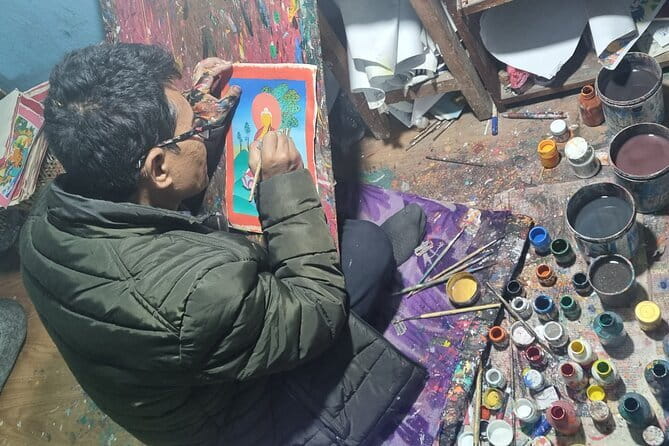
Your thangka starts with a blank page. In Kathmandu, this workshop is a rare chance to make a traditional thangka painting yourself, using a real studio setup instead of guessing what you’re buying in a shop. I love that you don’t just pick something off a wall—you watch the full process and can ask questions while it happens, which is a big deal in a market where you might not be able to tell hand-made quality from cheaper alternatives.
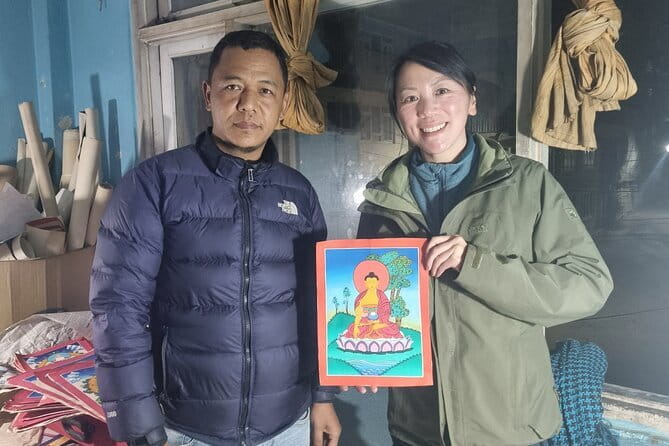
Two things I really like: you get to choose your pickup location (so it fits your day), and you choose one design from three options before you start. An English-speaking guide named Aayam helps you through the workshop so the symbols and steps make sense, not just your brush strokes.
One possible drawback: expect slow, careful work. If you’re picturing a quick craft session, the timing can feel long because the details matter, and even mistakes get corrected rather than rushed over.
In This Review
- Key things to know before you go
- Why making your own thangka beats buying a souvenir
- The 12:45 pm start: how the 5-hour session usually feels
- What you’ll paint: traditional thangka in a guided process
- Choosing pickup, design, and timing without the stress
- Learning with Aayam and a patient master: what makes the instruction work
- The value of taking home what you make
- Price and value: is $72 a fair deal?
- Who this workshop suits best (and who should think twice)
- Practical tips to get the most out of your thangka session
- Should you book the Thangka Painting Workshop in Kathmandu?
- FAQ
- How long is the Thangka Painting Workshop?
- Is pickup included, and can I choose where I get picked up?
- Do I get to take the thangka painting home?
- Is an English-speaking guide included?
- Are snacks included?
- Can I cancel and get a full refund?
Key things to know before you go
- You’ll learn in a real thangka workshop with master artists and apprentices working together
- Pickup is flexible and you can select where you’re picked up
- You choose 1 design out of 3, so you’re not painting a random template
- You get an English-speaking guide (Aayam) to help with questions and confusion
- Plan for 4–5 hours of hands-on detail, not just coloring
Make something to carry home
- Half day cooking class in Thamel kathmandu★ 5.0 · 607 reviews
- Kathmandu: Local Women-Led Nepali Cooking & Momo Class★ 4.9 · 360 reviews
- Kathmandu: Local Lead Nepali Cooking & Momo-Making Class★ 5.0 · 212 reviews
- Knife (Khukuri) Making Workshop- Forge of the Gurkhas★ 5.0 · 143 reviews
Why making your own thangka beats buying a souvenir
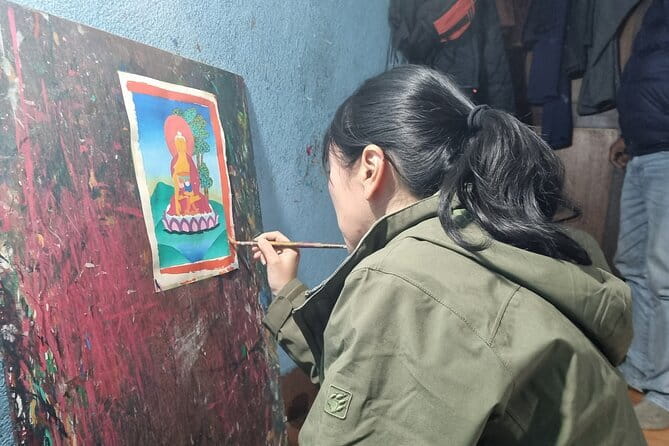
Kathmandu is full of art shops, and it’s not always obvious whether a thangka you’re offered is truly made by hand or produced by a faster method. This workshop addresses that problem in a practical way: you see the steps, you ask questions, and you paint the piece yourself.
That changes how you’ll value the final result. Instead of hoping you chose a good one, you’ll know what went into it—what you did, what your instructor corrected, and what details took time. And if you care about the difference between something you can verify and something you can only guess at, this experience makes that verification happen in plain sight.
There’s also a calmer side to learning rather than shopping. In a workshop, the goal isn’t to move you along to the next customer. You get to slow down enough to understand what you’re creating, even if you’ve never held a brush for this kind of art before.
The 12:45 pm start: how the 5-hour session usually feels
The start time is 12:45 pm, and the class runs about 4–5 hours. In real terms, that means you should treat this as your main activity block, not something to squeeze in between quick errands. You’ll spend enough time at the worktable that your shoulders and hands will feel the hours, but it stays focused on painting rather than tourism stops.
Because the workshop includes a guide and a studio environment, you’ll likely feel like you’re learning a skill, not just doing a craft demo. The studio setup is part of the value. You’re not only painting; you’re part of the working rhythm of artists who have decades of experience.
Also note this is a private tour/activity, meaning only your group participates. That’s useful if you want space to ask questions without waiting your turn.
What you’ll paint: traditional thangka in a guided process
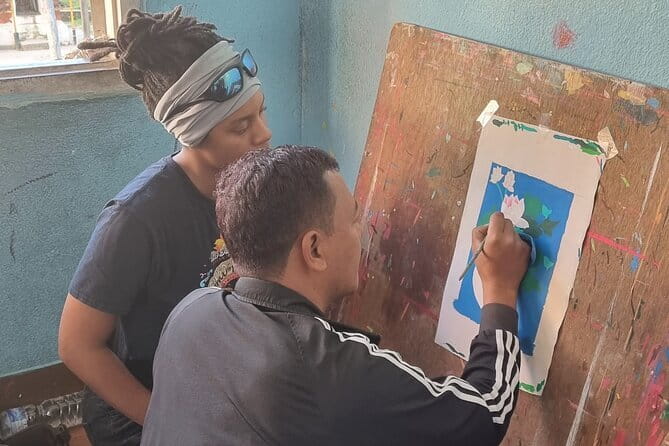
You’ll learn to paint traditional thangka under the guidance of artists in their workshop. The workshop description focuses on learning the method from experienced artists, and the reviews reinforce that the session is hands-on with a patient approach while you work.
Here’s the key difference from many souvenirs: the process is the learning. You’re not simply filling in colors; you’re building the piece step by step. One reviewer summed up the feeling well: it’s not just coloring, because the details take longer when you’re aiming to do it properly.
You’ll have a concrete goal for the session too. You choose one design out of three before you begin, so you’re not stuck with a mystery pattern you didn’t pick. That matters because it shapes your motivation the whole way through. If you genuinely like the design you chose, the time goes easier.
Choosing pickup, design, and timing without the stress
Logistics can ruin a good experience, so I appreciate the workshop’s flexibility. You can choose your pickup location, and you can choose the timing that fits you. That sounds small, but in Kathmandu it can save you time and stress—especially if your hotel is in a spot where walking for long stretches is annoying.
The transportation is also practical: you’ll travel in an air-conditioned vehicle. Kathmandu traffic can be unpredictable, so having a comfortable ride between wherever you’re staying and the workshop helps the experience feel easier from the start.
Since the workshop is near public transportation, you also have more options if you’re comfortable arranging your own way there. But the included pickup is a straightforward win when you want a stress-free start.
Finally, there’s the simple fact that you can control the elements you care about: pickup point, design choice, and when you go. That’s the kind of flexibility that makes a cultural activity feel like yours, not like a schedule someone else designed.




Learning with Aayam and a patient master: what makes the instruction work
You get one English-speaking guide to help you throughout, and the name Aayam comes up in the accounts you provided. This matters because thangka symbols and the logic behind the steps can be hard to follow if you only get a handout and a vague demo.
In the workshop environment, the guidance style seems to be patient and hands-on. Reviews highlight master artists who sit with you during the process and teach you how to paint it, plus help when you make mistakes. That’s huge for beginners. The fear of ruining it can keep you from relaxing and learning, but if support is available while you work, you’re freer to try.
You should also expect a real workshop vibe rather than a classroom setup. One review described master artists and apprentices painting thangkas together in the same studio. That means you’re learning inside the ecosystem of how this art is actually practiced, not watching an isolated performance.
The value of taking home what you make
You’ll take the souvenir you painted with you. That turns the whole session into something tangible you can keep. It’s not just a story to tell later; it’s an object that reflects your time and your choices.
One practical takeaway for planning: this kind of artwork deserves careful handling on the way back to your hotel and onward. You’ll likely want to carry it in a way that avoids bending or rubbing, and to keep it away from tight, crowded bags. If you’re continuing to other parts of Nepal soon after, think about how you’ll transport it comfortably so it arrives looking the way you finished it.
This is also where the workshop beats buying. When you purchase a thangka in a random shop, you may not know how it was made or what level of detail went into it. Here, you live through the process, so your expectations line up with what you end up with.
Price and value: is $72 a fair deal?
The price is $72.00 per person, and the session runs about 5 hours. On paper, it sounds like a lot compared with a quick “paint a souvenir” activity. But when you look at what’s included, it makes more sense.
What’s included:
- an air-conditioned vehicle
- all fees and taxes
What isn’t included:
- snacks
So you’re paying for real instruction time, a studio setting, and the logistics that get you there. If you compare this to buying a finished thangka in shops where quality can be hard to judge, the value becomes clearer. You’re not only getting the outcome; you’re buying confidence—confidence in what you made and how it was made.
Another value factor: you’re not following a rigid group script. You choose your pickup and design, and the experience is a private one for your group. That personalization usually costs extra in other types of tours, so it’s good to see it built in here.
Also, it’s booked far in advance on average (about 115 days). That suggests people find this time and format worth planning around.
Who this workshop suits best (and who should think twice)
This is a strong match if you want a hands-on cultural activity in Kathmandu that isn’t just photos and facts. You’ll likely enjoy it most if you:
- like slow, careful work and don’t mind spending hours creating
- want a souvenir with a real learning story behind it
- appreciate instruction where you can ask questions and get corrections
It may be less ideal if your goal is a super-fast souvenir fix. One review mentioned that if you expect only coloring in a short window, it can feel like more detail than you expected. This class is built for people who are okay with detail-driven time.
As for physical demands, you should have a moderate physical fitness level. That likely just means you’ll sit and work for several hours, so plan your posture breaks and bring comfortable basics.
Practical tips to get the most out of your thangka session
You’ll have the best experience if you show up ready to work slowly and learn as you go. A few practical ideas:
- Wear clothes you don’t mind getting paint on (even if you’re careful).
- Bring your curiosity. Ask questions early, because it’s easier to adjust your approach before you’ve built the whole piece.
- If you’re nervous about mistakes, know that corrections are part of the learning process.
- Plan your day around the session. With a 12:45 pm start and 4–5 hours involved, you’ll feel rushed if you schedule heavy plans right after.
Also, confirmation happens at the time of booking, which helps you feel settled before you arrive. And since the meeting point is near public transportation, you have a backup plan if you prefer walking or you’re running late.
Should you book the Thangka Painting Workshop in Kathmandu?
Book this if you want a souvenir with real meaning and you care about doing it right. The big wins are the guided, hands-on workshop setting, the ability to choose your design, and having Aayam (English guidance) to help you understand what you’re painting while you paint it. The private group format also adds a lot of comfort.
Skip it (or at least set expectations) if you’re trying to squeeze in a fast craft stop or you expect it to feel like only quick coloring. This is a process class, not a rush job—and that’s exactly why it’s worth it.
If you’re planning a Kathmandu day and want something that feels authentic rather than purchased off a shelf, this is a smart choice. You’ll leave with your own work in hand—and a clearer sense of why thangkas aren’t one-size-fits-all.
FAQ
How long is the Thangka Painting Workshop?
The class runs about 4–5 hours (approximately).
Is pickup included, and can I choose where I get picked up?
Yes. Pickup is offered, and you can choose your pickup location.
Do I get to take the thangka painting home?
Yes. You take the souvenir you made with you.
Is an English-speaking guide included?
Yes. One English-speaking guide is included to help you throughout the experience.
Are snacks included?
No. Snacks are not included.
Can I cancel and get a full refund?
You can cancel for a full refund up to 24 hours before the experience’s start time.
Make a Little Nepal to Take Home




More Tour Reviews in Kathmandu





Just Reviewed in Kathmandu
- Mountain Bike Tour
★ 5.0 · 3 reviews - Annapurna Panaroma
★ 5.0 · 3 reviews - Mount Everest Scenic Flight 50 Minutes
★ 5.0 · 3 reviews - Kathmandu : Swambhunath & Durbar Square Guided Half Day Tour
★ 3.3 · 3 reviews - Chandragiri Cable Car & Monkey Temple Tour – Private/Group
★ 5.0 · 3 reviews - Kathmandu: Shivapuri National Park Hiking Day Trip
★ 3.3 · 3 reviews
Workshops, compared.
 ★ 5.0Half day cooking class in Thamel kathmanduFrom $28607 reviews
 ★ 4.9Local Women-Led Nepali Cooking & Momo ClassFrom $4360 reviews
 ★ 5.0Local Lead Nepali Cooking & Momo-Making ClassFrom $5212 reviews
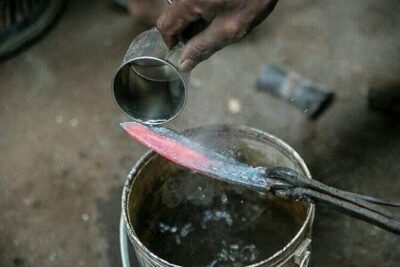 ★ 5.0Knife (Khukuri) Making Workshop- Forge of the GurkhasFrom $68143 reviews
Local Women Lead Nepali Cooking ClassFrom $30125 reviews
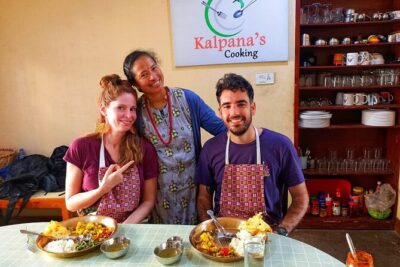 ★ 5.0The best Private Nepali Cooking Class in KathmanduFrom $2483 reviews
 ★ 4.8Traditional Momo Making Class & PickupFrom $460 reviews
 ★ 5.0Traditional Nepali Momo Making ClassesFrom $1853 reviews
Browse the lists this tour appears in