
Review · ANNAPURNA BASE CAMP TREKS
Annapurna Base Camp, Nepal 10 days
A trek to the Annapurna Sanctuary feels personal here. This private 10-day plan takes you from Kathmandu down to Pokhara and then up into the Annapurna region, with a guide who’ll explain the spiritual and environmental significance as you walk. I like that the schedule is built for real pacing, not pressure, so you can take breaks without the whole group getting twitchy.
Two things I’d highlight right away: the focus on private trekking at your own pace and the support from guides known for being welcoming and attentive, like Sandip, Resham GC, and Nitesh. You also get a strong value package: hotels and teahouses with most meals covered, plus air-conditioned ground transport.
One consideration: this is still a high-altitude mountain trek, with daily walks that can run 3 to 8 hours, and you won’t have hot showers or WiFi waiting for you at night. If you’re hoping for “easy mode,” you’ll want to be honest with your fitness level before you go.
In This Review
- Key things that make this Annapurna Base Camp trek work
- Why Annapurna Base Camp feels different with a private, steady pace
- Price and value: what $848 covers (and what it doesn’t)
- Day 1: Kathmandu to Pokhara, 7 hours of motion and a calmer start
- Day 2: Drive to Siwai and trek to Ghandruk (a Gurung village day)
- Day 3: Chhomrong via Kimrungdanda—views and a serious climb
- Day 4: Chhomrong descent via 2,500 stone steps to a suspension bridge
- Day 5: Bamboo to Deurali (3,230m) and that damp-cold feeling
- Day 6: Toward the Annapurna high country—Bagar to Machhapuchhre Base Camp
- Day 7: From Annapurna Base Camp back to Bamboo—downhill that still takes time
- Day 8: Chhomrong Khola steps and a stop at Jhinu Danda
- Day 9: Trek to Siwai and return toward Pokhara—wild bee hives and lunch on the way
- Day 10: Kathmandu wrap-up—souvenirs, rest, and a $100 flight option
- What it feels like in practice: guiding, food, and the real trekking grind
- Packing and pacing tips that match this exact trek
- Should you book this Annapurna Base Camp trek?
- FAQ
- How many days is the Annapurna Base Camp trek?
- Is this a private tour?
- What time does the trek start each day?
- What meals and accommodation are included?
- Do I get hot showers, WiFi, or phone charging?
- What transport is included?
- Is free cancellation available?
Key things that make this Annapurna Base Camp trek work
- Private only for your group: no merging into a big crowd
- Most meals included: breakfast (10), lunch (8), dinner (7)
- Teahouses plus hotels: comfort where it counts, basics where it’s the mountains
- Early start rhythm: meeting starts at 6:15 am
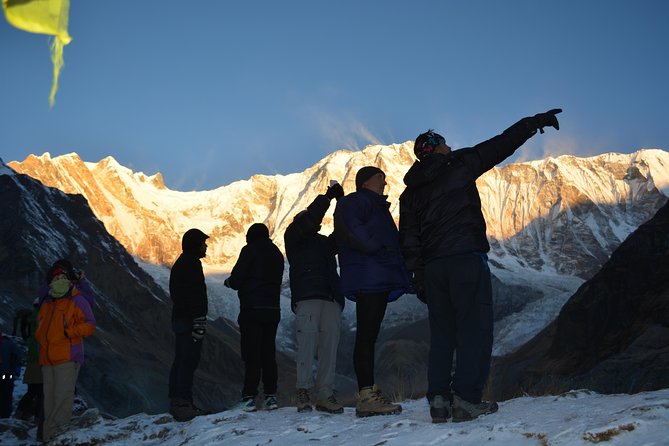
- Guide-led context: spiritual/environment notes along the way
- Real pacing: daily walking time typically stays in the 3–8 hour range
Not sure yet? Here are other Kathmandu tours worth a side-by-side look.
- Everest Base Camp Trek – 14 Days★ 5.0 · 1,499 reviews
- Everest Base Camp Trek★ 5.0 · 842 reviews
- Private Kathmandu Sightseeing Tour | UNESCO World Heritage sites★ 5.0 · 756 reviews
- Kathmandu: 7 UNESCO Sites with Lunch★ 4.8 · 744 reviews
Why Annapurna Base Camp feels different with a private, steady pace
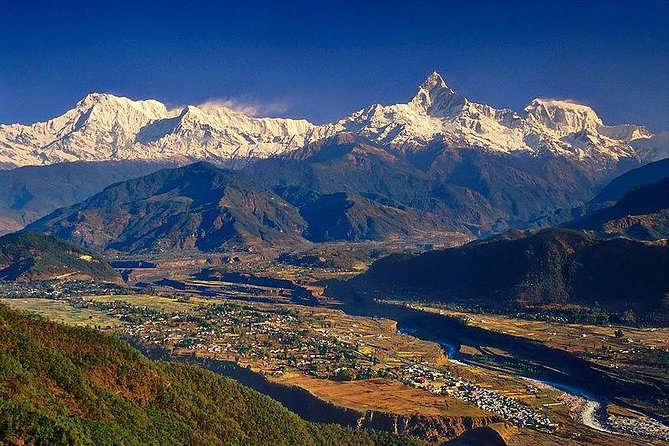
Annapurna Base Camp isn’t just a destination. It’s a multi-day rhythm, and the big advantage of this version is that it’s private. That means you set the speed, not the loudest person in the group.
You’re also not walking blind. The trek is guided, with explanations tied to the Annapurna Sanctuary—the spiritual and environmental meaning of this area. Even when you’re tired, it helps to know what you’re looking at and why the route matters.
And yes, it’s physically demanding. Expect daily stretches that can land toward the longer end (3 to 8 hours), especially as the trail starts stacking elevation and steps. The good news is that a private pace usually makes that difficulty feel more manageable.
Price and value: what $848 covers (and what it doesn’t)
At $848 per person for about 10 days, the value mostly comes from what’s included upfront. You get accommodation split between hotels and teahouses, plus most meals (breakfast 10 times, lunch 8 times, dinner 7 times). Add in air-conditioned vehicle transport, and you’re not constantly doing extra arranging day by day.
There’s also a practical modern touch: a mobile ticket, and pickup is offered. Small things like that reduce the “where do I stand?” stress that can happen on travel days.
What you should plan around: hot water, hot showers, WiFi, and battery charging are not included. So don’t budget your comfort the same way you would at a normal hotel back home. Also, tipping to the crew member is not included, so set aside cash for that.
Day 1: Kathmandu to Pokhara, 7 hours of motion and a calmer start
You start with a long but straightforward transfer: Kathmandu to Pokhara by tourist bus, about 7 hours, with Pokhara sitting around 820m. It’s a travel day, but it’s a useful one—you’re trading city rhythm for mountain rhythm.
I like this kind of Day 1 because it avoids forcing a big hike before you’ve even settled. You’re still fresh enough to rest well that first night, which matters when the trek begins early.
A drawback on Day 1: it’s a long road day. If you get uncomfortable on buses, bring the usual fixes—something for your neck, water, and snacks.
Day 2: Drive to Siwai and trek to Ghandruk (a Gurung village day)
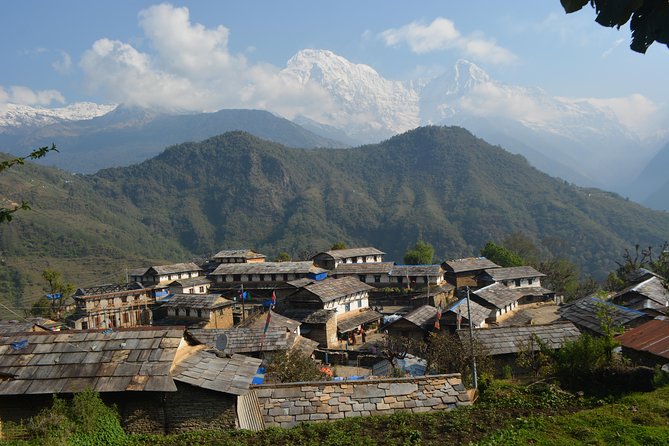
Day 2 starts early after breakfast: a drive to Siwai (about 2.5 hours), then trekking to Ghandruk for about 4 hours. Ghandruk is known as a beautiful village where the Gurung community is central, so it’s more than just a waypoint.
This is one of those days that helps you ease into the walking pattern. You’re not going from zero to maximum altitude challenge in one step. You’re building stamina while getting early cultural context.
If time permits, you may also visit a nearby Gurung-related site or area (the plan mentions extra time and optional viewing). That’s a nice bonus when the weather is cooperating.
Day 3: Chhomrong via Kimrungdanda—views and a serious climb
From the Chhomrong approach, you climb about an hour up to Kimrungdanda, where the scenery turns into the headline. You can look out toward Annapurna South, Hiunchuli, Machhapuchhre (Fishtail), and Ganggapurna. This is a day where the effort feels justified because the views come with a real sense of scale.
After that climb, you move toward Chhomrong. The walking time lands around 6 hours, so you’ll want to pace yourself and not burn matches too early. That matters for how you’ll feel the next day when steps and descents start stacking up.
One more thing I’d keep in mind: with views like this, you’ll probably stop often. Build that into your time mentally, so it doesn’t feel like the day is dragging.
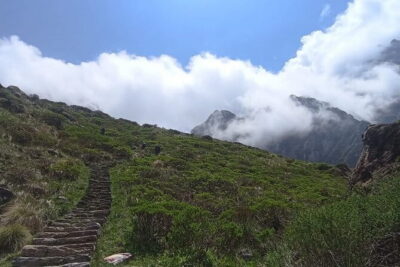
Day 4: Chhomrong descent via 2,500 stone steps to a suspension bridge
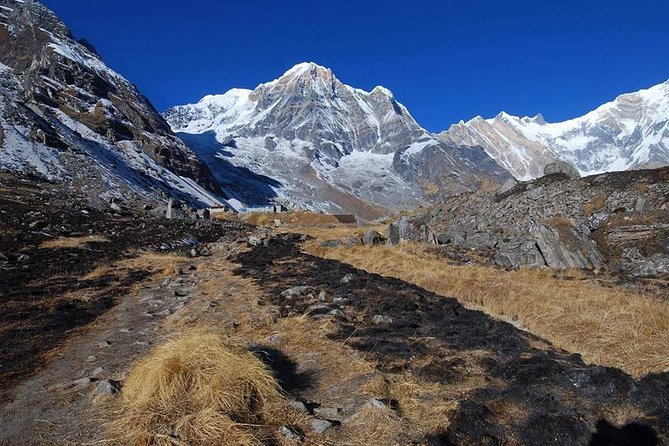
Day 4 is where the trail gets more technical underfoot. You descend out of Chhomrong via about 2,500 stone steps and cross the Chhomrong Khola on a swaying suspension bridge.
Then it’s uphill again: there’s an ascent to Sinuwa, followed by passing through forest sections toward Kuldihar. Total trekking time is around 5 hours.
This day is a good reminder of what mountain trekking really is: not one big climb, but repeated effort—up, down, then up again. If your knees get cranky, trekking poles can be a lifesaver. Also, take the bridge crossing seriously; it’s part of the fun, but your footing matters.
Day 5: Bamboo to Deurali (3,230m) and that damp-cold feeling
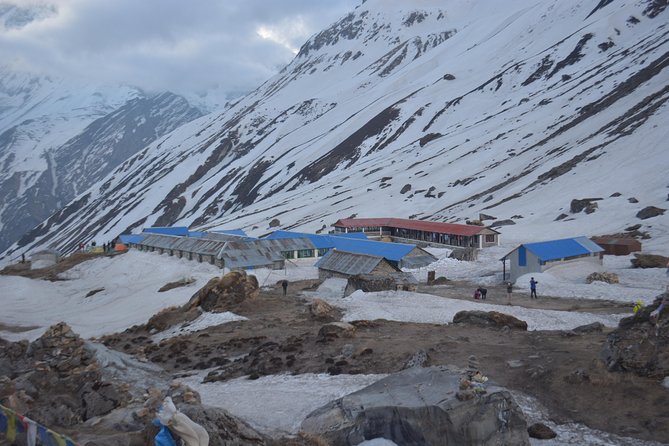
You go from Bamboo to Deurali at about 3,230m, with trekking time around 4–5 hours (about 5 hours in the plan). The trail passes through bamboo forest, described as damp and cold, then you ascend steadily with fewer steep sections.
I like how this is structured. Even though Deurali is higher, the route is gradual enough that you can focus on rhythm. When the forest turns chilly, you’ll feel it quickly—so pack layers and expect temperature swings.
The day ends around the Himalaya Hotel area (the plan specifically calls it out). That “reach-and-reset” feeling is important after a cold stretch, especially when hot water and hot showers aren’t part of the deal.
Day 6: Toward the Annapurna high country—Bagar to Machhapuchhre Base Camp
Day 6 is another solid walking day at around 6 hours. You climb gently through a river bed, then take a steeper trail toward the mountain side. The hike from Bagar to Machhapuchhre Base Camp is described as somewhat strenuous.
From Machhapuchhre Base Camp, you’ll get some kind of excursion and viewpoints (the plan says you’ll get exciting views from there). This is one of the days where the “walk” starts feeling like you’re crossing into the real mountain zone, with big air, big ridgelines, and less room for distraction.
If you’re feeling tired on this day, that doesn’t mean you’re failing. It just means you’re doing the mountain math. Keep your pace steady and let the views do the bragging.
Day 7: From Annapurna Base Camp back to Bamboo—downhill that still takes time
After reaching Annapurna Base Camp, you retrace steps back toward Bamboo. The day is downhill, so it should be easier than the ascent—but the plan still gives around 8 hours of walking time.
That’s the key tradeoff on the return day: less altitude strain, but long hours on your legs. Going downhill can still be rough if your stride isn’t careful. Take a slower downhill cadence and watch your footing.
The upside is obvious: you’re surrounded by extraordinary scenery the whole way back, and the day tends to feel like a victory lap, even when your calves disagree with you.
Day 8: Chhomrong Khola steps and a stop at Jhinu Danda
Day 8 layers work across multiple sections. You hike from Bamboo up toward Kuldighar, then down to Chhomrong Khola, climb stone steps back to Chhomrong, and then descend again to Jhinudanda (the plan also names Jhinu Danda in the day label).
This is a 6-hour day in the plan, and it’s the kind that tests whether you can keep moving smoothly after a big trekking week. The good news is you’re not starting from scratch—you’ve already learned the trail’s logic.
If you want to feel prepared, think of Day 8 as the “legs management” day. Keep your stops brief, fuel consistently, and don’t let yourself get cold while you’re resting.
Day 9: Trek to Siwai and return toward Pokhara—wild bee hives and lunch on the way
On Day 9, you head toward Siwai from Jhinudanda, with a mix of walking and sightseeing. The plan calls out an interesting detail: you can enjoy amazing western Nepal hill views, including wild bee hive under the cliff.
You’ll have lunch on the way, and the trek ends at Siwai, where you board your vehicle (the plan cuts off the final wording, but it clearly returns you by transport). Total trekking time is around 6 hours, and the day lines up with moving back toward the more relaxed travel phase.
This is a great day to keep your energy for logistics. You’ve already done the climb. Now it’s time to set yourself up for a smooth last push back to Kathmandu.
Day 10: Kathmandu wrap-up—souvenirs, rest, and a $100 flight option
You drive back to Kathmandu after breakfast, with the road time listed at about 7 hours. It’s a lighter finish: shop a bit, pick up souvenirs, and rest.
There’s also an alternate option: you can take a flight instead, which costs extra $100. If you’re feeling the altitude week in your body, that flight option can be worth thinking about.
Either way, this is your recovery day. Don’t turn it into a “see everything” sprint. You’ll enjoy the final hours more if you pace them.
What it feels like in practice: guiding, food, and the real trekking grind
The best part of a good base camp trek isn’t just reaching the goal. It’s how the days fit together—and this plan is built around practical pieces that reduce stress.
The guiding looks like a big deal here. From the operator’s named guides—Sandip, Resham GC, Nitesh, and support from people like Ganesh Neupane and Bijane Neupane—you can expect friendly, caring help and someone who pays attention to details. If you like having context while you walk, this is the kind of trek that gives it.
Food is also a core value. Since most meals are included, you’re less likely to spend the trek days hunting menus. Just remember that teahouses are basic by design. You’ll do better if you treat meals as fuel, not a restaurant review.
And then there’s the comfort math: no hot showers and no WiFi, plus battery charging isn’t included. That means you’ll want to pack a plan for power (like a power bank) and embrace an unplugged mindset. In the mountains, the best entertainment is usually the next view and the next step.
Packing and pacing tips that match this exact trek
- Pack layers for cold bamboo forest days and higher nights. The plan explicitly flags a damp, cold bamboo section.
- Bring a way to manage the “no hot shower” reality. That can mean wipes and a small towel rather than waiting for spa-level comfort.
- Plan for limited tech: since WiFi and battery charge aren’t included, keep your devices for photos and navigation only.
- Start mentally early. The meeting time is 6:15 am, so you’ll want your wake-up routine ready the night before.
- Budget extra cash for tipping to the crew member.
Finally, be honest about your knee tolerance. Days like the 2,500 stone steps route can turn into a leg burner fast.
Should you book this Annapurna Base Camp trek?
I’d book this if you want a private trek, steady pacing, and a structure that handles the “big stuff” (lodging in hotels and teahouses, and most meals) so you can focus on walking. The $848 price feels more like a package than a shopping list, especially with air-conditioned transport and the guided context around the Sanctuary.
I’d think twice if you’re hoping for comfort extras like hot showers and WiFi, because those aren’t included. Also, if you’re very new to altitude or long hiking days, be realistic: this trek is designed for people with at least moderate physical fitness, and the walking can reach long hours.
If weather turns bad, you may be offered a different date or a full refund. That weather dependency is normal in this region, so plan flexible expectations from day one.
FAQ
How many days is the Annapurna Base Camp trek?
It’s listed as 10 days approximately.
Is this a private tour?
Yes. It’s a private tour/activity, and only your group will participate.
What time does the trek start each day?
The meeting start time is 6:15 am.
What meals and accommodation are included?
Accommodation is included in hotels and teahouses. Most meals are included: breakfast (10), lunch (8), and dinner (7).
Do I get hot showers, WiFi, or phone charging?
No. Hot water, hot showers, WiFi, and battery charge are not included.
What transport is included?
An air-conditioned vehicle is included, and pickup is offered. The plan also includes a tourist bus drive between Kathmandu and Pokhara.
Is free cancellation available?
Yes, free cancellation is available up to 24 hours in advance for a full refund. If the experience is canceled due to poor weather, you’ll be offered a different date or a full refund.
More Tour Reviews in Kathmandu
Just Reviewed in Kathmandu
- Mountain Bike Tour
★ 5.0 · 3 reviews - Annapurna Panaroma
★ 5.0 · 3 reviews - Mount Everest Scenic Flight 50 Minutes
★ 5.0 · 3 reviews - Kathmandu : Swambhunath & Durbar Square Guided Half Day Tour
★ 3.3 · 3 reviews - Chandragiri Cable Car & Monkey Temple Tour – Private/Group
★ 5.0 · 3 reviews - Kathmandu: Shivapuri National Park Hiking Day Trip
★ 3.3 · 3 reviews
Annapurna Base Camp Treks, compared.
 ★ 5.0Annapurna base camp trek 5 DaysFrom $699252 reviews
 ★ 5.014-Day Private Annapurna Base Camp TrekFrom $1,090180 reviews
 ★ 5.0Annapurna Base Camp TrekkingFrom $1,779116 reviews
 ★ 5.0Annapurna Base Camp TrekFrom $935111 reviews
★ 5.0Annapurna Base Camp TrekFrom $1,350107 reviews
★ 5.0Annapurna Base Camp TrekFrom $935111 reviews
★ 5.0Annapurna Base Camp TrekFrom $1,350107 reviews
 ★ 5.0Kathmandu to Annapurna Base Camp (ABC) 5-Day TrekFrom $99102 reviews
 ★ 5.0Annapurna Base Camp Trek- 11 DaysFrom $99990 reviews
 ★ 5.0Annapurna Base Camp Trek 12 DaysFrom $80085 reviews
Browse the lists this tour appears in