
Review · ANNAPURNA BASE CAMP TREKS
Annapurna Base Camp Trekking
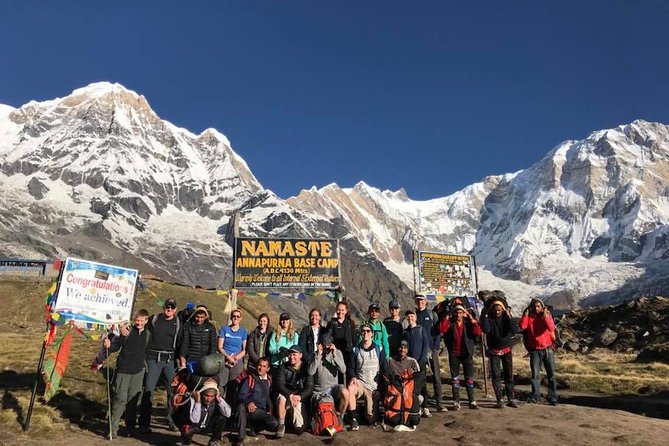
The first big Himalayan wall hits early. This Annapurna Base Camp trek is a moderate, well-loved route starting at Nayapul, passing through Gurung, Magar, and Thakali villages, then into rhododendron forest and toward a dramatic glacier amphitheater at the top view area.
I especially like the trip’s built-in structure: you get a guide and a porter for the trek, plus Kathmandu and Pokhara time without rushing. And I really enjoy the two classic “stop-and-savor” moments: Poon Hill sunrise and Jhinu Danda hot springs.
One drawback to plan for: during the trek, basic comforts are part of the deal. Heater charges and hot shower charges are not included, so pack for cool nights and expect the mountain version of a shower.
In This Review
- Key points at a glance
- Annapurna Base Camp: what makes this trek so worth your time
- Kathmandu to Pokhara: get set up without losing a day
- Starting the trail at Nayapul: Ulleri and Ghode Pani as your rhythm-makers
- Small advice that pays off
- Poon Hill sunrise and Chhomrong: the big payoff comes on schedule
- Deurali and the Annapurna mountain-range day: panoramas with a purpose
- Annapurna Base Camp area (4,130m) and the trail’s mountain logic
- Jhinu Danda hot spring and Pothana: recovery without losing the mountain feeling
- Back to Pokhara, then flying home to Kathmandu
- Price and what $1,779 buys you in real trekking terms
- The trekking team experience: why the guide and porter matter
- Who should book this trek—and who should be careful
- Should you book Annapurna Base Camp with Adventure Treks Nepal?
- FAQ
- Where do I meet the group for this Annapurna Base Camp trek?
- How long is the trek?
- Is this a private tour?
- Is there a minimum number of people required?
- Are flights included?
- What meals are included during the trek?
- What costs are not included during the trek?
- Do I need a Nepal visa, and what does it cost?
- Can I cancel or change my booking for a refund?
Key points at a glance
- Nayapul start, tea-house rhythm, and a steady path upward to the Annapurna Base Camp area (around 4,130m)
- Poon Hill sunrise scheduled as a short, early highlight (about 45 minutes)
- 360-degree view time at the Annapurna mountain-range section for big panoramic payoff
- Jhinu Danda hot spring as a real recovery break after trekking days
- Guide + porter support with insurance, including a porter ratio of 1 porter for 2 people
- Flights between Pokhara and Kathmandu so you’re not backtracking the whole way
More trails out of Kathmandu, boots ready
- Everest Base Camp Trek – 14 Days★ 5.0 · 1,499 reviews
- Everest Base Camp Trek★ 5.0 · 842 reviews
- Everest Base Camp Trekking★ 5.0 · 485 reviews
- Nagarkot Sunrise View and Day Hiking from Kathmandu★ 5.0 · 471 reviews
Annapurna Base Camp: what makes this trek so worth your time
Annapurna Base Camp is famous for a reason. The approach funnels you into view of the Annapurna massif—Annapurna III, Annapurna South, Hiunchuli, Fang, Machhapuchhare (Fish Tail), and Gangapurna—arranged in a kind of circle around a central amphitheater with glacier coverage. Even if you’re not a “mountain-nerd,” you’ll feel that visual drama when it finally opens up.
What makes this specific itinerary attractive is how it mixes culture with altitude work. You’re not just hiking to scenery; you’re walking through real community routes where people from Gurung, Magar, and Thakali backgrounds live and work day to day. There’s also a clear shift in what you see: warmer village paths early on, then cooler Buddhist-influenced hills, and plenty of rhododendron forest before you’re high enough that the mountains start to look close.
This is also marketed as moderate. That doesn’t mean easy. It means the route is approachable for people with moderate fitness, and the days are planned around steady progress rather than one brutal push every single day.
Kathmandu to Pokhara: get set up without losing a day
Your trip begins at Tribhuvan International Airport (Ring Rd, Kathmandu) with transport handling arrival. From there, you’ll spend the next day in Pokhara—time that matters more than people think.
Pokhara’s included stop gives you a simple warm-up: arrive, then walk around Phewa Lake. That’s a practical choice. Before you start trekking, you want your legs moving gently, your head clear, and your gear organized for a mountain schedule. It also helps you mentally switch from city time to trail time.
If you like having a local base that feels slower than Kathmandu, Pokhara usually scratches that itch. And because flights are included later, you can keep logistics simple instead of guessing about timing.
Starting the trail at Nayapul: Ulleri and Ghode Pani as your rhythm-makers
On trekking start day, you drive to Nayapul. This matters because the trail begins right away at the foothills rather than after a long, confusing transfer. From there, the itinerary moves to Ulleri for an overnight tea-house stay.
Ulleri is the kind of place where you’ll feel the “real trek” settle in. Tea-house nights are part of the experience here. You’re not roughing it in the wild; you’re living at the pace of a village trail. The practical benefit is that you can spend your energy trekking, not hunting for services.
Next up is Ghode Pani (spelled Ghore Pani on the itinerary). You’ll trek there and overnight again in a tea house. This day-to-day pacing is where the trip earns its “moderate” label. It’s long enough to build trekking stamina, but it also gives you repeated chances to reset: eat, sleep, and adjust layers.
Small advice that pays off
Bring a mindset of routine. Each tea-house stop is your checkpoint for gear and comfort—water habits, warm layers, and how your body is responding to hiking for hours.
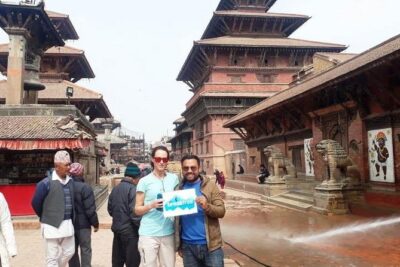
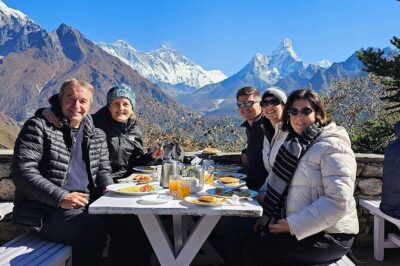
Poon Hill sunrise and Chhomrong: the big payoff comes on schedule
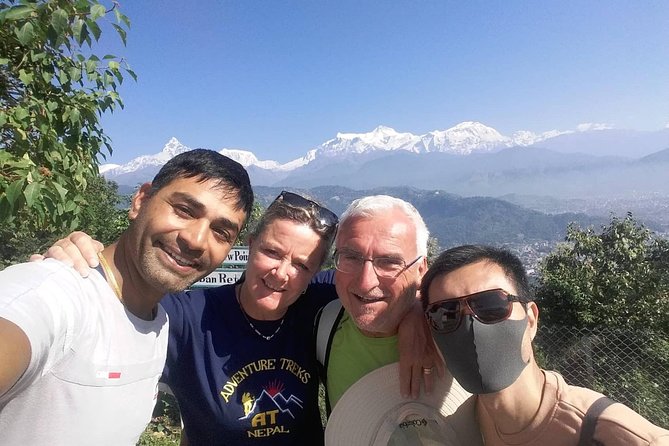
One of the best-known moments in the Annapurna region is Poon Hill sunrise. In this itinerary, you get a short sunrise-view stop (about 45 minutes). That’s smart planning: you’re not turning it into a half-day chore. You go, you look, you photograph if that’s your thing, then you keep moving.
After the sunrise, the route continues to Chhomrong for an overnight stay. Chhomrong is a key step in the trek because it’s often where the “Himalaya is close now” feeling becomes more than an idea. The air can feel different, the views can feel sharper, and you’ll start noticing how the day’s perspective keeps widening.
The culture side also stays active here. Earlier villages from Gurung, Magar, and Thakali communities don’t just act as background scenery; the itinerary is built around passing through places where conversation can happen. If you’re the type who likes learning a few words, asking about daily life, or just taking a break to talk, this trek gives you those chances.
Deurali and the Annapurna mountain-range day: panoramas with a purpose
From Chhomrong, you head toward Deurali for an overnight tea-house lodge. This is another day that helps your body settle into higher trekking. Even if you’re used to hiking at home, altitude changes the way you breathe and how quickly you feel tired. The itinerary’s pacing helps because you’re not stacking only the hardest segments back-to-back.
Then comes a very direct “view day.” The itinerary includes a 360-degree view of the Annapurna mountain range, with an overnight afterward. That’s the trip’s midpoint big moment: it’s where you realize the circuit isn’t just one peak. It’s a whole bowl of mountains meeting in one broad view—Annapurna massif pieces lining up around the glacier amphitheater effect described for the base camp area.
After this, you continue to Bamboo for another tea-house night. Bamboo is where the trail keeps you honest. It’s not just about clouds and spectacle; you still hike. But the “work” days are part of why the view days feel earned instead of accidental.
Annapurna Base Camp area (4,130m) and the trail’s mountain logic
The trek is centered on reaching the Annapurna Base Camp area—listed at around 4,130m—and the surrounding high Himalayan viewpoint. The overview highlights how the peaks arrange in that circle around the glacier-covered amphitheater. That’s a rare kind of geography: it’s not just one dramatic angle. It’s a full-body sense of being surrounded.
Here’s the value for you: this type of destination rewards patience. You don’t get the best views by sprinting. You get them by keeping a steady pace, staying warm when you need to, and arriving in the right frame of mind.
You’ll also notice the itinerary follows a logic that makes sense for a multi-day trek: village-to-forest-to-higher-hills progression, with repeated overnight stays so you’re not constantly scrambling for rest. You’re also moving along established tea-house corridors, which keeps the trip from turning into a logistics puzzle.
Jhinu Danda hot spring and Pothana: recovery without losing the mountain feeling
One of the most memorable parts of the itinerary is Jhinu Danda, where you’ll go to the hot spring. This is a genuine recovery moment after trekking days. Even if your muscles aren’t thrilled about the hike (they won’t be), a warm-water break is the kind of reward that actually helps you keep going.
After that, you head to Pothana for an overnight tea-house stay. Pothana is a good “last stretch” type stop because it keeps you in mountain rhythm. You’re not suddenly back in a city. You’re still living in the same trekking ecosystem—meals, tea-house sleep, and the steady repetition that makes long trekking trips feel doable.
If you want one lesson from this section, it’s that smart trekking isn’t only about effort. It’s also about when you choose recovery.
Back to Pokhara, then flying home to Kathmandu
After your final trek days, you return to Pokhara and spend time around Phewa Tal. That’s a nice decompression. You’ll swap steep trail pacing for easier lakeside strolling and normal meal rhythms.
Then you fly back to Kathmandu. Flights are included (with airport tax), so you’re not left planning a bus schedule and guessing arrival times.
Your final day in Kathmandu is a free day, which is perfect if you want to reset your body, do one last meal out, or visit something simple near where you’re staying. Because your trek is done, you can move at an easy pace.
The trip ends back at the starting area around Tribhuvan International Airport, closing the loop cleanly.
Price and what $1,779 buys you in real trekking terms
At $1,779 per person for about 14 days, the best way to judge value is to look at what’s included that would otherwise cost time and effort.
You get:
- Kathmandu and Pokhara accommodation with breakfast
- Breakfast, lunch, and dinner during the trekking (the itinerary lists 13 breakfasts, 10 lunches, 9 dinners)
- Kathmandu–Pokhara drive, and Pokhara–Nayapul / Phedi Pokhara drives
- Pokhara to Kathmandu flights with airport tax
- A trekking guide (with insurance) and a porter (with insurance), using a ratio of 01 porter for 02 pax
- A trekking duffel bag, plus a region map
- Trekking food and lodging support through tea houses
- Transport for arrival and departure
When trekking costs feel high, it’s often because travelers have to pay separately for guide/porter coordination, transfers, and meal planning. Here, that base infrastructure is handled. You’re buying peace of mind: less time negotiating logistics, more time walking and taking in the peaks.
What’s not included is also clear, and you should factor it in:
- International airfare
- Nepal entry visa fee (US$50 for 30 days and US$30 for 15 days)
- Travel insurance
- Drinks, desserts, juice, mineral water
- Heater charge and hot shower during the trekking
- Main meals in the cities
- Tips for guide, porter, and driver
That last part matters. If you want smooth service, keep a budget for tips. Also, because heater charges and hot showers are not included, your comfort planning shouldn’t assume warm water on demand.
The trekking team experience: why the guide and porter matter
The itinerary is built around having both a guide and porter support. That’s not just convenience; it changes how you hike.
A guide helps with route flow and day planning, and the itinerary includes insurance for both the guide and porter. In practice, that translates into steadier pacing and fewer moments where you’re stuck figuring out what comes next.
Also, many past trekking stories tied to this kind of operation highlight names like Anuj, Gyanendra, Hari, Ramesh, and support from a medic named Dev. I can’t promise you’ll get the same people, but the pattern is the same: the trip is designed around a real team, not just a ticket and hope.
One more practical point: you get a trekking duffel bag included. That sounds small, but it often makes packing simpler and keeps your gear easier to manage for a multi-day trek.
Who should book this trek—and who should be careful
This is a great match if you:
- want a moderate trekking experience with structured daily progress
- like cultural stops in traditional villages of Gurung, Magar, and Thakali communities
- care about big view moments like Poon Hill and the 360-degree Annapurna mountain-range view
- value having guide and porter support with insurance
You should be careful if you:
- aren’t comfortable with cold nights and basic tea-house comfort, especially since heater charge and hot shower costs aren’t included during the trek
- might struggle with a multi-day hiking schedule up toward an area around 4,130m
Also, this is a private tour/activity, and there’s a note that a minimum of 2 people is needed to run the trip. If you’re traveling solo, you’ll need to plan around that requirement.
Should you book Annapurna Base Camp with Adventure Treks Nepal?
If your goal is classic Annapurna Base Camp scenery—paired with culture, sunrise viewing, and a real recovery stop—this itinerary is a strong option. The biggest reason is the balance between structure and freedom: you get transfers, flights, guide/porter support, and meals, while the trekking itself stays grounded in real mountain villages and tea houses.
I’d book it if you want your hardest part to be the hiking, not the logistics. I’d also book it if you like a trip that gives you scheduled “wow” moments on the right days: Poon Hill at sunrise, a panoramic 360-degree view day, and hot springs at Jhinu Danda.
Pass or rethink only if you know you’ll be unhappy without included hot showers/heater charges during trekking. Otherwise, for the money and the included support, this looks like a good value way to reach the Annapurna amphitheater in about two weeks.
FAQ
Where do I meet the group for this Annapurna Base Camp trek?
The meeting point is Tribhuvan International Airport, Ring Rd, Kathmandu, Nepal. The experience also ends back at this same meeting point.
How long is the trek?
The duration is approximately 14 days.
Is this a private tour?
Yes. It’s listed as a private tour/activity, and only your group participates.
Is there a minimum number of people required?
Yes. The trip requires a minimum of 2 people to run.
Are flights included?
Yes. Flights from Pokhara to Kathmandu are included, and airport tax is included as well.
What meals are included during the trek?
Breakfast, lunch, and dinner are included during the trekking period. The itinerary lists 13 breakfasts, 10 lunches, and 9 dinners.
What costs are not included during the trek?
Drinks, dessert, juice, mineral water, heater charge, and hot shower during the trek are not included. Tips for the guide, porter, and driver are also not included.
Do I need a Nepal visa, and what does it cost?
Visa fees are not included. The listing gives US$50 for a 30-day visa and US$30 for a 15-day visa, and it notes you should get a Via open your arrival.
Can I cancel or change my booking for a refund?
No. The experience is non-refundable and cannot be changed for any reason, and the amount you paid will not be refunded.
More Trekking Out of Kathmandu
More Tour Reviews in Kathmandu
Just Reviewed in Kathmandu
- Mountain Bike Tour
★ 5.0 · 3 reviews - Annapurna Panaroma
★ 5.0 · 3 reviews - Mount Everest Scenic Flight 50 Minutes
★ 5.0 · 3 reviews - Kathmandu : Swambhunath & Durbar Square Guided Half Day Tour
★ 3.3 · 3 reviews - Chandragiri Cable Car & Monkey Temple Tour – Private/Group
★ 5.0 · 3 reviews - Kathmandu: Shivapuri National Park Hiking Day Trip
★ 3.3 · 3 reviews
Annapurna Base Camp Treks, compared.
 ★ 5.0Annapurna base camp trek 5 DaysFrom $699252 reviews
 ★ 5.014-Day Private Annapurna Base Camp TrekFrom $1,090180 reviews
 ★ 5.0Annapurna Base Camp TrekFrom $935111 reviews
★ 5.0Annapurna Base Camp TrekFrom $1,350107 reviews
★ 5.0Annapurna Base Camp TrekFrom $935111 reviews
★ 5.0Annapurna Base Camp TrekFrom $1,350107 reviews
 ★ 5.0Kathmandu to Annapurna Base Camp (ABC) 5-Day TrekFrom $99102 reviews
 ★ 5.0Annapurna Base Camp Trek- 11 DaysFrom $99990 reviews
 ★ 5.0Annapurna Base Camp Trek 12 DaysFrom $80085 reviews
Annapurna Base Camp TrekFrom $78581 reviews
★ 5.0Annapurna Base Camp Trek 12 DaysFrom $80085 reviews
Annapurna Base Camp TrekFrom $78581 reviews
Browse the lists this tour appears in