
Review · ANNAPURNA BASE CAMP TREKS
Annapurna Base Camp Trek- 11 Days
First time trekking in Nepal often comes with a lot of moving parts. This 11-day Annapurna Base Camp trip makes it easier, with airport pickup, teahouse accommodations, and an experienced English-speaking, government-licensed guide that keeps the logistics calm. I especially like the way your Kathmandu time is handled (including two nights there, plus a welcome dinner), and how the trek itself is organized around real trail days and gradual altitude changes. One thing to consider: you are spending nights and meals at altitude, and the trek is still physically demanding even for a “moderate” fitness level.
What really sells this experience is the full loop: fly to Pokhara, trek toward Annapurna Base Camp, then return down through the valleys with another flight back to Kathmandu. The likely benefit for you is less hassle—private vehicle transfers where they matter, meals during the trek, and porter support (2 trekkers to 1 porter). The main drawback is also the nature of the region: weather can change fast, and in the mountains that can mean delays or rerouting around road/travel interruptions.
In This Review
- Quick hits before you commit
- Kathmandu Setup: Two Nights to Get Your Bearings
- Pokhara to Ghandruk, Then Chhomrong: Your Trail Warm-Up
- Bamboo and Deurali: Where Altitude Gets Real
- Annapurna Base Camp Day: Machhapuchhre Base Camp Route
- The Descent to Jhinu Danda: Bamboo to Bamboo (But Easier)
- Naya Pul Return to Pokhara, Then Back to Kathmandu
- Price and Value: What Your $999 Covers (and What It Doesn’t)
- Teahouse Reality: Meals, Rooms, and What Comfort Looks Like
- Guides, Porters, and Safety: The Human System Behind the Trek
- Who Should Book This 11-Day Annapurna Base Camp Trek?
- FAQ
- What kind of accommodation do I get during the trek?
- Are meals included on the mountain part?
- How do flights work in this itinerary?
- Will I have a guide and porter support?
- What should I plan to pay for myself?
- Is cancellation free?
- Should You Book This Annapurna Base Camp Trek?
Quick hits before you commit
- Private guided format: only your group, with a government-licensed English-speaking guide
- Teahouse nights + full trek meals: breakfast, lunch, dinner included while trekking
- Real altitude progression: from Ghandruk/Chhomrong up to Annapurna Base Camp at 4,130m
- Pokhara-Kathmandu flights included: fewer long travel days in vans and buses
- Porters shared 2:1: you’re supported, but you still carry your essentials
More trails out of Kathmandu, boots ready
- Everest Base Camp Trek – 14 Days★ 5.0 · 1,499 reviews
- Everest Base Camp Trek★ 5.0 · 842 reviews
- Everest Base Camp Trekking★ 5.0 · 485 reviews
- Nagarkot Sunrise View and Day Hiking from Kathmandu★ 5.0 · 471 reviews
Kathmandu Setup: Two Nights to Get Your Bearings
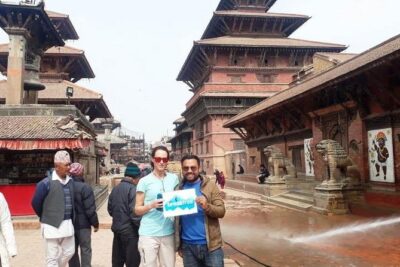
Day 1 starts in Kathmandu at about 1,300m (4,264ft). You land, and you’re met by a representative of Alpine Club of Himalaya. That matters more than it sounds. Nepal airports can be busy, and having someone there to point you in the right direction helps you settle in quickly.
That evening includes a welcome dinner with authentic Nepalese cuisine. It’s a smart first step because it gets you into the rhythm of local flavors before you start thinking about trek food (dal bhat, noodles, seasonal soups, and the usual teahouse menu patterns). You sleep in Kathmandu for the night.
On Day 2 you shift to Pokhara via a short 30-minute flight, then immediately begin trekking toward Ghandruk (about 1,940m). The goal here is simple: compress the “getting there” part and start moving while you’re still fresh.
Practical tip: Kathmandu is where you’ll want to handle anything you’ll regret later—small purchases, charging phones/batteries (note that battery recharge isn’t included), and basic trekking comfort items. You should also expect Kathmandu traffic and start-time changes to feel normal; your plan is still organized, just not “Western exact to the minute.”
Pokhara to Ghandruk, Then Chhomrong: Your Trail Warm-Up
Day 2 includes a trek from Pokhara to Ghandruk over about 5–6 hours (starting around 823m / 2,700ft and ending at roughly 1,940m / 6,360ft). This is your first real hiking day. You’ll notice the air feels different as you climb, and your breathing becomes your main workout.
Ghandruk is also where the cultural side starts showing up in a meaningful way. The trek highlights include communities such as Gurung, Magar, and Thakali villages, and this region is part of that mix. In practice, that means you’re not just walking through scenery—you’re moving through villages where daily life continues around the trail.
Day 3: Ghandruk to Chhomrong takes about 5–6 hours, climbing to around 2,170m (7,120ft). Chhomrong is often a turning point psychologically. You’ve done enough uphill that you can feel progress, but you’re still low enough that the trail doesn’t feel like an endurance test yet.
What to watch: the “trail warm-up” pace can trick you. It feels manageable, so you may walk too fast. Keep an even rhythm. If you start early and move steadily, the later altitude days will feel less brutal.
Bamboo and Deurali: Where Altitude Gets Real
Day 4: Chhomrong to Bamboo takes around 4–5 hours, finishing near 2,310m (7,578ft). This day helps you settle into the teahouse pattern—walk, arrive, eat, rest, repeat. If it’s your first trek, you’ll likely find this is where you learn how fast your body asks for breaks.
Day 5: Bamboo to Deurali is shorter on paper (about 3–4 hours) but it’s a big altitude jump, ending around 3,230m (10,595ft). This is where the trek stops being just “walking” and becomes “walking while managing effort.” You don’t need hero mode. You need steady steps, frequent pauses, and water discipline.
One more thing: sun can be bright at higher elevations. Even on cool days, you may feel it quickly. Bring sun protection even if you think you’ll be too cold for it.
Teahouse note: Deurali is one of those stops where rooms, heating, and comfort depend on season and availability. The trek includes teahouse accommodation, but not extras like showers, laundry, or guaranteed charging (those are listed as not included). That’s normal here—plan for simple comforts, not hotel perks.
Annapurna Base Camp Day: Machhapuchhre Base Camp Route
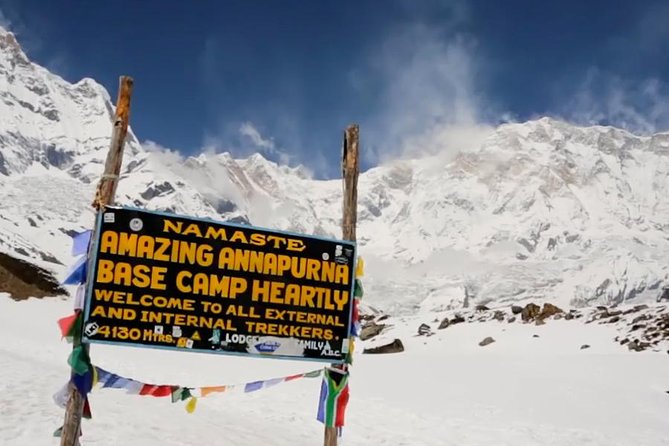
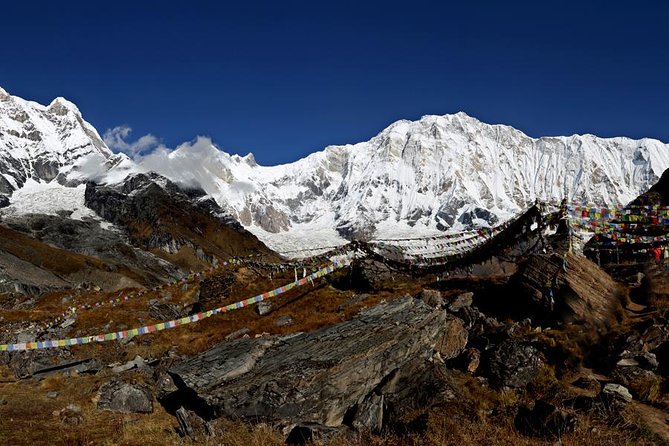
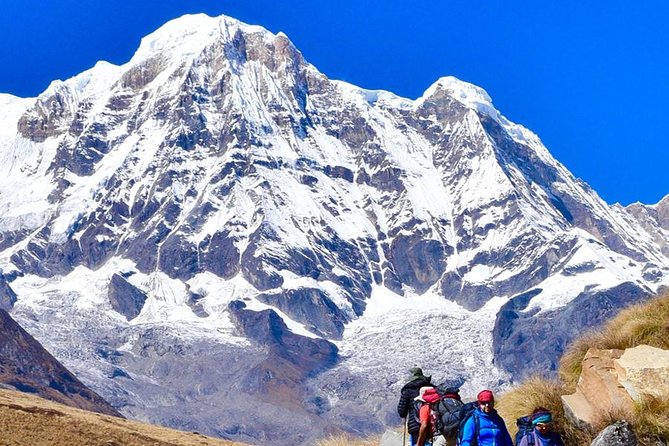
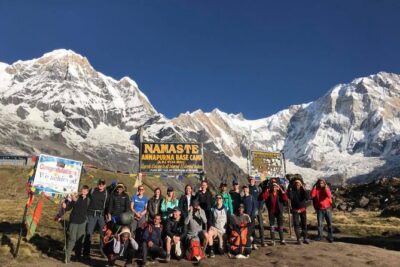
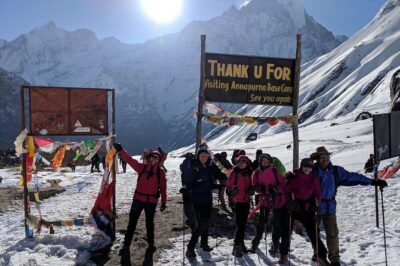
Day 6 is your big target: Deurali to Annapurna Base Camp via Machhapuchhre Base Camp. Expect about 5–6 hours, rising to 4,130m (13,545ft) at Annapurna Base Camp, after going through Machhapuchhre Base Camp at around 3,700m (12,135ft).
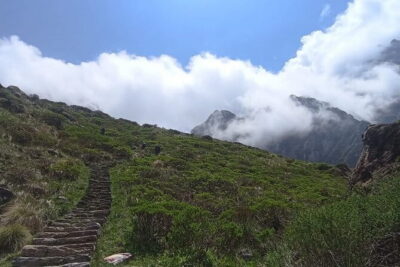
This day is physically serious. You’ll likely feel it in your breathing and your legs. The climb is steady, but the altitude is the real opponent. The best strategy is quiet patience—walk slower than you think you should, and don’t let adrenaline mess with your pace.
Why this route matters: going via Machhapuchhre Base Camp adds a meaningful “before the main event” point where the environment tightens and the sense of scale sharpens. You’re not just hiking to a single dot on a map—you’re working your way toward it through a corridor that builds anticipation.
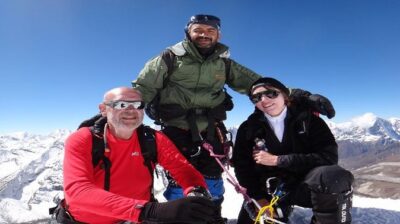
At Annapurna Base Camp itself, the win is the mix: the high-altitude stillness, the sense of reaching something difficult, and the fact that you got there through your own effort plus a guide and porter team doing the behind-the-scenes work.
Practical consideration: if the weather is poor, visibility can be reduced even when you reach the camp. Your guide will still take you to the right places, but you should be ready for clouds to change the “wow factor” on the day.
The Descent to Jhinu Danda: Bamboo to Bamboo (But Easier)
Day 7: Annapurna Base Camp to Bamboo takes about 7–8 hours. Yes, it’s longer. The descent can feel easier on paper, but long downhills can be rough on knees and ankles. This is where good footwear and careful footing pay off.
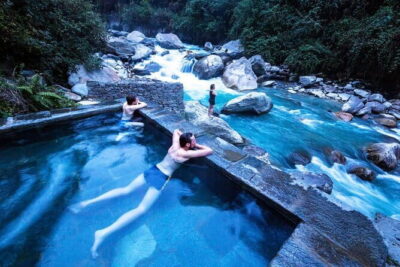
Day 8: Bamboo to Jhinu Danda is about 5–6 hours down to roughly 1,760m (5,770ft). Jhinu Danda is a popular finish because it sets you up for recovery. One of the big rewards of dropping in altitude is feeling your body unclench.
This day is also where trekking finally feels more like a vacation again. You’re still hiking, but you’re moving toward warmth and less thin air.
Accommodation style: you stay in teahouses again. Expect a simple setup. You’ll have food options included during trekking, but extras like shower use aren’t part of the package.
Naya Pul Return to Pokhara, Then Back to Kathmandu
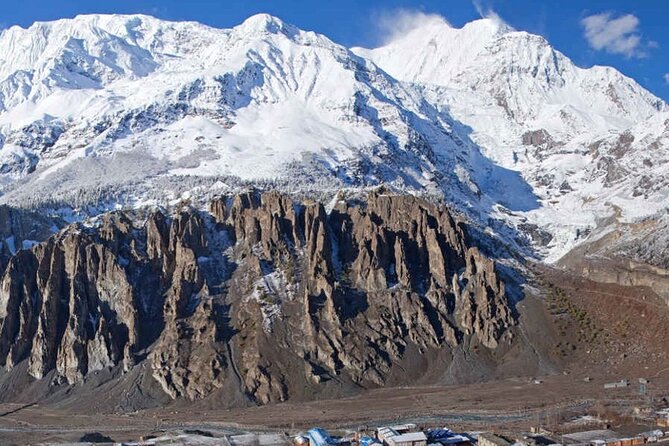
Day 9: Jhinu Danda trekking to Naya Pul takes about 6 hours, then you drive about 1 hour to Pokhara. This is one of those “finish strong” days. You’re nearing the end, but you still need to treat it like a real hike day until you’re in the vehicle.
Day 10: Fly to Kathmandu. This is included, so you’re not stuck spending another day wrestling roads.
Day 11: final departure from Kathmandu, with the experience ending back at the meeting point. In other words, your trip is designed as a clean loop, not a messy scatter of transfers.
If you’re someone who gets stressed by complicated travel, this is a big value point: most of your movement is pre-planned, and the mountain portion has staff support.
Price and Value: What Your $999 Covers (and What It Doesn’t)
At $999 per person for 11 days, the value is mostly in what’s bundled. You’re not only paying for guiding. You’re paying for:
- Two nights in Kathmandu and one night in Pokhara with breakfast
- Kathmandu–Pokhara flights round-trip
- Airport pickups and drops in a private vehicle
- Teahouse accommodation during the trek
- All meals during the trek (breakfast, lunch, dinner) plus tea/coffee
- A government-licensed English-speaking guide
- Porter service with a 2 trekkers to 1 porter ratio
- Staff costs, local and government taxes
What’s not included is also important to budget:
- Nepal visa fee
- International flights to and from Nepal
- Travel and rescue insurance
- Meals in Kathmandu and Pokhara beyond what’s provided
- Tips for guide(s), porter(s), and driver(s)
- Bottled or boiled water, shower, laundry, battery recharge, desserts
So the math works best if you prefer a “planned and handled for me” style of travel. If you’re a hardcore budget traveler who wants to arrange everything independently, this might feel more expensive than DIY. But if you value time and reduced hassle, the bundle makes sense.
A big quiet win: flights are included for the Kathmandu-Pokhara portion. That saves fatigue and makes the trekking window smoother.
Teahouse Reality: Meals, Rooms, and What Comfort Looks Like
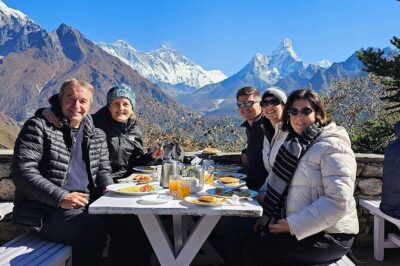
Teahouse trekking sounds romantic until you’re actually at 3,000m-plus and your body wants warm food and rest. The good news: this tour includes all meals during the trek, and you’ll also get tea/coffee. That reduces one of the biggest uncertainties in independent trekking: you don’t have to guess what you’ll eat at each stop.
Expect a basic routine:
- You wake up, have breakfast
- Walk to the next village stop
- Check in to a teahouse, eat lunch and dinner
- Rest early when needed
About rooms: the trip includes teahouse accommodation, but private rooms aren’t guaranteed everywhere. Still, there’s evidence the team works hard to secure better room options when demand is high, so it’s worth asking your coordinator what’s possible for your departure dates.
Also plan for limited amenities. Shower use, laundry, and extra comfort items are not included, and battery recharge may cost extra. Bring a small power plan: a power bank helps more than you’d think.
Guides, Porters, and Safety: The Human System Behind the Trek
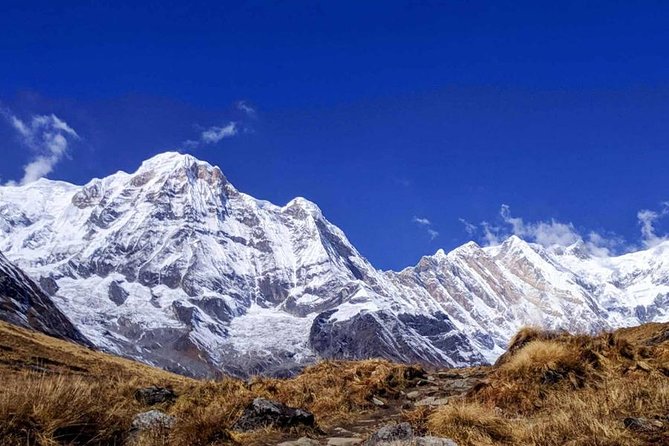
This is a private trekking format with an experienced, English-speaking, government-licensed guide and porter service. That’s not fluff. It means someone is:
- tracking your daily plan
- managing pacing
- handling the hard-to-notice details like where you sleep and how your days connect
Porters at this ratio (2 trekkers to 1 porter) help a lot. You’ll still carry your essentials, but the heavy load is shared. That matters for footwork over long days and for reducing “I’m done” fatigue that can ruin your last days.
On safety: altitude is part of the deal. This itinerary builds in gradual progress and uses day-to-day structure to help you adjust. Still, if you have any history of breathing issues or you’re prone to altitude sickness, you should talk to your doctor before booking. And even if you feel fine at lower elevations, respect the climb on Day 6 and the long descent later.
Who Should Book This 11-Day Annapurna Base Camp Trek?
This one fits you if:
- You want a guided trek where transfers, meals during the hike, and teahouse lodging are handled
- You like the idea of village-to-village trekking with cultural stops tied to Gurung, Magar, and Thakali communities
- You’re capable of moderate trekking and want a clear route with realistic daily segments
- You’d rather spend your attention on the mountains than on logistics
Think twice if:
- You hate altitude days and long walking hours, even on a well-paced itinerary
- You don’t want to manage basic teahouse comfort (limited showers, extra costs for some amenities)
- You’re not planning on travel and rescue insurance, which isn’t included
FAQ
What kind of accommodation do I get during the trek?
You stay in teahouses overnight while trekking. Kathmandu and Pokhara include set accommodation nights with breakfast as part of the package.
Are meals included on the mountain part?
Yes. The trek includes breakfast, lunch, and dinner each day, plus tea/coffee during the trekking days. Meals in Kathmandu and Pokhara beyond what’s listed are not included.
How do flights work in this itinerary?
You fly from Kathmandu to Pokhara (about a 30-minute flight) and later fly back to Kathmandu. Both flights are included, and airport transfers are handled by private vehicle.
Will I have a guide and porter support?
Yes. The tour includes an experienced, English-speaking, government-licensed guide and porter service with a 2 trekkers to 1 porter ratio. Tips for them are not included.
What should I plan to pay for myself?
Budget for the Nepal visa fee, international airfare, travel and rescue insurance, and extras like tips, bottled/boiled water, laundry, shower, and battery recharge.
Is cancellation free?
The experience offers free cancellation. You can cancel up to 24 hours in advance for a full refund.
Should You Book This Annapurna Base Camp Trek?
If you want an Annapurna Base Camp trek that’s built like a smooth trip—pickup, flights, teahouse nights, meals, and a licensed guide—this is a solid choice. The price is easier to justify when you factor in how many moving parts are handled for you, especially flights and meal coverage during trekking.
I’d recommend booking if you’re excited by the idea of walking into the high Himalayas with support, and you’re realistic about the physical effort of reaching 4,130m. I’d reconsider if you want full luxury comfort or if you’d rather avoid altitude and long trail days.
If you want, tell me your experience level (first trek or not) and your travel month, and I’ll help you sanity-check whether this exact pacing and altitude progression fits you well.
More Trekking Out of Kathmandu
More Tour Reviews in Kathmandu
Just Reviewed in Kathmandu
- Mountain Bike Tour
★ 5.0 · 3 reviews - Annapurna Panaroma
★ 5.0 · 3 reviews - Mount Everest Scenic Flight 50 Minutes
★ 5.0 · 3 reviews - Kathmandu : Swambhunath & Durbar Square Guided Half Day Tour
★ 3.3 · 3 reviews - Chandragiri Cable Car & Monkey Temple Tour – Private/Group
★ 5.0 · 3 reviews - Kathmandu: Shivapuri National Park Hiking Day Trip
★ 3.3 · 3 reviews
Annapurna Base Camp Treks, compared.
 ★ 5.0Annapurna base camp trek 5 DaysFrom $699252 reviews
 ★ 5.014-Day Private Annapurna Base Camp TrekFrom $1,090180 reviews
 ★ 5.0Annapurna Base Camp TrekkingFrom $1,779116 reviews
 ★ 5.0Annapurna Base Camp TrekFrom $935111 reviews
★ 5.0Annapurna Base Camp TrekFrom $1,350107 reviews
★ 5.0Annapurna Base Camp TrekFrom $935111 reviews
★ 5.0Annapurna Base Camp TrekFrom $1,350107 reviews
 ★ 5.0Kathmandu to Annapurna Base Camp (ABC) 5-Day TrekFrom $99102 reviews
 ★ 5.0Annapurna Base Camp Trek 12 DaysFrom $80085 reviews
Annapurna Base Camp TrekFrom $78581 reviews
★ 5.0Annapurna Base Camp Trek 12 DaysFrom $80085 reviews
Annapurna Base Camp TrekFrom $78581 reviews
Browse the lists this tour appears in