
Review · ANNAPURNA BASE CAMP TREKS
Annapurna Base Camp Trek
The Himalayas get real fast here. This 13-day Annapurna Base Camp trek takes you from Kathmandu to Pokhara, up through the Annapurna Sanctuary, and finally to Annapurna Base Camp at 4,130 m for big-mountain views.
I like two things a lot: the route is paced for real walking (with gradual climbs and frequent village stops), and the support is built in. You get a licensed English-speaking trekking guide plus a porter setup of 1 porter for every two clients, which matters when you’re carrying day gear and not your entire life.
One consideration: this is still hard altitude hiking. Expect steep sections and lots of stairs, and plan to pack light because your legs do the work, not the porter.
In This Review
- Key things that make this trek work well
- Ace the Himalaya logistics: what you’re really paying for
- Kathmandu start: an easy first day before the climb
- Pokhara lakeside: a calmer base camp for a big trek
- Nayapul to Tikhedhunga: the first lesson is patience
- Ghorepani and the rhododendron climb: your first real altitude day
- Poon Hill sunrise: early steps, big payoff
- Chhomrong and Dovan: steep down, steady up
- Into the Annapurna Sanctuary: Machapuchare to Annapurna Base Camp
- Day 9 descent to Bamboo: rest your body, keep your head clear
- Jhinu Danda hot springs and the walk back to real comfort
- Kathmandu return and a farewell night
- Price and logistics: why $1,350 can make sense
- What I’d pack and practice before you go
- Should you book this trek with Ace the Himalaya?
- FAQ
- How long is the Annapurna Base Camp trek on this tour?
- What’s the highest altitude you reach?
- Is airport pickup and drop-off included?
- Do I get a guide and porter support?
- What kind of lodging is included during the trek?
- Are trekking permits included?
- Does the price include meals?
- Does the tour include a hot springs stop?
- How many people are in a group?
- What if weather is poor?
Key things that make this trek work well
- English-speaking guide + porter ratio keeps you moving with less stress
- Poon Hill sunrise includes an early hike and a hot breakfast stop
- Annapurna Sanctuary route brings you to Annapurna Base Camp after Machapuchare Base Camp
- Guesthouse/lodge lodging in twin-share and dorm-style rooms keeps it simple
- Small group size (max 15) makes the trek feel more personal
More trails out of Kathmandu, boots ready
- Everest Base Camp Trek – 14 Days★ 5.0 · 1,499 reviews
- Everest Base Camp Trek★ 5.0 · 842 reviews
- Everest Base Camp Trekking★ 5.0 · 485 reviews
- Nagarkot Sunrise View and Day Hiking from Kathmandu★ 5.0 · 471 reviews
Ace the Himalaya logistics: what you’re really paying for
For many people, the “value” in Annapurna isn’t just the scenery. It’s the fact that you don’t have to choreograph transport, permits, and daily meals while also learning how to walk uphill at altitude.
This tour is run as a full service package. You get airport transfers in Kathmandu, a tourist bus between Kathmandu and Pokhara, and a private vehicle between Pokhara and Nayapul. You also get permits for trekking, plus guesthouse accommodation for the bulk of the trek nights.
On the people side, you’re not left guessing. You travel with a licensed English-speaking guide, and you share porter help at a set rate: 1 porter for every two clients. In the field, the trekking team is the part you’ll feel most, day after day. In past journeys with Ace the Himalaya, the names that show up again and again include guides like Raj, Raj Kumar, Ramesh Karki, Maddy, Ganesh, Shyam, and others, with porter teams including people like Prakash, Bhagwan, Tenzing, Shantiraj, Lumbu, Ram Prasad, and Tika Ram.
Also, I appreciate the small “extras” that reduce friction. You’re given an Ace the Himalaya duffel/kit bag and a sun hat for the trek, plus a mobile ticket. These sound minor until you’re standing at a trail stop realizing you forgot something useful.
Kathmandu start: an easy first day before the climb
Day 1 is about landing and getting organized. After you arrive at Tribhuvan International Airport, you’re met by an airport representative holding an Ace the Himalaya signboard and transferred to your Kathmandu hotel in a private tourist vehicle.
Either Day 1 or Day 2, you also attend a pre-trip meeting at the operator’s office. Plan on bringing your passport, three copies of passport-size photos, and a readable copy of your travel insurance policy. You’ll settle any remaining balance (if needed) and sign the required trip paperwork plus a non-liability disclaimer. This is worth doing carefully; it’s the behind-the-scenes step that keeps everything smooth when the trek starts.
Why I like this setup: it turns “I just arrived in Nepal” into “I have the plan and the team.” You’ll meet your trek leader/guide before you ever hit the trail.
Pokhara lakeside: a calmer base camp for a big trek
On Day 2, you leave early. The staff pick you up from your Kathmandu hotel at 6:30 am, and you head to the bus station for the trip to Pokhara (around 7:30 am departure). Pokhara is smaller and less intense than Kathmandu, which matters because you’re going from city energy to walking energy fast.
Pokhara sits by Phewa Lake, and the view corridor matters on this trek. From here, you can look north toward Annapurna and Machapuchare, and west/east toward other major ranges. Even if clouds come and go, you’ll feel the mountains close.
That’s the practical benefit: Pokhara helps you reset your rhythm. You’ll be going from tea houses and traffic to steady steps and long valleys.
Nayapul to Tikhedhunga: the first lesson is patience
Day 3 begins with a drive from Pokhara to Nayapul. Then it’s a short walk along the Modi Khola banks to Birethanti (1,015 m), where you can find shops and teahouses. From there the trail climbs steadily toward Hille (1,495 m), and onward to Tikhedhunga at 1,570 m.
This day is relatively short and easy, and that’s not a throwaway detail. The first climb teaches your body how the trek pacing feels: slow uphill effort, frequent breaks, and learning what “steady” means at altitude.
If you’re someone who likes to go fast, you’ll need to resist that instinct early. The whole trek works better when your ego stays quiet and your breathing stays controlled.
Ghorepani and the rhododendron climb: your first real altitude day
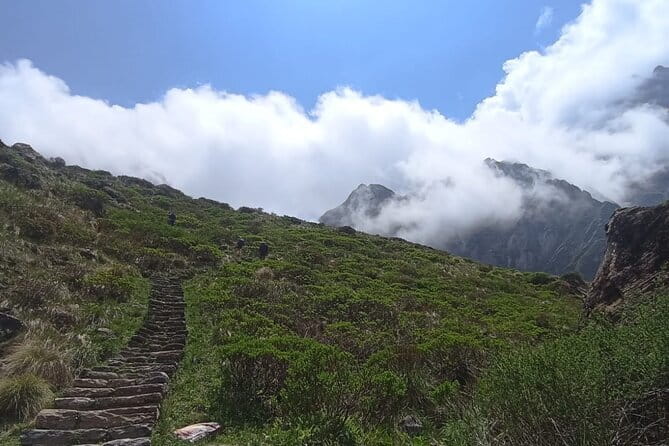
Day 4 pushes you toward Ulleri (2,070 m) and then through oak and rhododendron forests. You pass Banthanti (2,250 m) and Nangethanti (2,460 m), then continue to Ghorepani at 2,840 m.
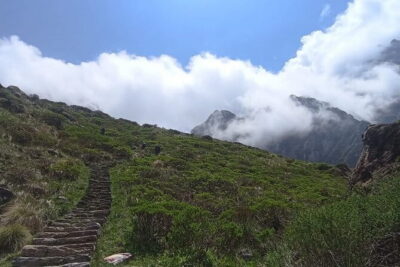
This is where the hike starts to feel like an Annapurna trek: you’re walking through forest trails that change with elevation, and you’re gaining height in a way that feels both scenic and work-heavy. The forest section also means you get more shade than on open ridges, which can help if the weather swings between warm and cool.
A small drawback: forest paths can still be uneven underfoot. If you’re not used to mountain trekking, give your footing priority on the steeper portions.
Poon Hill sunrise: early steps, big payoff
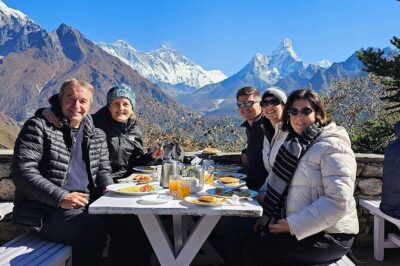
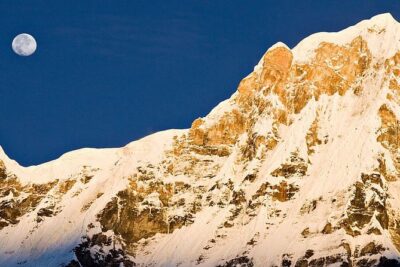
Day 5 starts with an early hike to Poon Hill at 3,210 m. The whole point is the sunrise view. You’ll climb for about an hour, spend roughly an hour soaking in the early-morning mountain panorama, then return for hot breakfast at Ghorepani.
After that, you move on ridges through pine and rhododendron forests toward Deurali (2,960 m). From there you descend toward Banthanti and turn off to Tadapani.
Here’s why this day stands out in real-life terms: sunrise hikes are usually one of two experiences—either magical, or miserable because you underprepared. This itinerary puts the most intense part (early climb) in the morning when you’re fresher, then rewards you with breakfast and continued walking at a manageable rhythm.
If you want the best experience, pack for early cold and bring a headlamp or flashlight if you’re prone to getting stuck without one. The trek starts early enough that daylight is not guaranteed when you set out.
Chhomrong and Dovan: steep down, steady up
Day 6 moves you from Tadapani down through rhododendron forests. The day starts with a steep downhill, then eases into a walk that gets you to Chhomrong at 2,140 m.
Chhomrong is a key village stop. It’s common to feel the “now we’re in it” moment here—because the scale of the terrain and the density of mountain villages become more obvious.
Day 7 continues the rhythm. You drop to the Chomrong Khola and then climb again to Khuldighar (2,380 m), an area where an ACAP check post used to be. After that, the trail runs steeply down a rock bank, then levels out through bamboo thickets. You reach the Himalayan Hotel.
This combination—steep down followed by a different kind of effort—is tiring in a specific way. Your legs work overtime both when you descend (to control speed) and when you climb again. It’s a good day to stay focused on short breaks rather than forcing long ones.
Into the Annapurna Sanctuary: Machapuchare to Annapurna Base Camp
Day 8 is the big emotional shift. The route climbs past Hinko Cave and continues toward Deurali and Machapuchare Base Camp. Here’s a useful detail: Machapuchare Base Camp isn’t treated like a standard mountaineering staging area because climbing Mt Machapuchare is not permitted. That restriction changes the feeling of the place; it’s more about views and the sanctuary setting than about summit logistics.
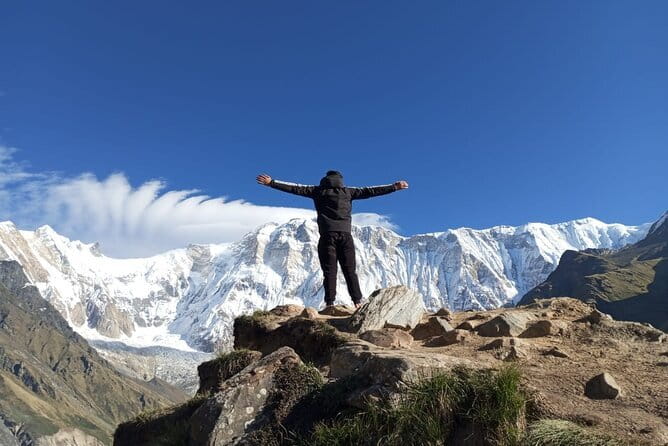
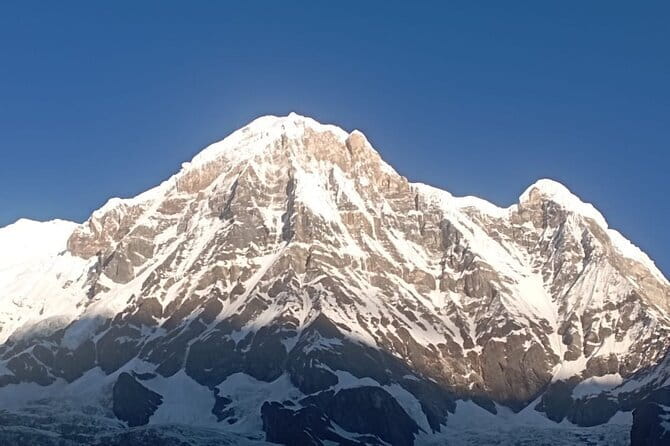
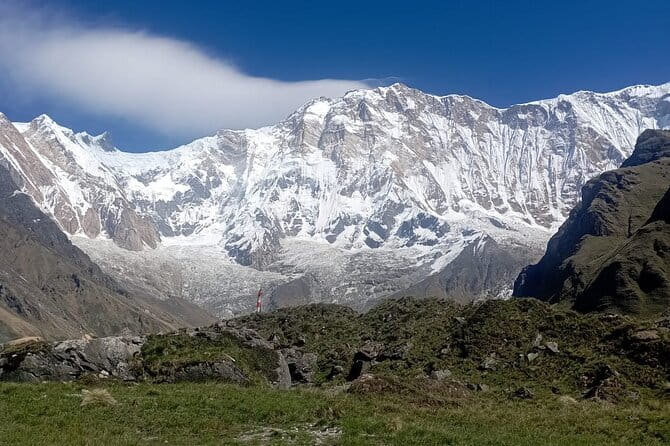
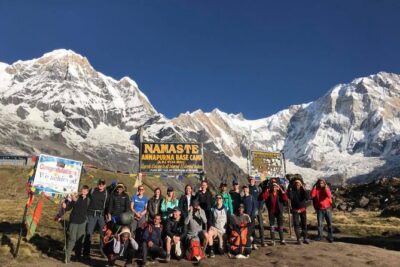
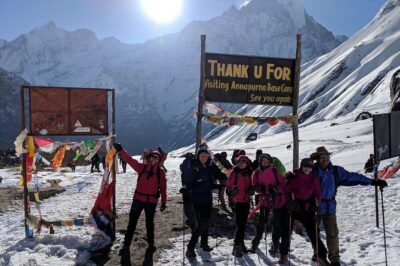
After about two hours from Machapuchare Base Camp, you reach Annapurna Base Camp at 4,130 m. This is the moment you came for: unobstructed views of peaks surrounding the sanctuary.
Even if visibility is mixed, you’ll still get something meaningful. The experience at ABC is about the scale of steep walls, glaciers you can sense more than fully see, and the feeling of being inside a giant bowl of mountains. This is the trek’s peak day, and it’s also when staying calm and hydrated matters most.
Day 9 descent to Bamboo: rest your body, keep your head clear
Day 9 follows the trail back down. You drop by about 1,700 m to the bank of the Modi Khola, reaching Bamboo (2,345 m) with a few teahouses/lodges.
That “drop” is not a free win. Descending at altitude can be hard on knees and ankles, and you may feel it more than you expect. Your best move is simple: take controlled steps and keep a steady tempo.
The upside is that Bamboo is a lower-altitude landing spot. It’s a good place to reset before the next push.
Jhinu Danda hot springs and the walk back to real comfort
Day 10 continues the descent pattern. You follow the same trail until Chomrong, then pass Khuldighar. There’s an experimental sheep farm along the way, followed by rhododendron and bamboo fields. From Chomrong, you descend steeply to Jhinu Danda.
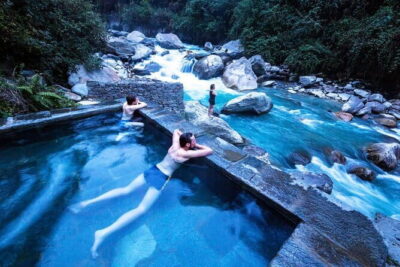
Jhinu Danda is famous here for one reason: natural hot springs. You’ll be able to bathe in the hot water, which feels like a life upgrade after days of cold evenings at higher altitudes.
Day 11 is a recovery day with a strong payoff. From Jhinu you walk on the right side of the Modi Khola for about 4.5 hours to Birethanti, then continue to Nayapul. After an hour drive, you arrive in Pokhara, check into your hotel, and head to Fewa Lake for a boating trip to Barahi Temple.
This is one of the most satisfying transitions in the whole trek. You go from stone stairs and thin air to lake reflections and an easy pace, and your body feels the difference.
Kathmandu return and a farewell night
Day 12 starts with driving back to Kathmandu in the morning. In the evening, you’ll have a farewell dinner in a traditional Nepalese restaurant with cultural performances.
Day 13 is straightforward: airport drop-off at Tribhuvan International Airport for your departure flight.
If you like your “last day” low-stress, this finish is good. You don’t end the trek with more trail time, and you get closure before you fly.
Price and logistics: why $1,350 can make sense
The listed price is $1,350 per person for about 13 days. On paper, trekking can look expensive if you focus only on nights in guesthouses. But value is really about what gets handled for you.
This package covers:
- airport transfers and Kathmandu–Pokhara tourist bus
- transport from Pokhara to Nayapul
- trekking permits and all taxes/VAT/service charges
- licensed English-speaking trekking guide
- porter support (1 per two clients)
- most meals during the trek period (breakfast included daily during the trek portion, with lunch and dinner counts specified)
- lodging: three-star hotel in Kathmandu (2 nights) and Pokhara (2 nights), plus guesthouse rooms on the trek
- trekking basics like the duffel/kit bag and sun hat
Not included items are also clear: travel insurance (especially for emergency high-altitude evacuation), international airfare, Nepal entry visa, alcoholic drinks, and personal trekking equipment.
So who is this price fair for? If you want someone to handle permits, routes, and daily logistics while you focus on walking, it often pencils out well. If you’re the type who already knows Nepal logistics cold and can self-organize a guide/porter/permits and transport, you might pay less going DIY. But most people don’t want that headache when altitude hiking is already complicated enough.
What I’d pack and practice before you go
The trek is doable with moderate fitness, but you should train for the specific effort. The trek includes steep days, long walks, and a lot of stairs.
Here are two practical tips that consistently make a difference:
- Do plenty of stairs before your trip. The trail is stair-heavy, and your body needs practice with repeated downhill control.
- Pack less than you think. Porters carry the load, but you’re still walking and living out of what you bring. Aim for a lean kit so you don’t spend the trek feeling heavy or frustrated.
For gear, the tour doesn’t list personal equipment included, so you’ll need to bring your own essentials like layers, rain protection, and footwear that grips on rocky steps. Even if it doesn’t specify brands, assume conditions can swing fast at altitude.
Finally, keep expectations grounded. Guesthouse lodging means simple rooms and basic comfort. That’s normal here, and it’s part of how you stay flexible day to day.
Should you book this trek with Ace the Himalaya?
Book it if you want a well-run package that takes logistics off your plate, pairs you with an English-speaking guide, and supports you with porters at a defined ratio. This is a good fit for first-time Nepal trekkers who like structure but still want authentic mountain living in tea houses along the trail.
Rethink it if you hate early mornings (Pokhara bus timing and Poon Hill sunrise are real) or if you’re not prepared for steep days and altitude fatigue. Also think twice if you don’t have travel insurance that covers emergency high-altitude evacuation—this trek goes to 4,130 m at Annapurna Base Camp.
If you’re ready for steps, views, and the slow rhythm of the Annapurna region, this is a solid way to experience it without turning your vacation into a logistics project.
FAQ
How long is the Annapurna Base Camp trek on this tour?
It runs for about 13 days (approx.), including time in Kathmandu and Pokhara and the trek to Annapurna Base Camp.
What’s the highest altitude you reach?
The trek’s main goal is Annapurna Base Camp at 4,130 m (13,549 ft).
Is airport pickup and drop-off included?
Yes. You get airport transfers in Kathmandu, with a representative meeting you at Tribhuvan International Airport and dropping you off at the end.
Do I get a guide and porter support?
Yes. You travel with a licensed English-speaking trekking guide, plus a porter setup of 1 porter for every two clients.
What kind of lodging is included during the trek?
You stay in guesthouses with twin-share and dormitory rooms for the trek nights, plus three-star hotel rooms in Kathmandu and Pokhara before and after the trek.
Are trekking permits included?
Yes. Permits for trekking are included.
Does the price include meals?
Yes for the trek period: breakfast is included 12 times, and lunch and dinner are included 9 times each, as specified in the tour details. Meals in Kathmandu and Pokhara are not included.
Does the tour include a hot springs stop?
Yes. You stop at Jhinu Danda, where you can bathe in natural hot springs.
How many people are in a group?
The maximum group size is 15 travelers.
What if weather is poor?
This experience requires good weather. If it’s canceled due to poor weather, you’ll be offered a different date or a full refund.
More Trekking Out of Kathmandu
More Tour Reviews in Kathmandu
Just Reviewed in Kathmandu
- Mountain Bike Tour
★ 5.0 · 3 reviews - Annapurna Panaroma
★ 5.0 · 3 reviews - Mount Everest Scenic Flight 50 Minutes
★ 5.0 · 3 reviews - Kathmandu : Swambhunath & Durbar Square Guided Half Day Tour
★ 3.3 · 3 reviews - Chandragiri Cable Car & Monkey Temple Tour – Private/Group
★ 5.0 · 3 reviews - Kathmandu: Shivapuri National Park Hiking Day Trip
★ 3.3 · 3 reviews
Annapurna Base Camp Treks, compared.
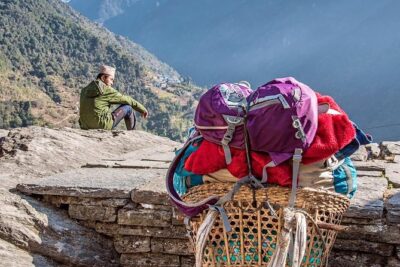 ★ 5.0Annapurna base camp trek 5 DaysFrom $699252 reviews
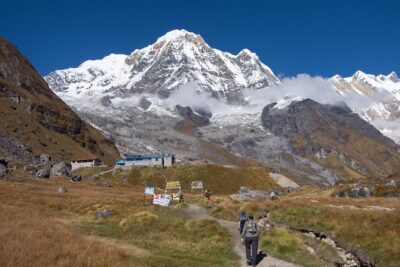 ★ 5.014-Day Private Annapurna Base Camp TrekFrom $1,090180 reviews
 ★ 5.0Annapurna Base Camp TrekkingFrom $1,779116 reviews
 ★ 5.0Annapurna Base Camp TrekFrom $935111 reviews
 ★ 5.0Kathmandu to Annapurna Base Camp (ABC) 5-Day TrekFrom $99102 reviews
 ★ 5.0Annapurna Base Camp Trek- 11 DaysFrom $99990 reviews
 ★ 5.0Annapurna Base Camp Trek 12 DaysFrom $80085 reviews
Annapurna Base Camp TrekFrom $78581 reviews
★ 5.0Annapurna Base Camp Trek 12 DaysFrom $80085 reviews
Annapurna Base Camp TrekFrom $78581 reviews
Browse the lists this tour appears in