
Review · ANNAPURNA BASE CAMP TREKS
Annapurna base camp trek 5 Days
Short days, big mountain payoffs. That’s the appeal of this Annapurna Base Camp trek: tea house comfort plus an English-speaking guide to handle the practical stuff while you chase the views. I also like that the price rolls in permits, meals on the trek, and even a down jacket and sleeping bag, so you do not have to hunt gear in Kathmandu. One watch-out: there have been cases where the guide did not bring the promised water purification tablets, and people were left scrambling.
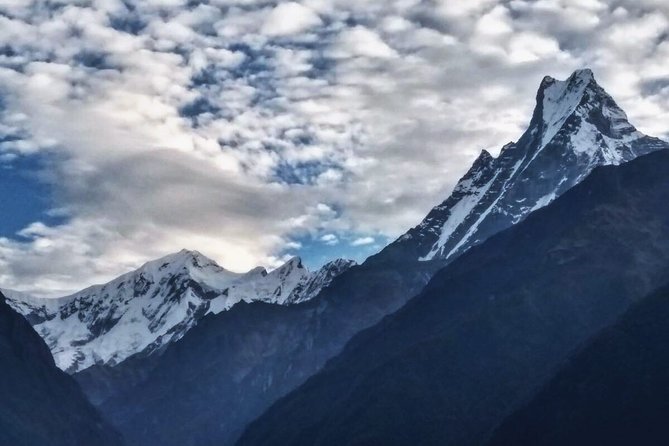
You’ll start with a full transfer day to Pokhara, then move through the Annapurna Range with classic stopovers like Chhomrong and Sinuwa. The scenery goal is clear: tall peaks and that famous Fish Tail look toward Machhapuchare, especially around sunrise.
This is a small group setup with a max size of 12, and the meeting time starts early at 6:45 am. That early start is great for weather and views, but it also means you should be ready to go at a steady pace from the first trekking day.
In This Review
- Key highlights worth your attention
- Kathmandu to Pokhara: how the trek starts before the first step
- The value check: what $699 covers (and what it does not)
- Day-by-day on the Annapurna trail: what each stop really gives you
- Day 2: Pokhara base to Chhomrong area (via jeep and Birethati)
- Day 3: sunrise vibes and moving toward Sinuwa
- Day 4: reaching Annapurna Base Camp on foot
- Day 5: Sinuwa morning light, then down toward Jhinu hot spring area
- Day 6: from Chhomrong down to Jhinu hot spring, then back to Pokhara
- Tea houses and included lodging: comfort level you can plan around
- Gear and packing: the provided items you should double-check
- Water on the trail: one small risk you should manage early
- Guide fit and professionalism: what to look for during the first day
- Who this Annapurna Base Camp trek is best for
- Should you book this 5-day Annapurna Base Camp trek?
- FAQ
- How many days is the Annapurna Base Camp trek?
- What time does the tour start?
- What is included during the trek?
- Are airport transfers and Kathmandu to Pokhara transport included?
- What group size should I expect?
- What fitness level do I need?
Key highlights worth your attention
- Pokhara first, then trail: you ease into the route with a drive and a lakeside day before the hiking starts
- Permits and trekking meals included: you handle the trail, not paperwork
- Gear included: down jacket and sleeping bag take the edge off packing
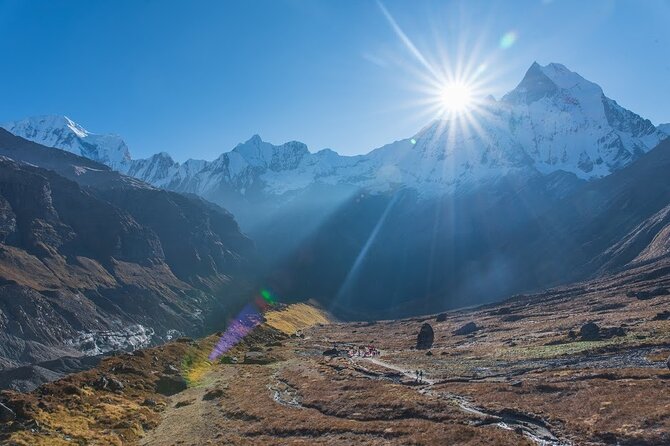
- Machhapuchare sunrise focus: mornings from Sinuwa are built around big-view timing
- Tea house nights: you sleep in lodges with meals along the way
- Small group (max 12): easier pacing and less crowd pressure
More trails out of Kathmandu, boots ready
- Everest Base Camp Trek – 14 Days★ 5.0 · 1,499 reviews
- Everest Base Camp Trek★ 5.0 · 842 reviews
- Everest Base Camp Trekking★ 5.0 · 485 reviews
- Nagarkot Sunrise View and Day Hiking from Kathmandu★ 5.0 · 471 reviews
Kathmandu to Pokhara: how the trek starts before the first step
Your trek begins with a long, scenic transfer from Kathmandu to Pokhara by tourist bus on day 1, routed via the Prithvi highway. It’s about 7 hours, so I treat this day as your mental reset and packing check, not a sightseeing sprint.
Once you arrive in Pokhara, you’ll spend time around the Lakeside area. This matters more than it sounds: you’re building rest, food choices, and calm before your first mountain day.
If you’re choosing this trek for efficiency, you’ll like the organization here. You get airport pick and drop-off, plus ground transport throughout the route, which reduces the number of decisions you need to make in Nepal.
The value check: what $699 covers (and what it does not)
At $699 per person, the real question is not the number on the price tag. It’s what you’re spared from paying for and planning yourself.
Here’s what’s included that usually costs extra when you DIY it:
- Tea house accommodation and meals on trek (breakfast, lunch, dinner listed for the trek days)
- A local English-speaking guide / sherpa
- Trekking permits
- Down jacket and sleeping bag
- All the ground transportation plus airport transfers
- A farewell dinner, plus a certificate of achievement
- A trekking t-shirt (listed as ART’s free t-shirt)
Now the stuff that is not included, and you should budget for:
- Food in Kathmandu and Pokhara (you handle meals on your own there)
- Arrival visa fees
- Tips for guide and staff
- Travel insurance
- Extra accommodation if you end up needing it beyond the planned schedule
There’s also a line item for insurance, equipment, foods, transportation and salary for the guide under included services. The listing does not explain coverage details, so I’d still think of travel insurance as something you personally confirm before you go.
Bottom line: if you want a shorter Annapurna route with fewer moving parts, this price bundles the essentials you’d otherwise juggle.
Day-by-day on the Annapurna trail: what each stop really gives you
This trek is built around a classic short route: it’s not an Everest-style slog. It’s more of a stair-step journey through the Annapurna Range, with forested sections and lodge nights that keep you moving without too much complexity.
Day 2: Pokhara base to Chhomrong area (via jeep and Birethati)
After breakfast, you drive from Pokhara to Siwai by local jeep, with a stop at Birethati along the way. That matters because Birethati is described as an entering point, and it signals you’re transitioning from road Nepal into trek Nepal.
You’ll end the day at Chhomrong Cottage, which is a practical place to sleep after a travel-to-trail shift. This day is a good example of why many people like organized short treks: you spend less time figuring out logistics and more time focusing on what your body can handle.
Before you lock this one in, a few Kathmandu alternatives:
Day 3: sunrise vibes and moving toward Sinuwa
Day 3 starts with an early wake-up feel: tea and a possible sunrise view from your lodge. The route description specifically mentions a view over the White Mountain from Sinuwa hilltop lodge and restaurant (Upper Sinuwa).
Even if clouds roll in, the rhythm is useful. You’ll descend parts of the trail during the day, then reorient around the lodge area at Sinuwa, which sets you up for the big peak views you’re chasing later.
Upper Sinuwa is also a smart location in the overall story of this trek. It’s the kind of stop where you can get your timing right for Machhapuchare and Annapurna views.
Day 4: reaching Annapurna Base Camp on foot
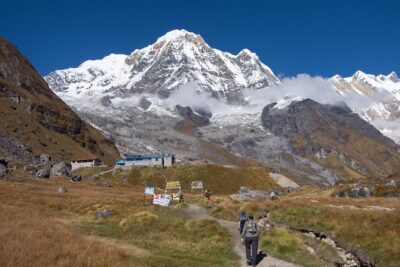
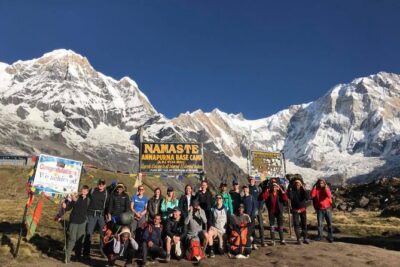
This is the day the whole trek points to. After breakfast, you start trekking toward Annapurna Base Camp, described as tied to the 10th tallest mountain in the world.
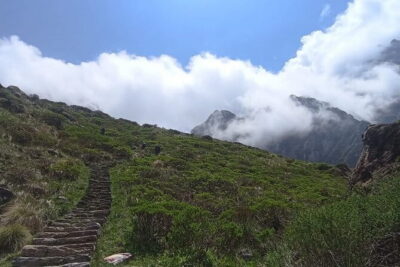
What you should expect on a day like this is a mix of effort and focus. The climbing is real, but it’s staged so you can keep moving steadily. Tea house routes also keep things simple: meals are planned, and you’re not trying to carry everything like a full wilderness expedition.
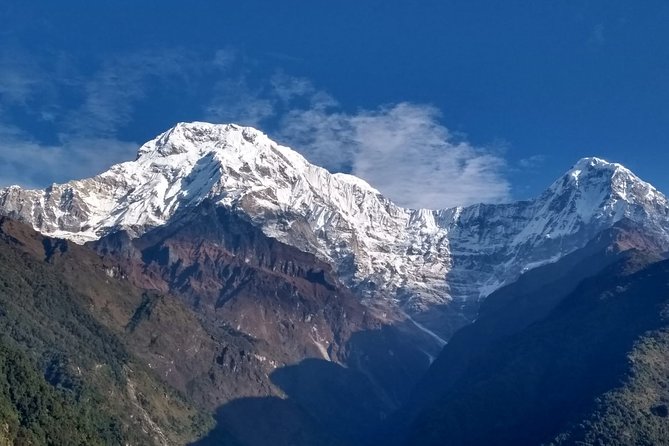
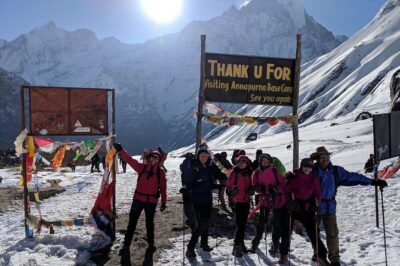
When you reach Base Camp, it’s not just a checkbox. It’s where the Annapurna Range feels close enough to study. You’re surrounded by big names and big ridgelines, with that iconic Fish Tail (Machhapuchare) hanging in the background.
Day 5: Sinuwa morning light, then down toward Jhinu hot spring area
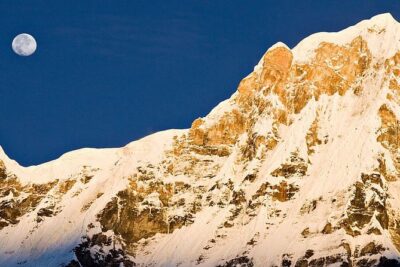
Day 5 leans into sunrise again. The plan includes a short morning walk to explore and catch the view as the sun rises over Machhapuchare and Annapurna towering above.
This morning is also a good place to practice your trek habits: hydrate early, take a few slow photos, and do not rush breakfast. Then you’ll follow the trail onward toward the next feature of the route.
The route guide language also sets you up for a steep descent later on, which is worth respecting. Descents are where sore knees show up first, so keep your steps short.
Day 6: from Chhomrong down to Jhinu hot spring, then back to Pokhara
On the return day, you follow the trail back toward Chhomrong first. From there, the plan describes a steep descent to Jhinu hot spring.
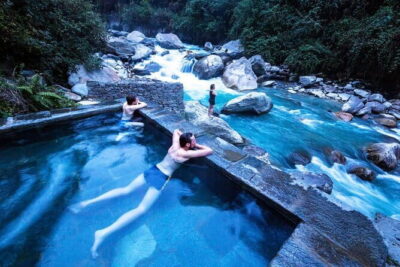
Jhinu hot spring is one of those classic trekking payoffs: after days of walking, a warm soak can feel like a reset button. Then you’ll trek down further toward Siwai, with the description noting about a 2-hour walk from Jinu dada to Siwai.
From Siwai, you take local jeep back to Pokhara. Once you’re in Pokhara, you’ll also have time for Pokhara Museum.
Tea houses and included lodging: comfort level you can plan around
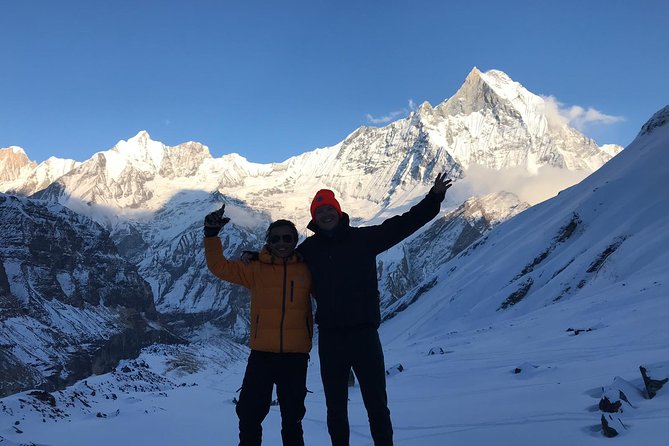
This trek is designed for tea house accommodation and lodge nights. That usually means basic rooms, simple meals, and the kind of hospitality that depends on where you are on the route.
The big win here is that your sleeping bag and down jacket are included. In these elevations, cold can sneak up at night and in the early morning, so having proper insulation makes a real difference in how you recover for the next day.
You should still plan for your own comfort items. Even with a provided sleeping bag and jacket, you’ll want things like a headlamp, dry socks, and a lip balm you trust. Those are not included, and the route involves enough moving that small comforts help.
Also note: the trek includes meals on trek days, but it does not cover Kathmandu and Pokhara meals. That’s normal on organized treks, but it affects your overall food budgeting.
Gear and packing: the provided items you should double-check
Two included items are the easiest to benefit from right away: down jacket and sleeping bag.
Before you leave, I’d verify two practical things:
- Ask whether your provided jacket is actually sized for you
- Confirm you’ll get a sleeping bag you can use comfortably at night temperatures on this route
Even when gear is included, it can still come down to fit and quality. A jacket that is too big means you lose heat; a sleeping bag that is too small means you’ll sleep uncomfortably and wake up tired.
You’ll also get a hiking t-shirt, which is a small touch, but it’s nice to have something trek-specific to wear during the main days.
Water on the trail: one small risk you should manage early
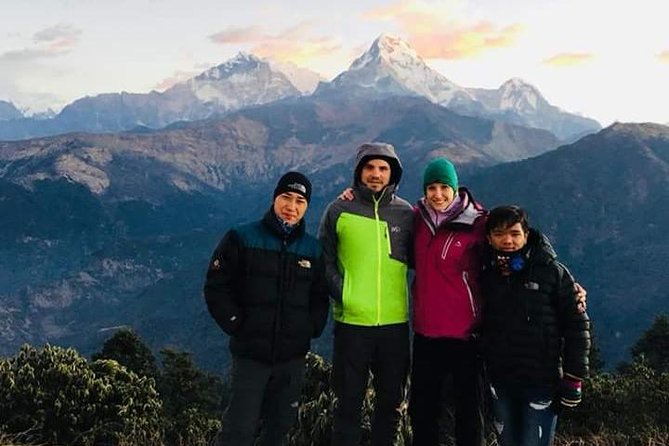
Here’s the most practical piece of advice I can give: before the trek starts in earnest, ask your guide about water purification tablets and confirm what’s in your kit. kathmandutrips.com covers Kathmandu as well.
The trek description promises an included water purification setup, and there have been real instances of the guide forgetting tablets and then trying to recover the situation on the spot. That’s exactly the kind of “small logistics” problem that turns into a stressful mid-trail expense.
So do this early:
- Ask, in plain terms, whether tablets are included and handed out
- Check that you have enough for your group and your pace
- If tablets are unclear, plan to bring your own backup purification method
Even if everything goes smoothly, having a backup plan makes you feel in control. In the mountains, control equals calm.
Guide fit and professionalism: what to look for during the first day
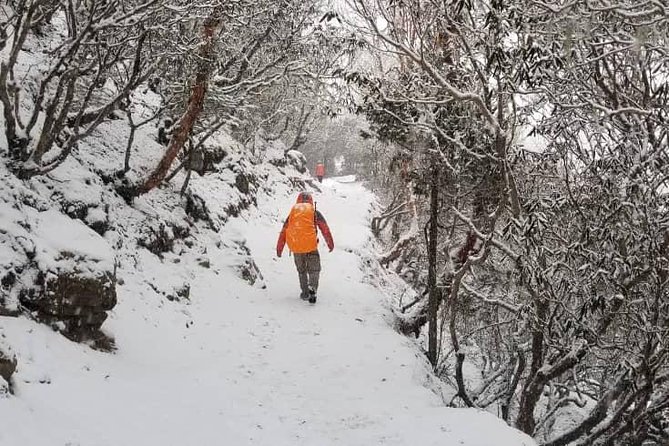
This trek is sold with an English-speaking guide / sherpa who takes care of arrangements. That’s a good setup because the route includes road days, lodge nights, permit handling, and multiple transfers by jeep.
But professionalism matters. In at least some past cases tied to this style of tour, guides were not fully prepared with the trek plan when they began working the group. That led to confusion and delays, plus the kind of water-purification scramble mentioned earlier.
What you should do as a smart customer:
- Use the first day to confirm the day-by-day schedule and where you sleep each night
- Ask where and when breakfast happens and what time you’ll start trekking
- Get clarity on what you need to carry versus what’s provided
A competent guide will answer quickly and clearly. If you get vague answers, slow down and get your confirmations in writing on your phone.
Who this Annapurna Base Camp trek is best for
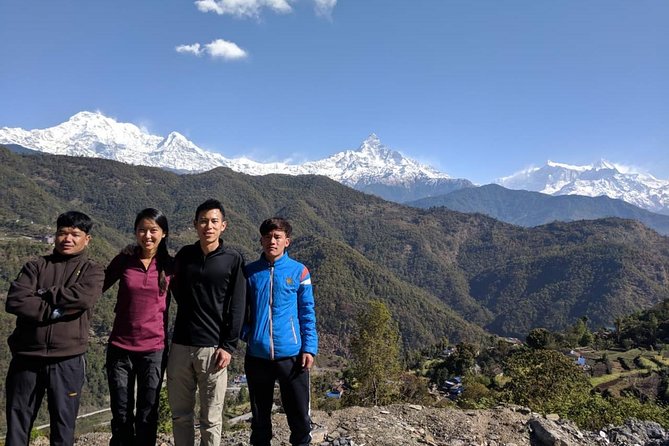
This is best for you if you want:
- A short, classic Annapurna experience instead of a long multi-week grind
- Moderate physical fitness and a trek that still feels like a real mountain journey
- A small group max size of 12, which keeps the experience more manageable
You’ll also appreciate the structure if you don’t want to plan permits, lodging logistics, or transport. The tour handles permits and trekking lodges, which is a big relief when you’re only in Nepal for a limited window.
You might want to reconsider if you hate uncertainty around water systems. If you’re very sensitive to disruptions and like total predictability, plan with your own purification backup and double-check early that your guide has the promised items.
Should you book this 5-day Annapurna Base Camp trek?
I’d book it if you want good value on an organized short route that includes the main mountain essentials: permits, guide, tea house lodging, meals on trek, and key gear. The Machhapuchare and Annapurna sunrise focus around Sinuwa is a strong reason to choose this route, especially if you like timing your day for the best views.
I’d also book it with one simple condition: come prepared to verify water purification tablets on day 1 and keep a backup method in your own pack. That one step turns a potential stress point into a non-issue.
If your goal is a rewarding Annapurna snapshot with less planning friction and more time on the trail, this is a solid match.
FAQ
How many days is the Annapurna Base Camp trek?
The trek is listed as 5 days in the title, with a total duration of about 6 days. The schedule includes travel to Pokhara first, then multiple trekking days, and a return day.
What time does the tour start?
The tour start time is listed as 6:45 am.
What is included during the trek?
Tea house accommodation and meals on trek are included, along with a guide, permits, and trekking items like down jacket and sleeping bag. Ground transportation is also included.
Are airport transfers and Kathmandu to Pokhara transport included?
Yes. Airport pick and drop off are included, and the tour includes a tourist bus to Pokhara plus other ground transport during the trek.
What group size should I expect?
This activity has a maximum group size of 12 travelers.
What fitness level do I need?
The tour notes a moderate physical fitness level. It is designed for people who can handle daily trekking with lodge stays.
More 5-Day Experiences in Kathmandu
More Trekking Out of Kathmandu
More Tour Reviews in Kathmandu
Just Reviewed in Kathmandu
- Mountain Bike Tour
★ 5.0 · 3 reviews - Annapurna Panaroma
★ 5.0 · 3 reviews - Mount Everest Scenic Flight 50 Minutes
★ 5.0 · 3 reviews - Kathmandu : Swambhunath & Durbar Square Guided Half Day Tour
★ 3.3 · 3 reviews - Chandragiri Cable Car & Monkey Temple Tour – Private/Group
★ 5.0 · 3 reviews - Kathmandu: Shivapuri National Park Hiking Day Trip
★ 3.3 · 3 reviews
Annapurna Base Camp Treks, compared.
 ★ 5.014-Day Private Annapurna Base Camp TrekFrom $1,090180 reviews
 ★ 5.0Annapurna Base Camp TrekkingFrom $1,779116 reviews
 ★ 5.0Annapurna Base Camp TrekFrom $935111 reviews
★ 5.0Annapurna Base Camp TrekFrom $1,350107 reviews
★ 5.0Annapurna Base Camp TrekFrom $935111 reviews
★ 5.0Annapurna Base Camp TrekFrom $1,350107 reviews
 ★ 5.0Kathmandu to Annapurna Base Camp (ABC) 5-Day TrekFrom $99102 reviews
 ★ 5.0Annapurna Base Camp Trek- 11 DaysFrom $99990 reviews
 ★ 5.0Annapurna Base Camp Trek 12 DaysFrom $80085 reviews
Annapurna Base Camp TrekFrom $78581 reviews
★ 5.0Annapurna Base Camp Trek 12 DaysFrom $80085 reviews
Annapurna Base Camp TrekFrom $78581 reviews
Browse the lists this tour appears in