
Review · ANNAPURNA BASE CAMP TREKS
Kathmandu to Annapurna Base Camp (ABC) 5-Day Trek
A short trek that still feels epic. This is one of the fastest ways to reach Annapurna Base Camp (4,130 m / 13,550 ft) in just five days, using a flight to cut most of the long-distance travel. You hike through the Annapurna region’s classic mix of tea houses, rhododendron forests, and high-mountain paths, then get the big finale: sunrise at ABC plus a soak at Jhinu Hot Spring.
What I like most is the smart pacing for a short trip, plus the human factor—this route is guided by licensed pros who focus on keeping things organized and safe (names you might see credited include Oham Raj Tamang, Nilakantha, Om Raj, Smile Ghale, and more). A second standout is the variety you get without adding extra days: flight to Pokhara, trekking via Chomrong/Jhinu Danda, ABC arrival via Machhapuchhre Base Camp, then the hot spring on the way out.
One thing to consider: five days is tight for altitude. If you’re prone to feeling winded or have limited acclimatization experience, you’ll want to take the first days easy and be honest with your guide about how you’re feeling.
In This Review
- Key Highlights You’ll Actually Feel
- Entering the Annapurna Sanctuary in 5 Days
- Kathmandu to Pokhara: The 25-Minute Jump That Saves Your Trip
- Simrung to Sinuwa: Rhododendron Trails and a First Taste of Altitude
- Sinuwa to Deurali: Tea Houses, Waterfalls, and Dense Forest Steps
- Deurali Toward ABC via Machhapuchhre Base Camp Valley
- Sunrise at ABC, Then the Trek Down Back to Sinuwa
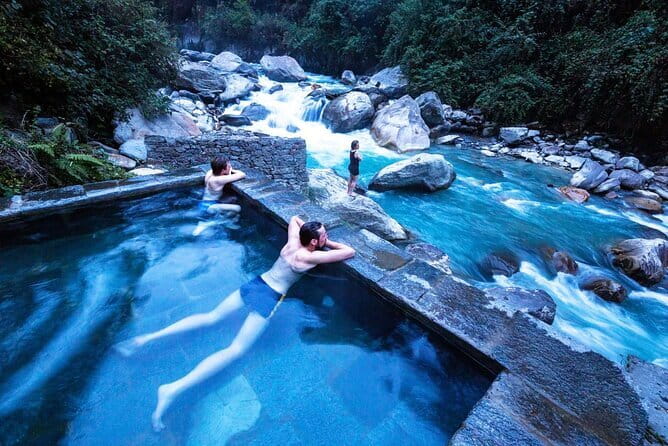
- Jhinu Danda Hot Spring: The Reward You Can Actually Relax In
- Price and Logistics: Where the $99 Value Comes From
- Gear, Fitness, and the Real Meaning of Moderate
- What the Guides Seem to Get Right
- Should You Book This 5-Day ABC Trek?
- FAQ
- How long is the Kathmandu to Annapurna Base Camp trek?
- What’s included in the price?
- Are meals included?
- Do I get a porter?
- Where do I start in Kathmandu?
- What about the hot springs at Jhinu Danda?
- What kind of fitness level do I need?
- What happens if weather is bad?
Key Highlights You’ll Actually Feel
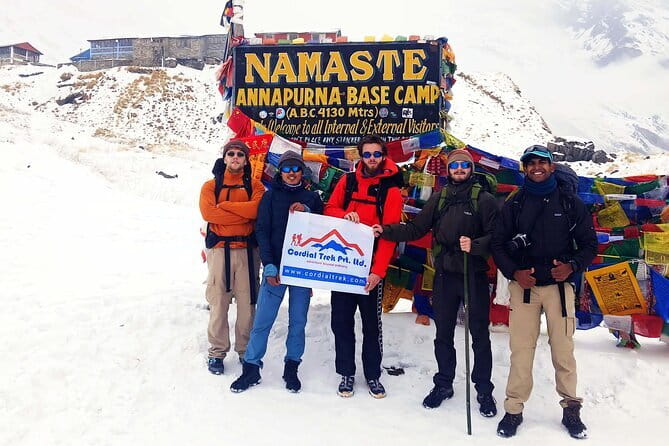
- Fast track to ABC: a short timeline with the big payoff of Annapurna Base Camp
- Flight shortcut: Kathmandu to Pokhara is a quick 25-minute hop
- Guesthouse nights included: 4 nights staying in mountain lodges
- ABC-to-Jhinu storyline: sunrise, then a descent that ends with hot springs
- Licensed guide support: English and Hindi in-person guidance
- Safety-first vibe for solo hikers: strong emphasis on care and check-ins
More trails out of Kathmandu, boots ready
- Everest Base Camp Trek – 14 Days★ 5.0 · 1,499 reviews
- Everest Base Camp Trek★ 5.0 · 842 reviews
- Everest Base Camp Trekking★ 5.0 · 485 reviews
- Nagarkot Sunrise View and Day Hiking from Kathmandu★ 5.0 · 471 reviews
Entering the Annapurna Sanctuary in 5 Days
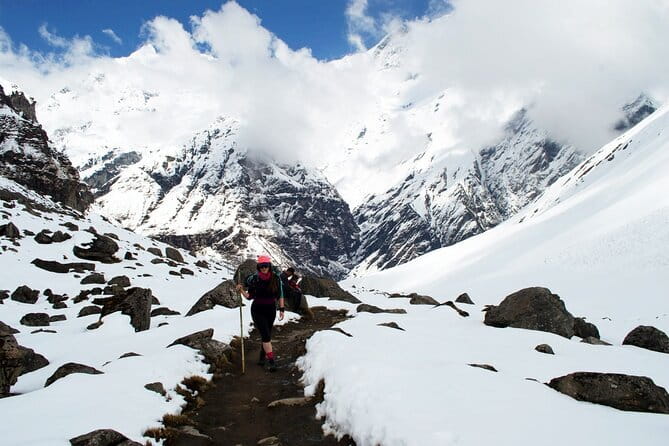
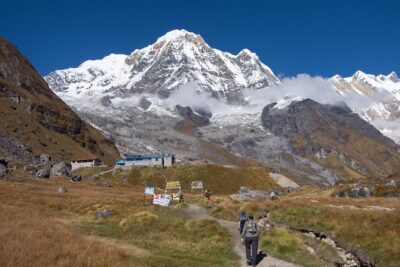
Annapurna Base Camp sits inside the Annapurna Sanctuary, a high glacial basin about 40 km north of Pokhara. It’s also the kind of place where the mountains feel close—so close you stop thinking in numbers and start thinking in silhouettes. Annapurna I rises to 8,091 m, but on this trek you reach the much more approachable “gateway” at 4,130 m, which still delivers real high-country drama.
The reason this trip works for many people is simple: it avoids the slow parts. You don’t spend your whole vacation just getting to the trekking region. Instead, you get dropped into the Annapurna rhythm fast—hike, rest, hike, rest—with the lodge system keeping you fed and off the ground at night.
The altitude reality: five days means less time to acclimatize than longer ABC treks. That doesn’t automatically mean it’s unsafe, but it does mean you’ll want to treat the first day and second day like a warm-up, not a speedrun.
Kathmandu to Pokhara: The 25-Minute Jump That Saves Your Trip
Day 1 starts with pickup from your hotel or apartment in Kathmandu, then an escort to Tribhuvan International Airport’s domestic terminal. From there, you fly to Pokhara in about 25 minutes.
This flight is a big deal for value. It’s the difference between “vacation spent in transit” and “vacation spent on the trail.” Pokhara also acts like a staging zone where the trek really begins—once you’re there, you’re in the Annapurna orbit.
When you land, you don’t waste time. You’re driven toward the start area (Simrung) to begin trekking the same day. Expect a full day, not a gentle arrival.
Simrung to Sinuwa: Rhododendron Trails and a First Taste of Altitude
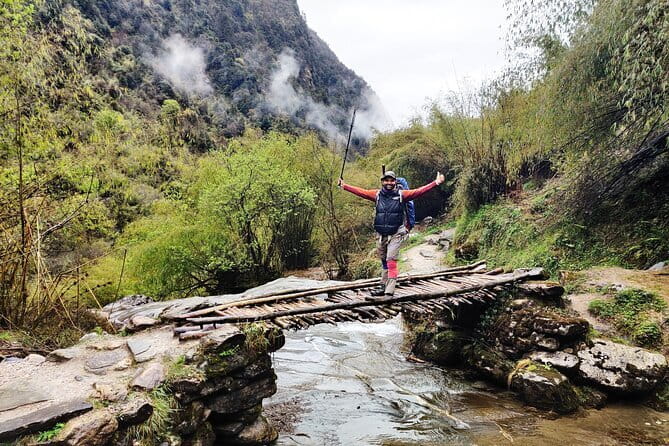
On Day 1, you trek roughly 5–6 hours from the Simrung area toward Sinuwa, passing through the Jhinu Danda and Chomrong route. For a short trek, this is a smart way to get your legs used to the climb without jumping straight into the steepest sections.
Sinuwa is where you settle for the night, and it’s a good “first real mountain stop.” You’ll likely feel the altitude more than you expect, especially if you’re coming in from Kathmandu’s lower elevation. Your best move is pacing: short steps, steady breathing, and plenty of water at lodge breaks.
What makes this leg satisfying is the variety. You’re not just walking uphill; you’re moving through the rhythm of the region—small trail turns, lodge stops, and those signature Annapurna forest sections that feel cooler and greener than you’d guess at altitude.
Sinuwa to Deurali: Tea Houses, Waterfalls, and Dense Forest Steps
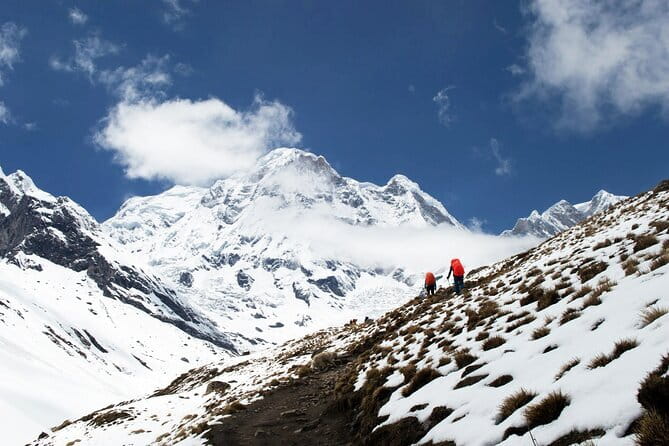
Day 2 is the hike from Sinuwa to Deurali, about 6–7 hours. The route goes via Himalaya, a small settlement with tea houses, and it’s described as a dense forest day with lots of waterfall moments.
This is the day where the trek turns from “getting there” into “living there.” The forest sections can slow you down in a good way. You’re less focused on distance and more focused on footing, scenery, and the next tea-house break.
If you’re trying to manage altitude on a tight schedule, this day is where you should stay extra disciplined. Don’t chase speed. Let the guide set the pace. And if you feel unusually dizzy, nauseous, or unusually exhausted, speak up early. This trip’s core advantage is that it’s guided—use that support.
Before you lock this one in, a few Kathmandu alternatives:
Deurali Toward ABC via Machhapuchhre Base Camp Valley
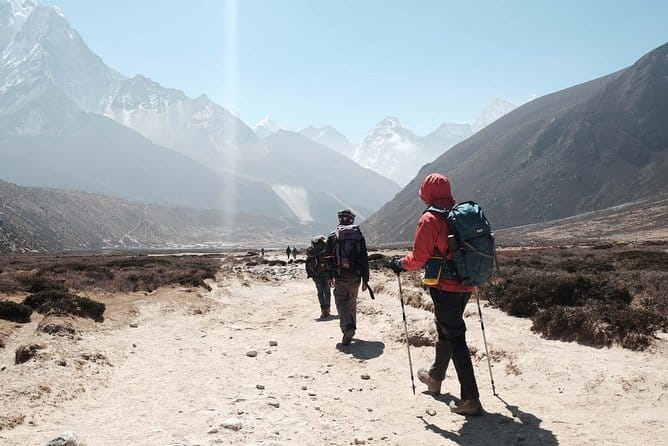
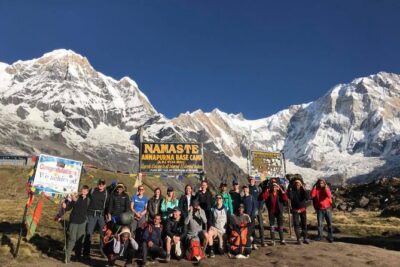
Day 3 is your arrival day at Annapurna Base Camp, reaching 4130 m via the Machhapuchhre Base Camp (MBC) route. You’ll pass through the MBC valley, which is often the emotional highlight of the entire trek because it feels like the mountains start to gather around you.
This is the big “yes, you made it” day. You climb, you crest the sections that have been building up your effort, and then the base camp basin opens into view. It’s a moment where the whole region starts making sense visually.
Reality check: Day 3 is long and mentally demanding, even if it’s your best scenery day. If you’re short on acclimatization time, don’t treat this as a day to power through. You’ll likely be tempted to run for photos. Take them, but keep your breathing calm.
Sunrise at ABC, Then the Trek Down Back to Sinuwa
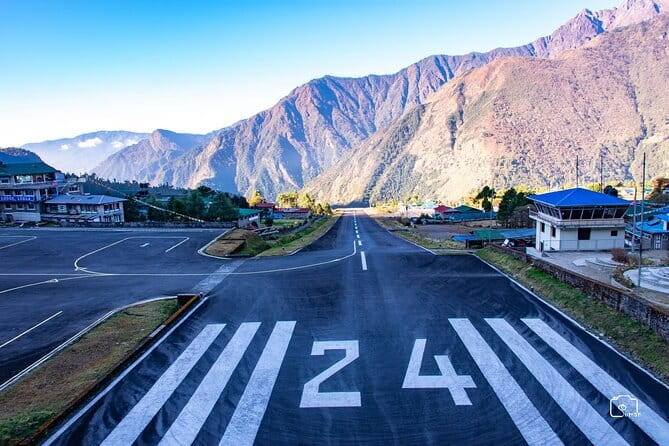
Day 4 starts with sunrise and breakfast at Annapurna Base Camp. There’s something about waking up high that changes your whole perspective—cold air, thin light, and the mountains looking different than they did yesterday. Breakfast here isn’t just food; it’s part of the rhythm of arriving in the right place at the right time.
After that, you trek down toward Sinuwa via Deurali, Himalaya, and the Dobh area (the route continues through those key waypoints). Expect 4–5 hours of descent, but factor in stops and photo breaks—especially because you’re going down in sections where your legs feel every step.
Descending is often easier on altitude than ascending, but it can be rough on knees and ankles. If you have any history of knee pain, bring supportive footwear and use trekking poles if you’re comfortable with them. Your guide will likely keep an eye on how you’re moving, and that matters on a day that’s mostly downhill.
Jhinu Danda Hot Spring: The Reward You Can Actually Relax In
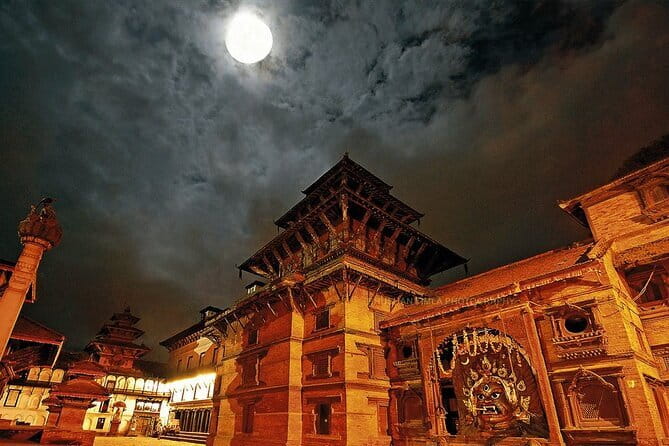
Day 5 is your descent back toward Simrung, roughly 5–6 hours, via Jhinu Danda. Jhinu Danda is famous for its natural hot spring bath, and in this trek it’s a scheduled payoff—not just a random detour.
After you arrive at Jhinu Danda, you get time to soak. This is one of those perks you appreciate more at the end than you ever could at the start. Warm water helps take the edge off sore calves and tired feet. It’s also a mental reset: you’re leaving the high-energy trekking zone and stepping into something restorative.
Then you drive back to Pokhara (about 2 hours). The evening is described as a celebration after completing the trek. That’s a nice final touch for a short itinerary—closure matters when you’re only out for five days.
Price and Logistics: Where the $99 Value Comes From
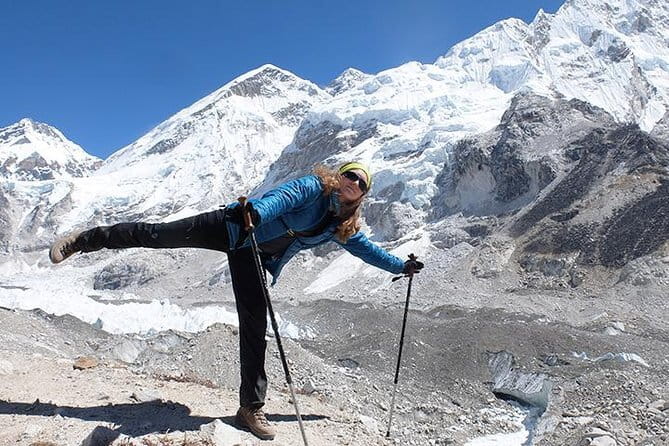
This trek is listed at $99 per person, which is low for a guided, permit-based mountain trip with flights and multiple lodge nights. The value angle comes from the structure: you get flight, guesthouse lodging (4 nights), trekking permits/national park fees, and a licensed guide, plus pickup and drop in Kathmandu.
That said, don’t ignore what isn’t included. Meals and drinks are not included, and porter service is not included. Those two items can change your real total. In practice, you’ll likely spend money on tea-house meals each day, and if you’re carrying your own day-to-day essentials, you’ll want to pack lightly.
Also pay attention to the flight coverage: the package includes Kathmandu to Pokhara one way. If you need a return flight to Kathmandu, make sure you know whether it’s included in your specific option. The itinerary data here focuses on the trek return to Pokhara, so it’s smart to confirm the final linkage to your homeward travel.
Gear, Fitness, and the Real Meaning of Moderate
The trek is described as needing moderate physical fitness. That’s true in the sense that you’re not doing technical climbing, but it doesn’t mean you can show up unprepared.
On a five-day ABC trek, your fitness needs to handle:
- long hiking hours (about 5–7 hours most trek days)
- significant altitude (ABC at 4,130 m)
- downhill stress on Day 4 and the final descent toward Jhinu
If you train for uneven effort, you’ll do better. A few weeks of walking with a backpack, some stairs, and light hiking practice go a long way.
Gear basics you should plan on:
- sturdy hiking shoes (more grip than you think you’ll need)
- a warm layer for early starts and ABC nights
- a daypack that’s comfortable (you won’t want a heavy load)
- water and sun protection (even on forest days, sun can surprise you)
What the Guides Seem to Get Right
The most praised aspect in the feedback is people support—guides and porters who keep things smooth, safe, and human. Names you may see credited include Oham Raj Tamang and Narayan, as well as Nilakantha, Om Raj, Smile Ghale, Raj, Pratip, Sohit, Shakti, and Jeevan.
What matters for you is the pattern behind those names: check-ins on physical health, cheerful energy, and problem-solving when conditions are tough. That’s not just nice. On a short altitude trek, it’s the difference between pushing too hard and staying steady.
You also benefit from language support. This trek includes a licensed trekking guide with English and Hindi in-person guidance. That helps when you need to talk about pace, symptoms, or logistics quickly.
And because this is listed as a private tour/activity for your group, you’re not stuck in a large mixed-speed crowd. That can be a big comfort upgrade on a tight five-day schedule.
Should You Book This 5-Day ABC Trek?
Book it if you want the Annapurna Base Camp experience without spending a week just reaching the mountains. The flight shortcut, included permits, lodge nights, and guided support make it a strong value if you want your time on the trail, not in transit.
Skip it or rethink it if altitude is a major concern for you. Five days is compact. You can still do it with the right pace and attention to how you feel, but if you need longer acclimatization, you’ll want a longer itinerary option.
My final take: this is best for hikers who pack smart, move steady, and want a guided route to a high point with real payoffs—sunrise at ABC and a hot spring finish.
FAQ
How long is the Kathmandu to Annapurna Base Camp trek?
It’s a 5-day trek, with the itinerary structured around trekking days plus a flight from Kathmandu to Pokhara and a return drive to Pokhara at the end.
What’s included in the price?
The included items are flight tickets Kathmandu to Pokhara (one way, for KTM option), shared vehicle Pokhara–Simrung–Pokhara, mountain guest house accommodation for 4 nights, trekking permits and national park fees, a licensed trekking guide, and hotel pickup and drop. Language support is provided in English and Hindi.
Are meals included?
No. All meals and drinks are not included, so you’ll budget for tea-house meals along the route.
Do I get a porter?
Porter service is not included. You’ll carry your own essentials unless you arrange extra support separately.
Where do I start in Kathmandu?
You’ll get pickup from your hotel or apartment in Kathmandu, then be escorted to Tribhuvan International Airport for the domestic flight to Pokhara.
What about the hot springs at Jhinu Danda?
Yes, Jhinu Danda hot spring bath is included as part of Day 5 during the return trek.
What kind of fitness level do I need?
The trek is described for people with a moderate physical fitness level. It involves multiple hiking days in the 5–7 hour range and reaches high altitude.
What happens if weather is bad?
This experience requires good weather. If it’s canceled due to poor weather, you’ll be offered a different date or a full refund.
If you want, tell me your travel month and your hiking experience level, and I’ll suggest whether this five-day pacing fits you well (or if you should look at a longer acclimatization option).
More 5-Day Experiences in Kathmandu
More Trekking Out of Kathmandu
More Tour Reviews in Kathmandu
Just Reviewed in Kathmandu
- Mountain Bike Tour
★ 5.0 · 3 reviews - Annapurna Panaroma
★ 5.0 · 3 reviews - Mount Everest Scenic Flight 50 Minutes
★ 5.0 · 3 reviews - Kathmandu : Swambhunath & Durbar Square Guided Half Day Tour
★ 3.3 · 3 reviews - Chandragiri Cable Car & Monkey Temple Tour – Private/Group
★ 5.0 · 3 reviews - Kathmandu: Shivapuri National Park Hiking Day Trip
★ 3.3 · 3 reviews
Annapurna Base Camp Treks, compared.
 ★ 5.0Annapurna base camp trek 5 DaysFrom $699252 reviews
 ★ 5.014-Day Private Annapurna Base Camp TrekFrom $1,090180 reviews
 ★ 5.0Annapurna Base Camp TrekkingFrom $1,779116 reviews
 ★ 5.0Annapurna Base Camp TrekFrom $935111 reviews
★ 5.0Annapurna Base Camp TrekFrom $1,350107 reviews
★ 5.0Annapurna Base Camp TrekFrom $935111 reviews
★ 5.0Annapurna Base Camp TrekFrom $1,350107 reviews
 ★ 5.0Annapurna Base Camp Trek- 11 DaysFrom $99990 reviews
 ★ 5.0Annapurna Base Camp Trek 12 DaysFrom $80085 reviews
Annapurna Base Camp TrekFrom $78581 reviews
★ 5.0Annapurna Base Camp Trek 12 DaysFrom $80085 reviews
Annapurna Base Camp TrekFrom $78581 reviews
Browse the lists this tour appears in