

Review · ANNAPURNA CIRCUIT TREKS
Annapurna Circuit Thorong La Pass
Thorong La is the serious day on this route.
This Annapurna Circuit itinerary is built around real altitude gains, classic villages, and river valleys that keep changing by the hour. I like that it blends acclimatization time (not just a grind) with a clear plan for the big crossing, so you’re not guessing what comes next.
Two things I especially like: first, you get a guide setup that clients consistently describe as calm and practical, including support from staff like Bimal and guides such as Saroj. Second, the logistics are unusually “hands-on” for a trek of this type, with airport transfers, permits, and most meals lined up so you can focus on walking and breathing.
The main drawback to weigh is the obvious one: Thorong La at 5,416m is tough, and the schedule still includes long travel days and steep walking. Even with an acclimatization day in Manang, this is not a casual hike.
In This Review
- Key things to know before you go
- Thorong La: why this trek feels like the real Himalayan test
- Day 1-3: Kathmandu to the road-to-trail transition
- Days 4-6: Koto to Upper Pisang, then Nawal, then Manang
- Day 7: Manang acclimatization day (lake time and big-range views)
- Day 8: Yak Kharka at 4,200m
- Day 9: Thorung Phedi or High Camp, your stamina decision
- Day 10: Thorung La Pass (5,416m) to Muktinath, about 8-9 hours
- Days 11-12: Muktinath to Kagbeni, then the road break
- Days 13-14: Tatopani to Pokhara, then back to Kathmandu
- Price and logistics: what $1,750 really buys you
- Included meals and tea-house life: comfort without tent gear
- The human factor: guides and staff that keep things workable
- Practical considerations for your body and your schedule
- Should you book Annapurna Circuit Thorong La Pass with Happyland Treks?
- FAQ
- What time does the tour start and where do I meet the group?
- Is pickup and drop-off included?
- How long is the trek?
- What is the highest point on this trek?
- What kind of accommodation do I get during the trek?
- What meals are included?
- Do I need permits for the route?
- Is there porter support?
- What if the weather is poor on trekking days?
- What’s the cancellation window for a full refund?
Key things to know before you go
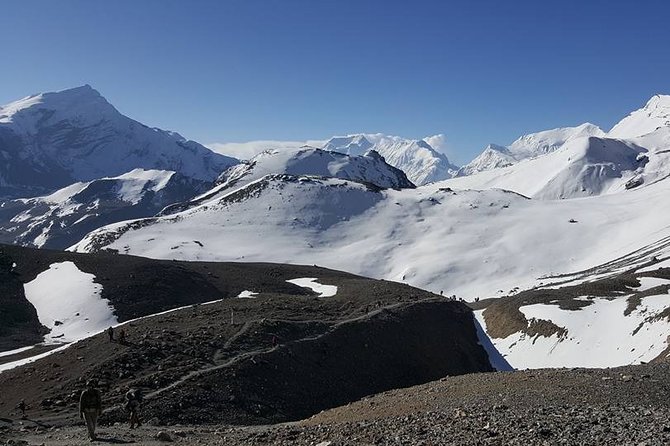
- Thorong La decision point (Thorung Phedi vs High Camp): you can choose where you sleep the night before the pass climb, based on stamina and comfort
- Acclimatization built into the route: an extra day in Manang plus a gradual push toward 4,200m at Yak Kharka
- Tea house rhythm all the way: included stays keep you from managing tents and gear logistics
- Support that sounds human, not robotic: multiple reviews mention staff responsiveness and safety-minded guidance
- Meals and tea/coffee included most days: fewer meals to plan for means less hassle at altitude
Not sure yet? Here are other Kathmandu tours worth a side-by-side look.
- Everest Base Camp Trek – 14 Days★ 5.0 · 1,499 reviews
- Everest Base Camp Trek★ 5.0 · 842 reviews
- Private Kathmandu Sightseeing Tour | UNESCO World Heritage sites★ 5.0 · 756 reviews
- Kathmandu: 7 UNESCO Sites with Lunch★ 4.8 · 744 reviews
Thorong La: why this trek feels like the real Himalayan test
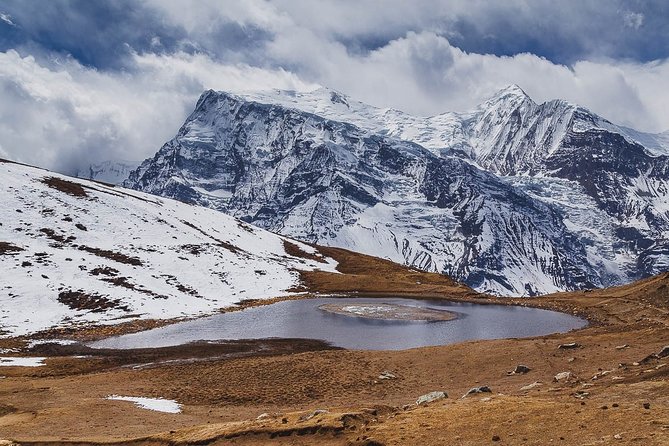
If you’re coming for scenery, the Annapurna Circuit delivers. But if you’re coming for a challenge, Thorong La is the headline. The pass is listed at 5,416m, and the route to it is designed to help you arrive not just tired, but prepared. That matters because the difference between doing the pass day well and doing it badly often comes down to how you handle your breathing, pacing, and the night before.
This is one of the most diverse sections of the western Himalaya because you don’t stay in one “type” of view. You start in river and settlement valleys, climb into drier high country, and then drop down toward Muktinath and Kagbeni. Each shift brings different light, different weather behavior, and different trail feel.
I also like that the plan doesn’t pretend altitude is simple. It includes an acclimatization day in Manang and a staging day around Yak Kharka and Thorong Phedi/High Camp. That’s a big deal for comfort, and it keeps the pass day from feeling like a random jump.
Day 1-3: Kathmandu to the road-to-trail transition
Your first day is about getting your feet under you. In Kathmandu, you transfer to a hotel, prep for trekking, and sleep there overnight. That matters because Nepal treks are won or lost on details like gear readiness, early breakfasts, and not rushing your paperwork.
Day 2 moves you from Kathmandu to Besisahar by bus, then you sleep at about 760m. The next day, Day 3, you drive from Besisahar to Koto (about 2,700m), which is where the trek starts to feel real. Even though this is “just transportation,” it changes your body. You’ll arrive higher, and that can be either helpful or annoying depending on how sensitive you are.
What I like about this setup is that it gets you onto the trekking loop without turning the early days into a chaotic scramble. What to watch: the travel legs can make the first trek steps feel more effort than expected. If you’re the kind of person who runs on energy drinks and adrenaline, take it easy and treat this like part of your acclimatization.
Days 4-6: Koto to Upper Pisang, then Nawal, then Manang
From Koto to Upper Pisang (around 3,350m) you’re already building elevation while walking through classic village scenery. Day 5 continues to Nawal (about 3,650m) and Day 6 lands you in Manang (about 3,540m). These days are long enough to feel like trekking, but not so aggressive that you’re stranded on your first major climb.
Here’s what makes this section valuable: it gives you a rhythm. You’re not going from low altitude to extreme altitude in one leap. You’re learning how your legs and lungs respond over multiple days. That pays off later when the pass day demands steady, disciplined effort.
A practical consideration: as you get higher, your pace usually slows, even if your legs feel okay. That’s normal. If you try to keep a low-altitude pace, you can burn out fast. Let the route teach you.
Day 7: Manang acclimatization day (lake time and big-range views)
Day 7 is your acclimatization day in Manang. The plan includes hiking for a few hours to visit a lake and the Himalaya mountain range. Even though this is described as a simple day, it’s the kind of day that often makes the difference between passing comfortably and feeling hammered.
Why this helps: your body gets extra time to adjust while you still walk a manageable amount. You also get a chance to hydrate, eat well, and notice any altitude symptoms early, when they’re easiest to manage.
What I’d do on a day like this is keep the intensity low. Enjoy the views, take photos, and keep yourself from chasing big summits just because you’re already there.




Day 8: Yak Kharka at 4,200m
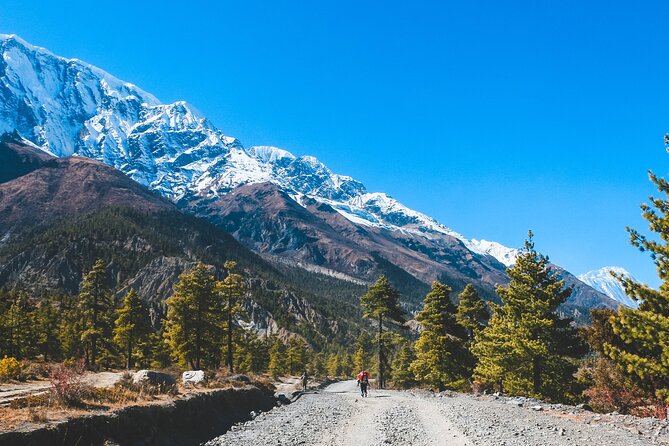
On Day 8, you trek from Manang to Yak Kharka (around 4,200m) in about 4 hours. This is a staging move that puts you into the higher zone before the pass prep. It’s not the pass yet, but it’s a clear step up.
This is also where the “feel” of the trek changes. High country means colder mornings, more wind exposure, and often less greenery underfoot. Tea houses help here because you’re not hauling shelter, and the included meals remove one more decision from your day.
The consideration: once you’re around 4,000m, even small efforts can feel heavier. Your goal is to arrive steady, not spent.
Day 9: Thorung Phedi or High Camp, your stamina decision
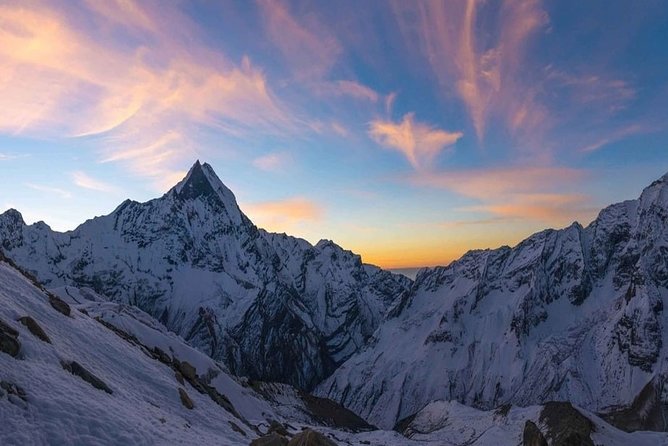
Day 9 is one of the most important planning choices in the itinerary. You trek from Yak Kharka to Thorung Phedi (about 4,450m) or to High Camp (about 4,880m). The schedule says this takes around 5–6 hours, and it explicitly depends on your stamina and whether you want to sleep at higher altitude or lower.
This is smart. If you sleep closer to the pass, the summit push can feel shorter and more direct. If you choose the lower option, you may feel less stressed by that first night at extreme altitude. Either way, you’re shaping your pass experience.
I’d treat this choice as a comfort and breathing decision, not a pride decision. The pass day is hard enough. You’re not earning points for suffering through the night.
Day 10: Thorung La Pass (5,416m) to Muktinath, about 8-9 hours
This is the day. Day 10 includes a climb of about 1,200m to Thorung La Pass (5,416m), then a descent down to Muktinath at around 3,800m, with an overall trek time of 8–9 hours.
If you take one thing from this itinerary, take this: the pass day is long, and it mixes altitude stress with downhill fatigue. Even after the pass, you’re still walking hard, and knees can complain. The descent can be deceptively tiring because you may feel relieved, then realize your legs are still working nonstop.
What helps you here is the build-up the trek gives you in the days beforehand: Manang acclimatization, a staging night at Yak Kharka, and that Thorung Phedi/High Camp choice.
A realistic drawback: you’re moving through the highest zone on the route, so weather matters. The trek provider notes weather can affect operations, and you’ll need flexibility in mind.
Days 11-12: Muktinath to Kagbeni, then the road break
Day 11 goes from Muktinath to Kagbeni (about 2,804m) in roughly 4 hours. Kagbeni is where the region starts to feel more arid and dramatic, with a strong sense of old trade-route culture. It’s a welcome contrast after the pass day altitude grind.
Day 12 is a travel day: you drive by bus from Kagbeni to Tatopani (about 1,200m) for around 3 hours. This is the kind of day that helps your body recover because you’re moving without climbing. Tatopani also gives you a mental reset: you’re back into lower altitude comfort and village bustle.
One note: travel days still matter. Your body doesn’t fully “switch off,” but it does get a different kind of rest than hiking days.
Days 13-14: Tatopani to Pokhara, then back to Kathmandu
On Day 13, you go from Tatopani to Beni to Pokhara by local bus, then sleep overnight in Pokhara (about 825m). Day 14 moves you from Pokhara back to Kathmandu by tourist bus.
Why I like this ending: you don’t just finish the trek and immediately jump into airport chaos. Pokhara is a breather stage. Even if you don’t plan big sightseeing, you get time to eat normally, sleep better, and let your altitude fatigue ease off.
Then Day 14 gets you back to Kathmandu at about 1,400m, which is a good practical step before departure.
Price and logistics: what $1,750 really buys you
At $1,750 per person for about 15 days, this price isn’t just paying for a walking route. You’re buying a full operating system: airport pickup and drop, hotel nights in Kathmandu and Pokhara with breakfast, permits (TIMS card and Annapurna conservation area entry), tea house lodging during trekking, and an English speaking guide.
You’re also getting staffing support that shows up in real life on trek days. The plan includes accommodation, food, salary, insurance, and medicine for staff, plus a medical kit for the group. It also includes a porter service with the basic ratio of 1 porter between 2 people, which can be a huge help when you hit the pass day.
Is it a bargain? It depends on your baseline. If you’re the type who hates chasing details, the value is strong because so many core pieces are handled. If you already have your own gear, your own guide, and a tight plan for permits and meals, you might feel less “wow” by the cost. But for most people, the included structure reduces stress—the real hidden cost on high-altitude treks.
One more practical value point: the itinerary lists three cups of tea or coffee per day during the trek. Small comfort, steady energy. It adds up when you’re cold and tired.
Included meals and tea-house life: comfort without tent gear
The plan includes standard meals during the trekking days—breakfasts, lunches, and dinners are counted across the trip—with tea/coffee support during trekking. It also includes tea house accommodations rather than camping.
This matters because tea-house trekking is a tradeoff. You give up some independence and you’ll share space like everyone else. But you gain reduced gear weight and fewer logistics on the hardest days. That often makes Thorong La more doable.
What to expect at tea houses: basic rooms, shared common areas, and the need to plan around heating and bathroom setup. The itinerary can’t promise luxury, but it does reduce the decision fatigue that can drain you faster than cold air.
Also note: lunches and dinners during your Kathmandu and Pokhara stays are not included. That’s normal, but budget for it.
The human factor: guides and staff that keep things workable
One theme in the feedback for this provider is that the team makes people feel safe and supported. Names that come up include Bimal (often referenced as the leader), Karma and Krishna as helpful staff, plus guides like Saroj and Aayush mentioned in client experiences.
What I take from that, practically, is communication and reassurance. On a trek where you’re making decisions about pacing, altitude effects, and pass-day timing, having a guide who can explain the plan and help you adjust matters. One review also mentions borrowing items you might not have brought—an underrated detail if you arrive missing a glove, a layer, or some basics.
You’ll still need to do your part: sleep well before pass day, follow pace advice, and don’t pretend altitude is optional. But a responsive team can keep surprises from turning into problems.
Practical considerations for your body and your schedule
This trek is built for moderate physical fitness. That phrase can sound soft. On Thorong La, it isn’t. You’ll be walking many hours some days, and the pass day is both high and long.
Here’s what you should watch for:
- Altitude timing: you’re sleeping and trekking at high elevations repeatedly, not just hitting the pass once
- Long day management: the pass day is 8–9 hours total, plus descent fatigue
- Weather dependence: the provider states the experience requires good weather, and poor conditions can change plans
Also keep in mind that this is a private tour/activity, meaning your group is the only one participating. That can be a big plus for comfort and flexibility, especially if your pacing is a little slower or you need extra time to settle after the acclimatization day.
Should you book Annapurna Circuit Thorong La Pass with Happyland Treks?
If you want a trek with a real structure—permits handled, meals covered, tea house lodging organized, and a team that communicates clearly—this is a strong fit. The itinerary’s big strength is how it prepares you for the pass: Manang acclimatization, staging nights, and the Thorung Phedi vs High Camp decision.
Book it if:
- you’re serious about crossing Thorong La at 5,416m and you want support that keeps the plan clear
- you prefer guided logistics over piecing together transportation, permits, and daily meals
- you value a porter option (1 porter between 2 people basic) so you can conserve energy
Skip it or rethink your plan if:
- you’re not ready for a physically demanding pass day and a long overall trek schedule
- you want maximum independence and don’t want a pre-set route and timing
- you’re sensitive to altitude and you need a more gradual, lower-stress itinerary
Bottom line: this trek is for people who want the classic Annapurna Circuit experience and are willing to respect altitude. With this kind of planning and staff support, you’ll spend more time focused on walking—and less time worrying about what comes next.
FAQ
What time does the tour start and where do I meet the group?
The start time is 6:00 am, and the ticket redemption point is Happyland Treks, Nepal Trekking, Everest Trek, South Asia, Paknajol Marg, Kathmandu 44600, Nepal.
Is pickup and drop-off included?
Yes. The package includes airport pickup and drop by car/van/bus, plus other ground transportation listed in the included section.
How long is the trek?
The itinerary is 15 days (approx.).
What is the highest point on this trek?
The highest point is Thorong La Pass at 5,416m.
What kind of accommodation do I get during the trek?
During the trek, you stay in tea house accommodations. You also have hotel accommodation in Kathmandu (two nights) and Pokhara (one night) with breakfast.
What meals are included?
During the trek, you get standard meals (breakfast/lunch/dinner as listed), and you also receive three cups of tea or coffee per day. Meals during your Kathmandu and Pokhara stays are not included.
Do I need permits for the route?
Yes. The package includes a TIMS card and the Annapurna conservation area trekking entry permit.
Is there porter support?
Yes. Porter service is included with the basic arrangement of 1 porter between 2 people.
What if the weather is poor on trekking days?
The experience requires good weather. If it’s canceled due to poor weather, you’ll be offered a different date or a full refund.
What’s the cancellation window for a full refund?
You can cancel up to 24 hours in advance for a full refund. Within 24 hours, the amount paid is not refundable.
More Tour Reviews in Kathmandu






Just Reviewed in Kathmandu
- Mountain Bike Tour
★ 5.0 · 3 reviews - Annapurna Panaroma
★ 5.0 · 3 reviews - Mount Everest Scenic Flight 50 Minutes
★ 5.0 · 3 reviews - Kathmandu : Swambhunath & Durbar Square Guided Half Day Tour
★ 3.3 · 3 reviews - Chandragiri Cable Car & Monkey Temple Tour – Private/Group
★ 5.0 · 3 reviews - Kathmandu: Shivapuri National Park Hiking Day Trip
★ 3.3 · 3 reviews
Annapurna Circuit Treks, compared.
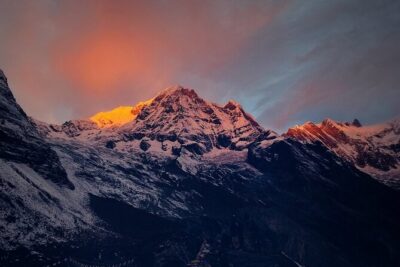 ★ 5.0Annapurna Circuit Trek with Tilicho LakeFrom $1,093368 reviews
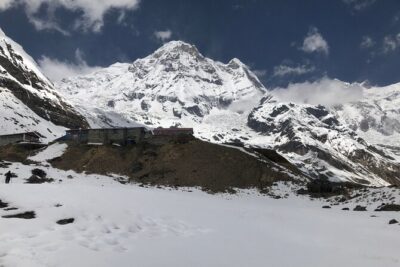 ★ 5.0Annapurna Circuit TrekFrom $1,17594 reviews
★ 5.0Annapurna Circuit TrekFrom $2,24067 reviews
★ 5.0Annapurna Circuit TrekFrom $1,07449 reviews
★ 5.0Annapurna Circuit TrekFrom $1,35046 reviews
★ 5.0Annapurna circuit TrekFrom $99835 reviews
★ 5.0Annapurna Circuit TrekFrom $1,15035 reviews
★ 5.0Annapurna Circuit TrekFrom $97534 reviews
Browse the lists this tour appears in