
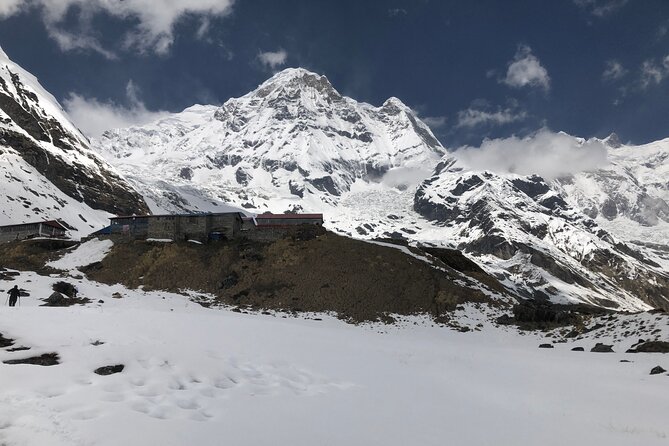
Review · ANNAPURNA CIRCUIT TREKS
Annapurna Circuit Trek
Climb to Thorong La, then soak in hot springs. This Annapurna Circuit trek strings together Kathmandu heritage, deep gorge views, and Pokhara’s lakeside culture in one efficient route.
I love the built-in recovery in Tatopani hot springs after big hiking stretches. I also really like the high-touch hiking support: a licensed English guide and a porter for every two clients, so you spend less energy “figuring it out.”
The main consideration is altitude and weather, especially around the early-morning Thorong La crossing. If conditions are tough (snow and strong winds), the day can feel slower and colder than you expect.
In This Review
- Key things that make this trek work
- Kathmandu First: Temple Stops That Help You Understand Nepal
- Getting to the Trek: Besisahar, Syange, and the Marsyangdi River Rhythm
- Chame to Upper Pisang to Ngawal: Forest Trails, Big Rocks, and a Sunrise Moment
- Manang Acclimatization: The Stop That Makes the Thorong La Day More Real
- Thorong Phedi and the Thorong La Crossing: Cold, Wind, and the Value of Timing
- Muktinath Side to Jomsom: Kali Gandaki Country and Mustang-Style Dry Air
- Tatopani Hot Springs: Two Days to Reset Your Body
- Ghorepani and Poon Hill: Classic Sunrise, Real Ridge Walking
- Pokhara Sightseeing After the Trek: Lakeside Culture and Cave-and-Fall Stops
- What You’re Paying For: $2,240 Value in Gear, Permits, Transport, and Support
- Your Best Fit: Moderate Fitness, Early Starts, and Weather Flexibility
- Should You Book This Annapurna Circuit Trek?
- FAQ
- What is the duration of the Annapurna Circuit Trek?
- Where does the trek start and end?
- Is pickup included?
- How large is the group?
- What gear and permits are included?
- What accommodation do I get during the trek?
- Are meals included?
- What transportation is included during the trip?
- Is there time to relax during the trek?
- What do I need to bring for the pre-trek meeting?
Key things that make this trek work
- Tatopani’s hot-spring break: two days to relax your legs after the trek’s hardest-feeling stretches.
- Guided pacing with acclimatization stops in Manang and Yak Kharka, not just a straight shot uphill.
- Thorong La timing: you’ll start very early to reach the pass by mid-morning when conditions are more manageable.
- Desert-like Kali Gandaki country in the Mustang side of the route, with deep-gorge scenery as you descend.
- Sunrise viewpoints included: a classic Poon Hill morning and an early Annapurna II sunrise chance en route.
More trails out of Kathmandu, boots ready
- Everest Base Camp Trek – 14 Days★ 5.0 · 1,499 reviews
- Everest Base Camp Trek★ 5.0 · 842 reviews
- Everest Base Camp Trekking★ 5.0 · 485 reviews
- Nagarkot Sunrise View and Day Hiking from Kathmandu★ 5.0 · 471 reviews
Kathmandu First: Temple Stops That Help You Understand Nepal
Your trip kicks off in Kathmandu with airport pickup and transfers to a hotel in a private vehicle. Day 2 is a smart way to set your cultural context before you trade city streets for mountain steps.
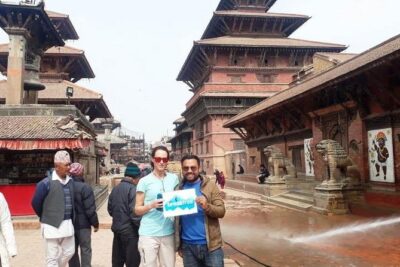
You’ll visit Pashupatinath Temple from the Bagmati River bank (you can’t go inside, since it’s for Hindus only). You’ll also stop at Boudhanath Stupa, where Tibetan pilgrims spin prayer wheels—an easy, visual introduction to Nepal’s mixed religious life. Then there’s Bhaktapur Durbar Square, with its palace and temple areas, including the five-storied Nyatapola-style structure.
Practical note: these are not “quick photo stops.” The schedule gives you enough time to watch activity and get your bearings fast, which matters when your next days are all about orientation—trail orientation, altitude orientation, the whole package.
Getting to the Trek: Besisahar, Syange, and the Marsyangdi River Rhythm
Once you leave Kathmandu, you shift into the Nepal pace: buses, then smaller vehicles, then walking that gradually changes character. Day 3 is a public bus ride from Kathmandu to Besisahar (about 6 hours), and then a shared 4WD transfer to Syange (about 2 hours). You’ll see rivers and waterfalls along the way—good “transition scenery” before the real climbing begins.
From there, the early trek days build confidence without feeling like a punishment. Day 4 walks gradually along the Marsyangdi River, with waterfall sightings and a gentle ascent. Day 5 changes the feel: you move away from the river corridor and go toward a village stop at Danakyu, with big-picture mountain views (including Annapurna II and Pisang Peak) showing up as the scenery opens.
Day 6 reaches Chame, the Manang headquarters. It’s an “early comfort” town on this route—less rugged than the earlier villages, with more services, which helps if you’re managing sore knees or just want a stable place to sleep.
Chame to Upper Pisang to Ngawal: Forest Trails, Big Rocks, and a Sunrise Moment
In trekking terms, Days 7 and 8 are where your eyes start doing more work than your legs. Day 7 pushes you to Upper Pisang with a trail through forest and river scenery, plus meadows and mountain panoramas. You’ll also pass the curved bowl-shaped rock face known as Paungda Dada, which is the kind of landmark that makes navigation feel easier.
Day 8 is an early-morning payoff: you’ll wake up to watch sunrise rays over Annapurna II. Then you continue toward Ngawal, which sits about 400 meters higher than the lower route. Expect opportunities for high-altitude flora and fauna, plus gorge views and more glacier-and-peak framing as you move.
Why this part of the trek matters: these days teach you how to move with altitude. Even when the walking is “doable,” your body starts responding differently, and you’ll be better prepared for what comes next.
Manang Acclimatization: The Stop That Makes the Thorong La Day More Real
If there’s one section I’d call the backbone of a safer crossing, it’s the Manang acclimatization plan. Day 9 brings you to Manang after trekking through hills, jungle, and wetlands. There’s a monastery and a village vibe here, so it’s not only about altitude—it’s also about being around people and routines.
Day 10 is the real acclimatization day. You’ll do some walking and sightseeing around Manang and visit a monastery, then head toward Gangapurna Glacier Lake. You return to accommodation in Manang for the night, which gives your body a chance to settle before your next climb.
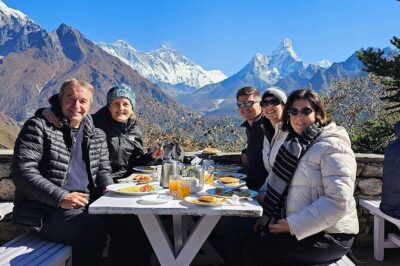
Then Day 11 climbs to Yak Kharka (around 4,000 meters). It’s a steady ascent of about 500 meters, moving through Tenki Manang and along the Jarsang Khola Valley. You’ll notice how vegetation thins, and the yak presence helps you stay grounded in the fact that this is working high-country country, not just a trekking corridor.
Thorong Phedi and the Thorong La Crossing: Cold, Wind, and the Value of Timing
Day 12 takes you to Thorong Phedi (about 4,450 meters). The schedule includes a two-hour ascent, then a descent to cross a river at around 4,310 meters, and then another climb. The practical benefit of this structure is that it keeps the day logical: you’re not guessing when the real steep section begins.
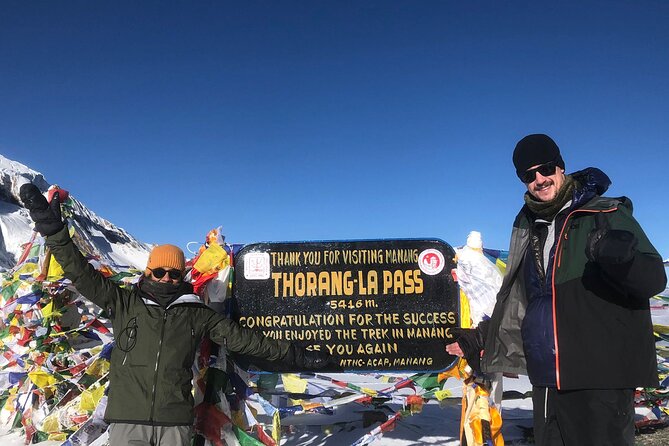
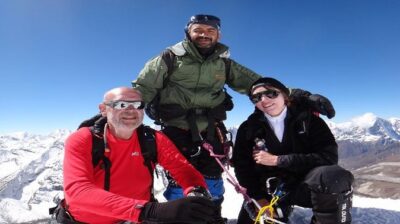
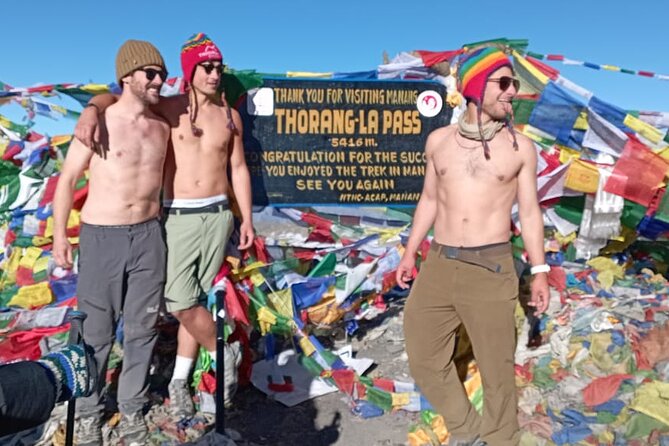
Day 13 is the big one: the trek to Thorong La Pass starts around 4:00 am, aiming to reach the pass by about 9–10 am. That early start matters because high passes can turn serious in wind and snow. The route is described as regular and fairly easy to follow, but altitude problems and snow can still make the crossing feel tough—so the start time is a safety tool, not just a tradition.
Once you reach the pass, you’re rewarded with views marked by chortens and prayer flags, and then you keep walking for several hours to Muktinath, a holy town. This “top of the world, then town reality” rhythm is part of why this trek feels like a complete journey rather than a single mountain push.
Muktinath Side to Jomsom: Kali Gandaki Country and Mustang-Style Dry Air
Day 14 brings you to Jomsom after crossing to the other side of Thorong La. The character changes fast: the land becomes dry and desert-like, and you’re tracking the Kali Gandaki River. You also get closer views of stupas and older traditional houses tied to Mustang district life.
This is one reason the Annapurna Circuit is so popular: the scenery doesn’t just get bigger. It changes textures. You go from forest-and-meadow trekking into dry river gorge terrain, which makes each day feel different even when you’re walking similar hours.
Day 15 continues descent into the Kopchepani area, described as the world’s deepest gorge. By the time you reach Tatopani, you’ve earned the next phase: recovery.
Tatopani Hot Springs: Two Days to Reset Your Body
Day 15 to Day 16 are your payoff for staying on schedule. Tatopani is famous for its hot springs, and the plan is basically: arrive, relax, and let your legs cool down without rushing.
Day 16 makes it explicit: you’ll be able to take a shower, dip into natural hot springs, and enjoy food and drinks. It’s not a “free day” in the sense of having no structure—your trek team handles the timing and lodging—but it is a genuine break from the uphill grind.
From a value perspective, this matters. A trek can be “included” but still feel exhausting if there’s no real recovery point. This itinerary gives you one, and it’s positioned right where your energy would otherwise start sliding.
Ghorepani and Poon Hill: Classic Sunrise, Real Ridge Walking
After Tatopani, Day 17 moves to Ghorepani with about 7 hours of walking and a climb of roughly 1,620 meters. From Ghorepani, you get views of Annapurna South, Himchuli, and Tukuche. You’ll pass Magar and Gurung villages, so you’re not only walking through scenery—you’re also walking through living communities.
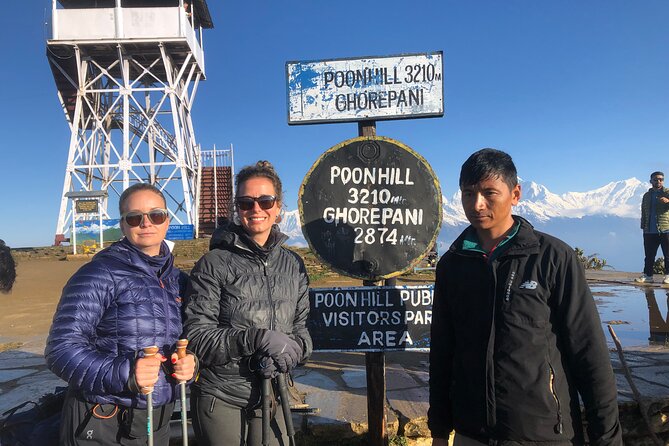
Day 18 is the famous early outing: a short hike to Poon Hill (at 3,210 meters). You’ll go before sunrise and spend about an hour for the spectacle of early light over the high Himalayas, weather permitting. Then you return for a hot breakfast and continue downhill toward Tikhedhunga through ridges and rhododendron forests.
This is where your legs will tell you the truth about altitude. Still, the payoff is solid because Poon Hill gives you big mountain views without requiring an all-day push like Thorong La.
Pokhara Sightseeing After the Trek: Lakeside Culture and Cave-and-Fall Stops
The trek ends at Nayapul, then you travel by vehicle to Pokhara (about 1 hour). Day 20 is a full cultural block: Shree Bindhyabasini Temple in the old bazaar area, plus Devi’s Fall, Gupteshwor Mahadev Cave, and views of the Seti River Gorge from key bridges.
You also visit the Tibetan Refugee Camp near Gupteshwor Cave, known for woolen carpets and other handicrafts. This gives you a different kind of context for the region—how communities adapt, rebuild, and trade culture across borders.
Day 21 is back to Kathmandu in the morning, followed by a farewell dinner with cultural performances. That final dinner is more than a nicety: it’s your on-ramp back into city life and a moment to review what changed in you over 22 days of walking.
What You’re Paying For: $2,240 Value in Gear, Permits, Transport, and Support
At $2,240 per person for about 22 days, the value comes from what’s bundled. You’re not just buying the route. You’re buying the whole machine that runs it: permits, guides, transport segments, lodging, and most meals.
Here’s what stands out as practical value:
- Permits and fees included: ACAP and TIMS are covered.
- Gear support included: you get a down jacket and sleeping bag for the trek to be returned after use.
- Comfort and logistics included: Kathmandu (3 nights) and Pokhara (2 nights) are in three-star hotels, plus guesthouse nights during the trek.
- Real hiking support included: a licensed English trekking guide and 1 porter for two clients.
- Most meals included: breakfast is included across 21 days; lunch is included for 16 days; dinner for 17 days.
You also get a duffel/kit bag and a sun hat. That’s small stuff, but it’s helpful when you’re trying to pack efficiently.
What’s not included also matters for budgeting: travel insurance (especially emergency high-altitude rescue/evac), Nepal entry visa, international airfare, and alcoholic drinks. And tipping is expected for trekking staff and drivers.
One more practical point: this is a maximum 15 travelers small group. Smaller groups often mean less waiting, better coordination, and a smoother guide-to-client ratio—especially on tight mountain paths.
Your Best Fit: Moderate Fitness, Early Starts, and Weather Flexibility
This itinerary says it’s for moderate physical fitness. In real terms, that means you should be comfortable with long walking days, early mornings, and the mental load that comes with altitude. The pass day specifically starts around 4:00 am, and strong winds or snow are part of the reality on Thorong La.
The good news: the itinerary isn’t blind. It includes acclimatization time in Manang, plus the gradual build through Yak Kharka and Thorong Phedi. It also includes a real recovery block at Tatopani, which helps you maintain momentum after your biggest altitude day.
Weather flexibility is part of it too. The experience is noted as requiring good weather, and if it’s canceled due to poor conditions, you’ll be offered a different date or a full refund. That’s not something you control, but it’s useful to plan around.
Should You Book This Annapurna Circuit Trek?
I’d recommend booking if you want a guided Annapurna Circuit that stitches together Kathmandu and Pokhara without forcing you to do extra planning. The itinerary gives you a strong mix: a culturally grounded start, a structured acclimatization plan, a genuine hot-spring recovery, and sunrise mountain views without adding extra complications.
I’d think twice if you’re highly sensitive to cold, altitude stress, or unpredictable mountain weather. The schedule includes early starts and a high pass crossing, so you’ll want to feel confident in your fitness and your ability to adapt day-to-day.
If you do book, do two things early: pack for cold mornings and secure travel insurance that covers emergency high-altitude rescue and evacuation. With that handled, this trek becomes a very workable way to see a lot of Nepal’s most memorable mountain-and-culture zones in one trip.
FAQ
What is the duration of the Annapurna Circuit Trek?
The tour runs for about 22 days.
Where does the trek start and end?
It starts at Tribhuvan International Airport in Kathmandu and ends back at the same airport meeting point.
Is pickup included?
Yes. Pickup is offered, and the itinerary includes airport transfers.
How large is the group?
The maximum group size is 15 travelers.
What gear and permits are included?
The tour includes ACAP and TIMS permits, plus a down jacket and sleeping bag for the trek (to be returned afterward).
What accommodation do I get during the trek?
You stay in guesthouses during the trek in twin-share and dormitory rooms, and you’ll have three-star hotel rooms in Kathmandu and Pokhara before and after the trek.
Are meals included?
Yes. Breakfast is included for 21 days, lunch for 16 days, and dinner for 17 days. Lunch and dinner in Kathmandu and Pokhara are not included.
What transportation is included during the trip?
You’ll use a public bus from Kathmandu to Besisahar, shared 4WD vehicles from Besisahar to Syange and from Jomsom to Tatopani, a tourist vehicle from Nayapul to Pokhara, and a tourist bus from Pokhara to Kathmandu.
Is there time to relax during the trek?
Yes. The itinerary includes a rest/relaxation focus in Tatopani with access to natural hot springs for two days.
What do I need to bring for the pre-trek meeting?
You’ll need your passport, three copies of passport-size photos, and a readable copy of your travel insurance policy. You’ll also clear any due balance and sign trip forms during the meeting.
More Trekking Out of Kathmandu
More Tour Reviews in Kathmandu
Just Reviewed in Kathmandu
- Mountain Bike Tour
★ 5.0 · 3 reviews - Annapurna Panaroma
★ 5.0 · 3 reviews - Mount Everest Scenic Flight 50 Minutes
★ 5.0 · 3 reviews - Kathmandu : Swambhunath & Durbar Square Guided Half Day Tour
★ 3.3 · 3 reviews - Chandragiri Cable Car & Monkey Temple Tour – Private/Group
★ 5.0 · 3 reviews - Kathmandu: Shivapuri National Park Hiking Day Trip
★ 3.3 · 3 reviews
Annapurna Circuit Treks, compared.
 ★ 5.0Annapurna Circuit Trek with Tilicho LakeFrom $1,093368 reviews
 ★ 5.0Annapurna Circuit TrekFrom $1,17594 reviews
★ 5.0Annapurna Circuit TrekFrom $1,07449 reviews
★ 5.0Annapurna Circuit TrekFrom $1,35046 reviews
★ 5.0Annapurna circuit TrekFrom $99835 reviews
★ 5.0Annapurna Circuit TrekFrom $1,15035 reviews
★ 5.0Annapurna Circuit TrekFrom $97534 reviews
★ 5.0Annapurna Circuit TrekFrom $99427 reviews
★ 5.0Annapurna Circuit TrekFrom $1,17594 reviews
★ 5.0Annapurna Circuit TrekFrom $1,07449 reviews
★ 5.0Annapurna Circuit TrekFrom $1,35046 reviews
★ 5.0Annapurna circuit TrekFrom $99835 reviews
★ 5.0Annapurna Circuit TrekFrom $1,15035 reviews
★ 5.0Annapurna Circuit TrekFrom $97534 reviews
★ 5.0Annapurna Circuit TrekFrom $99427 reviews
Browse the lists this tour appears in