
Review · ANNAPURNA CIRCUIT TREKS
Annapurna circuit Trek
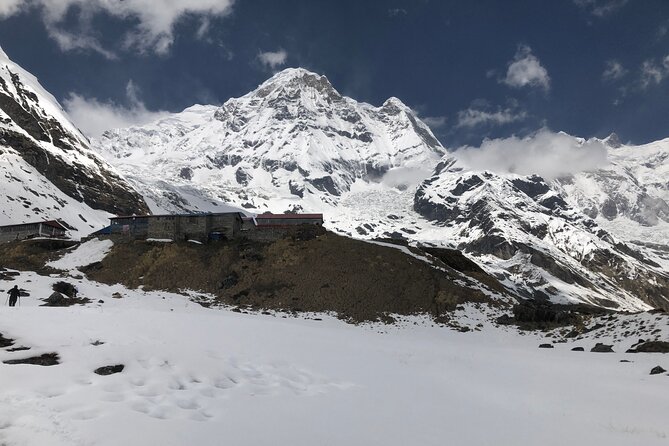
There is a reason the Annapurna Circuit keeps calling people back. This one mixes big mountain views, changing cultures and religions, and a well-run day-by-day plan that takes the altitude seriously.
I like how the trip handles the hard-to-organize stuff up front, from airport pickup in Kathmandu to permits (Annapurna conservation entrance permit and TMIS card), treated drinking water, and reliable transport between big waypoints. I also like the human side: an experience guide plus porters, with staff support that can step in fast when things get serious.
One consideration: you are committing to real altitude and long trekking days, including the 5,416m crossing area at Thong/Thorong-la, plus several 7–8 hour stretches. If you hate early starts and high-elevation fatigue, this won’t feel light.
In This Review
- Key highlights you’ll care about
- Annapurna Circuit Trek: why this route feels special
- Kathmandu handoff: 3-star hotel base and early momentum
- Drive to Dharapani (via Beshishar): the long start that sets your rhythm
- Chame to Upper Pisang: village trekking with real altitude payoff
- Manang and acclimatization day: the sanity stop at ~3,500m
- Yak Kharka to Thorong Basecamp/Phedi: prepping for the 5,416m pass day
- Thorong-la to Muktinath (via the Thong/Thorong-la pass): the big day
- Marpha via Jomsom: dropping down to 2,650m
- Tatopani and the Pokhara wrap-up: hot springs vibes and a softer landing
- Price and what $998 gets you in real value
- The guide and porter team: where the quality shows
- What’s not included: the budget items you must plan for
- How hard is it really? A practical altitude-and-time check
- Who this Annapurna Circuit trek suits best
- Should you book this Annapurna Circuit Trek?
- FAQ
- What time is the Kathmandu airport meeting start time?
- Are airport transfers included?
- Are trekking permits included?
- What food and drinks are covered during the trek?
- Is trekking equipment included?
- What is not included during the trek?
Key highlights you’ll care about
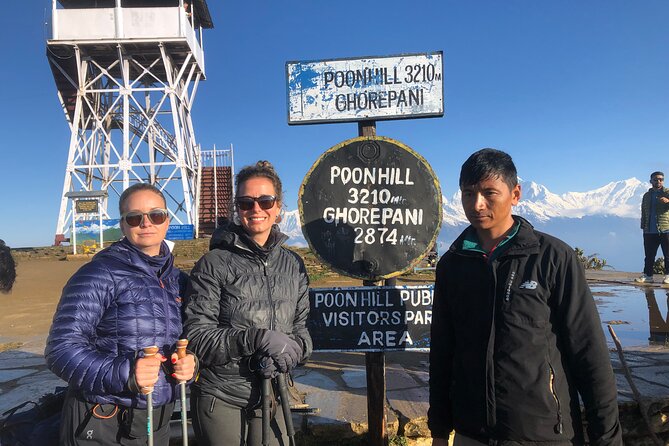
- A route that mixes cultures on purpose: monasteries, villages, and regional traditions as the scenery and elevation shift.
- Serious altitude pacing: an acclimatization day around 3,500m before you move toward the high pass area.
- Big-day support around Thorong-la: you’re guided from Yak Kharka up to Thorong basecamp/Thorong Phedi and then over the pass.
- Included essentials that prevent hassle: permits, food (breakfast/lunch/dinner), tea or coffee, treated water, and fresh fruit after dinner.
- Staff + practical extras: guide and porter support, plus a down jacket you can return after the trip, a duffle bag, and a t-shirt gift.
- Private group vibe with local transport: your party is kept together, but you may use local sharing bus/jeep for ground travel.
More trails out of Kathmandu, boots ready
- Everest Base Camp Trek – 14 Days★ 5.0 · 1,499 reviews
- Everest Base Camp Trek★ 5.0 · 842 reviews
- Everest Base Camp Trekking★ 5.0 · 485 reviews
- Nagarkot Sunrise View and Day Hiking from Kathmandu★ 5.0 · 471 reviews
Annapurna Circuit Trek: why this route feels special
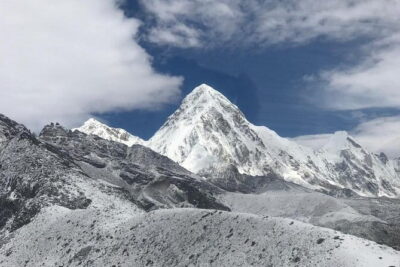
The Annapurna Circuit is not just about peaks. It’s about the slow feel of changing elevation and culture as you walk. You’ll go from Kathmandu’s city baseline into hills, then into Manang’s high mountain world, and finally up toward the pass area where the air gets thinner fast.
This tour’s schedule is built around that rhythm. You’re not jumping from low to extreme in one bound. You’ll earn elevation step by step, then take a dedicated acclimatization day before the big crossing. That matters because Thorong-la is the kind of day where good pacing beats bravery.
And the mix of religions and cultures isn’t an afterthought. The towns along the way are where the trek becomes personal: tea houses, prayer wheels, stone walls, and everyday village life, not just photo stops.
Kathmandu handoff: 3-star hotel base and early momentum
Your trek starts with an arrival-to-hotel transfer in Kathmandu, with a 3-star stay included. That’s a smart setup because you’re not trying to figure out Nepal logistics with jet lag and a sore back from day-one travel.
Pickup is included from Tribhuvan Airport, and the meeting start time is 6:15am. That means you’ll want to be awake and ready, not bargaining for extra sleep. If you’re the type who needs a slow morning to function, plan accordingly.
Also included is the admin side that makes a trek smoother: necessary documents plus government VAT. You’re not left hunting for paperwork or wondering what you still need before the trail.
Drive to Dharapani (via Beshishar): the long start that sets your rhythm
After Kathmandu, you drive to Dharapani via Beshishar. The drive is listed as 7–8 hours, starting around 2,000m.
This is one of those legs that feels like “not trekking” but still counts as real travel time. The upside is you arrive already oriented to the region, and you start the walk fresh instead of spending your first day scrambling for direction.
Then you trek to Chame (about 4–5 hours). Chame sits at 2,600m, and it’s a classic early circuit step: enough climbing to feel you’re headed higher, but still reasonable if you keep your pace steady.
Chame to Upper Pisang: village trekking with real altitude payoff
From Chame you continue to Upper Pisang in roughly 4–5 hours, around 3,300m. This is the kind of stretch where your legs warm up, and the air starts to feel different. You’ll notice it most when you stop moving and breathing becomes the focus again.
Upper Pisang is also a useful “height check.” You’re high enough that cold can sneak in, but not so high that every step turns into a battle. If you’re trying to judge your own altitude comfort, this portion is a decent early benchmark.
What I like here is the pacing is consistent with the rest of the trip. You’re not stacking too many huge hiking hours back-to-back right after the drive.
Manang and acclimatization day: the sanity stop at ~3,500m
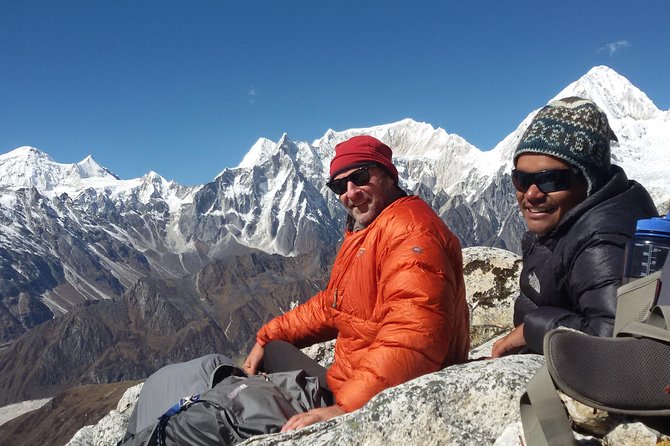
Next you trek to Manang via the upper trail, listed at 7–8 hours and around 3,500m. Yes, that’s a long day. But it’s also a common setup for circuit treks because it positions you for the acclimatization phase.
Then you get an acclimatization day. That’s not a random extra day. It’s the difference between feeling strong on approach and feeling fragile when the pass day arrives.
Acclimatization in this part of the circuit is about adaptation, not sightseeing. Plan to keep movement light, hydrate, and listen to your body. If you’ve ever tried to “power through” altitude changes, you already know this: the mountain usually wins.
Yak Kharka to Thorong Basecamp/Phedi: prepping for the 5,416m pass day
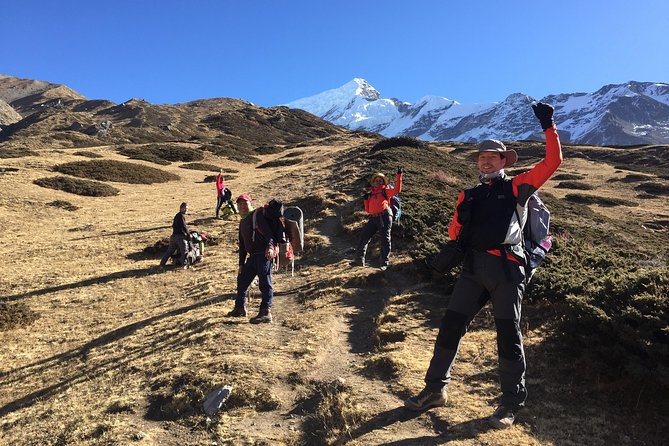
You trek to Yak Kharka in about 3–4 hours to 4,060m. This is a transition stage: you’re higher, temperatures often feel harsher, and every stop becomes more about breathing and hydration.
Then you head to Thorong basecamp or Thorong Phedi in 3–4 hours, around 4,500m. The big point is you’re now in position for the pass crossing the next day. Whether you end up at basecamp or Phedi can affect how you feel the night before—either way, you should treat this day like the final rehearsal.
For most people, the pass is not just distance. It’s cold morning conditions, steep effort, and a steady rhythm that you can’t afford to rush. This tour’s value is that it gets you into the right zone in time, with guide and porter support included.
Thorong-la to Muktinath (via the Thong/Thorong-la pass): the big day
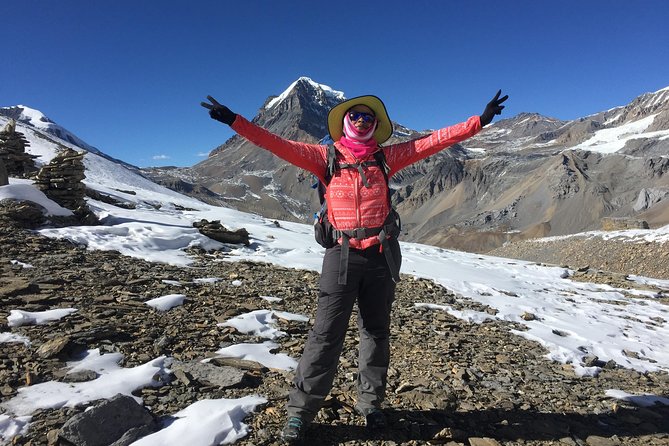
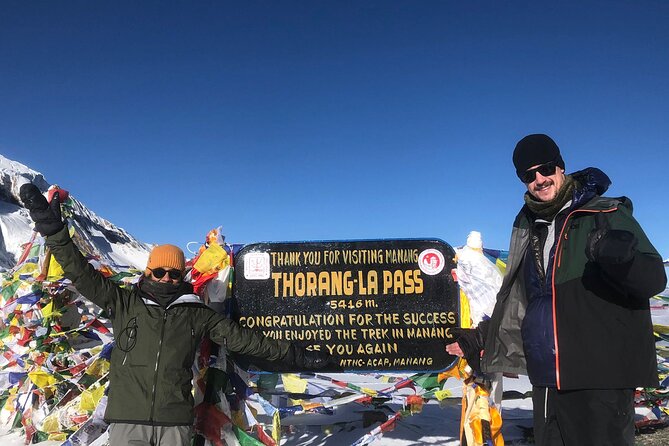
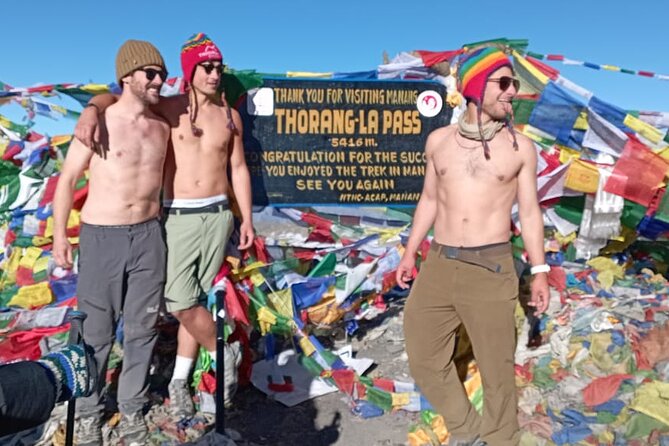
From Thorong basecamp/Phedi, you trek to Muktinath via Thong-la pass, reaching 5,416m, and then down to about 3,800m. Time is listed at 7–8 hours.
This is the defining day of the itinerary. The high point is where altitude headaches, nausea, and exhaustion can show up for anyone—even fit trekkers. The key isn’t to be a hero; it’s to move consistently and respect your limits.
Muktinath at the finish is where the “religion mix” shows up most clearly. It’s a spiritual destination, and the atmosphere shifts from mountain trekking to something more ceremonial. Even if you’re not religious, it’s a powerful place to arrive after the cold climb.
Marpha via Jomsom: dropping down to 2,650m
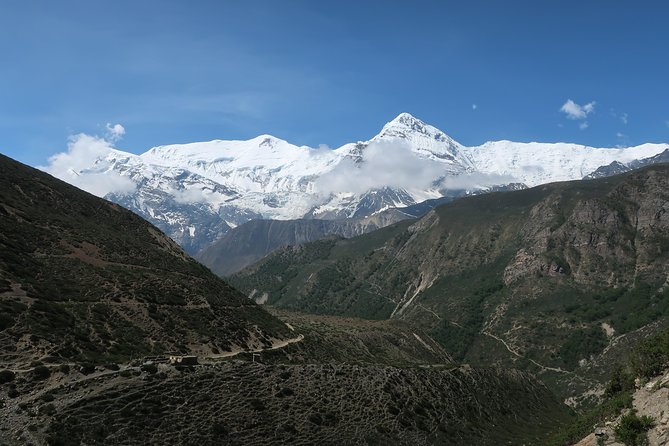
After Muktinath, you trek to Marpha via Jomsom in about 6–7 hours, dropping to around 2,650m.
This section is about transition. You’re coming off the pass and heading down into a calmer altitude zone. The air feels easier to breathe, but your legs might still feel heavy from that earlier big climb.
Marpha is also where the circuit can surprise you culturally. It’s one of those places where the pace of life feels slower than the high parts of the trek, which is exactly what your body needs after the altitude stress.
Tatopani and the Pokhara wrap-up: hot springs vibes and a softer landing
Then you drive to Tatopani by bus or jeep (about 5 hours) to roughly 1,190m. Tatopani is known for hot-spring-style recovery energy, and even if you don’t soak for long, just being lower helps your body reset.
Finally, you drive back to Pokhara (about 6 hours) to around 740m. Your trip ends here, but you do get one night in Pokhara included. That one hotel night is a nice buffer. It gives you time to shower properly, eat something that doesn’t involve trekking-hour timing, and sort gear without urgency.
Price and what $998 gets you in real value
At $998 per person, this trek pricing makes sense because it includes the costly “must-haves” that many DIY plans forget. You’re not just paying for walking. You’re paying for logistics and altitude planning.
Here’s what you’re getting that reduces risk and hassle:
- Airport pickup and drop
- 3-star hotel in Kathmandu plus one night hotel in Pokhara
- Trekside meals: breakfast, lunch, and dinner
- Tea or coffee during the trek
- Fresh fruit after dinner each day
- Treated drinking water
- Accommodation during the trek
- Guide and porter support
- Required trek documents and permits: Annapurna conservation entrance permit and TMIS card
- A down jacket (refundable after the trip), plus a duffle bag and a t-shirt gift
Also, ground transportation during the trek is handled via local sharing bus or jeep. That’s typically where people lose time on their own trips—wrong timing, wrong vehicle, or no clear handoff between legs.
To be fair, you still need to budget for things that are not included, like travel insurance and tipping. But compared to arranging everything alone, $998 can feel like buying back mental energy.
The guide and porter team: where the quality shows
The most consistently praised part of this kind of trekking program is not the mountain. It’s how well someone runs the day when weather shifts or your body doesn’t cooperate.
This tour includes an experience guide and porters (sporting staff). You’re also given treated drinking water, plus a steady food rhythm. Those small things matter more than people think when you’re tired and cold.
From the staff names associated with this company, you’ll want to watch for leaders like Dinesh and Deepak, supported by guides and team members such as Ram, Tej, Nara, and others. When you see that kind of organized team structure, it usually means you’re less likely to feel stranded when plans adjust.
And yes—medical support capability is part of what you should consider on high-altitude treks. A good team can be the difference between panic and action if someone needs urgent help.
What’s not included: the budget items you must plan for
The trip does not include:
- International airfare
- Travel insurance
- Trekking equipment
- Extra nights in Kathmandu and Pokhara before/after the trek
- Wi-fi, laundry, extra snacks, cold drinks during the trek
- Tipping for staff
- Anything not listed under included items
That means you should think about insurance early, not at the last minute. Altitude treks carry specific risks, and travel insurance is what protects you if you need evacuation.
It also means you’ll want to pack your own trekking gear. Even with a down jacket provided (refundable after), you’ll still need your core trekking setup: layers, daypack, and footgear.
How hard is it really? A practical altitude-and-time check
This is listed for moderate physical fitness. That’s a helpful starting point, but you should treat it like this: you’re walking most days, and several days are long.
Examples of what your body faces:
- Trek days of about 6–8 hours appear in multiple places.
- You climb to high elevations, reaching the pass area at 5,416m.
- You have an acclimatization day, which is great—but the next days still demand effort.
So aim for a steady pace and a consistent effort style. Don’t sprint early and hope for the best. On pass day, your breathing is your clock.
Also, start time matters. Since pickup and start are early (6:15am), your sleep schedule the night before is a big deal.
Who this Annapurna Circuit trek suits best
This tour fits you if:
- You want a guided trek with logistics handled end-to-end
- You’re comfortable with altitude and long hiking days
- You prefer a private-group feel (your group participates together)
- You value included food, treated water, and daily small comforts like fruit after dinner
It might not fit you if:
- You want a short, easy hike
- You dislike early starts and cold nights near high elevation
- You prefer to fully DIY permits, transport, and paperwork
Should you book this Annapurna Circuit Trek?
I’d book this if you want the classic Annapurna Circuit experience, but with less mental load. The $998 price is doing real work for you by covering permits, meals, treated water, guide/porter support, Kathmandu and Pokhara hotels, and key transport legs.
If you’re serious about doing Thorong-la safely and comfortably, the acclimatization day and the staging to basecamp/Phedi are the kinds of choices that help you enjoy the trek instead of just surviving it.
If you are flexible, willing to plan for cold and altitude, and ready for a multi-day walking commitment, this is a strong option for the money.
FAQ
What time is the Kathmandu airport meeting start time?
The meeting start time is 6:15am at Tribhuvan Airport, Kathmandu Nepal.
Are airport transfers included?
Yes. The package includes airport pickup and drop.
Are trekking permits included?
Yes. The Annapurna conservation entrance permit and TMIS card are included.
What food and drinks are covered during the trek?
You’ll get breakfast, lunch, and dinner during the trek. Tea or coffee is included, and there is treated drinking water. Fresh fruit is provided after dinner every day.
Is trekking equipment included?
No. Trekking equipment is not included in the price.
What is not included during the trek?
Wi-fi, laundry, extra snacks, and cold drinks are not included.
More Trekking Out of Kathmandu
More Tour Reviews in Kathmandu
Just Reviewed in Kathmandu
- Mountain Bike Tour
★ 5.0 · 3 reviews - Annapurna Panaroma
★ 5.0 · 3 reviews - Mount Everest Scenic Flight 50 Minutes
★ 5.0 · 3 reviews - Kathmandu : Swambhunath & Durbar Square Guided Half Day Tour
★ 3.3 · 3 reviews - Chandragiri Cable Car & Monkey Temple Tour – Private/Group
★ 5.0 · 3 reviews - Kathmandu: Shivapuri National Park Hiking Day Trip
★ 3.3 · 3 reviews
Annapurna Circuit Treks, compared.
 ★ 5.0Annapurna Circuit Trek with Tilicho LakeFrom $1,093368 reviews
 ★ 5.0Annapurna Circuit TrekFrom $1,17594 reviews
★ 5.0Annapurna Circuit TrekFrom $2,24067 reviews
★ 5.0Annapurna Circuit TrekFrom $1,07449 reviews
★ 5.0Annapurna Circuit TrekFrom $1,35046 reviews
★ 5.0Annapurna Circuit TrekFrom $1,15035 reviews
★ 5.0Annapurna Circuit TrekFrom $97534 reviews
★ 5.0Annapurna Circuit TrekFrom $99427 reviews
★ 5.0Annapurna Circuit TrekFrom $1,17594 reviews
★ 5.0Annapurna Circuit TrekFrom $2,24067 reviews
★ 5.0Annapurna Circuit TrekFrom $1,07449 reviews
★ 5.0Annapurna Circuit TrekFrom $1,35046 reviews
★ 5.0Annapurna Circuit TrekFrom $1,15035 reviews
★ 5.0Annapurna Circuit TrekFrom $97534 reviews
★ 5.0Annapurna Circuit TrekFrom $99427 reviews
Browse the lists this tour appears in