

Review · ANNAPURNA CIRCUIT TREKS
Annapurna Circuit with Tilicho Lake
A high-mountain lake first, then a giant pass. This trek strings together Tilicho Lake in Manang, the big altitude milestone of Thorong La, and the sunrise show from Poon Hill. I love how the route mixes forests, Tibetan settlements, and quiet alpine valleys, and I also love that you get real support on the hard days with an English-speaking, government-licensed leader plus a porter team. The one drawback to plan around: altitude and early wake-ups are not optional, and the trip moves through some rough scree and cold, windy conditions.
What makes this tour feel practical is the way the logistics are handled end-to-end. Airport transfers use a private vehicle, Kathmandu and Pokhara stay in 3-star hotels with breakfast, and during the trek you sleep in teahouses with all your meals included. It’s also a small group setup, listed as 4 trekkers to 1 assistant guide, with porter support (2 trekkers share 1 porter), which usually means you’re not stuck waiting around as often.
At $1,599 per person, the price only makes sense if you want the full package: permits, staff, meals, and most ground transport are included, not just the walking. If you’re hoping to do it super independently with cheap costs, you’ll likely find other ways to trek. But if you want fewer headaches and a smoother flow from Kathmandu to Pokhara, this one has strong value on paper—assuming you’re ready for the physical side.
In This Review
- Key Highlights You’ll Notice Fast
- Three Zones of Nepal in One Trek: Manang, Tilicho, and the Kali Gandaki Side
- Price and Value: What You Pay For (and What You Don’t)
- How the Team Support Actually Helps on Altitude Days
- Kathmandu City Tour: More Than a Warm-Up
- The Long Drive to Syange and the First Trek Steps Through Fields
- Dharapani to Chame: Forest Ridges and Hot Springs Relief
- Chame to Manang Via Pisang and Upper Pisang: The View Upgrade
- Acclimatization Day in Manang: Training Your Brain and Body
- Siri Kharka and the Tilicho Approach: Where Loose Ground Tests Patience
- Tilicho Lake: Early Start, Steep Switchbacks, Big Payoff
- Yak Kharka and Thorang Phedi: High-Altitude Valleys and the Final Setup
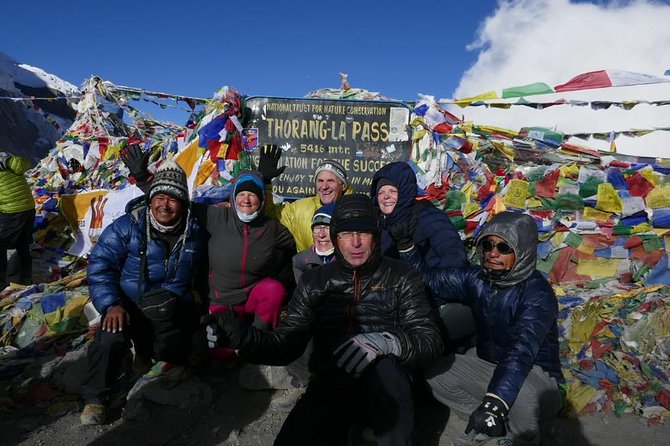
- Thorong La Pass: The Early-Morning Challenge at 5,416m
- Muktinath and Tatopani: Temples, Waters, and a Reset
- Ghorepani and Poon Hill: Rhododendron Forests and Sunrise Drama
- Pokhara and Back to Kathmandu: Finish With a Soft Landing
- Should You Book This Annapurna Circuit with Tilicho Lake Trek?
- FAQ
- How long is the Annapurna Circuit with Tilicho Lake trek?
- Where does the tour start and end?
- Is airport pickup and drop included?
- What kind of accommodation do I get?
- Are meals included during the trek?
- Are trekking permits included?
- Is travel or rescue insurance included?
- What’s the fitness level needed?
- How many trekkers are in the group?
Key Highlights You’ll Notice Fast
- Tilicho Lake visit at 4,949m, with an early start to reduce wind trouble
- Thorong La pass crossing (5416m) with a very early start and big Himalayan panorama payoff
- Poon Hill sunrise views over the Annapurna and Dhaulagiri ranges
- Small-group support: English-speaking licensed leaders and porter service built into the trek
- Meals and permits included (ACAP and TIMS), so you’re not micromanaging logistics
Not sure yet? Here are other Kathmandu tours worth a side-by-side look.
- Everest Base Camp Trek – 14 Days★ 5.0 · 1,499 reviews
- Everest Base Camp Trek★ 5.0 · 842 reviews
- Private Kathmandu Sightseeing Tour | UNESCO World Heritage sites★ 5.0 · 756 reviews
- Kathmandu: 7 UNESCO Sites with Lunch★ 4.8 · 744 reviews
Three Zones of Nepal in One Trek: Manang, Tilicho, and the Kali Gandaki Side
This trek works because it doesn’t just do one famous thing. It layers three high-impact zones into a single trail arc.
First, you spend time in the Manang area, where the scenery and the culture shift noticeably from lower Nepal. You’ll see terraced fields and river valleys at the start, then gradually move into colder, drier high-country terrain. You also get to pass through Tibetan-influenced settlements and monasteries, which matters because it changes how the mountains feel: less jungle-to-ice, more open-air high altitude.
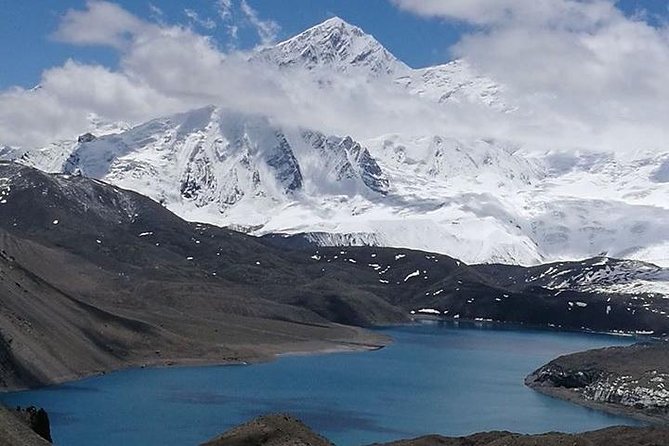
Then comes Tilicho Lake. This is one of those bucket-list destinations for a reason: you reach the world’s highest lake at 4,949m, and it’s described as The Great Ice Lake by a French expedition leader. The experience is less about a town and more about standing above a hard-edged, ice-cold kind of beauty where the lake sits at the foot of Tilicho Peak.
Finally, you pivot toward the Thorong La route and descend into the sacred Muktinath area. After one of Nepal’s highest passes, you move from icy air and steep terrain to a more human place—temples, prayer flags, and hot springs—before the trail winds back toward the Annapurna foothills.
If you like mountain travel that changes pace and feel every few days, this itinerary is built for you.
Price and Value: What You Pay For (and What You Don’t)
$1,599 is not a bargain price, but it also isn’t just for “a guide with a map.” The included pieces are the expensive stuff that usually eats time and nerves:
- Kathmandu and Pokhara hotels (3-star) with breakfast
- Teahouse accommodation during the trek
- All trek meals: breakfast, lunch, and dinner
- Airport pickup and drop in a private vehicle
- Permits handled for you (ACAP and TIMS)
- Licensed trek leader and assistant trek leader
- Porter service, plus staff costs (insurance, food, and accommodation are included in the tour setup)
- Medical kit carried by your trek leader
What’s not included is also clear. You’ll need to budget for Nepal’s visa fee, international flights, travel and rescue insurance, and your personal expenses (phone calls, laundry, bar tabs, battery recharges, and the usual stuff). Tips for guide and porter are also not included.
For me, the value case is strongest if you want everything planned: meals covered, permits handled, and someone actively managing the pace and altitude risk. If you already know how you’ll handle logistics and you like to self-manage every detail, you may feel the package is paying for convenience. But if you’d rather show up, walk, and let someone else handle the moving parts, this is priced like a guided mountain experience.
How the Team Support Actually Helps on Altitude Days
This kind of trek doesn’t fail because people lack courage. It fails when people get tired, cold, and behind schedule. The tour’s structure aims to prevent that.
You’re traveling with a government-licensed, English-speaking trek leader and assistant leader, and a medical kit is carried. There’s also a named emphasis on acclimatization and mountain sickness education: you’ll have an optional visit to the Himalayan Rescue Association in Vraga village, with a briefing on acute mountain sickness symptoms and prevention. That’s the practical kind of prep, not just a lecture.
On top of that, the guide and assistant ratio (with a small group and porter support) tends to make daily schedules smoother. You’re not stuck carrying everything up steep sections, and you’re less likely to fall into the classic trap of burning yourself out trying to manage gear.
In the reviews associated with this operator, guides like Bishnu and Sanam Sherpa come up for being organized and helpful with trip logistics. Another name you’ll see attached to positive experiences is Ganesh as a guide. I can’t guarantee every trek uses the exact same staff roster, but the consistent theme is clear: people rate the team for managing details and staying attentive.
Kathmandu City Tour: More Than a Warm-Up
Your trek begins in Kathmandu, and you get a guided city day that’s useful for two reasons.
First, it gets you into Nepal’s real texture right away: Buddhist and Hindu landmarks close enough to visit in one loop. You’ll go to Boudhanath Stupa, Pashupatinath Temple, Patan Darbar Square, and Swayambhunath Stupa. Swayambhunath is perched high above the valley floor, and you’ll get a bird’s-eye view of the city from there.
Second, you use that time to get oriented before you climb. You meet your trek leader group and get a pre-trip discussion, so you can ask questions about what to expect on the trail and how the trek will be managed.
This is the kind of day that can save you later. If you understand the plan early, you’re less stressed on the bus ride out of Kathmandu and less likely to scramble when the trekking gear reality hits.




The Long Drive to Syange and the First Trek Steps Through Fields
The first big travel day is the drive from Kathmandu to Syange, listed around 8 hours. This matters more than it sounds. You’re not just burning time—you’re watching Nepal’s geography change. Rivers run through green hills, villages cluster near farmland, and the mountain silhouettes start showing themselves more clearly.
When you start trekking afterward, the trail begins with a mix of suspension bridges and steep climbs into the Manang region. You’ll pass through agricultural zones—barley, rice, and potato fields—with waterfalls alongside the trail. You also pass through a larger Manang valley village area (Kodo is described as one of the biggest villages in the Manang valley).
What I like about this early portion is that it’s not the “nothing but stone and ice” version of high altitude. It gives you time to settle into the rhythm: walk, pause for views, and learn how your body responds before the cold, high days arrive.
Dharapani to Chame: Forest Ridges and Hot Springs Relief
From Dharapani toward Chame, the trail turns more forested. Pine, fir, oak, and maple trees show up along a river route. This is a good sign for your senses: forest days often feel mentally easier because the ground and shade can make the walk feel less exposed than the open ridge sections.
Chame is the district headquarters area for Manang, and it’s positioned like a gateway into higher terrain. You’ll also have a chance to stop by small hot springs. Even if you don’t soak for long, the idea matters: you’re preparing your legs for colder nights and higher elevations.
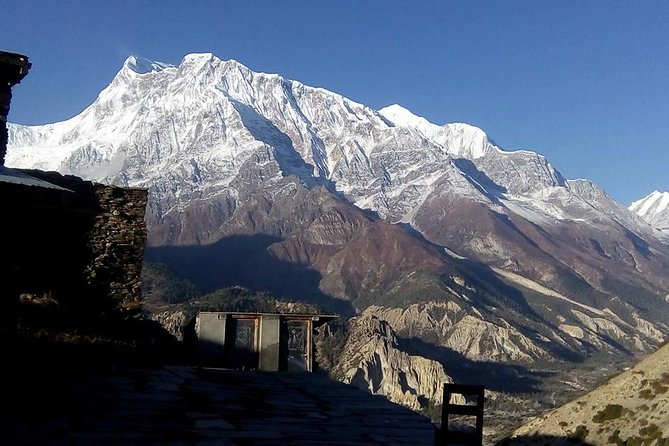
This stretch has a tradeoff. There are landslides mentioned on the route, so you’ll want to keep your focus on footing and stay flexible. The upside is you get big mountain views looking up at peaks like Lamjung Himal, Annapurna II, and Annapurna IV.
Chame to Manang Via Pisang and Upper Pisang: The View Upgrade
Once you move toward Pisang, you enter a steeper and narrower valley feel. A key landmark here is Paungda Danda, described as a curved rock face rising 1500m from the river. It’s dramatic enough that it changes how you experience the trail—suddenly you’re walking with an enormous, stone wall in your view.
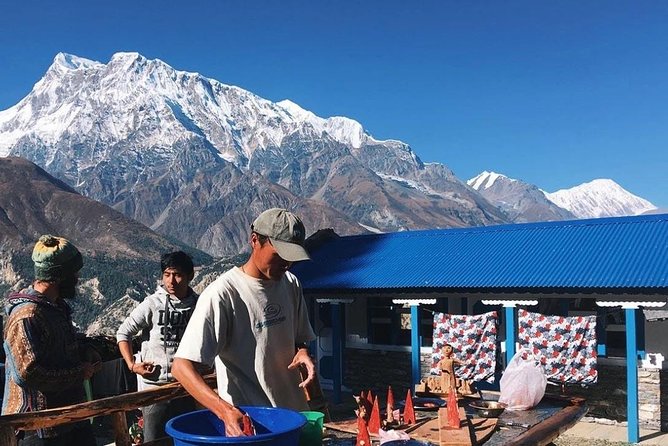
From Pisang toward Manang, the route choice is important. The itinerary specifically opts for the Upper Pisang path via Geru because it offers outstanding north-face views of Annapurna II, III, IV, Gangapurna, Tilicho, and Pisang Peak. You also see Tibetan settlement areas and visit Barge Monastery, described as the largest in Manang district.
If you’re a “views matter” person, this is one of the smarter choices in the whole trek. It’s also where the air starts to feel more cold and dry as you ascend.
Acclimatization Day in Manang: Training Your Brain and Body
This tour includes an acclimatization-focused day. You’ll hike either to Bhojo Gumba or Gangapurna Lake, depending on energy and conditions. The bigger point is that you’re doing controlled movement while keeping rest within reach.
If you have the energy, the plan includes a possible visit to Vraga Village for Himalayan Rescue Association briefing on acute mountain sickness. That’s a big deal because it’s not just theory. It helps you recognize symptoms early and understand what prevention looks like in practice.
This kind of day is one reason many people complete the trek comfortably. Not because it makes altitude harmless, but because it teaches your body to adapt while you still have momentum.
Siri Kharka and the Tilicho Approach: Where Loose Ground Tests Patience
After Manang, the trail heads toward the higher side toward Siri Kharka (4,060m to 4,140m areas described). You’ll walk through coniferous forest, cross rivers, and pass monasteries. The views you get around Gungang Himal and Mt. Chulu are part of the reward for the climb.
Then the route to Tilicho Base Camp becomes more technical in feel. You’re warned that even if it isn’t the steepest physically, it can still feel exhausting because the paths are narrow and the ground includes loose scree and landslide zones. You’re walking through the middle of a landslide area with impressive rock formations along the trail.
This is where I’d suggest treating the hike like a skill session. Short steps, steady breathing, and staying calm about uneven ground is how you keep energy for the later lake push.
Tilicho Lake: Early Start, Steep Switchbacks, Big Payoff
Tilicho Lake is scheduled with a deliberate early start to avoid afternoon wind. The climb from Tilicho Base Camp to the lake is described as a steep, consistent ascent of about 2–3 hours.
Once you reach the lake, it’s described as large and sparkling, sitting at the foot of Tilicho Peak’s north face. This is not a place you rush. You take time, then return the same route back to Siri Kharka.
One practical note: you’re at very high altitude here (4,949m). Even if your pace is good, cold air can make you feel slow and heavy. Plan to dress in layers and take warm breaks before you feel miserable. This is also where your guide’s pacing matters most—slow and steady beats heroic.
Yak Kharka and Thorang Phedi: High-Altitude Valleys and the Final Setup
After Tilicho, you descend to Khangsar, pass Tare Gumba (described as a thousand-year-old monastery), and continue into the Thorong Khola valley. You cross a bridge, hike up to a plateau, and reach Yak Kharka—an area with views of Annapurna ranges and wildlife possibility like blue sheep (bharal). A snow leopard sighting is mentioned as possible if you’re lucky, but don’t build your entire trip around seeing one.
The next key step is Thorong Phedi, described as the last busy settlement before the pass. The route includes an uphill push through cliffs and involves crossing a suspension bridge and passing Ledar village before reaching the settlement where you’re essentially setting up for the pass.
This segment is where the trek turns from “beautiful hike” into “mountain operation.” You’re moving with purpose.
Thorong La Pass: The Early-Morning Challenge at 5,416m
Thorong La is the headline. The plan has you waking around 3 a.m. to make the crossing. You’ll walk up through icy air and high altitude, and the itinerary notes the pass is among the highest passes in the world.
The important practical detail: the crossing is from east to west (Manang to Muktinath), described as the easiest and safest direction in this plan. When you reach the top, you get a panorama extending northward into Tibet, with a view of main Annapurna peaks behind you.
Then you descend to Muktinath at around 3,800m. This matters for your recovery. The pass is hard, but the trek immediately gives you a goal worth it—and after the top, you get into a sacred place.
Muktinath and Tatopani: Temples, Waters, and a Reset
Muktinath is a sacred area for both Hindus and Buddhists. The Buddhists call it Chumig Gyatsa, described as meaning Hundred Waters. You visit the temple before continuing to Tatopani.
Tatopani is famous for natural hot springs. This is where many people feel the trek shift from endurance to recovery. Even a short soak can make your next walking days feel less brutal.
Ghorepani and Poon Hill: Rhododendron Forests and Sunrise Drama
The walk from Tatopani toward Ghorepani goes through villages like Shikha and Chitre and includes a terraced farmland section. Then you enter rhododendron and forest areas, including birch, magnolia, and rhododendron. When rhododendrons are in bloom, the trail turns pink or red underfoot—exact timing depends on the season.
Ghorepani sits on a ridge top, and it’s used as the staging point for Poon Hill.
Poon Hill is at 3,210m. You’ll head up early in the morning for sunrise, with views described over the Annapurna and Dhaulagiri massif, including Machhapuchhre (Fishtail), Manaslu, and surrounding peaks. After Poon Hill, you trek back down to Nayapul and then drive to Pokhara.
This is the trek’s “take a breath” finale. It’s also a good moment to mentally file the whole journey: the lush start, the Manang monasteries, Tilicho’s ice-cold presence, Thorong La’s height, and the warmth of valley towns.
Pokhara and Back to Kathmandu: Finish With a Soft Landing
After reaching Pokhara, you have time to relax, recover, and enjoy the lake-city atmosphere. Then you drive back to Kathmandu for your departure.
If you’re the type who wants to keep the trip moving, you can also add a 25-minute flight from Kathmandu back on request as part of the overall setup. Your tour version describes the car-to-air option as something you may choose, but it’s not included in the main package.
The key is that you end with cushioning. You’re not immediately thrown back into airports and long city navigation after high altitude.
Should You Book This Annapurna Circuit with Tilicho Lake Trek?
I’d book it if these describe you:
- You want Tilicho Lake and Thorong La in one trip without having to piece logistics together.
- You’re okay with early starts and serious altitude exposure.
- You like small-group support and want meals and permits handled for you.
- You care about views at multiple altitudes, not just one highlight.
I’d think twice if:
- You dislike cold mornings and early wake-ups (3 a.m. is part of the pass plan).
- You want a softer, low-stress trek with no rough ground. Loose scree and landslide sections are part of the Tilicho approach.
- You’re looking for a budget DIY style trek. The included meals, staff, and permits raise the price.
If you do decide to go, do yourself one favor: take acclimatization seriously, even on the days labeled easier. And bring warm layers you can actually layer up fast. You’ll feel smarter for it on the cold mornings.
And yes, you can cancel up to 24 hours in advance for a full refund, so if plans are fragile, that flexibility can help.
FAQ
How long is the Annapurna Circuit with Tilicho Lake trek?
The duration is listed as 19 days approximately.
Where does the tour start and end?
It starts with arrival in Kathmandu and ends with a drop at Tribhuvan International Airport in Kathmandu for your onward flight.
Is airport pickup and drop included?
Yes. The tour includes airport pickups and drops in a private vehicle.
What kind of accommodation do I get?
You’ll stay in 3-star hotels with breakfast in Kathmandu and Pokhara, and teahouse accommodation during the trek.
Are meals included during the trek?
Yes. All meals (breakfast, lunch, and dinner) are included during the trek.
Are trekking permits included?
Yes. The tour states that necessary permits are included, including ACAP and TIMS.
Is travel or rescue insurance included?
No. Travel and rescue insurance is not included.
What’s the fitness level needed?
The tour says travelers should have a moderate physical fitness level.
How many trekkers are in the group?
The tour notes a small group setup: 4 trekkers with 1 assistant guide, and porter service where 2 trekkers share 1 porter.
More Tour Reviews in Kathmandu






Just Reviewed in Kathmandu
- Mountain Bike Tour
★ 5.0 · 3 reviews - Annapurna Panaroma
★ 5.0 · 3 reviews - Mount Everest Scenic Flight 50 Minutes
★ 5.0 · 3 reviews - Kathmandu : Swambhunath & Durbar Square Guided Half Day Tour
★ 3.3 · 3 reviews - Chandragiri Cable Car & Monkey Temple Tour – Private/Group
★ 5.0 · 3 reviews - Kathmandu: Shivapuri National Park Hiking Day Trip
★ 3.3 · 3 reviews
Annapurna Circuit Treks, compared.
 ★ 5.0Annapurna Circuit Trek with Tilicho LakeFrom $1,093368 reviews
 ★ 5.0Annapurna Circuit TrekFrom $1,17594 reviews
★ 5.0Annapurna Circuit TrekFrom $2,24067 reviews
★ 5.0Annapurna Circuit TrekFrom $1,07449 reviews
★ 5.0Annapurna Circuit TrekFrom $1,35046 reviews
★ 5.0Annapurna Circuit TrekFrom $1,15035 reviews
★ 5.0Annapurna circuit TrekFrom $99835 reviews
★ 5.0Annapurna Circuit TrekFrom $97534 reviews
Browse the lists this tour appears in