
Review · NEPALI COOKING & MOMO CLASSES
Kathmandu: Nepali Cooking Class with Hotel Pickup
Food lessons move fast in Kathmandu. I love how this class mixes a real market run with hands-on cooking, so the meal isn’t just memorized—it makes sense. You also get to cook crowd favorites like momo and sel roti, with an English-speaking instructor who explains how the food fits local life.
Two things really sell me on this experience: the rickshaw ride to Kathmandu-Ason to pick ingredients, and the practical cooking time where you actually make the food. One thing to plan around: the day can feel shorter than the stated 4 hours, and a market stop may be more limited depending on the day and your group.
In This Review
- Quick hits before you go
- Why a Kathmandu market stop changes everything
- Hotel pickup from Thamel and the Ason rickshaw ride
- What you’ll cook: momo, curries, roti-style bread, and sel roti
- The class atmosphere: folk music, phrases, and mealtime energy
- Ingredient lessons: how the instructor ties culture to technique
- Price and timing: when $60 feels like a smart deal
- Practical tips to make the day run smoothly
- Should you book this Nepali cooking class in Kathmandu?
- FAQ
- How long is the cooking class?
- Do I get hotel pickup and drop-off?
- Is there a market visit before cooking?
- What dishes will I learn to cook?
- Is the instructor available in English?
- Does the tour run rain or shine?
- What do I need to bring?
Quick hits before you go
- Hotel pickup from Thamel makes it easy to start without scrambling
- Rickshaw to Kathmandu-Ason turns ingredient shopping into part of the experience
- Hands-on cooking of momo, curries, roti-style bread, and sel roti
- English instruction plus English audio helps you follow along even with food terms
- Folk music and Nepalese phrases keep the class lively while you eat
More time at the stove
- Half day cooking class in Thamel kathmandu★ 5.0 · 607 reviews
- Kathmandu: Local Women-Led Nepali Cooking & Momo Class★ 4.9 · 360 reviews
- Kathmandu: Local Lead Nepali Cooking & Momo-Making Class★ 5.0 · 212 reviews
- Local Women Lead Nepali Cooking Class★ 5.0 · 125 reviews
Why a Kathmandu market stop changes everything
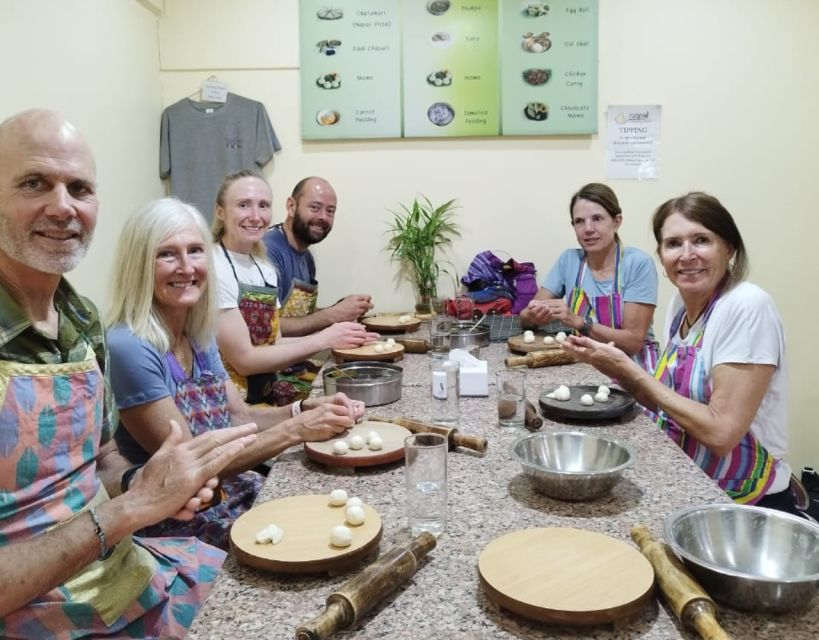
There’s a big difference between cooking with a cookbook and cooking with the actual ingredients you chose nearby. With this class, you go out first to buy what you’ll cook, and that sets the tone for the rest of the lesson. You’re not just learning steps—you’re learning why those ingredients matter.
I also like that the instructor frames food culture alongside the meal. That matters in Nepal, where ingredients, spice blends, and cooking styles are closely tied to everyday habits. When you later shape, mix, and cook in the kitchen, the “story” becomes something you can taste.
If you’re the type who cares about flavor logic, this is a strong setup. If you’d rather skip shopping and get straight to cooking, you may find yourself wanting more kitchen time—especially since some bookings report the class running shorter than expected.
Hotel pickup from Thamel and the Ason rickshaw ride
This starts with hotel pickup and drop-off from the Thamel area, which is a win if you’re trying to keep Kathmandu days simple. You don’t have to figure out the route, haggle for transport, or worry about being late with a group that’s already moving.
Then you head to a local market in Kathmandu—Kathmandu-Ason—by rickshaw. For many visitors, that ride is the first dose of local pace: narrow lanes, quick turns, and the sense that everyone has a destination. It’s also practical. By the time you reach the market, you’re already in the Kathmandu flow, not waiting around.
Here’s the consideration: a market visit can range from a more involved stop to something that feels closer to a quick shop. If you’re hoping for a long, walk-every-aisle style morning, give yourself a little flexibility. It’s still worth doing for the ingredient piece, but don’t assume it will match your idea of a full market tour.
What you’ll cook: momo, curries, roti-style bread, and sel roti
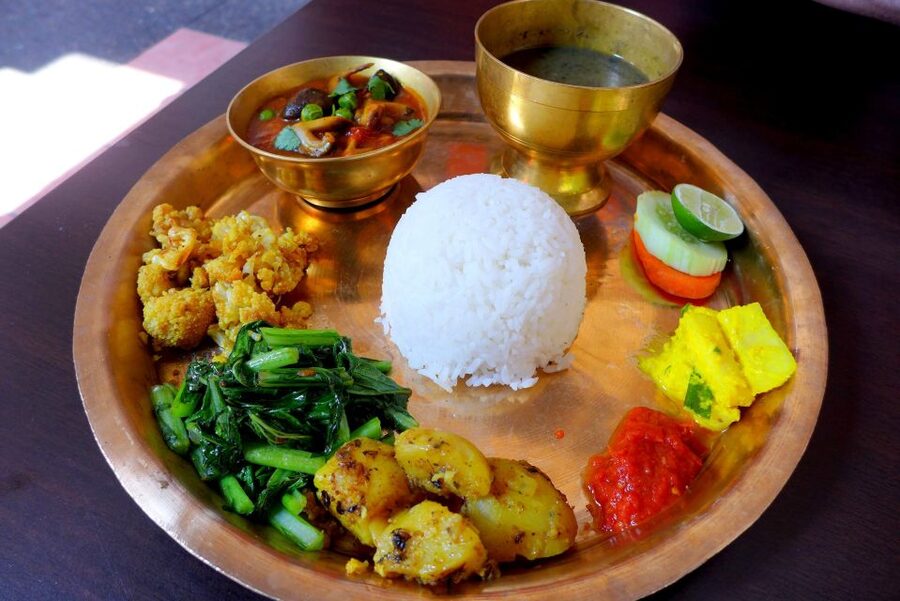
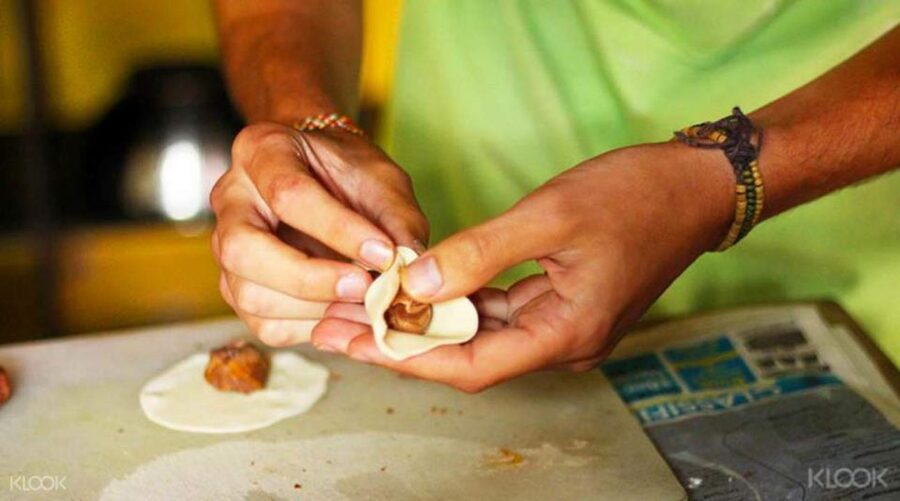
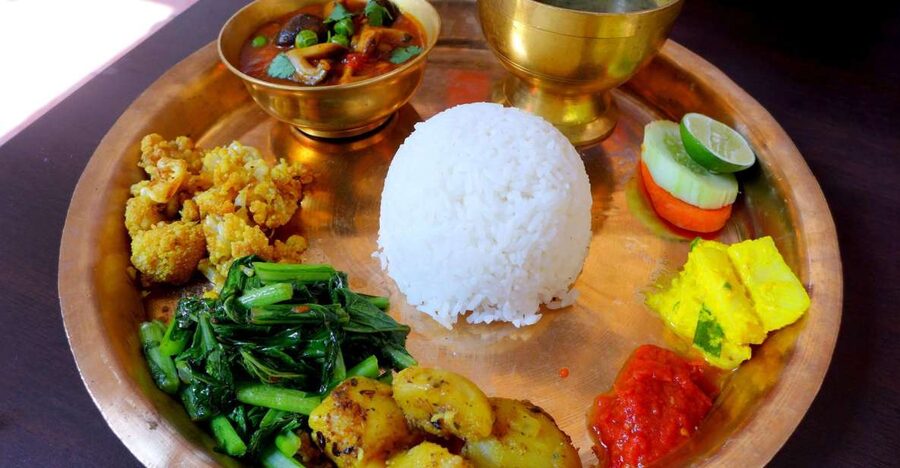
Now the fun part: the kitchen time. You’ll cook a traditional Nepali meal with the guidance of your experience chef instructor, following along in an English-friendly format. The dishes listed are very clear, and they give you a balanced plate: savory mains, warming curries, and a sweet, playful finish.
You’ll make:
- momo
- varieties of curries
- a unique bread that includes roti
- sel roti, which is slightly similar to American donuts
I like that mix because it’s not just one technique. Momo has its own shaping rhythm, curries teach how flavors come together through cooking, and roti-based bread adds another texture and heat pattern. And sel roti is a great “wow” dish—ring-shaped, fried, and noticeably different from what many people expect when they sign up.
If you’re expecting strict fine-dining plating, that’s not the vibe. This is about making familiar, beloved foods you can actually recreate later at home. You’ll also learn what ingredients are used and how the dishes are prepared, so you’re not leaving with only recipes—you’re leaving with an understanding of the building blocks.
The class atmosphere: folk music, phrases, and mealtime energy
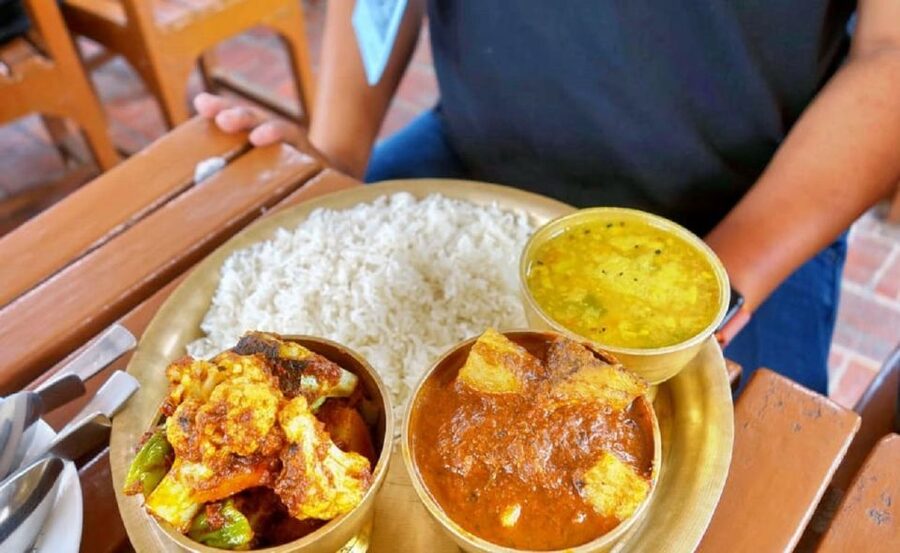
Cooking classes can get either stiff or chaotic. This one aims for the middle, and the included details help. During the class and at mealtime, you’ll hear Nepalese folk music, which sets a comfortable rhythm while you work.
You’ll also learn some Nepalese phrases. That’s small, but it’s useful. Even a few words can turn a market visit, a greeting in a shop, or a simple thanks into something more natural than silent photo-taking.
One note: the mood depends on timing and group size. If your session runs shorter on the day, you may get less of the “hangout” feel and more straight-through cooking. Still, the music and language component are part of what makes the meal feel like an experience, not a transaction.
Make something to carry home
Ingredient lessons: how the instructor ties culture to technique
This isn’t only hands and spatulas. The instructor leads you through cooking while also talking about food culture of the region. That means you learn why certain ingredients show up together and how they’re used in traditional dishes.
You also visit the market beforehand to pick up ingredients, so the cultural talk has a direct anchor. When you see an ingredient in the market, then use it in the kitchen, it sticks better than if someone just points at a label.
The cooking part covers how the dishes are cooked, and you’ll follow along to make the meal from scratch. Since the instructor is English-speaking and an English audio guide is included, you’re set up to keep pace even if Nepali food vocabulary feels new. You don’t have to guess what’s happening.
One consideration: in a couple cases, the chef was described more like a local student. That doesn’t automatically mean the quality is low. It does mean you should go in with the right mindset: you’re there to learn, ask questions, and enjoy the process. If you’re the type who needs a very polished, celebrity-chef performance, this may not fully match that expectation. If you want real instruction and hands-on results, it’s a strong fit.
Price and timing: when $60 feels like a smart deal
At $60 per person for about a 4-hour experience, the value depends on what you care about most. You’re getting hotel pickup and drop-off from Thamel, an English instructor, a market stop for ingredients, and the chance to cook multiple dishes. That’s a packed bundle for the price—especially in Kathmandu, where transport and guided time can add up fast.
But timing is the key variable. The activity is listed as a 4-hour class, and yet some bookings reported it feeling closer to two hours. When that happens, you still usually walk away with a cooked meal and lessons, but you may feel the schedule got compressed.
So here’s my practical take:
- If you want a guided market + cooking + meal, the price can feel fair to very good.
- If you’re tightly scheduled and need a full-length 4-hour experience, build in cushion.
- If your main goal is mastering one dish deeply, a shorter class may not give you as many repeats as you’d like.
In other words: it’s a good value if you treat it as a fun learning session, not a timed masterclass with guaranteed runway.
Practical tips to make the day run smoothly
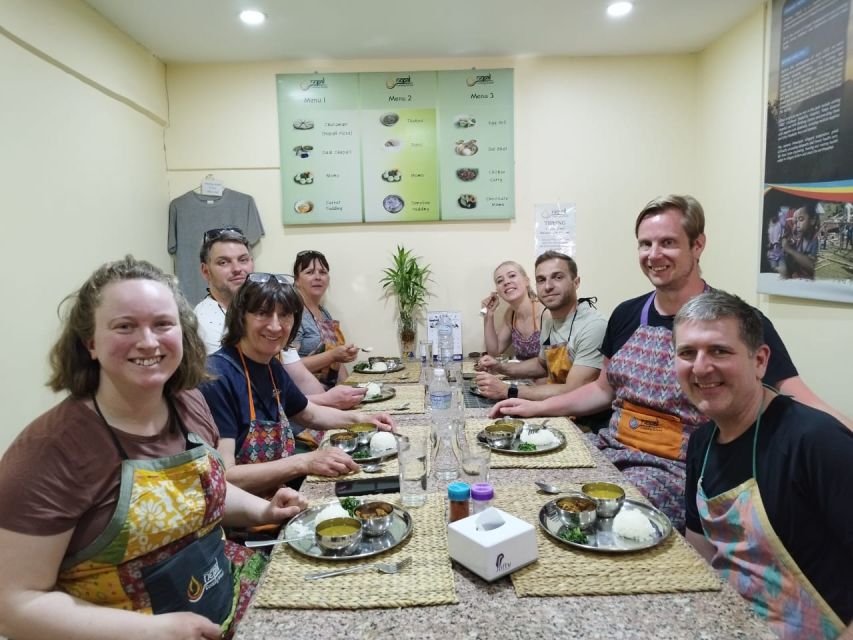
A few simple prep moves can make a big difference.
First, bring an ID or passport—a copy is accepted. You’ll also want to follow the rules: alcohol and drugs aren’t allowed.
Second, remember it runs rain or shine. Kathmandu weather can flip quickly, so wear something you can move in and consider a light rain layer. Comfortable shoes matter because you’ll be going from hotel pickup to rickshaw to market to kitchen.
Third, come hungry but not starving. You’ll be cooking and then eating your own meal, and it’s nicer when you’re not rushing through steps because you’re too distracted by your empty stomach.
Finally, use the English support. The instructor speaks English and the English audio guide is included, so don’t be shy about asking what an ingredient does or what the next step should be. If you want to recreate sel roti or curries later, ask how the instructor adjusts thickness, heat, or timing.
Should you book this Nepali cooking class in Kathmandu?
Book it if you want a hands-on Kathmandu morning that connects food to place—market first, then cooking, then a meal you helped make. It’s especially appealing if you’re staying in or near Thamel and want a guided plan with transport handled.
Skip it (or at least adjust expectations) if you’re counting on a very long cooking session. Some days seem shorter than the stated duration, and the market stop can feel more like a quick ingredient run than a big wandering tour. Also, if you want a highly polished, fully staged chef experience, be aware the instructor role may vary.
If your goal is to leave with real dishes—especially the fun payoff of sel roti—and a basic understanding of ingredients and technique, this is an easy yes.
FAQ
How long is the cooking class?
The duration is listed as 4 hours.
Do I get hotel pickup and drop-off?
Yes. Pickup and drop-off are included from the Thamel area.
Is there a market visit before cooking?
Yes. You visit a local market in Kathmandu-Ason to buy ingredients for the meal, and you go there by rickshaw.
What dishes will I learn to cook?
You’ll cook momo, varieties of curries, a roti-included bread, and sel roti.
Is the instructor available in English?
Yes. The instructor is English-speaking, and an English audio guide is included.
Does the tour run rain or shine?
Yes, it takes place rain or shine.
What do I need to bring?
Bring your passport or ID card (a copy is accepted). You should also avoid alcohol and drugs.
Make a Little Nepal to Take Home

Learn Another Nepali Dish
More Tour Reviews in Kathmandu





Just Reviewed in Kathmandu
- Mountain Bike Tour
★ 5.0 · 3 reviews - Annapurna Panaroma
★ 5.0 · 3 reviews - Mount Everest Scenic Flight 50 Minutes
★ 5.0 · 3 reviews - Kathmandu : Swambhunath & Durbar Square Guided Half Day Tour
★ 3.3 · 3 reviews - Chandragiri Cable Car & Monkey Temple Tour – Private/Group
★ 5.0 · 3 reviews - Kathmandu: Shivapuri National Park Hiking Day Trip
★ 3.3 · 3 reviews
Nepali Cooking & Momo Classes, compared.
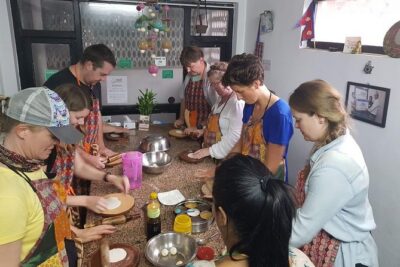 ★ 5.0Half day cooking class in Thamel kathmanduFrom $28607 reviews
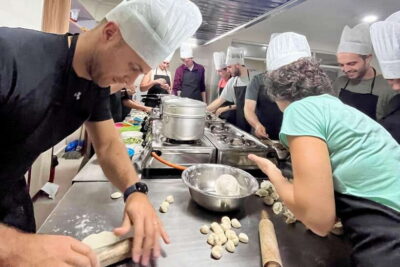 ★ 4.9Local Women-Led Nepali Cooking & Momo ClassFrom $4360 reviews
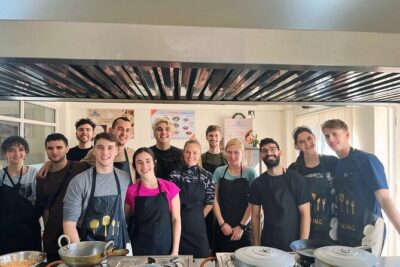 ★ 5.0Local Lead Nepali Cooking & Momo-Making ClassFrom $5212 reviews
Local Women Lead Nepali Cooking ClassFrom $30125 reviews
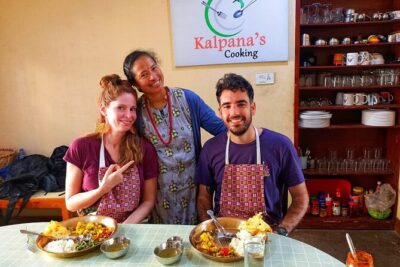 ★ 5.0The best Private Nepali Cooking Class in KathmanduFrom $2483 reviews
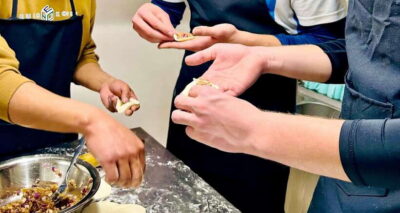 ★ 4.8Traditional Momo Making Class & PickupFrom $460 reviews
 ★ 5.0Traditional Nepali Momo Making ClassesFrom $1853 reviews
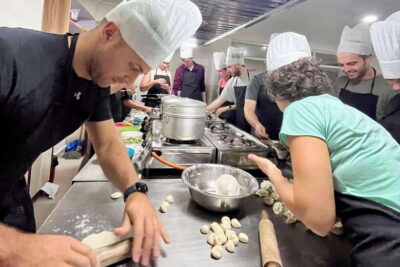 ★ 4.9Local Women-Lead Nepali Cooking & Momo ClassFrom $545 reviews
Browse the lists this tour appears in