
Review · PASHUPATINATH & BOUDHANATH TOURS
Katmandu: Pashupatinath Open Cremation & Evening Aarati
The Bagmati River teaches in silence. This is one of Kathmandu’s most intense spiritual experiences: open cremations at Pashupatinath and the evening Aarati for Lord Shiva. The catch is simple—this is not a gentle, feel-good show, and the walking and solemn atmosphere can be a lot if you have mobility limits or sensitive nerves.
I like that the whole thing is tightly timed into about 3 hours, so you’re not stuck all evening waiting around. You’ll get a car pickup with water, a short look around the temple complex, then you head toward Arya Ghat in time to find a good Aarati viewing spot (aiming to arrive by 5:30 PM).
In This Review
- Why This Pashupatinath Cremation + Aarati Combo Hits So Hard
- Timing: How the 3 Hours Work Without Feeling Rushed
- From the Main Entrance to Arya Ghat: The Walk That Matters
- The Open Cremation at Pashupatinath: What You’re Actually Seeing
- Understanding Moksha and Respectful Watching (Without Getting Weird)
- Pashupatinath Aarati at Dusk: Lamp Light, Chants, and Lord Shiva
- Driver Support vs. a Dedicated Guide: What to Expect
- What to Bring and Wear for a Religious Riverfront Evening
- Price and Value: Is $27 Worth It for This Kind of Night?
- Where It Can Go Wrong: Pickup Comfort and Expectations
- Who Should Book This, and Who Should Skip It
- Should You Book This Pashupatinath Cremation + Evening Aarati Tour?
- FAQ
- How long is the Pashupatinath open cremation and evening Aarati experience?
- Where does pickup happen?
- Does this tour include entry tickets or a meal?
- What time should I arrive for the Aarati to get a good spot?
- When does the Pashupatinath Aarati start?
- What will I see during the cremation part?
- What should I wear and bring?
- Is the tour suitable for people with mobility impairments or wheelchair users?
- Is this a private group?
- What’s the cancellation policy?
Why This Pashupatinath Cremation + Aarati Combo Hits So Hard
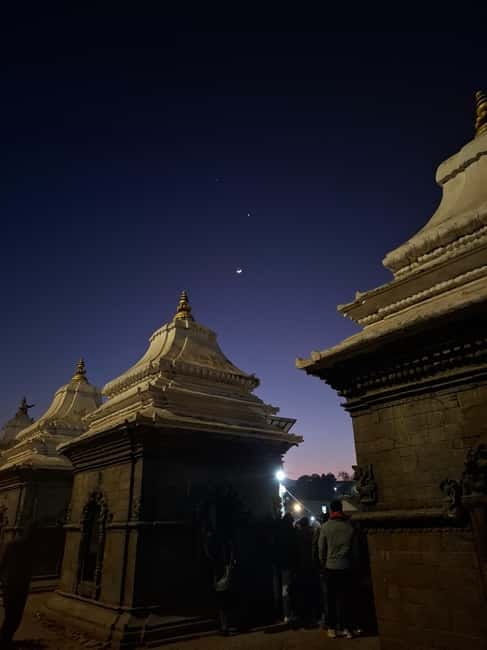
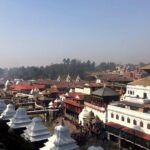
Pashupatinath isn’t just a temple. It’s a working sacred riverfront, where Hindu funeral rites unfold beside daily life. You’re in the Bagmati Zone of Kathmandu, and the experience is built around two linked moments: what people do with death here, and what they chant and worship at night.
What I really appreciate is how the tour doesn’t pretend to be comfortable. The open cremation rituals are presented as a belief system, including the idea of moksha—liberation—through cremation at this holy site. Then, when evening comes, the tone shifts to devotional rhythm and lamp light during the Pashupatinath Aarati, dedicated to Lord Shiva. It’s life and death in the same frame, and it forces you to slow down and look.
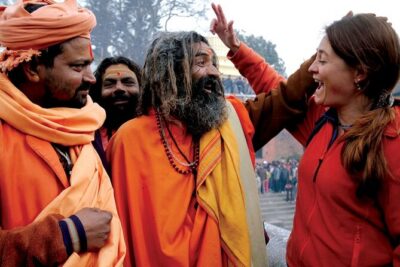
A practical note: this is a religious site and you’ll be asked to dress modestly, wear comfortable shoes, and follow do’s and don’ts. Cameras are allowed, but you should be ready for rules around where you stand and how you behave, because this is an active ritual area.
Other ways into a Kathmandu evening
- 3 Nights 4 Days Chitwan National Park with Tower Night Stay★ 5.0 · 41 reviews
- 3 night 4 Day Yoga & Ayurveda Retreat to Detox the Body & Mind, Nepal★ 5.0 · 37 reviews
- Kathmandu: Pashupatinath Temple Evening Aarati Tour★ 5.0 · 36 reviews
- Kathmandu: Pashupatinath Temple Aarti Night Tour★ 4.8 · 29 reviews
Timing: How the 3 Hours Work Without Feeling Rushed
This experience runs about 3 to 4 hours depending on where you’re picked up and traffic. The structure is straightforward:
First, you’re collected in a private air-conditioned vehicle from your location in Kathmandu. Pickup usually falls within a 15-minute window of the scheduled time. After a short briefing on do’s and don’ts, you head to the Pashupatinath temple complex.
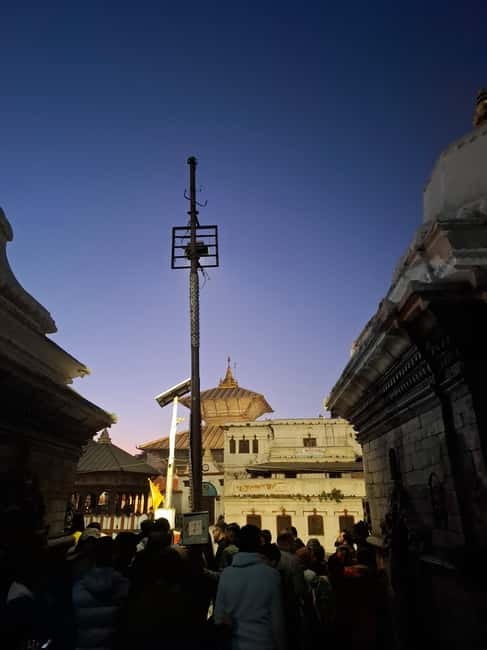
Then you transition to the most important timing piece: the Aarati. You’ll be advised to reach the Aarati viewing area at least 30 minutes early, with 5:30 PM being the target for the best view. The main Aarati starts between 6:00 and 6:30 PM, and the ceremony runs while cremation rituals may still be happening in the background. That overlap is part of what makes the evening memorable—and sometimes emotionally challenging.
The payoff is that the evening feels complete. You’re not just watching a temple ceremony from afar. You’re present as the day changes, the lamps come out, and the sacred riverfront keeps going.
From the Main Entrance to Arya Ghat: The Walk That Matters
After drop-off at the main entrance of the Pashupatinath complex, you’ll walk toward Arya Ghat, the sacred open cremation site along the Bagmati River. The walking is real, and it’s one reason the tour has clear limits on who should join—especially people with back problems, mobility impairments, wheelchair needs, or certain pre-existing medical conditions.
This part is about positioning and pacing. You’re not meant to sprint. The point is to get to the riverfront area so you can observe the funeral rites without arriving late or standing in a worse spot.
Because you’ll be outside for stretches, wear comfortable shoes and modest clothing. Bring a light layer if the evening cools off. If you plan to take photos, keep your camera ready but also remember that this is a place where people are actively grieving and performing rites—so treat it like a ceremony, not a sightseeing checkpoint.
The Open Cremation at Pashupatinath: What You’re Actually Seeing
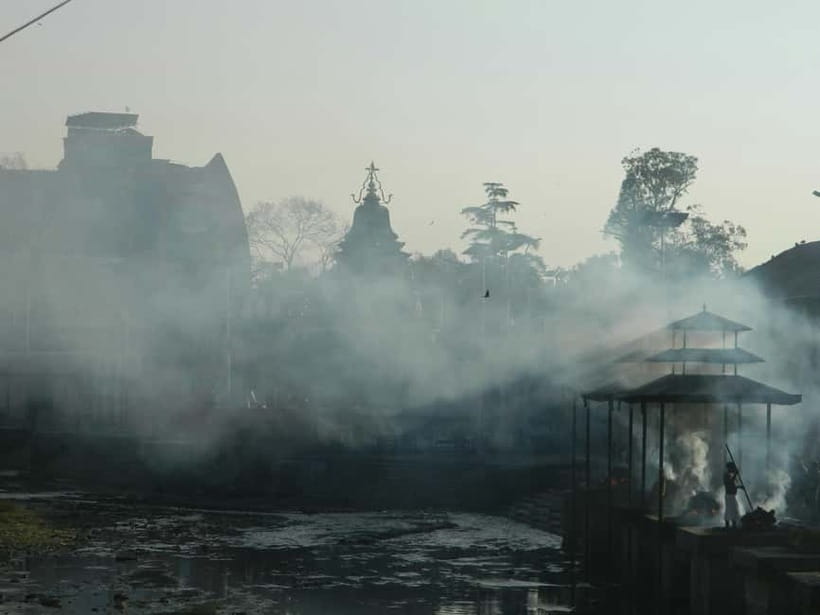
The main event is the open cremation rituals along the Bagmati River at Pashupatinath. This tradition is deeply tied to the belief that cremation at this holy site can help a person reach moksha (liberation).
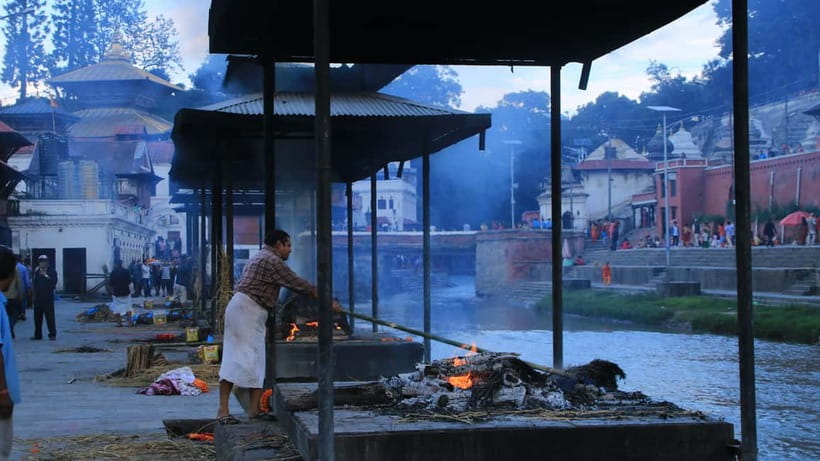
What you’ll notice depends on the timing of rites in progress, but the setting is consistent: you’re watching funeral rites unfold by the riverfront while the temple complex remains a place of worship and movement around it.
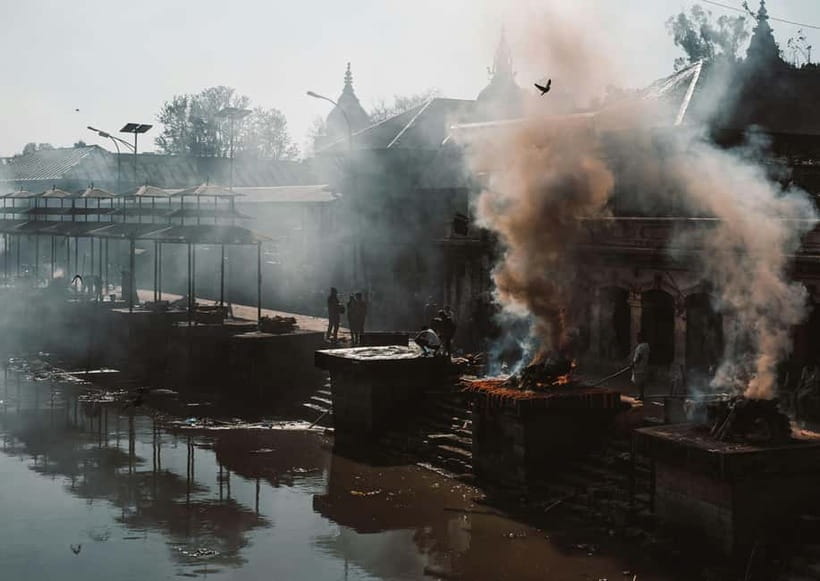
One detail that stands out in the kind of night-time scenes people describe: once it gets dark, you may see burning funeral pyres alongside a crowd gathered on stone steps/bleacher-like areas. It can feel cinematic—not because it’s entertainment, but because the scale and the light make a powerful impression.
Important for your expectations: this isn’t curated to make you comfortable. It’s presented as a serious religious practice. If you have a fragile stomach, strong fear responses around death rites, or you tend to panic in crowded, emotional spaces, think hard before booking.
Understanding Moksha and Respectful Watching (Without Getting Weird)
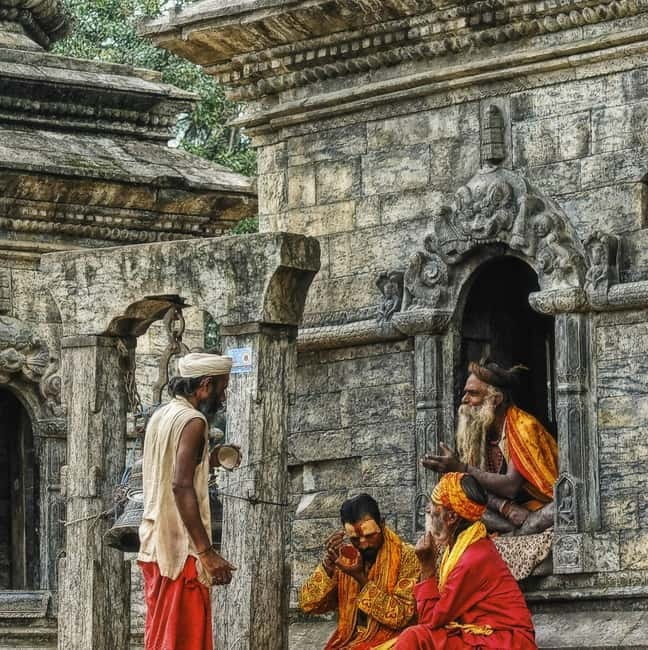
The tour frames the cremation at Pashupatinath as more than a ritual—it’s part of Hindu spirituality and the idea of liberation. That meaning matters, because it changes how you should watch.
You don’t need to become an expert in theology to be respectful, but you should go in with the right mindset:
- Treat it as a real religious process, not spectacle.
- Keep your voice low and your movements controlled.
- Follow the do’s and don’ts you receive during pickup briefing.
- If you’re taking photos, be mindful of how close you stand and whether your camera use disrupts anyone.
Where a helpful explanation really improves the experience is in the “why.” In one recent run, the person providing English interpretation—Bhum Raj Tiwari—was praised for explaining the religious logic clearly so visitors could understand why Hindus perform these rites the way they do. That kind of translation doesn’t sanitize the scene; it just gives it context so you’re not only reacting emotionally.




Pashupatinath Aarati at Dusk: Lamp Light, Chants, and Lord Shiva
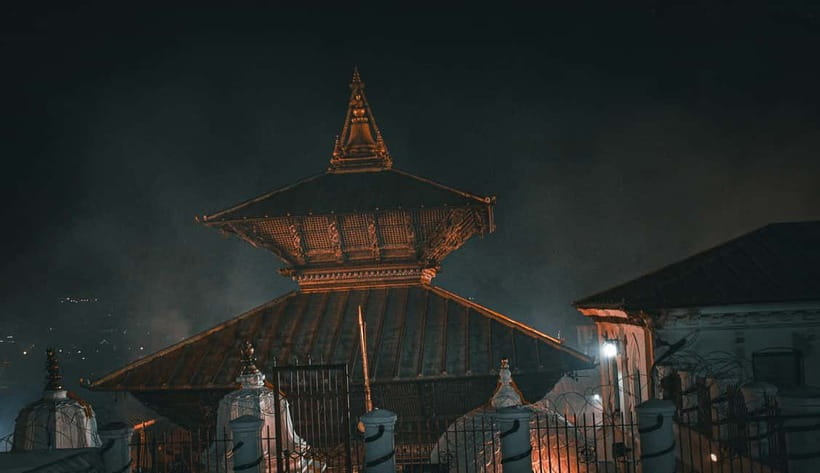
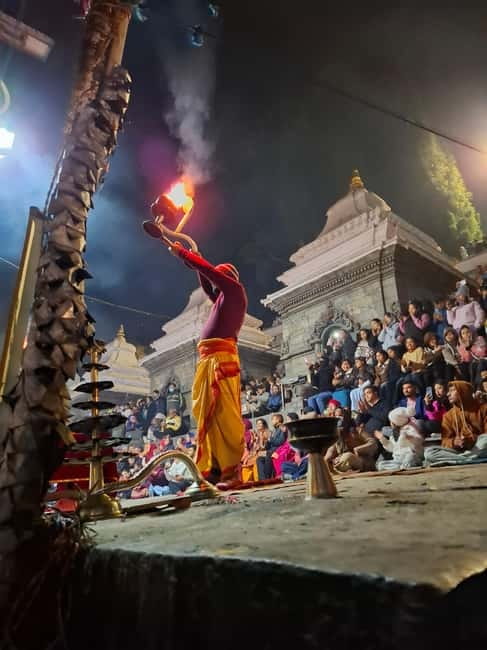
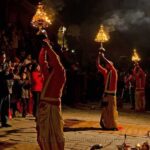
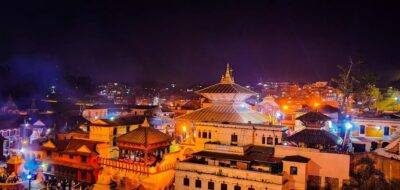
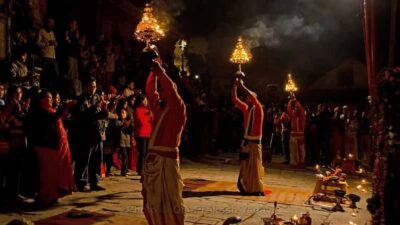
After you’ve seen the cremation area, the focus shifts to evening worship. You’ll be positioned for the Pashupatinath Aarati dedicated to Lord Shiva, with chants, music, and the glow of oil lamps.
This is the emotional hinge of the tour. In daytime, the riverfront can feel harsh and direct. At dusk, with lamps lit and the ceremony building, the mood changes into structured devotion. The idea you’re supposed to take away is that life and death aren’t treated as opposites here—they coexist within a spiritual worldview.
The timing is key:
- Get to the Aarati area by 5:30 PM
- Expect the ceremony to start 6:00–6:30 PM
- Remember cremation rites can continue in the background, so the scene may mix sacred chanting with ongoing funeral activity
If you want a strong view, arrive early and plan to stand or sit still. Aarati viewing is not something you solve with “I’ll just walk around when I get there.” You’ll get a better angle and a calmer experience by making your choice early.
Driver Support vs. a Dedicated Guide: What to Expect
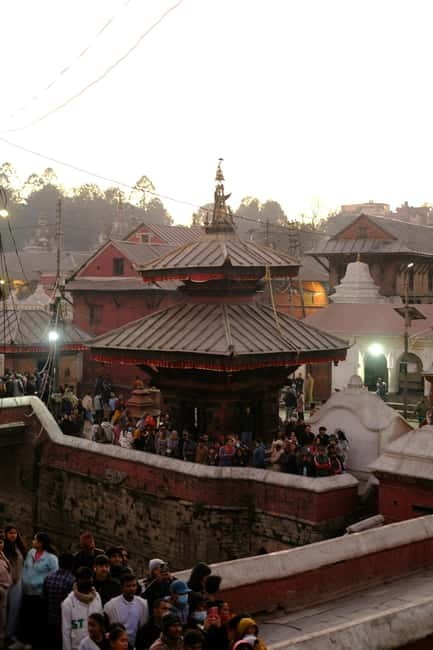
One confusing thing is that the tour is often described as having live guidance, but the cost sheet says a formal tour guide isn’t included. In practice, you should think of this as a private driver-led experience with assistance, plus any interpretation your driver may offer.
That said, quality can vary. A positive account highlighted a driver/interpretive presence—Bhum Raj Tiwari—as excellent, with strong English and thorough explanations. Another account criticized the experience when the pickup happened late and the driver didn’t speak English.
So here’s your practical takeaway: if you care about understanding what you’re seeing, don’t assume you’ll automatically get deep commentary. If possible, message ahead to ask whether your driver can provide English explanations for the cremation rites and Aarati. And when you’re on the ground, ask simple questions early—why this place, what the chants mean, and what moksha is pointing to.
What to Bring and Wear for a Religious Riverfront Evening
This is an outdoor, walking-heavy experience inside an active sacred complex. To keep it smooth:
Bring:
- Passport or ID card
- Comfortable shoes
- Camera
- Comfortable, modest clothes
- Cash
Wear:
- Modest clothing is strongly recommended for a religious site
- Shoes that support standing and walking at a riverfront
Plan for:
- Outdoor conditions (a light jacket can help)
- A walk toward Arya Ghat before the Aarati starts
Also keep your expectations realistic: this isn’t for people who need wheelchair access. The experience specifically notes it may not be suitable for people with mobility issues, back problems, certain medical conditions, and children under 9.
Price and Value: Is $27 Worth It for This Kind of Night?
At about $27 per person, you’re paying for a focused evening experience: private air-conditioned transport, pickup/drop-off, drinking water, and a planned route that gets you to Pashupatinath and into position for the Aarati.
Is it expensive? For Kathmandu private night transport to a major site, it can feel fair. Is it cheap? Also not “bargain bin,” especially since entry tickets and meals aren’t included.
The value depends on what you want most:
- If you want a clear plan and transportation so you don’t wrestle with timing, the structure helps.
- If you want a deep, guided explanation throughout, you may find the lack of a guaranteed formal guide a concern—unless your driver provides that context (as in the strong examples).
In other words: you’re buying time, access, and a ride that lands you at the right places—then you supply your own approach to respect, patience, and comfort.
Where It Can Go Wrong: Pickup Comfort and Expectations
A negative experience mentioned a few red flags that are worth protecting yourself against:
- Late pickup
- A vehicle that felt not meant for tourists (dirty, lacking air-conditioning)
- No seat belts
- A driver with essentially no English
- Feeling like you were only transported, not guided at all
You can’t control everything, but you can reduce the chance of disappointment:
- Be ready during the pickup window and keep your contact info available.
- Ask before confirming what language support you can realistically expect.
- If comfort is important to you, check whether the vehicle is air-conditioned and whether seat belts are available.
- Go in with the mindset that this is religious observation, not a lecture tour with guaranteed narration.
The good news: when the explanation is solid and the timing is right, the combination of cremation rites and Shiva Aarati can become one of the most memorable evenings you have in Nepal.
Who Should Book This, and Who Should Skip It
This tour fits best if you:
- Can handle emotionally intense religious imagery
- Want to see how Nepal’s spiritual life is lived in public, at river level
- Appreciate cultural context and don’t need it softened
- Are comfortable walking at least part of the way to Arya Ghat
It’s a poor fit if you:
- Have mobility impairments, wheelchair needs, back problems, or certain medical conditions
- Need a fully controlled, comfortable sightseeing pace
- Are bringing young children (it’s not suitable for kids under 9)
If you’re in the “I want authenticity, even if it’s uncomfortable” category, this has real appeal.
Should You Book This Pashupatinath Cremation + Evening Aarati Tour?
Book it if you want a compact, well-timed evening that connects cremation rituals at Arya Ghat with the devotional energy of the Pashupatinath Aarati to Lord Shiva. The hour-and-a-half window around 5:30–6:30 PM is what makes the night feel whole, and the $27 price is reasonable for private pickup/drop-off and transportation.
Skip it if you know you can’t handle death rites in an active setting, or if your body needs more accessibility than this tour provides. And if you care about English explanations, consider asking ahead whether your driver can help translate the spiritual meaning, because that part can make or break your understanding.
If you do go, go respectfully, dress modestly, wear shoes you trust, and give yourself time to feel what the evening is saying.
FAQ
How long is the Pashupatinath open cremation and evening Aarati experience?
The experience runs about 3 hours, with the total duration noted as approximately 3–4 hours depending on pickup location and traffic.
Where does pickup happen?
Pickup is included from your location in Kathmandu. You wait at your main accommodation entrance/lobby or a clearly visible pickup spot.
Does this tour include entry tickets or a meal?
No. Entry tickets and meals are not included. Drinking water is included.
What time should I arrive for the Aarati to get a good spot?
You’re advised to reach the Aarati viewing area at least 30 minutes early, with 5:30 PM recommended.
When does the Pashupatinath Aarati start?
The Aarati starts between 6:00 PM and 6:30 PM.
What will I see during the cremation part?
You’ll observe Hindu funeral rites at the open cremation site along the Bagmati River, specifically the area near Arya Ghat at Pashupatinath.
What should I wear and bring?
Wear modest clothing and comfortable shoes. Bring a passport or ID card, a camera, cash, and comfortable clothes. Weather can be outdoors, so a light jacket may help.
Is the tour suitable for people with mobility impairments or wheelchair users?
No. It is not suitable for wheelchair users, and it may not be suitable for people with mobility impairments, back problems, or certain medical conditions.
Is this a private group?
Yes, it’s a private group.
What’s the cancellation policy?
You can cancel up to 24 hours in advance for a full refund.
When the Lights Come On


More Tour Reviews in Kathmandu






Just Reviewed in Kathmandu
- Mountain Bike Tour
★ 5.0 · 3 reviews - Annapurna Panaroma
★ 5.0 · 3 reviews - Mount Everest Scenic Flight 50 Minutes
★ 5.0 · 3 reviews - Kathmandu : Swambhunath & Durbar Square Guided Half Day Tour
★ 3.3 · 3 reviews - Chandragiri Cable Car & Monkey Temple Tour – Private/Group
★ 5.0 · 3 reviews - Kathmandu: Shivapuri National Park Hiking Day Trip
★ 3.3 · 3 reviews
Pashupatinath & Boudhanath Tours, compared.
 ★ 5.0Kathmandu Spiritual Sites: Bodhnath & Pashupatinath TourFrom $60185 reviews
 ★ 5.0Pashupatinath Temple Evening Aarati TourFrom $4536 reviews
 ★ 4.8Pashupatinath Temple Aarti Night TourFrom $7129 reviews
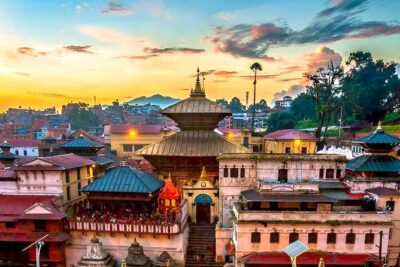 ★ 5.0Pashupatinath Temple, Hindu Crematorium and Aarati in-depth TourFrom $9025 reviews
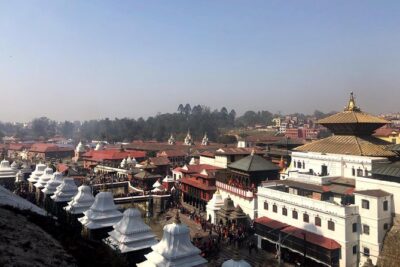 ★ 4.5Pashupatinath Evening Aarati: Few Divinely Hours in KathmanduFrom $3523 reviews
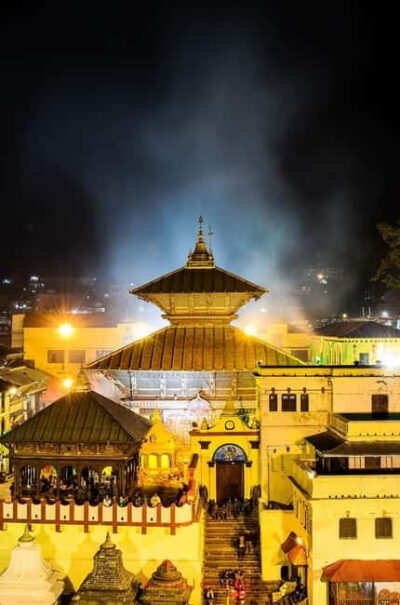 ★ 5.0Sacred Pashupatinath: Aarati,Cremation Rites & Boudha StupaFrom $1118 reviews
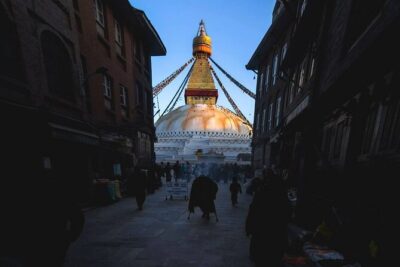 ★ 5.0PashupatiNath and BoudhaNath – Private/Small GroupFrom $1518 reviews
★ 4.7Pashupatinath Temple Evening Aarati TourFrom $2211 reviews
Browse the lists this tour appears in