
If dumplings are your love language, this class nails it—because you make Nepali momos step by step in a real home kitchen. I like that you start with basics like kneading dough and end with folding and cooking your own dumplings. I also like that you’re not rushed through a demo; you actually get to put your hands to the work and then sit down to eat with the family. One thing to consider: it’s not recommended if you have gluten allergies.
This is the kind of Kathmandu food experience that feels personal. You’ll be warmly welcomed, learn from a local host who has been teaching for years, and then enjoy your momos with conversation over the meal—less restaurant performance, more lived-in local life.
You’ll choose between veg and non-veg momo styles (chicken and buffalo are mentioned), so you can match your taste without missing the core technique. It’s also a private tour, so it stays focused on your group.
In This Review
- Key highlights you’ll care about
- Why this momo class works in Kathmandu (not just for foodies)
- Price, time, and what $35 gets you in practice
- From kneading to folding: your momo-making workflow
- Getting started: dough that you can feel
- Ingredient prep: building flavor before you fold
- Folding: the step that turns dough into momos
- Cooking: finishing the job
- The best part: eating with the host and family
- Veg, chicken, buffalo: choosing your momo style
- Where it starts: Sorakhutte meeting point and simple timing
- Who this class suits best (and who should think twice)
- Making the most of your 2.5 hours: practical tips
- Is it worth booking? My straight answer
- FAQ
- What is the duration of the Momo Cooking Class?
- How much does the class cost?
- Where does the class start and end?
- Is the tour private?
- What types of momos are included?
- Is this class suitable for gluten allergies?
- Can I cancel for a full refund?
Key highlights you’ll care about
- Home-kitchen lesson: dough, fillings, folding, and cooking are all part of the same class
- Hands-on from scratch: you’re not just watching; you’re making momos with your own hands
- Veg or non-veg options: you can do chicken or buffalo momos, or go vegetarian
- Family table time: you eat with the host and family after you finish cooking
- Private group format: only your group participates
More time at the stove
- Half day cooking class in Thamel kathmandu★ 5.0 · 607 reviews
- Kathmandu: Local Women-Led Nepali Cooking & Momo Class★ 4.9 · 360 reviews
- Kathmandu: Local Lead Nepali Cooking & Momo-Making Class★ 5.0 · 212 reviews
- Local Women Lead Nepali Cooking Class★ 5.0 · 125 reviews
Why this momo class works in Kathmandu (not just for foodies)
Kathmandu has a serious relationship with momos. Street-style dumplings, family kitchens, casual meals—momos show up everywhere. The big reason this class is special is that it treats momos like a craft, not a one-bite snack.
You get the full chain: dough, filling prep, folding, and cooking. That matters because momos aren’t hard to love, but they’re easier to understand when you see how the dough behaves and how the fold affects the finished dumpling. You’ll leave knowing what to pay attention to next time you make them at home.
I also like the human side. You’re welcomed into a humble home in Kathmandu, and the class ends with you sitting down with the host and family. That’s the kind of experience that doesn’t just fill your stomach—it gives you context for how Nepalese families talk about food, daily routines, and what makes a good dumpling.
Price, time, and what $35 gets you in practice
This class costs $35 per person and runs about 2 hours 30 minutes. For Kathmandu, that’s a fair price for a hands-on cooking session because you’re paying for three things at once:
- Instruction from a local host who has been teaching for years
- The materials and kitchen setup (not a shared commercial kitchen demo)
- Food at the end, eaten with the family, not just handed to you and moved along
A lot of cooking classes elsewhere focus on the spectacle. Here, the value is in the process. Kneading dough, prepping ingredients, folding, and cooking take time, and that time is what you’re buying.
Also, you’re doing this in a private format, so the pace usually feels right for your group. If you’re traveling as a family, this kind of setup tends to work better than a large group where you’re stuck waiting for the next step.
From kneading to folding: your momo-making workflow
The class is built around the core momo steps, in the order you’d actually need them at home. Expect about 2.5 hours of active participation.
Getting started: dough that you can feel
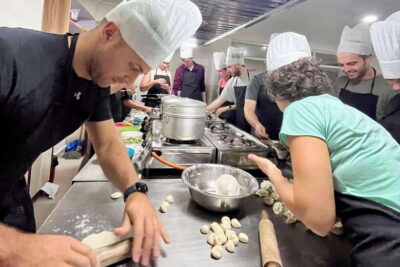
You’ll begin with kneading dough. This is where many first-time cooks get surprised. Dough texture matters. Knead it well enough and you get something that’s workable for folding. Knead too little and things tear or don’t hold shape.
Even if you don’t remember every minute detail, you’ll walk away with a feel for what good dough behaves like.
Make something to carry home
Ingredient prep: building flavor before you fold
Next comes preparing the ingredients. The class is set up so you learn the process, not just the finished dumplings. That means you’re involved in getting the stuffing ready for your momo type.
If you’re doing chicken or buffalo momos, you’ll see how the filling gets prepared before it goes into dumplings. If you choose veg, you’ll follow the veg filling route.
Folding: the step that turns dough into momos
Folding is the make-or-break moment. This is where you’ll learn technique and get practical guidance while you shape dumplings. The fold isn’t just for looks—it helps the dumpling hold together during cooking.
If you’ve ever tried to make dumplings at home and they came apart, this is your chance to understand why. The class gives you the chance to correct your technique in real time.
Cooking: finishing the job
Finally, you’ll cook your momo. That last step turns your folded work into something you can eat right away—warm, fresh, and clearly made with care. The class avoids the feeling of a lesson where you watch and then eat something unrelated. Here, your dumplings end up on the table because you made them.
The best part: eating with the host and family
Many food tours stop at the bite. This one keeps going. Once your momos are prepared, you sit with the host and family to enjoy your dumplings and talk.
That matters more than you might expect. It’s where you get small, real-world insights—things like what people consider the best momo experience, how they talk about different momo styles, and how a home meal fits into daily life in Kathmandu.
It also adds a comforting rhythm to the class. After the hands-on work, you get to relax and enjoy the reward. And since it’s hosted in a home kitchen, the atmosphere tends to feel friendly rather than staged.
Veg, chicken, buffalo: choosing your momo style
The class includes veg and non-veg options. The different momo types mentioned include chicken, buff/buffalo, and veg.
Here’s how to think about choosing:
- Pick chicken if you want a familiar flavor profile and a straightforward first-timer experience.
- Pick buffalo if you want the more distinctive momo style that shows up in many Nepalese meals.
- Pick veg if you want the same dumpling technique with a vegetarian filling route.
If you’re traveling with picky eaters, this is useful. The class format supports both veg and non-veg, and you won’t have to choose a totally separate activity to match your group’s tastes.
One more plus: the class teaches the momo process, so even if you’re only making one type, you still learn the fundamentals that apply to the others.
Where it starts: Sorakhutte meeting point and simple timing
You’ll start at People’s Dental College & Hospital, Sorakhutte Chowk, Kathmandu 44600, Nepal and the activity ends back at the meeting point.
This setup is practical. Meeting at a recognizable place helps you avoid the stress of hunting for an address. And since the class is near public transportation, you have options if you’re not using a private car.
The experience typically runs about 2 hours 30 minutes, so it’s a nice slot for a half-day plan. It also gives you a reason to be in the area without building a whole day around a long tour schedule.
If you’re the type who likes to arrive a bit early, do it. Cooking classes run best when your head is on the task, not stuck figuring out where you are.
Who this class suits best (and who should think twice)
This is a great choice if you like food that you can make yourself and you want a local home setting rather than a big cooking studio.
It also seems to work well for mixed ages. One family experience described an instructor who was friendly and patient, making it easier for both kids and adults to join in and learn. That’s a strong sign that the class balances teaching with hands-on fun.
You should think twice if:
- You have a gluten allergy, since the class is not recommended for that situation
- You’re expecting a quiet, sightseeing-type experience—this is hands-on, with flour, dough, and active participation
If you want a memorable Kathmandu meal and a skill you can repeat, this class hits the sweet spot.
Making the most of your 2.5 hours: practical tips
Here are the small choices that help you enjoy the class more, especially if it’s your first time making momos.
- Wear clothes you don’t mind getting a little messy. Kneading dough and handling filling is the whole point.
- Take a moment to watch before you copy. Folding and dough handling are easier when you see the technique once clearly.
- Ask questions while you’re still doing the step. The best moment to fix a problem is before it becomes a finished dumpling.
- Plan to eat what you make. You’ll be seated with the host and family after cooking, so save room and go in with an appetite.
And don’t worry if your first momo looks imperfect. The class is about learning the process, not producing museum-quality dumplings.
Is it worth booking? My straight answer
Yes, I’d book it if you want a Kathmandu experience that’s hands-on, local, and genuinely useful. You pay for instruction plus the whole momo-making workflow, and you finish by eating with the family. For the price and time, it’s a solid deal.
Skip it only if you can’t do gluten-based foods (the class is not recommended for gluten allergies) or if you want a mostly passive activity. This is active cooking, not a sit-and-watch show.
If your travel style is about learning real skills and sharing a meal that feels like it belongs to Nepal—not just a restaurant performance—this momo class is a strong match.
FAQ
What is the duration of the Momo Cooking Class?
The class lasts about 2 hours 30 minutes.
How much does the class cost?
It costs $35.00 per person.
Where does the class start and end?
It starts at People’s Dental College & Hospital, Sorakhutte Chowk, Kathmandu 44600, Nepal, and ends back at the same meeting point.
Is the tour private?
Yes. It is a private tour/activity, so only your group participates.
What types of momos are included?
The class covers both veg and non-veg momos, with options including chicken and buffalo momos.
Is this class suitable for gluten allergies?
It is not recommended for travelers with gluten allergies.
Can I cancel for a full refund?
Yes. Free cancellation is available up to 24 hours in advance for a full refund. If you cancel less than 24 hours before the experience starts, the amount paid is not refunded.
Make a Little Nepal to Take Home

Learn Another Nepali Dish
More Tour Reviews in Kathmandu





Just Reviewed in Kathmandu
- Mountain Bike Tour
★ 5.0 · 3 reviews - Annapurna Panaroma
★ 5.0 · 3 reviews - Mount Everest Scenic Flight 50 Minutes
★ 5.0 · 3 reviews - Kathmandu : Swambhunath & Durbar Square Guided Half Day Tour
★ 3.3 · 3 reviews - Chandragiri Cable Car & Monkey Temple Tour – Private/Group
★ 5.0 · 3 reviews - Kathmandu: Shivapuri National Park Hiking Day Trip
★ 3.3 · 3 reviews
Nepali Cooking & Momo Classes, compared.
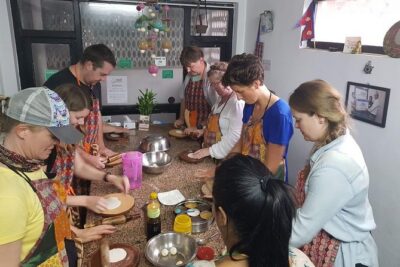 ★ 5.0Half day cooking class in Thamel kathmanduFrom $28607 reviews
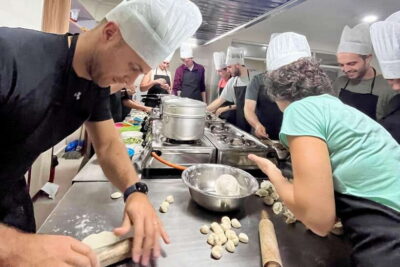 ★ 4.9Local Women-Led Nepali Cooking & Momo ClassFrom $4360 reviews
 ★ 5.0Local Lead Nepali Cooking & Momo-Making ClassFrom $5212 reviews
Local Women Lead Nepali Cooking ClassFrom $30125 reviews
 ★ 5.0The best Private Nepali Cooking Class in KathmanduFrom $2483 reviews
 ★ 4.8Traditional Momo Making Class & PickupFrom $460 reviews
 ★ 5.0Traditional Nepali Momo Making ClassesFrom $1853 reviews
 ★ 4.9Local Women-Lead Nepali Cooking & Momo ClassFrom $545 reviews
Browse the lists this tour appears in