
Review · LANGTANG VALLEY TREKS
9 Days LANGTANG VALLEY TREKKING IN NEPAL
Langtang goes from temples to high-altitude hiking fast. This 9-day trek is interesting because it pairs UNESCO Kathmandu sights with real time in the Langtang Valley—forests, rivers, alpine meadows, and big views of Langtang Lirung and Dorje Lakpa. I love the way this trip gives you Kyanjin Ri summit hiking as a clear peak moment, and I also like how the route focuses on Tamang communities and day-to-day comfort at tea houses. The one drawback to plan for is altitude: even on an easier-feeling trek, you still need a steady pace and some early nights.
What makes this experience feel practical is how it’s organized for motion without chaos. You’ll move by private A/C vehicle from Kathmandu to the trek start, then walk in a sequence of villages like Syabrubesi, Thulo Syabru, Langtang Village, and Kyanjin Gompa. Along the way, you get an experienced guide, a porter, and trekking poles and a sleeping bag in camp-grade condition, so you can focus on the trail instead of logistics.
I think this tour fits best if you want Nepal that’s part culture, part trail. You’ll see Hindu and Buddhist sacred sites in Kathmandu, then shift into mountain life with tea house meals and monasteries up high. If you’re sensitive to cold or altitude stress, you’ll want to take the acclimatization and gear list seriously.
In This Review
- Key things I’d actually watch for on this Langtang trek
- Kathmandu UNESCO days: set your bearings before you start climbing
- From Kathmandu to Syabrubesi: the gate into the Langtang National Park
- Syabrubesi Hot Spring and Tamang villages: comfort with a mountain heartbeat
- Thulo Syabru to Langtang Village: where the trail feels personal
- Kyanjin Gompa: the monastery stop where the air feels different
- Kyanjin Ri sunrise hike: the panoramic payoff
- Ghodatabela and the return rhythm: don’t rush the way down
- Price and logistics: does $1,050 feel fair?
- Who should book this Langtang Valley trek?
- Should you book this 9 Days Langtang Valley trekking experience?
- FAQ
- What does the trek include for meals and lodging?
- Is transportation included from Kathmandu to the trek start?
- Which permits are included?
- Are a porter and trekking gear provided?
- Where does the trip start and end?
- What Kathmandu sites are visited before the trek?
- What is the highest major hike on the route?
- Are Kathmandu hotel nights included?
- Is insurance included?
Key things I’d actually watch for on this Langtang trek
- Kathmandu UNESCO mornings before the climb: Pashupatinath, Swayambhunath (Monkey Temple), and Boudhanath set the tone for your Nepal trip.
- Langtang National Park entry at Dhunche: you may need to show your Langtang National Park permit at the checkpost.
- Syabrubesi Hot Spring: a rare comfort break after trek walking and travel.
- Kyanjin Gompa at about 3,870 meters: monastery architecture plus serious mountain scenery.
- Kyanjin Ri around 4,773 meters: the hike that’s designed as your big panoramic payoff.
- Tea house/lodge nights for 6 nights on trek: easier on planning than fully camping, with meals provided.
More trails out of Kathmandu, boots ready
- Everest Base Camp Trek – 14 Days★ 5.0 · 1,499 reviews
- Everest Base Camp Trek★ 5.0 · 842 reviews
- Everest Base Camp Trekking★ 5.0 · 485 reviews
- Nagarkot Sunrise View and Day Hiking from Kathmandu★ 5.0 · 471 reviews
Kathmandu UNESCO days: set your bearings before you start climbing
Most Langtang trips feel like they begin with the first flight of stairs in the mountains. This one starts smarter: you get Kathmandu’s major spiritual sites first, so your brain understands place and meaning before it’s all hiking and altitude.
At Pashupatinath Temple on the Bagmati River, you’re seeing a major Hindu pilgrimage site dedicated to Lord Shiva. It’s also UNESCO-listed since 1979. I like that it’s close to where you’ll be based in Kathmandu—about 5 minutes from the airport—so even after you land, you’re not stuck with only jet lag and airport food. The grounds and river backdrop make it feel calmer than you might expect from a big city.
Next comes Swayambhunath Stupa, also UNESCO-listed (since 1979) and known as the Monkey Temple. It sits on a hill, which matters because it teaches you a Kathmandu theme: sacred space high above the daily street level. The stupa name connects to meaning—self-existent—so you’re not just looking at a landmark; you’re learning why it’s important.
Then you’ll head to Boudhanath Stupa, believed to date back to the 5th century and also UNESCO-listed. What I’d focus on here is the design detail: the large dome-like base, the tall spire, and the Buddha’s watchful “eyes” painted on all four sides. Those eyes are a symbol of wisdom and compassion, and it’s the kind of visual you remember long after the hike starts.
A small caution: Kathmandu religious sites can mean crowding, dust, and long walking inside complexes. Bring patience for short lines and take water breaks when you can. The upside is huge: you’ll get context for why Nepal feels the way it does.
From Kathmandu to Syabrubesi: the gate into the Langtang National Park
Once Kathmandu’s temples fade behind you, the trip shifts into movement mode. You’ll transfer from Kathmandu to Syabrubesi using a private air-conditioned vehicle. This is a real value piece if you hate spending your energy on buses before a trek day. Along the drive, you pass villages, terraced hills, and views that often include Ganesh Himal in the background.
From Dhunche, you enter Langtang National Park through the checkpost. This is where your documents matter. You might be asked to show your TIMS and Langtang National Park permit, which are included in the tour. I like this setup because it removes the guessing game. You can travel with confidence that you’ll be able to show what you need.
Once you reach Syabrubesi, the day becomes about transition: downhill walking in a gentle rhythm toward the village, then overnight there. This is a good place to settle your legs. Syabrubesi also works as a practical base with basic shops, guesthouses, and eateries designed for trekking needs.
One more practical note: Syabrubesi sits at the start of the route people use for Langtang Valley and Gosainkunda Lake. That means you’ll likely see familiar trail logistics—signs of other hikers, shared guesthouse patterns, and an easy sense of where to eat and rest.
Syabrubesi Hot Spring and Tamang villages: comfort with a mountain heartbeat
After the travel day, you don’t just jump straight into pain. One of the smartest included stops is the Syabrubesi Hot Spring. Natural thermal waters here are meant for relaxation and mineral-rich soaking. This kind of stop can be the difference between “I’m okay” legs and “why do my calves feel like rocks” legs.
Syabrubesi itself gives you a taste of rural Nepal in the Langtang region. The area is closely tied to the Tamang community, and that matters because you’ll see more than just scenery—you’ll interact with people who have lived with this landscape for generations.
Then you continue on toward higher villages like Thulo Syabru. This village sits around 2,200 meters and is known for Tamang architecture and welcoming locals. What I like about this type of stop is that it breaks the monotony of only walking uphill. You get a change of pace: breathe the mountain air, eat a proper meal, and hear everyday village life.
From a value point of view, these village days also help you manage your energy. You’re not trying to force long, exhausting days with no recovery. It’s more like you’re learning the valley while your body adjusts.
Thulo Syabru to Langtang Village: where the trail feels personal
As you keep moving, the route brings you into the heart of what makes Langtang feel different from other Nepal treks. The trail is not just about altitude—it’s about repeated contact with community and valley routine.
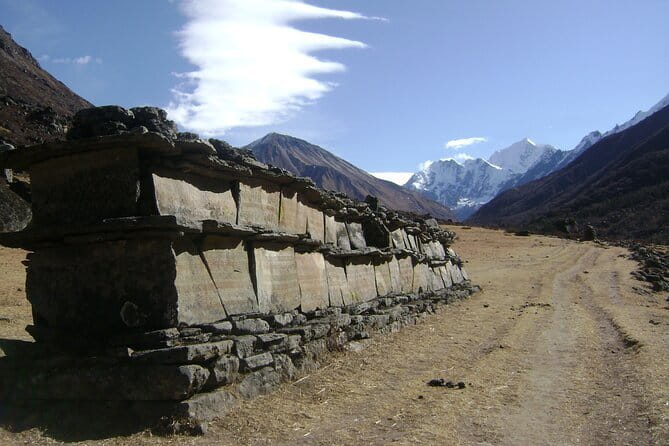
Langtang Village is one of the stops that hits emotionally because it’s a real settlement with Tamang culture, stone houses, prayer flags, and mountain views that stay in the background even when you’re focused on your next step. This is the kind of place where a brief chat with a local can tell you more than a guidebook will.
The tea house or lodge approach also shapes the mood. Instead of camping and hauling your comforts, you’re eating and sleeping in small facilities that support trekkers. Included meals make a difference here: breakfast 8 times, lunch 7 times, and dinner 6 times on the trek. That’s not just convenience—it reduces decision fatigue. You spend less time searching, negotiating menus, or wondering if you’re missing a meal plan.
Still, there’s a practical consideration: tea house conditions can vary. You’ll want layers, warm socks, and a good attitude about basic plumbing and early evening power patterns (especially in smaller villages). The trade-off is simple: you get warmth from human-scale hosting and a trekking rhythm that’s easier to sustain.




Kyanjin Gompa: the monastery stop where the air feels different
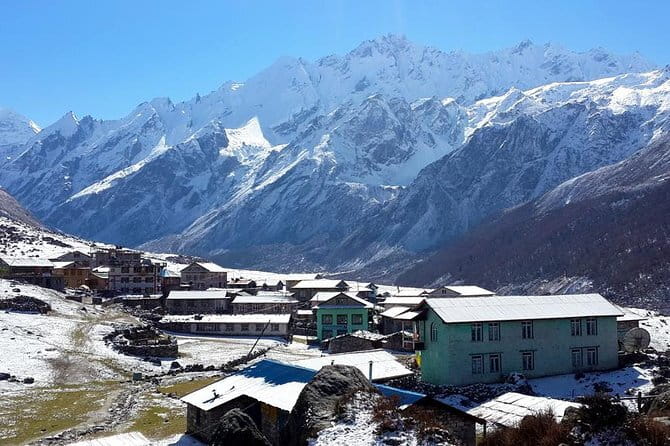
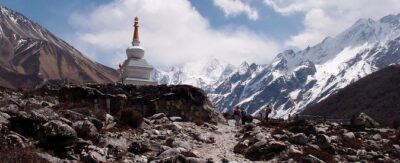
Next is Kyanjin Gompa, positioned at about 3,870 meters. This is the first place on the trek where you feel the combination of altitude and stillness together. The monastery is sacred for Tibetan Buddhists and trekkers, and it’s known for ornate architecture and lots of colorful prayer flags.
I like this stop because it’s not just a “photo point.” You can explore monastery grounds, and it’s described as a place where trekkers can participate in meditation sessions. Even if you don’t join in, the setting changes how you walk the next day. Your mind slows down.
Kyanjin Gompa also acts as your base for higher viewpoints and day hikes. It’s where the trip transitions from “travel through the valley” into “go for the view.”
One altitude note you can’t ignore: at nearly 4,000 meters, you may feel it in your breathing and sleep. Your guide’s job here is important—experienced guidance helps you pace and stay safe. With a porter included and trekking poles provided, you’ll have more ability to keep your steps controlled rather than sprinting up and paying for it later.
Kyanjin Ri sunrise hike: the panoramic payoff
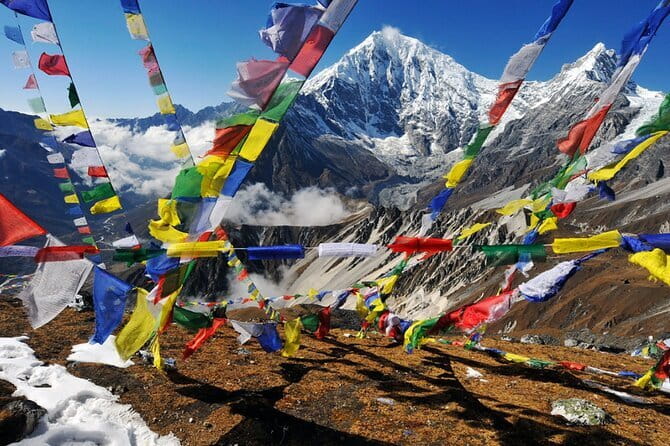
The highlight day is Kyanjin Ri, around 4,773 meters, near Kyanjin Gompa. This hike is built around the payoff: panoramic views of peaks like Langtang Lirung, Dorje Lakpa, and Ganchempo, plus glacial valleys stretching in multiple directions.
This is also where the trip leans into the “sunrise spectacle” idea. The goal is a sky-meets-mountains moment with light changing fast. I’d plan your effort around the hike being more demanding than the earlier village-to-village days. You’ll likely start in colder conditions, so good layers matter more here than on lower days.
Because the route uses tea houses/lodges for overnight stays, you can keep your gear simple. You’re not managing a full camp, which means you can focus on the essentials for the hike: warm hat, gloves, and a steady breathing rhythm.
What makes this day worth the effort is the contrast. You’ll have spent time among people, then you go above them, into a place where your main company is weather, light, and the pull of big mountains.
Ghodatabela and the return rhythm: don’t rush the way down
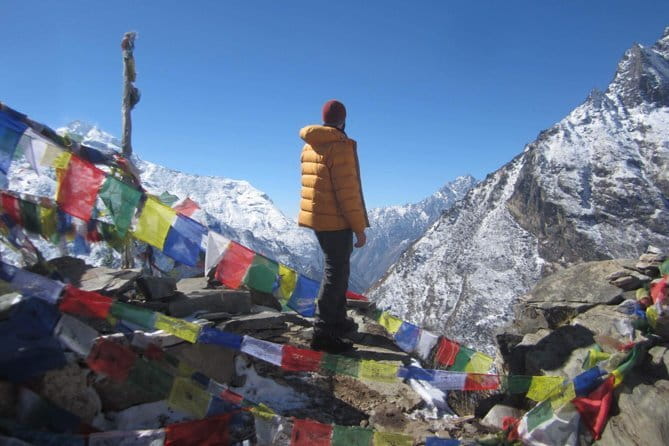
After the Kyanjin Ri moment, the route starts easing back. Ghodatabela is a scenic stop in the Langtang Valley trek route, and its name means “horse stable.” Historically, it served as a resting place for travelers and their horses. Now it functions as a practical overnight stop, with forests, waterfalls in the broader area, and open mountain views.
What I like about the return days is the psychological shift. Going down is not the same as resting, but it’s easier to appreciate the valley from a lower angle. You’re still working, still moving, but you’re not chasing the next maximum altitude point.
This is also where your body benefits from steady pacing and a porter doing porter work. Your guide helps keep things safe, including how you handle weather changes and how you manage energy for the descent.
When you return to Kathmandu, the experience comes full circle: monastery stillness gives way to city noise, and you’ll notice the difference right away.
Price and logistics: does $1,050 feel fair?
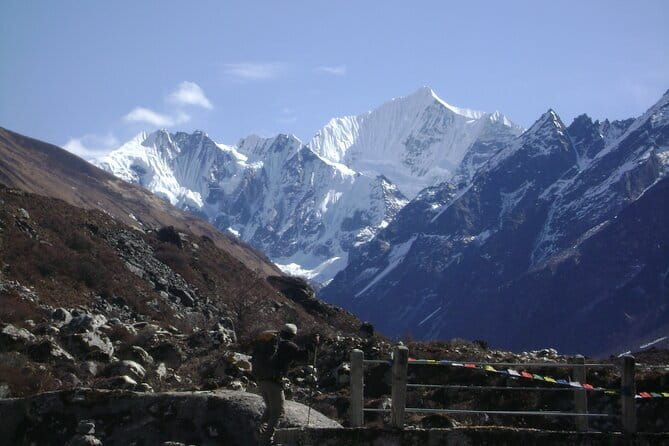
For $1,050 per person (based on the provided price), the main question is what you’re getting for that money. Here’s the honest way I’d judge the value.
You’re paying for a full package:
- A professional experienced trekking guide throughout the trek
- Porter included
- Private transportation between Kathmandu and the trek start
- 2 nights in Kathmandu at a 3-star hotel category
- TIMS and Langtang National Park permits included
- Trek support items: camp-grade sleeping bag and trekking poles provided
- Meals on trek (breakfast/lunch/dinner counts provided)
- Trek nights in tea house/lodge for 6 nights
Those inclusions matter because they remove the most common hidden costs: permits, guide/porter labor, and equipment hassles. The tour also mentions group discounts and uses a mobile ticket, which suggests a more organized internal workflow.
What’s not included is equally important: insurance/medical coverage and any personal expenses and beverages not listed. If you don’t have good travel medical coverage for altitude trekking, that’s your first fix before you think about value.
My bottom line: the price looks fair if you want less planning stress and more hiking time. If you’re the type who enjoys building your own route, booking each tea house separately, and finding your own transport, you might spend less. But you’d also spend time and risk getting permits or pacing wrong. This package is for people who want the mountains without the paperwork headache.
Who should book this Langtang Valley trek?
Book it if you want a Nepal trip that mixes serious scenery with real culture. You’ll like it if you enjoy:
- UNESCO sites with meaning, not just quick stops
- Village walking and tea house nights
- A peak day that’s clearly planned around Kyanjin Ri
- Guides who help manage pacing and safety, with porter support so you don’t fight your own pack
You might skip it if you:
- Hate cold starts and high-altitude effort
- Want a fully “easy stroll” trek with no breath stress at higher points
- Don’t plan for the fact that the trip includes mountain walking plus Kathmandu sightseeing days
If your main goal is a big view and you’re ready to work for it, this trek fits well.
Should you book this 9 Days Langtang Valley trekking experience?
Yes, if you want a guided, well-supported Langtang route with permits handled, gear provided, and a clear high point at Kyanjin Ri. It also earns points for starting your trip with Kathmandu’s major sacred sites, so the journey feels like more than just “hike and repeat.”
My decision test for you is simple: are you willing to take altitude and cold seriously, even on a beginner-friendly style of trek? If the answer is yes, this is a strong value way to experience Langtang with less logistics stress and more time enjoying the trail and the people along it.
FAQ
What does the trek include for meals and lodging?
The trek includes breakfasts (8), lunches (7), and dinners (6) along with 6 nights in tea house or lodge accommodation.
Is transportation included from Kathmandu to the trek start?
Yes. You get private air-conditioned vehicle transportation from Kathmandu to Syabrubesi.
Which permits are included?
Your TIMS permit and Langtang National Park permit are included.
Are a porter and trekking gear provided?
Yes. A porter is included, and you’re provided a camp-grade sleeping bag and trekking poles.
Where does the trip start and end?
It starts at Tribhuvan International Airport in Kathmandu and ends back at the same meeting point.
What Kathmandu sites are visited before the trek?
You’ll visit Pashupatinath Temple, Swayambhunath Stupa, and Boudhanath Stupa.
What is the highest major hike on the route?
Kyanjin Ri is the major hike, at about 4,773 meters near Kyanjin Gompa.
Are Kathmandu hotel nights included?
Yes. The package includes 2 nights in Kathmandu at a 3-star category hotel.
Is insurance included?
No. Insurance or medical coverage is not included.
More Trekking Out of Kathmandu






More Tour Reviews in Kathmandu




Just Reviewed in Kathmandu
- Mountain Bike Tour
★ 5.0 · 3 reviews - Annapurna Panaroma
★ 5.0 · 3 reviews - Mount Everest Scenic Flight 50 Minutes
★ 5.0 · 3 reviews - Kathmandu : Swambhunath & Durbar Square Guided Half Day Tour
★ 3.3 · 3 reviews - Chandragiri Cable Car & Monkey Temple Tour – Private/Group
★ 5.0 · 3 reviews - Kathmandu: Shivapuri National Park Hiking Day Trip
★ 3.3 · 3 reviews
Langtang Valley Treks, compared.
 ★ 5.0Langtang Valley TrekFrom $555140 reviews
★ 5.0Langtang Valley TrekFrom $83061 reviews
Langtang Valley TrekFrom $70050 reviews
 ★ 5.08 Days Tour in Langtang Valley TrekFrom $69845 reviews
 ★ 5.0Private 8 – Day Langtang TrekkingFrom $58429 reviews
★ 5.0Langtang Valley TrekFrom $1,00023 reviews
 ★ 5.06-Day Limitless Langtang TrekFrom $18121 reviews
 ★ 5.0Langtang Valley TrekkingFrom $75020 reviews
Browse the lists this tour appears in