

Review · POON HILL & GHOREPANI TREKS
Annapurna Poonhill Trek
Waking up for Poon Hill feels like work. It’s also one of the most dependable ways to see the Annapurna and Dhaulagiri giants, and this private plan pairs Poon Hill sunrise with organized Kathmandu–Pokhara transport. I especially like that the days are timed so you’re not constantly playing catch-up, and you’re guided from start to finish with a single team.
The second big win for me is the practical support built into the package: you get a full meal plan during the trek, plus air-conditioned private vehicles between cities and key fees covered (including the Annapurna Conservation fee). If you’ve ever tried to cobble together tea-house treks on your own, you’ll understand why this matters—less logistics, more hiking.
One consideration: the package is priced at $1,562.67 per person, and you still need to bring key cold-weather gear like a warm jacket and sleeping bag. Also, sunrise views depend on weather, so you’ll want to be flexible.
In This Review
- Key highlights at a glance
- Poon Hill is the whole reason to come
- Kathmandu pick-up and the drive to Pokhara (no self-planning needed)
- Day-to-day hiking: Tikhedhunga gives you an easy first day
- Ulleri steps and Ghorepani: where the trek starts feeling real
- 4 a.m. to Poon Hill: sunrise is the main event
- Tadapani to Ghandruk: rhododendron forests and real village life
- Into Pokhara via Dhampus and Phedi: your last hiking day
- Sarangkot at dawn: a second sunrise viewpoint
- Price and what’s actually included (and what you bring)
- Who this trek suits best
- Should you book the Annapurna Poon Hill Trek?
- FAQ
- How long is the Annapurna Poon Hill trek?
- Is this a private trek or shared with others?
- What meals are included during the trek?
- How early do I need to wake up for Poon Hill?
- What elevations will I reach?
- What do I need to bring that isn’t included?
- Can I get a refund if plans change or weather is bad?
Key highlights at a glance
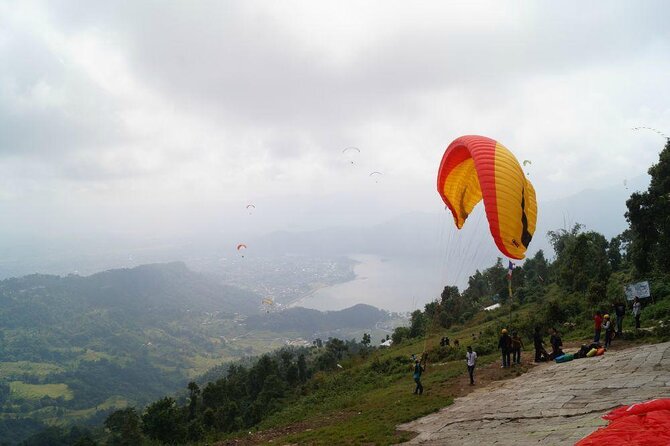
- Poon Hill (3210m) sunrise timed for pre-5 a.m. mountain light
- Private trek for your group with guide-led pacing from village to village
- Meals included on trek days, so you’re not hunting food between climbs
- Ghorepani and Ulleri stone steps set up the classic Himalayan viewpoint route
- Ghandruk Gurung village with big views and a strong local feel
- Sarangkot dawn adds another sunrise-style viewpoint beyond Poon Hill
More trails out of Kathmandu, boots ready
- Everest Base Camp Trek – 14 Days★ 5.0 · 1,499 reviews
- Everest Base Camp Trek★ 5.0 · 842 reviews
- Everest Base Camp Trekking★ 5.0 · 485 reviews
- Nagarkot Sunrise View and Day Hiking from Kathmandu★ 5.0 · 471 reviews
Poon Hill is the whole reason to come
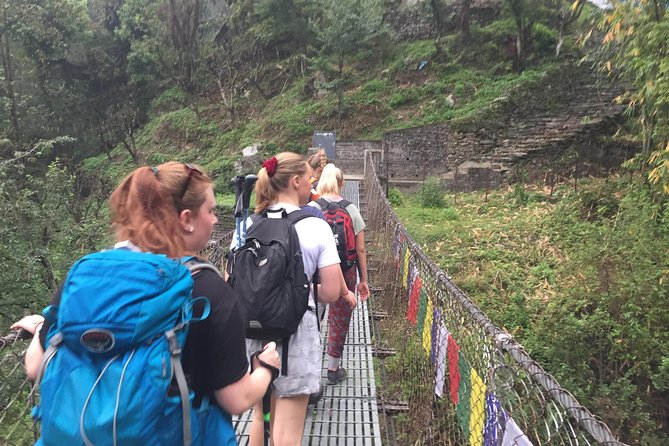
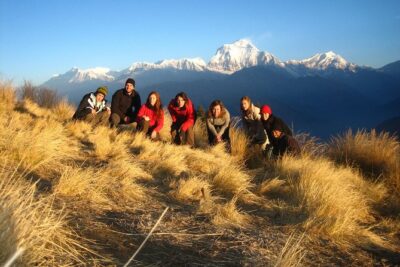
The Annapurna Poon Hill trek is short on paper, but it hits hard on views. Poon Hill sits at 3210m, and from there you’re in position to spot a huge range: Dhaulagiri and Annapurna are the headline acts, with famous silhouettes like Machhapuchher (Fish Tail) and peaks including Tukuche, Nilgiri, Hiunchuli, and Annapurna South.
What I like is the balance. This is not a technical climb where the focus is on rope work. It’s walking—sometimes steep, sometimes long—but it’s built for most travelers who can handle day-to-day hiking. And the payoff is visual: early light rolling across ridgelines, with the mountain scale doing the talking.
The timing is the deal. The plan calls out that the best viewing is before 5 a.m., and you’ll wake around 4 a.m. for the climb to the Poon Hill viewpoint. That means the trek’s energy is mostly about getting you into position when the sky is ready.
Kathmandu pick-up and the drive to Pokhara (no self-planning needed)
You meet in Thamel, Kathmandu, with a start time of 8:15 a.m. That’s a smart touch because Kathmandu can eat time fast—traffic, small errands, and the general “where do I go now?” feeling.
On day one, you’re picked up after immigration and driven into central Kathmandu to your booked accommodation. Then the next day is a long but scenic transfer: the drive from Kathmandu to Pokhara takes about 7 hours. You’ll ride an air-conditioned vehicle, which is not glamorous, but it does make the road smoother and more comfortable.
Why this matters: when the trek starts, you want your brain on the mountains, not on logistics. This plan reduces the number of decisions you have to make—especially on travel days when you’re tired.
Day-to-day hiking: Tikhedhunga gives you an easy first day
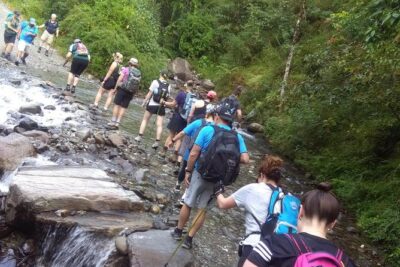
Your trek begins after a drive to Nayapul (about 1.5 hours), followed by walking that starts near the Modi Khola area. On the early stretch, you’ll move along riverbanks, then reach Birethanti, a village with shops and teahouses that acts like a practical waypoint.
The climb continues toward Hille (1495m) and onward to Tikhedhunga (1570m). The route is described as a short and relatively easy climb—which is exactly what you want early on. It’s also a good moment to get your trekking rhythm: steady steps, water management, and learning what pace feels sustainable.
Even if you’re fit, the Annapurna region can still surprise you with how quickly altitude makes your lungs work harder. This first hike day is designed to let you adjust before the bigger climbs.
Ulleri steps and Ghorepani: where the trek starts feeling real
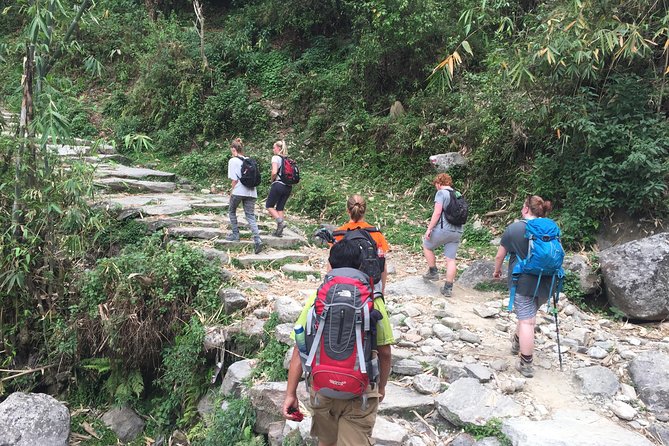
From Tikhedhunga, the next day goes longer and steeper. You’ll climb for about 6 hours, with the standout feature being the ascent to Ulleri (2070m). It’s known for a lot of stone steps—yes, the classic Nepal stair climb—and it’s the kind of effort that turns your calves into your new favorite conversation partner.
The trail then continues upward more gently through forests of oak and rhododendrons. You’ll pass Banthanti (2250m) and Nangethanti (2460m) before arriving in Ghorepani (2840m).
This is also where viewpoint trekking becomes practical. Ghorepani is a relatively large village with excellent views of the Annapurna range and nearby peaks like Nilgiri and Dhaulagiri. You can stock up on supplies there too—especially important because the next morning is early.
Trade-offs: you gain effort with this day’s climb. If you’re not used to steady uphill walking, plan to take breaks more often than you think you need.




4 a.m. to Poon Hill: sunrise is the main event
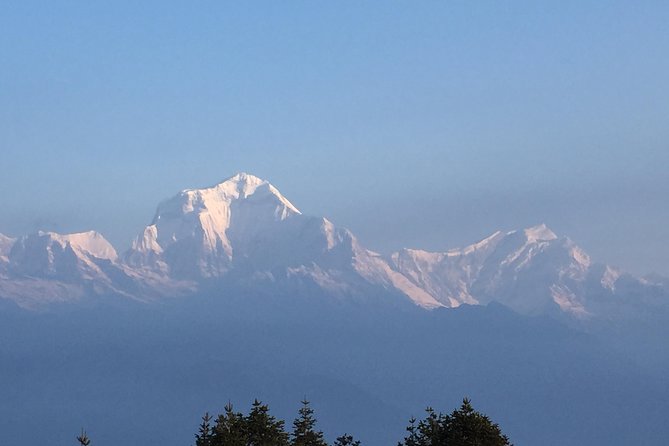
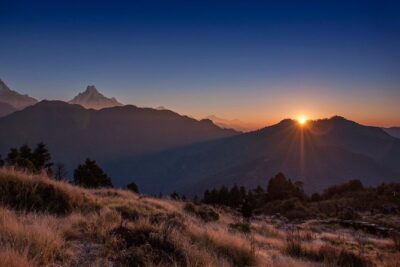
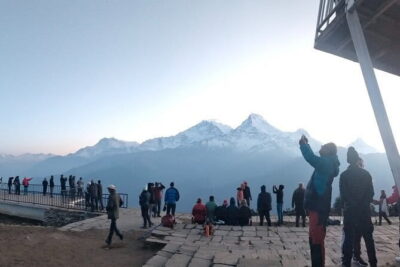
This is the day you’ve paid for. You’ll wake by 4 a.m. and move from Ghorepani to Poon Hill (3210m). The viewing is timed for those pre-dawn hours because the mountains look dramatically different before the sun finishes climbing.
From Poon Hill, you should expect views of Machhapuchher (Fish Tail), Tukuche Peak, Nilgiri, Hiunchuli, Annapurna South, and Dhaulagiri. That’s a lot of peak spotting for one viewpoint—so bring a camera, but also take time to just look. When visibility is good, the ridgelines feel close enough to touch, even though they’re miles away.
After the sunrise moment, you’ll head back to Ghorepani, eat breakfast, and continue trekking onward to Tadapani. This is a smart sequencing choice: you get the viewpoint hit while you still have energy, then you turn the day into walking time rather than waiting around.
Small practical note: early starts mean cold mornings. Since warm jackets aren’t included, I strongly recommend you pack/bring layers you trust.
Tadapani to Ghandruk: rhododendron forests and real village life
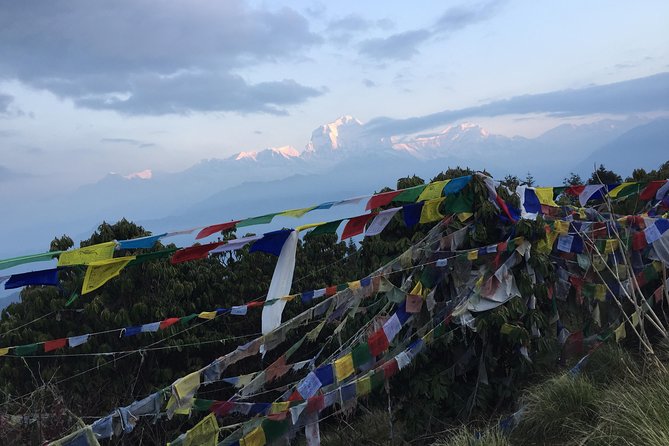
On the way from Tadapani to Ghandruk, the path runs through subtropical jungle and then down through rhododendron forests and pine. You’ll descend passing streams and villages, and the walking time is about 5 hours.
The destination, Ghandruk (1940m), is a major Gurung village and an important cultural stop in this route. It’s also famous for views of Annapurna South and Machhapuchhre—so even without a sunrise mission, you’ll still get mountain scenery.
Why I like this segment: it shifts the trek’s feel from “climb for a viewpoint” to “walk through communities where the views are part of daily life.” It’s not just hiking; it’s the rhythm of local settlements in the Annapurna region.
Into Pokhara via Dhampus and Phedi: your last hiking day
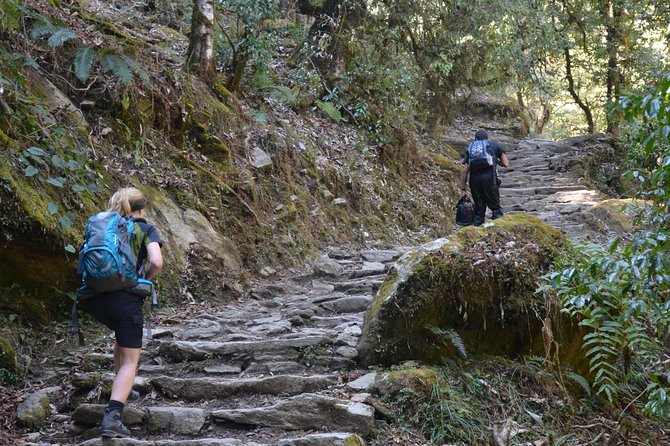
After Ghandruk, the route descends steeply through villages and then terraced paddy fields, with more forest walking mixed in. You’ll also pass through areas like Dhampus and Phedi, ending in Pokhara after about 4 hours of walking time.
This part can feel like a release. Your legs are still working, but the treks’ biggest climbs are behind you. You also get glimpses of major mountains you may not have noticed on the way up—things like Machhapuchhare, Annapurna South, Lamjung Himal, and Annapurna III.
Then comes the city reset: you drive back to Pokhara for rest. If you’ve been focused on trail time, this is a good moment to eat something simpler and soak in the lake-city atmosphere.
Sarangkot at dawn: a second sunrise viewpoint
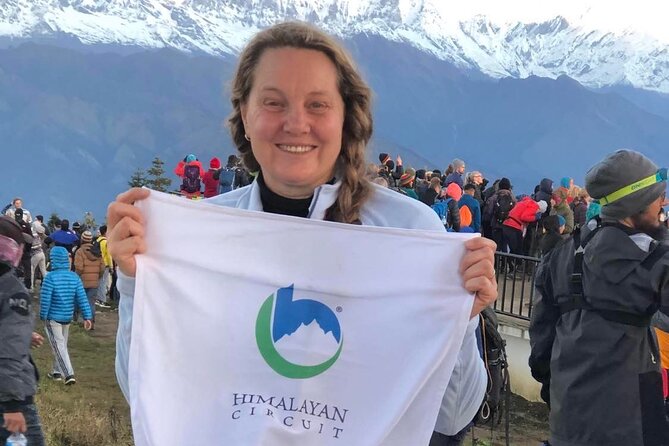
The next morning is another early wake-up, this time for Sarangkot. The plan is to catch the sunrise view over the Annapurna and Dhaulagiri range, then return to your hotel for breakfast and transfer back to Kathmandu, ending with time to relax in Thamel.
Sarangkot is a classic add-on for a reason: you get another angle on the same big mountain story, and it gives you a satisfying finish without adding more days of trekking.
If your first sunrise at Poon Hill was clear, Sarangkot can feel like a bonus. If it was cloudy, Sarangkot gives you another attempt at good light—though no guarantee.
Price and what’s actually included (and what you bring)
At $1,562.67 per person, this trek isn’t a budget-only option. It’s priced like a service package, not like a DIY itinerary.
Here’s what you do get included:
- Air-conditioned private vehicles and private transportation in the Kathmandu–Pokhara–Kathmandu loop
- Full meal plan during the trek, with breakfast (4) and dinner (5) explicitly listed
- Annapurna Conservation fee
- Trekking support systems, including a Trekkers Information Management System
- Key admissions covered (including Poon Hill and Sarangkot)
Here’s what you should plan for because it’s not included:
- Sleeping bag, duffle bag, and warm jackets
- Travel/medical insurance
- Nepal visa fees
- Lunch and dinner in Kathmandu and Pokhara
- Personal expenses and bar bills
Value check: if you want private logistics, guided trekking support, and meals handled, the price starts to look reasonable. If you already have the gear, can manage your own transport, and don’t need someone to coordinate meal planning and fees, you might find cheaper options. But you’ll be doing more of the work yourself.
Who this trek suits best
This is a strong fit if you want:
- A private, organized Annapurna foothills trek with a clear viewpoint focus
- Classic routes through places like Tikhedhunga, Ulleri, Ghorepani, Tadapani, and Ghandruk
- A schedule that includes both Poon Hill and Sarangkot sunrise-style mornings
- City transfers handled so you can move between Kathmandu, Pokhara, and the trekking start without stress
It’s less ideal if:
- You hate early mornings (you’ll be up around 4 a.m. for Poon Hill)
- You’re unwilling to carry your own warm-layer gear
- You’re on a tight budget and can’t justify paying for private services
There’s also a useful note on flexibility from the way the operator is described by past clients: planning often adapts to your needs, and guides like Sanu are praised for adjusting pace. If you’re the type who wants a route that works with how you actually hike, that’s a good sign.
Should you book the Annapurna Poon Hill Trek?
If your dream is Himalayan views without a multi-week grind, I think you should seriously consider it. You get two major sunrise moments—Poon Hill and Sarangkot—plus a guided trek through villages that feel like more than just photo stops. And because transport and trek-day meals are handled, you’ll spend less energy on logistics and more time enjoying the mountains.
But make your decision based on two practical things: weather tolerance and gear planning. The package is designed around early sunrise viewing, so cloud cover can change the experience. And since warm jackets and a sleeping bag aren’t included, you’ll want to budget time (and money) for that before you go.
FAQ
How long is the Annapurna Poon Hill trek?
It’s listed as 9 days approximately.
Is this a private trek or shared with others?
It’s a private tour/activity, meaning only your group participates.
What meals are included during the trek?
The plan includes a full meal plan during the trek, and it specifically lists breakfast (4) and dinner (5).
How early do I need to wake up for Poon Hill?
The best viewing is before 5 a.m., and you’ll wake around 4 a.m. to go from Ghorepani to Poon Hill for sunrise.
What elevations will I reach?
Poon Hill is at 3210m. The route also includes Ghorepani at 2840m, Tikhedhunga at 1570m, and Ghandruk at 1940m.
What do I need to bring that isn’t included?
You should plan for a sleeping bag, a duffle bag, and warm jackets, since those aren’t included. Travel/medical insurance is also not included.
Can I get a refund if plans change or weather is bad?
Yes. Cancellation is free up to 24 hours in advance for a full refund. The experience requires good weather; if it’s canceled due to poor weather, you’ll be offered another date or a full refund.
More Trekking Out of Kathmandu






More Tour Reviews in Kathmandu




Just Reviewed in Kathmandu
- Mountain Bike Tour
★ 5.0 · 3 reviews - Annapurna Panaroma
★ 5.0 · 3 reviews - Mount Everest Scenic Flight 50 Minutes
★ 5.0 · 3 reviews - Kathmandu : Swambhunath & Durbar Square Guided Half Day Tour
★ 3.3 · 3 reviews - Chandragiri Cable Car & Monkey Temple Tour – Private/Group
★ 5.0 · 3 reviews - Kathmandu: Shivapuri National Park Hiking Day Trip
★ 3.3 · 3 reviews
Poon Hill & Ghorepani Treks, compared.
 ★ 5.04 Days Poon Hill TrekFrom $40594 reviews
 ★ 5.0Ghorepani(Poonhill Trek)From $60081 reviews
 ★ 5.04-day Poon Hill TrekFrom $40074 reviews
 ★ 5.0Ghorepani Poon Hill TrekFrom $39961 reviews
★ 5.0Ghorepani Poon Hill TrekFrom $70046 reviews
 ★ 5.0Poon Hill TrekFrom $1,17242 reviews
 ★ 5.0Poonhill TrekFrom $60033 reviews
 ★ 5.0Poon Hill Trek packageFrom $40527 reviews
Browse the lists this tour appears in