
Review · POON HILL & GHOREPANI TREKS
Poon Hill Trek package
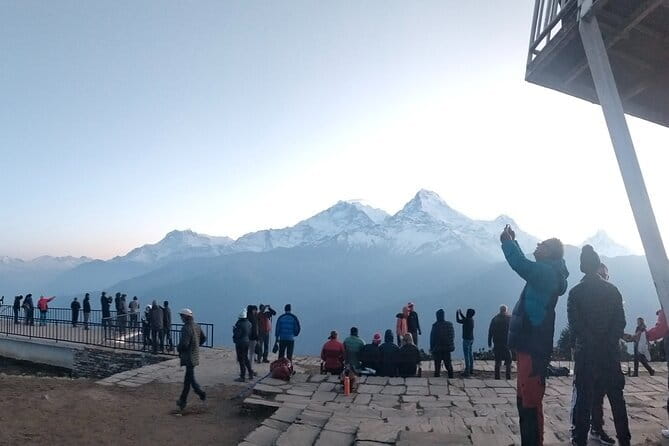
Poon Hill is the payoff for a few solid uphill hours. This trek is built for big Himalayan views and small-village life in places like Gurung villages, with an easy pace aimed at hikers with normal fitness. I like how the route mixes trail time (rhododendron forest, terraced fields, alpine meadows) with cultural stops, not just photo stops.
My main caution is the early start. The sunrise hike to Poon Hill means waking up before dawn and walking in low light, so if you hate cold mornings or dislike going out early, plan for that in advance.
In This Review
- Quick hits on the Poon Hill Trek package
- Poon Hill Trek: the best-value intro to Annapurna and Dhaulagiri views
- Price and what $405 actually buys you (and what it doesn’t)
- Day 1 in plain terms: Kathmandu meeting, then the long drive to Pokhara
- Day 2: Birethanti checkpoint and the walk up toward Ulleri
- Day 3: Rhododendron forests to Ghorepani (and why this day sets up the sunrise)
- Day 4: Poon Hill sunrise hike, then Ghandruk village life
- Day 5: Downhill to Syauli Bazaar, then back to Pokhara Lakeside
- What the trail feels like: easy difficulty, real walking, and changing scenery
- Guides, timing, and why communication seems to be a big deal here
- Group trekking realities: what “max 8” means for your experience
- Permits, fees, and the practical side of trekking in the Annapurna area
- Weather matters: plan for the sunrise, but respect the forecast
- Who this trek suits best (and who should think twice)
- Should you book this Poon Hill Trek package?
- FAQ
- What is the duration and route for the Poon Hill Trek package?
- Where is the meeting point and where does the tour end?
- What’s included in the package price?
- Is this trek suitable for beginners or normal fitness?
- How big are the groups?
- Do you hike to Poon Hill for sunrise?
- What is not included in the tour cost?
Quick hits on the Poon Hill Trek package
- Sunrise-focused plan with a dedicated early-morning push to Poon Hill
- Village time in Ulleri, Ghorepani, and Ghandruk—not only mountain viewpoints
- Permits handled at the Birethanti checkpoint (fees and taxes are included)
- Guide support that gets praised repeatedly, including guides named Tilak, Bishnu, and Ram
- Small groups (max 8), which keeps the pace and logistics more manageable
- Meals and basic lodging included, so you’re not constantly hunting for food and beds
More trails out of Kathmandu, boots ready
- Everest Base Camp Trek – 14 Days★ 5.0 · 1,499 reviews
- Everest Base Camp Trek★ 5.0 · 842 reviews
- Everest Base Camp Trekking★ 5.0 · 485 reviews
- Nagarkot Sunrise View and Day Hiking from Kathmandu★ 5.0 · 471 reviews
Poon Hill Trek: the best-value intro to Annapurna and Dhaulagiri views
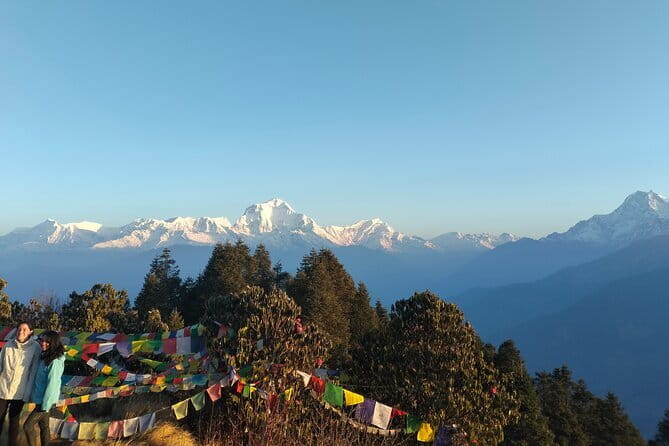
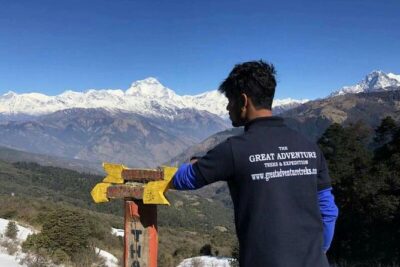
If you want a Nepal trek that feels like a proper Himalayan experience without needing weeks on the trail, this is a smart choice. The Poon Hill trek is famous for turning up huge views—often of the Annapurna and Dhaulagiri ranges—from a viewpoint that’s reachable on a short schedule. The best part is that you’re not just sitting at a lookout. You work for it: walking through forests, climbing through villages, and ending each day with more of that mountain panorama building in your mind.
I also like that the experience is framed for real humans. The trek is described as easy difficulty levels and suitable for people with normal fitness. That doesn’t mean it’s zero-effort—there’s still uphill trekking—but it’s not pitched as a technical challenge.
Price and what $405 actually buys you (and what it doesn’t)
At $405, the package is trying to cover the stuff that usually becomes annoying when you trek: transportation, permits/fees, guiding, and core meals/lodging. According to the inclusions, you get:
- Round-trip transport between trek start/end points (and a tourist bus from Kathmandu to Pokhara)
- All fees and taxes
- An experienced trekking guide
- Accommodations for 3 nights during the trek plus 1 night in Pokhara
- A set meal plan: breakfast (4), lunch (4), and dinner (3)
That’s where the value often hides. You’re not just paying for someone to point at mountains—you’re paying for the practical moving parts: permits, timing, and getting you from Kathmandu to the trail and back.
What’s not included matters too. The package lists drinks/beverages, personal expenses, and tips for the guide/potters as expected extra costs. If you’re the kind of traveler who buys drinks every meal and snacks nonstop, budget for that. If you plan to keep it simple, the included meals make the trip feel much more predictable.
Day 1 in plain terms: Kathmandu meeting, then the long drive to Pokhara
You start at the Nepal Hiking Adventure Company office near Thamel in Kathmandu. From there, you head toward the bus park and take the tourist bus down to Pokhara. This is the first big reality check of the trek: the road time. The drive is listed as 6–8 hours, and you’ll sleep in Pokhara after arriving.
I like this setup because Pokhara is the right kind of reset. You’re not starting your first trek day immediately out of Kathmandu chaos. You get a night to settle, eat a proper meal, and get your gear ready for the trail rhythm.
Day 2: Birethanti checkpoint and the walk up toward Ulleri
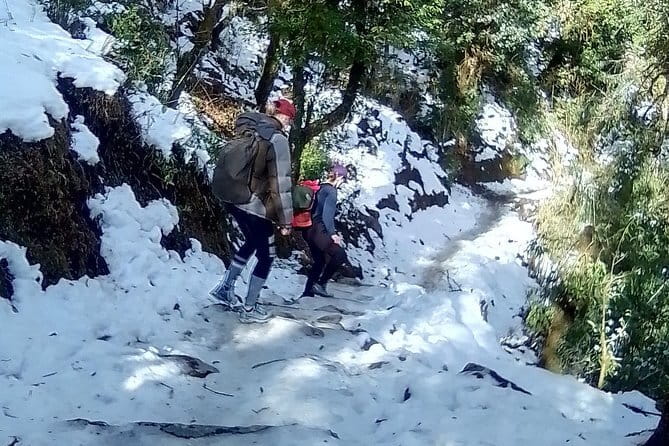
Day 2 starts with driving from Pokhara Lakeside to Birethanti, which acts as a checkpoint for the Annapurna Conservation Area. This is where the permit checks happen. Having that handled for you (since fees and taxes are included) removes one of the common stress points for independent trekkers.
After the checkpoint part, your trekking begins toward Ulleri. The plan is to trek through Hile, with a short lunch break at Hile before continuing uphill to Ulleri.
Two things to watch for here:
- You’re switching from vehicle time to foot time. Don’t treat it like a stroll.
- You’ll want footwear that’s comfortable for uneven paths because the “easy” level still means actual walking, not flat sightseeing.
Day 3: Rhododendron forests to Ghorepani (and why this day sets up the sunrise)
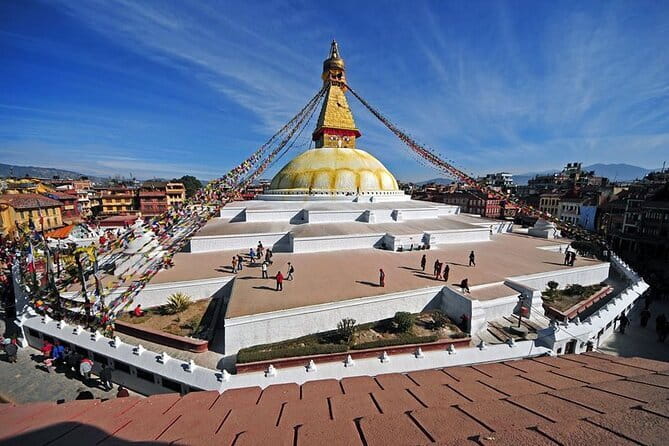
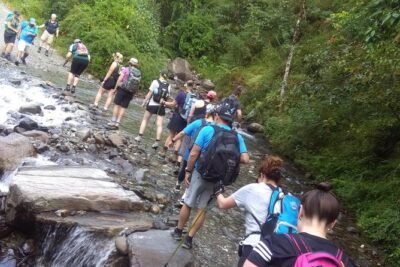
The next morning you start early from your hotel after breakfast and trek toward Ghorepani. The route includes rhododendron forest, which is one of the classic trekking visuals in this region—especially as you climb and the vegetation changes with the altitude and weather.
The itinerary lists about 5 hours for this day, so it’s long enough to feel like a trek day, but not so long that you’re wiped out. In many Poon Hill itineraries, this day functions like the calm before the sunrise push. You’re moving into the area that gives you the staging point for reaching Poon Hill in the dark-hours of Day 4.
If you’re trying to time your trip for good photos, pay attention to how you use this day. Go a little slower than you think you need, and save enough energy for standing around in the morning chill.
Day 4: Poon Hill sunrise hike, then Ghandruk village life
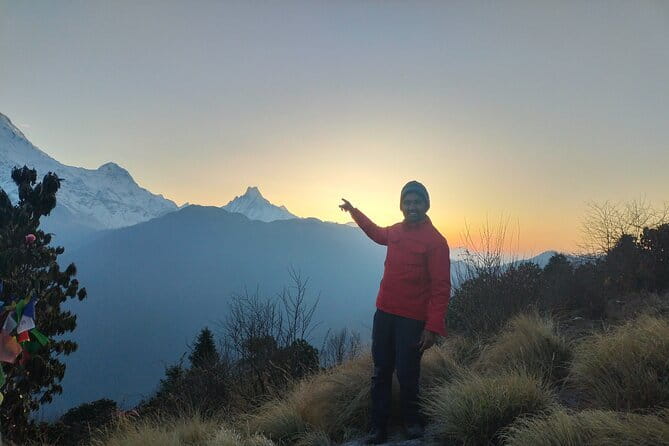
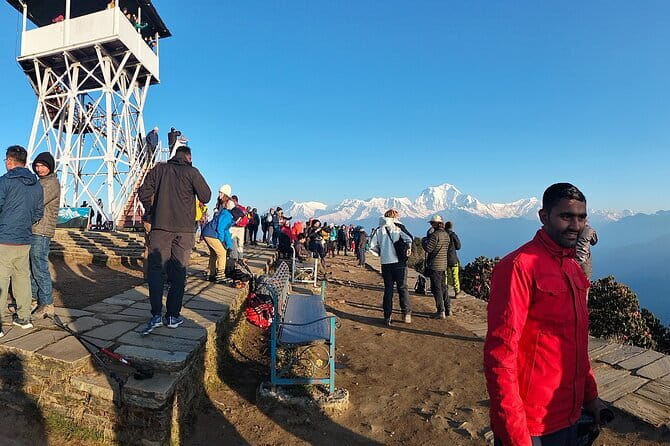
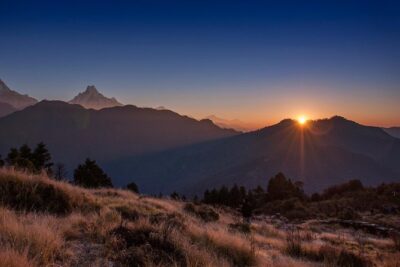
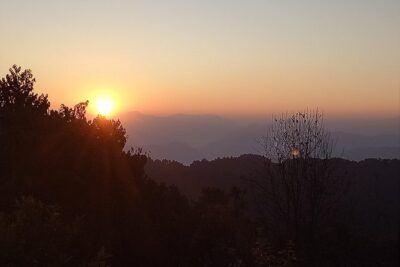
Day 4 is the star day. You’ll hike to Poon Hill early morning for sunrise, then explore more mountain views from the viewpoint. After that, you return to the hotel for breakfast before continuing to Ghandruk.
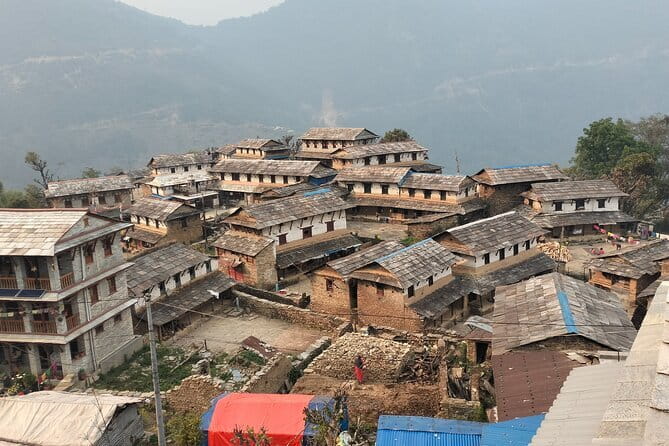
This is also where the itinerary shows its balance: you get your big mountain moment, then you switch to village time. Ghandruk is often the kind of place where trekking stops feeling like a checklist and starts feeling like everyday life—shops, homes, and local rhythms mixed in with the scenery.
The trek day is split into two major blocks:
- Sunrise hike and viewpoint time at Poon Hill (about 2 hours indicated in the schedule for that section)
- Walk to Ghandruk after breakfast (about 6 hours indicated, with a lunch break along the way)
A practical tip: plan your pace for the second half. After sunrise, your legs might feel good for a while—until you start descending and climbing again toward the village. Small, steady steps beat trying to “race” because you’re excited.
Day 5: Downhill to Syauli Bazaar, then back to Pokhara Lakeside
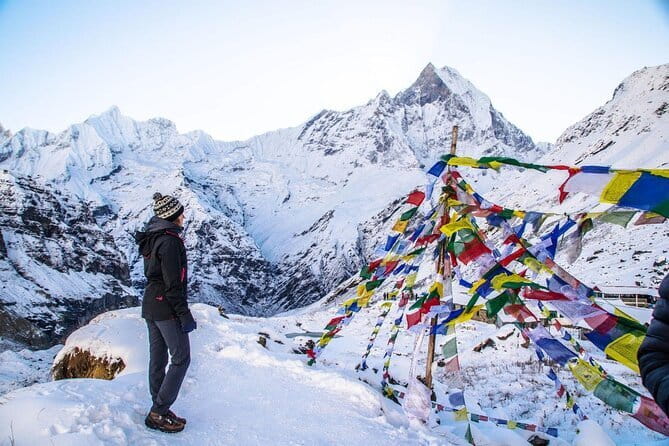
On Day 5 you start with breakfast at the hotel, then begin trekking from Ghandruk. The route takes you downhill toward Syauli Bazzar, then continues along an easy path to Birethanti, which becomes your trek ending point.
From Birethanti, you check out your permit and then drive back to Pokhara Lakeside.
This is the day where you’ll feel the difference between “trek legs” and “normal walking legs.” It’s described as an easy path, but it’s still trekking—so treat it like a steady finish, not a sprint.
Once you reach Pokhara, you’re done with the trail portion of the trip, and you’re back in a city where you can eat without thinking about snacks.
What the trail feels like: easy difficulty, real walking, and changing scenery
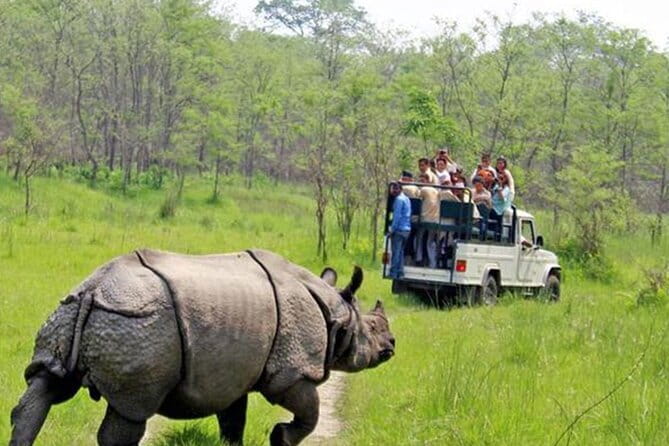
The trek is labeled as easy for people with a normal fitness level, and the itinerary supports that idea: it’s broken into daily chunks of roughly 2 to 6 hours each, with rest and food stops built in. Still, don’t mistake “easy” for “effortless.” Expect uphill sections (Birethanti to Ulleri) and early starts (Poon Hill sunrise).
In terms of what you’ll see, the trek is described as passing through:
- Rhododendron forests
- Terraced fields
- Alpine meadows
- Gurung and Magar villages
That mix matters because it keeps the trek from becoming repetitive. Instead of seeing the same type of slope all day, you get vegetation changes and village stops that break up the walking.
Guides, timing, and why communication seems to be a big deal here
One pattern shows up in the praise: the guides and their approach to support. Names like Tilak, Bishnu, and Ram come up in past trip stories, and the common thread is practical care—answering questions quickly, staying timely, and being attentive during the hike.
Even if you’re an experienced trekker, this is valuable. On a short itinerary, you don’t have time to troubleshoot delays. You need the group to run on schedule, and you need clear guidance on what’s coming next: permits, meal stops, and the sunrise logistics.
Group size also matters. The package has a maximum of 8 travelers, which usually means less waiting around and less chaos at junction points or viewpoints.
Group trekking realities: what “max 8” means for your experience
A small group isn’t just a number. It affects how the days feel.
- You typically wait less.
- Your guide can notice if someone’s moving slowly.
- The pace is easier to manage without splitting people too much.
This is especially useful for Poon Hill, where you’ll want to move as a unit for the early sunrise plan. The more scattered the group, the harder it can be to keep timing for viewpoint time.
If you prefer solitary hiking, a group trek might feel like a tradeoff. But for most people, especially first-timers, it’s a big upgrade in confidence and convenience.
Permits, fees, and the practical side of trekking in the Annapurna area
One of the most helpful inclusions here is handling the paperwork side. Day 2 begins with Birethanti, a checkpoint connected with the Annapurna Conservation Area, and the schedule explicitly mentions checking your permit there. Since all fees and taxes are included, you shouldn’t have to scramble for official steps mid-journey.
At the end, Day 5 also returns to Birethanti for the trek ending flow and permit checkout. That kind of routine reduces uncertainty when you’re tired from the final downhill day.
Weather matters: plan for the sunrise, but respect the forecast
This experience requires good weather. If conditions are poor, the plan may be changed with either a different date or a full refund. That’s not just fine print—it’s central to why Poon Hill works at all. Sunrise views depend on visibility.
In practice, you should treat the schedule like a “best effort” plan rather than a guaranteed spectacle. Your guide and provider will follow the weather rules, but you still want to be mentally ready for postponement if skies don’t cooperate.
Who this trek suits best (and who should think twice)
This Poon Hill Trek package fits best if you:
- Want a short Nepal trek with big mountain views and guided support
- Prefer an easy difficulty plan designed for normal fitness
- Like village walking as much as viewpoint photos
- Value predictability: meals, lodging, transport, and permits handled
It might not be the best match if you:
- Hate early mornings (sunrise hike starts before daybreak)
- Want a totally flexible schedule with no group coordination
- Don’t want to plan for added costs like drinks and tips
Should you book this Poon Hill Trek package?
I’d book it if you want a “great first trek” with minimal logistics and clear payoff. The combination of guided support, included meals/lodging, and the Poon Hill sunrise focus is exactly what makes this kind of trek feel worth the effort.
Before you hit confirm, do three quick checks:
- Can you handle an early-morning climb for sunrise without grumbling too much?
- Are you okay with a group of up to 8 and a set daily rhythm?
- Do you have budget for extra items not included (drinks, personal expenses, and expected tips)?
If those boxes are fine, this is a solid value route to see Annapurna-area mountains in a few days.
FAQ
What is the duration and route for the Poon Hill Trek package?
The trek is listed as approximately 5 days, starting in Kathmandu and ending in Pokhara (with trekking start/end points including Birethanti).
Where is the meeting point and where does the tour end?
The meeting point is at Nepal Hiking Adventure Company, Z Street, Kathmandu 44600. The tour ends at Pokhara Lakeside, Lakeside Rd, Pokhara 33700.
What’s included in the package price?
Transportation to and from the trek start/end point, all fees and taxes, an experience trekking guide, accommodations for 3 trek nights plus 1 night in Pokhara (BB plan), tourist bus ticket to Pokhara, and meals including breakfast (4), lunch (4), and dinner (3).
Is this trek suitable for beginners or normal fitness?
The trek is described as easy difficulty and accessible for most travelers with normal fitness. The schedule includes day hikes that are not extreme in length, but you should still expect real uphill and downhill walking.
How big are the groups?
This experience has a maximum of 8 travelers.
Do you hike to Poon Hill for sunrise?
Yes. The itinerary includes an early morning hike to Poon Hill for sunrise, followed by more mountain views from the viewpoint.
What is not included in the tour cost?
Not included are drinks and beverages during the trek, personal expenses, and tips for the guide/potters (expected). Weather and minimum traveler requirements can also affect whether the experience runs as scheduled.
More Trekking Out of Kathmandu
More Tour Reviews in Kathmandu
Just Reviewed in Kathmandu
- Mountain Bike Tour
★ 5.0 · 3 reviews - Annapurna Panaroma
★ 5.0 · 3 reviews - Mount Everest Scenic Flight 50 Minutes
★ 5.0 · 3 reviews - Kathmandu : Swambhunath & Durbar Square Guided Half Day Tour
★ 3.3 · 3 reviews - Chandragiri Cable Car & Monkey Temple Tour – Private/Group
★ 5.0 · 3 reviews - Kathmandu: Shivapuri National Park Hiking Day Trip
★ 3.3 · 3 reviews
Poon Hill & Ghorepani Treks, compared.
 ★ 5.04 Days Poon Hill TrekFrom $40594 reviews
 ★ 5.0Ghorepani(Poonhill Trek)From $60081 reviews
 ★ 5.04-day Poon Hill TrekFrom $40074 reviews
 ★ 5.0Ghorepani Poon Hill TrekFrom $39961 reviews
★ 5.0Ghorepani Poon Hill TrekFrom $70046 reviews
★ 5.0Ghorepani Poon Hill TrekFrom $39961 reviews
★ 5.0Ghorepani Poon Hill TrekFrom $70046 reviews
 ★ 5.0Poon Hill TrekFrom $1,17242 reviews
 ★ 5.0Poonhill TrekFrom $60033 reviews
 ★ 5.0Ghorepani Poon Hill Sunrise TrekFrom $79921 reviews
Browse the lists this tour appears in