
Review · GOKYO LAKES & EVEREST HIGH PASSES
Everest Base Camp & Gokyo Ri Trek
Everest views start before the first step. This trek is interesting because you get two “big view” days (Gokyo Ri and Kala Patthar) plus the real grit of a Cho La glacier crossing. I love the quick Kathmandu-to-Khumbu jump from the Lukla flight and I love how the route mixes quiet villages with massive mountain backdrops. One possible drawback: you’re stacking long days at altitude, and the Cho La section demands careful footing on icy, slippery ground.
I also like the way the itinerary builds in acclimatization stops around Namche and Khumjung/Thame before you push higher toward the lakes and Everest. Lodges and meals are handled along the way, so you can focus on pace, hydration, and staying warm instead of logistics. If you’re the kind of person who likes schedules but also wants room to move at a sensible rhythm, this one fits well.
In This Review
- Key Highlights You’ll Actually Feel on the Trail
- Fly Into Lukla and Watch Kathmandu Shrink Fast
- Phakding to Namche: Suspension Bridges and First Everest Glimpses
- Namche Rest Day: Best Time to Adjust Without Losing Momentum
- Khumjung and Thame: Prayer Flags, Mani Stones, and Hillary’s Hospital
- Into the Rhododendron Belt: The Dudh Koshi Valley Grind
- Gokyo Lakes Day: The Ngozumpa Glacier and Three Holy Lakes
- Gokyo Ri: A Steep Early Climb for a 360-Degree View
- Thagnak and Zonglha: Shorter Trek, Bigger Preparation
- Lobuche and the Memory Stones: Glacier Moraine and Nuptse at Sunset
- Kala Patthar: Early Start, Big View, and a Real Sense of Scale
- Everest Base Camp Excursion: Ice Pinnacles and the Glacier Feel
- The Descent Through Tengboche and Kyanjuma: Wild Birds, Rhododendron, and Relief
- Kathmandu Wrap-Up: Boudhnath, Pashupatinath, and Patan
- Price and Logistics: Does $2,800 Make Sense Here?
- What the Included Support Really Means for Your Day
- Packing and Fitness: Where People Usually Get Caught
- Who Should Book This Trek, and Who Might Reconsider
- Should You Book Everest Base Camp & Gokyo Ri Trek?
- FAQ
- How long is the Everest Base Camp & Gokyo Ri trek?
- Where does the trip start and end?
- Are flights within Nepal included?
- What kind of accommodation do you get during the trek?
- Are meals included?
- Are permits and guides included?
- What’s the most challenging part of the itinerary?
- How many people are in a group?
- What is the cancellation refund rule?
Key Highlights You’ll Actually Feel on the Trail
- Lukla flight sets the tone fast with cliff-hanging airport drama and instant mountain context
- Namche, Khumjung, and Thame slow your climb smartly with acclimatization and Sherpa culture
- Gokyo lakes deliver the “that color is real” moment (emerald reflections at the holy lakes)
- Gokyo Ri is a summit-style payoff with a steep, early climb for wide Everest views
- Cho La is the toughest day with steep glacier traverse and ice-glazed rock
- Everest Base Camp plus Kala Patthar gives you two different kinds of awe
More trails out of Kathmandu, boots ready
- Everest Base Camp Trek – 14 Days★ 5.0 · 1,499 reviews
- Everest Base Camp Trek★ 5.0 · 842 reviews
- Everest Base Camp Trekking★ 5.0 · 485 reviews
- Nagarkot Sunrise View and Day Hiking from Kathmandu★ 5.0 · 471 reviews
Fly Into Lukla and Watch Kathmandu Shrink Fast
Day 1 is mostly about landing and getting set. On a clear day, the flight into Kathmandu/Tribhuwan area can be a real panoramic warm-up, with mountain peaks spread out below. Then the support team meets you on arrival and escorts you to your hotel for the night.
Day 2 starts the trek properly: you take a short flight from Kathmandu to Lukla, described as a cliff-hanging airport in Khumbu. After meeting the crew, you head into the Dudh Koshi Valley on a well-marked trail and spend the night in Phakding at a lodge.
Why I like this start for you: the itinerary respects the fact that altitude and effort aren’t only about the hiking days. Getting into the Khumbu early means you can spend energy on actual trail moments—not on long drives or wasted travel time.
Phakding to Namche: Suspension Bridges and First Everest Glimpses
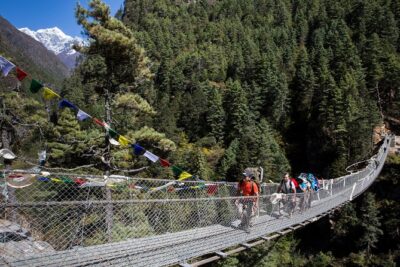
The Phakding-to-Namche stretch follows river crossings again and again, using high suspension bridges that feel exposed even when you’re walking steadily. After Monjo, you enter Sagarmatha National Park, a key piece of environmental protection for the Everest region.
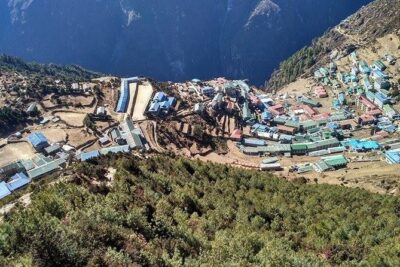
The climb into Namche is steep enough that you’ll earn the payoff. If the weather’s clear, you may get your first glimpse of Mt Everest, and Namche itself brings big “Sherpa capital” energy: lodges, tea shops, and an active Saturday market where locals, lowland traders, and yak caravans intersect.
Possible drawback to consider: Namche days can tempt you to move too fast because it’s busy and fun. The route handles this well, though, by placing a rest/acclimatization stop soon after.
Namche Rest Day: Best Time to Adjust Without Losing Momentum
Day 4 is your acclimatization buffer. It’s set up as a rest day in Namche so you can catch your breath at elevation, eat something you enjoy, and let your body adjust before going west toward Thame.
You’ll also enjoy the practical side of this day: with plenty of tea houses and shops, you can manage small needs like warming layers or basic comforts without feeling stuck.
For your experience, this matters because the trek later asks you to do early starts and bigger elevation gains. A calm rest day isn’t wasted time—it’s what keeps the later days from feeling like a constant scramble.
Khumjung and Thame: Prayer Flags, Mani Stones, and Hillary’s Hospital
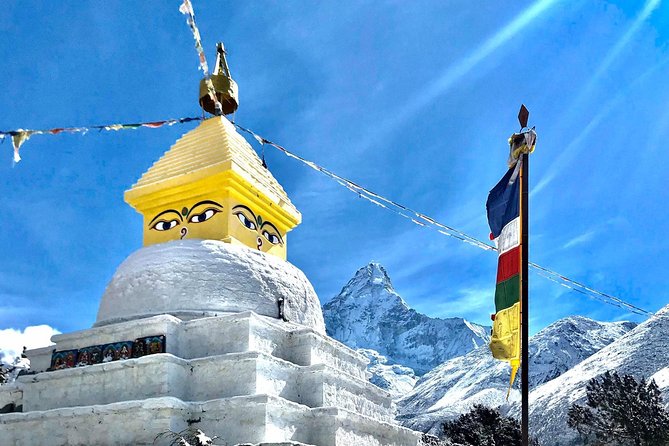
After Namche, the trail turns west toward the Bhote Koshi Valley. You’ll pass prayer flags and mani stones, which quietly remind you that this area is Buddhist, not just “a hiking zone.”
The route goes through Thame and then toward Khumjung, where you’re treated to views of peaks like Teng Kangpoche and Kwangde. Thame Gompa sits above the valley and is connected to the Mani Rimdu festival in spring, so this village isn’t only scenic—it has living cultural rhythm.
One of my favorite details here is Khunde hospital, set up by Sir Edmund Hillary. It’s a strong reminder that people have been supporting the Everest region long before most hikers even arrive with their trekking poles.
Short version: Khumjung and Thame add meaning to the climbs. You’re not only gaining altitude—you’re moving through a place with community institutions, beliefs, and mountain-season routines.
Into the Rhododendron Belt: The Dudh Koshi Valley Grind
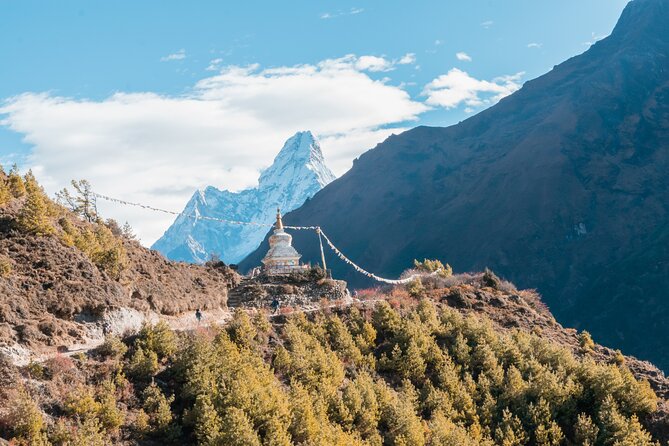
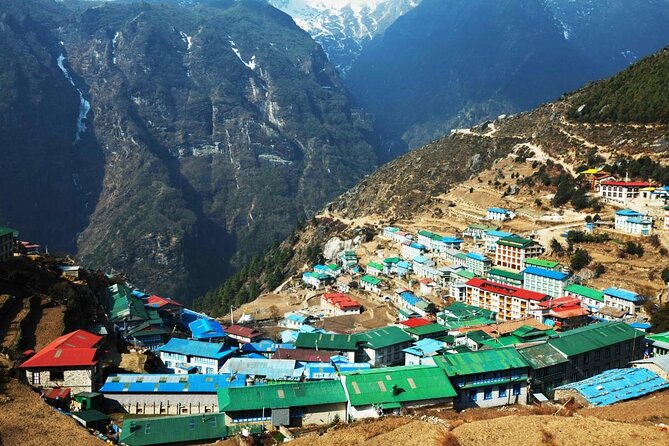
You retrace part of the route down the Bhote Koshi Valley and then branch onto a quieter trail toward Khumjung again. You also get more valley views from the camping area, including Thamserku, Kantega, and Ama Dablam.
Soon after, you climb toward a large chorten on a ridge linked to Khumbila, a 5734m peak described as the abode of the patron god of the Khumbu. After lunch near the bridge by Phortse, you push up through rhododendron and birch forest with hanging mosses and lichens.
This is a good day for learning your pace. Forest walking can trick you into going too fast because it feels less exposed than open slopes. Keep your effort steady; altitude still adds up.
Gokyo Lakes Day: The Ngozumpa Glacier and Three Holy Lakes
From Dole onward, the vegetation shifts—rhododendron gives way to scrub juniper as altitude rises. You’ll also pass summer settlements (yersa), used when yaks graze in seasonal pastures. That’s a detail I like because it helps you see the landscape as a working system, not just scenery.
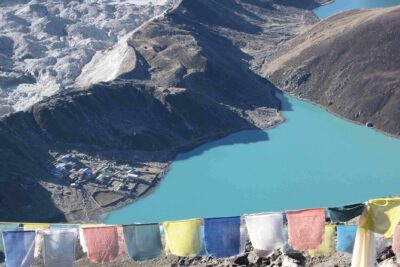
On the way to Gokyo, the trail tracks alongside melting rivers descending from the Ngozumpa Glacier. You reach the first holy lake, then the second, where the route later links to Cho La and toward Lobuche/Everest. The third lake is Dudh Pokhari, known as Milk Lake, and on the eastern shore sits the Gokyo village.
The famous moment here is walking by the lakes: you get reflections of peaks like Cho Oyu and Gyachung Kang in greenish waters. Weather has to cooperate, but the setting is so striking that even hazy days feel memorable.
Gokyo Ri: A Steep Early Climb for a 360-Degree View
Gokyo Ri is placed right for maximum impact. Day 10 starts just after first light with a steep path up the hillside from above the village on the northern edge of the lake.
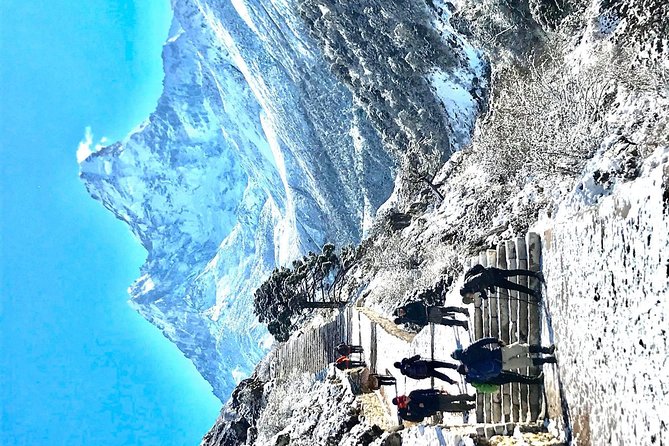
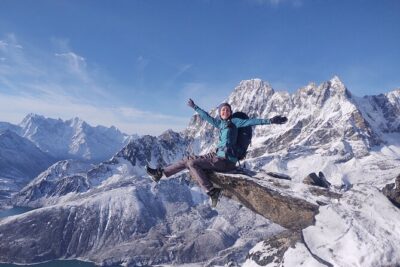
As you climb, you can watch Everest-region giants come into view—Everest, Lhotse, and Makalu among them. From Gokyo Ri, the panorama is described as 360 degrees, and some say it can be even better than Kala Patthar depending on conditions.
After lunch, the itinerary shifts to Na, a village at the foot of the Ngozumpa Glacier. This keeps the day from ending as pure climbing and helps you preserve energy for what’s coming next.
Thagnak and Zonglha: Shorter Trek, Bigger Preparation
Day 11 is framed as a shorter hike plus rest—exactly what you want after a summit-style push. You trek through the Ngazumpa Glacier area and traverse along the edge of a mountain, then head into Thagnak.
Day 12 becomes your turning point: Cho La pass. Even though the pass itself isn’t described as the long grind of a multi-day climb, it’s one of the toughest days because of steep glacier traverse on the eastern side. The trail is vertical in places, and rocks are glazed by ice, which makes slip risk real. You cross crevasses before reaching Dzongla.
This is where your careful pacing matters most. Don’t treat this as a distance day. Treat it as a safety-and-footwork day—one step at a time, with your guide checking conditions and timing.
Lobuche and the Memory Stones: Glacier Moraine and Nuptse at Sunset
After Dzongla, the route goes to Lobuche. You pass teahouses of Duglha and climb higher onto the terminal moraine of the Khumbu glacier. Along the way, you’ll see stone monuments built in memory of Sherpas who died on Mount Everest expeditions.
Then the trail drops and follows the west side of the valley toward Lobuche. Sunset on Nuptse from here is called out as especially spectacular, which makes sense: Lobuche sits in a position that gives you dramatic mountain silhouettes when the light hits right.
If you’re thinking about photos: plan for quick bursts, not long stops. Cold temperatures and fatigue can steal your time fast.
Kala Patthar: Early Start, Big View, and a Real Sense of Scale
Day 14 is a very early start to reach Gorak Shep, then a climb to Kala Patthar at 5554m. The trail offers superb views, including places where the path forces you to cross a tributary glacier.
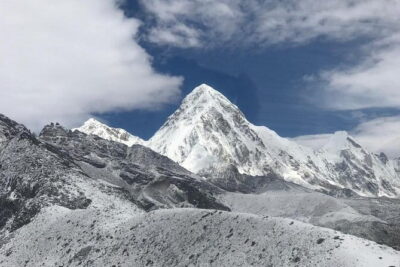
Kala Patthar is one of the most famous viewpoints in the Everest region for a reason: you’re close enough to feel the scale of the ice and ridgelines. After reaching the top, you return to Gorak Shep.
Practical tip: take it slow on the ascent. Even if you feel okay, your body is still adjusting to high elevation, and the cold will make movement feel heavier.
Everest Base Camp Excursion: Ice Pinnacles and the Glacier Feel
Day 15 is your Everest Base Camp outing from the Gorak Shep area. It’s described as taking several hours because the trail weaves through ice pinnacles and near crevasses of the Khumbu Glacier.
On the return, you may take a higher route for a spectacular view of the Khumbu icefall and the route to the South Col. Then you trek back toward Pheriche.
This is the day you’ll remember most as “the mountain is right there.” It’s not a simple walk to a sign. The glacier environment makes it feel serious and alive, even when you’re moving slowly.
The Descent Through Tengboche and Kyanjuma: Wild Birds, Rhododendron, and Relief
After Base Camp, you shift from peak goals to recovery. Day 16 includes walking downhill toward Tengboche and crossing the Dudh Koshi bridge, then continuing toward Kyanjuma, the junction linking routes to Gokyo Valley, Khumjung, and Namche Bazaar.
There’s also a note about dense wildlife you might encounter inside the rhododendron forest—pheasants, griffons, musk deer, and wild goat. Even if you don’t see all of them, the forest and river valley feel different from the high, exposed stretches.
Day 17 and Day 18 bring the descent through rhododendron and juniper, with prayer-flag bridges over the Dudh Koshi and views of Ama Dablam, Thamserku, and Nuptse when you reach vantage points near Sansa.
Finally, Day 18 returns to Lukla. That last evening is set up as a farewell party with Sherpa guides and porters, including chang (local beer) and Sherpa dancing.
Kathmandu Wrap-Up: Boudhnath, Pashupatinath, and Patan
Day 19 flies you back to Kathmandu and leaves you free to do your own thing. Day 20 adds a guided cultural block: Boudhnath (the largest Buddhist stupa in Nepal), Pashupatinath (a major Hindu shrine for Lord Shiva), and Patan (Lalitpur), including Patan Durbar Square and Malla-era architecture.
You’ll also visit Mahaboudha Temple, Kumbeshwor Temple, Krishna Temple, and Golden Temple around the square. Day 21 ends with airport transfer for your flight home.
This “city reset” is valuable after days in thin air. It gives you something to do with your energy besides thinking about weather and crampons.
Price and Logistics: Does $2,800 Make Sense Here?
At $2,800 per person for about 21 days, you’re paying for a lot of real costs that add up quickly in the Everest region: the Kathmandu/Lukla/Kathmandu airfare, lodge stays during the trek (standard rooms with non-attached bathrooms), and the permits during the trek.
You’re also paying for human support: an English-speaking local expert guide, porters with a ratio of 2 members to 1 porter, and equipment clothing for porter/staff plus insurance. On top of that, airport transfers in private vehicle and Kathmandu sightseeing are included, and meals are covered during the trekking days (with listed counts for breakfast, lunch, and dinner).
What you should budget for separately: international flights, tips for guide/porters/drivers, and personal expenses like drinks/snacks, hot showers, and internet during the trek. That’s not a dealbreaker, but it matters if you prefer to minimize spending while hiking.
Value take: this price looks more reasonable if you want less mental load. The itinerary includes a lot of movement, and the “handled for you” parts let you spend your brain on pacing and safety.
What the Included Support Really Means for Your Day
The strongest praise from trekkers isn’t the marketing—it’s the practical care. Guides like Bibek and Tiger get described as people who know how to manage the hike while keeping you safe and looked after. Porters like Ram are described as being there step-by-step, not just carrying bags and disappearing.
There’s also emphasis on logistics working smoothly even when plans shift. One review notes changing their mind a few times and the team adjusting. Another mentions dietary needs being anticipated.
Important note: the trek is still tough. Support helps you execute, but you still need to match the effort with a steady pace.
Packing and Fitness: Where People Usually Get Caught
You need moderate physical fitness for this trek. That sounds simple, but it’s really about consistency: walking uphill at altitude for long stretches, handling cold mornings, and keeping your feet steady on varied terrain.
Gear-wise, the itinerary mentions equipment clothing for porter/staff, not a full gear list for you. Since the Cho La day includes steep glacier traverse and ice-glazed rock, you should make sure you’re prepared for cold conditions and traction needs as advised by your operator.
A smart approach: plan layers so you can breathe and adjust when you stop moving. At altitude, getting too warm while hiking and then freezing when you pause is a common problem.
Who Should Book This Trek, and Who Might Reconsider
This is a great fit if you want:
- Everest-region highlights without skipping the acclimatization rhythm
- Gokyo lakes and Gokyo Ri as a real equal to Everest Base Camp
- A guided experience where guides and porters handle permits, logistics, and daily movement
You might reconsider if:
- You hate icy footing days. Cho La is explicitly described as a tough glacier traverse with slippery ice-glazed surfaces.
- You want a purely easy trek. Even with lodges and meals handled, the elevation and day lengths are a big part of the experience.
Should You Book Everest Base Camp & Gokyo Ri Trek?
If you want the classic Everest region story—Lukla entry, Namche acclimatization, Khumjung/Thame culture, Gokyo lakes, Gokyo Ri panorama, Cho La grit, Everest Base Camp, then Kala Patthar—this route is built for it. The value looks solid because airfare within Nepal, permits, guides/porters, and most day-to-day essentials are included.
My call: book it if you’re ready for one hard technical-feeling day and you like real trekking structure. Skip it if you want comfort over challenge or if icy glacier walking sounds like your idea of stress.
FAQ
How long is the Everest Base Camp & Gokyo Ri trek?
It’s listed as 21 days (approx.).
Where does the trip start and end?
It starts with support meeting you at Tribhuvan International Airport in Kathmandu, Nepal, and ends with airport transfer to leave Kathmandu.
Are flights within Nepal included?
Yes. Kathmandu/Lukla/Kathmandu airfare is included.
What kind of accommodation do you get during the trek?
Accommodation is in local lodge/tea house standard rooms with non-attached bathrooms, plus 3 nights’ accommodation in Kathmandu in twin sharing with breakfast included.
Are meals included?
Yes. The package includes breakfast, lunch, and dinner during the trekking period (with listed totals), plus breakfast during the Kathmandu nights.
Are permits and guides included?
Permits during the trek and an English-speaking local expert guide are included. Porters are also included with a ratio of 2 members to 1 porter.
What’s the most challenging part of the itinerary?
Cho La pass on the day described as the toughest, because it includes steep glacier traverse and icy, slippery rock surfaces.
How many people are in a group?
The tour/activity has a maximum of 100 travelers.
What is the cancellation refund rule?
Free cancellation is offered. You can cancel up to 24 hours in advance for a full refund, and cancellations less than 24 hours before the start time are not refunded.
If you tell me your travel month and your hiking experience (how many days you’ve trekked before), I can suggest whether this timing and pace sounds like a good match for you.
More Trekking Out of Kathmandu
More Tour Reviews in Kathmandu
Just Reviewed in Kathmandu
- Mountain Bike Tour
★ 5.0 · 3 reviews - Annapurna Panaroma
★ 5.0 · 3 reviews - Mount Everest Scenic Flight 50 Minutes
★ 5.0 · 3 reviews - Kathmandu : Swambhunath & Durbar Square Guided Half Day Tour
★ 3.3 · 3 reviews - Chandragiri Cable Car & Monkey Temple Tour – Private/Group
★ 5.0 · 3 reviews - Kathmandu: Shivapuri National Park Hiking Day Trip
★ 3.3 · 3 reviews
Gokyo Lakes & Everest High Passes, compared.
 ★ 5.0Gokyo to Everest Base Camp TrekFrom $2,200113 reviews
 ★ 5.0Everest Base Camp – Cho La Pass – Gokyo TrekFrom $1,39465 reviews
 ★ 5.012 Days Everest Base Camp Kala Patthar TrekFrom $1,79961 reviews
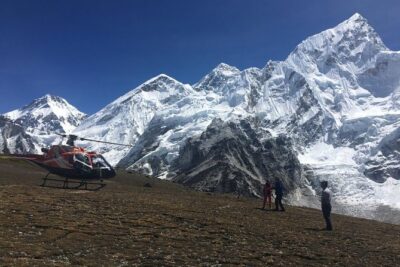 ★ 5.0Guaranteed Landing at Everest Base Camp Kalapathar by HelicopterFrom $3,50038 reviews
 ★ 5.0Everest Gokyo Valley Trek – 12 daysFrom $1,39927 reviews
 ★ 4.214-Day Everest Base Camp with Kala Patthar TrekFrom $1,29621 reviews
 ★ 5.0Landing Private Helicopter at Everest base camp & Gokyo for photoFrom $4,39920 reviews
 ★ 5.0Gokyo Valley TrekFrom $1,51419 reviews
Browse the lists this tour appears in