
Review · EVEREST BASE CAMP TREKS
Everest Base Camp Trek | Deluxe Lodges | Both Way Helicopter Ride
Helicopter to Lukla saves your legs. This 10-day Everest Base Camp package mixes a scenic flight with a classic trek through Sherpa villages, then adds a heli return so you don’t have to spend extra days going back downhill. I love how the plan is short but still builds in acclimatization stops, and I also like that you’re not left to figure logistics alone, with permits, guides, and lodge stays handled for you. One thing to consider: the itinerary depends on flight timing and altitude conditions, so you’ll want to stay flexible and pack for cold even in the middle days.
In This Review
- Everest Base Camp Key Points I’d Plan Around
- First Impressions in Kathmandu: Thamel, Pickup, and What’s Covered
- Helicopter to Lukla (and the Return): The Big Value Move
- Day by Day: What the Trek Feels Like in Real Life
- Day 1: Thamel Arrival and a Proper Reset
- Day 2: Fly to Lukla, Then Ease into Phakding
- Day 3: Pine Forests, Dudh Koshi River, Monjo, and Namche Bazaar
- Day 4: Syangboche Acclimatization and the Everest View Hotel Stop
- Monasteries, Bridges, and the Classic Everest Trail Bits
- Day 5: Tengboche Gompa and the Long Suspension Bridge
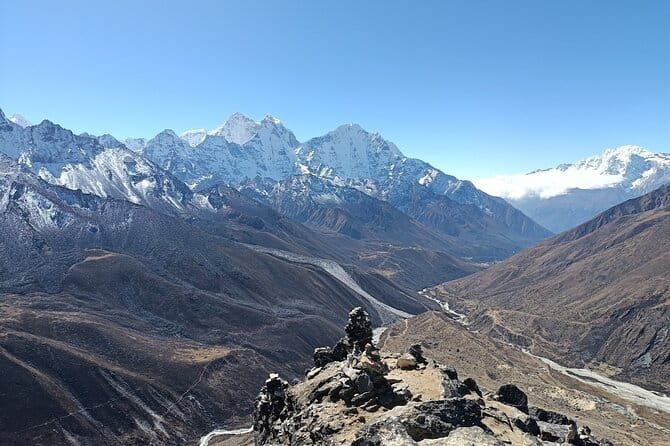
- Day 6: Pangboche Buddhist Monastery and Big-Peak Views
- Day 7: Dingboche Acclimatization Day (Climb High, Sleep Low)
- Day 8: Lobuche, Dughla, and the Memorials
- Everest Base Camp + Gorakshep + Heli Return: How to Get the Most Out of It
- Day 9: Gorakshep Area, Glacier Terrain, and the Base Camp Moment
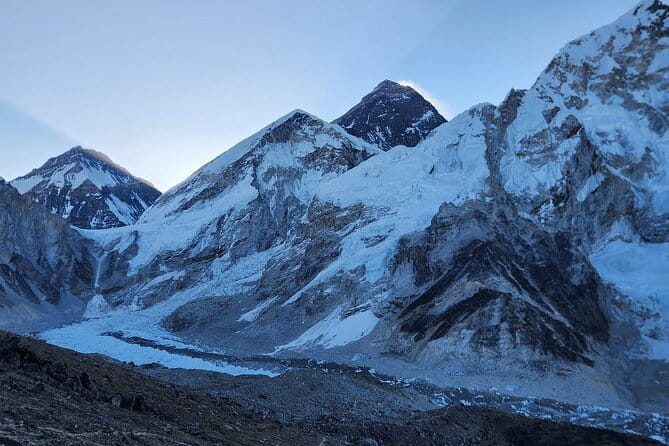
- Day 10: Kala Patthar Sunrise and the Final Stretch
- Lodges, Meals, Gear, and the Stuff That Keeps You Comfortable
- Guides, Safety, and the Real Meaning of a Licensed Team
- Price and Value: $3,332 for EBC + Deluxe Lodges + Helicopters
- Who This Trek Fits Best (and Who Might Want a Different Option)
- Should You Book It?
- FAQ
- How long is the Everest Base Camp trek?
- Does the price include the helicopter flights?
- What lodging do you get during the trip?
- Are permits included?
- What gear is provided for cold weather?
- Who leads the trek and do you have porters?
- What’s not included in the price?
Everest Base Camp Key Points I’d Plan Around
- Both-way helicopter ride keeps this trek to about 10 days instead of dragging into a longer schedule.
- Acclimatization days at Namche plus Syangboche and Dingboche help you pace altitude more intelligently.
- Everest View Hotel stop at 3,880 m is built into the acclimatization day (coffee is optional and not included).
- Warm gear included for -20°C means you can travel lighter and safer for cold nights (you return it at the end).
- Porters and luggage limits are clear: 10 kg big bag + 5 kg handbag, with 1 porter for 2 people.
More trails out of Kathmandu, boots ready
- Everest Base Camp Trek – 14 Days★ 5.0 · 1,499 reviews
- Everest Base Camp Trek★ 5.0 · 842 reviews
- Everest Base Camp Trekking★ 5.0 · 485 reviews
- Nagarkot Sunrise View and Day Hiking from Kathmandu★ 5.0 · 471 reviews
First Impressions in Kathmandu: Thamel, Pickup, and What’s Covered
You start in Kathmandu in the Thamel area, which is a smart choice for an Everest trip. It’s practical: you get easy access to cafés, gear shops, and quick help if you need to adjust anything before the trek. The tour includes airport pickup and drop-off by private car or van, so you’re not stuck bargaining for transport after a long flight.
You also get two nights in a 3-star hotel in Kathmandu with breakfast—one night before the trek and one night after. That matters more than it sounds. When you’re about to leave for high altitude, a real bed and a calm evening help you get your head right. You’re also in a better spot to handle whatever you forgot (charging cables, warm socks, that kind of stuff).
The package uses a guide and staff coordination that includes emergency and rescue operations planning, and the trek team carries first aid kits plus an oxi-meter. That gives you peace of mind without turning the trip into a clinical experience. Also, it’s set up as a private activity for your group only, so you’re not squeezed into a random crowd.
Helicopter to Lukla (and the Return): The Big Value Move
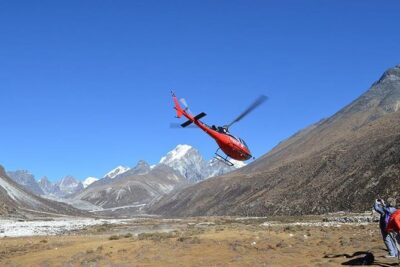
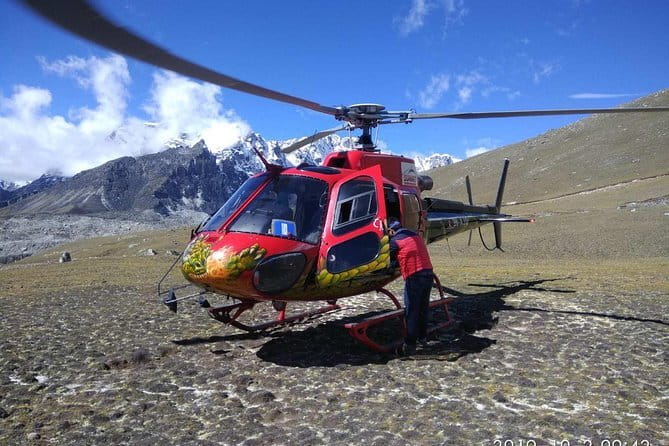
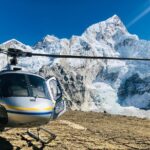
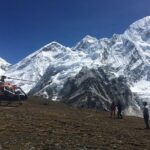
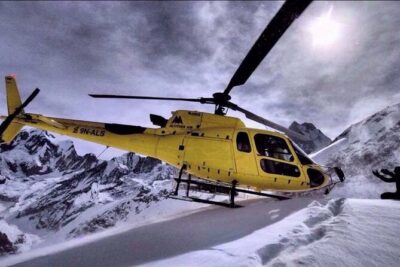
This is the hook of the whole trip: a sharing helicopter from Kathmandu to Lukla, then a helicopter return from the Everest Base Camp (Gorakshep) area back to Lukla, plus the final leg from Lukla back to Kathmandu.
Why you’ll like it:
- Your legs get a break. Traditional EBC routes can have a lot more back-and-forth hiking. Here, you compress the whole timeline.
- You still get the big trekking payoff—villages, suspension bridges, monastery stops, and the Everest Base Camp area.
- It turns a “maybe I’ll do this someday” plan into something you can realistically fit into a shorter window.
Why you should think twice:
- A helicopter changes the rhythm. Instead of having full control over each day through walking, you depend on flight schedules and timing.
- Sharing flights can mean you need to accept that your exact departure time isn’t entirely your decision.
Also, this trek explicitly includes luggage allowances for the high part of the trip: up to 10 kg for a big bag and 5 kg for a handbag. Pack accordingly. If you show up with a suitcase full of “just in case” items, the mountains will tell you to rethink that.
Day by Day: What the Trek Feels Like in Real Life
Day 1: Thamel Arrival and a Proper Reset
Day 1 is a landing and settling day. You’re met after you arrive at Tribhuvan International Airport in Kathmandu and driven to your hotel. Then you rest.
This is the right move. Most people don’t feel “ready” on Day 1, no matter how excited they are. A night in Kathmandu lets you sleep, shower, and adjust before altitude does its thing.
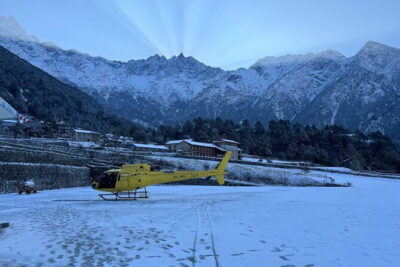
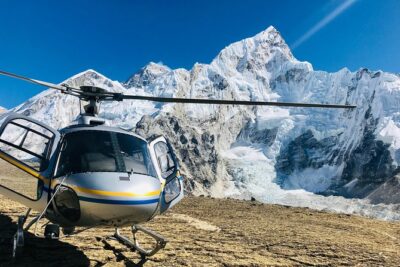
More of the range from the air

Day 2: Fly to Lukla, Then Ease into Phakding
You take an early flight to Lukla—about 45 minutes—and the ride is described as scenic, flying over Everest and Kanchenjunga. That’s a rare way to get high-mountain context fast, and it can also reduce the mental fatigue that sometimes comes from spending too many hours just getting to the trekking start.
Once you land, you begin walking toward Phakding. The hike is kept shorter so you can acclimatize. The route runs gently along the river bank, which usually means fewer killer climbs on the first real trekking day.
A practical tip for Day 2 pacing: treat it like a long warm-up. You’re not trying to “win” the trek. You’re trying to finish the day feeling strong enough to enjoy the next one.
Day 3: Pine Forests, Dudh Koshi River, Monjo, and Namche Bazaar
Breakfast first, then a trek that follows the Dudh Koshi River through pine forests. You pass places like Benkar village and continue to Monjo, then push on toward Namche Bazaar.
Namche is a big deal on this route. It’s where you can feel the Everest region shift from “trail with villages” to “mountain town base.” The itinerary calls out an important moment: after a steep ascent, you start getting glimpses of Everest peeking over the Lhotse-Nuptse ridge.
Why this stop matters for you:
- Namche helps you regulate your pace. It’s a place to slow down without losing momentum.
- There’s a local market, and you’re given time to explore restaurants, massage centers, and spas.
That last part sounds like a luxury, but when you’re carrying trekking aches, a bit of recovery can be the difference between enjoying the next day and thinking only about your feet.
Day 4: Syangboche Acclimatization and the Everest View Hotel Stop
Day 4 is one of the most “smart planning” parts of the trek. It’s a dedicated acclimatization day, hiking up to Syangboche near Khumbila Peak. Along the way you visit the Hotel Everest View, which sits around 3,880 m—a place where you can have coffee with massive mountain views. The hotel stop is described as optional in terms of admission.
Then you go back down to Namche Bazaar. This matters because acclimatization works best when you climb high and don’t sleep at the absolute top every time. The itinerary is set up with that in mind.
What you’ll likely notice here: the cold feels sharper. Even if the air isn’t biting, your body tightens up when you’re higher. If you’ve ever felt “tight” on long climbs, that’s normal here. You manage it with slow steps, steady breathing, and not rushing for photos.
Monasteries, Bridges, and the Classic Everest Trail Bits
Day 5: Tengboche Gompa and the Long Suspension Bridge
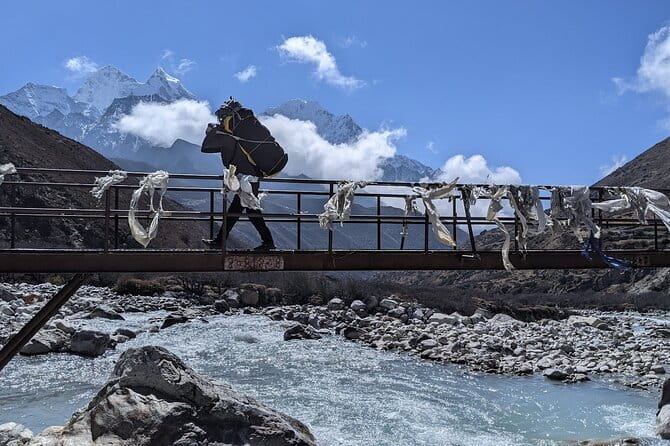
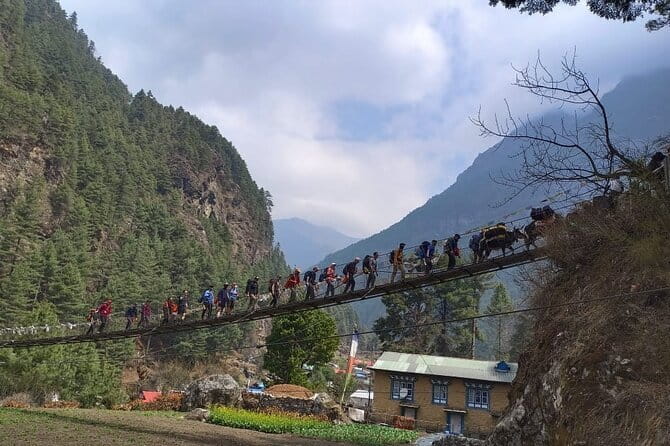
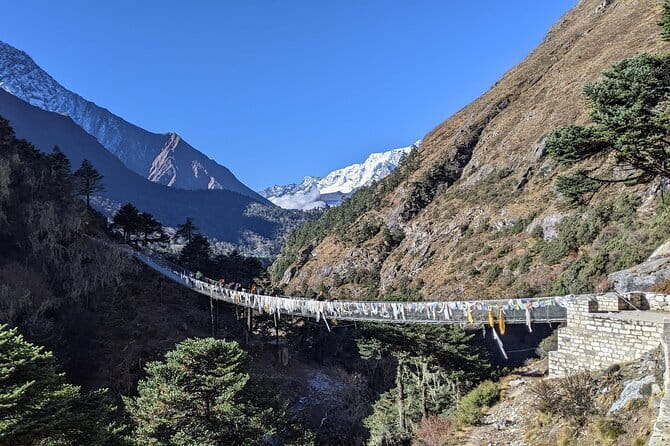
Day 5 takes you toward Tengboche Gompa. You walk along the Dudh Koshi for a while, then cross a long suspension bridge—then move into the Imja Khola Valley.
This is one of those days where the trail does what it’s famous for: it strings together river, woodsy scenery, and bigger mountain angles. It also hits a cultural highlight. Tengboche Gompa is the type of place where you’ll see prayer flags and feel that the mountains are tied to local life, not just tourism.
A drawback you should expect: walking days to bigger viewpoints can feel long. Even if your route isn’t described as the hardest, cold air and altitude make regular “moderate” trekking feel more intense.
Day 6: Pangboche Buddhist Monastery and Big-Peak Views
Day 6 centers on Pangboche, with a stop at the Buddhist monastery (spelled पाङ्बोचे). The route is described as offering outstanding landmarks and good scenery of peaks like Ama Dablam and others.
This is also one of those days where you’re not just walking from A to B. You’re getting those “oh wow, that looks close enough to touch” moments—while still being guided along a path that keeps you in the right altitude rhythm.
If you’re the kind of person who wants a few slower breaks for photos and tea, this day is built for that. You’ll still walk, but it’s not purely a grind.
Day 7: Dingboche Acclimatization Day (Climb High, Sleep Low)
Day 7 brings the second big acclimatization day, with a move to Dingboche. The plan follows the rule of acclimatization: climb high and sleep low.
The itinerary indicates about 5 hours of walking on this acclimatization day. In practice, that means you get a challenge without the full exhaustion that can come from going too high, too fast.
This is also where your body starts acting like it’s in a different environment. Sleep might not be perfect. Appetite might change. Don’t panic about it. Your goal is consistent effort and smart pacing.
Day 8: Lobuche, Dughla, and the Memorials
Day 8 heads toward Lobuche, with a “relatively light day” phrasing in the schedule, while still noting a big altitude gain. You follow steep slopes to reach the wide valley of Dughla, then pass memorials over the Thukla area.
This day can feel like a turning point. The farther you go, the more the trail becomes a place of memory and seriousness—not just scenic hiking. It’s also a good day for reminding yourself why you’re there, since you’ll be thinking about the next stop: Everest Base Camp.
Everest Base Camp + Gorakshep + Heli Return: How to Get the Most Out of It
Day 9: Gorakshep Area, Glacier Terrain, and the Base Camp Moment
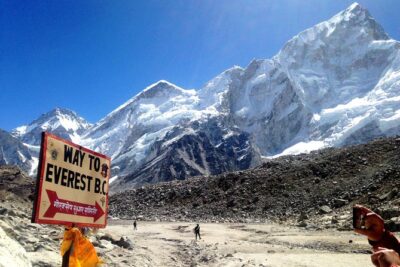
Day 9 is the main headline: Everest Base Camp. The trek description says you leave Lobuche and trek about 4 hours along glacier terrain to reach Gorakshep, described as the last part before the base camp highlight.
Even if you’ve seen photos, this is the kind of place where scale hits you differently. You’re high, cold, and surrounded by serious rock and ice. Base Camp isn’t just a destination—it’s a sign that you actually made it through the toughest part of the region.
This package includes the sharing helicopter flight from Everest Base Camp (Gorakshep) to Lukla. That means you’re not stuck spending another day trekking back out. Your knees will thank you.
One more practical point: since you’re doing glacier terrain, traction and cold management matter. The trek provides warm down jackets and sleeping bags, and those should help you stay functional in camp. Still, keep layers simple and close to your body so you don’t waste energy on fiddling.
Day 10: Kala Patthar Sunrise and the Final Stretch
Day 10 is all about Kala Patthar, with an early morning hike before sunrise for panoramic views of Mt. Everest and the surrounding area. It’s described as a sight to cherish.
Then the trip wraps back into your Kathmandu return plan via the final logistics included in the helicopter chain. If you’ve done sunrise hikes before, you already know the deal: you’ll start tired and cold, then feel instantly rewarded when the light hits.
This is a great “last push” day because it’s short in time and hits emotionally. It also gives you a chance to replace any base camp fatigue with a final, focused view.
Lodges, Meals, Gear, and the Stuff That Keeps You Comfortable
This isn’t a bare-bones trek. During the trekking days you get twin-share best available lodge accommodation. Kathmandu has 3-star hotel rooms, too. That’s a big part of why this package feels like “deluxe lodges” rather than a survival mission.
Meal coverage is strong:
- 10 breakfasts
- 8 lunches
- 8 dinners
Lunch and dinner in Kathmandu are not included, so you’ll plan those on your own. On the trek, you’re given meals plus what’s described as food and equipment coordination.
The gear list is one of the most useful parts of the inclusions:
- Warm down jacket and sleeping bag (-20 degree) are provided (and you return them afterward)
- A Life Himalaya trekking bag/duffel bag and a t-shirt
- A trail map for Everest Base Camp
- First aid kits including an oxi-meter
For you, this means less gear hauling and less decision fatigue. If you’ve ever tried to buy trekking sleeping bags on the spot, you know how messy that can get. Here, the cold-weather basics are handled by the operator.
Luggage handling is also practical:
- You can bring 10 kg big bag and 5 kg handbag
- Porters are included on a 1 porter for 2 people ratio
That porter setup is one of the best ways to enjoy the hike instead of managing weight anxiety the whole time.
Guides, Safety, and the Real Meaning of a Licensed Team
You’re assigned an experienced government-licensed trek guide and porters. The package also covers guide and porter accommodation, salary, equipment, food, and accidental insurance.
The reviews you’ll see for Life Himalaya consistently mention strong communication and hands-on support. Names that came up include Rabin, Shiba, Tika, and Pramod (also shown as Promod in one place). While I’d treat any single name as “one guide’s excellence” rather than a promise across every trip, it does signal a pattern: you’re not just getting someone who hands you a route and vanishes.
Safety support is also part of the inclusions. Staff first aid kits plus oxi-meter is included, and there’s service coordination for emergency and rescue operations.
A balanced take: this is still the Himalaya. Your job is to follow pacing advice, report symptoms early, and take acclimatization seriously. A good team helps you make safer choices, but they can’t eliminate risk.
Price and Value: $3,332 for EBC + Deluxe Lodges + Helicopters
At $3,332 per person, you’re paying for speed, comfort, and reduced trekking time. The big cost drivers here are the sharing helicopters, the Kathmandu hotel nights, the lodge support, and the fact that gear for cold weather is included.
Is it “cheap”? Not really. But it’s not an overpriced fantasy trek either, because the package is packing in a lot:
- both-way helicopter components
- permits (Sagarmatha National Park and Pasang Lhamu Rural Municipality)
- licensed guide and porters
- lodge stays and Kathmandu hotel
- sleep and cold-weather gear
- meals on the trail (plus breakfast-heavy coverage)
What you should compare it against:
- If you’re used to lower-cost trekking-only EBC routes, this package trades more money for less time walking and less gear hassle.
- If your biggest priority is fitting EBC into a short schedule and keeping the experience comfortable, this price can feel justified.
What’s not included matters too:
- travel insurance up to 5500 m rescue/evacuation (you need to arrange this)
- international airfare and Nepal entry visa
- beverages and snacks
- lunch and dinner in Kathmandu
So your true total cost depends on your flights and insurance plan.
Who This Trek Fits Best (and Who Might Want a Different Option)
This plan suits you if:
- you want to do Everest Base Camp in about 10 days
- you’re okay paying more to save trekking time and protect energy
- you like structured acclimatization with clear guide support
- you prefer lodge comfort over basic tea-house living
You might think twice if:
- you hate the idea of depending on flight timing for a big chunk of the schedule
- you’re the type who prefers to fully self-manage every detail on the ground
- you’re not confident about altitude pacing even with acclimatization stops
Before you book, check your physical fitness. The tour asks for a strong fitness level, and that’s not marketing talk. Even with helicopters, you still walk, gain altitude, and do a sunrise hike.
Should You Book It?
I’d say book this trek if you want Everest Base Camp without turning your trip into an endurance test. The acclimatization days, the licensed guide and porter support, and the fact that cold-weather essentials are included make it a strong value for your time.
If you’re sensitive to tight schedules or you want total control over every hiking day, you may prefer a trekking-only route. But if your goal is to see Everest, walk the classic trail highlights, and get back to Kathmandu without spending extra days on the return, this package hits the sweet spot.
FAQ
How long is the Everest Base Camp trek?
The trek is listed as about 10 days.
Does the price include the helicopter flights?
Yes. It includes sharing helicopter flights from Kathmandu to Lukla and from Lukla to Kathmandu, plus a sharing flight from Everest Base Camp (Gorakshep) to Lukla.
What lodging do you get during the trip?
You get two nights in a 3-star hotel in Kathmandu (one night before and one night after the trek). During the trek, you stay in twin-share best available lodges.
Are permits included?
Yes. The package includes Sagarmatha National Park (Mt. Everest) trek permit fee and Pasang Lhamu Rural Municipality permit fee.
What gear is provided for cold weather?
You’re provided a warm down jacket and a sleeping bag rated for -20 degree temperatures. You return the items after the trip.
Who leads the trek and do you have porters?
You have an experienced, government-licensed trek guide. Porters are included at a ratio of 1 porter for 2 people.
What’s not included in the price?
Not included are travel insurance for rescue and evacuation up to 5500 m, international airfare and Nepal entry visa charges, beverages and snacks, and lunch and dinner in Kathmandu.
More of Nepal from the Air

More Trekking Out of Kathmandu






More Tour Reviews in Kathmandu



Just Reviewed in Kathmandu
- Mountain Bike Tour
★ 5.0 · 3 reviews - Annapurna Panaroma
★ 5.0 · 3 reviews - Mount Everest Scenic Flight 50 Minutes
★ 5.0 · 3 reviews - Kathmandu : Swambhunath & Durbar Square Guided Half Day Tour
★ 3.3 · 3 reviews - Chandragiri Cable Car & Monkey Temple Tour – Private/Group
★ 5.0 · 3 reviews - Kathmandu: Shivapuri National Park Hiking Day Trip
★ 3.3 · 3 reviews
Everest Base Camp Treks, compared.
 ★ 5.0Everest Base Camp Trek – 14 DaysFrom $1,8001,499 reviews
 ★ 5.0Everest Base Camp TrekFrom $1,790842 reviews
 ★ 5.0Everest Base Camp TrekkingFrom $1,350485 reviews
 ★ 5.0Everest Base Camp Trekking – 13 DayFrom $1,399365 reviews
★ 5.0Everest Base Camp TrekFrom $1,445350 reviews
★ 5.0Everest Base Camp Trek -14 DaysFrom $1,420321 reviews
 ★ 5.012 Days Everest Base Camp TrekFrom $1,099289 reviews
 ★ 5.0Everest Base Camp Trekking – 2025/2026From $1,339199 reviews
Browse the lists this tour appears in