
Review · GOKYO LAKES & EVEREST HIGH PASSES
Everest Gokyo Lake Trek
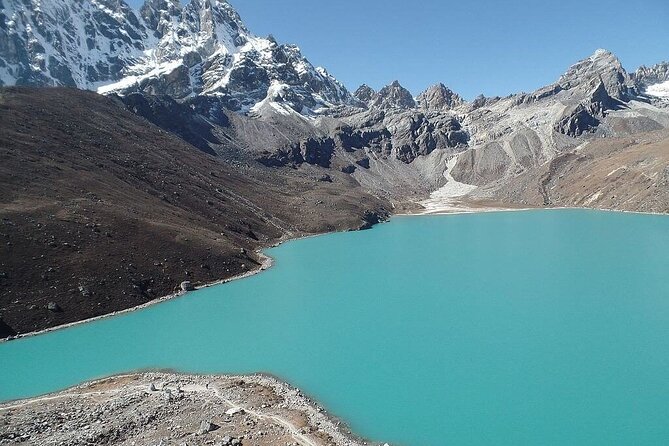
Turquoise lakes with Everest staring back. I love the turquoise Gokyo Lakes and the big Gokyo Ri viewpoint that lines up Everest and Cho Oyu, and I like how the trek builds acclimatization step by step. The main drawback is that you still need steady high-altitude stamina, because the days are long enough to make you earn the views.
The trip also scores points for organization. In past runs with Accessible Adventure, guides like Shiva and Himal and porters like Shobit have been praised for keeping things running smoothly and at a comfortable pace, with a porter setup of 1 porter for two people.
One more reality check: this is not a fully catered, hotel-in-the-mountains experience. During the trek, tea/coffee and meals are not included, so you’ll want to budget and carry a little cash for the days ahead.
In This Review
- Key things that make this trek worth it
- Turquoise Gokyo Lakes and the Gokyo Ri view that sells the trip
- Kathmandu start: a buffer that helps you move better on Day 2
- Lukla to Phakding: that first trail day sets the rhythm
- Namche Bazar acclimatization: markets, museum stops, and breathing practice
- Syangboche Airport and Everest View Hotel: an acclimatization day that feels like sightseeing
- The rhododendron climb toward Dole: where the effort starts to feel real
- Ngozumpa Glacier and the first lake: where the trek becomes distinctly Gokyo
- Gokyo Ri: the payoff viewpoint for Everest and Cho Oyu
- Downhill toward Namche: waterfalls, rhododendrons, and peak sightings on the way back
- Lukla return and Kathmandu finish: repeat the route, feel the altitude difference
- Price and value: what you’re really paying for at $1,290
- Who this trek suits best, and who should think twice
- Should you book this Everest Gokyo Lake Trek?
- FAQ
- How long is the Everest Gokyo Lake Trek?
- Where does the tour start, and what is the start time?
- Are airport transfers included?
- Are flights to Lukla included?
- What permits are included?
- Is trekking gear included?
- Are meals included during the trek?
- Can I cancel for a full refund?
Key things that make this trek worth it
- Gokyo Ri gives you the Everest and Cho Oyu skyline in one sweeping viewpoint, not in small, scattered glimpses.
- Ngozumpa Glacier terrain is the special character of this route, especially the steep moraine climbing that leads into the lakes.
- Acclimatization days are built in, with Namche Bazar and a hike toward Syangboche/Everest View Hotel.
- Private bathrooms at key stops (Phakding, Namche, Lukla) make a noticeable difference on a trek this length.
- Down jacket and sleeping bag use are included, so you’re not forced into last-minute gear shopping.
- Small group size (max 20) helps keep schedules tighter and the vibe less chaotic.
More trails out of Kathmandu, boots ready
- Everest Base Camp Trek – 14 Days★ 5.0 · 1,499 reviews
- Everest Base Camp Trek★ 5.0 · 842 reviews
- Everest Base Camp Trekking★ 5.0 · 485 reviews
- Nagarkot Sunrise View and Day Hiking from Kathmandu★ 5.0 · 471 reviews
Turquoise Gokyo Lakes and the Gokyo Ri view that sells the trip
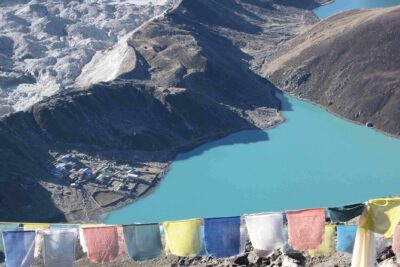
If you want a classic Everest-region trek but don’t feel like doing the same loop as every other itinerary, this one makes a strong case. The headline here is the stretch of Gokyo Lakes—turquoise glacial water with some of the biggest 8000-meter peaks sitting behind it. And then you add Gokyo Ri, a viewpoint climb that rewards you with broad, clear sightlines across the Mahalangur range.
On this route, the scenery isn’t just “pretty.” It changes like a movie scene. You start in forested valleys, then get pushed into higher, colder terrain. Eventually you’re walking around glacial features, following the Ngozumpa area with day views that make it hard to keep your eyes on the trail for long.
The other reason people love this trek: it feels like you’re seeing multiple layers of the Himalaya. Everest is in the mix, yes, but so are Cho Oyu and the rest of the big neighboring peaks. You’re not stuck with one “signature” view. You get repeat chances.
Kathmandu start: a buffer that helps you move better on Day 2
You land in Kathmandu and you’re met at Tribhuvan International Airport by a representative who’s using an Accessible adventure signboard. Then you’re taken to your hotel by private tourist vehicle. That may sound minor, but it matters when you’re flying in from far away.
The package includes two nights with breakfast at a 3-star category hotel in Kathmandu, in twin sharing rooms. This is useful because Day 2 is your first real jump into the mountains, starting with the early flight to Lukla and then walking to Phakding. Having time to reset your body (and charge your devices) usually makes the trek easier.
For Day 10, you’ll also get a farewell dinner near Thamel after the Lukla-to-Kathmandu flight. Thamel is touristy, but it’s a practical place to eat and decompress after trekking days. You’ll sleep in Kathmandu again before your departure transfer on Day 11.
Lukla to Phakding: that first trail day sets the rhythm
Day 2 is built around the classic Everest-region start: early morning flight to Lukla, followed by a trek to Phakding. The walking time listed is about 4 hours, and the route is described as green and full of views, including Kusum Kangraru.
The best part of this start is psychological. Your body is fresh, your gear is new, and you get a real sense of how the Khumbu region feels on foot. The challenge is that you’re already working at altitude early, and the trek day is only “easy” in comparison to later days.
Practical detail: the package includes private bathrooms in Phakding. On a trek, that’s a small comfort win that helps you stay focused on the scenery instead of logistics.
Namche Bazar acclimatization: markets, museum stops, and breathing practice
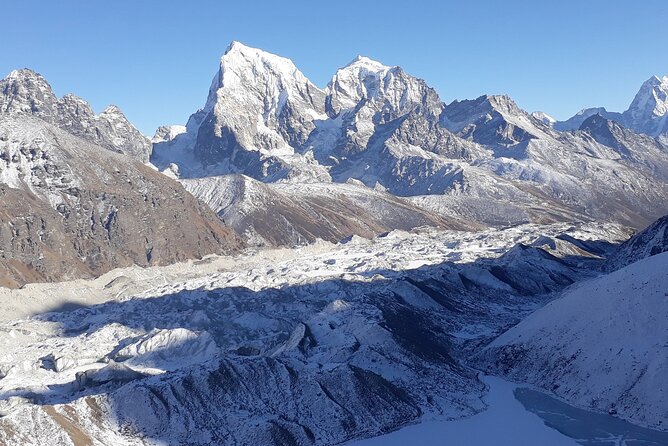
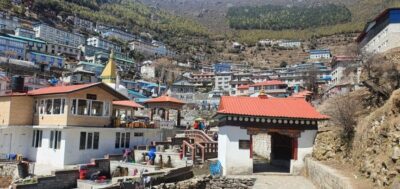
Namche Bazar is the place where the trek turns from “walking” into “Himalaya life.” You follow the Dudh Koshi, climbing through Himalayan pine and cedar forests, and the destination is described as a historic trading post where Nepali and Tibetan traders exchanged goods.
Then you stay for two days to acclimatize. That’s one of the smarter parts of the plan, because you’re not just passing through at high altitude. You’ll have time to visit local markets, spend time with your team, and still catch your first real glimpses of Everest and nearby peaks while you hike.
Day 3 is about getting your bearings without rushing. Day 4 is where the pace becomes “managed” but more active. You’re still doing altitude gains, just with a plan to help your body catch up.
The value here isn’t only the views. It’s that Namche lets you learn how you handle breathing, cold mornings, and the slow drag that comes with thin air. If you listen to your body during these days, the later lake work feels more manageable.
Syangboche Airport and Everest View Hotel: an acclimatization day that feels like sightseeing
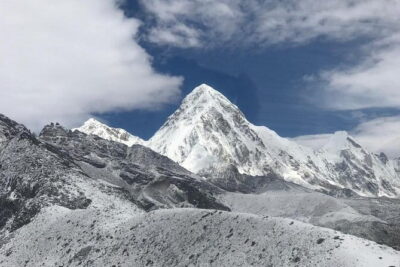
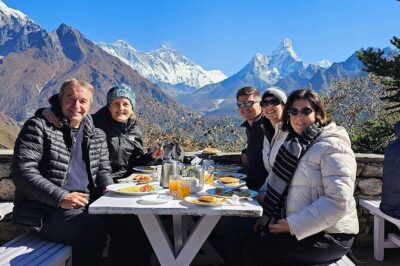
Day 4 focuses on acclimatization, but it doesn’t feel like a homework assignment. You hike up toward Syangboche Airport (listed at 3700m), described as the highest airport in the world, and then continue to the Everest View Hotel for panoramic views of Everest, Lhotse, Amadablam, Tawache, and more.
On the way back, the route includes cultural and photo stops: Sherpa Culture Museum and an Everest Photo Gallery. This is a great use of time. Instead of staring at the sky all day, you also get context for how the Sherpa community fits into the mountain world—especially because you’ll be walking through landscapes that people have lived alongside for generations.
This day also helps you understand something important: the Everest region can look dramatic from below, but the scale is hard to grasp until you’ve climbed into the “view zone.” That’s what this day does.
The rhododendron climb toward Dole: where the effort starts to feel real
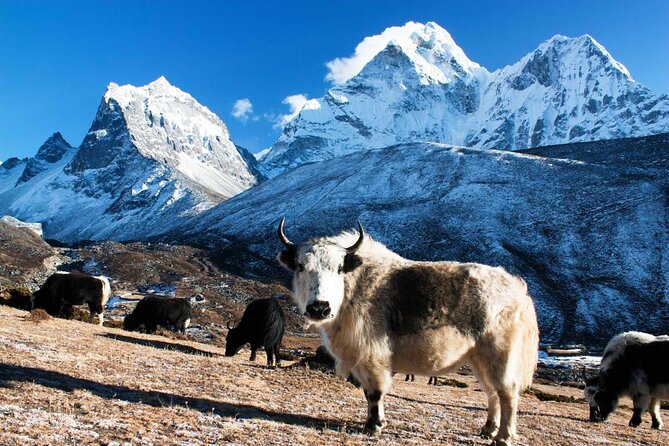
Day 5 is described as beautiful, especially in spring. The trail starts easier, then it climbs steeply out of the valley through rhododendron forests. As elevation increases, the vegetation shifts toward juniper and large conifers, and the route passes kharkas, the summer settlements used when Sherpas graze yaks at higher pastures.
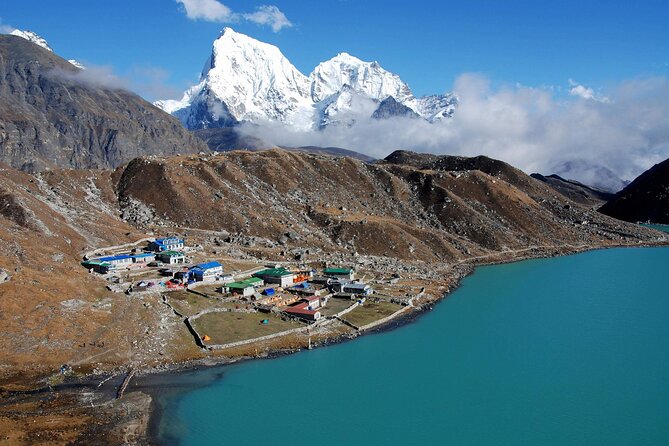
You walk through Tongba (3950m) and Gyele (3960m) to Dole, where there are a few hotels. Views of Khumbila and Tawache (listed at 6542m) are called out as incredible throughout the day.
This is one of the days where you’ll feel the trek’s personality. Early optimism usually fades on steep sections. The upside is that the scenery is actively changing as you go, so it’s not just “climb, breathe, repeat.” Rhododendrons blooming and the forest transitions make the walking feel varied.
Again, the schedule listed is about 5 hours. Don’t treat that number like a fitness promise. Treat it like a time window that depends on your altitude adaptation, your pace, and the group’s flow.
Ngozumpa Glacier and the first lake: where the trek becomes distinctly Gokyo
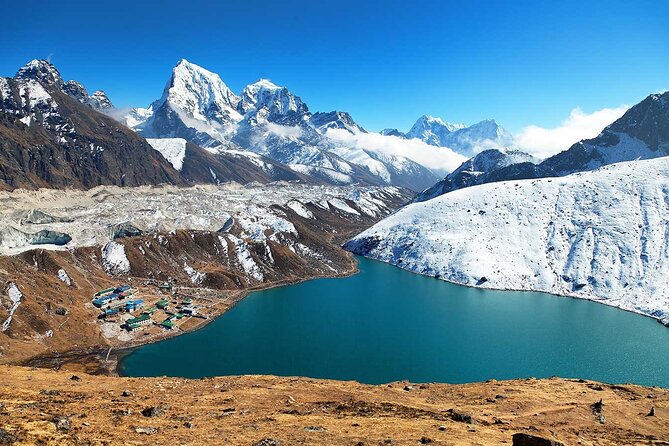
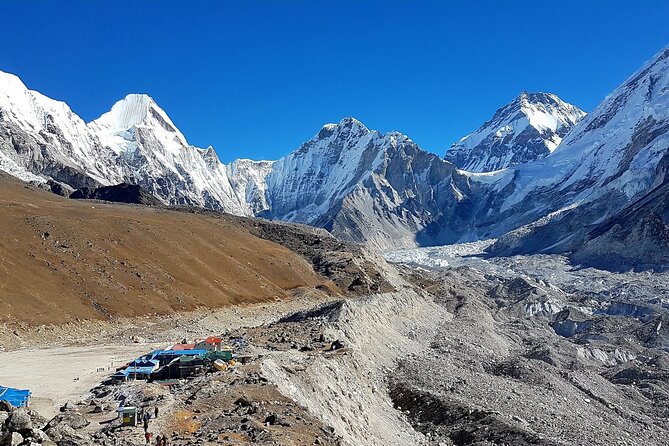
Day 6 is one of the signature days. You climb a ridge for views down the valley and up toward Cho-Oyu (listed at 8201m). Then the trail passes through Pangka (4390m), descends to the riverbank, and begins a climb onto the terminal moraine of the Ngozumpa Glacier.
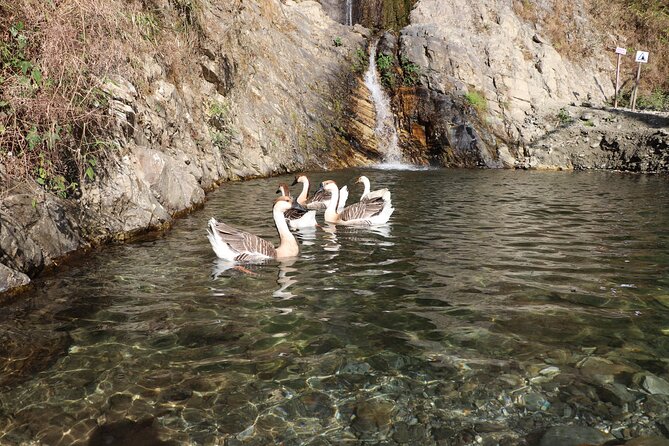
This is the steep, switchback-heavy section you’ll remember. The route describes switch backing alongside the stream to reach the first small Lake at (4650m). And yes, there’s a charming detail that stands out: a family of green brainy ducks lives nearby.
The practical takeaway: moraine routes feel rougher underfoot than a groomed trail. You’ll want good hiking shoes and careful foot placement. If you’ve done other Nepal treks, you already know moraine can be the kind of “hard” that doesn’t look dangerous, but still taxes your ankles.
The upside is that once you reach the lakes area, the emotional payoff clicks. This is where your trek stops being a route and becomes a place.
Gokyo Ri: the payoff viewpoint for Everest and Cho Oyu
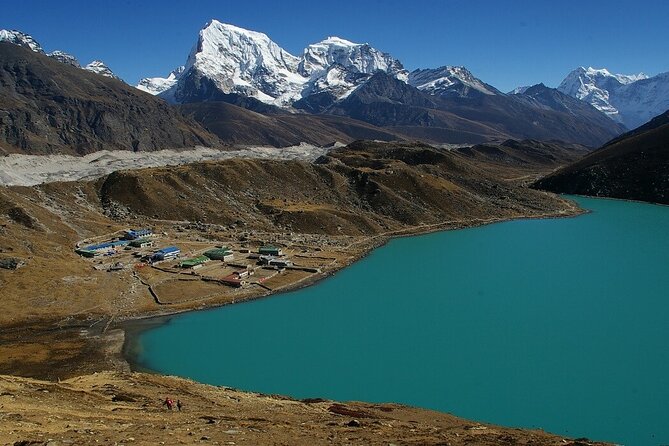
Day 7 is an early wake-up and a climb to Gokyo Ri. The time given is about 2 hours up, and the viewpoint is described as offering a panoramic sweep of the Mahalangur Himalayan range.
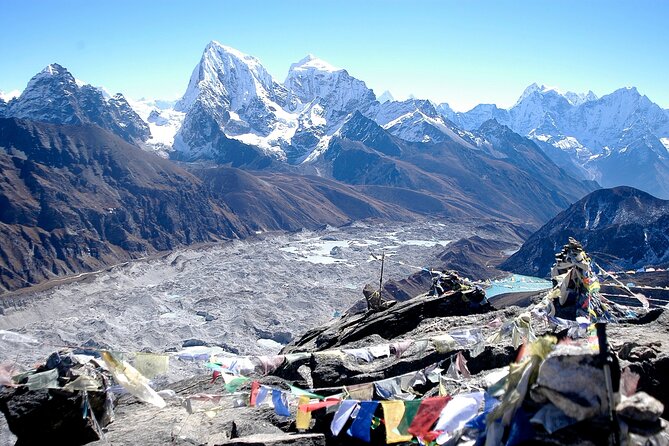
From the top, you get views of Cho Oyu, Gyachung Kang, Everest, Lhotse, Makalu, Cholatse, Tawache, and also a great looking at Ngozumpa glacier (listed as the largest glacier in Nepal). It’s a long list because the sightlines really do open up from here.
This is the moment that makes the trek feel different from Everest Base Camp-style routes. Everest is present, but so is the wider system of peaks around it. And Ngozumpa glacier isn’t just “background.” It’s part of the view composition.
If you’re deciding whether to push the climb despite the early morning cold, here’s my advice: go slow, keep warm at the start, and don’t rush the summit goal. The big views are there for anyone who manages their pace.
Downhill toward Namche: waterfalls, rhododendrons, and peak sightings on the way back
After Gokyo Ri, Day 8 switches to downhill walking while you keep watching the big peaks behind you. The trek includes chances to see waterfalls and enjoy interaction with local flora, fauna, and rhododendron trees beautifully blooming in spring.
It’s also described as having “dual opportunities” for snow-capped views of Amadablam, Tawache, Thamserku, and a far view of Tengboche from Mongla. Then you descend toward Sansa, which connects you to the main Everest trail and leads you to Namche Bazar.
This is one of those days where your legs start to remember what altitude does. Downhill is easier in theory, but it can still be hard on knees and thighs. The plus side: you’re moving back toward a more familiar trekking rhythm, and you get more chances to look at peaks without the pressure of big climbs.
Lukla return and Kathmandu finish: repeat the route, feel the altitude difference
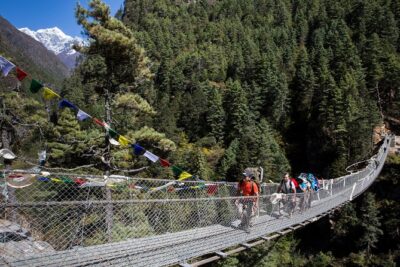
Day 9 takes you back from Namche toward Lukla. The plan includes Everest souvenir shopping in Namche Bazaar, and it notes that every Saturday there’s a large marketplace. From there, you walk the same route downwards, crossing the Dudh Koshi river multiple times over suspension bridges, reaching Jorsale, and moving into denser, greener lower elevations.
This is the day when your body usually feels the altitude easing. Breath gets less strained, steps feel lighter, and you notice how quickly the environment changes once you drop.
Day 10 is the morning flight from Lukla to Kathmandu, described as usually scheduled early because of clearer weather. You check in, then head to the farewell dinner near Thamel, and you’ll sleep in Kathmandu again. Day 11 is then departure assistance to the international airport 3 hours before your flight.
Price and value: what you’re really paying for at $1,290
At $1,290 per person for roughly 11 days, the price looks straightforward, but it’s worth breaking down what’s actually covered.
Included highlights that carry real cost:
- Round trip Kathmandu–Lukla flights
- Sagarmatha National Park permit fee and TIMS fee (you’ll need two passport-size photos)
- Guide and porter support (including 1 porter for two people)
- Down jacket and sleeping bag use during the trek
- Kathmandu hotel stays (2 nights) with breakfast
- Private vehicle transfers and ground transport
- Trekking map and trip achievement certificate
- Duffle bag and a first aid medicine kit
- Government taxes and office service charge
Included comfort details that matter more than people think:
- Private bathrooms at Phakding, Namche, and Lukla
What’s not included (and you should plan for it):
- Three daily meals with tea/coffee during the trek
- Tips for trekking staff and drivers
- Fuel surcharge (if applicable)
- GST (Goods and Services Tax)
- Any extra private transportation
- Internet and phone call unless it’s free at your lodging
My take: you’re paying for the heavy-ticket items—especially flights into Lukla and the official trekking permissions. If you’re the type who hates gear rentals and prefers to show up ready, the down jacket and sleeping bag inclusion saves time and hassle.
Your biggest “surprise” cost risk isn’t the base price. It’s the daily food and tea/coffee during trekking, plus tips.
Who this trek suits best, and who should think twice
This itinerary is aimed at people with moderate physical fitness. The daily hike durations in the schedule hover around 4 to 7 hours for most of the trek days, with an extra acclimatization structure that helps.
This is a good fit if:
- You want the Everest region without committing to a longer Everest Base Camp-style route
- You care about turquoise lakes and want a glacier-connected trekking experience
- You like the idea of a sunrise-style viewpoint climb at Gokyo Ri
- You prefer a guided package where flights, permits, and key gear are handled
This may be a rougher fit if:
- You dislike early mornings (Gokyo Ri is an early climb)
- You need a fully all-inclusive food plan (meals during the trek aren’t included)
- You’re expecting a fully luxurious lodge setup every night (lodges are described as best available twin sharing; Dole has only a few hotels)
Group size is capped at 20, which helps. Still, you should be comfortable hiking at altitude with a group pace.
Should you book this Everest Gokyo Lake Trek?
Yes, if your priority is Gokyo Lakes plus a big panoramic payoff at Gokyo Ri, and you want an organized package that takes care of flights into Lukla, permits, and key trekking gear. Also yes if you like the idea of a trek that mixes mountain views with Sherpa culture stops and market time in Namche.
Hold off or compare other options if you want meals during the trek fully included, or you’re not ready for the early start days and the high-altitude effort. In that case, you’ll end up doing extra planning and spending on top of the base price.
If you book, I’d do one practical thing: ask who your guide and porter team will be and what your expected daily meal plan budget looks like. With a good team (and past praise for guides such as Shiva and Himal), this trek is the kind that feels like it belongs in your long memory—not just your photo folder.
FAQ
How long is the Everest Gokyo Lake Trek?
The trek runs for about 11 days.
Where does the tour start, and what is the start time?
It starts at Tribhuvan Airport in Kathmandu, Nepal, with a start time of 6:30 am.
Are airport transfers included?
Yes. You get pickup and all ground transport in private vehicles, including airport transfers.
Are flights to Lukla included?
Yes. Round trip flights Kathmandu to Lukla and Lukla to Kathmandu are included.
What permits are included?
Sagarmatha National Park permit fee and TIMS fee are included, and you’ll need two passport-size photos for the permits.
Is trekking gear included?
Yes. Down jacket and sleeping bag use are included for the trek, along with a trekking map and trip achievement certificate.
Are meals included during the trek?
No. Three daily meals with tea/coffee during the trek are not included, but breakfast is included in Kathmandu.
Can I cancel for a full refund?
Yes. There is free cancellation if you cancel up to 24 hours in advance of the experience start time.
More Trekking Out of Kathmandu
More Tour Reviews in Kathmandu
Just Reviewed in Kathmandu
- Mountain Bike Tour
★ 5.0 · 3 reviews - Annapurna Panaroma
★ 5.0 · 3 reviews - Mount Everest Scenic Flight 50 Minutes
★ 5.0 · 3 reviews - Kathmandu : Swambhunath & Durbar Square Guided Half Day Tour
★ 3.3 · 3 reviews - Chandragiri Cable Car & Monkey Temple Tour – Private/Group
★ 5.0 · 3 reviews - Kathmandu: Shivapuri National Park Hiking Day Trip
★ 3.3 · 3 reviews
Gokyo Lakes & Everest High Passes, compared.
 ★ 5.0Gokyo to Everest Base Camp TrekFrom $2,200113 reviews
 ★ 5.0Everest Base Camp – Cho La Pass – Gokyo TrekFrom $1,39465 reviews
 ★ 5.012 Days Everest Base Camp Kala Patthar TrekFrom $1,79961 reviews
 ★ 5.0Guaranteed Landing at Everest Base Camp Kalapathar by HelicopterFrom $3,50038 reviews
 ★ 5.0Everest Gokyo Valley Trek – 12 daysFrom $1,39927 reviews
 ★ 4.214-Day Everest Base Camp with Kala Patthar TrekFrom $1,29621 reviews
 ★ 5.0Landing Private Helicopter at Everest base camp & Gokyo for photoFrom $4,39920 reviews
 ★ 5.0Gokyo Valley TrekFrom $1,51419 reviews
Browse the lists this tour appears in