
Review · 5-DAY EXPERIENCES
Everest Short Trek -5 Days
Five days is enough for Everest fever.
This Everest Short Trek is interesting because it compresses the classic Khumbu Valley experience into a schedule that feels doable, yet still uses the region’s natural rhythm: fly to Lukla, walk the Dudh Koshi River corridor, acclimatize at Namche, then reach the famous Hotel Everest View for panoramic Everest-range sights. I really like the way this route keeps your effort focused with an easier push to the hotel (instead of committing to tougher higher-stage hikes). I also like that logistics are largely handled for you, including private airport pickup and a real support team in the field. The main drawback to consider is that the flight start and end are weather-dependent, so you’re signing up for a small-aircraft reality check even with good planning.
The trek also has a smart balance of culture and nature: you spend time in and around Sagarmatha National Park while walking between mountain villages, then add viewpoints at Khumjung and the hotel. Expect longish hiking days that still come with a built-in acclimatization day, plus comfortable lodge/tea house nights along the way. If you’re hoping for a laid-back stroll all the way up Everest territory, this isn’t that—but if you can handle 3–7 hours of walking with altitude in the mix, it’s a great value-minded way to see the region fast.
In This Review
- Key highlights worth planning around
- Why this 5-day Everest View trek fits tight schedules
- Flying into Lukla: fast entry, real weather risk
- Phakding and the Dudh Koshi River: the warm-up day that matters
- Namche Bazaar at 3,446m: acclimatization with a real destination
- Khumjung Village and Hotel Everest View at 3,880m
- The return to Lukla: what “short trek” means for your legs
- Price and value: what $1,300 really covers
- Guides, porters, and the people who keep things moving
- Lodge nights and meals: comfort you’ll notice more than you expect
- Fitness and altitude: who this trek suits best
- Should you book this Everest Short Trek?
- FAQ
- What is the duration of the Everest Short Trek?
- What are the main places you hike to during the trek?
- What are the trekking altitudes mentioned in the itinerary?
- Are meals and accommodations included?
- Does the tour include permits and park fees?
- Is airport pickup and drop-off included?
- What isn’t included in the tour price?
Key highlights worth planning around
- 360° Everest-range views from Hotel Everest View that are hard to match on a short trek
- An acclimatization day in the Khumbu that helps you adjust instead of rushing higher
- Private logistics with airport pickup and organized Lukla flights to reduce the mental load
- Support on the ground: experienced guide plus porter ratio of 1 porter for 2 clients
- Sagarmatha National Park walking time even though the itinerary is short
More trails out of Kathmandu, boots ready
- Everest Base Camp Trek – 14 Days★ 5.0 · 1,499 reviews
- Everest Base Camp Trek★ 5.0 · 842 reviews
- Everest Base Camp Trekking★ 5.0 · 485 reviews
- Nagarkot Sunrise View and Day Hiking from Kathmandu★ 5.0 · 471 reviews
Why this 5-day Everest View trek fits tight schedules
If your Nepal trip is short, this trek is built for that reality. You don’t need a week of base-camp slog to get the Everest region feel. The route hits the classic waypoints—Lukla, Phakding, Namche Bazaar, and the climb to Khumjung/Hotel Everest View—while staying in a tight 5-day window (about that, not a vague guess).
What I like most about the design is that it’s not trying to sell you on a full Everest “expedition.” Instead, it gives you a practical taste of high Himalaya life: lodge nights, mountain villages, and the awe of standing in front of the biggest peaks on earth. In plain terms, it’s the kind of itinerary that lets you come back with photos, stories, and a sense of place, without needing a month of training.
The altitude numbers are still real. You’ll go from roughly 2,610m (Phakding) up to 3,446m (Namche Bazaar), then to about 3,880m during the acclimatization day. That’s why the pacing matters, and why the built-in extra day is more than a nice add-on.
Flying into Lukla: fast entry, real weather risk
This trek begins with a flight from Kathmandu to Lukla, landing at Tenzing Hillary Airport in Lukla. That’s the main trade-off of all short Everest-region treks: you save days of trekking time by using small planes, but you accept that mountain weather can interrupt plans.
The good part is that the operator includes the flights and also builds in support around travel and rescue arrangements. Still, it’s smart to think ahead for timing. The trek’s schedule assumes you’ll start early (the meet time is 6:00am), and the hiking days are scheduled for multi-hour efforts.
If flights do get delayed, your day-by-day plan can shift. The key point for your budget: while the tour includes essential travel setup, extra costs that happen after flight disruption are not included. So, I’d go into this with a buffer mindset and solid travel insurance.
Phakding and the Dudh Koshi River: the warm-up day that matters
Day one is your first taste of Khumbu Valley walking: from Lukla to Phakding (about 2,610m), around 3–4 hours. This portion is often the “figure it out” day—your legs wake up, your breathing adjusts, and you start picking out how the trail moves alongside the river.
That Dudh Koshi River corridor matters. It’s not just scenery; it shapes the route and the feel of the trek. Along the way, you’ll be moving through the kind of mountain terrain where village life stays close—tea houses, simple guesthouses, and a steady rhythm of travelers and locals passing each other on the trail.
Lodge/tea house stays are included on the trek. That helps you avoid the big headache of sourcing places to sleep after you arrive tired from a flight day. Expect standard trek basics rather than luxury in the usual sense—but for a short trek, that trade-off is the whole point.
Namche Bazaar at 3,446m: acclimatization with a real destination
On day two you trek from Phakding to Namche Bazaar (about 3,446m) in roughly 6–7 hours. This is a longer day, and it’s also where you begin to feel the “real altitude” side of the Everest region.
You also transition into Sagarmatha National Park while you’re walking in the corridor near the river. That’s a subtle benefit: you’re not just trekking for views. You’re moving through a protected area, which typically means the trail and surroundings feel more wild and regulated than generic mountain paths.
Namche Bazaar is the trek’s social and logistical hub. It’s where you regroup, eat well, and set up for the higher day. Since this itinerary includes an acclimatization day, your job in Namche is to act like a careful climber even if you feel fine. Take it slow. Drink water. Don’t treat the altitude like a dare.
Before you lock this one in, a few Kathmandu alternatives:
Khumjung Village and Hotel Everest View at 3,880m
This is the signature day. On day three, you stay in the acclimatization window while visiting Khumjung Village and the Hotel Everest View at roughly 3,880m.
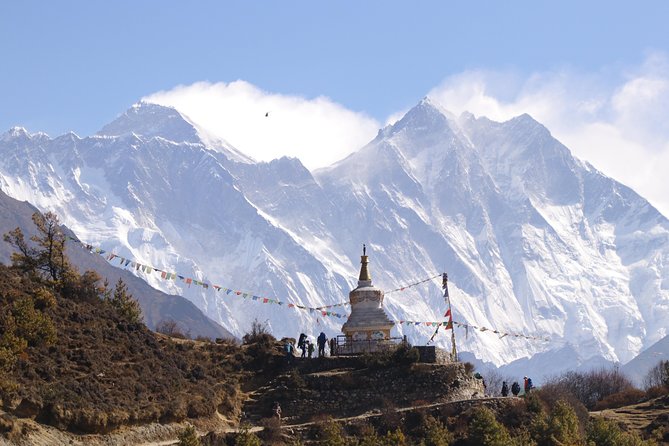
The hotel is the big reason this trek stands out in a practical way. The property is described as offering a 360° view of the Everest range, something you don’t always get in a quick-stop itinerary. You’re also in a position to see major peaks including Lhotse (8,516m), Cho Oyu (8,201m), and Mt. Everest (8,848m). That combination is a powerful payoff for a short schedule.
There’s another detail I like: the route to the hotel is described as relatively easier because the trail reaches the hotel rather than pushing you into more demanding higher-route variations elsewhere in the Khumbu Valley. That matters because you still get the altitude and view payoff without turning the trek into a full-on endurance test.
Still, don’t ignore the fact that you’re up around 3,880m. Even on an easier-feeling route, your body has to adjust. If you get headaches, nausea, or unusual fatigue, you’ll want to follow your guide’s pace and guidance immediately.
The return to Lukla: what “short trek” means for your legs
Day four brings you back down and around: Namche Bazaar to Lukla via Phakding, about 6–7 hours total, and you’ll drop to around 2,800m. From a trekking-feel perspective, this is where people often realize short doesn’t mean easy. Your knees and hips may take over the workload, especially after the higher day.
The route still follows familiar valley steps—Phakding becomes your checkpoint on the way back. It’s the day that reminds you the trek is a loop: you’re not just going up for views, you’re returning through the same ecosystems and village rhythms.
Day five is simple on paper: fly Lukla back to Kathmandu, with breakfast on the last day included and the rest of your time dependent on flight timing. In real life, this is often where that small-aircraft weather factor comes back into play again. When the sky clears, you’re out fast. When it doesn’t, you might sit and wait.
Price and value: what $1,300 really covers
At $1,300 per person, this trek looks like it’s priced for convenience and safety—not just scenery. The most valuable inclusions are the things that would otherwise eat your time and energy while you’re in Nepal:
- Private airport pickup and drop
- Meals during the trek (breakfast, lunch, dinner)
- TIMS permit and Khumbu Valley fees
- All accommodations in lodges/tea houses during the trekking days
- An experienced guide plus a porter setup of 1 porter for 2 clients
- Travel and rescue arrangements and a first-aid kit on the trek
- A duffle bag (returned after the trek)
- Company t-shirts
- A farewell dinner at an authentic Nepalese restaurant with cultural performance
What’s not included is just as important. You’ll want to budget for:
- Nepal visa fee (easy to obtain at the Kathmandu airport, based on the tour info)
- International airfare to and from Kathmandu
- Travel and rescue insurance
- Any extra mountain expenses if you get stuck due to weather delays
- Personal spending (phone calls, laundry, battery recharge, hot showers, bottled/boiled water, and the like)
- Tips for guide and porter
To me, the value math works best if you want: organized permits, meals, sleeping, flight coordination, and a support team without juggling vendors. If you already have insurance, are comfortable handling permits yourself, and can source your own guide/porter, you might find cheaper routes. But if you want a “less thinking, more walking” trip in a short window, this price structure makes sense.
Guides, porters, and the people who keep things moving
The experience quality here isn’t only about the mountains. It’s also about coordination on the ground. In the feedback, the names Badri, Bhagwat, and Pemba show up as key figures—and that’s meaningful because the Everest region punishes poor planning.
- Badri is described as caring, patient, and fun, with guide-level competence and constant attention.
- Bhagwat is the operator contact described as a calm organizer with strong communication skills and a knack for handling the whole flow.
- Pemba (a Sherpa mentioned as indispensable) is credited with making the trek feel manageable and supported.
Why I think this matters for you: on a route with flights, permits, altitude, and daily timing, you don’t just need a friendly person—you need someone who can adjust when conditions change. A guide’s job isn’t only leading; it’s helping you pace correctly and stay safe when the day doesn’t go exactly like the plan.
Porters also matter. With a porter ratio of 1 porter for 2 clients, you’re not intended to carry everything yourself. That’s a big help when the trek is short and you want your energy for acclimatization and view time.
Lodge nights and meals: comfort you’ll notice more than you expect
Since accommodations and meals are included, your daily life becomes simpler. Breakfast, lunch, and dinner are covered during trekking days. That matters because hungry altitude makes poor decisions easier to make.
The lodges/tea houses are exactly what you’d expect in this part of Nepal: warm enough for the night, basic but functional, and designed for trekkers who need recovery more than luxury. You’ll likely notice the pattern quickly—eat, rest, repeat. The key is to use that rest time wisely. Sleep helps your body adjust. Hydration helps your head feel normal-ish. And a slower start helps your breathing.
Also, the tour info says vegetarian options are available if you request them at booking. If your diet has restrictions, flag them early so the kitchen can plan.
Fitness and altitude: who this trek suits best
This trek is described as suitable for “most people,” but you still need to respect the altitude and the walking hours. You’ll do:
- about 3–4 hours on day one
- about 6–7 hours on day two
- acclimatization day with visits up around 3,880m
- about 6–7 hours on day four
So it fits best if you can comfortably hike several hours a day at moderate effort. You don’t need to be a mountain athlete, but you should be comfortable with steep-ish trail sections and carrying your day gear.
It may not fit you if:
- you have medical limitations related to altitude
- you expect a totally easy walk with no stamina demands
- you’re not willing to follow a guide’s pacing recommendations
If altitude scares you, the good news is that this itinerary does include an acclimatization day, and the hotel route is described as relatively easier than harder variants.
Should you book this Everest Short Trek?
I’d book it if you want a high-impact Everest region experience in a 5-day format with organized flights, permits, meals, and lodge stays. The promise of 360° views from Hotel Everest View, plus time in Namche and Khumjung, is a strong payoff for a short trip. It’s also appealing if you like having a guide and porter support system (especially with a porter ratio of 1 porter for 2 clients).
I’d think twice if you:
- can’t handle the altitude jump up to around 3,880m
- dislike early morning starts and flight timing dependence
- don’t want to handle the reality that weather can change your schedule and create extra costs
If you do book, your checklist is simple: confirm your travel insurance covers trekking in this region, plan for possible flight delays, and set aside budget for tips and personal spending.
FAQ
What is the duration of the Everest Short Trek?
The trek lasts about 5 days.
What are the main places you hike to during the trek?
You’ll hike between Lukla, Phakding, Namche Bazaar, and then visit Khumjung Village and the Hotel Everest View, before returning to Lukla.
What are the trekking altitudes mentioned in the itinerary?
The itinerary lists approximately 2,610m (Phakding), 3,446m (Namche Bazaar), 3,880m (Hotel Everest View / acclimatization area), and about 2,800m on the return day.
Are meals and accommodations included?
Yes. Breakfast, lunch, and dinner are included during the trekking days, and lodges/tea house accommodations are included.
Does the tour include permits and park fees?
Yes. TIMS permit and Khumbu Valley fees are included, along with required paper work.
Is airport pickup and drop-off included?
Yes. The tour includes pickup and drop to the airport by private vehicle.
What isn’t included in the tour price?
Not included are the Nepal visa fee, international airfare, travel and rescue insurance, extra mountain expenses if you get stuck due to delays, personal expenses (like phone calls and hot shower), and tips for the guide and porter.
More 5-Day Experiences in Kathmandu
More Trekking Out of Kathmandu






More Tour Reviews in Kathmandu




Just Reviewed in Kathmandu
- Mountain Bike Tour
★ 5.0 · 3 reviews - Annapurna Panaroma
★ 5.0 · 3 reviews - Mount Everest Scenic Flight 50 Minutes
★ 5.0 · 3 reviews - Kathmandu : Swambhunath & Durbar Square Guided Half Day Tour
★ 3.3 · 3 reviews - Chandragiri Cable Car & Monkey Temple Tour – Private/Group
★ 5.0 · 3 reviews - Kathmandu: Shivapuri National Park Hiking Day Trip
★ 3.3 · 3 reviews
5-Day Experiences, compared.
 ★ 5.0Annapurna base camp trek 5 DaysFrom $699252 reviews
 ★ 5.0Kathmandu to Annapurna Base Camp (ABC) 5-Day TrekFrom $99102 reviews
 ★ 5.05 Day Private Guided Trekking in Annapurna Base CampFrom $22525 reviews
 ★ 5.0UNESCO World Heritage Sightseeing Tour in Kathmandu – 5 DaysFrom $49922 reviews
 ★ 5.0Ghorepani – Poon Hill Trek – 5 DAYSFrom $99913 reviews
 ★ 5.05-Day Sunrise Tour in Kathmandu Near EverestFrom $37012 reviews
 ★ 5.05 Days Hiking, Tour, Meditation and Yoga Retreat in Kathmandu, NepalFrom $58610 reviews
 ★ 5.0Pokhara: 5-Day Annapurna Base Camp (ABC) TrekFrom $1369 reviews