
Review · ANNAPURNA BASE CAMP TREKS
Pokhara: 5-Day Annapurna Base Camp (ABC) Trek
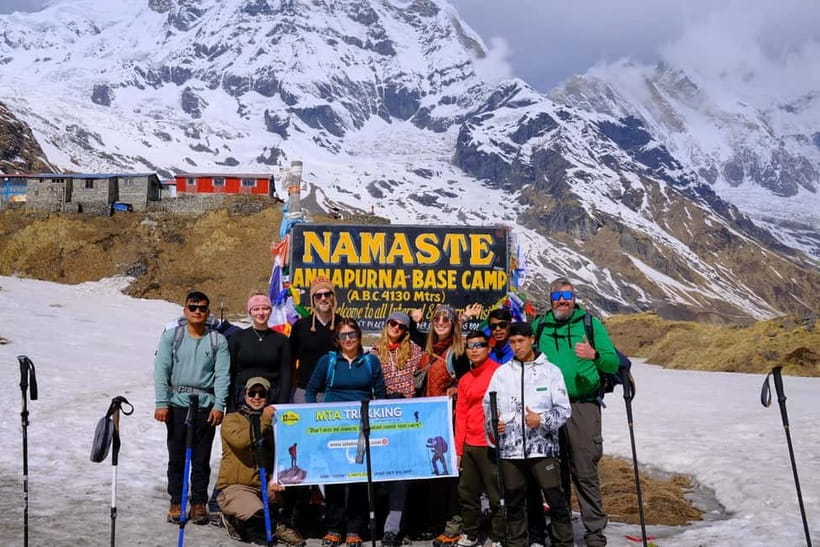
Five days to stand on the roof of Nepal. This Pokhara to Annapurna Base Camp trek is a 4-night, 5-day route that takes you to the iconic Annapurna Base Camp at 4,130m, while you walk through terraced fields, forest trails, and village life. I love the mix of scenery and culture, and I especially like the way Jhinu hot springs bookend the experience on the way in and out. One consideration: the itinerary is compact, so you’ll want good cardio and to take altitude seriously, even if sickness is described as rarely happening.
The best part of this trip is how it’s run. Guides such as Santosh, Prabit, and Ramit are praised for being kind, organized, and ready to explain mountains and culture in clear English, including helpful pace adjustments. Still, you’re trekking at real elevation, so if you’re not feeling steady on moderate climbs, you may find the daily walking time demanding.
In This Review
- Key Things I’d Pay Attention To
- Why This 5-Day ABC Trek From Pokhara Makes Sense
- From Lakeside Pokhara to Lower Sinuwa via Jhinu: Get Your Legs Going
- Deurali (3,200m): The Day the Mountain Air Becomes Real
- Annapurna Base Camp (4,130m) and Machhapuchhre Base Camp: The Main Event
- Descend to Bamboo (2,400m): Photos, Breathing Room, and Real Recovery
- Jhinu Hot Springs on the Way Out: Why This Ending Feels Good
- Tea Houses, Full Meals, and What Comfort Actually Means on ABC
- Guides, Permits, and Safety: The Parts You Don’t Want to DIY
- Price and Value: What $136 per Person Really Buys
- Gear and Fitness: How to Make This Trek Feel Hard in a Good Way
- Should You Book This Pokhara to Annapurna Base Camp Trek?
- FAQ
- How long is the Annapurna Base Camp trek from Pokhara?
- What’s the highest altitude on the trek?
- What kind of lodging and meals are included?
- Are permits included?
- How do you travel from Pokhara to the trail?
- Is there an English-speaking guide?
- What’s the cancellation policy?
Key Things I’d Pay Attention To
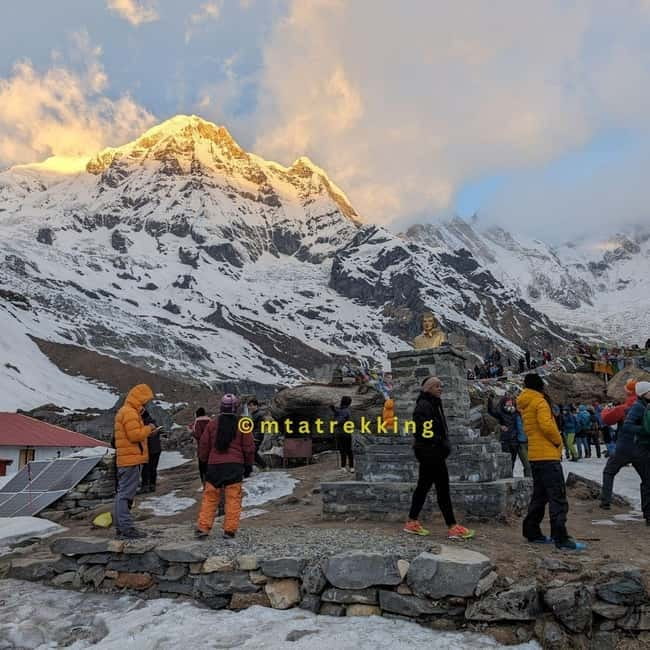
- Annapurna Base Camp at 4,130m: the main goal, with huge payoff on the final approach.
- Jhinu hot springs before and after: a practical way to recover after longer hiking days.
- Machhapuchhre Base Camp detour: a strong photo-and-view payoff on the summit day.
- Tea house nights with full meals (full board option): comfort that’s common on the trail, kept simple and predictable.
- ACAP + TIMS + government permits handled: less admin stress before you start walking.
More trails out of Kathmandu, boots ready
- Everest Base Camp Trek – 14 Days★ 5.0 · 1,499 reviews
- Everest Base Camp Trek★ 5.0 · 842 reviews
- Everest Base Camp Trekking★ 5.0 · 485 reviews
- Nagarkot Sunrise View and Day Hiking from Kathmandu★ 5.0 · 471 reviews
Why This 5-Day ABC Trek From Pokhara Makes Sense
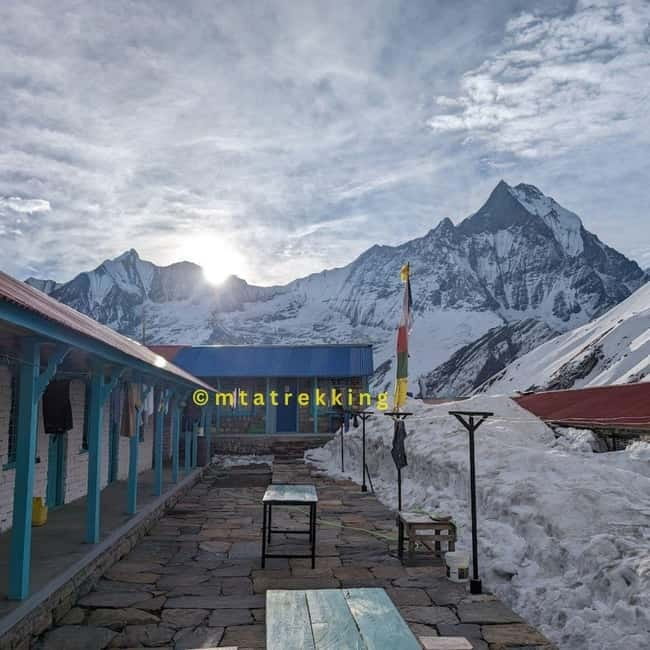
If you want the Annapurna Base Camp experience but you don’t have 7–10 days, this 5-day format is a realistic target. It’s built around the classic ABC route feel—daily altitude gains, village stops, tea house evenings—without dragging you through too many long transfer days.
Pokhara is the right launch pad. It’s easy to reach your start point (hotel pickup in Lakeside Pokhara, plus pickup from Pokhara International Airport), and the trip is designed with that in mind. The day you start, you don’t just show up at a trailhead and hope for the best. You drive from Pokhara by private Jeep/SUV to the trail access area (Siwai / Last Road), then begin hiking. That reduces the “what now?” moments and helps you focus on the trek.
Also, your guide role matters here. This trek is run with a live English-speaking guide and a private group setup, and that makes a difference on ABC. At this altitude, small decisions—how fast you go, when you rest, how you dress—change how the day feels. The reviews you provided underline that guides are proactive about pacing and clarity, from Santosh’s friendly explanations to Ramit’s careful timing.
The main tradeoff is pacing. With only 4 nights on trek, you’ll move each day and you won’t have much buffer for illness or weather delays. Altitude is the big reason to be cautious: ABC sits at 4,130m, and even if it’s described as rarely causing altitude sickness, it’s still your job to listen to your body and follow guide advice.
From Lakeside Pokhara to Lower Sinuwa via Jhinu: Get Your Legs Going
Your trek starts in Lakeside Pokhara, with hotel pickup and a private drive. Then you hike for about 5 hours to Lower Sinuwa (2,300m), passing through Jhinu.
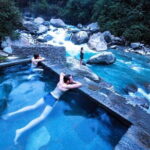
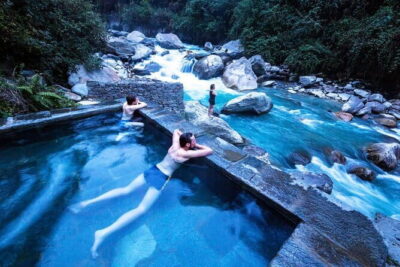
Why Jhinu matters: it’s not just a name on the map. Jhinu is known for natural hot springs, and the trek uses it twice—first as a village point on Day 1, then again at the end on Day 5. That rhythm is smart. Hot springs are the kind of recovery that fits trekking life: warm water, sore calves, and the simple satisfaction of lowering your heart rate without lying around all day.
Lower Sinuwa is also a good first-night choice because it sets expectations for the rest of the trek. You’re already in the hills, but you’re not at full altitude. You’ll likely notice the air feels cooler and thinner than Pokhara, and that’s your cue to hydrate and dress in layers.
A practical tip: if you arrive in Nepal feeling “fine” but you slept badly or traveled hard the day before, Day 1 can still feel surprisingly physical. Take the first hike seriously. Don’t try to prove anything early. Let your body warm up to the altitude gradually.
Deurali (3,200m): The Day the Mountain Air Becomes Real
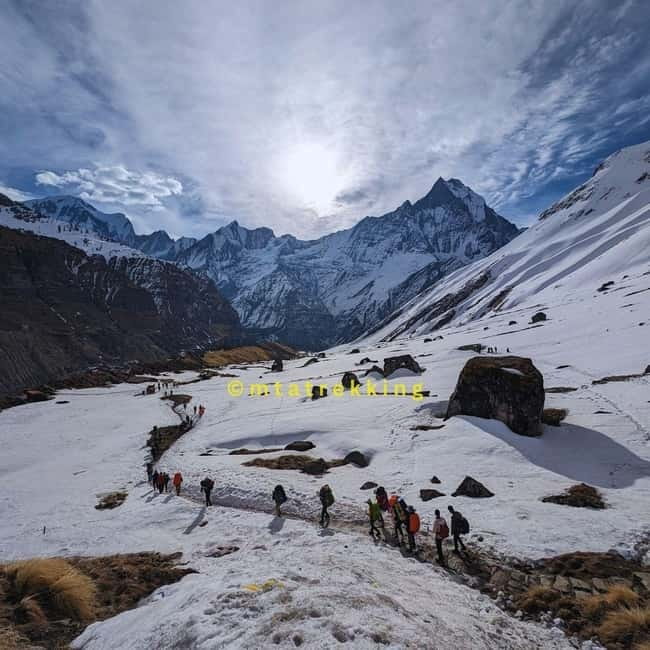
Next you hike roughly 6 hours from Lower Sinuwa to Deurali (3,200m). This is an “earn it” day, and that’s where the route shows its logic. Deurali is high enough that you’ll feel elevation, but not so high that you’re immediately thrown into the deepest end.
This is the stage where the trail often shifts character. Your route description points to diverse walking: terraced rice fields earlier, then more forest and village passages as you climb. You’ll also see how Nepali village life changes with altitude—smaller homes, different crops, and a pace of life that feels slower than the city but steady.
Night in Deurali is a key part of the schedule. It gives you a chance to settle, eat well, and sleep at a meaningful altitude before the final push to ABC. If you’re the type who tends to rush when you get excited, Deurali is where you want discipline. Many people get tempted to move faster on days that feel “not too bad.” Here, it can cost you later.
The guide’s job becomes more important on this day. From the reviews you shared, guides like Prabit are praised for anticipating the trek’s complexity and keeping you equipped and ready. That usually means: timing rests, checking you’re dressed right, and making sure you don’t go too hard too early.
Annapurna Base Camp (4,130m) and Machhapuchhre Base Camp: The Main Event
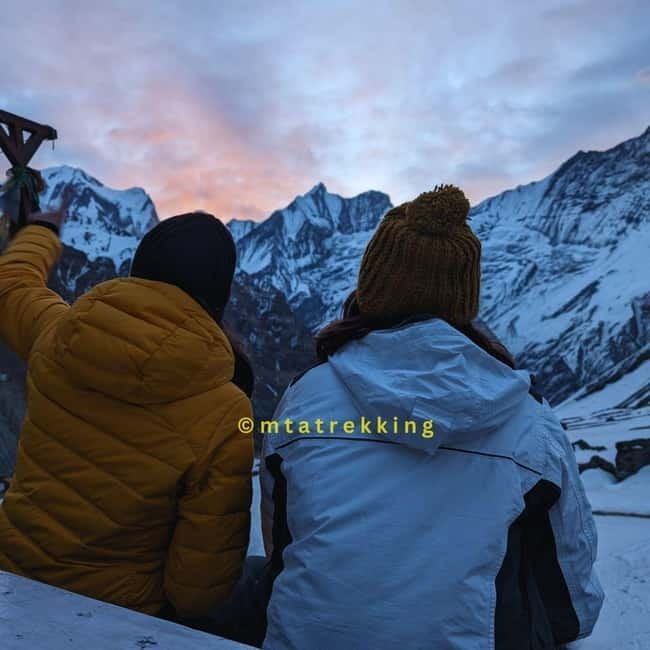
Your summit day runs about 4 hours to Annapurna Base Camp (4,130m), with a detour to Machhapuchhre Base Camp for views of Fishtail Peak.
This is why people do ABC. You climb toward a point that’s high enough to feel serious, but the route keeps you moving through human places—villages, tea houses, and mountain paths—so the end moment doesn’t feel random. It feels earned.
What makes the Machhapuchhre detour worth your energy: it adds variety to the final day. You’re not just slogging from point A to point B. You’re getting a second big view payoff before you arrive at ABC. That also helps if the weather shifts. Sometimes one viewpoint clouds over; the other can still give you a clear moment to enjoy the peaks.
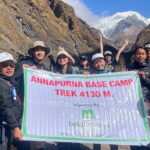
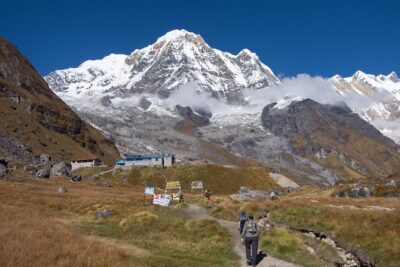
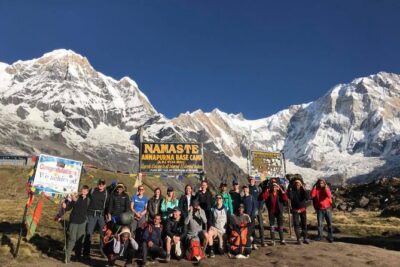
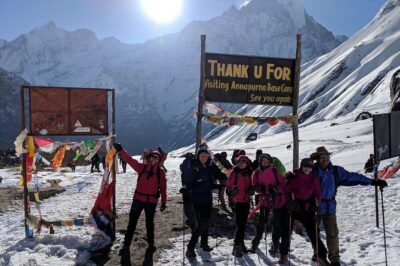
When you reach base camp, you’ll be surrounded by the Annapurna massif. Your itinerary experience emphasizes the “massive sense of accomplishment” here, and that matches what this altitude milestone represents in practical terms: the final day compresses effort into a clear finish line.
One thing to plan for: base camp mornings matter. Even though your schedule calls for exploring and photo stops, keep in mind that mountain conditions change fast. If your guide recommends earlier starts or specific times for views, listen. It’s not about chasing Instagram light. It’s about visibility.
Before you lock this one in, a few Kathmandu alternatives:
Descend to Bamboo (2,400m): Photos, Breathing Room, and Real Recovery
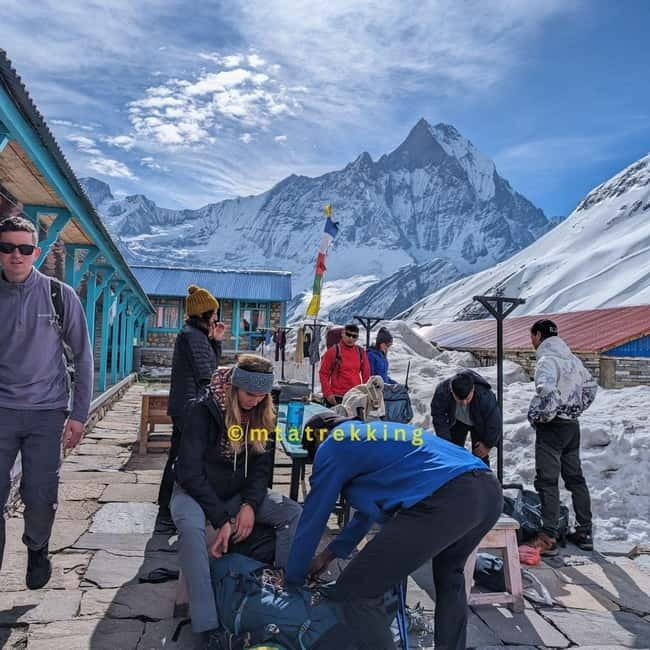
After the big day, you spend your next trek section exploring ABC panoramas and then descending to Bamboo (2,400m). Your schedule notes photo opportunities and time in the base camp area, then a descent into the calmer range of 2,400m.
This day is valuable because it changes the nature of your effort. Ascents demand breathing discipline; descents demand leg control. When you go down, you’ll use different muscles—thighs, calves, and ankles—and if you didn’t manage pace earlier, the descent is where you feel it.
Your route sets up a smart recovery arc: you start at the highest emotional peak, then bring the altitude down in a way that keeps you moving. Bamboo acts like a reset button. You’re lower, usually cooler and easier to breathe, and you can finally eat like a human again instead of a survival robot.
Also, take a moment to appreciate the “in between” of trekking. The best views often come when you’re not sprinting. Base camp days can make you feel like you must capture everything. Try to split your time: a few photos, then a quiet look. Let your eyes adjust to the scale.
Jhinu Hot Springs on the Way Out: Why This Ending Feels Good
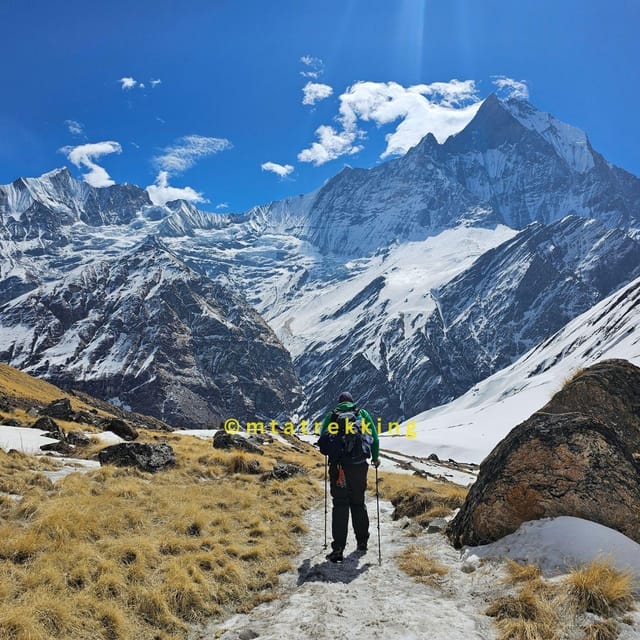
On Day 5 you trek from Bamboo to Jhinu, where the hot springs are optional, then you drive back to Pokhara.
Hot springs aren’t just a nice extra. They’re a practical tool for recovery, especially after a week where your knees and calves do most of the work. If you’re worried about soreness, this is one of the few places on the itinerary where comfort is built in.
There’s also a psychological benefit. Ending with a village walk and then a warm soak creates a clean mental closure. You’re not stuck in a long hiking slog on the final day. Instead, you finish with something that feels distinctly Nepali and human, not just scenic.
Once you’re back in Pokhara, you’ve got the classic decompression options—rest, food, and a real shower if you choose to spend on comfort. The trek notes that hot showers aren’t included on the mountains, so plan for “warm water” to be a premium experience up there.
Tea Houses, Full Meals, and What Comfort Actually Means on ABC
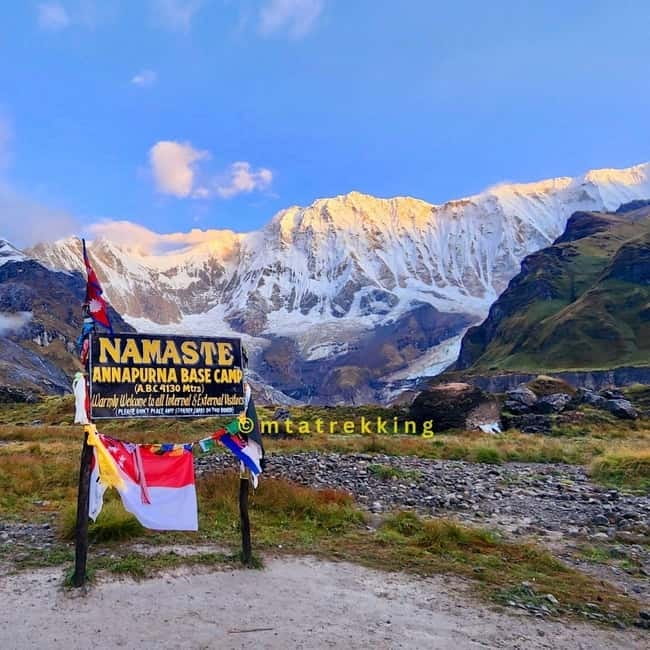
This trek includes accommodation on tea houses and meals if you select the full board option. Tea houses are a real part of Himalayan trekking culture: warm rooms, simple food, and a rhythm that keeps everyone moving.
What to expect day-to-day: you’ll likely sleep in small lodges with basic beds, and you’ll eat meals that are filling rather than fancy. The menu can vary, but your schedule is built around getting enough energy to keep hiking the next day.
Your packing choices matter more than you think. If you bring a change of clothes and comfortable gear, you’ll enjoy the evenings more. Many people underestimate cold nights at altitude. Your comfort level on Day 3 and Day 4 can make or break the experience.
Also, the trip includes a luggage storage facility on Pokhara during trekking. That’s a small detail, but it’s huge. You can travel lighter and not drag extra bags onto the mountains.
Guides, Permits, and Safety: The Parts You Don’t Want to DIY
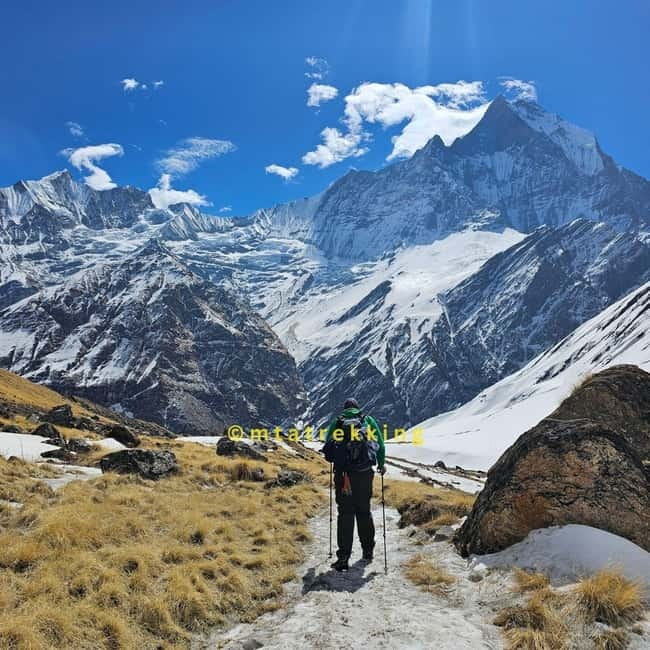
This experience covers a lot of the “administrative weight” that can bog down a trek. You’ll get:
- ACAP Permit (Annapurna Conservation Area)
- government permits, TIMS, and taxes covered
- a professional trekking guide (with government registration)
- first aid kit included
- professional support with planning and daily management
It’s the kind of setup that reduces friction when you’re already focused on breathing and foot placement. You don’t want your day plans derailed by paperwork.
The guide quality is also a major theme in your provided feedback. Santosh is described as kind and understandable. Prabit is described as informative and attentive to fine details, including making sure you’re ready to trek. Ramit is credited with managing travel times and rest along the route, plus creating an especially memorable moment at sunrise in front of Annapurna’s south face.
Even if you’re not chasing sunrise, that tells you what to expect: guides here don’t just lead you from trail to trail. They help you time the experience.
Price and Value: What $136 per Person Really Buys
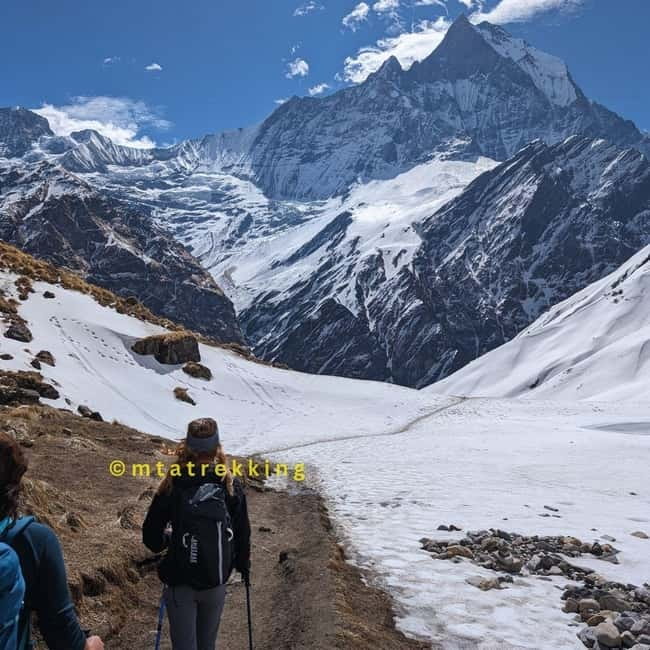
At $136 per person for a 5-day experience, this is positioned as value-focused. The price matters most when you compare what’s covered:
- tea house accommodation
- meals via full board option
- hotel pickup and drop-off from Lakeside Pokhara and airport
- private transport to and from the trail access point
- permits (ACAP, TIMS, taxes)
- English-speaking guide support
- first aid kit and luggage storage in Pokhara
Where costs can surprise you is what’s not included. The trek notes personal expenses like mineral water, Wi‑Fi, drinks, laundry, and hot showers. Also, porter service costs $20 per day if you choose to add it. Rescue and insurance are not included, so it’s smart to plan those separately.
If you’re a careful budget traveler, you’ll like the structure. If you hate small extra fees, factor in hot shower choices and water needs at elevation. In other words: the base price covers a lot of the “core trekking costs,” but it won’t cover every convenience.
Gear and Fitness: How to Make This Trek Feel Hard in a Good Way
ABC is not extreme technical hiking, but it is altitude hiking with daily climbs and descents. That means fitness matters, and the reviews you provided back that up: your fitness will get tested, even though the trek is doable in 5 days.
What to bring (based on the trek notes):
- comfortable shoes
- change of clothes and comfortable clothes
- cash
- passport or ID card (copy accepted)
How to think about altitude:
- ABC reaches 4,130m
- altitude sickness is described as rarely happening, but it’s still a real possibility
- the itinerary assumes you’ll follow guide pacing and listen to your body
Monsoon season note: during June–August, weather can be erratic with heavy rainfall, so you’ll need the right gear and you should follow your guides’ calls. Another monsoon issue: leeches, especially on lower trails. The advice given is practical: wear long pants tucked into gaiters and use insect repellent.
Who should be cautious or skip this trek:
- the trip is listed as not suitable for pregnant women, people with mobility impairments, wheelchair users, visually impaired people, people with altitude sickness, and people over 70.
If you want a simple rule: if you can walk 30–60 minutes on uneven ground without stopping constantly, and you can handle cold mornings and basic lodge nights, you’ll be in a good place for this route.
Should You Book This Pokhara to Annapurna Base Camp Trek?
I’d book this trek if you want the ABC payoff in a short, organized 5-day window, and you’re happy to do real walking each day with a strong chance of stunning views at the end. The route’s structure—hot springs recovery at Jhinu, a key detour to Machhapuchhre Base Camp, and tea house lodging—fits travelers who like clear plan and steady progress.
I’d think twice if you’re worried about altitude, you’re limited on daily walking endurance, or you don’t want weather risk (especially in monsoon months). Also, if you need extra support for mobility or vision needs, this experience is listed as not suitable.
One last nudge: if you can, take the guide’s advice seriously on pacing and layering. That’s where quality shows—like the guides named in your feedback who made adjustments so hikers could proceed with confidence.
FAQ
How long is the Annapurna Base Camp trek from Pokhara?
It’s a 5-day experience with 4 nights on tea house accommodation.
What’s the highest altitude on the trek?
Annapurna Base Camp reaches 4,130 meters.
What kind of lodging and meals are included?
You get tea house accommodation and meals if you choose the full board option.
Are permits included?
Yes. The trek includes the Annapurna Conservation Area (ACAP) permit, plus government permits, TIMS, and taxes.
How do you travel from Pokhara to the trail?
You use private transport from Pokhara to Siwai (Last Road) and back, using a Jeep/SUV.
Is there an English-speaking guide?
Yes. The trip includes a live tour guide in English and runs as a private group.
What’s the cancellation policy?
There is free cancellation up to 24 hours in advance for a full refund.
More 5-Day Experiences in Kathmandu
More Trekking Out of Kathmandu
More Tour Reviews in Kathmandu
Just Reviewed in Kathmandu
- Mountain Bike Tour
★ 5.0 · 3 reviews - Annapurna Panaroma
★ 5.0 · 3 reviews - Mount Everest Scenic Flight 50 Minutes
★ 5.0 · 3 reviews - Kathmandu : Swambhunath & Durbar Square Guided Half Day Tour
★ 3.3 · 3 reviews - Chandragiri Cable Car & Monkey Temple Tour – Private/Group
★ 5.0 · 3 reviews - Kathmandu: Shivapuri National Park Hiking Day Trip
★ 3.3 · 3 reviews
Annapurna Base Camp Treks, compared.
 ★ 5.0Annapurna base camp trek 5 DaysFrom $699252 reviews
 ★ 5.014-Day Private Annapurna Base Camp TrekFrom $1,090180 reviews
 ★ 5.0Annapurna Base Camp TrekkingFrom $1,779116 reviews
 ★ 5.0Annapurna Base Camp TrekFrom $935111 reviews
★ 5.0Annapurna Base Camp TrekFrom $1,350107 reviews
★ 5.0Annapurna Base Camp TrekFrom $935111 reviews
★ 5.0Annapurna Base Camp TrekFrom $1,350107 reviews
 ★ 5.0Kathmandu to Annapurna Base Camp (ABC) 5-Day TrekFrom $99102 reviews
 ★ 5.0Annapurna Base Camp Trek- 11 DaysFrom $99990 reviews
 ★ 5.0Annapurna Base Camp Trek 12 DaysFrom $80085 reviews
Browse the lists this tour appears in