
Review · GOKYO LAKES & EVEREST HIGH PASSES
Everest Three High Passes Trek – 20 Days
Three passes, big views, and real altitude.
This Everest Three High Passes Trek is for hikers who want the Khumbu Valley in full-on mountain mode: Kongma La, Cho La, Renjo La, plus the Gokyo lakes and the big Everest-area “wow” stops like Kala Patthar. I especially like how the route mixes serious pass days with calmer village days, so your legs get a chance to reset. I also like that the plan is packaged tightly, including the key flights and the permits—less hassle while you’re juggling altitude and timing.
The main consideration: this is not a “walk and cruise” trek. You’ll deal with cold mornings (some days start in the dark), steep/rocky pass climbs, and glacier-area trail conditions where weather can quietly change everything. If you’re going, go with a strong fitness base and respect for altitude—your body sets the pace here.
In the logistics side, the company behind the trip (Himalayan Adventure Treks and Tours Pvt Ltd) gets praise for hands-on help and solid planning, with guides like Ang Dawa Sherpa and Ang Pemba showing up in past feedback, plus company leaders such as Bhagwat Simkhada involved in making things run smoothly. You’re not on your own trying to figure out connections in a high-altitude environment.
In This Review
- Quick hits: what makes this trek tick
- Why the Everest Three High Passes route is such a different kind of Everest trek
- Price and what you really get for $2,700
- The altitude and fitness reality check (the pass days aren’t “optional”)
- How the route flows: from Tribhuvan Airport to Lukla and into Sagarmatha National Park
- Tengboche to Dingboche: monasteries, viewpoints, and the acclimatization rhythm
- The Kongma La to Everest Base Camp stretch: where the trek earns its reputation
- Kala Patthar sunrise at 5,545 m: worth it, and also hard
- Cho La and Dzongla to Gokyo: glacier footwork plus the reward of the lake region
- Gokyo Ri, Scoundrel’s Viewpoint, and the five-lake day energy
- Renjo La back toward Thame, Namche, and Lukla: finishing with culture and descents
- Day 19–20: flights back to Kathmandu and the farewell dinner
- Who should book this trek, and who should think twice
- Should you book this Everest Three High Passes trek?
- FAQ
- How long is the Everest Three High Passes Trek?
- Where does the experience start and what time?
- Are flights between Kathmandu and Lukla included?
- What are the three high passes on this trek?
- What big viewpoint is included besides the passes?
- What meals and lodging are included in the price?
- What permits are included?
- What costs are not included?
- Can I cancel for a full refund?
Quick hits: what makes this trek tick
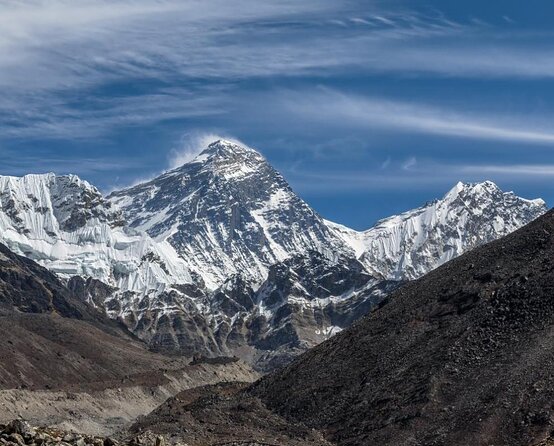
- Three named high passes: Kongma La (5,535 m), Cho La (5,420 m), Renjo La (5,360 m) across a classic Khumbu-to-Gokyo route
- Kala Patthar timing: early push for sunrise-style views of Everest and the surrounding peaks (cold and wind are part of the deal)
- Gokyo lakes day: multiple lakes plus viewpoint work around Gokyo Ri and a viewpoint known as Scoundrel’s Viewpoint
- Sagarmatha National Park included: you pass through the park and the Khumbu valley Permit + TIMS are covered
- Support on the ground: an experienced guide, plus a porter arrangement (1 porter for 2 clients) to take weight off
- Lukla flights handled: Kathmandu to Lukla and return flights are part of the package, with Ramachap as an alternate route mentioned
More trails out of Kathmandu, boots ready
- Everest Base Camp Trek – 14 Days★ 5.0 · 1,499 reviews
- Everest Base Camp Trek★ 5.0 · 842 reviews
- Everest Base Camp Trekking★ 5.0 · 485 reviews
- Nagarkot Sunrise View and Day Hiking from Kathmandu★ 5.0 · 471 reviews
Why the Everest Three High Passes route is such a different kind of Everest trek
Most Everest treks funnel you through the “classic” Everest Base Camp rhythm. This one keeps that spirit but adds a second act: Gokyo and its lake system, then Renjo La on the way back. So you don’t just chase one mountain silhouette—you get a whole region of views, from forested valleys to glacier country, and then to turquoise lake basins at altitude.
The three passes are the spine of the challenge. Each one has a different feel: Kongma La is the first big wall, then Cho La brings steeper sections with scramble-style footing, and Renjo La feels like a scenic high crossing that sets up your descent toward Thame and Namche. If you like variety in terrain (instead of repeating the same trail patterns), this route gives it.
And if you care about photos, this trek basically hands you subjects all week: monastery backdrops at Tengboche, Himalayan giants during the Dingboche acclimatization day hike, the Everest-area glacier maze toward Gorakshep and Base Camp, then the lake-and-ridge viewpoints around Gokyo Ri.
Price and what you really get for $2,700
At $2,700 per person for a ~20-day trip, you’re paying for a package that covers the stuff that usually costs real money and stress on Everest routes: Kathmandu hotel nights, key flights to/from Lukla, permits, and the trail support system.
What’s included (based on the details provided) that matters most:
- Two nights in Kathmandu in a 3-star hotel with breakfast
- Meals during trekking: breakfast, lunch, dinner listed across trekking days
- Guide + porter support (1 porter for 2 clients)
- TIMS and Khumbu valley permit, plus paper work handling
- Accommodations in lodges/tea houses during the trek
- Travel and rescue arrangements and a first-aid kit
- Duffle bag that gets returned after the trek
- Farewell dinner with cultural performance in Kathmandu
- Airport pickup and transfers by private vehicle, including taking you to the airport before your flight
What is not included:
- Nepal visa fee, plus international airfare to/from Nepal
- Extra hotel nights in Kathmandu if flight timing forces it earlier/later than the plan
- All meals in Kathmandu (outside the included Kathmandu hotel breakfast)
- Travel/medical insurance (and likely the coverage you choose matters here)
- Personal costs: phone calls, laundry, battery recharges, hot showers, and bottled/boiled water
- Tips for guide/porter
- Any additional expenses if weather delays force you to stay longer in the mountains
So is it good value? For most serious hikers, yes—because the heavy friction points are handled: flights, permits, and organized trekking support. If you were trying to assemble all of that yourself, you’d be spending time and money on coordination, and you can’t control weather—but you can control how prepared your logistics are. This package is built to reduce that scramble.
The altitude and fitness reality check (the pass days aren’t “optional”)
This trek is described as one of the most challenging treks in the Khumbu Valley, and the route shows why. You’re hitting three passes above 5,300 meters, plus Kala Patthar at 5,545 m. That means oxygen is thinner, the temperature drops, and your body’s recovery between days matters a lot.
A few itinerary moments are especially demanding:
- Kongma La day: you go early and the descent after the pass is described as the most difficult part of that day
- Everest Base Camp + Kala Patthar: Kala Patthar is done early, sometimes requiring trekking in the dark and dealing with cold/wind
- Cho La day: the final climb is steep and worse due to boulders, with scramble sections mentioned
- Glacier-area walking shows up multiple days, which means you’ll be on uneven, sometimes icy or rocky footing depending on conditions
If you’re choosing between trekking companies based on “comfort,” this isn’t the trek to optimize for comfort. It’s about managing pace, drinking water, eating consistently, and using acclimatization days wisely.
How the route flows: from Tribhuvan Airport to Lukla and into Sagarmatha National Park
You start in Kathmandu, arriving at Tribhuvan International Airport. A company representative meets you and transfers you to your hotel. Then you get a night in Kathmandu to meet the group and members, which helps because the next day starts with flights.
Day 2 is the short, dramatic hop to Lukla: the flight is less than 30 minutes, and it’s described as scenic with mountains, forest, and river valleys. Once you land, you begin trekking to Phakding for about 3 to 4 hours. Early on, the trail is calmer—trees and river scenery—so you can get your pack fit and rhythm right before altitude starts squeezing.
From Phakding to Namche, you’ll follow the Dudh Koshi river corridor and pass the entrance area at Monjo, which is part of Sagarmatha National Park. This segment helps you transition from “Lukla day adrenaline” to proper trekking pace.
Then comes the acclimatization day at Namche. This is one of the smartest parts of the plan. You don’t just sit there—you explore with short hikes and cultural stops. The route includes a hike to Everest View Hotel, and also time in the Khumjung area:
- Khumjung monastery
- Hillary School
- A visit to the Tourist Visitor Center near the Sagarmatha National Park headquarters, where you can observe materials related to the first Everest ascenders, Sherpa culture, and regional plants and animals
That kind of stop breaks up the altitude stress with context—and it reminds you this is a living Sherpa region, not just a checkpoint chain.




Tengboche to Dingboche: monasteries, viewpoints, and the acclimatization rhythm
After Namche, the trek pushes east toward the big monastery area. You go to Phunki Thanga and then up toward Tengboche—the home of the largest monastery in the Everest region. The plan even mentions that you might witness a Buddhist ceremony when you reach in the afternoon, which is one of those moments that turns a hike into a memory instead of just miles.
The next day brings you downhill through forests—birch, conifers, and rhododendron—then back into Himalayan sightlines (Everest, Lhotse, Ama Dablam are named). You pass through Debuche, cross the Imja River, and continue to Pangboche, with additional monastery-area views.
Then you reach Dingboche, where the trek schedules another acclimatization day. This is the part where your body starts to learn how to handle higher air. You also get a hiking option to Nagarjun Hill, which is positioned for wide views of Makalu, Lhotse, Chalotse, Tawache, and Ama Dablam.
These acclimatization days matter because you still have multiple high-effort days ahead. If you treat them like free days instead of recovery days, you’ll feel it later on the passes.
The Kongma La to Everest Base Camp stretch: where the trek earns its reputation
Once the trek leaves Chhukung and starts driving toward the highest sections, it shifts from “pretty hiking” to “earned altitude.”
You first reach Chhukung and then go up to Chhukung Ri, described as involving some easy scrambling near the summit. This is a good step-up: you’re training your legs and breathing, while still staying in a manageable zone before the big pass day.
Then comes Day 9: Kongma La. You start very early to reach the highest part of the trip. The plan offers two possible trail options to the top, including walking over terrain near Nuptse Glacier moraines or using another route above the Niyang Khola. Either way, the top is marked by prayer flags and cairns. The key detail is the descent: it’s described as the most difficult part of the day, moving down through Khumbu Glacier country toward Lobuche.
From Lobuche, you continue through glacier lateral moraine terrain, getting views of Everest’s north ridge area and surrounding peaks like Pumori and Khumbutse. Then you reach Gorakshep and push on to Everest Base Camp. The plan keeps expectations honest: you’ll walk through rocky dunes, moraines, and streams to get to Base Camp.
Next stop is the night back in Gorakshep, with the following morning focused on Kala Patthar.
Kala Patthar sunrise at 5,545 m: worth it, and also hard
Kala Patthar is the named highest point on this trek at 5,545 m, and the plan is very clear about the timing: you start early to catch first-light style views of Everest. That means:
- cold temperatures (season-dependent)
- trekking in the dark at times
- wind risk
This is where preparation matters. You’ll want layered clothing, a headlamp (if you’re moving before sunrise), and a steady pace that doesn’t burn you out. The payoff is described as close-up views of Everest and surrounding Himalayan peaks—very much the “there it is” moment people chase on Everest-area treks.
After that, you descend to Lobuche to rest.
Cho La and Dzongla to Gokyo: glacier footwork plus the reward of the lake region
From Lobuche, the trek heads downhill alongside the Khumbu Glacier, then navigates splits in the trail to reach Dzongla through Chola Tsho Lake and another smaller lake. The trail includes crossing the Chola Khola on a bridge, which is a small detail that actually helps mentally—you’re moving through specific named features, not just crossing unknown terrain.
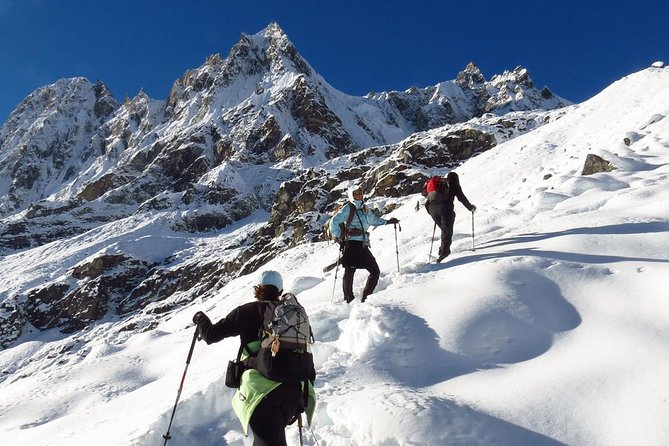
Then you climb to Cho La. The plan calls the incline steep and made worse by boulders, with scramble sections. It’s described as tricky around a crevasse area during the final climb, with the pass top marked by prayer flags and cairns. But the scenery payoff is framed as breathtaking in all directions.
After the descent toward Thangnak, the trek shifts to a different mood: walking down up to the Gokyo Valley. This day is associated with reaching the Ngozumpa glacier (called the longest glacier in Nepal in the provided details) and then crossing to see the series of lakes. You reach Gokyo Village and spend the night near the lake system.
Gokyo Ri, Scoundrel’s Viewpoint, and the five-lake day energy
In Gokyo, the trek gives you an active sightseeing day. You start by climbing Gokyo Ri for mountain vistas, then continue with lake exploration.
The plan includes:
- touring the fourth Gokyo Lake (noted as about 3 km north of Gokyo Village)
- trekking onward to the fifth lake
- viewing from Scoundrel’s Viewpoint at the edge of the fifth lake
From those viewpoints, the peaks listed include Cho-Oyu, Gyachung Kang, Everest, Lhotse, Nuptse, and Makalu, plus views of the massive Ngozumpa Glacier.
That’s a lot of named geography for one day, and it helps explain why this portion feels like a “reward stage.” You work hard on passes and rougher terrain, then you get sustained scenery that doesn’t require technical effort every hour.
Renjo La back toward Thame, Namche, and Lukla: finishing with culture and descents
After a day focused on the lake region, you head toward Renjo La. The plan has you start early on the long day, with walking along Dudh Pokhari for a while before descending toward the Renjo La pass. On the way, you’re rewarded with views of the Rolwaling ranges, and once you’re at the pass you get a view described as similar to Gokyo Ri, with the third Gokyo Lake and Gokyo Village beneath the Ngozumpa Glacier.
Renjo La is also noted for views of Everest from the top. After that, the route winds down via a stone staircase and then over loose scree to reach the south bank of Angladumba Tsho Lake.
Then you shift into a historic-style trading route: the descent from Marulung to Thame is described as following a traditional route used for centuries by Tibetan traders. You cross the Bhote Koshi River, pass Taranga, cross bridges, and reach Thame. There’s time to see the gompa on a hill to the west, then continue down gradually through small villages toward Namche Bazaar.
The final trekking day ends in Lukla. You descend with repeated bridge crossings over Dudh Koshi and tributaries. The plan also calls out open plains plus rhododendron and pine forests, along with Sherpa villages where you’ll see faith markers like prayer stones and flags.
You finish this loop with the typical reward: stretching out sore legs in Lukla after the long trek to the mountain and its high passes.
Day 19–20: flights back to Kathmandu and the farewell dinner
Flights to Kathmandu are usually scheduled in the morning for safety, so you’re likely waking up early again. Once you reach Kathmandu, you can rest or shop. The plan includes a farewell dinner at an authentic Nepalese restaurant with cultural performance before the final airport transfer the next day.
So the last days are about decompression. Your body will still be working out the trek for a while, but your travel stress drops off because the route is already organized for you.
Who should book this trek, and who should think twice
This is a strong fit for hikers who:
- can handle multi-day trekking with altitude pressure
- enjoy tough days with early starts and cold conditions
- want both Everest-area highlights and the Gokyo lake region in one structured trip
You should think twice if:
- you struggle with altitude in general
- you’re expecting flat, easy walking
- you don’t have the fitness for steep climbs, boulder/scramble sections, and long descents
Also, go in with a mindset of teamwork. You’ll benefit from using your guide’s pacing and advice and letting a porter carry part of your load (the plan includes that support with 1 porter for 2 clients). Your best gear plus smart pacing beats hero moves.
Should you book this Everest Three High Passes trek?
If you want the full Khumbu story—Kongma La, Cho La, Renjo La, plus Gokyo lakes and the Kala Patthar moment—this 20-day package looks like a solid way to get there without turning your trip into a logistics project.
Book it if you’re ready to work for the views and you like an itinerary that has real acclimatization built into it. Pass on it if you’re chasing an easy trek, or if you’re not comfortable with cold mornings and steep/rocky pass travel.
FAQ
How long is the Everest Three High Passes Trek?
The trek is listed as 20 days (approx.).
Where does the experience start and what time?
The start is Tribhuvan Airport, Kathmandu, Nepal, with a start time of 7:00 am.
Are flights between Kathmandu and Lukla included?
Yes. The package includes Kathmandu to Lukla and Kathmandu/Ramachap to Lukla and Ramachap flight.
What are the three high passes on this trek?
The trek includes Kongma La Pass (5,535 m), Cho La Pass (5,420 m), and Renjo La Pass (5,360 m).
What big viewpoint is included besides the passes?
The itinerary includes Kala Patthar (5,545 m) for a major Everest-area viewpoint.
What meals and lodging are included in the price?
It includes two nights in a 3* hotel in Kathmandu with breakfast, and during the trek it includes lodges/tea houses plus breakfast, lunch, and dinner during trekking days as listed.
What permits are included?
You get TIMS and the Khumbu valley permit, plus the necessary paper works.
What costs are not included?
Not included are the Nepal visa fee, international airfare, travel and rescue insurance, extra Kathmandu hotel nights, all meals in Kathmandu, and personal expenses like phone calls, laundry, battery recharge, and hot shower costs, plus tips.
Can I cancel for a full refund?
Yes. It offers free cancellation, with a full refund if you cancel up to 24 hours in advance of the experience start time.
More Trekking Out of Kathmandu






More Tour Reviews in Kathmandu




Just Reviewed in Kathmandu
- Mountain Bike Tour
★ 5.0 · 3 reviews - Annapurna Panaroma
★ 5.0 · 3 reviews - Mount Everest Scenic Flight 50 Minutes
★ 5.0 · 3 reviews - Kathmandu : Swambhunath & Durbar Square Guided Half Day Tour
★ 3.3 · 3 reviews - Chandragiri Cable Car & Monkey Temple Tour – Private/Group
★ 5.0 · 3 reviews - Kathmandu: Shivapuri National Park Hiking Day Trip
★ 3.3 · 3 reviews
Gokyo Lakes & Everest High Passes, compared.
 ★ 5.0Gokyo to Everest Base Camp TrekFrom $2,200113 reviews
 ★ 5.0Everest Base Camp – Cho La Pass – Gokyo TrekFrom $1,39465 reviews
 ★ 5.012 Days Everest Base Camp Kala Patthar TrekFrom $1,79961 reviews
 ★ 5.0Guaranteed Landing at Everest Base Camp Kalapathar by HelicopterFrom $3,50038 reviews
 ★ 5.0Everest Gokyo Valley Trek – 12 daysFrom $1,39927 reviews
 ★ 4.214-Day Everest Base Camp with Kala Patthar TrekFrom $1,29621 reviews
 ★ 5.0Landing Private Helicopter at Everest base camp & Gokyo for photoFrom $4,39920 reviews
 ★ 5.0Gokyo Valley TrekFrom $1,51419 reviews
Browse the lists this tour appears in