
Review · GOKYO LAKES & EVEREST HIGH PASSES
Gokyo Lake Trek
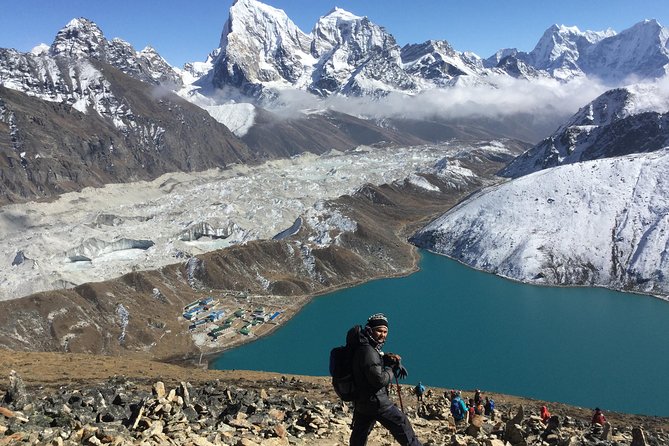
You came for the Everest region views, but you’ll remember Gokyo Lake. This 15-day trek takes you through Sherpa villages, national-park hiking, and high-altitude scenery up to Gokyo Ri for panoramic mountain sightlines. I like that it’s built around both big viewpoints and actual daily walking moments, not just one or two highlight stops.
One possible consideration: you’re dealing with real altitude, long uphill days, and Lukla flights that depend on weather.
What makes this trip feel practical is the way the hard parts are supported. You’ll get a friendly English-speaking guide, helpful porters, trekking permits and TIMS handled, plus cold-weather basics like a warm down jacket and sleeping bag for the trek. The route also gives you clear context for what you’re seeing, including Sagarmatha National Park stops and a Himalayan Rescue Association briefing on altitude sickness.
From the feedback I saw, guides like Urja and Ashish are specifically praised for clear communication and looking after people day to day. Still, with a price tag of $1,785 per person and flights that can be weather-dependent, you’ll want to stay flexible and plan your budget around tips and personal extras.
In This Review
- Key highlights worth knowing
- Why Gokyo Lake and Gokyo Ri change your Everest trip
- Price and what $1,785 buys you (and what it doesn’t)
- Kathmandu warm-up: hotel nights, briefing, and a smoother start
- Lukla flight day: short in time, big in impact
- From Lukla to Namche: bridges, rivers, and the mini-market buzz
- Namche area: Sagarmatha National Park, Khumjung, and Everest View Hotel
- The long uphill days: building altitude sense toward the Gokyo route
- Gokyo Glacier and Gokyo Lakes: where the mountains feel close
- Gokyo Ri: early hike, panoramic payback, and a smart optional detour
- The return: backtracking with better perspective (and more picture time)
- Fly back to Kathmandu and close with culture
- What’s included vs not included: avoid budget surprises
- Gear, fitness, and altitude prep that actually helps
- Who should book this Gokyo Lake trek, and who should pause
- Should you book Alliance Adventure’s Gokyo Lake trek?
- FAQ
- How long is the Gokyo Lake trek?
- Where does the trek start?
- What is the price per person?
- Is the tour private?
- Are trekking permits and TIMS cards included?
- What’s included for meals and drinks during the trek?
- What gear is provided?
- What’s not included in the package?
- Do I need a visa for Nepal?
- Is there a minimum age?
Key highlights worth knowing
- Gokyo Lake sits high at about 4,750 m, so the views arrive faster than you might expect.
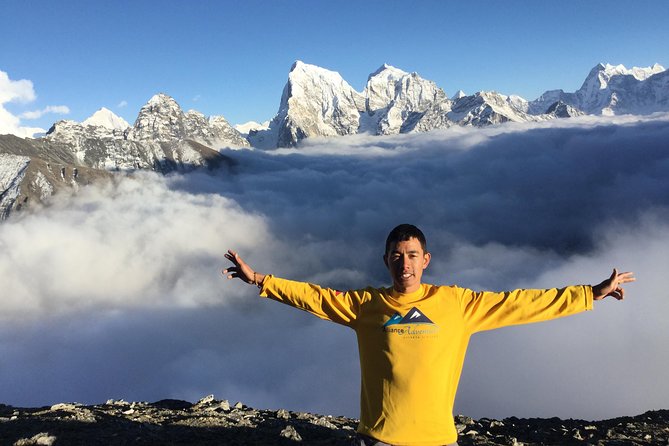
- Gokyo Ri is your big “360-ish” viewpoint goal, with Everest-range panoramas early in the day.
- Lukla-to-Namche includes suspension bridges, including a high Hilary suspension bridge (weather permitting for views).
- Sagarmatha National Park day plus Khumjung and Everest View Hotel adds real cultural and interpretive stops.
- Himalayan Rescue Association briefing helps you understand altitude risk before you feel it.
- Gear support included: warm down jacket, sleeping bag, trekking poles (and a waterproof duffel for the trek).
More trails out of Kathmandu, boots ready
- Everest Base Camp Trek – 14 Days★ 5.0 · 1,499 reviews
- Everest Base Camp Trek★ 5.0 · 842 reviews
- Everest Base Camp Trekking★ 5.0 · 485 reviews
- Nagarkot Sunrise View and Day Hiking from Kathmandu★ 5.0 · 471 reviews
Why Gokyo Lake and Gokyo Ri change your Everest trip
A lot of Everest-region hikes share the same loop: climb, acclimatize, push higher, descend, repeat. The Gokyo Lake trek keeps that rhythm, but it adds something different—lakes at altitude and a viewpoint (Gokyo Ri) that feels like you’re watching the whole Everest region from above the drama.
First, the altitude matters. When your destination is Gokyo Lake at around 4,750 m, you’re not just walking toward a postcard. You’re living at the elevation where air gets thinner and the light gets sharp, so the mountains look close and crisp. The trail also brings in multiple mountain names along the way, including Cho Oyu and the Everest-side peaks like Lhotse, Nuptse, and more.
Second, the plan doesn’t rely on one viewpoint only. You’ll get big mountain moments from Namche-area hiking and glacier walking, then a dedicated early hike for Gokyo Ri with panoramic Himalayan range views. If you like mornings when the air is cool and the world looks extra still, this style of timing can be a major win.
The one tradeoff is simple: this is a high trek. If you’re hoping for an easy stroll with minimal climbing, you’ll likely feel the uphill days. Even the “scenery-focused” parts come with steep trail sections.
Price and what $1,785 buys you (and what it doesn’t)
The headline price is $1,785 per person for about 15 days. In trekking, the real value isn’t just the route—it’s what’s included when conditions get complicated (cold mornings, permits, flight days, and the daily logistics of food and lodging).
Here’s what you get that meaningfully reduces your burden:
- Kathmandu lodging: 2 nights hotel with breakfast
- Trek meal plan: breakfast, lunch, dinner and hot drinks/tea or coffee during the trek days
- Trek operations: trekking permits and TIMS, plus a medical kit bag
- People support: English-speaking guide, porters, and insurances for guide and potters
- Cold-weather tools: warm down jacket and sleeping bag (plus trekking walking poles after the return)
- Extra gear: 100% waterproof trekking duffel bag and a company T-shirt
- Transportation: arrival through departure plus ground transport by private vehicles
What’s not included is also important for your budget:
- Cold drinks, phone calls, laundry, and bar bills
- Hot shower and battery charging during the trek (so bring a plan for power)
- Tips for your guide and potters
- Travel or high-altitude sickness insurance
For value, I like that you’re not carrying the whole logistics load yourself. But you should treat the price as “serious trekking coverage,” not “a cheap holiday package.” A trek like this asks you to plan smart: money for personal extras, and time for training.
Kathmandu warm-up: hotel nights, briefing, and a smoother start
Day 1 is a hotel welcome and getting briefed for the trek. That matters more than it sounds. A good briefing helps you understand what your body is about to face—thin air, early mornings, and cold nights.
On Day 2, you get a half-day city tour, then a drive toward Manthali Airport (the plan notes that if you drive today, you can avoid a very early wake-up at 2am the next day). If you’re sensitive to jet lag or sleep disruption, that little change can make a real difference.
You’re starting from Kathmandu with a 6:00am start time listed. Even if your exact day timing shifts, that early-morning emphasis is consistent with this region’s trekking style: you move early, you hike while the weather is friendlier, and you build in rest where needed.
Lukla flight day: short in time, big in impact
You’ll fly from the Kathmandu area to Lukla—the listed flight time is about 15 minutes. The notes also say the flight depends on weather, and that they fly if weather is friendly and the skies are clear.
This is one of those moments where you should stay flexible. When Lukla weather is off, the trek timeline can shift, and your provider’s communication becomes key. Feedback for Alliance Adventure specifically praises clear communication and caring guidance, and that kind of support matters when plans need adjusting.
Once you land, the trekking start follows the local pattern: Sherpa life style, local culture, and nature views while you walk your way into the main Everest-region hiking corridor.




From Lukla to Namche: bridges, rivers, and the mini-market buzz
The trek toward Namche Bazaar is where you start to feel the “Everest gateway” energy. The plan includes five suspension bridges, including a very high Hilary suspension bridge. If weather clears, you can sometimes catch views of Mt. Everest from the trail area—so early and weather-aware hiking becomes part of your strategy.
Namche Bazaar is described as a mini market, and that’s accurate in function. It’s not just a town—it’s where supplies, small comforts, and trekking-life routines happen. You can usually find the basics and also choose small upgrades like coffee and bakery-style stops.
Day 4 is also where the trail is described as mostly climbing until you reach Namche. That’s an important reality check: even before high-altitude lakes, you’re already working your legs.
Namche area: Sagarmatha National Park, Khumjung, and Everest View Hotel
From Namche, you’ll do a day that blends walking with meaningful stops. The plan includes hiking in or around Sagarmatha National Park, time at Everest View Hotel, and a visit to Khumjung Village including the Hillary School.
This kind of day is valuable because it gives your eyes context. When you’re staring at snow peaks all day, it helps to also learn about the communities living with those peaks nearby. It also helps keep the trek interesting beyond physical effort.
There’s also a practical benefit: this is a “guided sightseeing while you hike” day. Your body still gets work, but you’re not just grinding uphill with no reward. And if you like mountain views, the route notes surrounded snow mountains, with Everest visible along the walking when conditions cooperate.
The long uphill days: building altitude sense toward the Gokyo route
After Namche, you’ll have a longer walking day where the trail is described as below the mountains with climbing up to your destination. Another day focuses on a climb from Dole to Machhermo.
When you reach Machhermo, you’ll also get a briefing from volunteers connected to the Himalayan Rescue Association, focusing on mountain sickness. That timing is smart. You’re moving toward higher elevations, so getting the altitude message before you fully feel it can help you take the right precautions: hydrate, move steadily, and don’t treat “staying strong” as a reason to ignore symptoms.
If you want a simple rule for this part of the trek: pace beats pride. The trek gives you steep days—your job is to keep the effort controlled so your lungs and legs can finish the trip.
Gokyo Glacier and Gokyo Lakes: where the mountains feel close
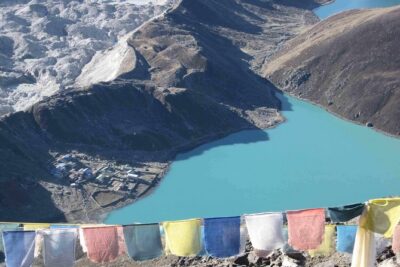
This is the stretch where the trek shifts from the Everest corridor into the Gokyo valley world. The plan describes walking through Gokyo Glacier and passing views tied to Mount Cho Oyu and the Gokyo Lakes.
The wording around the lakes is intense for a reason: at altitude, a lake can look shockingly different from low-elevation water. It’s not just “pretty.” The combination of glacier surroundings and high elevation light can make the scene feel sharp and layered, like the mountains and sky have been turned up in contrast.
Day 8 also flags that you’ll see the lakes and be surrounded by mountains. That phrase is useful because it hints at what your brain needs in order to enjoy this portion: expect fewer distractions, more time looking outward, and a slower relationship with time while your body adjusts.
Gokyo Ri: early hike, panoramic payback, and a smart optional detour
The signature “view day” is your early morning hike to Gokyo Ri on Day 9. The goal is panoramic Himalayan range views, including Everest and Makalu, with notes calling out a 360-degree style view plan.
This is the kind of hike where weather matters a lot. The idea of an early start is practical: you want clearer visibility and calmer conditions. When the mountains line up, the viewpoint can feel like the moment the whole region makes sense.
If you still have energy, the plan notes an option to hike to the 5th Lake as well. I like this as an optional add-on because it lets you match your pace to how you’re feeling. Some days altitude turns “extra” into “enough.” This option helps you keep control.
The return: backtracking with better perspective (and more picture time)
On Day 10, you hike back along a similar route with last-minute pictures with lakes and mountains, then continue walking down to your destination. The return days often feel easier mentally even when your legs are tired—because you’ve already learned where to look.
Day 11 continues with walking below peaks including Thamserku and Kusumkhangaru, plus Ama Dablam, with a note about last capture of Mt. Everest and returning to Namche Bazaar market area.
Day 12 frames the final push as the last steps of Hillary and Mt. Everest, followed by celebration with your guide/porter in Lukla. That final-day energy can be very real. After days of careful movement, your body finally gets to shift into relief mode.
Fly back to Kathmandu and close with culture
On Day 13, you fly from Lukla down to Manthali Airport, then drive about 4 hours back to Kathmandu and rest. This is the point where you should take it seriously: the trek is done, but your hydration and sleep still matter. If you try to “act normal” too fast, the jet-lag-plus-altitude fatigue can hit.
Day 14 includes a tour focused on Nepal history and culture, with a farewell dinner. Day 15 finishes with last-minute shopping and the provider’s good wishes for your flight home.
This cultural ending helps balance the trip. A high trek can leave you with one-track memories—mountains, weather, breath. Adding history and culture helps you bring the experience back into everyday context.
What’s included vs not included: avoid budget surprises
Here’s the practical breakdown based on what’s explicitly included:
Included
- Kathmandu: 2 nights hotel + breakfast
- Trek: all accommodation and meals (breakfast/lunch/dinner and hot drinks like tea/coffee, plus ginger lemon honey, hot chocolate)
- Trek basics: warm down jacket, sleeping bag, and trekking walking poles (provided through the trek and returned to the company)
- Permits: trekking permit and TIMS
- Health support: medical kit bag on the trek, plus insurances for guide and porters
- Guides and support: friendly English-speaking guide, helpful potters/porters
- Transport: all transportation from arrival to departure, plus ground transport by private vehicles
- Welcome/farewell dinners and company extras: duffel bag (waterproof), company t-shirt
Not included
- Cold drinks and phone calls
- Laundry and bar bills
- Lunch and dinner in Kathmandu
- Tips for guide and potters
- High-altitude sickness insurance for yourself
- Hot shower and battery charging during the trek
The biggest “gotcha” for many people is the lack of charging and hot shower options. Plan to live within that reality.
Gear, fitness, and altitude prep that actually helps
The packing guidance here is basic but worth taking seriously:
- Windproof outer jacket and a warm down-filled jacket for cold periods
- Comfortable trousers and warm layers; women are advised about loose skirts during the day
- Gloves, hat or cap, sunglasses, sunblock, and lip balm for sun at altitude
- Lightweight trekking shoes and warm woolen/thermal socks
- Thermal undergarments for colder nights
- Flashlight and spare batteries
- A reminder to train with hikes and mountain-country walking before you go
Fitness-wise, the trip calls for moderate physical fitness. But in practice, moderate means you can walk uphill for hours without stopping every five minutes. It also means you’ve prepared for cold nights and early starts.
Altitude is the other half of the plan. The trek includes an Himalayan Rescue Association briefing on mountain sickness, and that’s your cue to follow sensible behavior:
- move slowly on climbs
- hydrate consistently
- don’t overpack your day with “just one more steep section” when you feel off
Who should book this Gokyo Lake trek, and who should pause
This trek is a strong fit if you:
- want Everest-region peaks plus a high-altitude lake experience
- like early morning hikes and viewpoint days
- want a guided trip that handles permits, meals, lodging, and trekking basics
- value cultural stops like Khumjung and Hillary School, not just walking between camps
You might want to think twice if you:
- struggle with long uphill days or cold nights
- dislike uncertainty around flight timing to Lukla
- are counting on hot showers or easy battery charging
Also, this is a private tour/activity for your group only, with minimum age 18.
Should you book Alliance Adventure’s Gokyo Lake trek?
Yes, if your goal is to experience Gokyo Lake and Gokyo Ri as more than a side note. The trek’s value is strongest in the way it supports you: permits and TIMS are handled, meals and lodging are covered, and the cold-weather gear basics are included. The route is also rich in both views and actual stops like Sagarmatha National Park and Khumjung.
I’d book with extra care if you know you’re sensitive to altitude or if your schedule is tight. The plan depends on Lukla flights that are weather-friendly when skies are clear, and that can add uncertainty. And remember: the trip is listed as non-refundable, so only commit when you’re sure.
If you want a serious Everest-region trekking story with lakes at high altitude, this is one of the clearer choices on the map.
FAQ
How long is the Gokyo Lake trek?
The duration is listed as about 15 days (approx.).
Where does the trek start?
It starts in Kathmandu, Nepal, with a meeting time of 6:00am.
What is the price per person?
The price is $1,785.00 per person.
Is the tour private?
Yes. It’s listed as a private tour/activity, meaning only your group participates.
Are trekking permits and TIMS cards included?
Yes. Trekking permit and TIMS cards are included.
What’s included for meals and drinks during the trek?
All accommodations plus breakfast, lunch, dinner, and tea/coffee are included during the trek, along with items like ginger lemon honey and hot chocolate.
What gear is provided?
You get a warm down jacket and sleeping bag, plus trekking walking poles after the trek return to the company. You also receive a 100% waterproof trekking duffel bag and a company t-shirt.
What’s not included in the package?
Cold drinks (like soda), phone calls, laundry, bar bills, lunch and dinner in Kathmandu, tips for guide and potters, hot shower and battery charging during the trek, and your own travel/high-altitude sickness insurance are not included.
Do I need a visa for Nepal?
Nepal visa can be applied on arrival in Kathmandu. The listed fees are USD25 for 15 days and USD40 for 30 days.
Is there a minimum age?
The minimum age is 18 years.
More Trekking Out of Kathmandu






More Tour Reviews in Kathmandu




Just Reviewed in Kathmandu
- Mountain Bike Tour
★ 5.0 · 3 reviews - Annapurna Panaroma
★ 5.0 · 3 reviews - Mount Everest Scenic Flight 50 Minutes
★ 5.0 · 3 reviews - Kathmandu : Swambhunath & Durbar Square Guided Half Day Tour
★ 3.3 · 3 reviews - Chandragiri Cable Car & Monkey Temple Tour – Private/Group
★ 5.0 · 3 reviews - Kathmandu: Shivapuri National Park Hiking Day Trip
★ 3.3 · 3 reviews
Gokyo Lakes & Everest High Passes, compared.
 ★ 5.0Gokyo to Everest Base Camp TrekFrom $2,200113 reviews
 ★ 5.0Everest Base Camp – Cho La Pass – Gokyo TrekFrom $1,39465 reviews
 ★ 5.012 Days Everest Base Camp Kala Patthar TrekFrom $1,79961 reviews
 ★ 5.0Guaranteed Landing at Everest Base Camp Kalapathar by HelicopterFrom $3,50038 reviews
 ★ 5.0Everest Gokyo Valley Trek – 12 daysFrom $1,39927 reviews
 ★ 4.214-Day Everest Base Camp with Kala Patthar TrekFrom $1,29621 reviews
 ★ 5.0Landing Private Helicopter at Everest base camp & Gokyo for photoFrom $4,39920 reviews
 ★ 5.0Gokyo Valley TrekFrom $1,51419 reviews
Browse the lists this tour appears in