
Review · GOKYO LAKES & EVEREST HIGH PASSES
Gokyo Lakes And Renjola Pass Trek – 12 Days
That first big mountain moment is different here. This 12-day Gokyo Lakes trek adds the Renjo La Pass route, pushing deeper into Nepal’s Khumbu and finishing with a classic pass-over view day instead of turning back early. You’ll go from Lukla up past the Gokyo Lakes, reach Gokyo Ri for high-altitude, peak-to-peak viewing, then cross Renjo La and descend through Thame and Namche Bazaar.
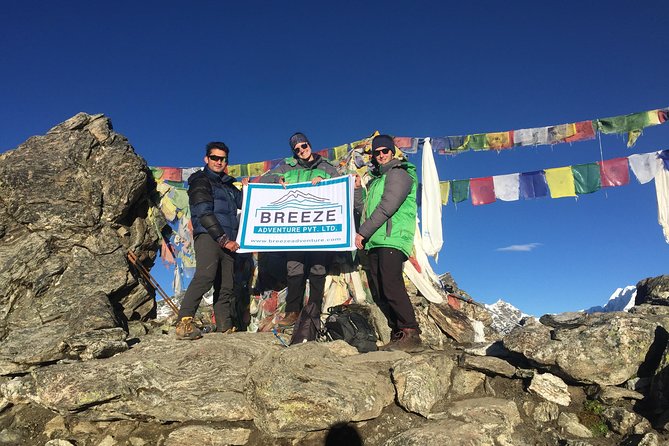
Two things I really like: you get a front-row seat to some of the Everest-region photography spots (especially Gokyo Ri), and the guiding support seems to be taken seriously. In the feedback I reviewed, people singled out experienced leadership and praised safety and comfort, including thanks to guide Sarki Sherpa.
One consideration: this is physically demanding high-altitude trekking. You’re aiming for Renjo La Pass at 5,345m, so you’ll want solid fitness, patience with slow pacing, and realistic expectations about weather and altitude.
In This Review
- Key things that make this trek worth your time
- Why Renjo La Pass Turns the Gokyo Lakes Trek into a Real Challenge
- From Kathmandu to Lukla: Timing and the Start of the Khumbu
- Gokyo Lakes and Gokyo Ri: The View Sequence You’ll Remember
- Renjo La Pass (5345m): The Early Rise and the Payoff
- Descent via Thame and Namche Bazaar: Recover Without Rushing
- Price, Group Size, and Support from Breeze Adventure
- Should you book this Gokyo Lakes and Renjo La Pass Trek?
- FAQ
- Where does the trek start and end?
- What is the duration of the trek?
- What is the meeting point address in Kathmandu?
- Does pickup get offered?
- What are the key high points on the route?
- What does Gokyo Ri help you see?
- How many people are in a group?
- What fitness level do I need?
- What happens if the weather is bad?
- What is the cancellation window?
Key things that make this trek worth your time
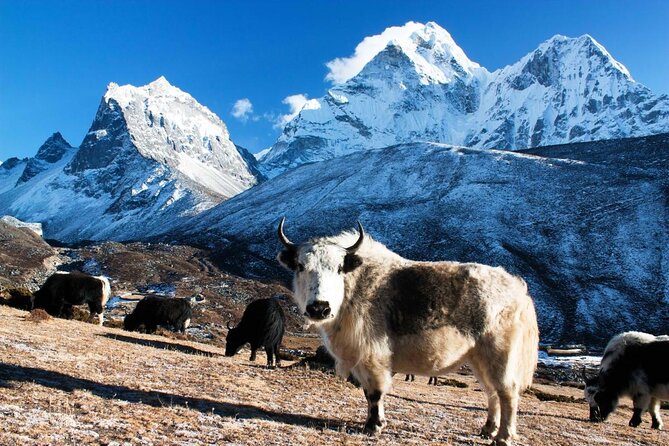
- Renjo La Pass at 5,345m: fewer Everest-region trekkers make it here, so the experience feels more like a goal than a standard detour.
- Gokyo Ri panoramic “big four” view: Everest, Lhotse, Makalu, and Cho Oyu show up in one wide, memorable angle.
- Route logic, not just checkmarks: you don’t just climb high—you also descend through Thame and Namche Bazaar.
- Small group size (max 15): easier logistics and less chaos on the trail than in larger crowds.
- Support from Breeze Adventure: reviews highlight experienced guidance and flexible planning when schedules need adjustment.
More trails out of Kathmandu, boots ready
- Everest Base Camp Trek – 14 Days★ 5.0 · 1,499 reviews
- Everest Base Camp Trek★ 5.0 · 842 reviews
- Everest Base Camp Trekking★ 5.0 · 485 reviews
- Nagarkot Sunrise View and Day Hiking from Kathmandu★ 5.0 · 471 reviews
Why Renjo La Pass Turns the Gokyo Lakes Trek into a Real Challenge
The classic Gokyo Lakes trek is already a special pick in the Everest region. But adding Renjo La Pass changes the tone. Instead of returning the way you came, you keep climbing over a high col, which means the payoff arrives later—and it’s bigger when it does.
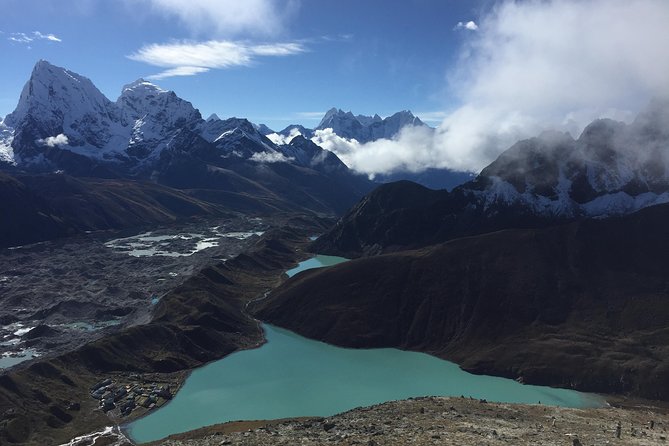
The star moments are altitude views with clear geometry. From Gokyo Ri (5,357m) you’re positioned just west of the Ngozumpa Glacier, and the panorama can include Mt. Everest, Lhotse, Makalu, and Cho Oyu. Then the next day is the early-rise work: crossing Renjo La for another wide view that includes the Ngozumpa Glacier and massive peaks in the distance.
If you like hikes that feel purposeful—where each day has a job—this route fits that mindset. If you want a relaxed, low-stress walk, this isn’t the one.
From Kathmandu to Lukla: Timing and the Start of the Khumbu
This experience starts at Breeze Adventure Pvt. Ltd in Thamel, Kathmandu (the address is on Thamel Marg, Kathmandu 44600, Nepal). Pickup is offered, and you’ll use a mobile ticket. Once booked, you should receive confirmation at the time of booking.
The trek itself begins at Lukla Airport. That matters because Lukla is where the Everest-region trekking “machine” starts for a lot of routes. The first days tend to feel like a shift from city rhythm into mountain rhythm: steady walking, careful steps, and time spent taking in views instead of chasing them.
Altitude in this region isn’t just a number on paper. Your body reacts to oxygen, wind, and exertion—especially when mornings start cold and trails get steeper. I’d treat the first trekking days as your warm-up, even if your mind wants to move faster.
Gokyo Lakes and Gokyo Ri: The View Sequence You’ll Remember
You’ll pass by the six Gokyo Lakes on the way to Gokyo Ri, and that’s more than a poetic waypoint. The lakes are spaced along a climb that slowly changes the environment: air feels thinner, views open up in stages, and the glacier area starts to dominate what you can see from your trail.
Then comes Gokyo Ri, which the description calls arguably the best viewpoint on an Everest-region trek—and you can see why. At 5,357m, you’re high enough for broad perspective, and you’re positioned near the Ngozumpa Glacier. The goal here isn’t just “a view.” It’s the kind of view where you can trace major peak silhouettes and understand how the ridgelines relate to the ice.
Practical tip: plan for discomfort. Mornings near this altitude can be cold, and the last push to a viewpoint tends to be steep and short-lived (in effort terms) but intense (in breathing terms). Bring what keeps you warm and functional, not just what looks good in photos.
This is also where the route feels most like a reward for sticking with it. After the lakes, the push to Gokyo Ri feels like the end of a storyline—except you still have Renjo La waiting the next day.
Renjo La Pass (5345m): The Early Rise and the Payoff
Renjo La Pass sits at 5,345m, which is a serious jump in altitude and a serious day emotionally. The trek description specifically mentions an early rise to ascend Renjo La. That usually means you’ll start before the day feels fully awake—so you’ll want to be ready for cold hands, slower starts, and steady trekking rather than bursts of speed.
Crossing a pass isn’t just about reaching a point. It’s also about how you manage effort on the climb: steady breathing, small steps, and trusting the pacing your guide sets. When you do it right, the pass feels like a controlled grind with a view at the end.
The payoff is the kind of panorama that makes the long days worth it. Renjo La gives another look at the Ngozumpa Glacier and distant peaks, and it’s a different angle than Gokyo Ri. If Gokyo Ri is your “big map” viewpoint, Renjo La is more like your “proof of work” viewpoint.
After Renjo La, you begin a peaceful descent toward Lukla via Thame and Namche Bazaar. That word “peaceful” is a useful expectation-set: the trail may still be rocky and steep at points, but you’re no longer climbing higher. Your job becomes staying balanced on the way down and conserving energy for the long walk-out.




Descent via Thame and Namche Bazaar: Recover Without Rushing
Not every Everest-region route gives you the classic Namche experience on the way out, and that’s part of the value here. You descend toward Lukla through Thame and Namche Bazaar, which keeps your trekking route connected to major Khumbu hubs.
Thame is often quieter than the busier parts of the trail system, so it can feel like a more grounded stop—useful when your legs are tired and you just want steady walking plus small moments to reset. Namche Bazaar, on the other hand, brings back the “people and rhythm” energy of the Khumbu. It’s where you can regain normal routines: hot drinks, a chance to regroup mentally, and a clearer sense of where you are.
One thing I like about routes like this is that they don’t end your challenge at the pass. They give you time to come down, eat, and adjust. Still, don’t treat the descent like a stroll. Your knees, ankles, and balance need attention, especially after long high-altitude exertion.
Price, Group Size, and Support from Breeze Adventure
At $1,800.62 per person for about 12 days, you’re paying for more than walking. You’re paying for the planning, logistics, and human support that reduce the “unknowns” that can make trekking stressful.
You’ll trek with a maximum group size of 15 travelers, which is a meaningful detail. Smaller groups can mean easier pacing, less crowd friction at viewpoints, and a smoother rhythm when the trail narrows.
The support side looks strong. The feedback emphasizes professional, experienced leadership focused on safety and comfort. People also thanked the team for being flexible—one example described changing the plan on the fly to fit a shorter timeframe. Another note specifically thanked Sarki Sherpa, which is a nice reminder that you’re not just buying a route; you’re buying into a guiding relationship at altitude.
Also, the experience starts and ends back at the meeting point in Kathmandu, and pickup is offered. For many trekkers, that reduces “where do I go next” stress on the front and back ends.
What I’d watch for: price can’t tell you everything. You should confirm what’s included (guides, porter support if you want it, permits, meals, and gear expectations) so you can compare like-for-like with other options. The itinerary promises an ambitious high-altitude route, so clarity on day-to-day support matters.
Should you book this Gokyo Lakes and Renjo La Pass Trek?
Book it if you want the Gokyo Lakes route plus a true add-on challenge: Renjo La Pass and a second high-view day are the difference-maker. You’ll be rewarded with a signature Everest-region perspective from Gokyo Ri and a strong second panorama from the pass.
Consider another option if you know you’re not ready for 5,345m trekking or if the idea of early starts at altitude stresses you out more than it excites you. This trek asks for moderate physical fitness and steady effort, and the best outcomes come when you go slow enough to let your body adapt.
If you do book, I’d go in with one mindset: treat the views as the point, but let your guide drive the pace. That’s how you make the long walk feel like it has purpose instead of punishment.
FAQ
Where does the trek start and end?
It starts at Breeze Adventure Pvt. Ltd in Thamel, Kathmandu, and the activity ends back at the same meeting point.
What is the duration of the trek?
The trek runs for 12 days (approximately).
What is the meeting point address in Kathmandu?
The meeting point is Breeze Adventure Pvt. Ltd, Thamel Marg, Kathmandu 44600, Nepal.
Does pickup get offered?
Yes, pickup is offered.
What are the key high points on the route?
You’ll reach Gokyo Ri at 5,357m and cross Renjo La Pass at 5,345m.
What does Gokyo Ri help you see?
From Gokyo Ri, you can get a panoramic view that includes Everest, Lhotse, Makalu, and Cho Oyu, with the Ngozumpa Glacier nearby.
How many people are in a group?
The tour has a maximum of 15 travelers.
What fitness level do I need?
You should have a moderate physical fitness level.
What happens if the weather is bad?
This experience requires good weather. If it’s canceled due to poor weather, you’ll be offered a different date or a full refund.
What is the cancellation window?
You can cancel up to 24 hours in advance for a full refund. If you cancel less than 24 hours before the start time, the amount paid isn’t refunded.
More Trekking Out of Kathmandu






More Tour Reviews in Kathmandu




Just Reviewed in Kathmandu
- Mountain Bike Tour
★ 5.0 · 3 reviews - Annapurna Panaroma
★ 5.0 · 3 reviews - Mount Everest Scenic Flight 50 Minutes
★ 5.0 · 3 reviews - Kathmandu : Swambhunath & Durbar Square Guided Half Day Tour
★ 3.3 · 3 reviews - Chandragiri Cable Car & Monkey Temple Tour – Private/Group
★ 5.0 · 3 reviews - Kathmandu: Shivapuri National Park Hiking Day Trip
★ 3.3 · 3 reviews
Gokyo Lakes & Everest High Passes, compared.
 ★ 5.0Gokyo to Everest Base Camp TrekFrom $2,200113 reviews
 ★ 5.0Everest Base Camp – Cho La Pass – Gokyo TrekFrom $1,39465 reviews
 ★ 5.012 Days Everest Base Camp Kala Patthar TrekFrom $1,79961 reviews
 ★ 5.0Guaranteed Landing at Everest Base Camp Kalapathar by HelicopterFrom $3,50038 reviews
 ★ 5.0Everest Gokyo Valley Trek – 12 daysFrom $1,39927 reviews
 ★ 4.214-Day Everest Base Camp with Kala Patthar TrekFrom $1,29621 reviews
 ★ 5.0Landing Private Helicopter at Everest base camp & Gokyo for photoFrom $4,39920 reviews
 ★ 5.0Gokyo Valley TrekFrom $1,51419 reviews
Browse the lists this tour appears in