
Review · GOKYO LAKES & EVEREST HIGH PASSES
Gokyo Lakes, Gokyo Ri Trekking Package – 10 Days
Blue-green lakes at altitude feel unreal. This Gokyo Lakes and Gokyo Ri trek package turns the Everest region into a calmer, less crowded route, with the big payoff of the early climb to Gokyo Ri (5357m). I love how the itinerary strings together classic Sherpa towns with the stark Gokyo Valley walls, and I love the day devoted to the lakes and the walk up toward Ngozumpa Glacier. One consideration: you’ll be going up and down at altitude, and the Gokyo Ri push is steep enough that you should have a moderate fitness base and real patience with your breath.
I also like how the operation is set up for low-stress logistics: airport transfers in and out of Kathmandu, a first aid kit included, plus a max group size of 15. If you want a guide and office that answer quickly and keep things moving, names like Lhakpa (guide) and Kishwor (office support) show up in the real-world feedback, along with Sherpa team members like Sarki Sherpa and Pemba.
In This Review
- Key things worth caring about
- Gokyo Lakes and Gokyo Ri: Why This Everest-Region Route Feels Different
- Price, Value, and What’s Actually Covered
- Day 1: Kathmandu to Lukla, Plus the First Sherpa-Route Buzz
- Day 2: Phakding to Namche Bazaar via Sagarmatha National Park
- Day 3: Namche Acclimatization, Museum Stops, and a Controlled Pace
- Day 4: Namche Junction to Gokyo Trek Territory via Kongde Ri and Mong La Danda
- Day 5: Dole to Machhermo, Tree Line Crossing, and Cho Oyu in View
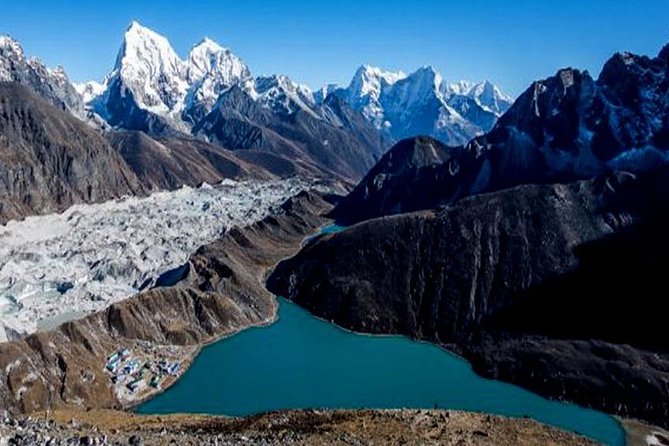
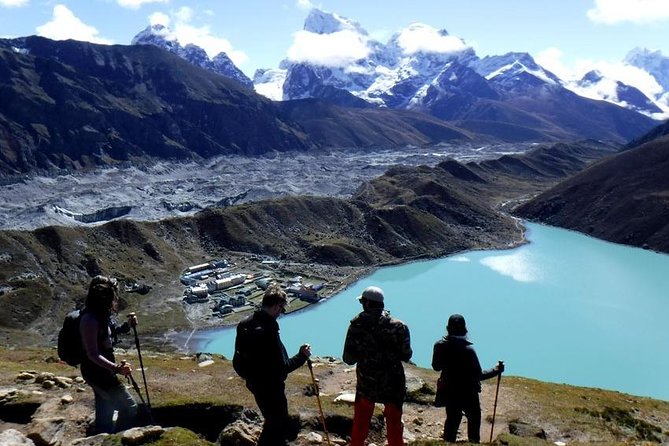
- Day 6: Gokyo Lakes Day, Ngozumpa Glacier Walk, and the Color That Gets You
- Day 7: Gokyo Ri Before Sunrise, Plus a 600-Meter Climb
- Day 8: Down to Namche, Then a Last Evening in Everest Territory
- Day 9: Namche to Lukla, Cross Bridges, and Finish the Trek Like a Pro
- Day 10: Lukla Area to Kathmandu via Manthali, Then a Kathmandu Celebration Dinner
- Guides, Reliability, and the Human Side of Logistics
- Packing and Fitness: How to Set Yourself Up for Gokyo Ri
- Should You Book This Gokyo Lakes Trek Package?
- FAQ
- How long is the Gokyo Lakes, Gokyo Ri Trekking Package?
- Where does the tour start and end?
- What’s the highest point on this trek?
- What meals are included?
- What’s included in the price besides the trek route?
- What fitness level do I need?
- How large is the group?
- What is not included in the package?
Key things worth caring about
- The Gokyo Ri sunrise climb: a steep 600-meter ascent timed for glowing 8,000m peaks.
- Gokyo Lakes day: multiple lakes in blue-green tones, plus a walk up toward Ngozumpa Glacier.
- High-altitude acclimatization that makes sense: an easy hike-based day in Namche instead of rushing higher.
- Wildlife chances on the quieter stretch: musk deer are a realistic possibility between Phortse Thanga and Dole.
- A small group size: up to 15 trekkers, so you’re not swallowed by a crowd.
- Clear meal planning: breakfasts and lunches are covered for the trek days, with dinners after.
More trails out of Kathmandu, boots ready
- Everest Base Camp Trek – 14 Days★ 5.0 · 1,499 reviews
- Everest Base Camp Trek★ 5.0 · 842 reviews
- Everest Base Camp Trekking★ 5.0 · 485 reviews
- Nagarkot Sunrise View and Day Hiking from Kathmandu★ 5.0 · 471 reviews
Gokyo Lakes and Gokyo Ri: Why This Everest-Region Route Feels Different
If you’ve been told Everest treks are all about one thing, this route quietly disagrees. Instead of staying tied to the most famous crowds, you head into the Gokyo Valley system, where the stars of the show are the lakes and the view-stops that feel made for photographers and daydreamers alike.
The big reason the trek sticks with people is simple: you don’t just reach a viewpoint, you earn it. The Gokyo Ri segment is timed for sunrise, and the payoff includes a lineup of major peaks in the same frame—Everest, Cho Oyu, Lhotse, and Makalu—so you get a sense of the whole Himalayan wall, not one isolated summit.
Price, Value, and What’s Actually Covered
The price is $1,686.67 per person for a 10-day itinerary. That number matters less than what you’re getting for it, and here you have a useful bundle: transportation to and from Tribhuvan Airport, a first aid kit, service charges and government taxes, and a post-trek celebration dinner in Kathmandu.
Meals are also planned out: 10 breakfasts, 10 lunches, and 9 dinners are included. That’s a real value point on trek days, because you’re not trying to guess what’s available at the next guesthouse. What’s not included is also clearly stated: shower and electronic charging fees at guest houses, and extra comforts like alcohol and most snacks.
One practical note: the itinerary describes a domestic flight to Lukla and later a flight to Manthali, but the included list only explicitly mentions airport transfers in Kathmandu. Before you commit, ask your operator what internal flights are covered versus paid separately, so there are no surprises.
Day 1: Kathmandu to Lukla, Plus the First Sherpa-Route Buzz
Your trek starts with an early flight from Kathmandu to Lukla. The plane views are part of the anticipation here: you’re not walking yet, but you’re already getting that sense of scale—mountains rising straight out of the map.
After landing, you get welcomed by your crew and you’ll trek through Sherpa villages, agricultural fields, and the usual Himalayan markers like mani stones and prayer wheels. You end up in Phakding for your next steps, and this day’s win is psychological: it gets you into the rhythm without grinding too hard.
Small reality check: flying to Lukla can be weather-dependent in Nepal. If your schedule is tight, build in flexibility with domestic connections, and keep your mindset flexible on departure days.
Day 2: Phakding to Namche Bazaar via Sagarmatha National Park
Day 2 follows the Dudh Koshi River, crossing suspension bridges and passing smaller Sherpa communities. You’ll reach Monjo and formally enter Sagarmatha National Park, which helps explain why the trekking feel is so controlled and well-trodden.
A key moment is Jorsalle for lunch, then the trail continues through pine forests. You’ll cross the highest suspension bridge of the Everest region, and once you start climbing, you’ll also feel the altitude creeping in.
By evening, you’re in Namche Bazaar for an overnight in a guest house. This stop matters because Namche is where trekkers start acting like trekkers: you’ll shop, talk, and compare trail plans—useful for learning what pace is working for others without letting the chatter run your schedule.




Day 3: Namche Acclimatization, Museum Stops, and a Controlled Pace
Day 3 is an acclimatization day, and that’s a gift. Instead of pushing higher just because you can, you take a short hike up toward the Sagarmatha National Park Museum and Khumjung Village.
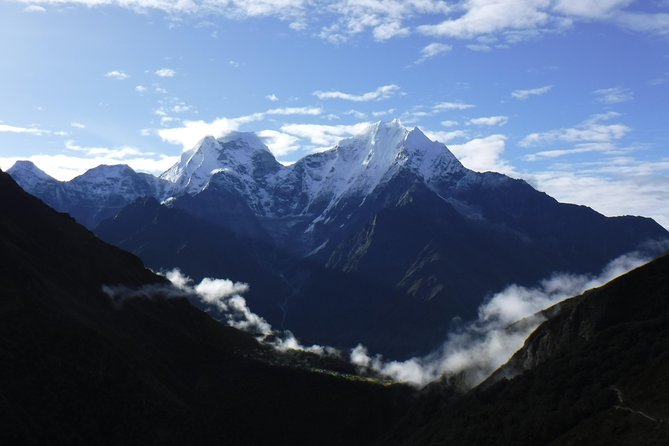
This hike has a few built-in highlights. The monastery view includes the famous yeti scalp display, and there’s an Everest Viewpoint element that gives you a direct look at peaks like Everest, Lhotse, Nuptse, and Ama Dablam on clear days. There’s also a stop at the Everest hotel for tea, which is one of those small comforts that feels big when you’re adjusting to altitude.
The main drawback of a day like this is also why it works: you have to move, but not too hard. If you go full sprint up the trail, you’ll pay for it later. The right pace here is slow enough to keep your breathing calm.
Day 4: Namche Junction to Gokyo Trek Territory via Kongde Ri and Mong La Danda
After breakfast, you ascend briefly for views from the top of Namche. From there the trail heads toward Kyanjuma, and you’ll hit a junction where the paths split for Gokyo Lakes trekkers versus Everest Base Camp trekkers.
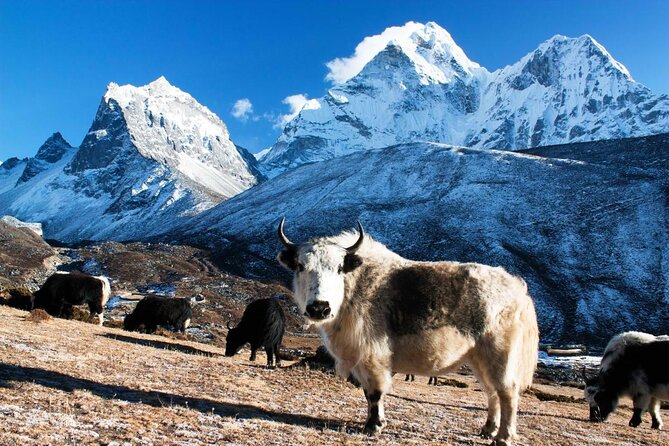
This is one of the best moments in the itinerary because it changes the feeling of the trek. You take the Gokyo route, heading up to Mong La Danda, with big views of Ama Dablam and Thamserku in the mix. Then you descend to Phortse Thanga for lunch.
Between Phortse Thanga and Dole is one of the itinerary’s specific wildlife windows. You have your best chance to spot musk deer, and the forest setting (birch and juniper) makes those quieter sightings more likely than on busier roads.
You finish the day at Dole, described as a small village with gorgeous views. In practice, that means you get a restful base without too much late-day stress.
Day 5: Dole to Machhermo, Tree Line Crossing, and Cho Oyu in View
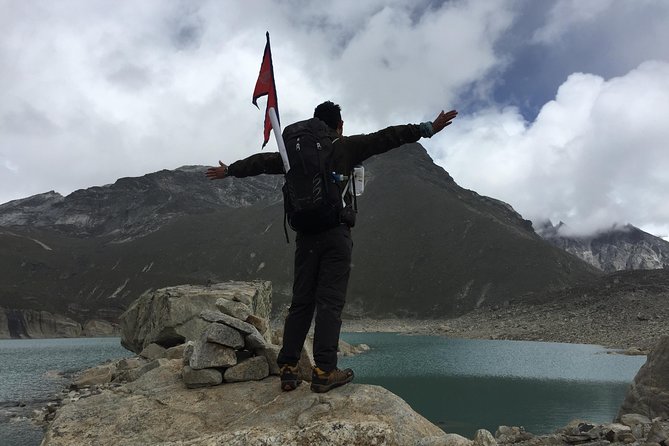
This is a steady uphill day. The Dole to Machhermo hike takes about four hours on a gradual climb, with some villages along the way for breaks—Lafarma and Luza.
About 15 minutes after leaving Dole, you can see Cho Oyu, which is a nice milestone because it signals you’re entering a more open, high-altitude zone. By the time you reach Machhermo, you’re above the tree line.
That above-tree-line detail matters. It usually means fewer trees to block wind and less shade from the sun, so you’ll feel temperature swings more. The reward is clean, open views, and Machhermo’s setting near a river gives you a calmer evening atmosphere.
Day 6: Gokyo Lakes Day, Ngozumpa Glacier Walk, and the Color That Gets You
Day 6 is the headline day for a reason. After an early start, you stop at a village for tea and then begin reaching the lakes in sequence.
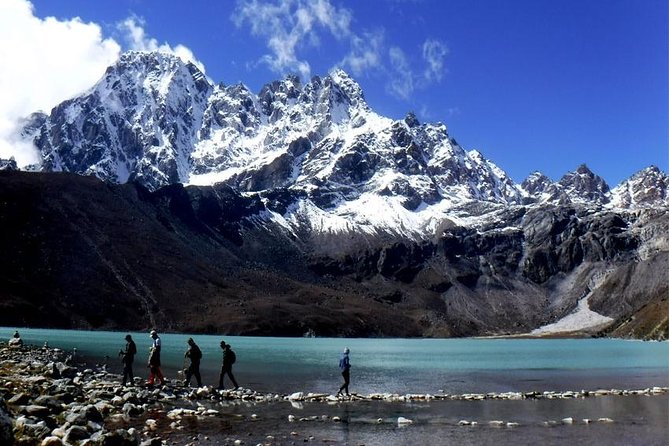
About an hour into the hike you reach the first lake, and another hour later you reach the next one. Then you hike again to the third lake. The lakes are described as mesmerizing blue-green, and that’s not just poetic—at altitude, the contrast between water color and surrounding rock makes everything look sharper.
Lunch happens near the third lake. From there, you walk up toward Ngozumpa Glacier, noted as the longest glacier in Nepal. You’re also reminded that it’s melting rapidly due to climate change, so this day carries an extra emotional punch: you’re seeing something that may not look the same in future years.
You end at Gokyo Village for the overnight, which keeps the pace manageable for the next day’s steep summit attempt.
Day 7: Gokyo Ri Before Sunrise, Plus a 600-Meter Climb
This is the day most people talk about later, because it’s timed for sunrise and built around effort. You start early, aiming to reach Gokyo Ri before the sun rises. The climb is described as steep—about 600 meters—and you’ll be watching the sky change while your legs grind uphill.
At the summit, the view lineup includes four 8,000-meter peaks: Everest, Cho Oyu, Lhotse, and Makalu. That’s a serious view stack for one non-technical trek day, and it’s why Gokyo Ri often competes with or even beats the fame of other Everest-region viewpoints in people’s minds.
After sunrise, you head back to Gokyo Village for breakfast, then continue toward Machhermo for lunch and the overnight. This split—big climb, then a calmer descent—keeps the day from becoming a full exhaustion marathon.
Day 8: Down to Namche, Then a Last Evening in Everest Territory
After breakfast, you head down to Namche Bazaar. The trail is mostly downhill, with one exception: a 40-minute climb from Phortse Thanga to Mong La Danda. After that, things ease again as you pass through Kyanjuma.
You stop in Namche Bazaar. This is your last chance to explore and buy souvenirs before you truly exit the Everest region. It also gives you a practical reset: laundry, a warm drink, and a chance to check gear while you’re still in a bigger hub.
Overnight is in a guest house again, so plan for cold rooms and limited charging options. Since charging fees aren’t included, bring a power strategy that doesn’t depend on plug-in time every night.
Day 9: Namche to Lukla, Cross Bridges, and Finish the Trek Like a Pro
Day 9 shifts into exit mode. You start with breakfast and views, then begin descending toward Lukla. You’ll spend about half an hour hiking down while enjoying last looks at Everest and then you cross six suspension bridges and pass multiple Sherpa villages.
After crossing the highest bridge, you walk another three hours to Phakding for lunch, then continue on toward Lukla. The itinerary describes arriving in Lukla after about 2.5 hours of walking through Sherpa settlements.
This is not the day for heavy sightseeing fantasies. It’s the day for steady walking, hydration, and saving energy for the final flight and rest.
Day 10: Lukla Area to Kathmandu via Manthali, Then a Kathmandu Celebration Dinner
On Day 10, you have breakfast and then walk to Tenzing-Hillary airport for a morning flight to Manthali. From there you drive to Kathmandu, with the drive taking about five hours via local villages.
You spend most of the day driving, and the plan is to end with a post-trek celebration dinner in Kathmandu. It’s a nice touch because it marks closure without making you plan a whole night out while you’re still physically recovering.
Guides, Reliability, and the Human Side of Logistics
This trek package is led by a company called Breeze Adventure Pvt Ltd, and the recurring theme in real-world feedback is reliability and a friendly team vibe. Names you’ll hear include guide Lhakpa, office support Kishwor, and Sherpa team members like Sarki Sherpa and Pemba, with additional support names such as Sushant and Prem showing up in the service stories.
Why that matters to you: on a trek like this, the difference between a smooth day and a stressful day is usually small decisions. If your guide and office team are quick to answer questions and handle changes fast, you can focus on walking and breathing instead of worrying about details.
Also, with a max group size of 15, it’s more personal than big-bus tour chaos. You’re still in a group, but you’re not disappearing into it.
Packing and Fitness: How to Set Yourself Up for Gokyo Ri
This trek is marked for travelers with moderate physical fitness. That doesn’t mean casual. It means you should be comfortable walking for several hours at a time and handling steep segments at altitude.
Think about the itinerary’s altitude moments:
- You reach Namche and do a structured acclimatization hike on Day 3.
- You cross toward the higher sections and go above tree line by the time you’re near Machhermo.
- The summit push at Gokyo Ri includes a steep 600-meter climb timed for sunrise.
For gear, the data doesn’t list a kit, so you’ll need to plan based on common trek needs in Nepal’s Everest region. The key is that charging fees can be an issue at guest houses, and showers cost extra too, so don’t rely on late-day comfort being included.
If you’re coming from flat ground, give yourself a training runway: lots of walking on hills, stair practice, and some time for your legs to adapt. Then on the trek itself, follow the pace your body can sustain rather than the pace you wish you had.
Should You Book This Gokyo Lakes Trek Package?
Book it if you want a classic Everest-region experience without spending every day glued to the most crowded route. This itinerary builds in good acclimatization, treats the lakes day as a true highlight, and makes Gokyo Ri the emotional peak with that sunrise timing.
You should pause before booking if you’re worried about steep climbs at altitude or if your travel window is inflexible. Weather matters here, and the trek is described as requiring good conditions, so it’s wise to be mentally ready for schedule shifts.
If you’re the kind of traveler who likes straightforward planning and dependable service, this package fits. You get a small-group setup, meal support, and a company that’s been praised for caring and staying on top of logistics—exactly what you want when your main job is to walk and enjoy the view.
FAQ
How long is the Gokyo Lakes, Gokyo Ri Trekking Package?
It’s listed as 10 days (approx.).
Where does the tour start and end?
It starts in Kathmandu, Nepal, and includes transportation to and from Tribhuvan Airport. The itinerary returns you to Kathmandu by the end of the trek.
What’s the highest point on this trek?
The highlight is reaching Gokyo Ri at 5357 meters (17,575 feet).
What meals are included?
Breakfast is included 10 times, lunch is included 10 times, and dinner is included 9 times.
What’s included in the price besides the trek route?
The included items list transportation to and from Tribhuvan Airport, a first aid kit, service charge and government taxes, and a post-trek celebration dinner in Kathmandu.
What fitness level do I need?
The tour says travelers should have a moderate physical fitness level.
How large is the group?
The maximum group size is 15 travelers.
What is not included in the package?
International airfare and personal expenses are not included. Shower and electronic charging fees at guest houses during the trek are also not included, and alcohol, chocolates, tea, and coffee are excluded.
More Trekking Out of Kathmandu






More Tour Reviews in Kathmandu




Just Reviewed in Kathmandu
- Mountain Bike Tour
★ 5.0 · 3 reviews - Annapurna Panaroma
★ 5.0 · 3 reviews - Mount Everest Scenic Flight 50 Minutes
★ 5.0 · 3 reviews - Kathmandu : Swambhunath & Durbar Square Guided Half Day Tour
★ 3.3 · 3 reviews - Chandragiri Cable Car & Monkey Temple Tour – Private/Group
★ 5.0 · 3 reviews - Kathmandu: Shivapuri National Park Hiking Day Trip
★ 3.3 · 3 reviews
Gokyo Lakes & Everest High Passes, compared.
 ★ 5.0Gokyo to Everest Base Camp TrekFrom $2,200113 reviews
 ★ 5.0Everest Base Camp – Cho La Pass – Gokyo TrekFrom $1,39465 reviews
 ★ 5.012 Days Everest Base Camp Kala Patthar TrekFrom $1,79961 reviews
 ★ 5.0Guaranteed Landing at Everest Base Camp Kalapathar by HelicopterFrom $3,50038 reviews
 ★ 5.0Everest Gokyo Valley Trek – 12 daysFrom $1,39927 reviews
 ★ 4.214-Day Everest Base Camp with Kala Patthar TrekFrom $1,29621 reviews
 ★ 5.0Landing Private Helicopter at Everest base camp & Gokyo for photoFrom $4,39920 reviews
 ★ 5.0Gokyo Valley TrekFrom $1,51419 reviews
Browse the lists this tour appears in