
Review · EVEREST BASE CAMP TREKS
Helicopter Return Everest Base Camp Trek, KTM-LUKLA & Gorakshep-KTM by Heli
Everest Base Camp feels huge when you only do it once. This trek combines classic Khumbu villages and big-altitude icons with an option for a helicopter return from the Gorakshep area, so you spend less time stuck waiting for flights. You’ll also build toward the Kala Patthar viewpoint, where the Everest region looks close enough to touch.
I really like the human side of this trip: the on-the-ground coordination is led by Buddhi, and the trekking guide support often comes from Dipak, with porters stepping in when needed. One thing to think about is that the helicopter legs (and porter help) come with extra costs and depend on weather, so you’ll want flexibility in your schedule and budget.
In This Review
- Key Highlights Worth Your Attention
- How the Helicopter Return Changes the Everest Base Camp Plan
- Kathmandu Warm-Up: A 5:45 am Start and Real-World Setup
- Lukla Flight and the First Trek to Phakding
- Namche Bazaar: Acclimatization, Trading Life, and Mountain Views
- Tengboche and Dingboche: Monasteries, Chortens, and Higher Tea-House Reality
- Lobuche to Gorakshep: Getting Close to the Khumbu Glacier
- Everest Base Camp and Kala Patthar: The Big Days at Big Altitude
- The Return to Kathmandu: Trek Down or Helicopter Back
- Guides, Porters, and Day-to-Day Support That Actually Helps
- Price and Value: Why $9,999 Might Be Worth It, or Not
- What to Pack for Teahouses, Cold Nights, and High Walks
- Should You Book This Heli Return Everest Base Camp Trek?
- FAQ
- What is the duration of the Everest Base Camp trek in this experience?
- Where does the trip start and end?
- What’s included in the price besides guiding and permits?
- Is helicopter service included?
- What are the helicopter costs if I choose shared flights?
- What are the private helicopter prices?
- Do I need a porter, and what does it cost?
- What start time is used for the experience?
- What gear does the experience recommend you bring from home?
- Is the trip guaranteed to run on the planned dates?
Key Highlights Worth Your Attention
- Small group (up to 15) keeps the trek feeling calm and manageable
- Guide support from Buddhi and Dipak focuses on organization and clear local know-how
- Kala Patthar viewpoint plan is built around big, high-altitude scenery at the top of the route
- Teahouse trekking with 9 breakfasts included keeps meals simple, with lunch and dinner paid locally
- Helicopter options for return can save you from the usual Lukla-flight stress
- Real Sherpa village time through Namche, Tengboche, Dingboche, and surrounding stops
More trails out of Kathmandu, boots ready
- Everest Base Camp Trek – 14 Days★ 5.0 · 1,499 reviews
- Everest Base Camp Trek★ 5.0 · 842 reviews
- Everest Base Camp Trekking★ 5.0 · 485 reviews
- Nagarkot Sunrise View and Day Hiking from Kathmandu★ 5.0 · 471 reviews
How the Helicopter Return Changes the Everest Base Camp Plan
Everest Base Camp is famous for views, sure. But the real stress for many people is logistics. Flights in and out of Lukla can get delayed, and the “wait and hope” feeling is not fun.
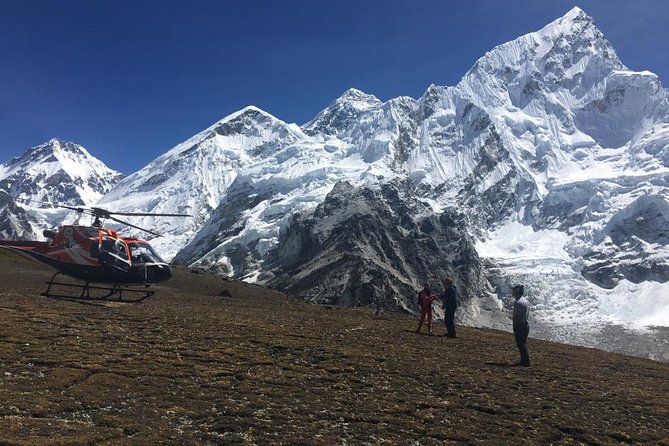
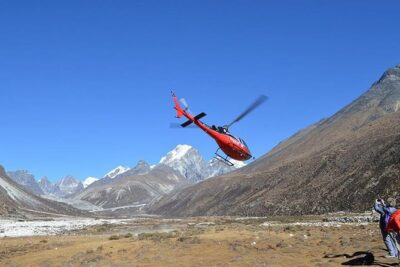
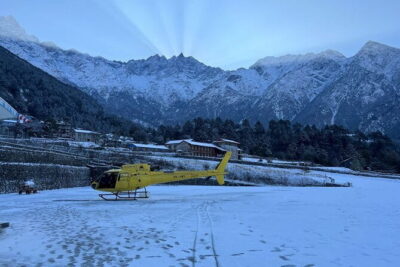
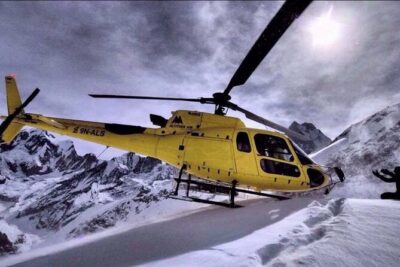
This is why I like the helicopter return option tied to the Gorakshep side of the trip. If you choose the helicopter from Gorakshep to Kathmandu, you’re reducing the chance that your entire ending depends on Lukla flight timing. The tradeoff is cost and weather dependence. If the helicopter can’t fly, your plan needs to pivot.
Even with the helicopter option, you still do the classic trekking rhythm: you gain altitude step by step, eat in mountain teahouses, and follow the Khumbu trail between Sherpa settlements. That means you still get the real travel part, not just a quick scenic transfer.
Kathmandu Warm-Up: A 5:45 am Start and Real-World Setup
Your trek begins in Kathmandu, the energetic base city for everything in the Everest region. The meeting time listed is 5:45 am, which tells you the day is structured to start early, likely to work around check-in and flight timing.
This is where you’ll confirm details like permits and the flow of the route. Permits (entry and trekking) are included, which matters because those documents are the “paperwork tax” you don’t want to scramble for at the last minute.
Also note the practical basics: pickup is offered, and you’ll use a mobile ticket. You’ll want your phone charged, offline maps downloaded, and a simple plan for cash for the parts that are not included (like lunch/dinner on the trail).
Lukla Flight and the First Trek to Phakding
From Kathmandu, the plan moves to Lukla, the gateway to the Khumbu. The route describes a short flight to Tenzing-Hillary Airport in Lukla, then a trek toward Phakding.
This opening stretch is where you learn two things fast:
1) your legs get to work right away (no gentle warm-up forever), and
2) packing is everything, because your body is carrying the weight while the air thins.
You’re walking around 3–4 hours on day one of the trekking portion, which is a nice start. Phakding itself is a familiar first stop on Everest trips: you’ll find teahouses, a chance to settle, and the first taste of the prayer flags and suspension-bridge vibe that repeats through the Khumbu region.
One practical tip: treat the first day like a gear-check day. Don’t try to “prove something” with speed. Save your effort for Namche and the higher days.
Namche Bazaar: Acclimatization, Trading Life, and Mountain Views
Namche Bazaar is the place where the Everest region shifts from village-hike to proper Himalayan town. You’ll reach it after trekking up through the river valley, and once there you’ll do a rest/acclimatization day.
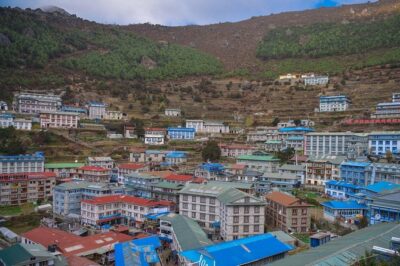
Namche is described as a buzzing hub with shops, food, culture, and stunning views. It’s also a traditional trading center, meaning you’ll see the town’s role in how people move goods through the mountains. If you’ve only imagined Everest as peaks and snow, Namche gives you the human scale: life organized around trails, weather, and seasons.
The itinerary’s pattern makes sense: going up to 3440m and then resting. That’s how you reduce the risk of getting too aggressively altitude-sick too early. You’re not just gaining elevation; you’re giving your body time to adjust.
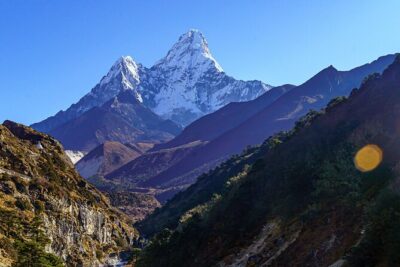
This is also where I like to slow down and look around. The scenery is massive, but it’s worth noticing the everyday details: prayer wheels, monasteries and chortens you’ll see along the broader route, and the way communities live with the terrain instead of fighting it.
More of the range from the air
Tengboche and Dingboche: Monasteries, Chortens, and Higher Tea-House Reality
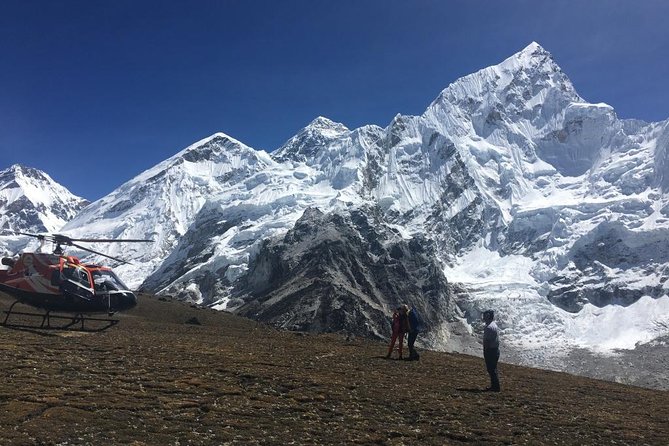
After Namche, the trek climbs again toward Tengboche and then Dingboche. These are days where you feel the altitude more. The walking windows are typically 4–5 hours, and the elevation climbs you toward the 3,800–4,300m zone.
Tengboche is a key cultural stop. The description highlights monasteries and the spiritual landscape of the Khumbu—so you’re not only trekking through mountain country, you’re moving through a living set of religious and community traditions. Prayer flags and the trail markers are part of the movement of daily life here.
Then comes Dingboche. You’ll reach it around 4350m and take another rest day. That second acclimatization break is not “extra time” for comfort. It’s there because the next stages push higher, toward Lobuche and the Gorakshep area.
Teahouses at these elevations become more about routine. You’ll sleep, hydrate, and follow the guide’s pacing. Food choices may be simpler than in Kathmandu, but you’re mostly trying to keep energy steady. And because breakfast is included, you don’t have to negotiate that morning decision every day.
Lobuche to Gorakshep: Getting Close to the Khumbu Glacier
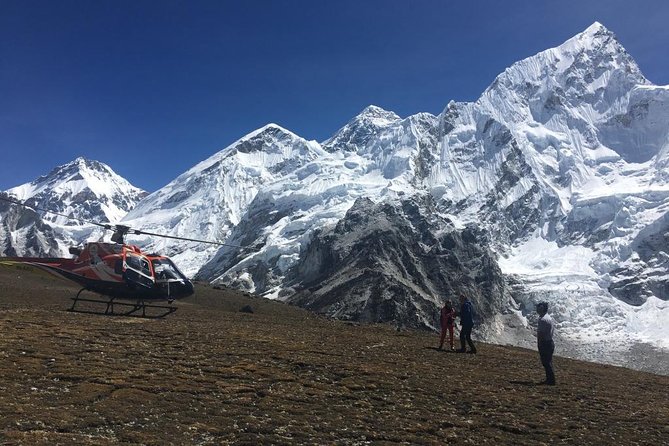
From Dingboche, you keep climbing toward Lobuche and Gorakshep. The route places Lobuche at roughly 4910m, and Gorakshep around 5180m—no joke numbers.
This is the stage where the environment starts changing. You’ll notice the sense of exposure: less greenery, more wind, and a stronger focus on the mountains as physical objects rather than distant shapes. The trip also frames this area with Sagarmatha National Park and the river valleys like the Dudh Koshi, then transitions you toward the high glacial landscape.
Gorakshep is the launch point for the iconic high walks. It’s a working base in the way it supports hikes to nearby highlights. Think of it as your gear-and-energy staging area before the big day.
If you’re someone who hates uncertainty, this is where the trip’s organization helps. A good guide routine matters when you’re high. It’s not just about routes; it’s also about timing, pacing, and making sure you’re not overreaching when your body is already under stress.
Everest Base Camp and Kala Patthar: The Big Days at Big Altitude
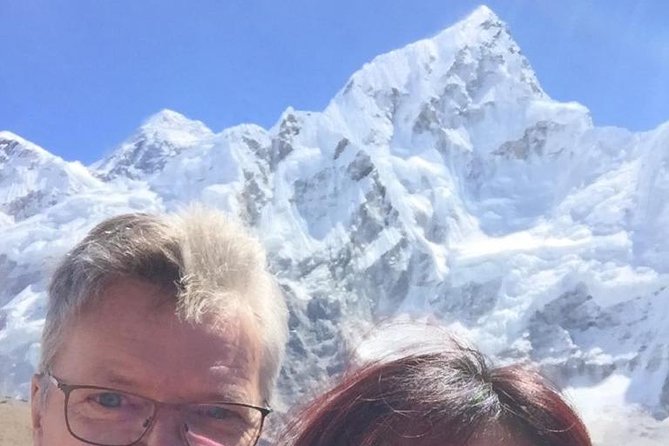
This is why you’re here.
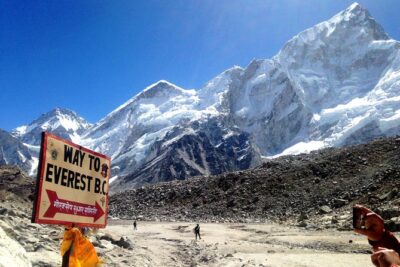
The route describes walking from Gorakshep to Everest Base Camp (around 5364m) for a 2–3 hour hike, plus the famous ascent to Kala Patthar at about 5545m.
Base Camp itself is a surreal place: lots of people, lots of movement in small circuits, and a feeling that the mountain is right there at eye level. You’ll be surrounded by the geography of the expedition world: the Khumbu Glacier and the area around the Khumbu Icefall are part of the visual story you’ll see from this region.
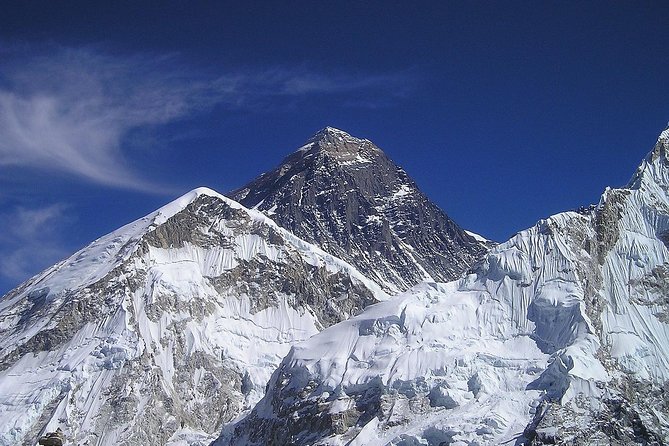
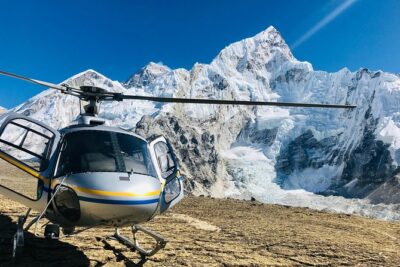
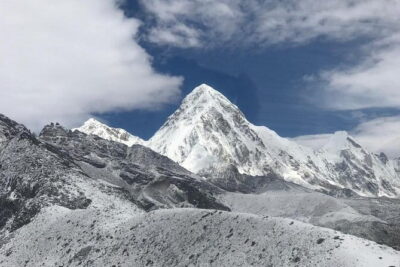
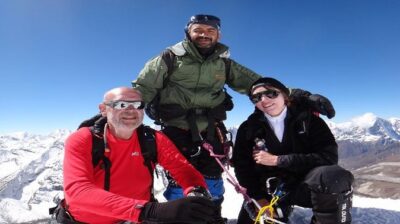
Then comes Kala Patthar, which is specifically described as famous for glittering views of peaks including Everest, Mt. Nuptse, Mt. Pumori, Mt. Lhotse, and Mt. Changtse. You’ll also see the Khumbu Glacier, glacial rivers, and avalanche paths. That last part is sobering. The mountains aren’t just scenery; they’re active systems.
What makes this day worth it is timing and effort. You’re doing a serious altitude jump on foot. You’ll want layers ready and a plan for staying warm while you wait for clear views. This is where the packing list matters: the trip explicitly flags a down jacket as a must for staying in a teahouse relaxed under 0C, plus warm hats and gloves.
One more practical note: Kala Patthar is often cold and windy. Bring sunglasses, keep your face protected, and don’t treat this like a summer hike. Snow and ice aren’t theoretical up here.
The Return to Kathmandu: Trek Down or Helicopter Back
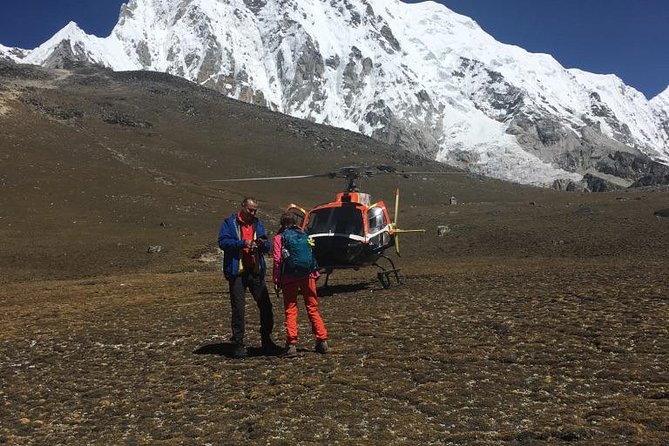
After your high points, the route shifts back toward lower altitude. It includes a trek from Gorakshep down toward Pheriche, and then further back toward Namche Bazaar and Lukla, followed by a return to Kathmandu.
But the headline of this experience is the helicopter option. The extra helicopter pricing is listed like this:
- KTM to Lukla shared helicopter-style flight: USD 400 per person (sharing flight, listed months)
- Gorakshep to Kathmandu shared: USD 999 per person
- Private helicopter option Gorakshep to KTM: USD 3600 per heli
- Private helicopter Kathmandu to Lukla: USD 2000
Here’s how to think about it as a decision:
- If you want to reduce exposure to Lukla-flight delays, the helicopter return is the lever.
- If budget is tight, you might stick to the trekking-and-flying pattern shown in the route.
- Either way, keep an eye on weather. This experience is clearly weather-dependent, and poor conditions can force changes or cancellations.
I’d plan your mindset like this: you’re doing the trek either way, and the helicopter mainly controls the ending stress level. That can be worth a lot.
Guides, Porters, and Day-to-Day Support That Actually Helps
The reviews tied to this operator lean hard on one theme: you’re not left to figure things out alone. The coordination led by Buddhi and the guide support often credited to Dipak show up repeatedly: good communication, being organized, and handling problems without panic.
That matters because Everest trips are full of small friction points:
- weather changes flight plans,
- teahouse rooms can feel tight at busy times,
- you’ll want help pacing and staying warm,
- and you’ll want clarity on what costs extra.
Porters are also part of the real-world solution. There’s a note to pay a porter USD 30 per day, paid directly at Lukla. The fact that porters like Carmen and Desantis get called out in the reviews is a good sign: the trip relies on people who know how to handle the mountain workday.
Group size stays small, up to 15 travelers, which keeps the logistics smoother than huge treks. Less crowding means more flexibility when you need a minute to catch your breath or adjust plans.
Price and Value: Why $9,999 Might Be Worth It, or Not
The listed price is USD 9,999 per person, and that number deserves a reality check.
Here’s what I can say from what’s provided:
- Tea house stays in the mountains are included.
- Breakfast (9) is included.
- A trekking guide is included.
- Entry and trekking permits are included.
- Lunch and dinner are not included and are paid locally.
Now, the big question is helicopter cost. Helicopters are listed as separate add-ons with clear pricing for shared and private options. If your final plan uses the helicopter return leg, that value can jump fast. If you’re mostly trekking and flying like a standard EBC itinerary, the helicopter fees might not apply—or they might still apply depending on your chosen plan.
So who is the price likely for?
- People who want a guided, organized experience with strong local coordination.
- People who value avoiding stress around high-country logistics (especially via helicopter return).
- Couples or small groups who can handle the cost of a premium service.
Who might pause?
- Budget-focused hikers who are comfortable handling more uncertainty themselves.
- Anyone who doesn’t plan to use the helicopter options and would prefer to pay for only the trekking essentials.
If you’re close to a decision, ask a simple question before you book: which helicopter legs are already covered in your final quoted price, and which are optional extras? That will tell you whether the $9,999 is a true bundle or a marketing number that excludes the helicopter component.
What to Pack for Teahouses, Cold Nights, and High Walks
This trek spells out what to bring, and you should take it seriously. In high teahouses, comfort depends on layers, not wishful thinking.
Plan on:
- A warm woolen cap, warm gloves, and proper layers for freezing nights.
- A down jacket for teahouse comfort, especially if temps drop below 0C as noted.
- A waterproof Gore-Tex layer (rain and wet wind happen).
- A 4-season sleeping bag is optional and can be provided, with return expected after the trip.
- A water bottle, torch/flash, and sunglasses.
- Trekking shoes plus sports shoes or sandals.
Clothing quantity guidance is also given: 4/5 pairs of good quality socks, 2–3 pairs of trekking trousers, and multiple trekking shirts. Also pack non-cotton underwear if you can.
One small but important habit: keep your day pack light and accessible. High-altitude days reward the person who can reach gloves, snacks, and a warm layer without turning their bag into a full-time job.
Should You Book This Heli Return Everest Base Camp Trek?
I’d book it if you want:
- a guided Everest Base Camp trek with organized local support led by Buddhi and commonly guided by Dipak,
- small-group pacing (up to 15),
- and a real chance to reduce flight-stress using helicopter return from the high area.
I wouldn’t rush into it if:
- your budget can’t handle possible extra helicopter costs (and porter fees),
- you hate weather-based uncertainty, since this experience is explicitly weather-dependent.
If you’re prepared for cold, high altitude, and you value comfort-through-organization, this is a solid way to do Everest without turning the end of the trip into a long waiting game.
FAQ
What is the duration of the Everest Base Camp trek in this experience?
The trek is listed as 9 days approximately, with additional time for arrival and final departure noted in the overall schedule.
Where does the trip start and end?
It starts in Kathmandu and returns to Kathmandu after the trekking portion through the Everest region (including Lukla and the high points).
What’s included in the price besides guiding and permits?
Included items are tea house in mountain, a trekking guide, entry permits and trekking permits, and breakfast (9). Lunch and dinner are not included and are paid locally.
Is helicopter service included?
Helicopter-related costs are listed separately under not included. The experience includes helicopter options with pricing for KTM to Lukla and Gorakshep to Kathmandu (shared or private), depending on what you choose.
What are the helicopter costs if I choose shared flights?
The listed shared helicopter-style options are USD 400 per person for KTM to Lukla and USD 999 per person for Gorakshep to Kathmandu, for the months listed.
What are the private helicopter prices?
Private options are listed as USD 3600 per heli for Gorakshep to KTM and USD 2000 for Kathmandu to Lukla.
Do I need a porter, and what does it cost?
Porters are an option, and there is a note to pay a porter USD 30 per day directly to the porter at Lukla.
What start time is used for the experience?
The experience lists a meeting start time of 5:45 am.
What gear does the experience recommend you bring from home?
A packing list is provided and includes essentials like trekking shoes, warm woolen cap, warm fleece or puffy jacket, waterproof Gore-Tex layer, down jacket, raincoat, gloves, sunglasses, a water bottle, and a 4-season sleeping bag as optional (if provided, it is returned after the trip).
Is the trip guaranteed to run on the planned dates?
The experience requires good weather. If it’s canceled due to poor weather, you’ll be offered a different date or a full refund.
More of Nepal from the Air
More Trekking Out of Kathmandu
More Tour Reviews in Kathmandu
Just Reviewed in Kathmandu
- Mountain Bike Tour
★ 5.0 · 3 reviews - Annapurna Panaroma
★ 5.0 · 3 reviews - Mount Everest Scenic Flight 50 Minutes
★ 5.0 · 3 reviews - Kathmandu : Swambhunath & Durbar Square Guided Half Day Tour
★ 3.3 · 3 reviews - Chandragiri Cable Car & Monkey Temple Tour – Private/Group
★ 5.0 · 3 reviews - Kathmandu: Shivapuri National Park Hiking Day Trip
★ 3.3 · 3 reviews
Everest Base Camp Treks, compared.
 ★ 5.0Everest Base Camp Trek – 14 DaysFrom $1,8001,499 reviews
 ★ 5.0Everest Base Camp TrekFrom $1,790842 reviews
 ★ 5.0Everest Base Camp TrekkingFrom $1,350485 reviews
 ★ 5.0Everest Base Camp Trekking – 13 DayFrom $1,399365 reviews
★ 5.0Everest Base Camp TrekFrom $1,445350 reviews
★ 5.0Everest Base Camp Trek -14 DaysFrom $1,420321 reviews
★ 5.0Everest Base Camp Trekking – 13 DayFrom $1,399365 reviews
★ 5.0Everest Base Camp TrekFrom $1,445350 reviews
★ 5.0Everest Base Camp Trek -14 DaysFrom $1,420321 reviews
 ★ 5.012 Days Everest Base Camp TrekFrom $1,099289 reviews
 ★ 5.0Everest Base Camp Trekking – 2025/2026From $1,339199 reviews
Browse the lists this tour appears in