
Review · LANGTANG VALLEY TREKS
Langtang valley trek
Few treks feel this close to real village life.
I like how this Langtang Valley route mixes culture and big mountain scenery in just a week, starting with a long Nepal highway run and ending with high, clear viewpoint walking. You also get a full-support setup: a guide, a porter, meals, and treated drinking water, so you spend your energy on the trail instead of logistics.
Two things I’d especially point out: private transportation from Kathmandu and back, and the human side of trekking support with guides like Deepak, Chhabin, Bharat, and Dinesh showing up in past trips with real care and problem-solving. The practical downside to plan for is altitude: you’ll reach viewpoint country around 4700m, so even if the trek is well-paced, you still need a smart, patient approach the whole way up.
In This Review
- Key Things That Make This Langtang Trek Worth Your Time
- Entering The Langtang Valley: What You’re Really Signing Up For
- Kathmandu To Syabrubesi: The Long Drive That Starts Your Trek Day
- Lama Hotel To Langtang Villages: A Forest Start With Real Elevation
- Langtang Villages To Kyanging Gumpa: The Trek Tightens Up
- Kyangin-Ri Viewpoint Day: The Peak Experience Without Pretending It’s Casual
- The Descent Back To Syabrubesi: How You Finish Matters
- Price and Logistics: What You’re Paying For (and What You Still Need)
- What You Can Expect Day-To-Day: Meals, Lodging, and Pace
- Guide Support You’ll Actually Feel: Deepak, Chhabin, Bharat, and Dinesh
- Best Time To Go: When the Weather Works With You
- Should You Book This Langtang Valley Trek?
- FAQ
- Where does this Langtang Valley trek start?
- How do you get from Kathmandu to Syabrubesi?
- What’s the highest point you reach on this trek?
- What’s included in the trek price?
- What’s not included?
- Do I need my own trekking gear?
- Is there Wi‑Fi on the trek?
- Is the trip private or shared?
- What are the best months to do this trek?
- What is the cancellation policy?
Key Things That Make This Langtang Trek Worth Your Time
- A 7-hour transfer to Syabrubesi that sets the tone early, with you landing at starting elevation instead of jet-lagging your way into hiking.
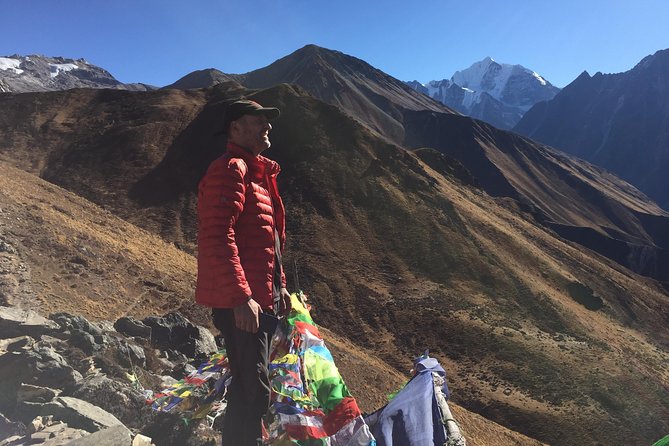
- Village days that feel lived-in, passing through Tamang, Gurung, and Tibetan-influenced communities with Buddhist festival culture in the background.
- Kyanging Gumpa plus Kyangin-Ri: a high day that’s strenuous, but built for payoff views.
- Porter support and full meals: breakfast, lunch, and dinner during the trek means fewer daily decisions.
- A “carry less, walk more” gear plan with a down jacket, trekking T-shirt, and a duffel bag included (refundable after the trek).
More trails out of Kathmandu, boots ready
- Everest Base Camp Trek – 14 Days★ 5.0 · 1,499 reviews
- Everest Base Camp Trek★ 5.0 · 842 reviews
- Everest Base Camp Trekking★ 5.0 · 485 reviews
- Nagarkot Sunrise View and Day Hiking from Kathmandu★ 5.0 · 471 reviews
Entering The Langtang Valley: What You’re Really Signing Up For
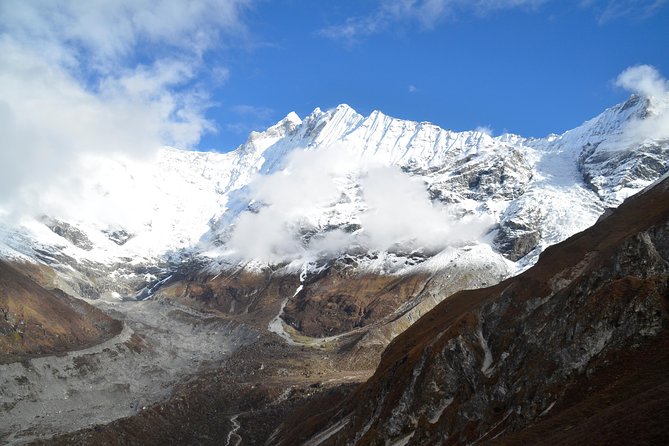
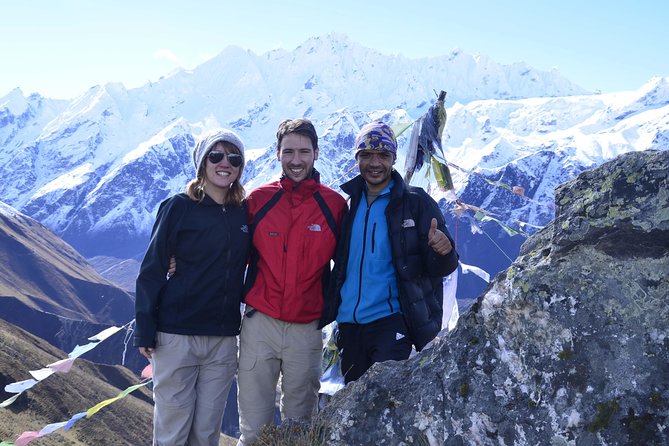
This trek runs north of Kathmandu into the Langtang region, a popular trekking area close to the Tibetan border. You’ll be moving through alpine terrain with rhododendron and bamboo forests, then rising into colder air where prayer flags, stone paths, and village routes start feeling more serious.
The draw for you is the balance: you’re not just hiking for views. You’re also walking through a Buddhist landscape tied to festivals like Dumji, Losar, Dashain, and Tihar—so even on slower moments, there’s local rhythm in what you see.
One more practical note I’d underline: the trek has a “day-hike” feel inside a structured multi-day plan. That means you’re still trekking every day, but there are standout pushes—especially around Kyanging Gumpa and Kyangin-Ri—that shape the whole rhythm of the week.
Kathmandu To Syabrubesi: The Long Drive That Starts Your Trek Day
Your trip kicks off at Tribhuvan Airport (TIA) with a start time around 8:00am. From there, you’ll transfer to your hotel in Kathmandu, then later drive to Syabrubesi, roughly 7 hours on the road and around 1400m elevation when you arrive.
This is a good thing for first-time trekkers, because it compresses the moving parts. You don’t have to arrange separate transport, and you can focus on sleep, hydration, and getting your pack right the night before walking starts.
What to watch: even though the drive is “only” travel time, it still uses energy. If you’re arriving from a long flight, you’ll want to treat that first day as recovery time, not sightseeing time. Let the trek do the heavy lifting for your memories.
Lama Hotel To Langtang Villages: A Forest Start With Real Elevation
After settling into the trek, you’ll head toward Lama Hotel. This leg is roughly a 4-hour trek and climbs to about 2400m.
Then you continue on toward the Langtang villages, around 5 hours of trekking and up to about 3400m. This is where you’ll start noticing the change in walking temperature and the way your breathing shifts as you climb.
The value here is that the terrain isn’t just “up, up, up.” You’ll pass through the kinds of forest zones described for this region—rhododendron and bamboo are both part of the trek’s feel—so you get variety in your senses, not just altitude counting.
A minor consideration: the jump from 2400m to 3400m over a couple of hiking days means you should keep your pace controlled. If you feel strong, it’s tempting to power-walk—resist that urge. On trek, calm effort is your altitude insurance.
Langtang Villages To Kyanging Gumpa: The Trek Tightens Up
From Langtang villages, you move toward Kyanging Gumpa in about 3 hours, reaching around 3700m. This stretch is shorter in time, but don’t confuse “shorter” with “easy.” By now, your legs know you’re climbing, and the air is cooler.
Kyanging Gumpa is also a mental checkpoint. When you reach it, you’re basically setting up for the big viewpoint climb—the part of the trek that turns your day schedule into a high-stakes outing.
If you’re the type who likes planning, this is where you’ll appreciate the structure: you’re not wandering. You’re moving with a guide and support team, keeping you aligned with what the day is designed to do.




Kyangin-Ri Viewpoint Day: The Peak Experience Without Pretending It’s Casual
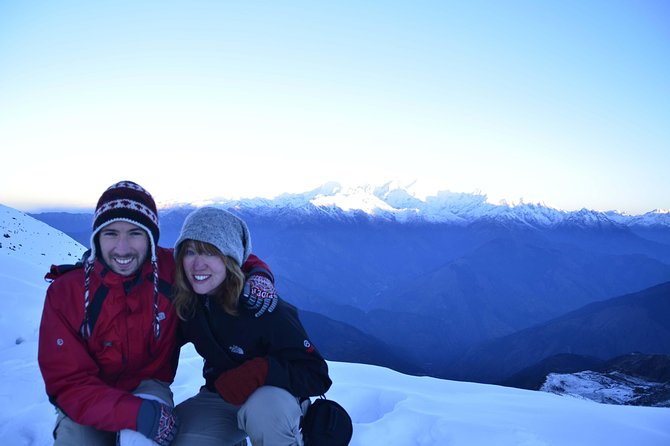
This is the moment most people remember: hike up toward Kyangin-Ri at around 4700m, then trek back toward Langtang. You’re getting high-altitude viewpoint country, with the satisfaction that you earned it by walking.
This is the day I’d treat as the “slow is fast” test. Even if others around you move quickly, you’ll do better by staying steady, sipping treated water, and focusing on foot placement rather than sky-gazing.
From a scenery standpoint, you’ll be in the orbit of major Himalayan landmarks listed for this route, including Langtang lirung (around 7240m) and Ganchenpuhimal (around 7430m), plus other peaks such as Ganjala peak, Yala peak, and the Ganesh Himal range. You don’t need every number memorized. You just need the sense that this is serious mountain country.
Practical tip from real trek experience shared with this operator: bring sunscreen. High elevation plus bright sky can surprise you, even when temperatures feel manageable.
The Descent Back To Syabrubesi: How You Finish Matters
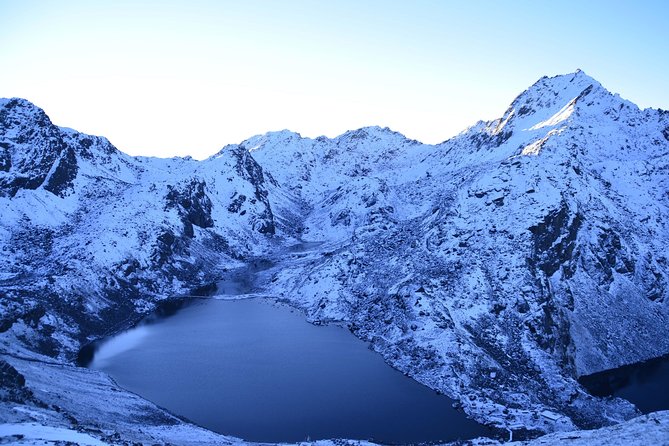
After your viewpoint day, you trek back to Syabrubesi, typically 6 to 7 hours, dropping back down to about 1400m. This descent phase can feel deceptively straightforward, but it’s still tough on knees and ankles.
It’s also the part of the trek where you’ll want to trust the pace. A fast scramble down can feel satisfying for an hour, then punish you for the rest of the day.
Once you’re back in Syabrubesi, you’ll drive to Kathmandu again, around 6 to 7 hours and to roughly 1300m elevation. Then the trip ends, and the next day your team will drop you to the airport based on your flight details—or help you add extra time around Kathmandu, Pokhara, Chitwan, and Buddha’s birthplace if you want to keep traveling.
Price and Logistics: What You’re Paying For (and What You Still Need)
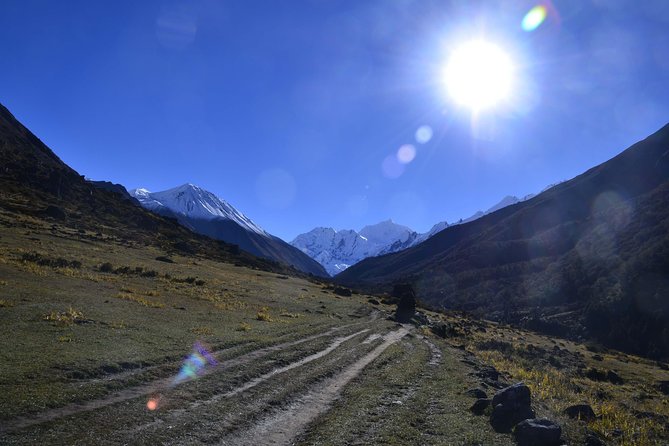
The price is $660 per person for an approx. 8-day trek with a private group. On paper, that might sound like a chunk of money. In practice, it’s about what’s included versus what you’d otherwise have to arrange.
You’re getting:
- Private transportation (to Syabrubesi and back)
- Breakfast, lunch, and dinner during the trek
- A professional guide plus a supporting porter
- Accommodation along the way
- Tea or coffee
- Treated drinking water
- First-aid kit support
- Fresh fruit every evening after dinner
- And a gear package: t-shirt, down jacket, and a duffel bag (refundable after the trek)
That gear list is a big “value lever” because it removes a common trekking expense and also keeps you from worrying about finding the right insulation right before cold nights. You’ll still want basic personal items, but you’re not starting from scratch.
What’s not included is equally important: international airfare, trekking equipment, cold drinks, and personal insurance. There’s also no trekking Wi‑Fi and no laundry, and Kathmandu meals aren’t covered unless they’re specified as extra.
Also plan for tips for staff. This kind of trek depends on the whole crew, not just the guide.
What You Can Expect Day-To-Day: Meals, Lodging, and Pace
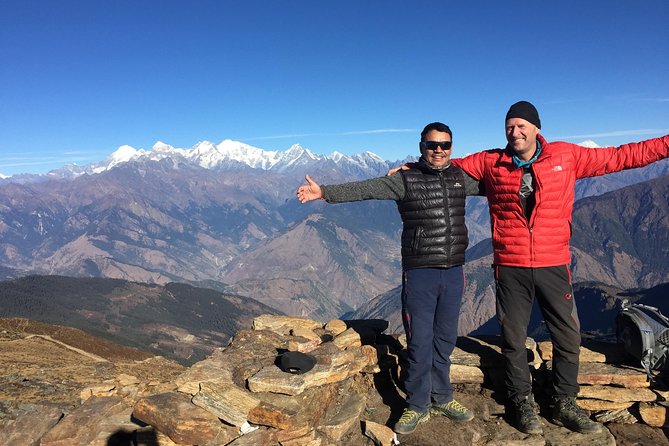
During the trek, meals are handled: breakfast, lunch, and dinner. You also get tea or coffee, plus fresh fruit after dinner. That kind of consistency matters when weather turns and when you’re walking long hours. You’re not hunting food mid-day or trying to interpret unfamiliar menus while your legs are tired.
Accommodation is included too, which helps you avoid decision fatigue. The trek’s “real work” is the walking. You shouldn’t spend that same mental effort on finding beds.
Pace-wise, the itinerary is built around a few longer hikes and a few shorter connectors. You’ll have longer days (like Lama Hotel and the Langtang villages day), and then sharper, higher-elevation days (Kyanging Gumpa and the Kyangin-Ri push). That mix is useful because it prevents a straight-line grind every day.
Guide Support You’ll Actually Feel: Deepak, Chhabin, Bharat, and Dinesh
The most consistently praised aspect in past feedback is support quality. I’d highlight names because it helps you picture what kind of people are leading: Deepak and Chhabin have led Langtang trekkers in separate experiences, and Bharat and Dinesh appear tied to Nepal trips where the crew handled both schedule changes and altitude concerns.
The practical win is not just “good leadership.” It’s responsiveness. When someone had altitude sickness on a trekking-adjacent agenda, Bharat helped them get through and recover. That doesn’t mean every person will feel fine at altitude, but it does mean the team has experience dealing with the issue, not panicking over it.
If you like structure plus flexibility, this style usually fits. One of the key benefits of a private trek is that you can ask for adjustments mid-course and not feel like you’re stuck inside a one-size-fits-all plan.
Best Time To Go: When the Weather Works With You
The best months listed for the Langtang Valley trek are February–May and September–November. That’s a practical range because it avoids the worst extremes and tends to deliver more reliable trekking conditions.
If you’re traveling in the shoulder season months, you should still expect cold air at altitude—especially once you’re getting near 3700m and 4700m—but you’ll be better positioned for clear viewpoints when the air is stable.
Should You Book This Langtang Valley Trek?
You should book if you want a structured trek that keeps the moving parts handled: private transport, meals, guide and porter, treated water, and key gear all built into the package. This is also a good match if you value a route with culture built in, not just a high-altitude checklist.
You might think twice if you know you struggle with altitude or if you dislike early starts and long drive days. Even with good support, you’ll still be climbing and spending time up near viewpoint elevation, so you’ll want a calm pace and realistic expectations.
If you can handle a big “walking week” and you like the idea of combining village routes with Kyanging Gumpa and Kyangin-Ri, this is a solid value-oriented way to experience Langtang.
FAQ
Where does this Langtang Valley trek start?
It starts at Tribhuvan Airport in Kathmandu, Nepal, with a start time around 8:00am. You also get pickup and a transfer to your Kathmandu hotel at the beginning.
How do you get from Kathmandu to Syabrubesi?
You drive from Kathmandu to Syabrubesi, which takes about 7 hours. Syabrubesi is listed at roughly 1400m elevation.
What’s the highest point you reach on this trek?
The trek includes a hike to the Kyangin-Ri viewpoint at about 4700m.
What’s included in the trek price?
Included are private transportation, breakfast/lunch/dinner during the trek, accommodation, a professional guide, a supporting porter, treated drinking water, all fees and taxes, tea or coffee, and fresh fruit after dinner. It also includes a t-shirt, down jacket, and duffel bag (refundable after the trek).
What’s not included?
International airfare, trekking necessary equipment, cold drinks, personal insurance, Wi‑Fi, laundry, extra snacks outside of tea houses, and any extra meals in Kathmandu beyond what’s mentioned are not included. Tipping for staff is also not included.
Do I need my own trekking gear?
Trekking necessary equipment is not included, so you should plan to bring or arrange it yourself. The provided gear includes a down jacket, trekking T-shirt, and duffel bag.
Is there Wi‑Fi on the trek?
Wi‑Fi is not included during the trek.
Is the trip private or shared?
It’s a private tour/activity. Only your group will participate.
What are the best months to do this trek?
The best time listed is February–May and September–October–November.
What is the cancellation policy?
Free cancellation is available if you cancel up to 24 hours in advance for a full refund. If you cancel less than 24 hours before the start time, the amount paid will not be refunded. The experience also requires good weather, and poor weather can lead to a different date or a full refund.
More Trekking Out of Kathmandu






More Tour Reviews in Kathmandu




Just Reviewed in Kathmandu
- Mountain Bike Tour
★ 5.0 · 3 reviews - Annapurna Panaroma
★ 5.0 · 3 reviews - Mount Everest Scenic Flight 50 Minutes
★ 5.0 · 3 reviews - Kathmandu : Swambhunath & Durbar Square Guided Half Day Tour
★ 3.3 · 3 reviews - Chandragiri Cable Car & Monkey Temple Tour – Private/Group
★ 5.0 · 3 reviews - Kathmandu: Shivapuri National Park Hiking Day Trip
★ 3.3 · 3 reviews
Langtang Valley Treks, compared.
 ★ 5.0Langtang Valley TrekFrom $555140 reviews
★ 5.0Langtang Valley TrekFrom $83061 reviews
Langtang Valley TrekFrom $70050 reviews
 ★ 5.08 Days Tour in Langtang Valley TrekFrom $69845 reviews
 ★ 5.0Private 8 – Day Langtang TrekkingFrom $58429 reviews
★ 5.0Langtang Valley TrekFrom $1,00023 reviews
 ★ 5.06-Day Limitless Langtang TrekFrom $18121 reviews
★ 5.0Langtang Valley TrekFrom $56020 reviews
Browse the lists this tour appears in